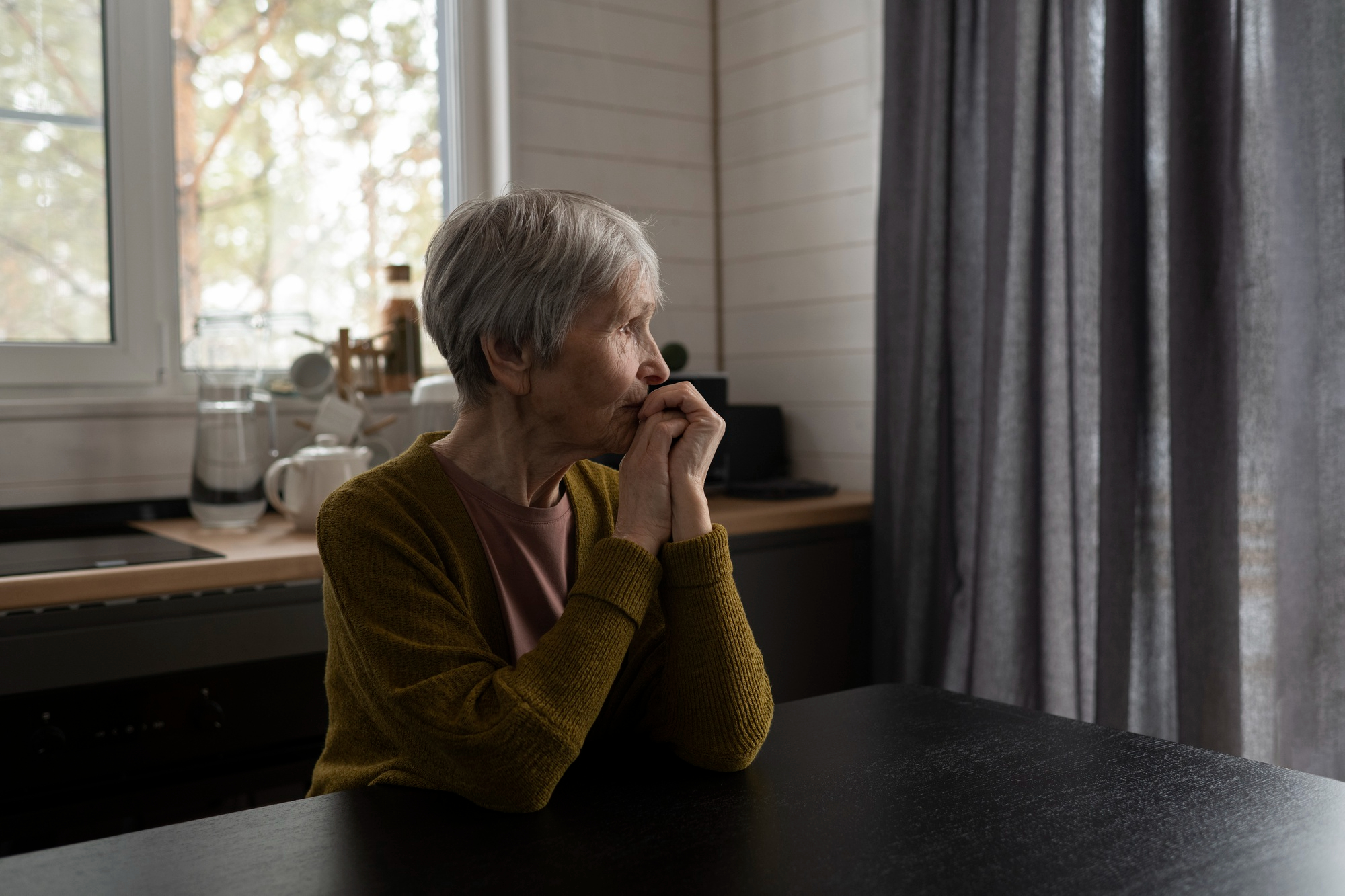
Richard and I had been married for twenty-three years. To everyone who knew us from the outside, he was a respectable corporate executive and the chairman of a well-regarded charity, a man who gave generous speeches at fundraising galas about the importance of family and community. At home, his word was absolute law, and his cruelty was not the loud, bruising kind that leaves marks you can point to. It was a quiet daily poison, a matter of cold looks and colder silences, of money withheld and permission denied, of a thousand small ways of reminding everyone in the house that we existed at his pleasure and could be corrected at any moment.
I had learned, over twenty-three years, to make myself small. To keep the peace by keeping quiet. I am not proud of it. I have spent a great deal of time since asking myself how a woman becomes the sort of person who watches her own son be thrown out of his home and says almost nothing, and the honest answer is that it does not happen all at once. It happens one silence at a time, over decades, until the silence is simply who you have become.
The morning it happened, Richard walked into the kitchen where our son Ethan was sketching at the table, and he dropped a thick stack of financial statements directly over the open sketchbook.
“Your art school,” Richard announced, “is a frivolous drain on this family’s resources. You have until noon to leave this house.”
My heart dropped through the floor. “Richard, you can’t do this. We have a college fund. My father set that money aside specifically for Ethan’s education. It was his grandfather’s gift.”
“That fund is being reallocated to more pressing investments,” Richard said, without so much as looking at me. “And if you interfere, Margaret, I’ll restrict your access to every account I control. You know I can. Think carefully about how you want to live.”
Ethan looked at me. He was nineteen, and he had his grandfather’s gentle eyes, and he looked at me across that kitchen and he saw exactly what he had seen his whole life. My trembling hands. My open mouth with nothing coming out of it. My familiar, practiced silence.
“I don’t need your money,” he said to his father, and his voice was low and steady in a way that shamed me, because it held a courage I had never managed to find. “And I don’t need a mother who won’t even defend me.”
That was the thing that broke me, and I deserved to be broken by it. Before Ethan could gather more than a bag, Richard took his phone from his hand and hurled it against the tile floor, and then, when it merely cracked, he brought his heel down on it, deliberately, grinding it under his shoe until the screen went black and the thing was ruined beyond any use. It was, I understood only later, a calculated act. He was severing the line. He was making certain that once Ethan walked out that door, I would have no way to reach him.
And then my son walked out into the cold, and he did not look back, and I let him go.
I want to tell you that I ran after him. I did not, not that day, because Richard stood between me and the door with an expression that promised consequences I was too frightened to face, and by the time I found the nerve to go out onto the porch, the street was empty. My son was gone into the world with a cracked resolve and a broken phone and a mother’s silence ringing in his ears.
For the next twelve months I looked for him every single day. I bought a separate phone that Richard did not know about, and I kept it hidden, and I used it to call shelters and hospitals and every one of Ethan’s old friends, working through them one by one, asking, pleading, leaving messages. I called the art school he had wanted to attend, in case he had somehow found his way there. I drove, on the days Richard was traveling, to parts of the city I had never seen, showing Ethan’s photograph to strangers. I found nothing. It was as though the world had simply closed over the place where my son had been.
Richard showed not a flicker of regret. He never mentioned Ethan’s name again, as though our son had been a line item he had successfully removed from a budget. But something in him changed in that year. He grew more secretive than ever, and in particular he became strange about a certain leather briefcase, a slim expensive thing he had never carried before, which he now took with him everywhere and kept locked, and which he brought into rooms with him and set beside his chair as though it could not be left alone. I noticed it the way you notice everything about a man you are afraid of. I did not ask. Asking was not something our marriage permitted.
Then, on a stormy Tuesday evening, with the rain coming down in sheets and the thunder rolling in off the hills, someone knocked at the front door. Urgent, hard, insistent knocking, the kind that means something is wrong.
I opened it, and my knees nearly gave out beneath me.
Ethan stood under the covered porch, soaked through, lit up in the flashes of lightning from the yard behind him. He was thinner than I remembered, and sharper somehow, older than a single year should have made him. And in one arm, held carefully against his chest, shielded from the rain, was a newborn baby, warm and wrapped in a faded hospital blanket. Behind him stood a young woman, perhaps twenty, anxious and pale, clutching a waterproof messenger bag against her chest as though it were the most important thing in the world.
“Ethan,” I gasped, reaching for him. “Where have you been? Whose baby is this?”
His voice was thick with exhaustion, frayed at the edges. “Please, Mom. Dad will be home soon. Let us in. Please.”
I pulled all three of them inside and locked the door behind us, and only when we were in the living room, out of the storm, did I really look at the young woman, my mind spinning through a thousand possibilities at once.
“Are you Ethan’s girlfriend?” I asked. “Is this my granddaughter?”
Ethan stepped back slightly, and something crossed his face, and he exchanged a look with the young woman that I could not read. “My baby?” he said. “Mom, no. This isn’t my baby. It’s not what you think. It’s nothing like what you think.” He drew a breath. “You don’t know everything about the man you married. The reason he made me leave had nothing to do with saving money, and nothing to do with art school. We didn’t come here to fight with him. We came because there are things you need to know, and because after tonight, it won’t be safe for anyone to not know them.”
A cold uneasiness settled deep in my stomach.
Without explaining further, Ethan came to me and carefully, tenderly, placed the sleeping newborn in my arms. The baby was impossibly light and warm, and it stirred and settled against me, and I held it because there was nothing else to do, and I looked down into its small sleeping face and then up at my son.
The young woman knelt beside the coffee table and unbuckled the messenger bag, and from it she drew a sleek silver USB drive.
“He’s been hiding things from you for years,” she whispered, and her hands were trembling. “Terrible things. And there’s something on here you need to hear, from his own mouth, or you’ll never believe the rest of it.”
She told me the drive held an audio file that Richard himself had recorded and sent, and she plugged it into the laptop on the side table, and she pressed play. And the moment my husband’s voice came through the speakers, I went completely, utterly still.
It was Richard’s voice, unmistakably, the smooth confident voice I had heard across the dinner table for twenty-three years, and he was speaking to someone in the clipped, businesslike tone he used when he believed he held all the power in a conversation.
“The girl is becoming a liability,” Richard’s voice said. “She knows too much about the foundation accounts. I want her handled. Quietly. I don’t care how. And the boy she’s been talking to, my wife’s precious little artist, he’s been asking questions too. I’ve already gotten him out of the house. If he keeps digging, handle him the same way. There’s more than enough money in this to make problems disappear. Do you understand me? Make them disappear.”
The recording ended. The room was silent except for the storm against the windows and the small breathing of the baby in my arms.
I could not speak. I looked at the young woman kneeling beside my coffee table, and then at my son, and slowly, terribly, the shape of it began to come clear.
“Her name is Dana,” Ethan said quietly. “She worked for Dad’s charity. As a junior accountant. She started noticing things about a year and a half ago, money moving in ways that didn’t make sense, donations coming in for causes that never received a cent, funds routed through accounts that led nowhere. The charity, Mom. The whole thing. It’s a laundering operation. It has been for years. Dad takes in donations meant for children’s hospitals and disaster relief and he moves the money through the foundation and it comes out the other end clean, in his accounts and the accounts of the men he works with. That’s where Grandpa’s college fund went. Not to investments. Into the machine.”
I sat down. I had to. My legs would not hold me, and I was holding a baby, and I lowered myself onto the couch and stared at the two of them.
“Dana found the evidence,” Ethan went on. “She came to me because she’d seen me at a couple of the foundation events, and she’d overheard Dad talking about me, about how his son wanted to waste money on art, and she thought, I don’t know, she thought I might be someone who’d believe her. A kid who was already on the outs with him. She was right. She showed me what she’d found, and I started helping her put it together, quietly, and Dad found out. That’s the real reason he threw me out. Not the money. He knew I’d seen the accounts. He wanted me gone and isolated and unreachable, exactly the way he wanted Dana gone. That recording, that’s him ordering someone to make us both disappear. Permanently.”
“The baby,” I managed. My voice did not sound like my own. “Whose baby is this?”
Dana spoke then, for the first time above a whisper, and her voice shook. “She’s mine,” she said. “She’s three weeks old. I got pregnant right around the time I started figuring out what Richard was doing, and I was so scared, Mrs. Ashford. I ran. Ethan found me a place to stay, a shelter two towns over, and he’s been protecting me this whole year, both of us just trying to stay alive and gather enough proof that anyone would have to believe us. But once she was born I knew we couldn’t run forever. We couldn’t raise her hiding in shelters, waiting for the men Richard hired to find us. We had to do something.” She looked at the baby in my arms, and her eyes filled. “We came here tonight because Ethan said the only way to end it was to bring the truth to the one person Richard never thought would turn on him. You.”
I looked down at the sleeping child, this three-week-old girl who had been born into the middle of a nightmare I had lived beside for twenty-three years and never seen, and something happened inside me that had not happened in a very long time. The fear that had governed my entire adult life, the fear that had kept me silent in that kitchen while my son was thrown into the cold, that fear did not vanish. But it was joined, and then overwhelmed, by something far larger and far older. A fury. A clarity. The particular unstoppable resolve of a mother who has just understood that her husband ordered her son killed.
“Play it again,” I said. “The recording. Play it again, and tell me everything you have. All of it. Because we are going to end this tonight, and I am going to help you, and I am never going to be silent again as long as I live.”
We did not have much time. Richard would be home within the hour, and the men in that recording were real, and Dana and Ethan had spent a year one step ahead of them. But Dana had done more than gather that single audio file. Over eighteen months she had assembled a meticulous record, bank statements and internal foundation documents and email chains and a spreadsheet tracing every dollar of stolen charity money through every shell account it passed through. She had copies of everything on that silver drive, and copies of the copies stored in places even she could not easily reach, because she had known, all along, that the evidence was the only thing keeping her alive.
What they had lacked was someone on the inside who could get to the one thing Dana had never been able to reach. The leather briefcase.
“He never used to carry it,” I said slowly, as the pieces came together. “Not until about a year ago. He keeps it locked and he takes it everywhere and he never lets it out of his sight.”
Ethan and Dana looked at each other. “That’s it,” Dana breathed. “That has to be it. The originals. The physical documents, the ledgers, the things he can’t risk keeping digital because they’d trace back to him. That’s why he keeps it close. It’s the one piece we could never get.”
“I can get it,” I said.
And this is the part I am proudest of, in a life that gave me little enough to be proud of. Because I knew my husband. Twenty-three years of studying a man you are afraid of teaches you things, and one of the things I knew was that Richard, for all his caution, had one blind spot, and that blind spot was me. He had never once, in all our years together, imagined that I might be a threat. I was furniture to him. I was the frightened quiet wife who kept the house and made herself small. It would never occur to him, not in a thousand years, that I would be the one to take him down. And that invisibility, the same invisibility that had been the great grief of my marriage, was now the most powerful weapon in the house.
We moved quickly. I got Dana and the baby settled in the back bedroom, out of sight, with instructions to stay silent and stay hidden no matter what they heard. I gave Ethan my hidden phone and had him ready to call the authorities the moment we had what we needed. And then I did the thing I had spent a year and a lifetime being too frightened to do. I decided to trap my husband.
When Richard came home, shaking off the rain in the front hall, briefcase in hand, I met him with a calm I did not know I still possessed. I had spent twenty-three years performing calm for that man. I performed it one final time. I told him I had made his dinner, that I had opened a bottle of the wine he liked, that I wanted to talk about our finances because I had been thinking about the future. He was suspicious at first, the way he was always suspicious, but suspicion in Richard was easily soothed by the appearance of my submission, because my submission was the natural order of his world. He set the briefcase down beside his chair, the way he always did, and he sat, and he drank the wine, and he began, unprompted, to lecture me about investments.
And I listened, and I nodded, and I refilled his glass, and I waited.
It took longer than I wanted. But eventually Richard, comfortable and a little loosened by the wine and entirely certain of his own safety in his own home with his own harmless wife, got up to use the bathroom, and he left the briefcase beside his chair. He had never once needed to guard it from me. Why would he.
I had the combination within a minute, because I knew my husband, and my husband used the same four numbers for everything, the date of the deal that had first made him rich, a date he had recited to me proudly a hundred times over the years, never imagining he was handing me the key to his own destruction. The briefcase opened. And inside, exactly as Dana had guessed, were the originals. Ledgers. Handwritten records. Documents connecting Richard by name and signature to every crime the digital files had only implied. The one piece they had never been able to reach, sitting in my hands.
I photographed every page with my hidden phone, my hands steady now, steadier than they had been in that kitchen a year ago, and I sent the images to Ethan in the back of the house, and Ethan sent everything, all of it, the audio file and Dana’s eighteen months of evidence and the photographs of the documents that tied it all together, to the authorities Dana had already quietly been in contact with, a federal investigator who had been waiting a long time for exactly this.
When Richard came back from the bathroom, the briefcase was closed and latched exactly as he had left it, and I was sitting with my hands folded and my eyes down, the picture of the wife he had always known. He finished his wine. He resumed his lecture. He had no idea that in the back bedroom of his own house sat the young woman he had ordered killed and her three-week-old daughter, or that his son, the son he believed he had disappeared into the cold, was crouched twenty feet away with a phone full of the evidence that would bury him. He had no idea that the frightened quiet woman across the table had just done the bravest thing of her entire life.
They came for him before midnight. The knock at the door was harder even than Ethan’s had been, and when Richard opened it, expecting anyone but who he found, the look on his face was something I will remember for the rest of my life. He turned and looked at me, and in that instant he finally saw me, saw me truly, for the first time in twenty-three years, and understood what I had done. And I looked back at him and I did not lower my eyes.
“You should have defended him,” I said quietly, as they put the handcuffs on my husband. “That day in the kitchen. You told me to think carefully about how I wanted to live. I have. This is how.”
It all came apart for Richard very fast after that, the way things do when the foundation was rotten all along. The charity was exposed for exactly what it was. The men on the other end of that recording were identified and arrested. The scope of the fraud turned out to be even larger than Dana had known, years of stolen money meant for sick children and disaster victims, and the public reckoning was enormous, and Richard, the respectable executive and beloved charity chairman, became overnight the most reviled man in the city. He is in prison now, and he will be for a very long time, and I have not visited him, and I will not.
There were hard months after. Dana testified, and Ethan testified, and so did I, and reliving it all in a courtroom was its own kind of ordeal. There was the wreckage of a marriage to sort through, the discovery of just how much of our shared life had been built on money that was never ours, the accounts frozen and examined, the house eventually sold. But there was also, running underneath all of it, something I had not felt in twenty-three years, which was the feeling of being free.
Dana and her daughter did not disappear from our lives when the trial ended. Quite the opposite. Over that long strange year of testimony and aftermath, the three of us, Ethan and Dana and I, had become something like a family, forged in the particular closeness of people who have survived the same catastrophe together. The baby, whose name is Lily, took her first steps in the small apartment I moved into after the house was sold, and she took them toward me, and I wept, because I had thought, holding her that stormy night, that I was too broken and too complicit to deserve to hold a child again, and I had been wrong.
Ethan and Dana are together now, truly together, which is not how it began but is how it became. They fell in love slowly, over a year of hiding and protecting each other, the way you fall in love with the person who stands beside you in the worst thing that ever happens to you. Ethan is Lily’s father in every way that matters, and someday, when she is old enough, they will tell her the truth of how they came to be a family, the frightened young accountant and the boy his father threw into the cold and the grandmother who finally, at the very end of her courage, found more of it than any of them knew she had.
Ethan went to art school after all. Not on his grandfather’s fund, which was gone, swallowed by Richard’s machine, but on a scholarship, and on the earnings of a mother who found work for the first time in decades and discovered she was good at it. His first real show, two years later, included a series of paintings I could barely look at without crying, storm-lit and dark and full of a small warm light at the center of each one. He would not tell me what they were about. He did not have to.
My son forgave me. That is the thing I did not expect and did not feel I had earned. On the night it ended, in the chaos after they took Richard away, when the house was full of investigators and Dana was crying with relief in the back bedroom, Ethan came and sat beside me and put his arm around my shoulders, this boy I had failed so completely in that kitchen a year before, and he said, “You came through, Mom. When it counted the most, you came through.” And I said I was sorry, that I had been sorry every single day of the year he was gone, that I should have defended him and I would never forgive myself for the silence. And he said, “You just did. You defended me tonight louder than anyone has ever defended anyone. That’s the mom I always knew was in there.”
I think about that kitchen still. I think about the woman I was, standing there with her trembling hands and her open mouth and nothing coming out, watching her son walk into the cold. I do not fully forgive her. But I understand her now, the way you understand a person you used to be, and I know what it took to stop being her. It took a stormy night and a knock at the door and a baby placed in my arms and my own husband’s voice ordering my son’s death, and it took me finally understanding that silence, the silence I had mistaken all my life for safety, had never protected anyone at all. It had only ever protected him.
I am not silent anymore. I will never be silent again. And on the quiet evenings now, when Lily is asleep and Ethan and Dana are laughing over something in the next room, I sit with the enormous unlikely gift of the family that walked out of a storm and into my life, and I am grateful, past all measure, that when the moment finally came, I opened the door.

Specialty: Quiet Comebacks & Personal Justice
David Reynolds focuses on stories where underestimated individuals regain control of their lives. His writing centers on measured decisions rather than dramatic outbursts — emphasizing preparation, patience, and the long game. His characters don’t shout; they act.