Earned, Not Given
The conflict began on a Sunday afternoon in my mother’s backyard, in the particular way that family conflicts always seem to begin: with something small and specific that turns out to be neither small nor specific at all, but rather the surface point of something that has been building underground for a long time.
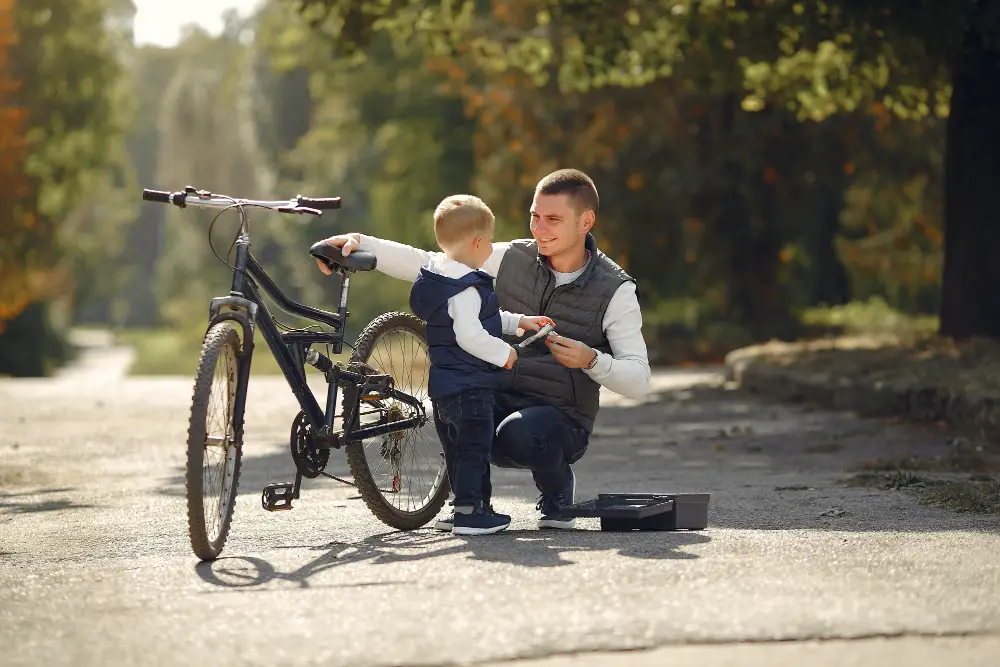
Ethan had brought his old mountain bike because Noah always wanted to ride it, and Ethan, being the kind of ten-year-old he was, almost always agreed. He was not a selfish child. I want to be precise about that because what followed required me to say it many times to many people, and I had to believe it myself completely before I could say it convincingly to anyone else. Ethan was generous by nature and by habit, and the fact that he had spent the afternoon sharing his bike with an eight-year-old who then bent a brake lever and scratched the frame by dropping it against the driveway, and had finally said I’m done sharing for today, was not evidence of selfishness. It was evidence that he had a reasonable limit and had eventually reached it.
Noah ran to my mother when Ethan said no.
Mom crossed the yard toward us with the purposeful energy of someone who has already made her ruling and is now carrying it to the defendant.
“Ethan, that is selfish,” she said. “Maybe you don’t deserve that new bike your grandfather and I were thinking about helping you buy.”
I stared at her.
She knew I had already ordered Ethan a custom bicycle. She knew he had been saving toward it for two years, doing chores and collecting birthday money and washing neighbors’ cars in the cold, keeping track of his contributions in a small notebook with a running total on the inside cover. She knew I was matching his savings, and she knew the bike existed not as an indulgence but as a deliberate lesson about the relationship between effort and reward, a lesson I had been trying to teach him since he was old enough to understand the concept.
She knew all of this and she invoked the bike anyway, as a threat, in front of everyone, because Noah was crying and someone needed to be punished for it and the available candidate was my son.
Ethan’s face went pale in the specific way of children absorbing something that they sense is deeply unfair but do not yet have the language to articulate. He did not argue. He did not cry. He simply picked up his scratched bicycle, walked it to my car, and placed it carefully in the back.
Marcus stood beside the grill the entire time.
He had heard every word.
He said nothing.
That silence was what made my decision. Not the threat about the bike, not my mother’s voice, not even Ethan’s face. Marcus standing there and choosing to be somewhere else in his mind while his son cried and his mother punished my son for having a limit: that was the thing.
Because I had also been paying, for several months, for Noah’s graduation party.
Elementary school graduation is not a small ceremony in my brother’s household, apparently. Marcus and Jenna had announced a celebration for nearly ninety guests: a rented smoker trailer, a live country band, inflatable games, personalized banners, catered desserts, the kind of afternoon that required logistics and a budget and, as it turned out, a person other than Marcus to provide both. He had forwarded me vendor invoices with the comfortable ease of someone who has never had to wonder whether the person on the other end might have their own expenses, their own limits, their own savings they are trying to preserve. He called me the organized one, which was true but which was also, I understood now, a job title he had assigned me without asking whether I wanted the position.
The total was $7,200. I had agreed to cover it because Noah was excited and because Marcus said money was tight and because I had a good heart and good hearts, in my family, had always been treated as resources available for general use.
I drove home that Sunday and opened my laptop.
I cancelled the barbecue.
Then I called the bicycle shop and upgraded Ethan’s order: matte navy frame, gold lettering, hydraulic brakes, fitted suspension. And a small engraved plate on the top tube that read: Earned, Not Given.
Two days later I filmed Ethan seeing the finished bike for the first time.
He covered his mouth with both hands, the gesture children make when an emotion is too large for their face to hold all at once, and then he threw his arms around me hard enough to shake the camera. I uploaded the video with a single caption: Proud of a kid who worked, saved, set boundaries, and still stayed kind.
Within the hour, relatives were leaving comments.
My mother called twice.
Then Marcus texted: We need to talk.
I replied: About the bike, or about the party you no longer have?
The typing bubble appeared and vanished and appeared again.
Finally: You canceled Noah’s barbecue?
Yes.
You can’t punish a child over an adult disagreement.
I looked out the window at Ethan riding circles around the driveway, smiling with the whole of his face in the way he had not smiled since Sunday.
I typed back: Interesting. That’s exactly what Mom tried to do to my son.
Marcus called before I put the phone down.
He led with outrage, which was predictable, and I let him run through it before I said anything. He covered Noah’s feelings, the invited classmates, Mom’s fury, my tendency to make things bigger than they needed to be.
“Mom said one stupid thing,” he said.
“She humiliated Ethan in front of everyone who was there,” I said. “And you stood next to her and said nothing.”
“I didn’t want to get involved.”
“You got involved when you accepted $7,200 from me.”
He went quiet.
I reminded him that I had attached one condition to financing the party, stated clearly and early: Marcus had to stop allowing our mother to favor Noah openly in front of Ethan, and he had to stop the pattern of expecting Ethan to surrender whatever Noah wanted. He had violated that condition repeatedly and consistently, at Christmas and Easter and every family gathering in between, each one following the same choreography. Noah wanted something. Ethan was expected to provide it. If Ethan resisted, the adults called him difficult.
“So this is revenge,” Marcus said.
“Revenge would be sending you the cancellation fees,” I said. “This is me withdrawing support from people who have decided my child’s feelings are negotiable.”
He ended the call.
That evening, Mom came to my house without calling first. She walked past me into the living room, looked at Ethan’s bicycle on its display mat near the garage, and told me I had posted the video to shame the family.
“I posted it because Ethan earned something and deserved to be celebrated for it,” I said.
“You made Noah look bad.”
“Noah wasn’t mentioned.”
“Everyone knows.”
“Then perhaps everyone already noticed the problem.”
Her eyes narrowed. She told me the party cancellation had become a topic of family discussion and that Marcus had claimed a venue scheduling error, and that my video, combined with his frantic calls to relatives, had caused that explanation to fall apart.
She ordered me to rehire the vendors.
I explained that the caterer had already accepted another booking. Even if every vendor were still available, I would not be paying them.
“You have always been jealous of your brother,” she said.
The accusation was familiar enough that it had lost most of its force. Marcus had always been the charming one, the athlete, the son who received help without anyone attaching expectations to it. I was the dependable one, which is a category that sounds like a compliment but functions as a job description: the person who handles emergencies, remembers obligations, fills gaps, and is told that doing so demonstrates good character. Good character, in this framing, was something I demonstrated by making other people’s problems disappear.
It had never been framed as something I was allowed to extend to myself or to my son.
Ethan came downstairs and stopped when he saw her.
Mom turned toward him. “I hope you’re happy. Noah might not get a party because of that bicycle.”
I stepped between them immediately. “You need to leave.”
She blinked.
I had never said those words to her before. Not once in my entire adult life. I had managed and redirected and smoothed and absorbed, but I had never stood in my own living room and told my mother to leave it.
“I’m your mother.”
“And I’m his.”
We looked at each other for several seconds. Then she picked up her purse and walked out, pulling the door shut hard enough to shift the framed photographs on the wall.
Ethan stared at the floor. “Did I ruin Noah’s party?”
I knelt in front of him, at his eye level, the way I had when he was small and needed to understand something important.
“No. Adults made promises they couldn’t afford to keep. That has nothing to do with you.”
He nodded, but I could see he was carrying it anyway, the way children carry things they have been told are not their fault but which have rearranged their world regardless.
The next morning, Jenna messaged me privately.
She did not come at me the way Marcus had. She wrote carefully, acknowledging that she understood my anger, but telling me that Noah had overheard the argument and now believed Ethan hated him. I called her immediately. Noah answered on speakerphone, his voice small and careful.
“I’m sorry I scratched the bike,” he said. “Dad said your new one cost my party.”
I closed my eyes.
“Noah, the party and the bike are completely separate things. Ethan does not hate you. I do not blame you for any of this.”
“Can I still come over to your house?”
“Yes. When the adults have settled down.”
After I hung up, I sat for a moment with the understanding that Marcus had done precisely what he had accused me of: placed the weight of an adult conflict on a child’s shoulders. He had told his eight-year-old that Ethan’s bike had cost him his party, which was both untrue and unkind, and which meant Noah was now walking around with a version of events that made him a victim of my son’s selfishness.
Then Jenna sent a screenshot from the family group chat.
Marcus had written that I cancelled everything because Ethan wouldn’t share, and that I had always resented Noah. Below it, Mom had added: Some people use money to control family.
I read both messages twice.
Then I opened the folder on my computer containing every invoice, every payment receipt, every message in which Marcus had asked me to rescue a party he had advertised without the means to pay for it.
I did not share them yet.
By Friday the canceled barbecue had become the only conversation anyone in the extended family wanted to have. My aunt Rebecca called asking whether I was having financial difficulties, which told me Marcus had changed his explanation again, this time apparently suggesting I had cancelled because I could no longer afford it.
I thanked her for her concern and clarified that I was not short of money. I had chosen not to continue funding an event after my son was publicly threatened and my brother chose not to defend him.
Rebecca was quiet for a moment. Then she said Marcus had told several relatives that Ethan had physically pushed Noah off the bicycle.
“That never happened,” I said.
“He also said the custom bike was bought with party money.”
“Also false. Ethan saved toward it for two years. I upgraded the order after canceling the party. The money came from entirely separate accounts.”
“You should put that in the group chat,” she said. “Before this gets worse.”
I hated doing it. I had spent years avoiding family disputes conducted through group messages, understanding that they rarely clarified anything and usually just created new grievances. But my silence was allowing Marcus to write his own version of events, and his version was damaging Ethan’s reputation within a family Ethan would have to inhabit for the rest of his life.
So I posted a clear, calm account. No insults, no private financial details, no dramatics. I explained what had actually happened: Ethan stopped sharing after his bike was damaged, no child had pushed anyone, and I had cancelled an event I had voluntarily agreed to fund after my son was treated unfairly by adults who should have known better.
Marcus replied within two minutes, accusing me of leaving things out.
Mom called me dramatic.
Two cousins posted popcorn emojis and then quickly deleted them when Rebecca told everyone to behave.
Then Jenna posted.
I was there, she wrote. Ethan did not push Noah. Linda threatened to take away a bike she was not paying for. Marcus heard it and said nothing. Please stop putting this on the children.
The chat went silent.
An hour later, Jenna came to my house alone. She sat across from me at the kitchen table looking exhausted in the way of people who have been managing a situation that should not require management, and she told me that she and Marcus had known for months they couldn’t afford the celebration they had announced. Marcus had assumed I would cover it, she said, because I had paid their overdue electric bill the previous winter and helped with Noah’s summer camp, and because, as Jenna put it with the careful honesty of someone who has decided to stop pretending: he tells people you like doing this.
I told her I liked helping. I said helping and being used were different things.
She nodded.
Then she told me that Marcus had collected three hundred dollars from my mother and five hundred from Jenna’s father for party expenses, even after I had agreed to pay every vendor. He had used the money to make an overdue truck payment.
I was not angry that he needed help with the truck. I understood financial pressure and I would have helped with the truck if he had asked me directly. What I was angry about was that he had taken money from his parents under false pretenses while simultaneously accusing me of using money to control the family. He had been doing the thing he was blaming me for, and doing it with less honesty.
“Does Mom know?” I asked.
“Not yet,” Jenna said. “I told Marcus he has until tonight.”
That evening Mom called, and her voice had lost the authority it usually carried.
“Did Marcus take money from me for a party you were already paying for?”
“Yes.”
“Why didn’t you tell me?”
“I didn’t know until today.”
She paused for a long time. “You still should not have canceled so suddenly.”
“Would you have preferred I keep paying after you told my son he didn’t deserve his own bike?”
“I was trying to teach him to share.”
“You were teaching him that Noah’s wishes mattered more than his property and his right to say no. He had been sharing all afternoon. He stopped when his bike was damaged. That is a reasonable response.”
“He is a child.”
“Exactly. And you made him responsible for keeping everyone else happy.”
She began crying.
In the past her tears had functioned as a kind of reset button: I would feel the familiar pull of guilt and obligation and would move toward repair, toward apology, toward whatever payment was required to restore the peace. This time I stayed where I was and let the silence sit between us.
Eventually she asked what we were supposed to do about Noah’s party.
“Give him a normal graduation party,” I said. “Burgers and cake and his closest friends. Something you can actually afford.”
She said it would be humiliating after everyone had heard about the band and the catered food.
“Embarrassment is not an emergency,” I said.
Marcus came to my house the following morning unannounced. He stood on the porch with his hands in his jacket pockets and stared at the doorbell camera until I opened the main door but left the storm door between us.
He had a proposal: I pay for the original party, he tells everyone it was a misunderstanding, we move on.
“No,” I said.
“You have the money.”
“That is irrelevant.”
He told me Ethan had gotten a four-thousand-dollar bike. I told him Ethan had saved toward that bike for two years. Marcus said he was ten. I said he already understood budgeting better than Marcus did, and I watched that land.
“Do you enjoy humiliating me?”
“No. I am simply no longer protecting you from the consequences of your own choices.”
He accused me of turning Jenna against him. He said Mom wanted her three hundred dollars back and his father-in-law wanted repayment. He complained that the family now considered him a liar.
“You lied,” I said.
He stared through the glass for a moment with the expression he had worn as a teenager whenever someone declined to clean up behind him: surprise shading into indignation, the genuine confusion of someone who has never had to absorb his own consequences and does not know how.
Then he said: “Maybe Mom was right about Ethan. He’s selfish, just like you.”
I unlocked the storm door, opened it, and pointed toward the street.
“Leave my property.”
He left.
For the following week I blocked Marcus and restricted Mom’s calls. I also contacted Ethan’s school counselor, not because anything was wrong with him but because I wanted him to have a neutral adult to talk to, someone outside the family weather system who could help him understand what had happened without the distortion of loyalty or guilt.
He admitted to the counselor that he felt responsible for what had happened to Noah. He worried that setting one limit had broken something that couldn’t be repaired. The counselor helped him see the distinction between cause and reaction. Ethan had said no after someone damaged his property. The adults had chosen how to respond. Those were different things, and the second one was not his to carry.
Meanwhile, Jenna organized a smaller celebration at the park near their house. Twelve children, her father at the grill, Rebecca’s cupcakes, balloons from Mom. The whole afternoon cost less than six hundred dollars.
She invited Ethan and me.
I hesitated.
Ethan did not. “Noah didn’t do the bad stuff,” he said.
That sentence made me prouder than anything else that had happened over the previous three weeks, prouder than the video and the comments and the bike itself, because it told me that despite everything Ethan had watched the adults around him do, he still knew how to separate a person from a situation.
We arrived after the party was underway. Noah saw Ethan and ran toward him, then stopped a few feet away with the caution of a child who has been told something that made him uncertain.
“Are you still mad?” Noah asked.
“I was mad about the bike,” Ethan said. “Not forever.”
He handed Noah a small wrapped present: bicycle gloves and a rocket-shaped bell. Noah hugged him.
Marcus watched from a picnic table but did not come over.
Mom did.
She stood in front of Ethan and looked directly at him, which I noted because she had not done that the last time she spoke to him. She had spoken at him, toward him, around him. This was different.
“I owe you an apology,” she said. “Your bike was yours. You were allowed to stop sharing it.”
Ethan glanced at me briefly, then back at her. “Okay,” he said.
She seemed to wait for something more, perhaps a hug or a wider absolution, and when it did not come she accepted its absence without pressing. That was also different.
Then she turned to me. “I owe you one too.”
“Yes,” I said, without softening it.
Her eyebrows lifted. She was accustomed to me making forgiveness easier, providing the bridge she needed to walk across without having to build it herself.
“I’m sorry,” she said. “I treated your help as if it were your obligation. And I should not have spoken to Ethan that way.”
“Thank you for saying that.”
We did not repair everything beside a picnic table in a public park on a June afternoon. Decades of accumulated imbalance does not dissolve in a single conversation, however sincere. But she apologized without immediately attaching an excuse, and that was more than she had done before.
Later, Noah asked Ethan whether he could ride the old mountain bike again sometime.
Ethan considered it. “Maybe. But you have to ask first, wear a helmet, and not drop it.”
Noah agreed immediately.
Marcus, who had drifted closer without appearing to, muttered that it was unbelievable.
Jenna turned toward him. “What is?”
“He gets to make rules now?”
“For his own bike? Yes.”
Marcus looked around the table for support and found none. Mom said it sounded reasonable. His face went through several things quickly and he walked to his truck and drove away before the cake was cut.
The party continued without him.
Two months later, an email arrived from Marcus.
He had begun counseling with Jenna, he wrote. He had come to understand that he had been depending on me financially and then resenting me for it, because my capacity to help reminded him of his own failures, and resentment was more comfortable than accountability. He apologized for lying about Ethan. He apologized for using Noah as leverage. He attached a repayment plan for the cancellation fee I had lost.
I did not forgive him immediately, and I said so in my reply. I told him the repayment mattered less than changed behavior, and that he would not spend time alone with Ethan until I was confident that he would not use my son to manage his own feelings.
He wrote back one sentence: I understand.
He did not argue.
Over the following months he made small payments, and stopped forwarding invoices, and when Noah wanted something that belonged to Ethan at family gatherings, Marcus told him to ask once and accept whatever answer he received. The change was not dramatic and it was not perfect, but it was real in the way that real change is real: visible in specific moments rather than announced in general terms.
Mom changed more slowly. She still praised Marcus for ordinary things and still expected me to manage whatever needed managing. Each time she did, I declined without explaining myself. When she asked me to organize Thanksgiving, I said I would bring a pie. Someone else sorted out the rest of it. The holiday survived.
Ethan kept riding the custom bike. He joined a youth cycling club and learned basic maintenance and began saving for replacement tires despite my offer to buy them.
“I want to earn those too,” he said.
The engraved plate on his bike still read: Earned, Not Given.
I had chosen those words thinking about the bicycle, about the two years of chores and birthday money and cold-morning car washes that had made it his in a way that simply receiving it never could have. But by the end of that summer I understood that the plate was about more than the bike.
It was about what I had finally stopped giving away.
It was about what Ethan had shown me you could protect when you stopped treating your own limits as negotiable, when you stopped calling the surrender of those limits generosity and started calling it what it actually was: a habit formed in the long practice of being the person everyone else relied on to make things comfortable.
Peace purchased through silence is not peace.
It is an arrangement, and the cost increases every year, and eventually the cost reaches something you are not willing to pay.
For me, that something was my son standing pale and quiet in a backyard, carrying his scratched bike to the car without saying a word, having learned in that moment that his limits were subject to other people’s approval.
That was the cost I would not pay.
And what came after, the bike and the video and the cancelled barbecue and the long uncomfortable reckoning that followed, all of it was simply the consequence of finally meaning it.

Lila Hart is a dedicated Digital Archivist and Research Specialist with a keen eye for preserving and curating meaningful content. At TheArchivists, she specializes in organizing and managing digital archives, ensuring that valuable stories and historical moments are accessible for generations to come.
Lila earned her degree in History and Archival Studies from the University of Edinburgh, where she cultivated her passion for documenting the past and preserving cultural heritage. Her expertise lies in combining traditional archival techniques with modern digital tools, allowing her to create comprehensive and engaging collections that resonate with audiences worldwide.
At TheArchivists, Lila is known for her meticulous attention to detail and her ability to uncover hidden gems within extensive archives. Her work is praised for its depth, authenticity, and contribution to the preservation of knowledge in the digital age.
Driven by a commitment to preserving stories that matter, Lila is passionate about exploring the intersection of history and technology. Her goal is to ensure that every piece of content she handles reflects the richness of human experiences and remains a source of inspiration for years to come.