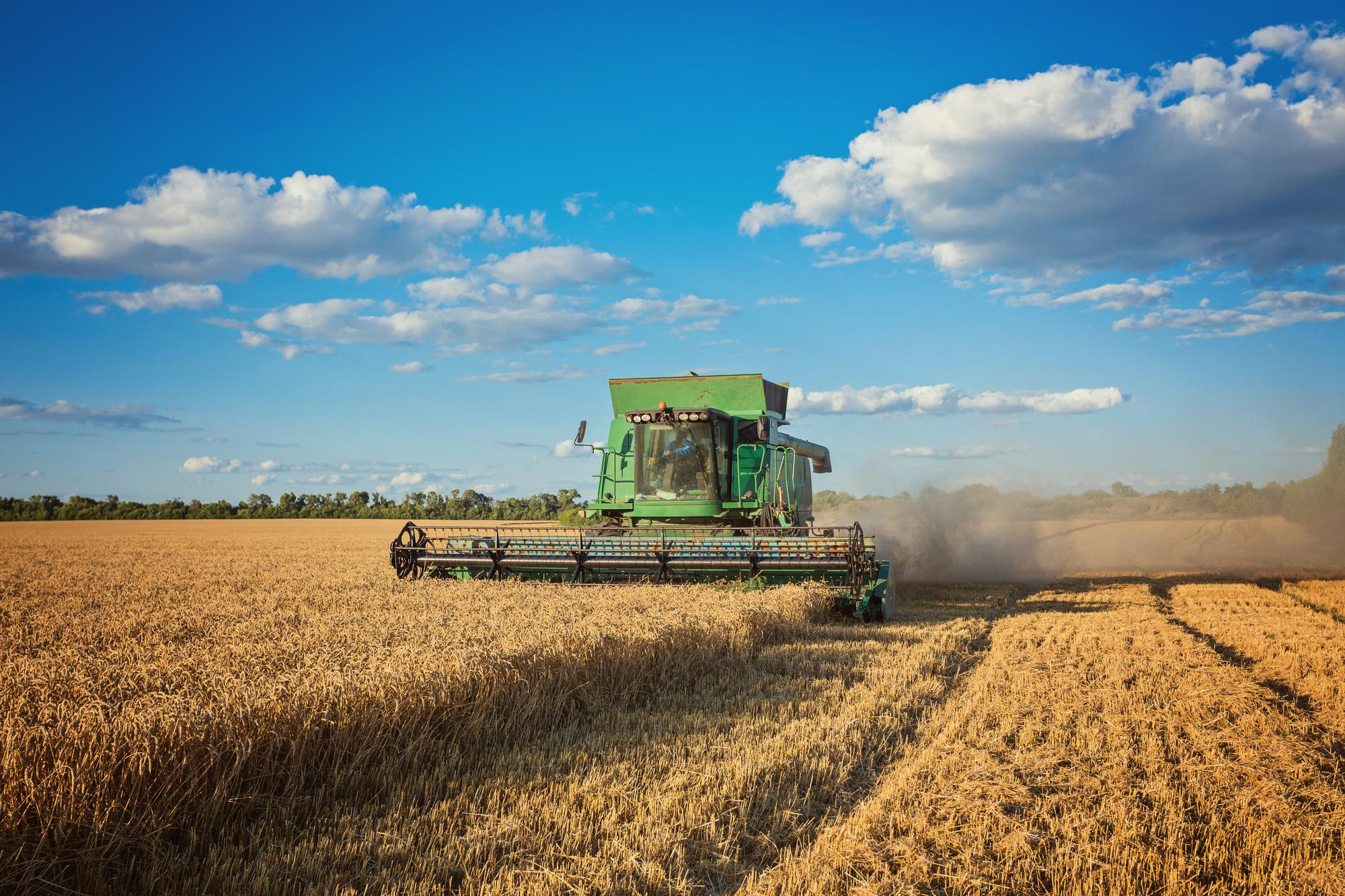
The South Bottom
My father taught me to read a field the way some fathers teach their children to read a clock. Not just the surface of it, the color of the stalks or the height of the canopy, but what lay underneath: the invisible logic of water moving through soil, the slow migration of nutrients, the patient conversation between roots and bedrock that takes decades to learn and a single bad season to ruin. He was a quiet man who used words carefully, which meant that when he did speak about the land, you stopped whatever you were doing and paid attention, because he would not repeat himself.
He believed that a farm was a set of relationships, not a piece of property. The relationship between rain and soil. Between root and rock. Between the river and the floodplain it had carved over centuries before anyone arrived with a plow and a drainage tile and decided to rearrange the whole arrangement for profit.
At thirteen years old, I watched a grown man auction off my father’s tractor while announcing to the whole of Carroll County that I was too young and too ignorant to run a five-hundred-acre farm.
Then he laughed because I had left forty-eight acres of our best bottomland unplowed.
Three months later, that untouched field was the only thing standing between the town of Willow Bend and a wall of black water.
My name is Eleanor Hart. Everyone in Carroll County called me Ellie.
The morning of the auction, I stood beside the machine shed in my father’s brown work coat. The sleeves covered half my hands, and the collar carried the smell of him in a way that I did not want to disturb by washing: diesel fuel, cedar shavings, and the peppermint gum he chewed whenever he was concentrating on a repair, rolling it quietly in his jaw while he listened to an engine or studied a worn bearing with his thumb. I had not washed the coat since the day the hospital called. I was not ready to. Maybe I would never be ready to. Grief is not a schedule you can plan around.
My aunt June stood to my right with her dark hair pulled into a rough ponytail and the particular stillness of a woman who had learned, through twelve years of emergency-room nursing, to hold herself upright when everything around her was coming apart. She had driven three hours from Cedar Falls the morning after the accident and had not gone home since. She had taken unpaid leave from her hospital, moved her clothes into the spare bedroom, signed the paperwork that made her my legal guardian, and had not once, in the three weeks since my father died, suggested that any of it was too much.
She had not slept the night before the auction. Neither had I.
More than a hundred people had come to the Hart farm that morning.
Some wanted bargains. Some wanted gossip. Most wanted both.
Pickup trucks lined Hart Road from the mailbox all the way to the cattle gate, parked tight along both shoulders the way they park at church on Easter when everyone shows up at once. Men in seed-company caps leaned against tailgates with foam cups of coffee, talking in the low unhurried way that farm country men talk when they are waiting for something. Women from First Methodist stood near the folding tables where the Willow Bend Booster Club was selling cinnamon rolls and coffee cake, raising money for something or other, cheerful and purposeful and not quite making eye contact with June and me.
Children climbed on hay bales without asking anyone’s permission, because children are practical about grief in ways that adults overcomplicate.
Our neighbors walked through the machine shed and the shop and the grain bins, examining everything my father had built and maintained and loved over twenty-six years of farming this ground. They handled his tools and looked at his equipment and assessed his work with the frank appraising eye of people who know what things cost and what they are worth, and for whom those two numbers are rarely the same. They did this as if his death had already converted everything into mere property. As if seventeen days were long enough for a man’s life to become an estate.
Our red Case IH tractor sat in the center of the yard.
Dad had bought it used when I was seven, on a handshake from a retiring farmer in Boone County who had kept meticulous maintenance records and an equally meticulous conscience. He had taught me on that machine: how to check the oil, how to clean the radiator screen of chaff and insects at the end of a long day, how to grease every fitting on a schedule, how to listen to the hydraulic pump for the faint irregular rattle that meant a seal was beginning to fail. He taught me that every piece of machinery has a voice and that the voice changes before the breakdown happens, always, if you are paying attention.
“Machines speak before they break,” he used to say. “Most people just wait until they start screaming.”
A white card had been tied to the steering wheel with a length of baling twine. LOT NUMBER 14. The sight of that card did something to my chest that I did not have language for yet, though I understand it now: it was the specific grief of watching something beloved become a transaction. Of watching love converted, against its nature, into a number.
The auctioneer climbed onto a flatbed trailer and tested his microphone. A sharp burst of feedback cut across the yard and several dogs barked from the beds of pickup trucks and a few people flinched.
“Morning, folks. We appreciate everybody coming out to help settle the Samuel Hart estate.”
Settle the estate. That was the phrase Buck Rawlins had insisted on. The business of taking everything my father had built across twenty-six years and reducing it to numbers on a clipboard.
Buck stood beside the auctioneer in a tan vest, polished boots, and a white cowboy hat that no working farmer in Willow Bend would have worn before Memorial Day without someone raising an eyebrow. He was fifty-eight years old, thick through the shoulders, silver-haired, with the easy groomed authority of a man who had spent decades being the most powerful person in every room he entered. His voice always sounded like he was doing you a favor. It took a while to notice that the favor was always, eventually, for him.
He had a habit of asking questions he already knew the answers to, and of smiling at you while he waited for you to reach the conclusion he had already drawn.
Buck Rawlins owned the Riverbend Grain Cooperative. He controlled the largest seed dealership in Carroll County. He chaired the Cedar River Levee District board. His oldest son Tucker sat on the county planning commission. His brother-in-law managed the Farm Credit bank branch that held our mortgage. In Willow Bend, people joked that Buck could decide whether the sun came up.
Nobody laughed loudly when they said it.
My father had owed the bank one hundred and eighty-six thousand dollars.
For a five-hundred-acre working farm with good ground and a functioning operation, that was not an impossible debt. He had been reducing it steadily for years, and with a reasonable corn crop and the south bottom producing the way it typically did in a good year, he had a clear path to being free of it within four growing seasons. He had shown me the numbers once, spread across the kitchen table on a yellow legal pad: income projections, cost estimates, debt retirement schedule. He had been methodical and unhurried about it, the way he was about everything.
But the loan agreement contained an acceleration clause that the bank’s attorney had placed on page eleven of a fourteen-page document, in the same font as everything else, unremarkable in its placement and devastating in its effect. When a primary borrower died without a co-signer on the note, the full remaining balance became due within thirty days unless a new operating note was executed by a creditworthy party approved by the bank’s loan committee.
June was my father’s sister, not his wife. She had no agricultural history on record. She had a nursing salary, a rented apartment in Cedar Falls, and a willingness to upend her entire life rather than let her niece go into foster care. The bank’s loan committee reviewed her application for a new operating note for three days and then declined it in a letter that used words like agricultural expertise and established operational history and risk assessment without once acknowledging that the farm in question had been productively managed for over two decades by the man who had just died.
Buck arrived at the house with a lease agreement three days before the funeral. He had it typed and bound, which told you something about how long he had been preparing it. He would take over the cropland for seven years. He would absorb the spring planting expenses, which were significant and due within weeks. He would pay enough money upfront to stop the foreclosure clock. All we had to do was sign over operational control of the farm.
I found the option clause on page six.
It was written in the same unremarkable font as everything else. It allowed Riverbend Agricultural Holdings to purchase the lower two hundred and ten acres of the Hart farm, which included the south bottom and the best river ground, at fair market value as determined by an appraisal commissioned by Riverbend following any major natural disaster that caused significant crop productivity loss on the affected acres.
I read that sentence three times. Then I read it again.
Then I carried the document into the kitchen, placed it flat on the table in front of Buck, and asked him why a man who said he was trying to save our farm needed a right to buy our best land at his own appraised value after a flood.
Buck looked at me with the expression adults use when a child has said something that is inconveniently accurate. A flicker of surprise. Then the smile returned, patient and a little condescending.
“Your daddy let you worry too much about grown-up business.”
“My daddy taught me to read contracts before signing them.”
“You’re thirteen years old.”
“The numbers don’t get older when I do.”
The smile disappeared. In its place was something I had not seen on his face before: the brief unguarded look of a man recalculating.
June refused the lease.
Three days later, the bank scheduled the equipment auction.
Probate court had given us some protection. The house, the land itself, and a handful of small machines were shielded through the estate process. But the tractor, the combine, the twelve-row planter, the sprayer, the grain wagons, and most of my father’s shop tools were going to the auction block to reduce the debt to a level the bank would agree to restructure. We kept the old farm pickup, a small utility tractor of minimal value, June’s Subaru, and the contents of the house. Everything else was Lot Number Something on a white card.
The smaller items sold first.
A neighbor paid three hundred dollars for Dad’s air compressor, the one he had used to run impact wrenches and fill tractor tires and blow dust out of electric motors on hot afternoons when the grain dryer was acting up. A contractor from Marshalltown bought his MIG welder. His socket sets were divided among three different men, none of whom would ever use them the way he had, which is unfair but unavoidable. His torque wrenches went individually, as did his grease gun, his floor jack, his hydraulic press, the set of combination wrenches hanging in careful size order on the pegboard above the workbench. Each time the auctioneer called out “Sold,” something left our farm and became someone else’s property, and the crowd moved on to the next lot without pausing, because that is how auctions work: forward, always forward, no time for sentiment.
I stood at the edge of the crowd with a small notebook and wrote down every buyer and every price. I was not certain what I would do with the information. Some instinct in me said to document everything, and I had learned to trust that instinct because it sounded like my father’s voice.
I did not cry when the tools were carried out of the shop.
I did not flinch when Tucker Rawlins climbed into the cab of the combine and revved the engine to show it off.
I did not look away when strangers pulled the row units off our planter to inspect the seed discs.
I did not answer when I heard people near the cinnamon roll tables saying that two women couldn’t save a farm, that the land would go to someone sensible eventually, that it was a shame but there it was.
I did not give Buck Rawlins the satisfaction of seeing anything break in me, because I could feel him looking for it.
When Lot Fourteen came up, the crowd tightened around the tractor in the particular way that crowds tighten around the thing they came for.
The auctioneer laid one palm against the rear tire and began his pitch with the brisk confidence of a man who did this for a living and did it well. “Here we have a clean 2012 Case IH Puma. Good rubber. Four-wheel drive. Hydraulics are tight. A dependable machine from the Hart operation. Who’ll give me sixty thousand to start?”
Buck Rawlins lifted two fingers from his vest pocket with the unhurried ease of a man who is not worried about the outcome.
The bidding moved fast at first. A farmer from Livingston County I recognized by his green jacket pushed back against Buck’s calm incremental raises, and for a few minutes it seemed like there might be a real contest. The price reached sixty-eight thousand, then seventy-two, then seventy-five. At seventy-eight thousand, the farmer from Livingston County stopped raising his hand. He stood with his arms folded and shook his head once, some private calculation having come up short.
The auctioneer pointed at Buck.
“Sold to Riverbend Agricultural Holdings.”
Buck smiled the way he smiled when things went as planned, which was almost always. Tucker stepped forward and slapped his father on the back. The auctioneer moved to the next lot, but Buck remained beside the tractor. He turned and looked across the folding tables and the milling crowd until he found me standing in front of the machine shed.
“Don’t worry, Ellie,” he called. Loud enough for the people nearby to hear clearly. “I’ll put her back to work.”
A few people laughed. Not many. Enough to be heard.
Tucker swung up into the cab. He was twenty-four and had grown up watching his father get everything he wanted, which is a particular kind of upbringing that either produces humility or its opposite, and Tucker had not chosen humility. He leaned out the open door and grinned at me.
“Maybe we’ll let you ride along when we plow that weed patch.”
More laughter. The weed patch was what people had started calling our south bottom.
Forty-eight acres of dark river soil lay between the farmhouse ridge and the Cedar River. It was flat, deep, and in most years our highest-yielding ground, the kind of soil that returned twelve percent more bushels per acre than the upland fields and that my father treated with a special attention that bordered on reverence. He had grown corn there since before I was born. But the previous fall, after harvest, he had done something that puzzled every farmer who drove past the fence line: instead of tilling the ground and leaving it bare for winter, he had planted a dense mixture of switchgrass, rye, native clover, sedge, and several varieties of prairie wildflowers. He had not disked it. He had not sprayed it. He had not left a single furrow. He had watched his neighbors drive slowly past with their windows down and their faces arranged into the expression that farmers use when they think something is being done wrong but are too polite to say so directly.
He had explained himself to no one in Willow Bend.
He had explained himself only to me.
Two weeks before the accident, he took me to the south bottom at sunrise on a cold morning in November. Frost lay over the new grass in a thin white sheet that crunched softly under our boots. Dad walked the field edge slowly, looking at the ground with the focused internal attention of someone working through a problem that had no easy answer, or perhaps working through an answer he had already reached and was now verifying.
He knelt and pushed his fingers down through the frost-stiffened grass until they found the soil beneath.
“Feel that,” he said.
I crouched beside him and did the same. The earth below the grass was cool and porous, yielding slightly under pressure, with a sponginess that bare tilled soil never has.
“It’s wet,” I said.
“Not wet enough yet. But it’s heading that way.”
I looked at him. We had spent years fighting water in that field together. He had dug new drainage tile lines two summers before when the old clay pipes collapsed. He had cursed every wet spring that pushed planting back into June. Wetter was not a word I had ever heard him use favorably about the south bottom.
He reached into his jacket pocket and pulled out a brass key. It was heavy and dark from years of handling, worn smooth on the bow where a thumb had rested many times. A small wire tag hung from it, bearing two words in my father’s careful printing: SOUTH GATE.
He held it for a moment, turning it in his fingers, then placed it in my palm.
“There are old flood control gates on the north end of this field,” he said. “Cast iron slide gates in a concrete headwall. The Levee District installed them in 1963 to drain this ground for row-crop production. Before that, this entire bottom flooded every few years. Naturally. The way it was supposed to.”
“Supposed to?”
“This soil is what it is because of those floods, Ellie. The seeds in it, the structure, the organisms. Everything here evolved around that cycle of filling and draining. The fertility came from the river. The biology came from the floods. And then we locked the gates and planted corn and called it progress.” He was quiet for a moment. The frost was lifting off the grass in thin curls of vapor as the sun came up behind us. “It’s supposed to flood. That’s what this ground is. That’s what it does when you leave it alone.”
I looked at the forty-eight acres laid out in front of us, the new grass pale and still in the early light, the field sitting lower than the surrounding uplands, gathering itself at the base of the ridge.
“Then why did they drain it?”
“Because corn is worth more per acre than a wetland, in the short run. And the short run is usually how these decisions get made.” He looked north toward the river, which we could not see from where we stood but could sometimes hear during spring high water, a low persistent rush of sound that carried across the flats. “The levees they built downstream pushed the river higher and faster during floods. The drainage tiles they installed in every low field pushed water into the river sooner. The wetlands they drained removed the only natural storage the system had. Every change they made to stop flooding made the floods worse.”
He stood and looked at the key in my hand.
“This field, restored to its original function, can hold somewhere between thirty and forty million gallons of water during a high-flow event. That is a meaningful number in a flood year. The land remembers what it is, Ellie, even after sixty years of being told otherwise. The plants I seeded will rebuild the soil structure in a few seasons. But the capacity to hold water only comes back if the gates are opened.”
“Why haven’t you opened them?”
“Because I needed to make sure the field was ready to receive it. And because I needed to make sure you understood what this was before I’m gone.” He paused. “Don’t let Buck Rawlins near that gate.”
The specific precision of that sentence. Not anyone. Buck Rawlins.
I understood later what I could only half-understand then: Buck chaired the Levee District. The Levee District had installed those gates in 1963. Reopening them to restore the wetland function of the south bottom would directly affect the flood management accounting that Buck’s district used to justify its infrastructure decisions. If the south bottom was absorbing flood water, the levee downstream looked less indispensable. And Buck had spent a long time making sure the levee district and its contracts and its influence remained indispensable.
My father had not explained all of this to me on that November morning. He had just handed me the key and told me to wait until I understood.
He died eleven days later when a tractor tire failed on a steep hillside and the machine rolled.
June found the key in his jacket pocket at the hospital and handed it to me without asking what it was for. I put it on a cord around my neck and wore it there every day: to the funeral, to the bank meetings, to the probate hearings, to the auction. I wore it under my shirt when Tucker Rawlins laughed from the cab of my father’s tractor. I wore it through November and December and the long gray weeks of January while I read everything I could find in my father’s back bedroom: worn paperbacks on soil science, a university extension pamphlet on riparian buffers and their hydrological function, a water-stained Army Corps of Engineers report on Cedar River flood history dating back to 1930. I read them all, some of them twice, following the footnotes into other documents and the references into other articles, building a picture of what the river had once been and what had been done to it and what the consequences had accumulated to be.
What I learned frightened me in a way that was clarifying rather than paralyzing, the way a good map frightens you by showing how large the territory is and then gives you the information you need to cross it.
The Cedar River had flooded severely in 1993, again in 2008, and in lesser ways in the years between. Each flood had crested higher than the hydrological models predicted. The reason, the Corps report made plain, was systematic: the watershed upstream of Willow Bend had been stripped of its water-holding capacity across the previous century. Prairie converted to cropland. Wetlands drained. Tile lines installed in every low field to accelerate drainage into the river. When heavy rain fell on ground that could no longer absorb it, the water moved fast and all at once, and it went downstream, and downstream was Willow Bend.
The south bottom, according to an old surveyor’s report I found in a manila folder in my father’s desk, had once flooded to a depth of two to four feet across its full forty-eight acres during significant high-water events. I did the arithmetic on a piece of paper three times to make sure I had it right. That was thirty-six to seventy-two million gallons of storage capacity. A volume of water that had once been absorbed and held and slowly released by this single field, that now went directly and immediately into the river.
The drainage tiles and the locked gates had eliminated all of it.
The switchgrass and native plants my father had seeded were the beginning of restoring the soil structure, the biology, the sponge-like porosity that decades of tillage had compacted away. But the real function, the flood attenuation that made the south bottom worth more to the county than any corn crop it could produce, would only return if the field could hold water again. If the gates were opened.
I began to understand with some precision what the key was for.
In February, I walked the north boundary of the south bottom alone on a cold clear morning and found the gate structure: a concrete headwall about four feet tall and eight feet wide, set into the low bank at the field’s edge, overgrown with a tangle of brushy willows and choked at the base with decades of accumulated silt and leaf debris. The structure itself was solid, poured concrete from an era when things were built to last. Two cast-iron slide gates sat in channels in the headwall, dark and scaled with rust but structurally intact. A heavy padlock the color of dried blood secured the operating mechanism. The brass key fit it.
I did not open the gates. Not yet. I needed to know more before I did anything.
I drove June’s car to the county extension office in Carroll on a Tuesday morning in February and sat across a metal desk from a soil conservationist named Dale Fetter, who had the careful eyes of a man who has learned to listen more than he speaks. I told him I needed information about flood attenuation capacity and wetland restoration potential for a specific piece of ground. I gave him the legal description of the south bottom.
He pulled up the county soil survey on his computer and within five minutes he was leaning forward in his chair.
“This ground is Harps silty clay loam,” he said. “Classic floodplain profile. It’s among the highest-rated soils in the county for wetland restoration.” He studied his screen. “Someone’s put it in switchgrass.”
“My father planted it in the fall.”
He looked at me over his reading glasses for a moment. “Your father was thinking about this very carefully.”
He spent the next hour explaining the federal wetland reserve easement program and the Natural Resources Conservation Service cost-share options and the payments available for restored wetland acres, which compared favorably to corn revenue in most years and eliminated production risk entirely. He explained the soil science of restoration timelines and what the switchgrass and native species would do to the soil structure over three to five seasons. He explained what a restored wetland of forty-eight acres, positioned where the south bottom was positioned in the watershed, could theoretically do during a flood event.
Then he said: “I’d recommend you document everything you do on that field. Dated photographs. Written records. Filed conservation plans. Keep copies somewhere off the farm property.”
I asked him why.
He looked at his desk for a moment. “Because sometimes when a piece of ground has the kind of value this one appears to have, interested parties pay close attention to what happens to it.”
I understood what he was not saying. I went home and started a binder.
I began recording everything in March as the weather changed and the snow began to melt and the Cedar River started its annual argument with its banks. I photographed the south bottom every three days, dating each image carefully and logging the conditions. I recorded rainfall totals from the gauge my father had mounted on the machine shed corner. I tracked water table depths from a monitoring well Dale Fetter helped me install near the north end of the field in the third week of March, driving out himself on a Saturday morning with equipment from the extension office, declining any payment for his time.
Our neighbors’ fields were running water off their bare surfaces in sheets, every drain tile dumping directly into the ditches and the ditches dumping into the river. The south bottom was drinking. The grass roots were intercepting the flow and pulling it down, and the monitoring well was showing a rising water table that was absorbing rather than shedding.
Buck Rawlins came by near the end of March in a pickup with Tucker and two men I did not recognize. They stopped at the field gate and stood at the fence looking at the south bottom for a long time. Buck looked at the field and then at the north boundary where the gate structure sat behind its screen of willows. Then he looked across the distance at me where I was standing in the farmyard.
He raised one hand in a neighborly wave, pleasant and unhurried.
I went inside without acknowledging it.
He filed a formal complaint with the county health department the following week, alleging that the unplowed and unmaintained south bottom constituted an agricultural nuisance and a potential public health hazard due to standing water and invasive weed species. The complaint was forwarded to the extension office and the state Department of Agriculture.
Dale Fetter called me the morning the notice arrived.
“I’ve already filed a written response,” he said. “The field is enrolled in a documented conservation plan and is in full legal compliance with all applicable regulations. The complaint has no merit and will be dismissed.” He paused. “Someone is trying to apply pressure.”
“I know.”
“Is there anything else I should make sure is documented?”
I told him about the option clause in the lease Buck had offered in October. I told him about the purchase right that activated after a flood. Dale was quiet for a long time.
“Bring me a copy of that document,” he said. “I want it in our office files.”
I drove to the extension office that afternoon. On the way home I stopped at the county recorder’s office and paid the fee to have a formal notation entered in the Hart farm property record documenting the existence, terms, and rejection of the lease offer including the option clause, signed and dated. The woman behind the counter looked at me over the counter with an expression I could not fully read.
“You Samuel Hart’s girl?” she asked.
“Yes, ma’am.”
She processed the filing without charging me the standard fee.
April came in with rain the way it sometimes does in the Iowa River country: not gently, not in the modest portions that soil and tile systems can manage, but in three sustained events arriving in quick succession, each depositing two to three inches of rain on ground that was already saturated from the snowmelt. The Cedar River gauge at the county road bridge north of town climbed from seven feet to thirteen feet in four days. The National Weather Service issued a flood watch, then a flood warning, and then the specific advisory that people in river valley towns recognize with a particular feeling in the stomach: the one that predicts the river may approach or exceed major flood stage.
Downstream from our farm, the town of Willow Bend sat in a natural bowl at the confluence of the Cedar and a smaller creek called Plum Run. The primary flood protection for the low side of town was the Riverbend Levee, which Buck’s district operated and maintained. It had been built to withstand what the engineers called a twenty-five-year flood event, which in practical terms meant it had been constructed in 1987 to handle the highest flow on record up to that point, and had not been significantly upgraded in the intervening decades while the upstream watershed continued to be stripped of its natural capacity to slow water down.
The weather service was projecting flow rates that would test that rating directly.
On the evening of April fourteenth, June came in from her night shift and found me at the kitchen table with topographic maps spread out and a laptop open to the USGS real-time stream gauge data and Dale Fetter on speakerphone. She was still in her scrubs. She poured herself a cup of coffee and sat down at the table and looked at the maps without asking for an explanation, because by then she had been living in this house for five months and she understood most of it.
“How much can the field hold at full capacity?” she asked.
“If the gates are open and the inlet is functioning,” Dale said through the phone, “somewhere between thirty and forty million gallons during a six-to-twelve-hour inundation event. One and a half to two feet of depth across forty-eight acres.”
June looked at the gauge data on the laptop. “And downstream?”
“At the flow rates currently being projected for tomorrow morning’s peak, that storage could reduce the flood crest at the Willow Bend gauge by four to six inches. Perhaps a bit more depending on timing.” He paused. “Enough to keep water off the low streets in the old neighborhood. Possibly enough to keep it under the levee crest.”
June looked at me.
I already had the brass key in my hand.
We drove to the south bottom together at ten-thirty that night. The rain had paused but the sky was the particular pressured darkness that means it is not done, just resting. We wore rubber boots and carried flashlights and moved quickly through the wet grass to the north end of the field.
The gate structure was larger in full darkness than it seemed in daylight, the concrete solid and silent at the field’s edge, the willow scrub pressing against it on either side. The padlock was stiff with cold and I worked the key in it for a full minute before the mechanism turned. The iron hasp swung free.
The gates themselves were the work of both of us. They had not moved in over sixty years, and the first one had to be convinced with a pry bar that June had thought to bring, her full weight on the bar while I managed the frame, the two of us working together in the darkness and the cold with the sounds of the swollen river carrying across the fields from the north. The iron moved with a grinding reluctance and then suddenly released and slid, and the sound of water became immediate: a dark, purposeful, alive sound.
The second gate moved more easily, as if the first had reminded the mechanism what it was for.
We stood back in the wet grass and listened.
I took photographs with my phone, time-stamped. I called Dale Fetter and left a message on his phone documenting the exact time of the gate opening, the weather conditions, the water table reading from the monitoring well. I wrote it in the binder on the tailgate of the pickup in the beam of a flashlight, dated and signed in my own handwriting.
We drove home.
By four in the morning, I could see the south bottom from my bedroom window: a flat dark shape lying against the hillside, reflecting the low clouds, still and full, absorbing the water it had been built over centuries to absorb. I sat at the window and watched the USGS gauge update every fifteen minutes on my laptop. The river was still rising upstream.
At six-thirty in the morning, the Cedar River at the county road bridge north of town crested at nineteen point eight feet.
The crest passed through Willow Bend at nine that morning. The weather service had projected a peak of twenty-two feet at the town gauge. The actual measurement was twenty point two.
Eighteen inches below what had been forecast.
The levee held.
The low streets in the old neighborhood on the river side of town stayed dry. The grain elevator stayed dry. The nursing home on River Street, which had been evacuated in 1993 and again in 2008 and twice in the years between, did not flood. Forty-seven residents who had been moved upstairs as a precaution were returned to their rooms by noon.
The south bottom held water for nine days before the flood pulse passed and the river dropped and the gates allowed the field to drain back into the receding current. The flood left behind a thin pale layer of fine silt across the grass, the river’s ancient gift to the land it had shaped.
I did not fully anticipate what came after.
The Willow Bend Gazette ran a front-page story on the flood the following week, citing the levee’s performance and the lower-than-projected crest as good news for the county’s flood preparedness. It quoted the county engineer, who credited favorable precipitation timing and good levee maintenance. Dale Fetter wrote a letter to the editor that ran the following Thursday. He named the Hart farm. He named the south bottom. He explained in plain and careful language what thirty to forty million gallons of stored floodwater looks like when you put it in a field that is designed to hold it, and what it means for the houses and businesses and nursing home residents downstream.
He attached a table of gauge data.
He did not mention Buck Rawlins.
He did not need to.
The calls started within a week of that letter. A reporter from the Des Moines Register called June on a Tuesday. A watershed coordinator from a neighboring county called the extension office asking for documentation. Two researchers from the Iowa Flood Center drove out on a Thursday afternoon, a man and a woman with soil corers and water quality meters and the focused excitement of scientists who have found a field site that confirms something they have been arguing about in papers for years.
The woman, Dr. Anita Mahajan, crouched at the south edge of the field and examined the silt deposit the flood had left across the grass. She held a handful of the material and smelled it and looked at it in the afternoon light.
“Your father planted this field,” she said. It was not a question.
“Yes.”
She was quiet for a moment. “He understood what he was doing.”
“Yes.”
She stood and looked across the forty-eight acres. “We would like to establish a long-term hydrological monitoring station here. A formal research partnership with the university. It would include an annual site payment.”
She told me the figure.
I wrote it in the binder.
Buck Rawlins sent a certified letter to June seventeen days after the flood. It had been prepared by his attorney and it referenced, in careful legal language, the option clause in the lease agreement that Riverbend Agricultural Holdings had presented to us the previous October. It asserted that the flooding of the south bottom constituted a qualifying natural disaster event under the terms of the option, and that the company was therefore exercising its right to purchase the lower two hundred and ten acres at fair market value as determined by an appraisal to be commissioned by Riverbend.
There were two fundamental problems with this argument.
The first was that June had never signed the lease. The option clause existed only in a document that had been rejected and returned.
The second was that I had filed a copy of the rejected lease with the county recorder’s office four months before the flood, with a signed and dated notation confirming that it had been offered to and refused by the estate of Samuel Hart. The option had no legal existence. It had never been executed. Asserting it was not a legal action. It was an attempt to manufacture a claim from a document that had no binding force.
June’s attorney responded in three sentences.
The certified letter went into the binder, behind the tab labeled RAWLINS CORRESPONDENCE.
I did not hear from Buck directly for six weeks after that. When I did, it was at the Carroll County Conservation Board meeting in early June, where the board was considering a formal resolution to recognize the south bottom restoration as a model conservation achievement and to support the Hart farm’s application for federal wetland reserve easement funding.
Buck sat in the third row in his tan vest and listened while Dale Fetter presented the hydrological data and Dr. Mahajan shared the Iowa Flood Center’s preliminary findings. He sat with his arms folded and his face arranged into an expression of polite interest, watching the presentation without looking at June or me.
When the public comment period opened, Buck stood up.
He was measured. He did not claim the option clause or mention the lease. He spoke about agricultural land values and county tax revenue and the importance of protecting productive cropland from permanent retirement. He spoke about the economic contribution of corn acres to the community. He spoke about the Hart farm in the passive voice, as if it were an abstraction to be managed rather than a place where a child had spent her entire life.
He did not look at me once while he spoke.
When he sat down and the comment period continued, the board chair asked if anyone else wished to be heard.
I raised my hand.
I was thirteen years old. I was wearing my father’s brown work coat because it was still cool in June in the evenings, and the sleeves still covered half my hands, and I did not care what it looked like. I walked to the podium and opened the binder on the surface in front of me and spoke without notes for four and a half minutes, because I had been preparing those four and a half minutes for months.
I presented the water table data from March through April, showing the field’s absorption rate during the critical pre-flood period. I presented the rainfall totals and the gauge data and the timing of the crest. I read the number from Dale Fetter’s letter: eighteen inches below the projected peak at the Willow Bend gauge. I named the nursing home on River Street. I named the streets that stayed dry. I named the families in the old neighborhood who did not have to move their furniture to the second floor.
Then I closed the binder.
“My father planted that field last October and asked me not to plow it until I understood what it was,” I said. “He gave me a key to the flood control gates and told me to wait. I spent the winter learning what he already knew. He knew this county needed this field more than it needed another forty-eight acres of corn. He knew the river needed somewhere to go.” I looked at the five board members directly. “He didn’t live to see it work. But he built it so it would work, and it did, and I intend to honor what he built for as long as I am farming this ground.”
I picked up the binder.
I did not look at Buck Rawlins on the way back to my seat.
The board voted five to zero to formally designate the south bottom as a model conservation site and to support the farm’s federal easement application with a letter of endorsement.
Buck left before the vote was completed.
Tucker Rawlins had less to say in Willow Bend that summer. I noticed it without marking it. Some things you absorb rather than record.
The summer was not easy and I do not want to suggest that one flood and one vote resolved everything, because that is not how anything works. June and I still carried a restructured debt to the bank, which had finally agreed to a modified repayment schedule after the farm received a federal conservation payment, a university research agreement, and enough positive attention that foreclosing on us would have looked like precisely what it was. We still had no tractor of our own. We rented equipment from a neighbor for the hay ground and accepted help from two families on our road who had watched what happened and decided quietly that the Hart farm was worth supporting.
I was still thirteen. I still slept in the room I had slept in my whole life, with the same ceiling I had memorized during years of lying awake before planting season, and the same view of the machine shed through the east window. I still wore my father’s coat on cold mornings. The sleeves had not gotten shorter.
But something had changed in the county’s understanding of what was happening on our farm, and that change was not small.
Dale Fetter arranged a meeting with the Farm Service Agency in September and helped us prepare and submit a beginning farmer operating loan application with June listed as principal operator and myself as apprentice operator. The loan officer who reviewed the file was a woman who had grown up on a farm near Ames and who read our application the way someone reads a document they intend to understand rather than a document they are looking for reasons to decline. The loan was approved in September.
We bought a used tractor in October. Not a Case IH. A John Deere 6115M, smaller and a decade older than our old Puma, purchased from the estate of a retired farmer outside Coon Rapids who had kept every service record and maintenance log in a three-ring binder in the cab. I checked the oil and the coolant and greased every fitting and then started the engine and sat in the seat and listened.
The engine was even and unhurried. The hydraulics responded cleanly. There was no rattle. Nothing speaking distress.
I thought about my father’s voice. Machines speak before they break. This one was speaking quietly and well.
The Levee District voted in November to commission an independent engineering review of the district’s flood management infrastructure, a review that had been stalled in procedural delays for three years and that now moved swiftly once the south bottom data and the Iowa Flood Center report were part of the public record. The review would include an assessment of whether natural water retention measures, including existing and potential restored wetlands in the floodplain, should be formally incorporated into the district’s flood management plan.
Buck voted against the commission.
He was outvoted four to one.
On a morning in late October, before the vote but after the summer had settled into the dry bright stillness of a good fall, I walked the south bottom alone in the early light. The field had drained completely after the spring flood, and the native species had come back with a density and vigor that surprised even Dale Fetter when he visited in August. The switchgrass stood waist high along the margins. The rye had filled in the disturbed areas from the flood silt deposit. There were sedge species I could not identify establishing themselves in the low center of the field where water had stood longest.
A great blue heron stood motionless at the far north end near the gate structure, watching something in the shallow drainage swale with the absolute patience that large birds seem to possess as a matter of course, as if time works differently at that scale.
I sat on a hummock of switchgrass at the field edge and looked at the forty-eight acres my father had given back to the river.
The brass key hung on its cord against my sternum. I pulled it out and held it in my palm. It was darker now than it had been in November, the brass dulled by the moisture of the spring opening, and there was a small orange smear along one edge from the iron of the lock housing. The smooth spot my father’s thumb had worn on the bow was still there, unchanged.
I thought about what he had said on that cold morning a year before. Not forty-eight acres. A sponge. The largest natural sponge left in the Cedar River floodplain between Willow Bend and Monroe County.
He had spent his whole farming life fighting water. Drainage tile, diversion ditches, delayed planting, cursing wet springs. Convinced, as every farmer learns to be convinced, that the enemy of production is wet ground and that the goal of good stewardship is efficient drainage. And then at the end of his life he had understood something that ran directly against all of it: that the water had always belonged in this place, and that the ground had been patiently demonstrating this for sixty years, and that the most productive thing he could do with those forty-eight acres was stop fighting the river and give it back its own.
He had not lived to open the gates.
But he had put the key in my hand and told me to wait until I understood what it was for. And I had waited, and I had learned, and when the time came I had understood well enough.
I did not understand everything. I was thirteen years old and there was a debt on the farm and a bank that had not wanted to help us and a county full of people making decisions about things I was still learning. I did not understand all the ways the next five years might be hard or the ways Buck Rawlins might find another approach or the ways farming five hundred acres without enough equipment tests a person across a long winter.
But I understood the south bottom. I understood that some ground does its best work when it is wet and slow and full of deep-rooted native plants and patient birds and the invisible industry of organisms that care nothing about commodity prices. I understood that the farmers who had laughed at the weed patch had been asking the wrong question of a piece of land that was already answering a different and more important one. I understood that my father had known this, and had planted the grass, and had put the key in his pocket and carried it for years before he gave it to me.
The heron at the north end of the field spread its wings slowly and lifted from the edge of the swale on long deliberate strokes, crossing the full length of the south bottom above the grass, heading south toward the river. I watched it until the treeline took it.
Then I stood and walked back through the tall grass toward the farmhouse ridge.
The kitchen light was on through the window. June had come home from her shift. There was coffee made, and the smell of it reached me even before I opened the door, and I stood for a moment on the porch steps in the October morning with the key warm in my closed fist and the coat collar against my jaw still carrying its faint ghost of peppermint and cedar.
The south bottom lay quiet behind me in the early light. Forty-eight acres of restored ground, doing the work it had always been built to do. Holding what needed to be held. Releasing what needed to be released.
I opened the door and went inside.

Specialty: Quiet Comebacks & Personal Justice
David Reynolds focuses on stories where underestimated individuals regain control of their lives. His writing centers on measured decisions rather than dramatic outbursts — emphasizing preparation, patience, and the long game. His characters don’t shout; they act.