What Was Left for Me
My grandmother’s hands always smelled of rose water and flour.
That is the first thing I think of when I try to reconstruct who Margaret Eleanor Hargrove was before the lawyers got involved, before the family settled into their respective positions around the conference table and began dividing her up into assets and line items. Before she became an estate. She was a woman who called every Sunday morning at nine o’clock sharp, who always asked whether I had eaten before she asked anything else, whose kitchen counter was permanently dusted with flour because she baked when she was thinking through a problem, which meant the counter was always dusty.
She was also, I know now, a woman who was watching very carefully, for a very long time, and planning for what she saw.
I did not understand that on the day the will was read. I was thirty-four years old and sitting in a leather chair in the offices of Hartley and Marsh on a Thursday morning in November, wearing the dark blazer I wore to every professional occasion that required me to look more composed than I felt, and I was trying to follow what the lawyer was saying about trust distributions and asset transfers and the tax implications of various arrangements. I was trying to follow it and I was losing it somewhere around the third paragraph, because the numbers being assigned to my sister Celeste and to my parents did not seem to leave very much for the remaining beneficiary, who was me.
The lawyer, a thin careful man named Gerald Marsh, kept reading in the steady unhurried voice of someone who has delivered both good and bad news so many times that the news itself no longer registers. My father Richard sat across the table with the contained expression of a man who already knows the outcome of a meeting and is waiting for the formality of it to catch up. My stepmother Vivian picked an invisible thread from her coat sleeve. My half-sister Celeste, who was twenty-eight and had our father’s talent for appearing relaxed in situations where relaxation was not warranted, watched the lawyer with a small private smile that she did not bother to fully suppress.
The Weston house. The investment portfolio. Control of the family trust.
Celeste. Richard and Vivian. Richard and Vivian.
And for Eleanor Hargrove, the only grandchild who shared Margaret’s initials, the only one who had visited every Christmas and called back every Sunday and sat in the flour-dusted kitchen listening to the older woman work through her thoughts in the particular winding way she had of arriving at something important from a direction you had not anticipated:
A rusted brass key on a faded tag.
14 Birch Hollow Road.
Gerald Marsh closed the folder.
Richard stood. He had the unhurried ease of a man who has just received confirmation of something he expected. He straightened his jacket.
“You heard the lawyer,” he said.
I was staring at the key in my palm. It was heavier than it looked, the kind of old brass that had been handled enough to develop a particular patina, dark in the grooves and lighter on the surfaces. The tag was handwritten in Margaret’s script, cramped and deliberate, the letters of the address pressed deeply into the paper as if she had meant for them to last.
“She promised she would take care of me,” I said. I had not intended to say it aloud. It came out quietly, aimed at the table rather than at anyone in particular.
Vivian sighed with the practiced weariness of a woman who considers other people’s grief a form of poor taste. “Margaret became sentimental near the end. It happens.”
Richard looked at me with the expression I had been navigating since childhood: not cruel, not warm, simply calibrated. He gave me a small cool smile.
“She gave you what you could handle,” he said.
He left the room first, which was always his preference, and Vivian followed, and Celeste gave me one brief glance on her way out that contained something I could not quite read. Sympathy, possibly. Or possibly the specific discomfort of someone who has received more than they deserve and knows it and has decided not to examine the fact too carefully.
I sat alone in the conference room with the key and the lawyer, who gathered his papers with professional discretion and left me to it.
She gave you what you could handle.
I turned the key over in my palm. The brass was warm from my grip.
Four days later, I drove out to Birch Hollow Road.
I had looked it up in the county records first. The property had been in Margaret’s name since 1978, purchased outright with no mortgage, a three-bedroom house on just under two acres at the end of a private road in a part of the county that had been rural when she bought it and had not much changed since. The tax records showed it assessed at sixty-four thousand dollars, which was the kind of number that made the phrase she gave you what you could handle feel like a punchline delivered with particular care.
The road was narrow and unpaved and wound through a stand of mature birch trees that had grown so tall they formed a canopy overhead, bare in November, their pale trunks standing in the gray light like witnesses. The house appeared at the end of the drive with the particular quality of a place that has been waiting for something: a Victorian-era two-story with a sagging front porch, a roof that had lost the argument with several winters, windows filmed with years of accumulated grime, and a climbing rose along the east wall that had grown entirely without direction into something enormous and structural, as if the plant had decided to become load-bearing.
I sat in the car for a while, looking at it.
Then I got out, walked to the front door, and used the key.
The smell came first: dust, damp wood, cold insulation, the particular staleness of a house that has not been aired in years. The entry hall floor was sound but creaking, the wallpaper separating from the plaster in long downward curls, the light fixture overhead holding a dead bulb. To the right, a parlor. To the left, what had been a dining room. Straight ahead, the kitchen.
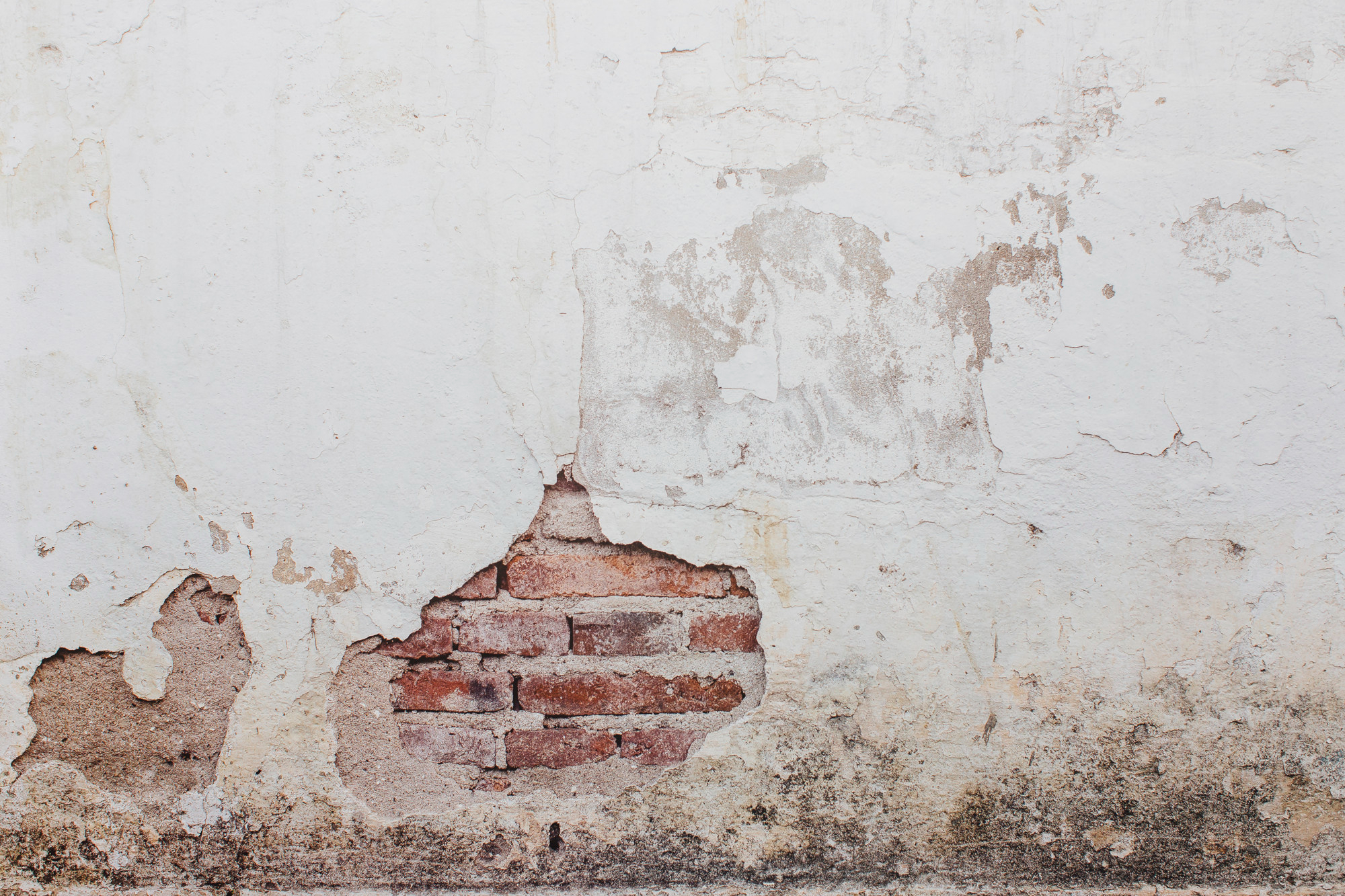
I walked through all of it slowly, opening doors, testing floors with my weight before trusting them. The house was not safe to occupy without significant work. The basement showed water intrusion along two walls. The upstairs bathroom had a ceiling failure where a pipe had frozen and burst at some point, the damage reaching down through the subfloor. One of the bedroom windows had a broken pane, and weather had been entering freely through the gap.
Every contractor I called over the following two weeks told me some version of the same thing: the house had been significantly neglected for at least a decade, and the cost of restoring it to livable condition would exceed its assessed value by a factor of two or three. Two of them suggested I consider demolition and a sale of the land.
I did not consider demolition.
Partly this was stubbornness, which I come by honestly on Margaret’s side of the family. But partly it was something else, a persistent and irritating sense that I was not reading the situation correctly, that I was standing in front of something that was showing me what it wanted me to see rather than what was actually there.
The anomalies were small but they accumulated.
One exterior wall had modern wiring that could not have been original and showed no evidence of the deterioration that affected every other system in the house. A section of hallway drywall on the first floor was slightly different in texture and shade from the surrounding plaster, suggesting it had been installed more recently, though still years ago by the dust settled in the joints. The basement had a section of poured concrete floor that was clearly newer than the rest, the color wrong, the surface less worn.
Someone had made targeted repairs to very specific areas of this house.
Not renovations. Repairs so deliberate and localized that they suggested a purpose beyond maintenance.
I thought about what Dorothy Callahan had said to me at the reception after the funeral, pulling me aside in the kitchen while everyone else was in the parlor, pressing my hand between both of hers and leaning close enough that I could smell her perfume.
“She told me she took precautions,” Dorothy had said.
“What kind of precautions?” I had asked.
Dorothy had looked at me with the careful eyes of a woman deciding how much to say. “Against people who would take what wasn’t theirs to take,” she had said. Then someone had called her name from the other room and she had squeezed my hand and moved away, and I had not been able to find a moment alone with her since.
Precautions.
The word had stayed with me through the weeks of contractor estimates and insurance arguments and the ongoing diminishment of my savings as I paid for assessment after assessment on a house that everyone agreed was barely worth saving. I turned it over in my mind the way I had turned the brass key in my palm in the lawyer’s office. Precautions against what. Against whom.
Against people who would take what wasn’t theirs.
My father had managed Margaret’s financial affairs for the last six years of her life. He had power of attorney for her medical decisions and had gradually assumed a broader administrative role as she aged, positioning himself as the responsible son-in-law, the competent one, the one who understood money and contracts and the practical necessities of an elderly woman’s estate. Margaret had not objected, or had not objected in ways that anyone had documented.
But she had been watching. I understood that now, in the way you understand something when the evidence is not yet complete but the shape of it is becoming clear.
The fourth month after the will reading was when everything changed.
By that point I had hired Frank Delaney and a small crew to begin the structural repairs that had to happen before any interior work was possible. Frank was a retired building contractor in his late fifties, compact and methodical, with a preference for working quietly and a manner of delivering bad news that was so matter-of-fact it was almost comforting. He had assessed the house himself before agreeing to take the job and had told me without sentiment that the bones were excellent, that Victorian construction of this quality was genuinely rare, and that whoever had built this house a hundred and thirty years ago had done it with an intention for permanence that most modern construction did not match.
“It wants to stand,” he had said. “It just needs someone to let it.”
I had hired him the same day.
We were four weeks into the structural work when he called.
It was 10:03 at night. I know the time because I was still at my laptop, reviewing invoices, and I looked at my phone when it rang and thought: Frank never calls this late. Frank was a man of established habits. He arrived at the house at seven-thirty every morning and left at four-thirty every afternoon and communicated by text for anything non-urgent. A ten o’clock call from Frank was, by definition, urgent.
I answered.
I could hear voices in the background, the movement of several people, and then a sharp metallic sound like something heavy hitting a concrete floor.
“Ma’am,” he said. His voice was quieter than usual, as if he were trying not to be heard by whoever was in the room with him. “We found something inside the wall.”
My hand tightened on the phone. “What kind of something?”
A pause. “You need to come here.”
“Frank. Tell me what you found.”
Another pause. Longer. “It’s better if you see it yourself.”
I was already standing.
The drive to Birch Hollow Road took twenty minutes on a dry night. In the rain that had been falling since early evening, on the dark unpaved road with the birch trees pressing close on both sides, it took twenty-five. I turned into the drive and the first thing I saw was the light from the police cruisers: two of them, red and blue strobing across the wet siding and the bare trees and the dark face of the house, making the whole scene look urgent and slightly unreal.
Frank was on the porch with his hat in both hands, turning it slowly. The gesture of a man who is holding himself together by the specific discipline of having something to do with his hands. When he saw my headlights he walked down the porch steps to meet me.
“Nobody’s hurt,” he said, before I could ask. “And nothing’s been disturbed. The officers asked everyone to step back.”
“What happened?”
“We were removing the old drywall in the first-floor hallway. The section that didn’t match. And behind it was a void.” He stopped. “A constructed void. Not a gap from bad installation. Someone built a space there deliberately. Framed it out and drywalled over it.”
I walked past him toward the door.
Inside, four officers occupied the hallway. The section of drywall that had always looked slightly wrong was gone, the exposed wooden studs on either side framing an opening that had been clearly constructed for a purpose: the studs on the inner side of the void were smooth and straight, with none of the irregularity that characterized the original framing. The cavity was about two feet wide, eighteen inches deep, and roughly three feet tall.
In the center of it, on a small wooden ledge that had been built into the framing, sat a rectangular steel box.
It was the size of a large document case, maybe eighteen inches long and ten inches wide, the steel dark with age and coated in gray dust from decades of sealed darkness. The surface was scratched and marked from what looked like years of storage, but it was intact, the seam between lid and body still tight.
One of the officers lifted it carefully from the ledge and turned it toward the light.
And I stopped breathing for a moment.
Carved into the lid, deeply and deliberately, with the careful precision of someone who had time to do it right and wanted it to last: E.H.
My initials.
Not my grandmother’s. Not any other member of the family. Mine.
I stepped forward with my hand out.
The officer who was holding the box looked at me. He was young, maybe twenty-six, with a careful professional composure that did not quite conceal the fact that he found this situation unusual.
“Ma’am,” he said. “Before you open that.” He paused. “Who in your family knows you’re here tonight?”
The question landed in the specific way that a question lands when it contains more than it appears to.
“No one,” I said. “I came alone.”
He looked at me for a moment. Then at the box. Then back at me.
“In that case,” he said, “I’d like you to open it with us present. As witnesses.”
The lock on the box was a combination mechanism, three rotating dials. I looked at it and felt the particular blankness of someone confronting a problem they do not yet have the information to solve. Then something moved through my memory, dislodged by the low light and the smell of old wood and the sound of rain against the dark windows: Margaret’s kitchen, a Sunday morning, the two of us at the table with coffee. She had been writing something in a small notebook, the same cramped deliberate script I had seen on the key tag. I had asked what she was writing.
“Precautions,” she had said, and smiled.
“Against what?”
“Against forgetting.” She had looked at me with the clear attentive eyes that age had not dimmed. “And against other people’s convenient memories.”
She had paused, and then she had written a sequence of numbers in the notebook and torn out the page and handed it to me. “Your birthday,” she had said. “Written the way I always write it. Keep this somewhere.”
I had put it in my wallet and not thought about it since.
I opened my wallet now with hands that were not entirely steady, and I sorted through the cards and receipts to the folded piece of notebook paper I had been carrying for four years without knowing why. I unfolded it.
March seventh, nineteen eighty-nine.
Written the way she had always written dates: month, day, year, no slashes or dashes, just the numbers in sequence. 030789.
I looked at the three dials. Then I set them: 030, 789.
The lock released.
The officer reached over and carefully lifted the lid.
Inside the steel box, wrapped in oilcloth and sealed with rubber bands that had dried and cracked with age, was a set of documents. Beneath the documents, in a separate envelope, was a key. Different from the brass one that had been in my palm since November. This one was silver, more modern, with a number stamped on the grip.
And beneath the envelope, filling the bottom of the box in dense and careful stacks, were more pages: handwritten, typewritten, printed, annotated in Margaret’s cramped script and in at least two other hands I did not recognize.
The young officer looked at the contents for a long moment. Then he looked at me.
“I think,” he said, “that you’re going to want a lawyer present when you go through this.”
He was right. But I could not stop myself from lifting the top document from the oilcloth wrapping and reading the first line.
It was a letter. Addressed to me. In Margaret’s handwriting.
It began: My dear Eleanor, if you are reading this, then the house did its job, and so did you.
I sat down on the hallway floor in my good blazer, with the rain on the windows and the police officers standing around me and Frank watching from the doorway with his hat still turning in his hands, and I read.
Margaret had begun the letter four years before her death. She had revised it twice, which was evident from the layers of her script: the original in blue ink, the additions in black, the most recent layer in the shaky but still careful pencil of a woman whose hands had begun to tremble but whose mind had not. She told me what she had seen, and what she had done about it, and why she had not been able to tell me while she was alive.
Richard had begun managing her finances in what he had told everyone was a selfless assumption of responsibility for an aging woman who could no longer handle complex financial matters. Margaret had understood from the beginning that this was not entirely true. She had allowed it because she had been advised by her own attorney, a woman named Patricia Osei who had since retired, that moving against a family member without documentation was legally precarious and personally catastrophic. So she had watched, and had documented, and had waited.
What Richard had done was not simple theft, which would have been easier to prove and prosecute. It was the slower, more sophisticated kind of financial erosion that people with access and patience can conduct almost invisibly: transfers characterized as loans that were never repaid and never properly documented, investment decisions made in her name that benefited entities he controlled, a quiet restructuring of the family trust that shifted assets and influence in ways that were individually defensible and collectively devastating.
Margaret had documented all of it.
The steel box contained seven years of records: bank statements with annotations in her hand, correspondence she had photographed on a small digital camera her friend Dorothy had shown her how to use, copies of trust documents with the relevant discrepancies highlighted in yellow marker, and a sworn affidavit witnessed by Patricia Osei and two other signatories, dated three months before Margaret’s death, in which she stated clearly and in her own words what she believed had been done and by whom.
The silver key, I discovered from a handwritten note in the envelope, belonged to a safe-deposit box at a bank in a city two hours away, in a branch where neither Richard nor anyone else in the family had any relationship or knowledge of her accounts. In that box, according to the note, were the original documents whose copies were in the steel box, along with a third letter addressed to the state attorney general’s office, sealed and ready to be mailed.
She had not been sentimental near the end.
She had been strategic, with the particular precision of a woman who understood that she could not fight this war openly and so had chosen to fight it on a longer timeline, through documentation and concealment and the careful placement of evidence where only the right person would find it.
And she had chosen me to find it because she knew I would not stop at the ruined house. She had known I would notice the anomalies. She had known I would keep the piece of notebook paper in my wallet for four years. She had known me, with the complete attention of someone who has been paying close attention for a very long time.
The final paragraph of the letter was short.
I am sorry I could not give you this more directly, she had written. I am sorry I could not protect you from the humiliation of that room and your father’s smile. I needed them to believe they had won. I needed them to be settled and certain before the walls opened. You will understand why when you have spoken to Patricia and reviewed everything in this box. I love you, Eleanor. I always knew you were the one who would do this right. The house always knew it too. That is why I left it to you.
I folded the letter.
I held it against my chest for a moment with my eyes closed.
Then I looked up at the young officer, who was watching me with the carefully neutral expression of a man trying to give someone privacy in an unwalled hallway, and I said: “I need to call a lawyer.”
“Yes, ma’am,” he said.
What followed was not swift, because these things are never swift, and I want to be accurate about the pace of it. I called Patricia Osei’s successor at her former firm the following morning, a woman named Claire Anand who had worked with Patricia for twelve years and who received my call and the summary of what I had found with the focused precision of someone who recognizes a significant case when it arrives. Claire and I spent three days going through the contents of the steel box before anyone else was notified of anything. We drove together to the bank two hours away and opened the safe-deposit box with the silver key and sat in the bank’s private room for two hours going through the original documents with the careful attention they required.
What Patricia Osei had assembled was not a smoking gun in the cinematic sense. It was something more durable: a meticulous paper record that connected a pattern of decisions over seven years to a specific and demonstrable outcome. Richard’s name was on certain of those decisions. The trust documents showed the restructuring clearly when you laid them in chronological order. The bank statements showed the transfers. The correspondence showed his awareness of the implications.
Claire filed a complaint with the state attorney general’s office on a Thursday morning in February, fourteen weeks after the night I had sat on the hallway floor reading Margaret’s letter. She filed a concurrent civil action on behalf of the estate. She also filed a petition with the probate court to revisit the distribution of the estate on the grounds that the will had been executed under conditions that the newly discovered evidence materially affected.
Richard received notice of the filings on a Friday.
I was told by Claire, who had been told by the process server, that he had read the documents for a long time before saying anything. Then he had asked for his own attorney.
I did not speak to my father directly for three months after that.
When I did, it was in a conference room not entirely unlike the one where the will had been read, though this one had more people in it: lawyers on both sides, a representative from the attorney general’s office, a mediator the court had appointed to oversee the estate proceedings. Richard sat across the table and looked older than I had seen him look since before Margaret died, some quality of certainty gone from his posture, the confident containment replaced by something more careful.
He did not apologize. I had not expected him to.
But he also did not fight. Not seriously, not in the way he might have fought if the documentation had been less thorough or the affidavit less clearly executed or the pattern of transfers less systematically recorded. Patricia Osei had spent seven years building something that was very difficult to argue with. Richard’s attorney spent two meetings trying to characterize the transfers as loans and the trust restructuring as legitimate estate planning and the overall pattern as the reasonable exercise of a fiduciary who had been doing his best for a difficult client.
Claire presented the annotated bank statements.
Then the correspondence.
Then the affidavit.
By the end of the second meeting, Richard’s attorney asked for a recess.
The settlement was reached six weeks later. I will not describe all its terms, partly because some of them are subject to confidentiality and partly because the specific numbers are less important than what they represented: a meaningful restoration of what had been removed, structured in a way that acknowledged the original wrong without requiring Richard to admit to it in terms that would follow him into criminal proceedings. The attorney general’s office was pursuing its own review on a separate track, which was not my proceeding to control.
Celeste called me the week after the settlement was signed.
She had not been named in any of the filings. Her inheritance had been straightforward, a direct bequest from Margaret with no apparent connection to the seven-year pattern the documents described. I had asked Claire specifically about this. Claire had said: your grandmother appears to have been very deliberate about who benefited from which decisions. Celeste’s portfolio had come to her cleanly.
I did not know whether Celeste had known what Richard was doing. I suspected she had not known the extent of it, and I had made my peace with not knowing more than that.
She called and I answered and for a long moment neither of us said anything.
“I didn’t know,” she said finally.
“I know,” I said.
Another silence. “Is there anything.” She stopped. Started again. “Is there anything I can do?”
“Not right now. Maybe eventually. I don’t know yet.”
She accepted that without pressing it. That was the most I could offer and she seemed to understand it.
Vivian sent no communication of any kind, which was perhaps the most clarifying thing she had done in twenty years of being my father’s wife.
Dorothy Callahan came to the house on Birch Hollow Road in April, when the structural repairs were finally complete and the interior work had begun, the old drywall gone and the wallpaper stripped and the floors refinished back to the original white oak they had been under sixty years of accumulated coverings. Dorothy was eighty-one and moved with the slow deliberateness of someone who has decided that moving carefully is better than not moving at all. She walked through the house with her hands clasped in front of her, looking at each room with recognition.
“I was here many times,” she said. “When we were young. Margaret loved this house.”
“Why did she stop coming?”
Dorothy looked at the window, the climbing rose visible through the glass on the east side, already beginning to leaf out in the April warmth. “Richard told her it wasn’t safe. That it was too much for her to maintain. He said it every year until she stopped arguing.” She paused. “I think she let him believe he had won that argument too.”
I thought about Margaret alone in this house the last time she had visited it, walking through the rooms with the flour-dusted hands and the clear attentive eyes, understanding what she was preparing. Building the void in the hallway wall. Installing the ledge. Sealing the box with oilcloth and rubber bands and the combination that only I would know how to find. Locking the gate against the wrong people and leaving the key for the right one.
“She told you to tell me she took precautions,” I said to Dorothy.
“She did.” Dorothy turned from the window. “She also told me to tell you something else, if you ever found the box. She made me promise.”
I waited.
“She said: the house always wanted to be yours. She said she could tell by the way you walked through it when you were little. She brought you here once, when you were very young, and you walked from room to room touching the walls. She said you touched them the way children touch things they recognize.”
I did not remember the visit. I had been too young to carry the specific memory, but some impression of the place must have stayed somewhere below the surface of conscious recall, because I had not been able to explain, in the months of bad contractor estimates and insurance arguments and my father’s cool smile, why I would not let it go. Why I kept going back. Why the house, collapsing and cold and full of the smell of decades, had felt from the first morning I opened the door like something that was mine.
The roses on the east wall bloomed in May, an extravagant and somewhat astonishing quantity of them, deep pink and densely petaled, covering the entire trellis structure the vine had built for itself over years of unsupervised growth. Frank’s crew had been careful around them during the exterior work, and they had responded to the care with the enthusiasm of plants that have been waiting for someone to notice.
I moved into the house in June.
It was not finished, not entirely, and it would not be finished for another year in the full sense of restored to what it could be. But the first floor was livable: the kitchen functional, the parlor and dining room repaired and repainted, the floors warm under the late-afternoon light that came through the cleaned windows in a way I had not seen before, the house’s actual quality suddenly apparent now that the grime was gone, the proportion of the rooms and the beauty of the original woodwork and the particular way the staircase turned at the landing, which I had not been able to see clearly under the old wallpaper but which was visible now in the natural oak newel post and the slender balusters that someone had turned by hand a hundred and thirty years ago.
Margaret had called me on a Sunday morning every week for fifteen years. She had always asked first whether I had eaten. Then she would tell me what she was thinking about, working through it in her winding way, and I would listen, and sometimes I would understand what she was actually saying and sometimes I would not, and she would be patient either way, because she was a woman of very long horizons who understood that timing matters as much as content.
She had known I would be in this house. She had known I would keep the notebook paper in my wallet. She had known the contractors would notice the drywall and that I would notice the contractors noticing it, and that I would keep asking questions rather than accepting the surfaces as final.
She had known me, which is to say she had paid attention, which is the most accurate definition of love I have found in the thirty-four years since she first called on a Sunday morning to ask if I had eaten.
The state attorney general’s office completed its review in August and referred the matter to the district attorney’s office for further proceedings. I was not directly involved in that process and I will not characterize its outcome beyond what is a matter of public record, which is that a resolution was reached in the fall and that Richard’s role in managing the family’s financial affairs came to a documented end.
I am telling you this not for the satisfaction of the accounting, though I will not pretend there was none. I am telling you because I want to be accurate about what Margaret built and what it accomplished. She had not built it as revenge, I do not think. She had built it because she believed that what was true should eventually be visible, and that evidence honestly assembled would outlast the people who found it inconvenient.
She had built it for me because she trusted me to do something with it when I found it.
I tried to be worthy of that trust.
On the first Sunday in September, I sat in Margaret’s kitchen, which was now my kitchen, with a cup of coffee and the morning light coming through the east window and the roses visible through the glass, still blooming at the end of their season, a few last deep-pink clusters holding on in the September warmth.
The kitchen counter had a light film of flour on it.
I had been baking the night before, working through something I was thinking about, the way she used to do, and I had not yet wiped it clean. I looked at the flour and thought: there you are. There you are in this kitchen that was always going to be mine, in this house that wanted to stand, in this morning that she will not see but that exists, in some way I cannot entirely explain, because she made it possible.
I left the flour where it was.
I picked up my phone and, out of a habit so old I did not fully register doing it until the call was already ringing, I dialed Dorothy Callahan’s number.
Dorothy answered on the second ring.
“Good morning,” I said.
“Good morning, Eleanor. Have you eaten?”
I looked at the counter. At the flour. At the roses through the window. At the kitchen of the house on Birch Hollow Road that had been waiting, through decades of neglect and one sealed steel box and fourteen months of my stubbornness, to be what it had always wanted to be.
“Not yet,” I said. “But I’m about to.”

Adrian Hawthorne is a celebrated author and dedicated archivist who finds inspiration in the hidden stories of the past. Educated at Oxford, he now works at the National Archives, where preserving history fuels his evocative writing. Balancing archival precision with creative storytelling, Adrian founded the Hawthorne Institute of Literary Arts to mentor emerging writers and honor the timeless art of narrative.