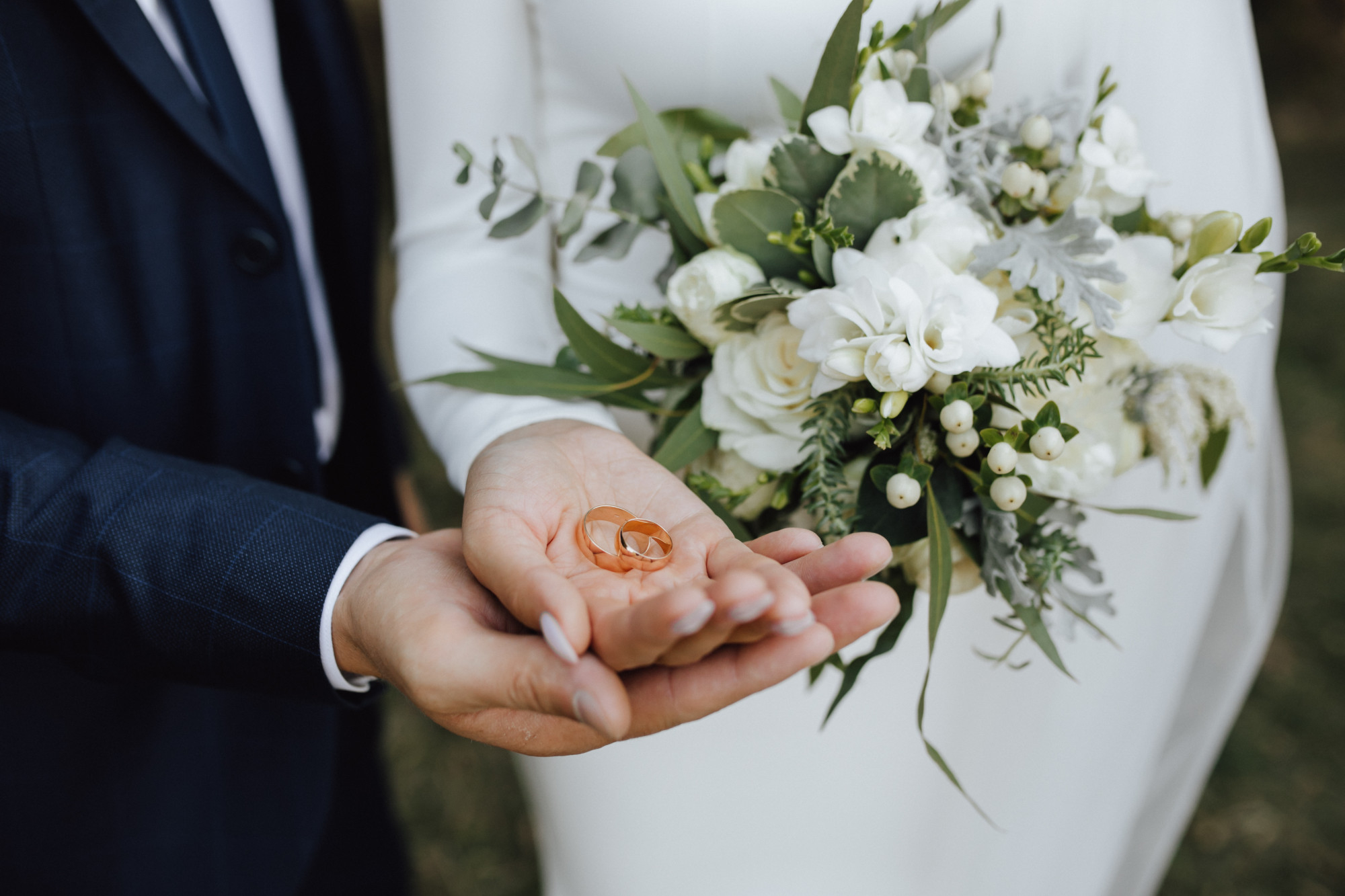
The Deed
At my son’s wedding, I found my seat outside, next to the trash cans.
For a long moment, I stood there and simply did not believe it, the way you refuse for a heartbeat to believe a doctor’s diagnosis or the sound of a car crash. It had to be a mistake, I told myself. Someone had misplaced a card. A seating chart had been printed wrong. Any second now a coordinator in a headset would rush out apologizing, sweep the little folding chair away, and lead me to my real place, the place a mother is supposed to have at her only child’s wedding.
But no one came. And the longer I stood there, the more clearly I understood that it was not a mistake at all.
The reception hall in Charleston glowed behind me through tall glass doors, and it was beautiful, breathtakingly so, the kind of beautiful that money buys and taste arranges. White roses climbed gold stands. Crystal chandeliers threw fractured light across a polished floor. Warm laughter rolled from table to table, that particular sound of a party in full bloom, of people who belong somewhere and know it. Every guest inside had a place card written in flowing silver ink, set at a table dressed in linen and candlelight.
Mine was balanced on a metal folding chair beside two black garbage bins, on the concrete apron behind the venue where the caterers came and went with their bags of refuse.
Margaret Hale, it read, in the same silver ink as all the others, which was somehow the cruelest detail of all. They had not forgotten me. They had not overlooked me. Someone had sat down and written my name in that lovely calligraphy, the same care given to every guest, and then had deliberately, knowingly, placed it out here, by the trash. It was not an oversight. It was a decision. Someone had decided exactly where I belonged and had taken the trouble to make it official.
I stood there in my navy dress, the good one, the one I had bought specifically for this day and had tried on three times in the store to be sure it was right, to be sure I would not embarrass Daniel. In my hands I held a cream-colored envelope, and inside that envelope was the gift I had been preparing for three years to give my son Daniel and his new wife, Vanessa. The October air behind the venue smelled of wet fallen leaves and, underneath it, the sour vinegar smell of wine dregs and garbage, and I stood in that smell in my good navy dress and held my gift and tried to understand how I had arrived at this exact spot.
A waiter pushed through the service door carrying a bulging bag of empty bottles, and he stopped short when he saw me standing there beside my little card. He was young, barely older than Daniel, and he looked from the card to my face and back again, and I watched him understand, and I watched him be ashamed on my behalf, which was worse, somehow, than the thing itself.
I’m so sorry, ma’am, he whispered. This can’t be right. Let me, I can find someone, I can ask a coordinator to—
No, I said softly. Thank you. But no.
I did not want a coordinator. I did not want a scene, or a scramble to find me a chair inside at the edge of some table, squeezed in as an afterthought, an apology made loud enough for everyone to hear. Whatever dignity I still had, I intended to keep, and I understood already, standing there, that it would not be found by begging my way inside a room where someone had gone to such lengths to keep me out.
That was when Vanessa appeared.
She came out through the glass doors in her fitted lace gown, radiant and cold, with three of her bridesmaids trailing a few feet behind her, pretending to examine their phones, pretending not to be there for exactly this. She was beautiful, my new daughter-in-law, she had always been beautiful, and she was smiling, but it was a smile with an edge to it, a smile sharp enough to cut ribbon, and she was aiming it directly at me.
Oh, good, she said, her voice bright and carrying. You found it.
I looked from the folding chair beside the garbage bins to her lovely face. This is my seat, I said. It was not really a question. But I needed to hear her say it. I needed to know for certain that I understood.
She tilted her head, the picture of gracious patience. Well, she said. We had limited space inside, you know how these things are. And honestly, Margaret, she paused, letting it land, you’ve never really supported us. Not really. So.
My chest tightened, and I heard my own voice come out smaller than I wanted it to. I paid for the rehearsal dinner, I said. The entire rehearsal dinner. I did not add all the other things. I did not add that I had driven four hours every time she asked for help with the planning, that I had addressed two hundred invitations by hand at her request because she liked my handwriting, that I had done a hundred small quiet things over the eighteen months of their engagement.
And reminded everyone you paid for it, she said smoothly. Constantly.
Which was a lie. I had never once mentioned it, not to a single soul, because that is not the kind of person I am, and she knew it was a lie, and she said it anyway, in front of her bridesmaids, because the lie was not meant to be true. It was meant to establish, out loud, in front of witnesses, a version of me that justified where I was standing. She was building a story, right there in the October air, the story of the difficult mother-in-law who had to be managed, who kept score, who never supported them, and who therefore deserved a folding chair by the trash. And once that story existed, spoken aloud and unchallenged, it would become the truth that everyone agreed to, and I would spend the rest of my life inside it.
Behind the glass, through the warm golden light, I could see Daniel. My son. My only child. He was laughing with a group of his college friends, his head thrown back, a drink in his hand, entirely at ease, entirely unaware, or so I told myself, that his mother was standing behind the building next to two garbage bins. I looked at him and I saw all of him at once, the way a mother does, saw the seven-year-old boy whose father had walked out on us both and never looked back, saw the child I had raised alone on a nurse’s salary, working double shifts and picking up every holiday and every overnight the hospital would give me so that he would never go without. I saw the young man whose college tuition I had paid dollar by exhausting dollar, who had hugged me at his graduation and said, Mom, I did this because of you, everything is because of you. And I saw the man he had become in the last two years, the man who had slowly, quietly, stopped answering my calls whenever Vanessa was in the room, who had grown distant in increments so small I could always explain each one away, until I looked up one day and realized my son had become a stranger who loved me only when he was permitted to.
Vanessa stepped closer to me, close enough that the bridesmaids could not quite hear, and she lowered her voice, and she said the four words that I will carry with me for the rest of my life.
Guess you don’t count.
And something inside me went still.
I want to describe that stillness precisely, because it is the hinge on which this whole story turns, and it was not the thing you might expect. It was not anger. Anger is hot and loud and it makes you say things, and I have felt anger and this was not that. It was not heartbreak, either, though heartbreak would come later, in the car, in the dark, in the weeks after. In that exact moment, standing beside the trash cans in my good navy dress, what I felt was a great and sudden stillness, a clarity so complete it was almost peaceful. It was the feeling of a fog lifting all at once. For two years I had been squinting through that fog, trying to convince myself that things were not as bad as they seemed, that Daniel was just busy, that Vanessa was just stressed, that I was being oversensitive, that a good mother does not make demands, that if I was just patient enough and supportive enough and small enough, my place in my son’s life would be restored to me. And with four words, guess you don’t count, the fog simply cleared, and I saw everything exactly as it was.
I looked once more at the two garbage bins. And then I looked down at the cream envelope in my hand.
Because here is what was inside that envelope, and it was not what anyone imagined. It was not a toaster or a set of good knives. It was not a check for the honeymoon. It was not jewelry or a savings bond or any of the ordinary things a mother gives. Inside that envelope was the deed to a lake house. A small, plain, beloved lake house on a quiet stretch of water three hours inland, the house my own parents had left me when they died, the house where I had spent every summer of my childhood, the house that was, apart from Daniel himself, the single most precious thing I owned in the world. I had spent three years and a good deal of money on lawyers and paperwork and back taxes getting everything in order, getting the title clean and clear, so that I could transfer it into Daniel’s name as a wedding gift. It was worth, in dollars, a great deal. It was worth, in what it meant to me, everything. I had pictured Daniel’s children swimming off that dock. I had pictured being an old woman on that porch watching my grandchildren the way my parents had watched him. I had wrapped up my whole heart and my whole family’s history and put it in a cream envelope to give to my son and the woman who had just told me I did not count.
I slid the envelope back into my purse.
Vanessa’s smile flickered. It was a small thing, barely visible, but I saw it, that first crack of uncertainty, because she had not expected this. She had expected me to cry, or to plead, or to make a scene she could point to later as proof of what a difficult woman I was, or, most likely, to simply lower my head and take my folding chair by the trash and hand over my envelope and accept my new and permanent place at the very bottom of her world. What she had not planned for was silence.
What are you doing, she said.
I did not answer her. I had decided, in the great stillness, that I was done spending my words on people who had made it clear that my words did not count either. I simply looked at her, once, for a long moment, and then I turned, and I walked away.
I walked down the stone path that led around the side of the beautiful venue, past the string quartet’s music still drifting through the doors, past the valet stand where the young attendants straightened when they saw me coming. I handed my ticket to one of them without a word, and I waited, and my heels clicked evenly against the pavement, steady, because I would not let them shake. The October night was cold and clean out front, away from the trash smell, and I stood there in the good navy dress and I breathed, and behind me the music kept playing, and inside my son celebrated his marriage, and I understood that I was leaving my only child’s wedding and that this might be the last time I ever stood this close to his life.
My car came around. The valet opened the door. And just as I bent to get in, I heard shouting behind me.
Mom!
Daniel’s voice, cracking through the cold air, and there was something in it I had not heard in two years, a rawness, a panic, the voice of the boy and not the managed man.
I looked over my shoulder.
He was running toward me across the front lawn of the venue, his jacket flapping open, his face stricken. And behind him, stumbling in her lace gown, holding her skirts up out of the grass, was Vanessa, and her face was no longer smug. It was pale with something like panic, and she was calling something too, though I could not make out the words.
Because in the few minutes since I had walked away, they had figured out what I had done. Or, more precisely, someone had. What I did not know in that moment, and only learned afterward, was this. When I turned and walked away with my purse, Vanessa had gone back inside, angry and unsettled, and she had mentioned to Daniel, in passing, with contempt, that his mother had shown up with some envelope and then taken it back and left in a huff, more proof of what a petty, score-keeping woman she was. And Daniel had asked what envelope. And Vanessa had said she had no idea, some little card, who cares. But Daniel had cared, because Daniel, whatever he had become, had grown up in the shadow of that lake house, had spent his own childhood summers on that dock, and something had turned over in him, some old memory, some suspicion, and he had asked a wedding planner, and the planner had said that the mother of the groom, Mrs. Hale, had been listed as bringing a gift of significant value, that it had been noted for the gift table. And Daniel had gone to the gift table, and my cream envelope, of course, was not there. And he had asked me once, months earlier, in a rare unguarded moment when Vanessa was not around, what he and his bride might expect from me, and I had smiled and said only, it’s a surprise, but I think you’ll be very happy, it’s something from your grandparents. And Daniel, standing at that empty gift table, had put it together, and had understood, all at once, exactly what his mother had brought to his wedding, and exactly what his wife had done to make her take it back.
He reached me at the car, out of breath, and up close his face was terrible, because it was not the face of a man worried about a lost inheritance, though I confess that was my first cold thought. It was the face of a man who had just seen himself clearly, the way I had seen everything clearly beside the trash cans, the fog lifting for him too, all at once, and finding himself horrified by what stood revealed.
Mom, he said, and he could barely get the words out. Mom, is it true. The lake house. Did you, was that, is that what you brought. Grandma and Grandpa’s lake house.
I looked at my son. And I did not lie to him, because I have never lied to him, not once in thirty years, which is more than he could say for the woman running across the grass behind him.
Yes, I said. I transferred the deed. It was going to be my wedding gift to you and Vanessa. The house where you learned to swim. I got everything in order, the title, the taxes, all of it. Three years I worked on it. It was in the envelope.
And Daniel made a sound I had never heard him make, a kind of broken exhale, and his hand came up to his mouth, and his eyes filled, and Vanessa arrived beside him breathing hard, and she started to speak, started to say Daniel, it’s fine, we’ll talk to her, she’ll give it back, don’t make a scene in front of, and Daniel turned on his new wife with a violence of feeling that stopped her cold.
Where did you seat my mother, he said.
Vanessa faltered. Daniel, this isn’t—
Where. Did you seat. My mother.
And Vanessa could not answer, because there was no answer that survived being said out loud, and her silence was the confession, and I watched my son look at his wife of three hours and see her, finally, completely, the way I had seen her by the trash cans, and I watched something in him that had been slowly dying for two years come roaring back to life.
He turned to me. Mom, he said. I need you to come back inside. Please. Not for, he gestured helplessly, not for the house, I don’t care about the house, do you understand me, keep the house, throw the house in the lake, I don’t care. I need you to come back inside because you are my mother and you belong at the head table and I have been, oh God, Mom, I have been so, what have I been doing. What have I let happen.
And there, on the front lawn of that beautiful venue in the cold October dark, with the music still playing inside and his bride standing pale and stricken beside him, my son began to cry, really cry, the way he had cried as a small boy when his father left, and he said the thing I had waited two years to hear without ever letting myself admit I was waiting for it.
I’m sorry, Mom, he said. I’m so sorry. I stopped answering your calls. I let her, I let everything, I told myself it was just about keeping the peace, I told myself you were fine, I made myself not see it because seeing it meant I’d have to do something and I was a coward. And you brought Grandma’s lake house. In an envelope. To sit by the trash cans. And say nothing. And just leave.
I want to tell you that I fell into his arms and everything was healed, but that is not what happened, because I am sixty years old and I have learned that the things worth having are not repaired in a parking lot in a single night. What I did was this. I put my hand on my son’s wet face, the way I had a thousand times when he was small, and I said, quietly, so that Vanessa could hear it too, I did not leave because of the trash cans, Daniel. I have sat in worse places than that in my life. I left because your wife looked at me and said guess you don’t count, and because in two years you had never once told her that I do. That is what I left about. Not a chair. A place. My place in your life. Which someone took from me, and which you let them take, a little at a time, until there was nothing left but a folding chair by the garbage.
Daniel wept, and Vanessa stood there, and I saw on her face something I had not expected, which was not just the panic of a woman who had lost a valuable gift, though that was surely part of it, but something closer to real fear, the fear of a person watching the ground shift under a thing they had believed was solid and theirs to control.
I did not go back inside that night. I want to be honest about that, because these stories always want the tidy ending where the mother returns in triumph to the head table and the whole room applauds and the villain is vanquished. Real life is quieter and harder than that. I told Daniel that I loved him, that I would always love him, that I was not disappearing, but that I could not walk back into that room and sit at a head table three feet from a woman who had put my name by the trash and pretend, for the sake of the guests, that everything was fine. I told him I was going home. And I told him something else, the thing that mattered most, the thing I had understood in the great stillness.
The lake house is not a bribe, Daniel, I said. And it is not a weapon. I am not going to hold it over you or over her. But I am also not going to give it, tonight or maybe ever, to a marriage that started with your mother by the garbage cans. That house is my parents’ house. It is your grandparents’ love, sitting on the water. And I will not hand it into a home where I am not welcome, because that would be handing it to be thrown away, the same as everything else of mine got thrown away. When there is a home there that would actually have me in it, we can talk about the house. Until then, it stays mine, and I stay your mother, and those two things are not for sale.
And I got in my car, and I drove home, three hours in the dark, and I cried for most of it, the heartbreak arriving at last now that the clarity had done its work, and I let myself grieve the wedding I did not get to have, the head table I did not get to sit at, the dance with my son that never happened. But underneath the grief there was something solid that had not been there in two years, which was my own self, returned to me. I had spent so long making myself smaller and smaller in the hope that a smaller mother would be an easier mother to keep, and by the trash cans I had finally understood that it had never worked and never would, that the smaller I made myself the less I counted, until I counted for nothing at all, a name in silver ink by the garbage. And I was done. Whatever happened with Daniel now, I was done disappearing.
What happened with Daniel took the better part of a year, and it was not simple, and I will not pretend Vanessa transformed overnight into a loving daughter-in-law, because she did not. But the marriage that started at the trash cans did not, in the end, survive the trash cans. I learned the details slowly, in the weeks and months after, in phone calls with Daniel that grew longer and more honest as he pulled himself out of the fog he had been living in. Because the wedding was the moment the fog lifted for him, and once a person sees clearly they cannot easily go back to blindness, however much the blindness was comfortable.
It came out, over those months, that the seating had not been an isolated cruelty but the visible tip of something Vanessa had been doing for the entire two years, systematically, quietly, the way a certain kind of person isolates a partner from the people who love them. She had not liked that Daniel was close to his mother, had seen my place in his life as a competitor for authority, and she had set about, patiently, cutting me out, discouraging his calls, rolling her eyes at my visits, reframing every ordinary maternal thing I did as an intrusion, an overstep, evidence of a controlling mother who had to be managed. And Daniel, who hated conflict, who had grown up without a father and clung to peace at any price, had let her, telling himself each small surrender was reasonable, until he had surrendered his own mother entirely. The seating by the trash was simply the moment Vanessa grew confident enough, and contemptuous enough, to do it in the open. She had miscalculated only in one thing. She had not known what was in the envelope, and she had not understood that a woman who will quietly walk away from a folding chair by the garbage is not weak. She is a woman who has finally stopped being afraid of losing what she has already lost.
Daniel started going to counseling, on his own at first, and then he asked Vanessa to go with him, and she refused, and that refusal told him more than anything else could have. He began to see the whole architecture of the last two years, and the more he saw the less he could bear, and the marriage that had cost me my seat at the wedding lasted, in the end, less than a year. I take no pleasure in that. I want to be clear about it, because it would be easy to hear this as a story of triumph, and it is not. It is a story of loss, of a young man who married the wrong person and had to live through the pain of understanding it, and of a mother who nearly lost her only child to a slow quiet campaign to erase her, and who got him back only after a wound deep enough to force the truth into the light. Nobody won at the trash cans. Some things were only saved.
But saved they were. Daniel came back to me, fully, the son I had raised, and the coming back was slow and real and earned, not the easy tearful reconciliation of a parking lot but the patient rebuilding of two people who had lost each other and found their way back. He apologized more than once, and more importantly he changed, which is the only apology that means anything. He learned to see the shape of what had happened so that he would never let it happen again, in that marriage or any other. He learned that keeping the peace by sacrificing the people who love you is not peace at all, only a slow surrender, and that a man who will not defend his mother will not, in the end, defend anyone, including himself.
And the lake house. I still have it. My parents’ house, on the quiet water, where Daniel learned to swim. I never gave it into that first marriage, and I am glad every day that I trusted the great stillness by the trash cans and slid that envelope back into my purse. Because the house was never really a gift of money. It was a gift of belonging, of family, of three generations on one dock, and belonging cannot be given to a home that would throw the giver away with the garbage. I understood that in an instant beside the trash cans, though I could not have put it into words then. You do not hand your family’s whole history to people who have just told you that you do not count.
Daniel is engaged again now, years later, to a woman named Claire, and Claire is nothing like Vanessa, and I say that not as a bitter mother comparing but as a woman who has learned, at great cost, to see people clearly. Claire calls me on her own, without Daniel, just to talk. Claire asked me, early on, to teach her my handwriting so she could address her own invitations the way I had once addressed Daniel and Vanessa’s, before she knew the story, and when I told her the story she cried and held my hand and said, I would never, and I believed her, because you can tell. You can always tell, if you have learned to see, and the trash cans taught me to see.
Their wedding is next spring. At the lake house. Daniel asked me, a few months ago, sitting on my parents’ porch with his fiancée, whether they could be married there, on the dock where he learned to swim, and I said yes, of course, and then Daniel got quiet, and he said, Mom, there’s something I need to ask you, and I want you to know you can say no. And I waited. And he said, when we’re married, I would like it if you’d think about putting the house in our names. Not as a wedding gift. Not because I’m asking for it. But because I want my kids to grow up on that dock the way I did, and I want you on that porch watching them, an old lady in a rocking chair yelling at them to be careful, for the next thirty years. I want the house to belong to all of us. To the family. Because you’re the family, Mom. You always were. I just forgot for a while, and I’ll spend the rest of my life making sure I never forget again.
And this time, on my parents’ porch, with a young woman beside my son who calls me on her own just to talk, I said yes. This time there was a home that would have me in it. This time I counted.
I have thought a great deal, in the years since, about the woman who wrote my name in silver ink and set it by the garbage, and about the four words she said to me, and about how she meant them to be the end of me, the final confirmation of my erasure. Guess you don’t count. She was so sure. And what she never understood, what people like her never understand, is that they do not get to decide who counts. That is the great lie at the heart of their cruelty, that they hold the ledger, that a person’s worth is theirs to assign, that they can seat you by the trash and thereby make you trash. But worth does not work that way. My worth was never in that folding chair or at that head table. It was in thirty years of double shifts and paid tuition and a boy raised alone by a mother who never left, and no seating chart in the world could add to it or take it away. She could put my name by the garbage. She could not make me garbage. Those are different things, and knowing the difference is the whole of what she never learned and I finally did.
I walked away from the trash cans that night with a deed in my purse and my dignity intact and my son, though I did not know it yet, on his way back to me. And I would not trade that walk for all the head tables in Charleston. Because at my son’s wedding I found my seat beside the trash cans, and the bride smirked and said guess you don’t count, and I quietly took back my gift and walked away without a word. And minutes later they came running after me. But the truth, the deeper truth I have carried ever since, is that I was not really walking away from them at all. I was walking back to myself. And a woman who has walked back to herself never counts as nothing again.

Adrian Hawthorne is a celebrated author and dedicated archivist who finds inspiration in the hidden stories of the past. Educated at Oxford, he now works at the National Archives, where preserving history fuels his evocative writing. Balancing archival precision with creative storytelling, Adrian founded the Hawthorne Institute of Literary Arts to mentor emerging writers and honor the timeless art of narrative.