Two Low Beats
I want to tell you about the sound first, because everything else follows from the sound.
It is not a command. It is not a trick, not a tool from any training manual, not something you can look up in the literature on working dog rehabilitation or find in the protocols that behavioral specialists carry in their document cases when they travel from Denver on a Tuesday morning. It belongs to a specific register of communication that exists between two living things who have been through enough together that the ordinary channels of signal and response have been supplemented by something older and less formal.
Two low beats. Then one longer breath.
I am here. You are not alone.
That is the translation, though translation is the wrong word for it, because it implies a language gap being bridged, and what the sound communicates does not cross a gap. It travels along a thread that is already there, already established, laid down across months of working alongside each other in conditions that required a particular quality of trust. The kind of trust that is built not by training exercises but by the accumulated experience of genuine shared danger, of coming through difficult things together, of being, in a specific and irreducible sense, each other’s reason for continuing to move.
Cota and I had that thread.
Or I believed we did.
I had not seen him in fourteen months.
My name is Sloan Mercer. I am thirty-seven years old and I spent nine years working military working dog handling before a knee injury ended my active service and a grief that I did not have clean language for finished the job the knee started. I was working, at the time I received the call about Cota, as a consultant for a small nonprofit that assisted in the transition of former military dogs into civilian life or appropriate retirement placement. It was work I had chosen because it kept me near the thing I understood best and because the dogs, unlike most of the human institutions I had encountered, did not require a performance of recovery before they would let you help them.
The call came from a woman named Dr. Rowan Keats at Red Mesa Veterans Recovery Center, which is a facility in the high desert of New Mexico that handles both human veterans and, in a separate wing, their service animals. It was not a call I had expected. Dr. Keats had found my name through a chain of referrals that she described as extensive and that I understood as desperate, because she called at six-thirty in the morning and she did not observe the usual professional courtesies of introduction before she got to the point.
“There’s a Belgian Malinois,” she said. “Former military working dog. His handler died overseas fourteen months ago. He’s been at three different facilities since. He arrived here eleven days ago and he hasn’t eaten properly in six. He’s injured two staff members. We have a behavioral specialist coming from Denver on Thursday but I’m not sure we have until Thursday.”
I had heard enough.
“What’s his name?” I said.
“Cota.”
I sat down.
I had not expected that specific name, which was, I recognized later, naive of me. There are not that many Belgian Malinois with military working dog backgrounds cycling through the system at any given time. The chain of referrals that had reached Dr. Keats’s desk had not been random. Someone in the chain had known, or had made an educated guess, that there was a specific connection between the name on the folder and the person they were calling.
“I knew his handler,” I said.
A pause on the other end.
“How well?”
“Well enough,” I said.
That was the answer I gave and it was accurate but not complete. The complete answer was that Marcus Webb had been my closest friend for seven years, from the day he arrived at the unit until the day he deployed on the assignment he did not come back from, and that Cota had been his dog from the beginning of their partnership three years before the deployment, and that I had been present for enough of those three years to know Cota in the way that you know a dog who is worked by someone you spend significant time alongside: not your dog, not your responsibility, but known, genuinely known, in the specific way that working dogs are known by people who understand them.
I had been at Marcus’s memorial service.
I had not known what happened to Cota afterward.
I had not asked, which was a failure of a specific kind that I had been carrying and had not yet found the right way to put down.
“I’ll be there by morning,” I said.
I drove through the night, which is a thing I do when I need to think, because driving at night on empty roads in the dark gives the mind a rhythm to think against, the headlights cutting the road into segments and the dark holding the rest, and the thinking can proceed without the usual interruptions. I thought about Marcus for most of the drive, which was not unusual; I thought about Marcus most days, in the way that you think daily about a person whose absence has become part of the structure of your life, a room that is always there and always empty.
I thought about Cota.
I thought about what fourteen months would do to a dog like Cota: a dog who had been trained to the highest standards of military working dog partnership, who had been built for a specific kind of operational life with a specific kind of person, and who had then lost that person suddenly and without preparation. The grief of working dogs is not a metaphor. It is a physiological and behavioral reality that manifests in specific ways: the failure to eat, the withdrawal, the aggression that is not aggression in the ordinary sense but is a traumatized animal’s attempt to maintain a perimeter when the person who defined the safe zone is no longer there.
Three facilities in fourteen months.
Six days without proper food.
Two injured staff members.
I understood all of this before I arrived. Understanding it did not tell me what I was going to do when I stepped through the door. Understanding is the map. The territory is different.
I arrived at Red Mesa at just past seven in the morning and was met by Charge Nurse Tamson Greer, who was a composed woman in her early fifties who had the manner of someone who has managed many difficult situations and has learned to assess new ones quickly. She assessed me in about thirty seconds and I could see the calculation happening: this is not the specialist from Denver, this is someone who drove through the night, who is this person and what authority do they have and what is the risk.
She began to explain the protocols.
I asked how many people had already tried.
She told me: three behavioral consultants over the eleven days, the two injured staff members before the isolation decision, and the attempts through the door with the food trays that Cota had consistently ignored. I listened to all of it and then I asked her to take me to the isolation hall.
She hesitated.
“The specialist from Denver,” she began.
“Is coming Thursday,” I said. “What time is it now?”
She looked at her watch.
“Eight-fifteen,” she said.
“That’s two days,” I said. “Where’s the room?”
She took me to the isolation hall.
The isolation hall was at the far end of the facility’s animal wing, separated from the main run by a reinforced door and a short corridor that had the particular atmosphere of a space designed for containment: quiet, controlled, the sound insulation doing its work. There was a small observation window in the isolation room door, thick glass, at eye level, and through it I could see the room: a reinforced concrete space with a sleeping platform, water access, and the tray that had come back untouched.
Cota was in the far corner.
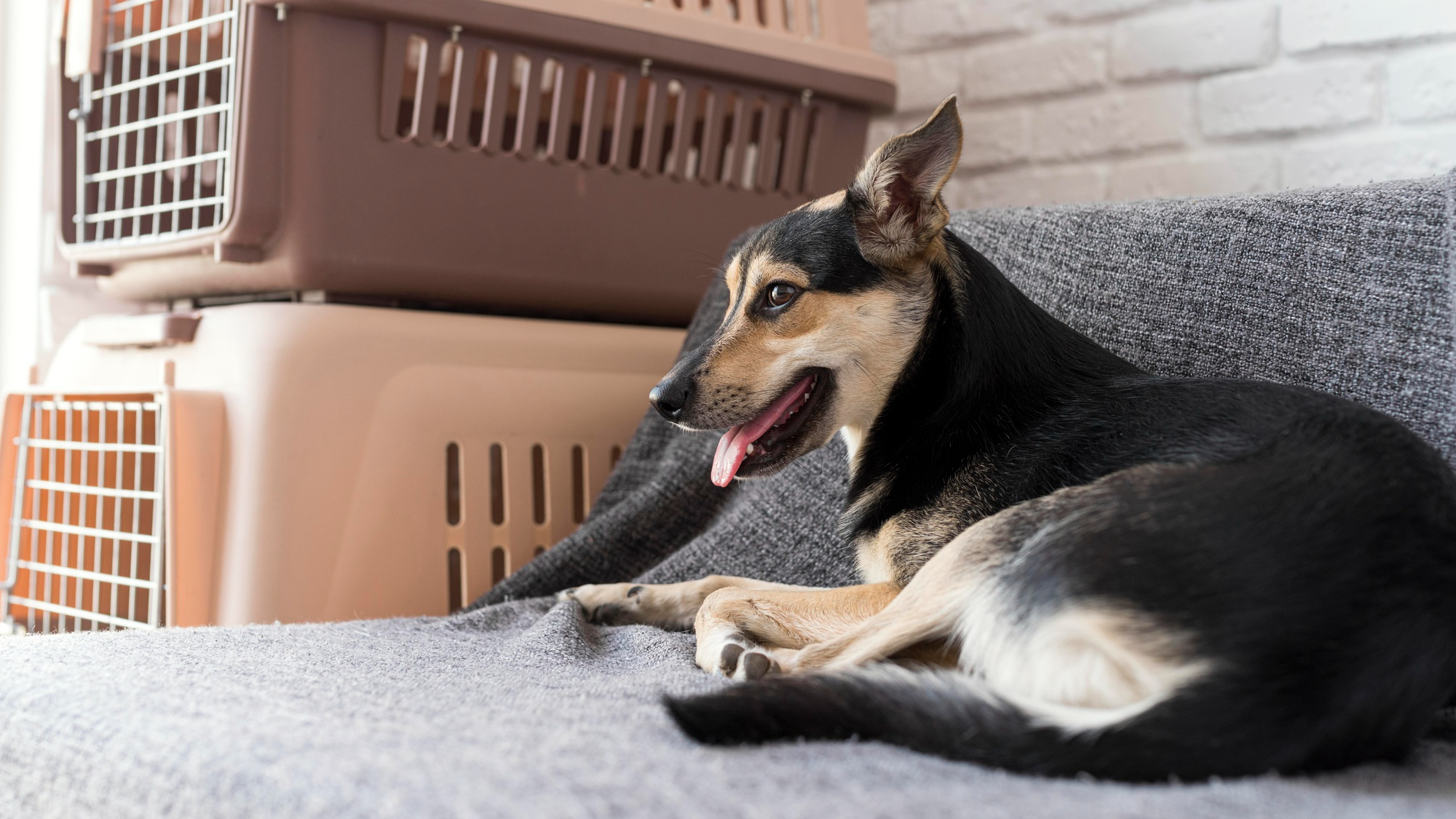
He was lying down with his head up, his body oriented toward the door, every muscle in his compact frame at a level of tension that was visible even through the thick glass and the distance. Belgian Malinois are not large dogs by the standards of working breeds, but they are dense with the kind of physical readiness that belongs to an animal who has spent years being trained to act rather than to wait. Fifty-three pounds of muscle memory and conditioned response, and all of it, at this moment, was pointed toward the door and whatever was beyond it.
He growled when I approached the observation window.
It was not the growl of a dog who wants to attack.
I want to be precise about this because it matters for understanding what followed. There is a quality of vocalization in a severely traumatized working dog that is different from aggression in the ordinary sense, and the difference is important. The growl was the growl of a dog who is frightened and has learned that frightened things get approached anyway, and that the only response to being approached is to make itself as threatening as possible, because threatening things are at least given a perimeter.
He was not trying to be dangerous.
He was trying to make danger legible, to convert the invisible enormity of what he was experiencing into something with a recognizable form that people would understand and respond to with distance.
The distance had worked. For eleven days, people had maintained distance when he made himself threatening. But the distance had not helped him.
Distance, for a dog like Cota, was not safety.
It was just more alone.
I lowered myself onto the floor beside the closed door.
I did not sit with my back to the door, which would have been aggressive. I did not sit facing it directly, which would have been confrontational. I sat at an angle, my shoulders turned slightly away from the door, my palms open on my knees in the specific posture of a person who is present and non-threatening and not going anywhere.
Jessa Marlo, the nurse assigned to document the interaction, noted the time and my position in her chart. She had a careful way of looking at me, the look of someone who is trained to observe and is observing, who has not yet decided what she is seeing but is committed to recording it accurately.
The growling continued.
I did not try to interrupt it.
There is a thing that people who do not understand distressed animals do, which is to make soothing sounds at them in the early stages of a panic response. The soothing sounds tell the animal that the person is responding to its distress, which tells the animal that its distress is being received as signal, which increases the distress because now the distress is doing something and distress that is doing something escalates. You do not soothe a distressed working dog. You do not make it known that you are affected by its state.
You simply exist near it.
Quietly.
Without agenda.
Without performance.
I sat on the floor of the isolation hall and listened to the growling and looked at the wall across from me and breathed at my own normal rate, and I let the time pass in the way that it passes when you are genuinely not counting it: slowly and then not slowly, in the rhythm of presence that has no goal other than the presence itself.
Jessa later told me she had checked her watch at intervals.
At nine-fifteen, the growling had not stopped but had changed quality.
At nine-thirty, there were gaps between the vocalizations.
At nine-forty, the gaps had grown.
At nine-forty-four, I made the sound.
I was not planning it. I want to be honest about this because the honest version is more accurate than the version where I executed a calculated technique at a strategic moment. I made the sound because the gaps in the growling had reached a length and a quality that told me something had shifted in the room behind the door, some interior recalibration was happening, and the sound was the natural response to that shift, the way that a response in a conversation is natural when the other person has said something that requires answering.
Two low beats. Then one longer breath.
Two beats, like a pulse. A breath, like an exhale. The kind of sound that does not read as a signal because it is not a signal. It is just being present audibly, the same being-present that was happening physically, extended into the register of sound.
I am here.
You are not alone.
I could not hear what happened behind the door with my ordinary hearing. But I could feel it, which is a thing that people who have not spent years working with animals in high-stakes environments will not believe and that people who have will understand immediately: the felt sense of a change in the quality of the air, the way a room changes when a held breath is released.
The growling stopped.
And then, from behind the reinforced door, a sound.
Soft. Low. Rising slightly at the end, the way a question rises.
I pressed my palm flat against the door.
Dr. Keats arrived with the veterinary folder.
She read Jessa’s notes standing in the corridor, which took her four minutes, and then she looked at me on the floor with the expression of someone who has been practicing medicine in challenging circumstances long enough to know when something has happened that is outside the standard protocols but is nonetheless real.
She asked what I needed.
I said: until the end of the day. And a chance to see whether he recognizes me.
The team consulted. I did not participate in the consultation; I stayed on the floor. This was not a gesture, not strategic positioning. I stayed on the floor because getting up and joining the professional consultation would have broken the thread of presence that had been establishing itself across the previous ninety minutes, and the thread was more important than the consultation.
The team approved a controlled interaction.
Dr. Keats explained the terms to me when they had decided.
The room would be monitored. The team would be positioned outside with eyes on the interaction through the observation window. If Cota showed signs that the interaction was becoming unsafe, they would intervene immediately. This was, she said, the only way she could authorize the attempt.
I said I understood.
She handed me a plain metal food bowl.
I stood, which required the specific attention of someone who has been sitting on a concrete floor for ninety minutes in a way that their joints register when they move. I took the bowl. I looked at the observation window.
Cota was standing now. He was not in the far corner. He was in the center of the room, facing the door, and his posture was different from what I had seen through the glass in the first moments: still alert, still carrying the full tension of an animal who has been at high readiness for too long, but the quality of the alertness had changed.
He was not managing a threat.
He was waiting.
At ten-thirty-seven, Dr. Keats opened the door.
I stepped into the room.
I did not move toward Cota.
I stopped inside the door, which clicked shut behind me, and I stood with the same posture I had used on the floor: shoulders turned slightly away, hands at my sides, palms out, not looking directly at him but not looking away.
He was six feet from me.
His head came up.
His eyes found mine.
We stayed like that for a time I cannot accurately measure, because time does not move at its normal rate in a room with a fifty-three-pound Belgian Malinois whose entire history is written in his body and who is looking at you with the specific attention of a dog who has learned that the arrival of people means the beginning of something and is trying to determine what this arrival means.
Then he made the sound again.
The soft, low rising question.
And I answered it.
Two low beats. One longer breath.
Cota took one step toward me.
He stopped.
He took another step.
He stopped again.
He was reading me the way working dogs read their handlers, with the full attention of an animal whose survival has depended on accurate reading, looking for the signals that tell him whether the person in front of him is consistent with the internal image he carries of safety. I stood still and breathed normally and did not ask him for anything, and he read me, and after two more minutes of reading he walked the remaining distance between us and pushed his nose against my palm.
I did not move my hand.
I let him smell me. Let him move around me, his nose working my jacket and my jeans and the hand that held the food bowl and the other hand that was still at my side. Let him complete his assessment in his own time.
Then I crouched down slowly, bringing myself to his level, and set the food bowl on the floor.
He looked at it.
He looked at me.
He lowered his head and ate.
I stayed crouched until the bowl was empty and then I sat down on the floor, cross-legged, and Cota stood beside me for a moment before lying down with his side against my knee.
I looked at the observation window.
Dr. Keats was there, and Jessa, and Tamson, and two members of the veterinary team whose names I did not yet know. They were not moving. They were watching.
I put my hand very slowly on Cota’s shoulder.
He was shaking.
Not in the way of a dog who is cold. In the way of a dog who has been holding everything so tightly for so long that being touched by something familiar is the thing that releases it, the specific fine trembling of a body that has been at maximum tension for fourteen months and is beginning, slowly and tentatively and not without fear, to let some of it go.
I kept my hand on his shoulder and I did not say anything.
The thing about grief in animals is that it is not processed the way grief is discussed in the human therapeutic context. There are no stages, no language, no narrative framework for making sense of the loss. There is just the absence. The handler-shaped absence that reorganizes everything, that makes food not food and sleep not sleep and the ordinary functions of a living body into tasks that require more than the body can currently produce.
Cota had been trying to survive that absence for fourteen months.
He had been doing it in the only way available to him, which was to make himself as unassailable as possible, to build a perimeter with his body and his voice and the threat of his training, because the perimeter was the only control available to a creature for whom everything else had become unpredictable.
I understood this.
Not because I am unusually empathetic, though I hope I am reasonably so. Because I had done something adjacent to it myself, in the fourteen months since Marcus died, in the way that I had moved through the world at a distance from most things and had kept the work close because the work was the only thing that required the specific quality of attention that made ordinary grief less suffocating.
We had both been building perimeters.
His had been made of growling and untouched food trays.
Mine had been made of the nonprofit work and the late nights driving and the phone calls I took at six-thirty in the morning from people who needed someone who understood.
I sat on the floor with Cota’s shoulder under my hand and felt him shaking, and I thought about Marcus.
Marcus had been the kind of person who made everything around him more navigable. Not easier, not simplified, but navigable: his presence changed the quality of difficult situations from impossible to merely hard, which is the most important kind of change, the kind that means you keep moving rather than stopping. He had been funny and specific and competent and generous in the way of someone who is not performing generosity but is genuinely organized around the wellbeing of the people and the animals around him.
He had loved Cota completely. In the particular way that handlers love their working dogs, which is not the way that civilians love pets, which is softer and more symmetric: the handler-dog love is built on a specific functional dependency that deepens into something that has no clean name, something that is partnership and responsibility and mutual protection and, at the bottom of all of it, the recognition of another consciousness that has chosen to be with you in the hardest places.
Cota had lost that.
There was no adequate.
There was only continuity, the thread of familiar presence, the sound that says I am here even when the specific person who should be here is gone.
I stayed with him for the rest of the morning.
The team outside shifted but someone was always at the observation window, which I understood and did not resent. Their caution was appropriate; what they were watching had not been predictable and could not be fully predicted even now. I was aware that this was a controlled situation with a specific logic and that the logic could change, and I honored the monitoring by not doing anything that would have required intervention.
Cota slept.
Not immediately. It took him about an hour to move from the lying-beside-my-knee posture to actual sleep, which was a horizontal positioning with his head on the floor and his breathing slowed to the rate of a resting rather than an alert animal. When he slept, the shaking stopped.
I watched him sleep and thought about what came next.
What came next was the part that would determine whether this morning mattered in the long term or only in the immediate sense, which was not nothing but was not enough. Dogs like Cota do not recover from the disruption of the handler bond through a single morning of presence, however meaningful the morning. The recovery, if it was possible, would require consistency: the same familiar contact repeated across enough time that the animal’s nervous system began to reorganize itself around a new understanding of its situation.
I did not have the ability to provide that myself, not fully, not in the way that Cota needed.
But I had an idea about who might.
Dr. Keats came in at noon with food for me and a check on Cota, who stirred at the door sound and then resettled when he registered that it was the same room and the same presence. She sat on the floor too, which I had not expected, and we talked quietly while Cota slept.
I told her about Marcus.
Not the full account, but the relevant outline: the seven years of friendship, the three years of watching the partnership between Marcus and Cota develop, the specific knowledge I had of Cota’s training history and his communication patterns and the sound that I had remembered from mornings spent in proximity to their work.
She listened with the focused attention of a physician who is gathering information.
“You haven’t had contact with him in fourteen months,” she said.
“He recognized me anyway,” I said.
“How do you know it was recognition and not just the sound?”
I thought about it honestly.
“Because of the order of it,” I said. “He made the question sound before I responded to it. He had already changed when I made the sound at the door. The sound confirmed something he was already beginning to move toward.”
She considered this.
“What does he need?” she said.
“Time with someone he knows,” I said. “A consistent presence. Not to be passed between facilities. He’s been in three facilities in fourteen months. Every time he gets moved, he starts over. Every time he starts over with a new person, he has to rebuild the entire structure of trust from the ground up, and he’s running out of capacity to do that.”
“Is there someone?” she said.
I had been thinking about this since the drive.
“Marcus’s sister,” I said. “Her name is Dani Webb. She spent time with the unit when Marcus was stateside. She knows Cota. Not the way I knew him, not the way Marcus knew him, but she knows him.”
“Where is she?”
“Tucson,” I said. “About four hours.”
Dr. Keats looked at Cota sleeping on the floor.
“Will you call her?”
“Yes,” I said. “If you’re willing to consider placement.”
“I’m willing to consider what’s best for this dog,” she said. “What I saw this morning is evidence I have to take seriously.”
The afternoon was quieter.
I stayed in the room. The veterinary team brought a second food bowl at two o’clock, and Cota ate again, more slowly this time, with the attention of a dog who is beginning to believe that the food is safe and that eating is possible. He came back to my side after he finished and lay down again.
Jessa came in at three to check on both of us. She sat on the floor briefly and watched Cota with the expression of someone who has been doing this work for long enough to have a clear-eyed view of outcomes and who is revising her expectation of this particular one.
“Six days,” she said quietly. “He hadn’t eaten in six days.”
“He was protecting himself,” I said.
“From us?”
“From the not-knowing,” I said. “When you don’t know what’s safe, you don’t consume anything. You keep everything inside the perimeter.”
She looked at me with the expression that I had seen earlier in the day, when I was on the floor outside the door, the expression of someone who is observing something she does not have a category for yet and is deciding how to file it.
“Is that what you’ve been doing?” she said.
The question was more direct than I had expected from the documentation nurse.
“Yes,” I said.
She wrote something in the chart.
“That’s honest,” she said.
I called Dani Webb from the facility phone at four in the afternoon.
She answered on the second ring. I had not spoken to her in eight months, since the last time I had been in contact with anyone from Marcus’s family, which had been a brief email about the service medal recognition that the unit had been pursuing on his behalf.
I told her where I was.
I told her about Cota.
She was quiet for a long time after I finished.
“I didn’t know where he was,” she said. “I asked, after, and they told me he was being handled. I thought that meant.”
“It meant the system,” I said. “Three facilities. It wasn’t enough.”
“Is he okay?”
“He’s asleep on the floor next to me,” I said.
She made a sound that was not quite a word.
“I need to ask you something,” I said. “And I need you to be honest about whether it’s possible, not about whether you want it to be possible.”
“Ask,” she said.
“He needs a permanent placement with someone he knows. Not the kennels, not another facility. He needs a home with a specific person who has existing familiarity. The facility here is willing to work with an approved adopter through their veteran companion animal program.”
Silence on the line.
“I live in an apartment,” she said.
“I know. It can be addressed.”
“I work full days.”
“There are programs,” I said. “Day programs, veteran support networks. It’s solvable.”
“Sloan,” she said.
“I know,” I said.
“Does he know me well enough? He knows Marcus through me, but does he know me enough to.”
“I think so,” I said. “He responded to familiarity today. You have familiarity. It will take time. But I think so.”
The silence this time was longer.
“Marcus would have wanted him with someone who knew,” she said.
“Yes,” I said.
“Okay,” she said. “Tell me what I need to do.”
Dani drove up from Tucson the following morning.
She arrived at nine and I met her in the parking lot and we walked in together, which was the first time I had been face to face with anyone from Marcus’s life in eight months and which required a moment that was not in any protocol: the moment of just being in the same space with someone who carries the same loss, acknowledging it without performing it.
We went to the isolation room.
Cota was awake and standing when we came to the observation window. He had been given his morning food, which he had eaten, and he looked different from the animal I had seen through that glass twenty-four hours earlier: still alert, still carrying the tension that does not disappear in a day, but present in a different way, the perimeter pulled in slightly, the eyes less fixed in the specific direction of maximum threat.
He saw me through the glass.
His tail moved. Once. Controlled.
Working dogs do not wag effusively. The tail movement was significant.
Then he saw Dani.
He went very still.
Not the still of threat assessment. The still of recognition. The still of a dog who is looking at a face that belongs to a category that has been dormant for fourteen months, a face that is connected to other faces, other times, other smells and sounds and the specific olfactory signature of a family.
I looked at Dani.
She had her hand pressed flat against the observation glass.
Cota moved toward the glass.
He put his nose against it.
Dani made a sound. Not the two-beat sound, not a trained cue. Just the sound a person makes when something breaks open in them that they have been holding shut.
We went through the introduction carefully, with the veterinary team present and the protocols observed, and it was not immediately simple and it was not immediately warm, because nothing in Cota’s situation was immediate and nothing about the complexity of what he had lost could be resolved in a morning. But he allowed Dani into the room. He allowed her to sit on the floor. He allowed her to put her hand on his side, which took forty minutes and the particular patience of a woman who had driven four hours and would have driven four hundred.
When he lay down beside her, she looked at me through the observation glass.
I nodded.
The process for approval took three weeks. Dani’s apartment situation was addressed through a veteran housing assistance program that Red Mesa worked with, one that permitted service and companion animals with medical documentation. The behavioral assessment of Cota for transition to a home placement was conducted by the specialist from Denver who arrived, ultimately, on Thursday as scheduled, and who reviewed the documentation from Tuesday and Wednesday with a combination of professional skepticism and genuine interest.
The specialist’s name was Adrienne Hollis and she had the manner of someone who takes nothing on faith and takes everything on evidence, which I respected. She spent two days doing her own assessment of Cota in the controlled environment and had a long conversation with me about the training history and the communication patterns and the sound.
“The two-beat cue,” she said. “Where did it come from?”
“Marcus used it in the early training,” I said. “Before it became formal. It’s a pre-command cue, a settling signal. It tells the dog that the handler is present and calm.”
“He hadn’t heard it in fourteen months.”
“I know.”
“And you think that’s what shifted him.”
“I think it was the combination,” I said. “The floor-sitting, the non-approach, the extended presence. The sound was the moment of recognition, but the recognition needed the context.”
She considered this.
“It’s not in the literature,” she said.
“No,” I said. “Most of the things that matter in working dog relationships aren’t in the literature.”
She looked at me with the expression of a specialist who is hearing something accurate from someone who is not a specialist in her discipline, and who is deciding whether the accuracy is sufficient to override the credentialing question.
“It worked,” she said.
“Yes,” I said.
“That matters,” she said.
Adrienne’s assessment of Cota for home placement was conditional and detailed and honest about the ongoing work that would be required: continued behavioral support, a structured transition period, regular check-ins with the facility. She was not recommending a simple adoption. She was recommending a carefully managed placement with a specific person who had existing familiarity and who was committed to the ongoing work.
Dani had made three more visits during the three weeks.
Each visit lasted a full day.
By the third visit, Cota was waiting at the door when she arrived.
The placement was finalized on a Thursday in the late afternoon. Dr. Keats signed the paperwork and Adrienne signed the assessment and Dani signed the adoption documentation with the steady handwriting of someone who has thought about a decision for long enough to make it without hesitation.
I was there.
I had stayed at a motel in the town near Red Mesa for most of the three weeks, going home for four days and coming back, because I had told Dr. Keats I would stay through the transition and I meant it. Tamson had stopped looking at me with the assessing expression by the second week. Jessa had shown me her documentation notes and we had talked for an hour about what she had observed from outside the room, which were things I had not known and which completed the picture in ways that were useful.
The day of the finalization, I sat in the parking lot with Cota’s lead in my hand and waited while Dani brought her car around.
Cota sat beside me.
His shoulder was against my knee.
He was not shaking.
Dani pulled the car up and opened the back door, which had a dog platform installed, and she looked at me across the parking lot with the specific look of a person who knows there is a conversation happening that does not require words.
I unclipped the lead.
“Cota,” I said.
He looked at me.
“Go on,” I said.
He looked at Dani.
He went.
He jumped into the back of the car with the ease of a dog who has been transported in vehicles for most of his working life and knows the protocol, and Dani closed the door and came around to the driver’s side and stopped before she got in.
“Come and see him,” she said. “When you can. He’ll need that.”
“I will,” I said.
“Come and see me too,” she said. “We never did this right. Being in contact.”
I thought about the eight months since I had been in contact with anyone from Marcus’s life. The perimeter.
“No,” I said. “We didn’t.”
“We should,” she said.
“Yes,” I said. “We should.”
She got in the car.
I watched it drive out of the parking lot and turn onto the road that led toward the highway and then toward Tucson, four hours south, where Dani’s apartment had been expanded to accommodate one more presence, one more living thing who needed consistency and familiarity and the particular assurance that the person they were with was not going anywhere.
I stood in the parking lot until the car was out of sight.
Dr. Keats came out of the facility behind me.
She stood beside me in the late afternoon light.
“Thank you,” she said.
“I didn’t do anything extraordinary,” I said.
“You sat on the floor for ninety minutes,” she said. “Most people won’t do that.”
“It’s not complicated,” I said.
“It’s rare,” she said.
I thought about what Mr. Vance had written, which I did not know yet but which I would have recognized had I known it: that there is a quality of attention that belongs to certain people, the quality of noticing the things other people look past and doing the thing that needs doing without making a production of it.
I had not been thinking about producing anything.
I had been thinking about Cota, alone in the room, making a sound that was almost a question.
I had answered it.
That was the whole of it.
I drove home the next morning.
On the way, four hours into the drive, I pulled into a rest stop and sat in the car and looked at the sky.
I thought about Marcus.
I thought about the sound that had passed between Cota and me through a reinforced door in an isolation hall in New Mexico, the question and the answer, the thread that had not broken across fourteen months and three facilities and two injured staff members and six days of untouched food.
The thread had not broken.
That meant something.
I was not entirely sure what it meant. I was not going to be entirely sure what it meant for a while. But I was going to find out, which required, at minimum, continuing to exist in the specific way that would make the finding-out possible: in contact, in communication, in the ongoing willingness to sit on floors and make sounds and answer questions that come through closed doors.
I pulled out of the rest stop.
I drove.
The road ahead was long and ordinary and mine.
It was enough to keep going.
I want to tell you something about the ninety minutes on the floor, because people have asked.
After the story moved through the staff at Red Mesa in the way that significant events move through a small professional community, and after Adrienne Hollis mentioned it in her behavioral report in a way that made it slightly more visible than it might have been otherwise, I received calls from two different journalists and a documentary producer who all described what had happened in terms that I want to correct.
They called it a miracle.
They called it an instinct.
One of them called it a gift.
These are not accurate descriptions. What happened in that isolation hall was the result of specific knowledge applied through patient presence, and the patience was not natural ease or gift but was itself a learned thing, the product of years of working in environments where impatience had consequences that were not recoverable.
I want to say this plainly because I think the miracle framing is not just inaccurate but harmful, in the specific way that framing something as exceptional rather than learnable makes it seem like the exception proves a rule about most people’s limitations rather than pointing toward something that most people could build toward if given the right framework and the willingness to sit on the floor.
Most people are not willing to sit on the floor for ninety minutes.
Not because they lack compassion. Not because they do not care about the outcome. But because the floor is uncomfortable and the ninety minutes is slow and the outcome is not guaranteed and the professional pressure to produce something visible within a reasonable timeframe is significant. Ninety minutes of sitting quietly looks, from the outside, like nothing. The temptation to do something visible is almost irresistible.
The doing of something visible is exactly what distressed working dogs do not need.
They need the nothing. They need the extended nothing, the long patient nothing of a presence that has no agenda and no timeline and no performance requirements. They need to complete their own assessment at their own pace, to move through their own internal process of threat evaluation and recalibration without the pressure of another creature’s urgency pressing against them.
Urgency, for a dog in that state, reads as threat.
So you do not be urgent.
You sit on the floor and you breathe normally and you look at the wall and you let the time pass and you do not count it.
Marcus had taught me this, in the early years of his partnership with Cota, before Cota was the dog he became. Cota had been a difficult dog in the first months of training, not in the way of a dog who is unsuitable for the work but in the way of a dog who is highly reactive and requires the handler to meet him at his level rather than pulling him up toward a standard. Marcus had been patient with him in a way that was notable even among people who are professionally patient with animals.
I had asked him once how he did it.
“You don’t try to be faster than the dog,” he said. “You try to be at the same speed as the dog. The dog sets the speed. You match it.”
“And if the dog is very slow?”
“Then you’re very slow,” he said. “That’s the whole thing.”
I had watched him be very slow with Cota across the better part of a year, and I had watched Cota become the dog he became: reliable, responsive, capable, bonded to Marcus in the way that the best working partnerships bond, which is to say completely. And I had stored that observation without knowing I was storing it, without knowing that one Tuesday morning fourteen months after Marcus died I would need to access it from the floor of an isolation hall in New Mexico.
The storage had been accurate.
The access had worked.
That is not a miracle.
That is the long-term function of paying attention to the people around you and what they know, which was a thing Marcus had modeled and which I had absorbed and which I was only now beginning to understand the full dimensions of.
He had been teaching me things for seven years.
Some of them I was still learning.
Adrienne Hollis called me two weeks after the finalization, which I had not expected.
She said she had been thinking about the documentation from the interaction, specifically the sequence of events and the specific cue and the response, and she had been considering whether there was a way to formalize the approach within the existing behavioral consultation framework for traumatized working dogs.
I said I was not a behavioral specialist.
She said she was aware of that.
I said I did not have the credentials for that kind of work.
She said credentials were acquired.
I sat with this for a moment.
“What are you suggesting?” I said.
“I’m suggesting that what you did was not magic,” she said. “It was specific and learnable and there are other dogs in situations like Cota’s whose outcomes are currently being determined by the limitations of the standard approach. Which works for many dogs and has not worked for the ones it hasn’t worked for.”
“I know,” I said.
“Your organization,” she said, meaning the nonprofit. “Would it be interested in developing something?”
“Something what?” I said.
“A protocol,” she said. “Based on what you know. Handler-specific communication patterns, the role of familiar presence in acute traumatic response, the specific pause-and-presence approach. Not a manual. A framework. Something that practitioners could use to identify when the standard approach is not going to be sufficient and what the alternative looks like.”
I looked at the window of my house.
I thought about Marcus and what he would have said.
He would have said: don’t make it complicated. Just write down what works.
“I’ll think about it,” I said.
“Think about it,” she said.
I thought about it.
I thought about it for two weeks, which is not a long time to think about a significant professional redirection, but which was the time I had before the thinking produced an answer. The answer was yes, with the specific condition that Adrienne was the expert of record and I was the practical informant, because the distinction mattered both for the integrity of the work and for the accuracy of the framework.
She agreed immediately.
We started the work in September.
I drove to Tucson in October.
Dani opened the door with Cota at her heel, which is the correct position for a working dog who has been trained to that posture and who maintains it because it is the structure he knows, the organization that makes sense to his body even in a context that is radically different from his operational history.
He saw me and his tail moved. Three times. Still controlled. Still himself.
But three times.
I crouched down and he came to me and pushed his nose into my palm and I put my hand on his shoulder and felt that it was steady.
Not shaking.
Steady.
Dani was watching from the doorway with an expression that I had seen on her face once before, in the parking lot at Red Mesa when the car drove away, an expression that was the specific face of someone who has sustained a loss large enough to reorganize their life and is beginning, slowly and tentatively and not without continued grief, to understand what the reorganized life contains.
“He’s good,” she said.
“I can see that,” I said.
“He has a routine,” she said. “He knows when I leave for work and he knows when I come back. He knows the dog park three blocks over, which he has opinions about.”
“What kind of opinions?”
“He thinks the other dogs are undisciplined,” she said. “He’s not wrong.”
I stayed for the weekend.
We talked about Marcus the way that people who have been carrying the same loss in separate containers talk when they finally open the containers in the same room: carefully at first, and then less carefully, and then with the specific freedom of people who are no longer protecting each other from the weight of it.
She told me things about his childhood that I had not known.
I told her things about the unit that she had half-known and half-imagined.
We ate dinner both evenings at the kitchen table with Cota under the table between our chairs, which was where he had positioned himself from the first evening and which neither of us mentioned because mentioning it would have made it smaller than it was.
The last morning, before I drove back, I took Cota for the early walk that had become his routine. Three blocks to the park, one circuit of the perimeter, three blocks back.
He walked beside me at the heel position.
We went around the perimeter of the park in the early light, the October air cool and specific in the high desert way that I had come to know across the weeks at Red Mesa, and I watched Cota navigate the space with the precise attention of a dog who is assessing his environment the way he has been trained to, who is mapping it and processing it and filing it as known.
I thought about Marcus.
I thought about the sound.
I thought about the thread that had not broken.
Marcus had spent three years building that thread, and the thread had held across fourteen months of the worst possible conditions for it to hold across. It had held because it was not made of habit or convenience or professional obligation. It was made of the specific material of genuine partnership: the repeated choice, across every difficult day, to be present with the animal in front of you at the animal’s own speed.
You don’t try to be faster than the dog. You try to be at the same speed as the dog. The dog sets the speed.
Cota came to a stop at the edge of the park.
He looked up at me.
I looked at him.
Two low beats. One longer breath.
He leaned against my leg.
We stayed there for a moment in the early light, the two of us, with everything that was between us: the loss and the thread and the ninety minutes on the floor and the morning that had begun to change things and the long work ahead that would keep changing them, the daily showing-up that is the whole of what any of us can offer any living thing we are in partnership with.
The whole of it.
Enough.
More than enough.
We walked home.

Specialty: Legal & Financial Drama
Michael Carter covers stories where money, power, and personal history collide. His writing often explores courtroom battles, business conflicts, and the subtle strategies people use when pushed into a corner. He focuses on grounded, realistic storytelling with attention to detail and believable motivations.