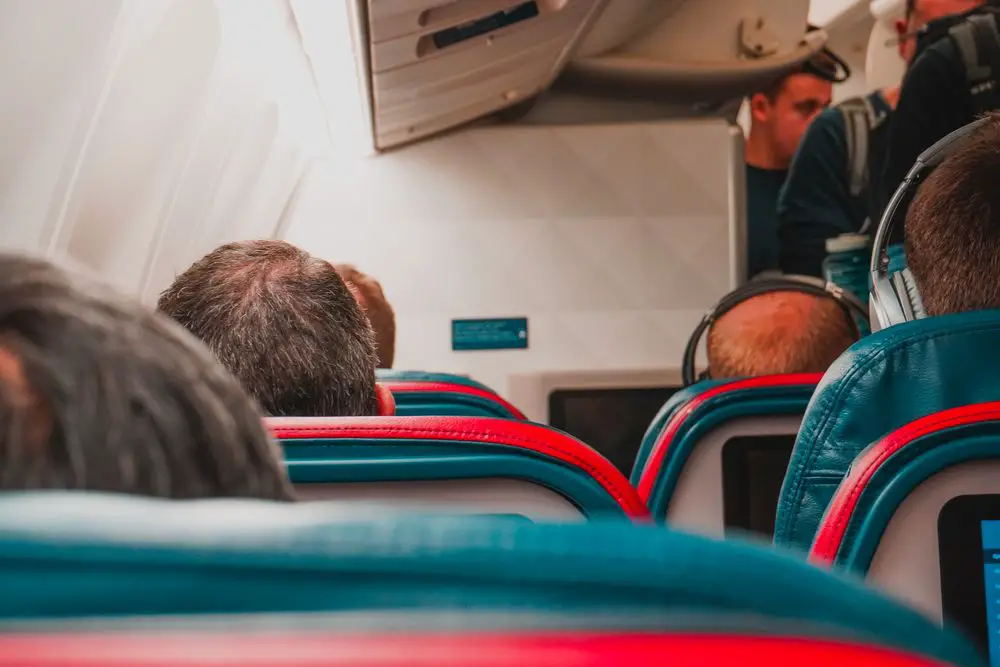
I had spent months, real months, getting my daughter ready for her very first flight. I had prepared her the way you prepare a child like mine for anything large and new, slowly and carefully and in layers, with picture books about airplanes and videos of takeoffs and a whole story we told and retold about the trip until it became familiar and safe. And at the very center of all that preparation, the keystone of the whole arch, was one thing. One seat. The single window seat that would let her feel safe enough to bear all the rest of it. So when that one small piece of security was taken away from us, quietly, in the space of a single morning, through no fault of mine and no fault of hers, I truly believed for a while that I had no choice left at all but to gather her up and disappear with her into the back of the plane and swallow the whole bitter thing in silence, the way I had learned to swallow so many things, so many injustices large and small, in the two long years since her father died and left the two of us alone.
The night before the trip, I sat cross-legged on the floor of my daughter Willa’s bedroom, zipping up a small suitcase covered in cloud stickers she had picked out herself at the pharmacy the week before, peeling each one carefully off its backing with enormous concentration and the tip of her tongue between her teeth and pressing it down exactly, precisely where she wanted it, no help accepted, no correction tolerated. The suitcase was hers. The clouds on it were hers. She had a whole cosmology worked out about which cloud went where and why, and I had learned long ago to stay out of it.
Two full years had passed since her father, Danny, died. I still measured time that way, everything either before or after, the way you do when a single day cuts your life cleanly in two. Two years of a house that was too quiet, of a side of the bed that no one slept on and that I still, absurdly, did not spread out into. Two years of the slow terrible administration of grief, the accounts to close and the clothes to give away and the thousand small ambushes, his handwriting on a saved list, his voice still on the outgoing message of a phone I could not disconnect. There was a coffee mug of his in the back of the cupboard that I had not been able to make myself get rid of and could not make myself use, and it just sat there, and I let it.
And this trip, this small and unremarkable four-day trip to the beach, was the very first thing I had allowed myself to plan in all of those two years that was not a doctor’s appointment, or a therapy session, or an evaluation, or a meeting with a specialist about my daughter’s diagnosis and my daughter’s needs and my daughter’s future. It was just a trip. Four days by the ocean, a rented room, some sand, some waves. That was all it was ever supposed to be. And yet, sitting there on that bedroom floor with my thumb on the cloud stickers, it felt like standing at the base of an enormous mountain in the dark, looking up at a summit I could not see and was not at all sure I had the strength to reach.
My six-year-old was already asleep in the bed above me, on top of the covers because she runs warm, her stuffed airplane tucked securely under one arm, her breathing slow and even and deep. She had named the airplane Pilot a little over a year ago, for reasons that were entirely and privately her own and that she has never explained to me, and from the moment she named it, it had not left her side for a single waking hour since. Not to the bath, where it waits on a folded towel at the edge of the tub in a spot she designates. Not to the doctor, where it goes into the exam room and gets its own imaginary checkup. Not to sleep, ever. It is gray, and soft, and worn nearly through at both wingtips from the constant pressure of her hands, and one of its button eyes is a slightly different shade than the other because I replaced it after the first one came loose, and it is, in every way that actually matters, a full member of our small family of two. When Danny died, we became two people and one gray airplane, and Pilot has held the line ever since, absorbing more of my daughter’s fear and grief and overwhelm than any stuffed thing was ever built to carry.
I sat there for a long moment on the floor, running my thumb back and forth over the little cloud stickers on the suitcase, feeling the slightly raised edges of them.
“You’ve got this, Rennie,” I whispered to myself, using the name Danny used to call me, because I needed the sound of it in the room. “It’s just a flight. It’s just a plane. You’ve got this.”
My phone buzzed against the carpet beside me.
It was an email from the airline, and I very nearly did not open it, because it was late and I was tired and I had already checked everything four times. But I opened it, and I skimmed it, the way you skim a thing at eleven o’clock at night when your eyes are already half closed. It said something about an aircraft change for the following day’s flight. Equipment substitution, the email called it. It said that passengers would be automatically reassigned to comparable seats where necessary, and that we should review our boarding passes for any changes.
So I pulled up our boarding passes and looked. Seat 7A for Willa. Seat 7B, right beside her, for me. They were still there. Still ours. Still locked in, exactly as they had been for months. I let out a breath.
Because it was going to be my daughter’s very first flight, and I had booked that particular window seat a full four months in advance, and I had done it deliberately, on purpose, with intent, and I had done it because Willa is autistic and that window was not, for her, a luxury or a preference or a nice-to-have. It was the entire plan. It was the load-bearing wall of the whole trip.
Here is what I have learned about my daughter over six years of loving her and watching her and studying her more closely than I have ever studied anything. When the world gets to be too much for Willa, when the noise and the closeness and the smells and the unfamiliarity and the sheer relentless sensory weight of a place like an airport or an airplane start to stack up inside her small body, higher and higher, toward the thing that other people call a meltdown but that I know from the inside is really a kind of drowning, a going-under, a person overwhelmed past the point of staying at the surface, the sky is the thing that reaches down and pulls her back up. Open sky. Moving light. The slow drift of clouds. Something vast and quiet and unchanging to fix her eyes on and pour herself into. Watching the sky is her anchor, the one that has never once failed to hold, and it works precisely as well thirty thousand feet up as it does through her own bedroom window at home, maybe better, because up there the sky is everything and everywhere. I had explained all of this, carefully, to a patient person on the phone at the airline when I made the booking. I had secured the window seat. I had a plan, a real and considered plan, built by a mother who does nothing where her daughter is concerned by accident. I had spent months, quietly, building the entire structure of this trip on top of that one small square of glass, and I had let myself believe it was solid.
“We’re good,” I told myself, setting the phone face down. “The window seat is still ours. Everything’s fine.”
The following morning at the departure gate, Willa stood with Pilot clutched against her chest and stared through the tall glass window at the enormous plane parked out on the tarmac, the jet bridge reaching out to it like an arm.
“Mommy,” she said, without taking her eyes off it. “Is that the one? Is that our one?”
“That’s the one, sweetheart,” I said. “That’s our plane right there.”
“And I get to see the clouds? From the window?”
I crouched all the way down to her level, so that we were eye to eye, which is where the important things get said in our family. “You get the window seat,” I told her. “Seven A. It has your name on it. It’s waiting for you right now, and nobody else’s, just yours.”
And my daughter smiled. I wish I could make you see it. It was the small, careful, held-in smile she saves only for the very biggest things, a smile that comes out slowly and does not show her teeth, a smile that visibly costs her something to give, because for Willa to smile like that is to let herself hope for a thing, and hope is dangerous, hope can be disappointed, and my daughter has already learned in her six short years that the world does not always deliver what it promises. She lost her father at four. She knows, in whatever way a small child knows such things, that people and things you count on can simply be gone one day. So when she gives that careful smile, she is taking a risk, she is betting on the world being good, and my whole chest ached, standing there in that gate area, with how completely and how helplessly I loved her, this brave, complicated, extraordinary small person who had already survived more than any child should have to and was about to fly up through the clouds for the very first time, betting, against her own hard experience, that it would be wonderful.
I glanced over toward the gate counter. The agent working it was frowning down at her screen, one hand pressed flat over the headset covering her ear, her lips moving in a low murmur I could not hear from where I stood with my daughter. She tapped at something, and frowned harder, and looked up once, quickly, toward the open mouth of the jet bridge, and then back down at her screen, and the frown deepened by another degree, and she reached for her keyboard again. I noticed all of it, distantly, the way you notice weather through a window, and I did not think a single thing of it. Airports are nothing but small problems being quietly sorted out from behind counters all day long, a thousand of them every hour, invisible to the rest of us, and I had more than enough of my own small problems to manage right there at my side, one of them holding a stuffed airplane. So I turned back to Willa, and I never gave that frown another thought, though I understand now exactly what the woman behind that counter was looking at, and it was us.
“Ready, Bug?” I asked.
“Ready!” she said.
I took her hand, warm and small and slightly sticky in mine, and Pilot dangled from her other hand, one soft gray wing brushing along the carpet as we walked, and we went together toward the jet bridge and the open door of the plane. And I whispered again, mostly to myself, one more time, like a charm, “The window seat is waiting for you.” I had no idea, walking down that carpeted ramp, that the email I had barely read the night before had already, quietly, set the entire day in motion, that the thing I thought was still locked in had come unlocked while we slept.
We boarded without any trouble at all, and for a few minutes I let myself breathe. The slow shuffling flow of the boarding line carried us down the jet bridge and through the little doorway, where a flight attendant smiled at Willa and told her welcome aboard, and then down the narrow aisle of the plane, past the murmur of passengers settling into their seats and the heavy thunk and click of overhead bins closing one after another. Willa kept her eyes down on the carpet and her body close to mine, overwhelmed already by the tube of it, the closeness, the strangers on every side, but holding, holding, because the window was coming, the window was right up ahead, and she knew it.
And we came to row 7. And I felt Willa’s small hand tighten hard on the fabric of my sleeve, the way it does whenever we arrive at a threshold, a doorway, a new place, a new thing to be braved. Pilot was crushed flat against her chest now, both of her arms wrapped tight around him.
There was already a woman sitting in seat 7A. In the window seat. My daughter’s window seat.
She looked to be in her late forties, sharply and expensively dressed, a silk scarf knotted at her throat, her handbag tucked neatly under the seat in front of her as though she had been settled there for hours. She had the window. Willa’s window.
I stopped beside her, and I put on my very softest, most apologetic smile, the one I have learned to lead with, and I said, “Excuse me. I’m so sorry, but I think these might be our seats. This one, the window.”
The woman looked up at me slowly, and her eyes moved over me, and then down to Willa, taking us both in, and then she made a small sound in her throat, not quite a laugh, a scoff.
“I paid for a window seat,” she said. “So did you, apparently. Sounds like that’s a problem between you and the airline.”
And a flight attendant appeared at my elbow right then, as if she had been nearby the whole time, waiting. Her name tag read Deana. I handed her both of our boarding passes without a word, because I did not entirely trust my voice yet, and she took them and looked at them, and then she leaned in and looked at the woman’s boarding pass where it stuck up from the seat pocket, and she let out a long, low, tired sigh, the sigh of a person who has just watched a small avoidable disaster arrive exactly on schedule.
“I am so sorry about the confusion, ma’am,” Deana said. “There was an aircraft change this morning, some passengers got automatically reassigned during the swap, and it looks like a mistake was made. This seat, 7A, was accidentally assigned to two different passengers.” She turned, then, to the woman in the window seat, and her voice stayed polite but something firmed up underneath it. “Ms. Calloway, I’m showing that your original seat on this booking was 14C. You were moved up to 7A automatically during the equipment change this morning. But this little girl was booked into 7A specifically, months ago. It’s her seat.”
I lowered my voice so that Willa, standing pressed against my hip, would not hear the tremble that had gotten into it. “My daughter is autistic,” I said quietly to Deana. “The window seat is what keeps her calm. It’s not, it isn’t a preference, it’s, please. Please. It’s the whole reason I booked so far ahead.”
Deana turned back to the woman with a careful, professional politeness. “Ms. Calloway, since 7A wasn’t your original seat on this flight, I’d be so grateful if you’d be willing to take an aisle seat back in row 12. It’s just a few rows behind, actually closer to the seat you originally booked.”
Ms. Calloway drew her shoulders back and straightened up in the seat as though we had all personally insulted her, as though the request were an outrage. She frowned deeply before she answered.
“I paid for a window seat,” she said, “and I am not moving out of it. That is not my problem. I got here, I sat down, I’m settled.”
And I felt Willa’s hand tug on mine, and I felt it start. That specific fine shiver in her fingers, that small tremor that runs up from somewhere deep, the first sign, the one I have learned to read faster than I read my own name. She was starting to slip. The noise and the crowd and the strangers and now this, the standing and the waiting and the tension coming off the adults in waves, it was all stacking up in her, and the window that would have caught her was occupied by a woman photographing the wing.
“Ma’am, please,” I said, and I kept my eyes on her and my voice as gentle and level as I could hold it, though my heart was going hard. “I paid for a window seat too. I have the booking. It’s so important for my daughter, it’s her first flight, she needs the sky, please, I’m asking you person to person.”
Ms. Calloway did not so much as glance down at Willa. That was the part I have not been able to forget, the part that told me exactly who she was. She did not look at my daughter at all, not once, not a flicker of the eyes downward, as though a trembling six-year-old with a stuffed airplane crushed to her chest were not even present, not even a person, just an inconvenience attached to me. She looked at me, and then slightly past me, at the middle distance, and she said, in a bright bored voice, “Why should I be the one to move? I’m already settled in. I got here, I sat down. Maybe next time you should get to the airport a little earlier, or plan better, or something.” And then she turned her face away from us, back toward the window, back toward my daughter’s sky, and lifted her phone, and that was the end of the conversation as far as she was concerned.
I had booked our seats four months earlier. The words were right there in my mouth, hot and ready, four months, lady, I booked this four months ago, I did plan, I planned better than you can imagine, you have no idea how much planning goes into a morning like this one for a family like mine. But I did not say any of it. I swallowed all of it back down. Because there was no point, none, not one particle of use in it, because a grown woman who could sit there and look at, or rather refuse to look at, a shaking little girl and tell that child’s widowed mother to plan better had already told me, completely and in full, exactly how the rest of that conversation was going to go, and I did not have the minutes to spend on it. My daughter did not have the minutes.
Deana’s eyes stayed on Ms. Calloway a beat longer than felt normal, a long cool measuring beat, and there was something in the flight attendant’s face in that moment that I could not quite read. Not anger, exactly. Something quieter and more decided than anger. Something that looked almost like a plan forming. But then she turned back to me with a small, warm, apologetic smile.
“Ma’am,” she said, “here’s what I can do right now. I can seat you and your daughter together in row 12. I’ve got a middle and an aisle open there, side by side. I am truly, truly sorry about this. Let me get you settled.”
Behind me, the line of boarding passengers had begun to bunch and back up in the aisle. A man a few people back cleared his throat, not unkindly, but pointedly. Someone shifted a rolling bag with a clatter. And Willa made a sound, a thin high whimper, so quiet that only I, tuned to her frequency my whole life, could possibly have heard it.
And I made the calculation. The one that every parent of a child like mine makes a hundred times a day, so quickly and so automatically that it no longer even registers as a decision, that has worn a groove in me so deep the choice runs down it on its own. Fight now, or protect her now. Those were the two options, and they could not both be taken, because they pointed in opposite directions. I could plant my feet in that aisle and demand the seat that was rightfully, provably, four-months-in-advance my daughter’s, and I could be right, completely and unarguably right, and I could win that argument, probably, in ten or fifteen long minutes of escalating tension and raised voices and a backed-up cabin, and at the end of those fifteen minutes I would have the seat and I would also have a daughter who had come entirely, catastrophically apart in a crowded aisle in front of a hundred staring strangers, undone so thoroughly that no window in the world could put her back together for hours. Winning the seat that way would be the same as losing everything the seat was for.
Or. I could get her into a seat, any seat at all, right now, this second, with me beside her, and I could start the work of holding her together before the storm fully broke. Being right was worth exactly nothing next to that, and it never is, and I had learned that lesson so many times and in so many rooms that I did not even feel the loss of it anymore. Being right is a luxury reserved for people whose children do not drown in noise. I am not one of those people. I gave up being right a long time ago, and I have never once missed it as much as I would have missed keeping her afloat.
“Okay,” I whispered to Deana. “Row 12 is fine. Thank you.”
Deana nodded, and something passed across her face, some acknowledgment. And then, before she led us back, she did something I only half noticed at the time. She glanced toward the rear of the cabin, and her eyes settled for a moment on a couple sitting together by a window a good ways back, row 19 or so, a man and a woman. She moved to them quickly, quietly, and leaned down and said a few low words. I could not hear any of it over the boarding noise. But I saw both of them look up, and look past her, down the length of the plane toward Willa, and then look at each other, and then one of them gave a small nod. Deana smiled at them, a real smile, grateful, and said something that looked like thank you, and then she came back to us as though nothing at all had happened, and led us to row 12.
Ms. Calloway, as we went, was already turned back toward the window, her phone raised, taking a photograph of the wing against the sky.
I guided Willa into the middle seat of row 12 and took the aisle myself. And across the aisle from our new row, an older woman looked up as we settled ourselves in, her silver hair pinned neatly back off her face, her eyes soft and creased at the corners with the deep kind lines that come only from a great many years of smiling at a great many people. She looked at my daughter, at Willa clutching Pilot with her whole body gone rigid with the effort of holding herself together, and she did not say anything, did not coo or exclaim or ask the questions strangers so often ask, the ones that make everything worse. She simply smiled at her, a warm, easy, unhurried smile that asked for nothing back. And then she raised her eyes and smiled that same smile at me. And it was, I am genuinely not exaggerating, the first truly kind thing that anyone had aimed at the two of us all morning, after the scoffing and the frowning and the be right or be quiet of the last half hour, and it landed on me with a weight all out of proportion to its size, like a warm hand set gently on the back of my neck, and I had to look away for a second so I would not cry in front of my daughter before we had even taken off.
“Good morning,” I managed.
“Good morning to you both,” she said warmly, and left it there, which was exactly the right amount, and went back to her magazine.
I buckled Willa in and pressed Pilot into her lap and folded her hands around him, and I kept my voice low and singsong, the register that reaches her. “We’re going up, up, up now, sweet girl,” I murmured. “Up into the sky, just like the birds. Just like Pilot.”
Her small hands tightened around the stuffed plane as, out on the wing, the engines began to spin up into a roar.
As the heavy cabin door was pulled shut and sealed with that deep final pressurized thunk that always makes Willa flinch, I caught a glimpse of Deana up at the front of the plane, standing half-turned into the galley, speaking quietly and quickly into the interphone handset with her head bent low. She listened for a moment, nodding once to herself, and then she answered with a single word that I could just barely read on her lips from where I sat. Understood. And then she hung the handset back in its cradle and smoothed her uniform and turned back to the cabin with her professional smile in place, as though nothing at all had happened.
I did not think much of it. I had no reason to. I closed my eyes and I leaned my head back against the seat and I said a small silent desperate prayer to whoever or whatever might be listening, that I would somehow be able to hold my daughter together for the next five hours, wedged into a middle seat with no window and no sky and no anchor, that I would be enough, that I would find a way. I did not know, and could not possibly have known, sitting there with my eyes shut and my hand on Willa’s, that up in the cockpit, behind the locked door at the front of the plane, the captain of that aircraft had just been told, quietly and completely, everything that had happened back at row 7, and that the crew of that airplane had already, silently, begun to act.
Once we had climbed up through the bumps and leveled off into smooth air and the seatbelt tone had chimed its soft double note, I went into what I have always called, privately, only to myself, mission mode. Every parent of a child like mine has a version of it, a whole system assembled over years out of trial and failure and small hard-won discoveries, a toolkit you carry everywhere and can deploy in seconds. I know Willa’s the way a pilot knows a cockpit, without looking, by feel.
I slipped her noise-canceling headphones over her ears first, always first, because sound is the flood that rises fastest in her, and I watched her shoulders come down half an inch as the roar of the cabin dropped away into a soft muffled hush she could live inside. Then I opened her coloring book to the page she loves best of all, the one with the row of little airplanes lined up wing to wing, the page she has colored so many times that the paper has gone soft and gray and nearly translucent at the center, worn thin from her devotion. I got out the good markers, the fat ones in the colors she trusts, the ones that do not squeak against the paper, because a squeak can undo everything. I laid it all out for her like a surgeon laying out instruments, in the order she needs them, and I kept my movements slow and my voice low and even, and I began the work, the constant patient work, of keeping my daughter’s head above the water.
“Count with me, baby,” I whispered, pointing at the page. “One cloud. Two clouds. Three clouds. Can you find three clouds?”
And she tried. My girl really, truly tried, the way she always does, working so much harder than anyone will ever know just to stay in a world that is often too loud and too bright and too close for her. But about twenty minutes into the flight, her small body began to rock against the seatbelt, forward and back, forward and back, the rhythm she goes to when the pressure is building, and a soft whimper slipped out of her.
“Mommy,” she said, and her voice was climbing toward the edge. “Sky. I want sky. I want to see the sky.”
My chest pulled tight. Because from where we were wedged, in the middle of row 12, all my daughter could see was the beige plastic wall of the aisle and the seatbacks in front of us and the back of a stranger’s head. No window. No light. No clouds. No anchor. Nothing to catch her.
“I know, sweetheart,” I said, stroking her hair. “I know, baby. I know.”
And the older woman across the aisle leaned toward us, gently, with that same soft smile.
“Sweetheart,” she said to Willa, “would you like to peek out of my window for just a second? I’ve got a good one right here.”
Willa looked up, uncertain, checking with me, and I nodded to tell her it was all right, and she craned her small neck across the aisle and caught, for just a moment, a thin slice of blue, a sliver of the sky she was flying through, and then she slumped back down into her seat. Because it was not enough. It could not be enough. A borrowed glimpse from four rows and an aisle away was never going to reach the place in her that needed reaching. I thanked the woman with my eyes, and she nodded, understanding, and sat back.
I kept up the counting games, low and steady and endless, one cloud, two clouds, three clouds, can you find me a red airplane, can you find me a blue one, the patient hypnotic litany that is half of my whole parenting some days. And all the while, underneath the games, running in a channel of its own, was the other voice, the familiar cruel one that never fully goes quiet in the mind of a mother like me, the one that had woken up the moment I sat down in row 12 and had not shut up since. It asked me, over and over, whether I should have fought harder. Whether a better mother, a stronger and fiercer and less tired one, would have planted her feet in that aisle and refused, flatly refused, to be moved, and forced them somehow to give Willa the seat that was hers by right. It asked me whether I had failed my daughter in that aisle by choosing the peace over the principle. It asked me, in its ugliest register, whether this entire trip, this whole fragile hopeful idea that the two of us could do an ordinary thing the way an ordinary family does it, fly to a beach, make a memory, had been a foolish mistake from the very beginning, doomed before we ever left the house.
And up ahead of us, past all the rows of seatbacks and strangers’ heads, I could just make out the back of Ms. Calloway’s head in seat 7A, and I could see her bare arm raised up again and again, her phone held out, angling and re-angling and re-angling, taking selfie after selfie after selfie with the wide blue sky and the banks of white cloud framed perfectly in the window behind her. She barely looked at the sky itself. She looked at herself, in front of the sky. And four rows back, my daughter was quietly coming apart at the seams for want of the exact thing that woman was using as a backdrop.
A while later, Deana came slowly down the aisle with the drink cart, working her way from the front, and I watched, half attending, as she reached row 7, and I saw her eyes land on Ms. Calloway and stay there, resting on her for just a beat, one deliberate beat longer than they should have. She did not offer the woman a smile. She did not ask her what she would like to drink. She did not set down a napkin or a cup or a little bag of pretzels in front of her. She simply looked at her, levelly, for that one extra measured beat, and then, without a word, she rolled the cart right on past 7A to the next row, and served them warmly. And there was something so quiet and so deliberate and so completely intentional in that small withholding that I noticed it even through the fog of my own worry, and some part of me understood, before I understood anything else, that a thing was being set in motion on that airplane, patiently, and that the woman in my daughter’s window seat was at the center of it. And then I watched her reach row 19, and pause, and lean in toward the couple she had spoken to during boarding, and exchange a few quiet words, and one of them glanced up the aisle toward Willa and gave another small nod, and Deana thanked them with a warm smile and moved on. I noticed it all only in passing, a small choreography at the edge of my attention, before I turned back to my daughter.
“Look, Bug,” I said, holding up the little gray airplane. “Look at Pilot. He’s flying right along with us. He’s not scared at all.”
And Willa’s whimper softened, just a little, just enough.
About ninety minutes into the flight, the public address system crackled to life overhead, and the captain’s voice came into the cabin, and something about the tone of it caught my ear right away. It was not the usual flat announcement about altitude and weather at our destination. It was calm, and measured, and somehow deliberate, the voice of a man saying something on purpose.
“Ladies and gentlemen, this is your captain speaking. My name is Captain Alvarez. Before we go any further into our flight this morning, I’d like to take just a brief moment to recognize something. An act, or really the opportunity for one, that reminds all of us who we each have the chance to be when we travel together in a small space at thirty thousand feet.”
A ripple of curiosity moved through the whole cabin. Heads that had been bent over phones and books came up. People glanced sideways at one another, eyebrows raised, small smiles starting, the way a plane full of bored travelers does when something unexpected and possibly delightful is about to happen to break the monotony of a long flight.
“To the passenger seated in seat 7A,” Captain Alvarez continued, his voice warm and generous and unhurried, “we have a very special little gift for you today. By our count, you happen to be our airline’s four hundred thousandth passenger of the year. Quite a milestone. So on behalf of all of us, congratulations.”
And Deana was already moving down the aisle toward row 7, carrying a small, neatly wrapped box in both her hands, holding it out in front of her like an offering, her expression perfectly, professionally composed, warm and pleasant and giving absolutely nothing away. Heads turned to follow her progress. People smiled. Somewhere someone started a small anticipatory clap and then thought better of it. She reached row 7, and she stopped, and she turned to face the window seat with the box held out.
Ms. Calloway’s face lit up. She lifted her phone immediately, turning it to catch herself in the frame, smiling broadly. “Oh my goodness,” she laughed, delighted, performing the delight for the camera. “I can’t believe this. Me? Really?”
Deana handed her the box.
I turned back toward Willa, adjusting her headphones, tucking Pilot more securely under her arm. Whatever was happening up in row 7, a prize, a lucky passenger, it had nothing to do with me. My daughter was hanging on by a single thread and I was hanging on right there with her, and a celebrity moment four rows up was not on my radar at all.
Ms. Calloway was still smiling as she pulled the wrapping from the box. She was still smiling as she lifted the lid.
And then I heard it.
A sharp, wounded, furious shriek tore through the whole length of the cabin, cutting clean over the drone of the engines.
“HOW DARE YOU.”
I froze where I sat. Beside me, Willa’s head snapped up off the coloring book, and even through the noise-canceling headphones, even muffled, the sound had reached her, and I saw her eyes go wide and startled and her hands tighten hard around Pilot, and I put my hand instantly on her back, steadying, here, here, I’m here. All around us, up and down the cabin, passengers were turning in their seats toward row 7, craning their necks, half rising, alarmed, murmuring to one another, everyone trying to see what on earth had happened up there to produce a sound like that. And Ms. Calloway was halfway up out of the window seat now, the small open gift box clutched in her two shaking hands, her face shifting fast from its earlier pleased pink to a deep and mottled and furious crimson, her mouth working.
Across the aisle from me, the silver-haired woman slowly lowered her magazine and looked up the cabin with mild interest.
“Well,” she murmured, to no one in particular. “Now that is interesting.”
I still had no idea what was happening. Like most of the cabin, I had risen partway out of my seat, trying to see.
Deana, standing beside row 7, calm as still water, gently reached out and took the open box back from Ms. Calloway’s trembling hands. Inside it, I would learn in a moment, there was no prize at all. There was a single handwritten card.
“I’ll read it out loud,” Deana said, her voice pitched to carry, even and clear, “since everyone is already watching.”
Ms. Calloway stared at her, stunned, opening and closing her mouth.
Deana held the woman’s gaze for one long, level, steady moment, letting the silence stretch, letting everyone lean in, and then she looked down at the small card in her hand, and in a clear carrying voice she read it aloud to the entire cabin.
“On behalf of your flight crew,” she read, “we want to thank you for what could have been a moment of real kindness this morning. Earlier today, at the gate, our crew was made aware of a seat dispute. It involved a young child. A little girl, traveling on her very first flight, a child with autism, whose window seat, reserved and paid for and booked in her name months in advance, was taken from her through no fault of her own during this morning’s aircraft change. That window was not a preference for this child. It was the thing that helps her stay calm in a frightening new place. We on this crew quietly watched what happened at row 7 when her mother asked, politely, twice, for that seat back. And we were deeply saddened to see that the chance to show a small kindness to a frightened child was offered, plainly, and turned down.”
The cabin went completely, utterly, ringingly silent. There was no sound at all but the steady hum of the engines and, somewhere behind me, a single sharp intake of breath. Every eye on that airplane was on seat 7A. And Ms. Calloway’s face had gone a deep and painful and blotchy red, the red of a person feeling the full weight of a hundred strangers’ judgment land on them at once, and she had sunk down low into the window seat, my daughter’s window seat, staring fixedly at her own lap, at her own hands, unable to lift her face and meet a single pair of the eyes turned toward her.
While the whole cabin sat processing what it had just heard, Deana stepped back to the galley and spoke softly into the interphone. “It’s resolved,” she said, just loud enough for those of us nearby to catch. “We’re ready whenever you are.”
A brief crackle answered her. And then Captain Alvarez’s voice came back over the cabin speakers.
“Kindness rarely asks to be recognized,” he said, and his voice had gone quieter now, and warmer. “The best kind almost never does. It just quietly happens, and asks for nothing. But kindness always, always deserves our thanks, whether it asks for it or not. And so I’d like to take just a moment, before we begin our descent, to thank the two passengers seated in row 19 of this aircraft, who earlier today, graciously, and without a single moment’s hesitation, and without being asked twice, volunteered to give up their own window seat, so that our very youngest traveler aboard this flight can spend the rest of her first journey through the sky the way that first journey was always meant to be spent. With her face at the window. Watching the clouds. Thank you both. It is people exactly like you, more than anything else in this job, who make every one of us up here proud to do the work that we do.”
And the cabin broke into applause. Real applause, warm and spontaneous and spreading in a wave down the entire length of the airplane, front to back, strangers clapping for strangers, for the couple in row 19 they had never met and would never meet again, for a small unnamed kindness done at thirty thousand feet. I heard someone a few rows behind me say, quietly, under the clapping, with real feeling in it, just the single word, “Good.” A verdict. A benediction. And in the middle of all of it, in seat 7A, at the window, Ms. Calloway sat very, very still, her shoulders drawn in, staring down at her own lap, and she did not move and she did not look up, and not one single person on that entire airplane applauded for her, and the absence of it, the pointed roaring absence of any applause for the woman at the window, was louder than all the clapping put together.
I did not feel triumphant. I want to be honest about that, because I think the easy and expected version of this feeling, the version in the story people would want to hear, would be triumph, a hot satisfied vindicated gladness at watching a cruel and selfish woman get her comeuppance in front of a hundred witnesses, get exactly what she had coming. And I understand that feeling. I am not above it. But sitting there in that cabin with my hand flat on my daughter’s small back, feeling the too-fast flutter of her heart begin, at last, to slow, that is genuinely not what I felt.
What I felt was seen. That is the only word for it. Simply, enormously, overwhelmingly seen. Because here is a thing that is hard to explain to people whose children move through the world easily. For two years I had been fighting for Willa in room after room after room, in doctors’ offices and school meetings and grocery store aisles and the homes of relatives, fighting in front of people who did not understand her and, worse, did not try to, people who saw her stimming or her meltdowns or her headphones and saw a badly behaved child and a mother who could not control her, and I had learned to carry that, to absorb it, to keep my chin up and keep advocating and keep going and expect nothing from anyone. And then, that morning, after being told to plan better and arrive earlier and take the seat in the back and keep my daughter quiet, a plane full of complete strangers and a crew of people whose names I had not known an hour before had looked at my child, actually looked at her, and seen her, seen past the headphones and the rocking and the stuffed airplane to the frightened brave little girl underneath, and had decided, quietly, on their own, without my asking, that she mattered. That she was worth bending the rules for. That her window seat was worth defending. After two years of feeling utterly, bone-deep alone in the work of loving her, that was not triumph. It was something far larger and far gentler than triumph, and it moved through me the way warmth moves back into hands that have been out too long in the cold, an ache and a relief at the very same time.
Deana came back down the aisle and knelt down beside our row, and she smiled warmly at Willa, and then she looked at me, and she lowered her voice.
“Okay, so, full disclosure,” she said, dropping her voice, with a small conspiratorial smile at the corner of her mouth. “I’m going to tell you something, and you did not hear it from me, and if anyone asks, this conversation never happened and I will deny it to my dying day.” She glanced up the aisle and back. “I talked to a few people. The captain, mostly. And we bent a couple of rules that we are very much not supposed to bend, all of us, on purpose, to teach the lady up in 7A a small and I think well-earned lesson in humility. We don’t usually do things like that. We’re not supposed to have opinions about passengers at all. But every now and then one comes along who makes it real hard.” Her smile softened, and the mischief went out of it, and something gentler came in. “And do you remember, way back when you were first boarding, when I stopped and leaned in and talked to that couple in row 19?”
I nodded. I remembered it exactly, the small choreography I had noticed and not understood. Willa was watching Deana now too, her headphones pushed back off one ear, her eyes wide and curious and fixed on this kind stranger who had made the whole cabin go quiet.
“I asked that very kind couple,” Deana said, “right then, at boarding, whether they’d be willing to switch seats with you later on, if it turned out your daughter needed a window. They said yes without even thinking about it. They’ve just been waiting, this whole flight, until the seatbelt sign went off so we could safely move you.”
I looked back toward row 19, and the couple there, the man and the woman, were already smiling at us.
Deana crouched down and gently lifted the headphones from Willa’s ears, just for a moment, so that my daughter could hear her clearly. “Sweetheart,” she said, in the soft warm careful voice of a person who understood, who had clearly been briefed, who was choosing her words for this particular child, “there’s a very nice couple sitting back there, and they would love for you to have their window seat. Their very own window seat, with a big window, all yours, for the whole rest of the trip. Would you like that? Would you like to go and see the clouds up close?”
Willa turned and looked at me, and her eyes were enormous, and there was in them that thing that breaks my heart every single time I see it, the not-quite-daring-to-believe, the checking, the making-sure, the way she always looks to me first to find out whether a good thing is real and whether it is allowed and whether it is safe to want it. She has learned to check. The world has taught her to check. And I nodded at her, and I smiled, and I gave her permission to believe it.
I was crying by then, quietly, and I did not care who saw. I smiled at her through it and I nodded.
“Go ahead, sweet girl,” I said. “Go see the clouds. It’s really yours.”
I mouthed a thank-you to the couple in row 19 as they stood in the aisle to let us slide past them into their seats, and they simply smiled and shook their heads a little, both of them, in that particular way that genuinely kind people have when they do not want to be thanked, when being thanked would almost spoil the thing, when the doing of it was already its own whole reward. The woman reached out and gave my arm a brief warm squeeze as I passed.
“We’re so happy to do it,” the man said quietly, bending down a little toward Willa as she went by clutching Pilot. “Truly. It’s our pleasure, sweetheart. You enjoy every single second of it, little one. Every cloud.”
And Willa, too shy to answer, pressed Pilot a little tighter, and then she climbed up into the seat, and she pressed her face to the glass.
I will remember it for the rest of my life. She put her small hand flat against the window, fingers splayed wide, palm to the cool plastic, as though she were trying to reach right through it and out into the open air and touch the sky itself, touch the great slow white banks of cloud sliding past beneath us in the gold of the afternoon light. And she went quiet. Completely, utterly quiet. The rocking stopped. The whimper stopped. The fine tremor that had been running through her small hands for two hours stilled. The whole gathering storm that had been building and building inside her body since we stepped onto that plane simply broke apart and dissolved, all at once, undone in an instant by the one thing she had needed the entire time, the thing that had been four rows away behind a stranger’s raised phone, and was now, finally, hers.
“Mommy,” she whispered, and her breath fogged a small soft circle on the glass. “Mommy, look. Look. The clouds are like pillows. They’re like big soft pillows and we could jump on them.”
And I laughed, out loud, through tears that had started somewhere back at row 7 and had not stopped and were not going to stop for a good long while, and I told her yes, baby, they are exactly like pillows, and she smiled without taking her eyes off them.
For the rest of that flight, my daughter watched the sky. She narrated it to me in a low happy murmur, the pillows and the mountains and the one that looked like a dog and the one that looked like Pilot, and she colored her airplanes, and she was, for those hours, completely and perfectly regulated, completely herself, a happy six-year-old girl on her first flight watching the world go by beneath her. And I sat beside her and watched her watch it, and I thought about her father, who would have given anything to see this, and I let myself, for once, just be in it, just be there, in the sky, with my girl.
When we landed, and the plane had taxied in and the seatbelt sign had gone dark and people were standing and pulling their bags down, Captain Alvarez himself came out of the cockpit and made his way back to find us. He was younger than his voice had sounded, with kind tired eyes, and he crouched down to Willa’s level, the way I always do, and he introduced himself to her formally, as though she were a very important person, which to me she is the most important person there is.
“I heard,” he said to her, “that we had a first-time flier aboard today. Is that you?”
Willa nodded, shy, holding Pilot up in front of her a little, like a shield and an introduction at once.
And Captain Alvarez reached into the breast pocket of his uniform and brought out a small pair of golden wings, the little metal pin that airlines give to children on their first flights, and he held it up so she could see it, and then he asked her, seriously, whether he might pin it on, and waited for her to nod before he did, which is a courtesy almost no adult ever thinks to extend to a child and which told me everything about the kind of man he was. And then he pinned the little golden wings carefully to the front of her shirt, just over her heart, and he said, “There. Now then. These are for you, and you earned them. You’re one of us now. You’re a flier. And I have to tell you, I got the report from the cabin, and I heard you were an absolute natural up there today. A born flier, they said. Best first-timer we’ve had all year.”
Willa looked down at the golden wings shining on her chest, and touched them once with a fingertip to make sure they were real, and then she looked back up at the captain, and she gave him the smile. The small careful held-in one, the big one, the one that costs her something to give, the one she does not give to many people, and she gave it to him, a stranger, freely, and I stood there in the aisle of that emptying airplane and thought my heart might simply give out entirely from the sheer overflowing fullness of it.
Then Captain Alvarez straightened up, and he looked at me, and he said, more quietly, just for me, “You’re doing a wonderful job with her. I mean that. Anyone can see it. Don’t let anybody, on a plane or anywhere else, ever make you doubt it.”
I could not answer him. I just nodded, and held it together, barely, and squeezed my daughter’s small warm hand.
We walked off that airplane together, my daughter and I, out through the jet bridge and into the bright bustle of a terminal in a city I had not stood in for years, and then down through the crowds and out at last through the wide automatic doors into the warm thick salt air of a coast I had not seen since before Danny died. And Willa held my hand with one of hers, tight and warm and no longer trembling, and she held Pilot by one soft gray wing with the other, and the little golden wings the captain had given her caught the afternoon sun and flashed on her chest as she walked, and she talked, without stopping, the whole way to the taxi line, about the clouds. The pillow ones and the mountain ones and the one shaped like a dog and the one shaped like Pilot himself. She had a great deal to say about the clouds. She had held it all in for so long, and now it came pouring out of her, bright and happy and free.
And for the first time in two years, in two long gray exhausting years of carrying every single thing alone, of fighting every fight by myself with no one to hand the weight to at the end of the day, of lying awake in the dark night after night wondering whether I was enough, whether I could possibly be enough, for this brave and complicated and extraordinary child whom I love more than my own life, more than anything that has ever existed, I felt as though I could finally, all the way down to the bottom of my lungs, exhale. Because I had learned something up in the sky that morning that I had needed, desperately, to learn, and that I had very nearly stopped believing was even true. I had learned that we were not, in fact, alone. That in two years of carrying everything by myself, of fighting every fight single-handed, of lying awake certain that it was Willa and me against an indifferent world and always would be, I had let myself forget a thing that turned out to be true after all. That there are good people out there. More of them than I had allowed myself to remember. Strangers on an airplane who say good under their breath. A flight attendant who sees an injustice done to a child and quietly, cleverly, without being asked, sets about putting it right. A captain who keeps a handwritten card and a pair of golden wings for exactly such a day. A couple in row 19 who give up their own window without a second’s hesitation and then wave away the thanks. People I would never see again, whose names I mostly never learned, who owed us nothing and gained nothing and chose, anyway, freely, to have my daughter’s back.
And knowing that, feeling it settle down into the deep cold places in me as we walked out toward the sound of the ocean, was worth more than the window seat itself. It was worth more than being right in that aisle. It was worth more than anything I could possibly have won by planting my feet and fighting. It was, I understood, the thing I had really come looking for on this trip without ever knowing that was what I was looking for, the thing I had lost somewhere in those two gray years along with Danny, the simple belief that the world still held enough kindness in it to catch us if we fell. And I had found it, of all places, at thirty thousand feet, in the last place I would ever have thought to look, among strangers, on my daughter’s very first flight.

Specialty: Legal & Financial Drama
Michael Carter covers stories where money, power, and personal history collide. His writing often explores courtroom battles, business conflicts, and the subtle strategies people use when pushed into a corner. He focuses on grounded, realistic storytelling with attention to detail and believable motivations.