My niece wrecked my son’s birthday party while everyone watched. I canceled her ski trip and dance camp. Then one letter changed everything.
“She’s just a kid.”
That was the line everyone kept repeating while my seven year old son stood frozen, staring at what remained of his birthday cake.
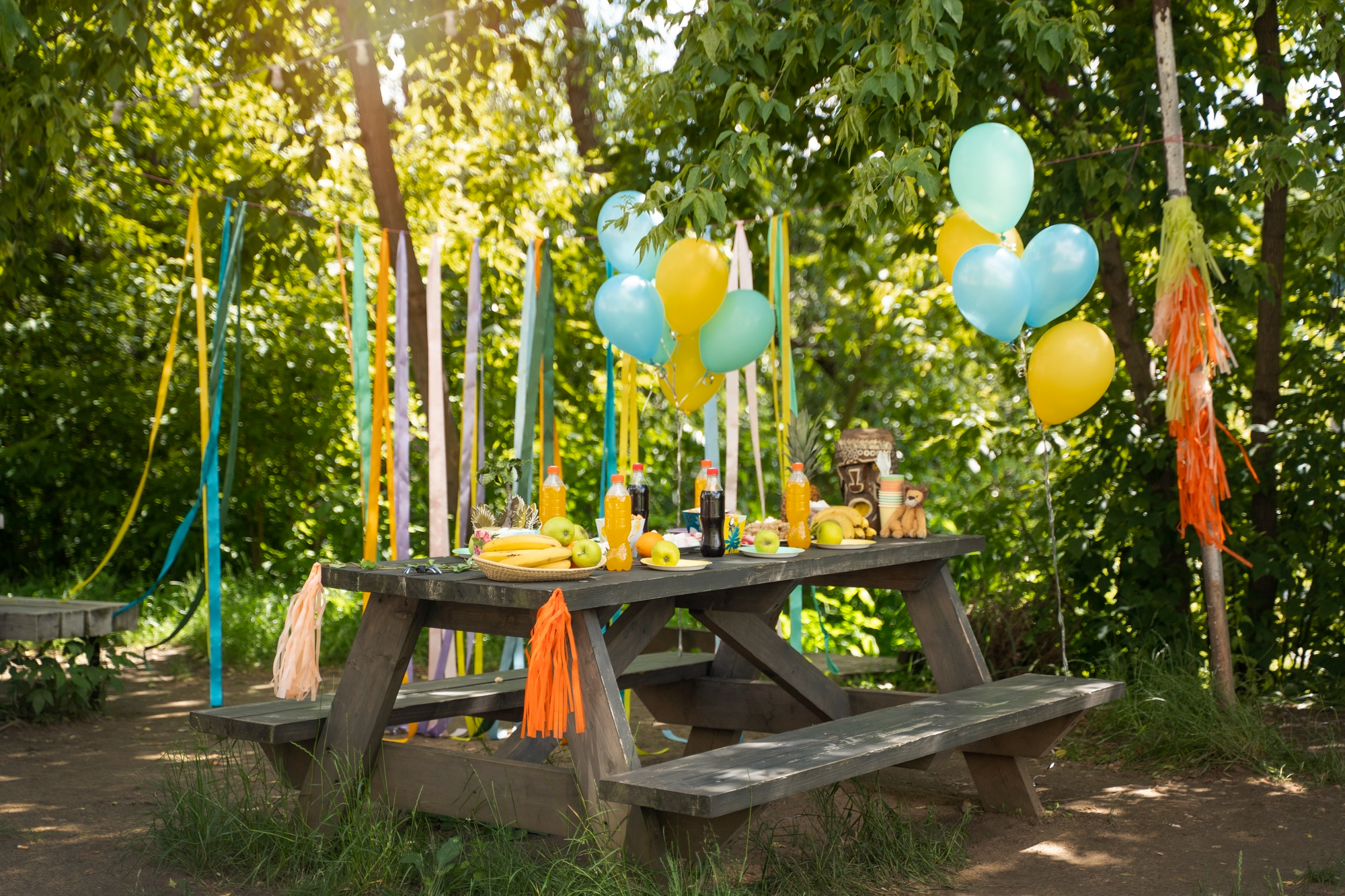
My niece, Emma, had shoved both hands into the three tier superhero cake, ripped out the plastic decorations, and tossed them across the backyard. Blue frosting streaked Noah’s brand new shirt. Crumbs covered the table and grass while several guests watched in stunned silence.
Then Emma laughed. Not an embarrassed little laugh. A loud, satisfied laugh. Noah burst into tears.
I pulled him against me and waited for one adult, just one, to tell Emma to apologize. Instead, my sister Ashley rolled her eyes. “Oh, come on. It’s only cake.”
Noah had spent weeks choosing those decorations. We had saved for months to give him his first real birthday celebration after a difficult year recovering from a serious bicycle accident. That party wasn’t only cake to him.
My parents immediately moved toward Emma. “She didn’t mean it.” “Kids get carried away.” “Don’t make this bigger than it is.”
But Emma was nine, not three, and minutes earlier I had heard her complaining that Noah was getting all the attention.
I calmly told Ashley that Emma owed him an apology. Ashley crossed her arms. “If Noah can’t handle a little joke, that’s his problem.”
That was enough. I didn’t shout. I didn’t argue. I said, “Then I won’t be paying for Emma’s ski trip or dance camp this summer.”
Every conversation around us stopped. Ashley stared at me. “What?”
“You heard me.”
For two years, after Ashley’s difficult divorce, I had covered Emma’s ski camp, dance camp, equipment, and registration fees, nearly six thousand dollars altogether. I had never used that help as leverage. I did it because Emma was family and because Ashley needed time to get back on her feet.
Dad stepped forward. “You can’t punish Emma over one poor choice.”
“I already have.”
Ashley started yelling that I was destroying her daughter’s future over a stupid cake. Mom called me vindictive. Emma stood beside them with blue frosting still on her fingers, watching to see whether the adults could make me back down. They couldn’t. I picked Noah up, carried him inside, and ended the party early.
That night my phone filled with messages from relatives who had watched everything happen without defending my son. Selfish. Cruel. Heartless.
The next morning, I was still scrolling through them while making coffee. Noah sat at the kitchen table in an old superhero T shirt, barely touching his toast. Then the doorbell rang.
Ashley stood on my porch holding Emma’s brand new iPad, still sealed in the box. Emma was beside her wearing the same smug expression she’d had at the party. Ashley said nothing. Emma held the box over the concrete. “Mom says you paid for this too. So I guess you want it back.”
Before I could answer, the mail carrier came up the front path with a certified envelope. I signed for it while Ashley watched my hands. The return address belonged to the insurance office that had handled Noah’s bicycle accident. Ashley’s fingers tightened around the iPad box.
I opened the envelope. The first page said Noah’s accident file could not be closed because a parental release form submitted months earlier contained conflicting information. A copy of that form was attached. It stated that no other child had been involved in the accident and authorized the settlement funds to be deposited into a separate account. At the bottom was my name. Written in a signature I had never made. And directly beneath it, on the witness line, was Ashley’s signature.
I want to describe the next few seconds precisely, because they were the seconds in which my entire understanding of the last year of my life came apart and rearranged itself into something I had refused, until that moment, to see.
I was standing on my own porch in my bathrobe with a certified letter in my hands. My son was inside barely touching his toast. My sister was in front of me with an iPad she’d brought to punish me, and her daughter was holding that iPad over the concrete like a threat, and the mail carrier was already walking back down the path, and none of that mattered anymore, because I was reading a document that said no other child had been involved in Noah’s accident, and it was signed with my name in handwriting that was not mine, and witnessed by my sister.
Here is the thing about Noah’s accident that I had, until that porch, allowed myself to misunderstand. Noah had been hurt badly. A bicycle accident, everyone called it, and I had called it that too, for a year, because that was the story I had been given and I had been too exhausted and too trusting and too much in love with my sister to look at it hard. But it had not been a simple bicycle accident. Noah had been riding with Emma, at Ashley’s house, under Ashley’s supervision, and he had come home to me broken in three places with a story that did not quite hang together, a six year old’s story, half formed and frightened, about going too fast down the hill by Emma’s house, a hill I had told Ashley more than once was too steep for the little ones, and Ashley had assured me she watched them, that it was an accident, that these things happen, and I had believed her, because she was my sister, because grief and fear make you desperate to have someone to trust, and because the alternative, that my sister had been negligent, or worse, was a door I did not have the strength to open while my son was in a cast.
The insurance settlement had been substantial. Noah’s medical bills were enormous, and there had been a payout, and I had assumed, vaguely, that it had all been handled, that the money had gone to the hospital and the rest into an account for Noah’s future, and I had signed what I was told to sign in a haze of hospital waiting rooms and physical therapy appointments, and I had never once, God help me, read carefully, because who reads carefully when their child is in pain, who audits the paperwork of their own catastrophe.
And now I was standing on a porch reading that someone had submitted a form, months ago, in my name, forging my signature, stating that no other child was involved, and directing the settlement funds into a separate account. A separate account. Not Noah’s account. A separate one. And witnessing that forgery was my sister.
I looked up from the letter. And I looked at Ashley. And whatever was on my face made her take a step backward, and made her reach out and take the iPad box out of her daughter’s hands and hold it against her own chest, and made Emma’s smug expression falter for the first time since the cake, because children read faces faster than adults do, and Emma had just read something in mine that told her the game had changed.
“Ashley,” I said. My voice was very quiet. “What is this.”
“I don’t know what that is,” she said, too fast. “That’s your insurance thing, that’s not, why are you looking at me like that.”
“It has your signature on it,” I said. “As the witness. To a form with my name forged at the bottom. A form that says no other child was involved in Noah’s accident. And directs his settlement into a separate account.” I took a breath, and the breath shook, and I did not let it stop me. “Emma was involved in the accident. Wasn’t she. That’s what this is about. This whole thing. That’s what you’ve been hiding.”
The silence on my porch was total. Even the birds seemed to have stopped. Emma looked up at her mother, and Ashley looked at me, and I watched my sister’s face perform the thing I had seen it perform our whole lives, the rapid calculation, the search for the story that would make it go away, and I watched, this time, the calculation fail, because there was no story that survived a forged signature in a certified letter.
“You need to leave,” I said. “Right now. Both of you. And you need to understand that I am going to read every page of this, and I am going to call that insurance office the moment it opens, and I am going to find out exactly what happened to my son and exactly what happened to his money, and there is nothing you can say to me on this porch that is going to change what I do next. So go. Before I say something in front of your daughter that she shouldn’t hear.”
Ashley went. She grabbed Emma’s arm and she went down my front path fast, and she did not look back, and the not looking back told me more than anything she could have said, because an innocent person turns around, an innocent person argues, an innocent person demands you explain the terrible thing you’ve just accused them of, and Ashley did none of it, Ashley fled, and I stood on my porch and watched my sister flee and I understood that the woman who had spent a year telling me it was only a bicycle accident, it was only cake, Noah just can’t handle things, had been managing me the entire time, and that the cake was not an isolated cruelty, it was a small visible piece of a much larger and better hidden one.
I went inside. Noah looked up from his toast. “Was that Aunt Ashley?”
“It was,” I said. I sat down across from him. And I made myself calm, because he had had enough fear, my boy, he had had a year of it. “Noah. Baby. I want to ask you something about the accident. The one where you hurt your arm and your leg. And I want you to know that you are not in any trouble, no matter what you tell me, and that I love you, and that nothing you say can make me upset with you. Okay?”
He went still in the particular way children go still when you approach a thing they have been holding. And I knew, from that stillness, before he said a word, that there was a thing to hold.
“Okay,” he whispered.
“When you went down the hill,” I said gently. “The steep one by Emma’s house. Were you by yourself on the bike? Or was someone with you?”
Noah’s lower lip started to go. And he looked at the table, and he said, in a voice so small I had to lean in, “Emma said I had to. She said if I didn’t ride down the big hill I was a baby and she wouldn’t be my friend anymore. And I said it was too fast and she pushed the bike. She pushed me, Mommy. At the top. And I told Aunt Ashley and Aunt Ashley said if I told you that I would get Emma in big trouble and it would be my fault and I shouldn’t be a tattletale and it was an accident and I should just say I went too fast. And I didn’t want it to be my fault. So I said I went too fast.”
I have been angry a handful of times in my life in a way that goes past heat into something cold and clear and permanent. I felt it then. Not at Noah, never at Noah, who had been carrying a nine year old’s shove and a grown woman’s coercion for a year, terrified that the truth would make his own broken bones his fault. I felt it at Ashley. At the sheer, patient, adult cruelty of it, of taking a frightened six year old with a shattered arm and teaching him to lie about how it happened so that her own daughter would not be blamed, of building that lie so thoroughly that the child believed his own injury was his fault, of then, apparently, forging her sister’s signature to redirect that same child’s settlement money into an account of her own.
I pulled my son around the table and into my lap, and I held him, and I said, “Noah. Listen to me. It was not your fault. It was never your fault. Not even a little bit. You didn’t go too fast. Emma pushed you, and that was wrong, and being scared to ride down a hill that’s too steep doesn’t make you a baby, it makes you smart, and Emma was wrong to call you that, and Aunt Ashley was very, very wrong to tell you to keep it a secret. Grown ups should never ask you to keep a secret like that. Never. You did nothing wrong, and I am so sorry you’ve been carrying this by yourself, and you never have to carry it again, because now it’s mine to carry, and I’m going to make it right.”
He cried, and it was a different crying than the cake, it was the crying of something set down that has been carried too long, and I held him until it was done, and then I made him fresh toast because the old toast had gone cold, and I put on his favorite show, and I sat with him until he was settled and small and safe, and only then, when he was okay, did I go into the other room and begin, coldly and methodically, to take my sister’s life apart.
I read every page of the certified letter. What had happened became clear as I read, and as I spoke, the next morning, to a very helpful and increasingly alarmed woman at the insurance office named Patrice. Noah’s settlement had been meaningful, more than I had ever registered in the fog of that year. A portion had gone to the hospital, yes. But a large portion, the portion meant for Noah’s future, his ongoing physical therapy, his care, had been directed, by a form I had never seen and never signed, into an account that was not Noah’s and not mine. The form stated no other child was involved because if another child had been involved, specifically a child who caused the accident through negligence or intent under the supervision of that child’s parent, the entire structure of liability changed, and questions would have been asked that Ashley did not want asked, and a full investigation might have found what my son had just told me at the kitchen table, which was that Emma pushed him and Ashley covered it up.
So Ashley had done two things at once with a single forged form. She had erased Emma from the accident, protecting her daughter and herself from any liability. And she had rerouted the settlement money into an account she controlled, which meant that for a year, while I saved for months to give my son a birthday party, while I paid nearly six thousand dollars for Emma’s ski camp and dance camp and equipment out of my own pocket, my sister had been quietly sitting on a much larger sum of money that belonged to my injured son. I had been paying for Emma’s luxuries with my own money while Ashley held Noah’s settlement in a separate account. That was the arithmetic. That was what the cake sat on top of.
Patrice at the insurance office was, I cannot stress enough, horrified, and also, I came to understand, relieved, because the conflicting information in the file had been sitting there as a red flag that the company could not resolve, which was the entire reason the file could not be closed and the letter had been sent. My forged signature said one thing. Other documentation, the hospital’s intake notes, the original accident report, said things that did not match. The company had a fraud problem on its hands and had not been able to tell, until I called, which side of it I was on, whether I was the perpetrator or the victim. Once I explained, once I told her I had never seen that form, never signed it, never authorized any separate account, and that I had a certified letter in my hand proving the discrepancy, Patrice’s whole tone changed, and she said the words that began the unraveling. “Ma’am, I’m going to need to escalate this to our fraud investigation unit. And you’re going to want to speak with an attorney, because what you’re describing is a felony.”
I got an attorney. Her name was Diane, and she specialized in exactly this intersection of insurance fraud and family betrayal, which she told me, on our first meeting, was more common than anyone wanted to admit, because families are where trust lives, and trust is what fraud requires. I gave her the certified letter. I gave her the forged form. I gave her, most importantly, my own genuine signature, dozens of examples of it, so that a forensic examiner could establish that the signature on the form was not mine, which turned out to be easy, because forgers copy the look of a signature and never the physics of it, never the pressure and rhythm and the small unconscious habits, and the examiner’s report came back stating that the signature on the settlement form was, to a high degree of certainty, not made by my hand.
And I told Diane about Noah. About the hill, and the push, and the coaching, and the year of a six year old believing his broken bones were his fault. Diane listened, and she wrote it down, and she said something I have carried with me since. She said, “The money is the crime the law can prove. But the thing done to your son is the crime that matters, and I want you to know that everything we do here, we do so that a court sees both. The forgery gets her charged. Your son’s story gets her understood.”
It took the better part of a year, and I will not walk you through every stage of it, because these things are slow and grinding and full of paperwork and waiting. But I will tell you the shape of how it ended, because the ending is why I can write this down.
Ashley was charged. Insurance fraud, forgery, and identity theft, all felonies, because forging your own sister’s signature on a federal insurance document to redirect a minor’s settlement funds is not a family squabble, it is a series of serious crimes, and once the insurance company’s fraud unit and the state got involved, it left the realm of who calls whom vindictive at a barbecue and entered the realm of the actual law, where Ashley’s charm and her ability to make me feel like the cruel one had no power at all, because the law does not care about the story, the law cares about the signature, and the signature was forged.
The money was recovered. Noah’s settlement, the full amount meant for his future, was located in the separate account Ashley had opened, most of it still there though she had begun, I learned, to spend against it, and it was frozen and then returned, placed this time into a proper trust for Noah with oversight I understood and controlled, a trust that will pay for his therapy and his care and, one day, his college, the future my sister tried to steal from a boy she’d already helped break.
And here is the part that I did not expect, the part that changed the whole story from a story about revenge into something more complicated and, I think, more true. My family, the relatives who had filled my phone with selfish, cruel, heartless the night of the cake, the ones who had watched Emma destroy my son’s party and told me she’s just a kid, had to reckon with what came out. Because it all came out. The push. The coaching. The forgery. The year my son spent believing it was his fault. And I watched my parents, who had moved to protect Emma at the party, who had called me vindictive for canceling a ski trip, receive the truth in stages, and I watched it break something in them, because they had spent a year, longer, taking Ashley’s side reflexively, believing her version, treating my reasonable concern as unreasonable cruelty, and they had to sit with the fact that while they were calling me heartless for withholding dance camp, their other daughter had forged my name and stolen their grandson’s future and taught a six year old to lie about his own injuries.
My mother came to me. It was months into the legal process, after the charges but before the resolution, and she came to my door the way Ashley had come to my door, except my mother came empty handed and shaking, and she stood on the porch where I had opened the certified letter, and she said, “I called you vindictive. At the party. I said it to your face and I said it in those messages. And I have to live now with the fact that I said that to the daughter who was right, to protect the daughter who did this, and I don’t know how to make that up to you, and I’m not sure I can, but I couldn’t not come and say it.”
I let her in. I did not fully forgive her that day, because some things take longer than a single conversation, and because I had learned, that year, the danger of forgiving too fast, of smoothing things over for the sake of keeping a peace that is really just accepting disrespect. But I let her in, and I let her see Noah, who she had been kept from seeing because I did not trust the family, and I watched my mother sit with her grandson and understand, finally, what had almost been done to him, and I watched her cry, and I thought, this is the beginning of something real, because it is built on the truth and not on the story.
Ashley did not go to prison, in the end, though she came close. She pleaded, because the evidence was overwhelming, the forensic signature analysis and the recovered account and the insurance company’s cooperation, and there was probation and restitution and a felony record and, most significantly to me, a family court component, because once the criminal matter established what had happened, questions were raised about Emma’s welfare and about the pattern of a parent who would coach a child into cruelty and coach another child into a lie. I did not push for the harshest possible outcome. I want to be honest about that, because I could have, and part of me wanted to. But I kept thinking about Emma. Because Emma was nine, and Emma had shoved my son down a hill and laughed at his ruined cake, and Emma had held an iPad over concrete like a weapon, and it would have been easy to hate Emma, to see her as a small villain in training. But Emma was nine, and Emma was becoming exactly what her mother was teaching her to become, and the cruelty in that child was not born in her, it was built into her, day by day, by a woman who rolled her eyes and said it’s only cake and taught her daughter that other children’s pain was funny and that getting caught was the only real crime.
So I asked Diane, and I asked the family court, not to destroy Ashley but to require her to change, mandated parenting intervention, mandated accountability, supervision, the machinery that exists for exactly this, for a parent who is not beyond saving but is actively harming a child through the poison she is passing down. Because I could not save Emma by hating her. I could only give her a chance by insisting the adult responsible for her be forced, by a power stronger than herself, to stop.
It has been two years now since the cake. I would like to tell you that Ashley and I are close again, that the family healed completely, that we all sit around the table at reunions the way we used to. That would be a tidier ending than the one I have. The truth is that Ashley and I are not close, and may never be, because you do not come back easily from forging your sister’s signature to steal her injured child’s money, and I have made my peace with a permanent distance there, a cordiality without warmth, the relationship of two people who share parents and a terrible history and not much else. I do not hate her. Hate takes more energy than I am willing to give her. But I do not trust her, and I have learned that trust, once a person has shown you they will forge your name over your child’s broken body, is not something you owe anyone simply because you share blood.
Emma, though. Emma is a different story, and Emma is the reason I am glad I chose the path I chose. The intervention worked, slowly, imperfectly, the way these things do. Ashley, forced into accountability she would never have chosen, was made to examine what she was doing to her daughter, and some of it took, and Emma, removed from the pure atmosphere of her mother’s contempt and given, through the court’s requirements, exposure to other ways of being, began to change. She is eleven now. She apologized to Noah last year, a real apology, coached at first I’m sure but arriving, eventually, at something genuine, a shame free and defensive free acknowledgment that she had hurt him and been wrong to. I watched my niece apologize to my son and I watched my son, who has a bigger heart than anyone in this story, forgive her, and I understood that this, this small hard won moment between two children, was worth infinitely more than any revenge I could have taken.
Noah is nine now. His arm healed completely. He rides his bike again, though never down hills that are too steep, because I taught him, and he believes me now, that being careful is not the same as being a baby, that the smart child is the one who says no to the hill. The nightmares he’d been having, the ones I hadn’t connected to anything until the truth came out, stopped within months of him understanding that the accident was not his fault. That is the thing I think about most, when I think about that certified letter arriving on my porch at the exact moment Emma held an iPad over the concrete. My son had been having nightmares for a year, and I had not known why, and it was because he was carrying a lie a grown woman had forced on him, a lie that told him his own broken body was his fault, and the letter that exposed my sister’s theft also, in the same stroke, freed my child from a year of secret guilt he was far too young to bear.
People ask me, when I tell parts of this story, whether I regret canceling the ski trip and the dance camp over a cake. Because that is where it started, that is the decision the whole family called cruel, the moment I said I won’t be paying for Emma’s ski trip or dance camp this summer over a smashed birthday cake. And I understand why they ask, because in isolation it does look small, it does look like a woman punishing a child over frosting. But it was never about the cake, and I knew even then, standing in that backyard, that it was never about the cake. The cake was the visible piece. The cake was Emma laughing at my crying son while every adult who should have protected him made excuses, and it was my whole family closing ranks around cruelty and calling me heartless for objecting to it, and it was the culmination of a year of small wrongnesses I had swallowed for the sake of peace. Drawing the line at the cake was not about the cake. It was about finally, after a year of accepting disrespect and calling it keeping the family together, refusing to accept it anymore. And it was the refusal, the line I finally drew, that put me on my porch the next morning in the exact frame of mind to open a certified letter and actually see what it said, instead of signing it in a haze the way I had signed everything else that terrible year.
If I had backed down at the party, if I had said oh you’re right, she’s just a kid, and paid for the ski trip to keep the peace, I would have opened that letter as the old me, the trusting exhausted me, and I might have called Ashley and asked her to help me understand it, and she would have spun me a story, and I would have believed it, because I always believed her, and the forgery might have been buried and my son might have carried his secret guilt into adulthood and his stolen future might have quietly drained out of a separate account and I would never have known. The line I drew over the cake is the reason I saw the truth. Sometimes the small refusal is the thing that clears your eyes enough to see the large betrayal that was always there.
Noah had his tenth birthday last month. We had a party, a real one, in our own backyard, and I made a three tier cake, superhero again because he is loyal to his loves, and I braced myself the whole time for something to go wrong, because that is what a year like that one does to you, it teaches you to wait for the smash. But nothing went wrong. My mother came, and my father, both of them careful and gentle with Noah in the way of people making up for a great deal. And Emma came, invited by Noah himself, and Emma helped him blow out the candles and did not laugh at anything except the things that were actually funny, and when the cake was cut she made sure Noah got the first piece, the corner one with the most frosting, and she watched him take it with an expression on her face that was the exact opposite of the one she’d worn two years before, an expression that was almost, I thought, watching from across the yard, like someone learning, late but not too late, what it feels like to give another child the best piece instead of taking it.
I keep the certified letter in a drawer. Not to nurse the anger, which is long spent, but because it is the physical proof of the day everything changed, the day a piece of official mail arrived at the precise moment a child held a gift over concrete like a threat, and told me, in a signature that was not mine, that I had been protecting the wrong people for far too long. I drew a line over a cake, and everyone I loved called me cruel, and then a letter came, and it turned out the line I drew was the truest and most protective thing I had done for my son all year. They said I was destroying a child’s future over a stupid cake. What I was actually doing, though none of us knew it yet, was finally standing up straight enough to catch the truth when it landed on my porch, and to save my son’s future, and, in the strangest turn of all, to give my niece the one thing her mother had been stealing from her right along with the money, which was the chance to become someone better than the cruelty she’d been raised in.

Adrian Hawthorne is a celebrated author and dedicated archivist who finds inspiration in the hidden stories of the past. Educated at Oxford, he now works at the National Archives, where preserving history fuels his evocative writing. Balancing archival precision with creative storytelling, Adrian founded the Hawthorne Institute of Literary Arts to mentor emerging writers and honor the timeless art of narrative.