The Last Family Trip
We almost did not go.
That is the detail I come back to when I try to reconstruct the week, and I want to be honest about it because it would be easy, in the retelling, to make it sound like we always knew this trip mattered and we went with the full awareness of its significance. We did not. We went because we were tired of arguing about it.
Maya had been sixteen for three months and she was in that particular stage of the sixteenth year where the distance between a teenager and her parents seems to grow by measurable increments each week, not because anything terrible is happening but because she is becoming someone and the becoming is mostly interior and mostly private and the visibility into it that we had when she was younger is no longer available to us in the same way. She had her friends and her phone and the specific interior life of a girl who is figuring out who she is going to be, and family vacation was not, in her assessment, the most efficient use of the summer.
She said: I’ll miss Riley’s party.
I said: you’ll go to Riley’s next party.
She said: you don’t know that.
She was right that I didn’t know that. I did know that this trip had taken me three weeks of low-level negotiation to plan and that I had been looking forward to it in a way that surprised me, with an urgency that was only partly about needing a break from work.
My husband David and I had not talked about it directly, but we had both felt it: the sense that Maya was about to start a period of her life in which family vacations would become the thing she was leaving rather than the thing she was part of, and that this trip might be the last one that felt like the ones we had taken when she was ten and twelve and still thought of beach vacations as genuinely exciting rather than tolerable.
She came under protest and then, by the second day, she had forgotten to be protesting.
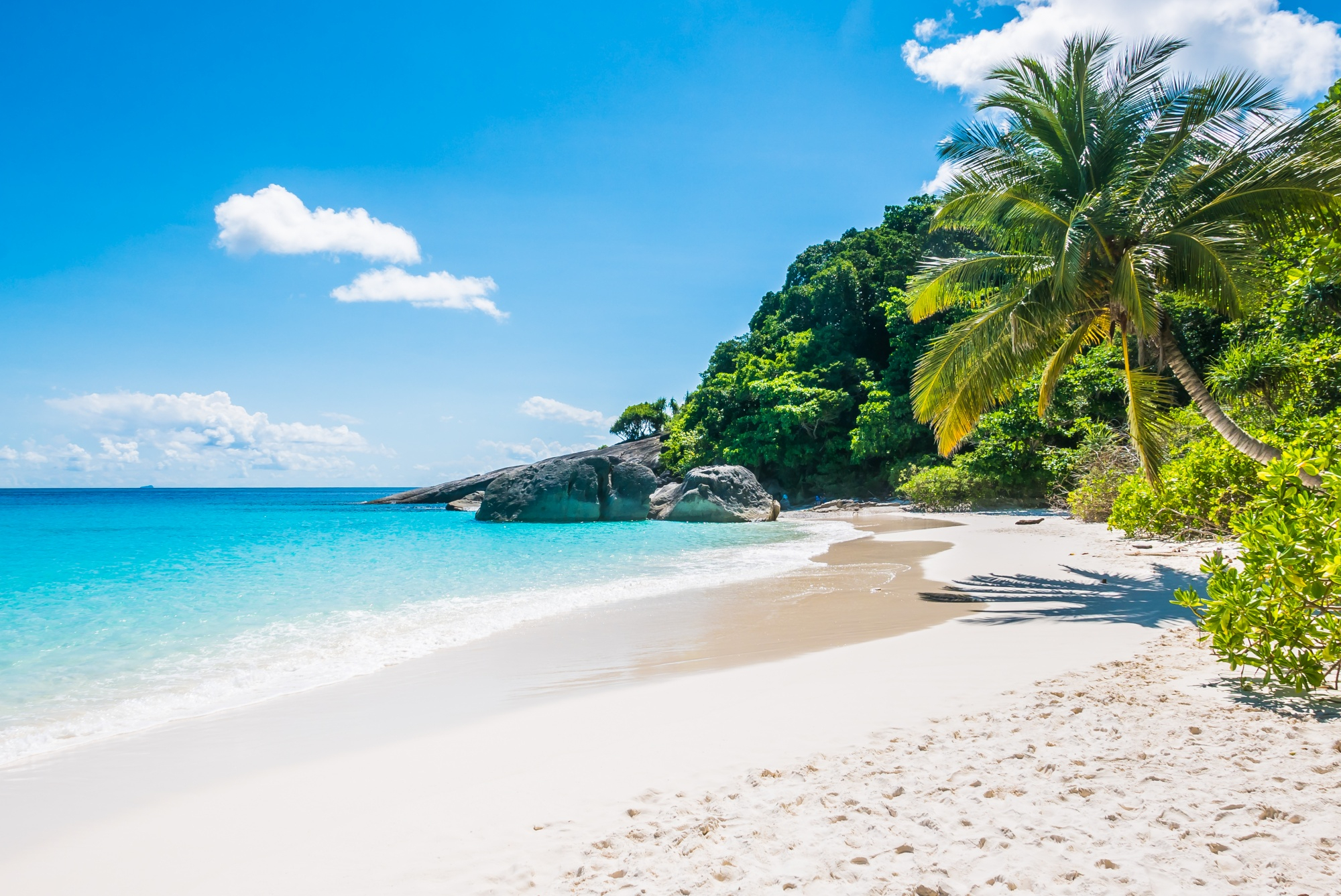
The resort was in the Turks and Caicos, on a beach that had the particular quality of Caribbean water I had never been able to adequately describe to people who had not seen it: a blue that is specific to that geography, that reads almost artificial from a distance and then, when you are standing in it, is so clear and particular that it seems like the most natural thing in the world.
Maya had taken her sunglasses off and looked at the water from the edge of the resort’s beach on the first afternoon, and her face had done the thing it used to do when she was younger and encountered something genuinely beautiful: completely open, the performance of teenage indifference temporarily set aside.
She said: okay. It’s pretty.
I said: I know.
She put her sunglasses back on.
But she kept looking at the water.
Liam appeared on the third day.
We were at the beach pavilion, the outdoor structure at the edge of the resort’s beach access where they kept the towels and the water sports equipment and where a small stand sold coconut water and fresh fruit. Maya had gone to get towels and I was watching from a lounge chair when I saw her talking to someone.
He was about her age, maybe a year older. He was wearing a plain white t-shirt and swim shorts and he had the relaxed posture of someone who is comfortable in vacation settings, comfortable with strangers, comfortable with himself in a way that reads as genuine rather than performed. Even from a distance I could see the quality of the conversation: not the stiff body language of two teenagers who are performing ease at each other, but actual engagement, actual back-and-forth.
Maya came back to the lounge chairs twenty minutes later.
She said: I met a kid named Liam. He’s here with his parents.
I said: what’s he like?
She considered this, which was itself a good sign, because Maya at sixteen in full protective mode would have said fine or whatever rather than considering.
She said: he’s actually really nice. He’s kind of formal. He said ma’am to me.
I said: he called you ma’am?
She said: I know. It was weird but kind of charming.
I said: how old is he?
She said: seventeen. He goes to school in Georgia. He’s going to be a senior.
I said: is he cute?
She gave me the look that that question warranted.
She said: Mom.
I said: I’m just asking.
She said: you’re embarrassing.
But she was smiling.
Liam and his parents came by our cabana that afternoon. His parents were Richard and Susan, who were from Savannah, Georgia, and who had the particular warmth of people who have raised their children carefully and are enjoying the evidence of the outcome. Richard was an attorney and Susan ran a non-profit focused on children’s literacy, and they were interesting and unpretentious and generous with their conversation in the way of people who are genuinely curious about other people.
Liam sat with Maya at the edge of the water while we talked.
I watched them from the cabana: two teenagers sitting with their feet in the ocean, the kind of easy parallel conversation that teenagers have when they are actually getting along rather than performing getting along.
David said, quietly: well. This is something.
I said: he seems like a good kid.
David said: he called me sir when he shook my hand.
I said: Maya mentioned that. She said it was charming.
David smiled.
Richard and Susan and David and I talked for two hours, which is not something that happens often with strangers at a resort: the conversation that does not feel like an obligation but feels like something you would seek out. We talked about our kids and about their respective futures, about the transition from high school to whatever came next and the specific anxiety of watching a child become an adult from the particular vantage of the parent.
Susan said: Liam sometimes tries too hard. He practices his manners and his conversation because he’s a little socially anxious underneath the politeness. He’s been working on it with a counselor.
I said: it’s good that he’s working on it.
She said: it’s good that you can see it for what it is. Some people find it off-putting.
I said: I found it disarming.
She said: that’s the goal, I think.
We made plans to have dinner together the following night.
The banana boat ride request came on the fourth evening.
Maya and Liam had spent the afternoon together, supervised in the loose way of a resort environment where everyone is in visible proximity and the staff is present, and they had been to the water sports shack and rented snorkel gear and come back sunburned and laughing about something that Maya summarized as he thought the starfish was real at first.
At around five o’clock, as the afternoon was moving toward the particular golden hour that happens at beach resorts in the late afternoon, Liam came to where David and I were sitting near the water’s edge.
He said: Mr. and Mrs. Patterson, would it be all right if Maya and I took one of the banana boat rides before sunset? The resort has them running until six.
He had his orange life jacket already in his hand, which struck me later as the kind of detail that reflects actual preparation rather than an afterthought.
David and I looked at each other.
The banana boat was a visible activity: a large inflatable banana-shaped float towed behind a speedboat, designed for groups, operated by the resort’s water sports staff. I had watched several go out that day from the beach. They stayed in the visible water near the resort. They were, by any reasonable assessment, a safe and ordinary vacation activity.
I said: is there a staff member on the boat?
Liam said: yes ma’am. The resort has a driver and an instructor who goes with every ride. The ride usually goes down the shore about half a mile and comes back.
David said: do you have your life jacket on properly?
Liam adjusted the clasp on his.
He said: yes sir. I already checked it. I’ll make sure Maya’s is secure too.
I said: we’ll watch from the shore.
He said: of course. We’ll wave when we go by.
Maya appeared with her own life jacket, already orange and bright and clearly provided by the resort, and she and Liam stood together at the water’s edge and flashed us thumbs-ups.
I took a photograph.
It is a good photograph. Maya is laughing at something Liam has said, her head turned slightly toward him, the late afternoon light warm on both of them, the bright orange life jackets against the blue water. She looks happy in the uncomplicated way that she had stopped looking happy in photographs somewhere around fourteen, when self-consciousness had arrived and the camera had become a thing to be managed rather than a thing to simply be in front of.
She looked like herself.
I took the photograph and then I watched them walk toward the water sports dock and I sat back down in my chair and felt, for a moment, the specific warmth of a thing going right.
The boat went out.
I watched it until it was a small shape against the water and then I looked at the beach around me and talked to David about dinner and watched the sun begin its afternoon descent.
Fifteen minutes passed.
I looked for the boat.
I had a general sense of the direction it had gone, down the shore to the left, and I could see boats in the water, several of them, but I could not specifically identify the one that had the banana float. This was not, at fifteen minutes, alarming: the ride had been described as going about half a mile and coming back, and half a mile at a comfortable tow speed is not a short distance.
Twenty-five minutes.
I stood and walked to the water’s edge and shaded my eyes.
The sun was lower now, moving toward the particular angle where looking west into the water becomes difficult because the light is coming directly from that direction.
Thirty minutes.
I said: David.
He said: yeah.
I said: the ride was supposed to be how long?
He said: they said usually fifteen to twenty minutes.
We looked at each other.
I said: I can’t see the boat.
He said: the light is bad in that direction. Let’s give it a few more minutes.
Forty minutes.
I went to the water sports dock.
The dock had two staff members, a young man who was coiling rope and a woman at the small desk who was logging equipment returns.
I said: the banana boat that went out about forty minutes ago. Has it come back?
The woman looked at her log.
She said: which group?
I said: a teenage boy named Liam and my daughter Maya. Orange life jackets. They left from this dock about forty-five minutes ago.
She looked at the log again.
She looked at the water.
Something moved across her face.
She said: let me make a call.
She picked up a radio and said something into it that I could not fully hear, and the man who had been coiling rope stopped what he was doing and looked at the water.
I said: is there a problem?
She said: one moment, ma’am.
I went back to David.
I said: something is off. The dock staff is making calls.
David went to the dock.
I stood on the beach and I looked at the water and I tried to do the rational calculation that the situation might still have a rational explanation: the boat had gone further than usual, there was a delay at the far end of the route, the tow connection had needed adjustment, any of the dozens of small mechanical and logistical things that happen in water sports operations that cause delays without causing emergencies.
But the dock staff had stopped what they were doing.
And the water in the direction the boat had gone was still.
Forty-five minutes.
The sun was now in the lower quarter of the sky, the water in front of the resort catching the orange and pink of it, beautiful in the way that impending sunsets are always beautiful regardless of what is happening beneath them.
I was pacing.
David came back from the dock with the expression I have learned to read in twenty years of marriage as: there is a problem and I am managing my response to it.
He said: they’re making some calls. They’re trying to reach the boat’s radio.
I said: they can’t reach it?
He said: they’re trying.
I said: David.
He said: let’s not.
He meant let’s not panic yet. He meant let’s wait for the information before we respond to the worst version. He was right, functionally, and I knew he was right, and knowing he was right did not stop the cold wave that moved through me as I stood on the beach and looked at the water and tried to calculate the possible explanations.
The sun continued its descent.
An hour.
The sky had gone to the deep orange-crimson that happens in the last twenty minutes before the sun actually sets, the most dramatic light of the day, and it was occurring over a body of water that was, in the direction we were watching, completely still.
No boat.
No banana float.
No orange life jackets.
David had gone to the main office.
I could see him through the lobby glass, talking to two staff members, his body language controlled in the way he controlled it when he was most alarmed.
The two staff members from the dock were now on their radios.
Another staff member had appeared with binoculars.
I sat down in the sand at the water’s edge because standing felt impossible and I put my hands in my lap and I looked at the water and I thought about the photograph I had taken: Maya laughing, the life jacket bright orange, the light warm.
She looked like herself.
I had thought that when I took the picture.
She looked like herself in a way she had stopped looking in photographs for two years.
I thought about the water and I thought about banana boat rides and I thought about life jackets and I thought about the instructor who was supposed to go with them and I thought about the phrase the ride usually goes down the shore about half a mile and comes back, and I thought about what usually means and what sometimes means and how large the gap between those two words can be.
An hour and five minutes.
The general manager appeared on the beach.
His name was Marcus Chen and I had met him twice during the week: once at the welcome dinner on the first evening and once when Maya had left her snorkel equipment at the wrong location and he had personally ensured it was returned to our cabana. He was a composed, professional man who ran the resort with the understated efficiency of someone who has managed hospitality environments for a long time and has learned that the guest experience is built in the small moments.
He was not composed now.
He was walking with purpose, quickly, dismissing a staff member who tried to speak to him with a brief gesture, and his face had a quality I had not seen on a hospitality professional’s face before and hope I never see again: the specific quality of someone carrying information they know will change someone else’s world.
He was holding a phone.
He came directly to me.
He said: I need you to come with me immediately. You have to see this video.
David had come back from the lobby and was behind me now, and Marcus looked at both of us.
He said: both of you, please.
I said: is Maya all right?
He said: please come with me first.
I said: Marcus. Is my daughter all right?
He stopped.
He said: yes. She is safe. I need to show you what happened.
The air came back into my lungs.
I had not realized I had been holding it.
David put his hand on my arm.
I said: where is she?
Marcus said: she’s on the boat. They’re on their way back. I need to show you the video before they arrive because the situation is complex and I want you to understand what happened before you see her.
We went to the water sports office, which was behind the main dock, a small room with equipment racks and a desk and a security monitor that showed several camera feeds from around the resort and the water.
Marcus handed me his phone.
He said: this is from the boat’s onboard camera. The resort’s water sports boats have cameras for safety and insurance purposes. What you are about to see was flagged by our monitoring team about thirty minutes ago.
The video was a minute and forty-seven seconds long.
I watched it.
David watched it over my shoulder.
The video showed the interior of the boat: the front seat where the driver sat, the instructor’s position behind him, and the tow line leading back to the banana float where Maya and Liam and two other guests who had joined the ride at the last minute were visible, orange life jackets bright in the afternoon sun.
The first forty seconds were ordinary: the boat moving through clear water, the float bouncing lightly behind, the passengers holding the handles and laughing.
Then the instructor’s radio crackled with something.
The instructor turned to speak to the driver.
The driver said something back.
I could not hear the words clearly over the engine noise, but the body language was distinct: something had happened, or was happening, and the two of them were conferring about it.
Then the camera caught what had changed.
Another boat.
It appeared from the right side of the frame: a mid-sized motorboat, moving fast, on a trajectory that was intersecting with the banana boat’s path. The driver of the banana boat cut speed. The instructor stood up.
The motorboat did not change course.
It was moving at a speed that was wrong for the area, too fast for the proximity of other vessels and the swimmers’ zone the resort had designated, and it was being driven by someone who was either not paying attention or was making calculations about the right-of-way that were incorrect.
At the moment of maximum proximity, when the two boats were perhaps twenty feet from each other and the banana float was directly in the path of the motorboat’s wake, Liam released the handle of the banana float.
He released it and grabbed Maya.
The motorboat’s wake hit the banana float and everyone on it went into the water, which is standard and expected for a banana boat: the float is designed to capsize safely and riders are told this in the pre-ride briefing.
But in the confusion of the capsize, one of the other riders, a woman in her thirties who had joined the ride at the last minute, did not surface immediately.
Liam had let go of the handle in order to hold Maya as the wave hit, which kept both of them in a controlled position rather than a tumbling one. He had his arm across her chest in the position that trained open-water swimmers use when assisting someone in distress, which had become relevant because Maya’s life jacket had twisted in the capsize and was partially blocking her face.
He helped her clear it.
Then he looked for the other rider.
The woman had surfaced twenty feet away, disoriented, and her life jacket was functioning but she was panicking and starting to struggle.
Liam swam to her.
In open water with a rip current running along the shore, which was what the boat’s camera recorded the instructor assessing as he entered the water from the boat’s step, a panicking swimmer is a specific risk: they can exhaust themselves, they can pull a rescuer under, they can drift. The instructor was in the water within seconds of the capsize, but he was coming from the boat side and the woman was twenty feet away and between them and the woman, Liam reached her first.
He did what you do with a panicking swimmer: he came at her from behind, spoke to her directly, put his arm across her chest, and controlled the situation until the instructor arrived.
The woman calmed.
The instructor reached them.
The boat driver had already radioed the resort.
The video ended.
I watched it twice.
I said: is the woman all right?
Marcus said: she’s fine. She’s with her family. She was shaken but unhurt.
David said: how old is Liam?
Marcus said: seventeen. I spoke to his parents. He completed a junior lifeguard program two summers ago.
David sat down.
He sat down in the chair by the desk the way people sit when their legs have made a decision that their brain has not fully processed yet.
I looked at the phone and at the still frame at the end of the video, which showed the instructor and Liam and the woman in the water, the banana float capsized behind them, the orange of the life jackets catching the late afternoon sun.
I said: why did they take so long to come back?
Marcus said: they needed to account for all riders and ensure the woman was stable before they moved. Then they had a minor mechanical issue with the tow line. And the driver was following protocol, which requires a full safety check before returning after an incident. He apologized for not radioing us sooner but he was managing the situation on the water.
I said: is Maya scared?
Marcus said: based on what my staff has reported, she seems more concerned about the other woman than about herself.
I thought about that.
I said: that sounds right.
The boat came in fifteen minutes later.
I was standing at the dock.
Maya came off the boat in her orange life jacket, hair wet, and she looked at me and her face did several things in about two seconds. She had been managing herself, I could see that: the expression of someone who has been through something and has been telling themselves they were okay for the duration of the return trip and who is now looking at their mother and finding that the telling-themselves is no longer required.
She said: Mom.
I said: I’m here.
She came down the dock and I held her and she held me and we stood on the dock for a while.
She said: I got my life jacket twisted.
I said: I know. I saw the video.
She said: Liam held onto me.
I said: I know.
She said: the other woman was scared.
I said: I know that too.
She said: he swam to her. Mom, he just went. He didn’t even think about it.
I said: I know.
She pulled back and looked at me.
She said: I was scared. I’m not going to pretend I wasn’t.
I said: I know.
She said: were you scared?
I looked at her.
I said: yes. Very.
She said: I’m sorry.
I said: sweetheart, you don’t apologize for that.
David had come down the dock and he held Maya and then he shook Liam’s hand, who had come off the boat behind her, and the handshake turned into the kind of extended grip that men sometimes use when they cannot say in words what needs to be said.
Liam’s parents were there.
Richard shook David’s hand and Susan held mine, and for a moment no one said anything because there was not a sentence available that was adequate to the moment.
Liam stood with his parents and he looked, for the first time in four days, like what he actually was: a seventeen-year-old who had been through something frightening and was now trying to hold himself together in front of adults.
His mother had her hand on his shoulder.
He said: I should have made sure the tow line check was complete before we went out. The float handled wrong from the start.
His father said: Liam.
Liam said: I noticed it when we left the dock. I should have said something.
Marcus, who was standing nearby, said: the tow line check is the responsibility of the staff. That is not something a rider is expected to assess.
Liam said: I know. But I noticed.
David said: you noticed something and you filed it away. And when something went wrong, you were ready.
Liam looked at him.
David said: that’s not nothing. That’s actually exactly the right kind of preparedness.
Liam said, quietly: the capsize is the normal thing. I knew the capsize was coming because of the wake. I just wanted to make sure Maya was controlled going in.
Maya was standing to my right and she was looking at Liam and something was happening on her face that I filed away without examining, because the moment was not the moment for that examination.
I said: Liam.
He looked at me.
I said: thank you for taking care of my daughter.
He said: yes, ma’am.
He said it the way he said everything, with the specific formality that his mother had described as learned rather than natural, practiced into something that had become genuine, and I understood in that moment what Susan had meant: beneath the politeness was someone who was anxious about the impression he was making, and the anxiousness had not gone away because something alarming had happened. He had swum to a panicking stranger in open water and he was still worried about whether he had said the right thing.
Susan put her arm around him.
She said: you did well.
He looked at the dock boards.
He said: I should have said something about the tow line.
She said: yes. Next time you will.
He said: yes.
She said: what else?
He thought about it.
He said: I should have signaled the boat sooner. After the capsize. I waited too long to signal them because I was focused on Mrs. Harlow.
Marcus said: Mrs. Harlow has asked me to convey her gratitude. Her husband would like to speak to you before you leave the resort.
Liam looked up.
He said: to me?
Marcus said: and to Maya. He said specifically that he wants to thank both of you.
Maya said: I didn’t do anything.
I said: you stayed calm. You cleared your own equipment.
She said: Liam held me so I could.
I said: yes. And then you let him go help someone else without panicking.
She considered this.
She said: I was talking to Mrs. Harlow while Liam was swimming to her. I was telling her it was okay. That help was coming.
I had not known this.
I looked at my daughter.
She said: she was looking toward us and I thought if she had something to look at and listen to she wouldn’t keep struggling.
She said it the way she said things she considered obvious, the way she had always said obvious things since she was small: in the tone of someone reporting a plain fact rather than claiming credit for a good decision.
She did not know it was a good decision.
She thought it was just the thing to do.
That, I thought, looking at her, is who you are. That is the person you have been becoming in the interior that I cannot see anymore. That is what is happening in the spaces where you are not visible to me.
I said: Maya.
She said: what?
I said: that was the right call.
She said: it was just obvious.
I said: obvious things are often the hardest to do when you’re frightened.
She thought about this.
She said: I wasn’t really thinking about being frightened. I was thinking about what she needed.
I said: yes.
She said: is that weird?
I said: no. That’s exactly right.
We had dinner that night with Richard and Susan and Liam.
Marcus had arranged a private dining space for us at the resort’s main restaurant, a quiet room off the main floor where we could talk without the ambient noise of the larger space. He sent a bottle of wine for the adults and mocktails for Maya and Liam, and he stopped by once to ask if we needed anything and then left us entirely alone.
The dinner was one of those evenings that does not have a correct category for what it is: not a celebration, because what had happened was too serious for celebration; not a debrief, because debriefs are clinical and this was anything but. It was the specific quality of an evening spent with people who have been through something together and who are finding, now that the something is over, who they are to each other.
Maya and Liam talked through most of dinner.
Not about the incident, at least not only about it. They talked about school and about music and about what they were planning for their senior years and about the specific strange experience of being the age they were, which was old enough to carry real responsibility and young enough that the people around them were still calibrating how much responsibility to assign.
Liam said: I think about that a lot. How much people expect.
Maya said: my parents expect a lot.
He said: is that bad?
She thought about it.
She said: no. It’s actually good. Even when it’s annoying.
He smiled.
She said: my mom took a picture of us before we went out. Before the ride.
He said: I remember.
She said: I want to see that picture.
I pulled out my phone and I found the photograph and I handed it across the table to Maya.
She looked at it for a moment.
She handed it to Liam.
He looked at it.
He said: we look like we have no idea what’s about to happen.
She said: we didn’t.
He said: that’s the thing about it, isn’t it. You can’t know.
She said: no. So you just have to be ready.
He looked at her.
He said: yeah. Exactly that.
Richard caught my eye across the table.
He was smiling.
I understood what the smile meant, the specific smile of a parent watching their child be, in public, the person you always hoped they were becoming in private.
I felt it too.
David poured more wine and we talked about the resort and about where the families were planning to travel in the future and about the particular gift of trips like this, the ones that are difficult to negotiate into existence and that produce things you could not have anticipated.
Susan said: we almost didn’t come this year.
I said: us too.
She said: Richard had a trial.
I said: Maya had a party to miss.
We laughed.
Richard said: we make excuses not to slow down. And then when we do, the thing that happens is almost never the thing we were planning.
David said: we were planning a relaxing beach vacation.
Richard said: how was it?
David looked at me.
He said: it was the best trip we’ve ever taken.
He meant it.
I knew he meant it.
Not because of the incident: the incident was frightening and I would not choose to relive the eighty-seven minutes between watching the boat go out and seeing Maya walk down the dock. But because of what surrounded it: the conversation between Maya and Liam that had not been possible before, the photograph I had taken and the way she had looked in it, the thing she had said at dinner about not thinking about being frightened because she was thinking about what someone else needed.
That thing.
I had been worried, in the months leading up to the trip, about who Maya was becoming in the interior spaces I could no longer see. I had been worried in the diffuse way of parents whose children are becoming private, the way you worry about something without being able to articulate exactly what you are worried about.
I was not worried anymore.
I could see who she was becoming.
She was becoming someone who, when she was frightened and floating in open water after a capsize, talked to a panicking stranger to give her something to focus on.
She was becoming someone who thought it was obvious.
The last evening of the trip.
Maya and I were sitting on the beach after dinner, in the dark, the resort lights behind us and the stars visible in the way they are visible when you are far enough from city light.
She said: I don’t want to go home.
I said: that’s a first.
She said: shut up.
I said: I mean it. That’s the first time you’ve said that.
She said: yeah, well.
She was looking at the water.
She said: do you think Liam and I will stay in touch?
I said: do you want to?
She said: yes. He’s different from the people I know at home.
I said: how is he different?
She thought about it carefully, which was, I thought, a characteristic of the conversations she had been having this week that was different from the conversations she had at home where the thinking-carefully part was often bypassed.
She said: he’s paying attention. All the time. He notices things and he files them away and then when something happens, the thing he noticed is already there.
I said: like the tow line.
She said: yes. And like how he knew what to do when Mrs. Harlow was panicking. He had thought about it before. Not that specific situation, but the shape of it. He already knew what to do.
I said: that’s a good quality.
She said: I want to be like that.
I said: you already are.
She said: I’m not.
I said: Maya. You talked to a frightened stranger when you were in open water after a capsize. You kept her focused until help arrived. You knew, in that moment, what the situation needed. That is not nothing.
She said: I told you. It felt obvious.
I said: that’s what it feels like when you’re ready. The obvious thing is available because you’re the kind of person who would do it.
She said: you’re going to make this into a lesson.
I said: probably.
She said: that’s very you.
I said: yes.
She looked at the water.
She said: Mom?
I said: yes?
She said: I’m glad we came.
I looked at her.
She was looking at the water, not at me, in the way she said important things when she was not ready to say them directly: turned slightly away, presenting the fact without the ceremony of it.
I said: I’m glad too.
She said: even though I missed Riley’s party?
I said: did Riley’s party produce anything comparable to this?
She said: Riley’s party had very good snacks.
I said: fair.
She said: but no. It didn’t.
I said: no.
She said: I’ll go to the next one.
I said: I know.
We sat on the beach until the resort staff very gently began turning off the beach lights, which was their way of suggesting that it was time for guests to move indoors, and we went in and I stopped in the hallway outside our room and I looked at the photograph on my phone one more time.
Maya and Liam at the water’s edge.
Orange life jackets.
Her head turned slightly toward him, laughing.
She looked like herself.
I looked at it for a long time.
Then I went to sleep.
We flew home the next afternoon.
Maya slept for most of the flight, headphones on, which was how she had arrived, and was different from how she was leaving, though the difference was not visible in the surface of the thing. She was sixteen and she was sleeping on a plane.
But she had called me Mom at the dock.
She had said I’m glad we came.
She had said, sitting in open water after a capsize: I wasn’t thinking about being frightened. I was thinking about what she needed.
I kept the photograph.
It is on my phone and it is also printed now, an actual print, on the wall in the hallway of our house between the school photographs and the family portraits and the vacation pictures from the years when she thought beach vacations were genuinely exciting.
It is the last photograph from what I had thought might be our last real family trip.
As it turned out, it was not the last one.
Maya, in the spring of the year after, when we were talking about the summer and she mentioned that Liam had sent her an article about a marine conservation volunteer program in Costa Rica, said: we should go somewhere this summer.
I said: what happened to independence?
She said: I can have independence and also go on a trip. They’re not mutually exclusive.
I said: when did you decide that?
She thought about it.
She said: probably somewhere around open water after a capsize.
I said: probably.
She said: I’m serious. Let’s plan something.
We planned something.
But that is a different story.
This one ends on a beach in the dark, with two women looking at the water and one of them saying I’m glad we came.
That was enough.
More than enough.
That was everything.
I want to tell you about the photograph.
I said I printed it, that it is on the wall in our hallway now, and I want to tell you why that matters to me in a way that goes beyond sentiment.
There is a specific kind of photograph that parents take. Not the posed ones, not the school portraits and the birthday party pictures where everyone is arranged and smiling on cue, but the ones where you catch someone being themselves without knowing you are catching them. These photographs are rare, and when they happen they have a quality that is different from every other kind: they show the person without the performance, the face without the management of the face.
Maya had stopped being available to this kind of photograph around fourteen.
At fourteen, the camera became something to be presented to, a surface that she arranged herself for. She was not doing anything wrong. This is simply what happens when children develop the awareness of themselves as seen, when the camera becomes a social instrument rather than a neutral recorder.
The photograph from the dock showed her at the moment before she got on the boat.
She was laughing at something Liam had said, her head turned slightly toward him, not toward the camera, completely unaware that the camera was active at all. She was wearing the bright orange life jacket and the late afternoon light was warm on her face and she was laughing.
She looked like herself.
Not the sixteen-year-old self she presented to the world, the composed and slightly distant version that was protection as much as personality. The version underneath that, the Maya who was still there even when she was working very hard to not be caught being her.
I had taken it without thinking.
I thought I was taking a picture before the boat went out, the kind of parental documentation that parents do compulsively and that children endure with varying degrees of grace. I was not trying to catch anything. I just pointed my phone and pressed the button.
And I caught her.
When I look at it now, hung in the hallway where I see it every day, I think about the eighty-seven minutes that came between taking that photograph and seeing Maya walk off the dock with her hair wet and her life jacket dripping. I think about the still water and the disappearing sun and the specific quality of the fear I felt during those minutes, which was not the generalized anxiety of something being wrong but the focused terror of my child being unreachable.
I think about what she was doing during those minutes, which I know now from the video and from what she told me later: she was in the water, she was helping, she was doing the thing she thought was obvious, which was to keep a frightened woman focused on something other than her fear.
She was sixteen years old in open water after a banana boat capsize and she was talking someone through it.
That is the person she was becoming in the spaces I couldn’t see.
Mrs. Harlow, the woman who had been on the float, came to our cabana on the last morning.
She was in her early forties, and she came with her husband and their two sons, who were nine and eleven, and she asked to speak to Maya and to Liam, and the four of them, Mrs. Harlow and her husband and Maya and Liam, sat in the shade of the cabana for about twenty minutes while the parents stood at a distance and let the conversation be what it needed to be.
I could not hear what was said.
I could see Maya’s face during it, though, the specific quality of attention she was paying, and I watched her absorb whatever Mrs. Harlow was saying and I watched the moment when she said something back, something that made Mrs. Harlow reach over and put her hand briefly on Maya’s arm.
When the Harlows left, Maya came back to where David and I were standing.
David said: what did she say?
Maya said: she said she wanted to thank me specifically. She said that having my voice to focus on was the thing that kept her from going under.
She said it plainly, in the way she said obvious things.
Then she said: she asked for my contact information. She said her older son wants to be a marine biologist and she thought I might know someone to connect him with.
David said: you don’t know any marine biologists.
Maya said: I told her I’d ask Liam. He knows a junior lifeguard instructor who works with the coast guard.
She said it so practically, so with the particular organizational efficiency that had always been one of her qualities, the one she brought to the color-coded school binders and the class schedules mapped out in advance, that David and I looked at each other and tried not to laugh.
She said: what?
I said: nothing. You’re very practical.
She said: is that bad?
I said: no. It’s very you.
She said: is that bad?
David said: it’s wonderful.
She made the face she made when compliments arrived in a form she was not sure how to process.
She said: okay. Well. Mrs. Harlow said something else.
I said: what?
She said: she said that when you’re scared and something is happening that you don’t have control over, the best thing is to focus on what you can do. She said that’s something she has to remind herself of all the time.
I said: that’s good advice.
Maya said: I know. She said I already did it without needing to be told, and she wanted me to know that.
I said: what did you say?
She said: I told her it felt obvious in the moment.
She said it and then she paused.
She said: she said that’s what it feels like when something has become part of who you are. She said the best skills feel obvious when you use them.
She looked at me.
She said: I’ve been thinking about that.
I said: what have you been thinking?
She said: about what feels obvious to me that doesn’t feel obvious to other people. Because if Mrs. Harlow is right, those are the things that are actually mine. The things I’m actually good at.
I said: what did you come up with?
She thought about it in the careful way she had been thinking this week.
She said: listening. I’m a good listener. I notice when people are scared even when they’re not saying they’re scared. I know what to say to keep people focused.
She said: and organizing. I like making things work. I like having the right information at the right moment.
She said: I don’t know what to do with those things yet. But I think Mrs. Harlow is right. Those are mine.
I looked at her.
I looked at my daughter, who was sixteen years old, standing in a beach cabana in the Turks and Caicos the morning after being in open water after a banana boat capsize, telling me with the matter-of-fact clarity of someone reporting a plain fact that she had figured out something important about who she was.
I said: yes. Those are yours.
She said: are those good things?
I said: they are very good things. They are the things that made a difference yesterday.
She said: okay.
She went to pack for the flight.
I stood in the cabana and David stood beside me and we watched her go and neither of us said anything for a moment.
Then David said: she’s going to be okay.
I said: yes.
He said: more than okay.
I said: yes.
He said: we almost didn’t come.
I said: I know.
He said: we should come again next year.
I said: she’ll want to come.
He said: she just told you she doesn’t want to go home.
I said: she said that before the capsize. After, she said let’s plan something for next summer.
He looked at me.
He said: she said that?
I said: on the beach last night.
He said: what specifically?
I said: she said I can have independence and also go on a trip. They’re not mutually exclusive.
He laughed.
It was the laugh that means something is exactly right, that the formulation of a thing is exactly what was needed to express it.
He said: where did she get that?
I said: I think she figured it out herself.
He said: yeah. I think she did.
We flew home the next afternoon.
I kept the photograph.
Liam and Maya stayed in touch, in the way of people who have been through something together and whose staying in touch is less about effort and more about the specific gravity of the shared experience, which pulls periodic contact into being naturally.
They talked about school and about their respective senior years and about the volunteer program in Costa Rica that eventually became an actual plan for the summer after graduation, a plan that Maya told me about on a Sunday evening in the fall with the specific ease of someone reporting something they have decided rather than requesting permission.
She said: I’m going to Costa Rica in June. With Liam and some other volunteers. It’s a sea turtle conservation thing.
I said: tell me about it.
She told me about it.
The program was legitimate and well-organized and the safety protocols were thorough and Liam’s junior lifeguard instructor connection had vetted it already.
She had done her research.
I said: you’ve already looked into this.
She said: of course.
She said it in the obvious-things voice.
I said: when did you look into it?
She said: in October. When Liam first mentioned it. I spent about two weeks looking at the program and the organization and the trip structure before I said anything to you because I wanted to have all the information first.
I said: you waited two months to tell me.
She said: I had to be sure I had the full picture.
She said it in the voice of someone reporting plain operational logic.
I looked at her.
She said: too much?
I said: it’s very you.
She said: is that bad?
I said: it is wonderful.
She made the face.
She went to Costa Rica in June and she came back with photographs and stories and a specific quality of presence that was different from the presence she had left with, which had been the presence of someone who is becoming and the becoming is still mostly interior. She came back with the presence of someone who is becoming and is becoming visible, even to herself.
The photograph from the Turks and Caicos is still on the wall.
The one from Costa Rica is beside it now: Maya knee-deep in the surf at night, holding a flashlight, watching a sea turtle make her way back to the water after laying her eggs.
In that one too she is not looking at the camera.
She is looking at the turtle.
She looks like herself.
She always looks like herself when she is not looking at the camera.
I am collecting the ones where she is not looking at the camera.
I intend to keep collecting them for as long as I can.

Specialty: Quiet Comebacks & Personal Justice
David Reynolds focuses on stories where underestimated individuals regain control of their lives. His writing centers on measured decisions rather than dramatic outbursts — emphasizing preparation, patience, and the long game. His characters don’t shout; they act.