I was standing in front of the bridal suite mirror with my phone pressed against my ear, counting the rings, when I realized my hands had gone completely still. Not shaking. Just still, in the particular way your body sometimes gets right before it understands something your mind hasn’t caught up to yet.
Four rings. Then a click, and the unmistakable sound of ocean waves crashing somewhere behind my mother’s voice.
“Mom, where are you?” I asked, and I could hear how thin my own voice sounded, stretched over something I wasn’t ready to name.
She laughed. Not an embarrassed laugh, not the sharp intake of breath someone makes when they realize they’ve made a terrible mistake. A careless, easy laugh, like I’d caught her in the middle of something mildly funny that had nothing to do with me.
“Oh,” she said. “Was that today, Scarlet?”
I couldn’t speak. I stood there in a white dress I’d spent four months choosing, in front of a mirror that showed a stranger’s careful hairstyle and perfect makeup, and I couldn’t produce a single word.
She kept talking, breezy, unbothered, as though we were discussing a forgotten dentist appointment instead of my wedding. “Your sister and I were just so exhausted from work this month, and a last-minute weekend at the beach sounded so much more fun than sitting through another long ceremony. Don’t be so dramatic, honey. You’ll have other big days.”
Behind her, I heard Chloe giggle. Then the faint clink of glass, the particular sound of someone ordering another drink from a poolside bar.
I stood in complete silence, staring at my own reflection. The room around me suddenly felt too bright, too polished, every detail sharpened to an unbearable clarity — the pins holding my hair in place, the careful sweep of eyeliner the makeup artist had spent twenty minutes perfecting, the neckline of a dress that had cost more than I usually let myself spend on anything. And behind all of it, a woman whose own mother had just told her that her wedding day wasn’t worth interrupting a weekend at the beach.
I felt the weight of something much older than that single phone call settle over me all at once. Thirty-two years of being the daughter who understood. Who absorbed. Who kept the peace by making herself smaller and steadier and endlessly, reliably available.
But something shifted as I stood there staring at myself. The tears that had been building behind my eyes simply stopped. Not because it hurt any less — it hurt more than I had words for in that moment. But underneath the hurt, something else was rising, something steadier, colder, clearer.
I wiped carefully beneath my eyes, careful not to smudge the makeup I’d have to wear for the next eight hours regardless of what had just happened, drew in one long breath, and ended the call without saying another word.
I was not going to let them take this day from me too.
I want to explain, because it matters, that what happened in that phone call wasn’t an isolated event. It was the newest chapter in a story that had been writing itself for as long as I could remember. My younger sister Chloe had always been the golden child in our house, the one whose smallest achievements got treated like national holidays, while my own steady, unremarkable competence was simply expected, absorbed into the background noise of the household the way you absorb the sound of a refrigerator humming.
When I made honor roll, my parents said they’d expected nothing less. When Chloe barely scraped through a difficult semester, there was cake, there were photographs, there were phone calls to relatives announcing the news like she’d cured something. When I got my first serious promotion at twenty-six, my mother told me she was proud in the same breath she used to pivot immediately into something Chloe needed help with. I learned, slowly and without anyone ever explicitly teaching me, that being the responsible one didn’t earn appreciation. It just taught the people around you that you’d keep carrying more weight without complaint.
As I got older and built a genuinely stable career — first in corporate accounting, then eventually running my own small advisory practice — that imbalance stopped being purely emotional. It became financial, concrete, measurable in dollar amounts. For the five years leading up to my wedding, I had quietly been the financial backbone underneath my parents’ entire lifestyle. I paid the monthly lease on the house they lived in. I’d signed as the primary guarantor on both of their vehicle loans, which meant that if either of them missed a payment, the consequence landed on my credit, not theirs. I handled most of the legal and administrative complexity surrounding a small family trust connected to commercial property my late grandfather had left behind, untangling paperwork nobody else in the family had the patience or the background to understand.
Whenever my mother called, it was rarely to ask how my week had gone. There was almost always a problem attached to the call. A bill that had come due. A payment that needed covering. A transfer that needed to happen before the fifteenth. Sometimes it involved Chloe’s credit card balance, which had a way of climbing every few months regardless of how many conversations we had about budgeting. Sometimes it was another expense tied to the small boutique retail business Chloe was perpetually trying to launch, always one investment away from finally taking off. And nearly every single time, without fail, I stepped in.
For years I told myself this was simply what a good daughter did. If I sacrificed enough, surely eventually they would notice. Surely one day I would need them the way they’d needed me, and they would remember everything I’d quietly absorbed on their behalf, and they would show up.
Standing in that bridal suite, staring through the open doorway toward thirty completely empty chairs reserved for my side of the family, that belief finally, quietly collapsed. They hadn’t simply forgotten the date. My mother’s laughter had made that painfully, unmistakably clear. They had assumed, without even needing to discuss it, that I would absorb this disappointment exactly the way I’d absorbed every other one before it. They believed I would still be the same Scarlet afterward — reliable, understanding, endlessly available, asking for almost nothing in return.
I wasn’t sure, standing there in my wedding dress, that woman still existed.
When the organ music finally swelled and the heavy chapel doors opened, I made myself look at Julian instead of at the empty side of the aisle. He stood at the altar watching me walk toward him with an expression so full and so steady that it settled something in my chest almost immediately. His mother, who had treated me like her own daughter almost from the first month Julian and I started dating, reached for my hand as I stepped forward past the first row. She didn’t say anything. She just squeezed my hand once, firmly, and let go. That was enough. It was somehow exactly enough.
With every step down that aisle, the humiliation of my family’s absence loosened its grip on me a little more. I was surrounded, on Julian’s side at least, by people who had chosen, deliberately, to be there — people who had rearranged work schedules, booked flights across state lines, reserved hotel rooms, wrapped gifts, and shown up early simply because the day mattered to them. That counted for more, I realized somewhere around the fourth row, than thirty empty chairs ever could.
Just before the vows began, the side doors of the chapel opened quietly, and two late guests slipped in and took seats. Arthur and Evelyn Vance — Julian’s great-uncle and great-aunt, people I’d only met a handful of times at family gatherings but had always found warm, sharp, and quietly formidable. Arthur was a respected figure in regional commercial real estate with significant interests across several investment funds. Evelyn chaired multiple charitable trusts and had a way of remembering everyone’s name after meeting them exactly once.
What my mother and Chloe didn’t know, what I barely thought about myself in that moment, was that Arthur’s firm, Vance Capital, had indirect financial connections to the development group that had helped finance Chloe’s boutique venture, and to some of the commercial property arrangements tied to my parents’ situation as well. It was a small, tangled overlap I’d only half-registered when Julian first mentioned his great-uncle’s business years earlier.
Arthur and Evelyn looked at me as they came in. Then they looked, briefly, at the block of thirty empty chairs on my side of the chapel. They didn’t ask any questions. They didn’t make any kind of scene. With a kind of quiet, practiced grace, they simply crossed the aisle and sat down in the front row on my side, smiling at me as though there was absolutely nowhere else in the world they’d rather be sitting.
For the first time all afternoon, when I looked toward my own side of the room, I didn’t see emptiness. I saw them.
The ceremony continued. When the moment came to sign the marriage paperwork, Arthur stepped forward without being asked, took the pen from the officiant, gave me a small, warm wink, and signed as one of our two official witnesses. It was such a simple gesture — a name written on a county document. But standing there, it meant more to me than almost anything else that happened that day. I had spent my entire life being taught, implicitly, that blood determined who belonged at the front of the room. That afternoon taught me something different.
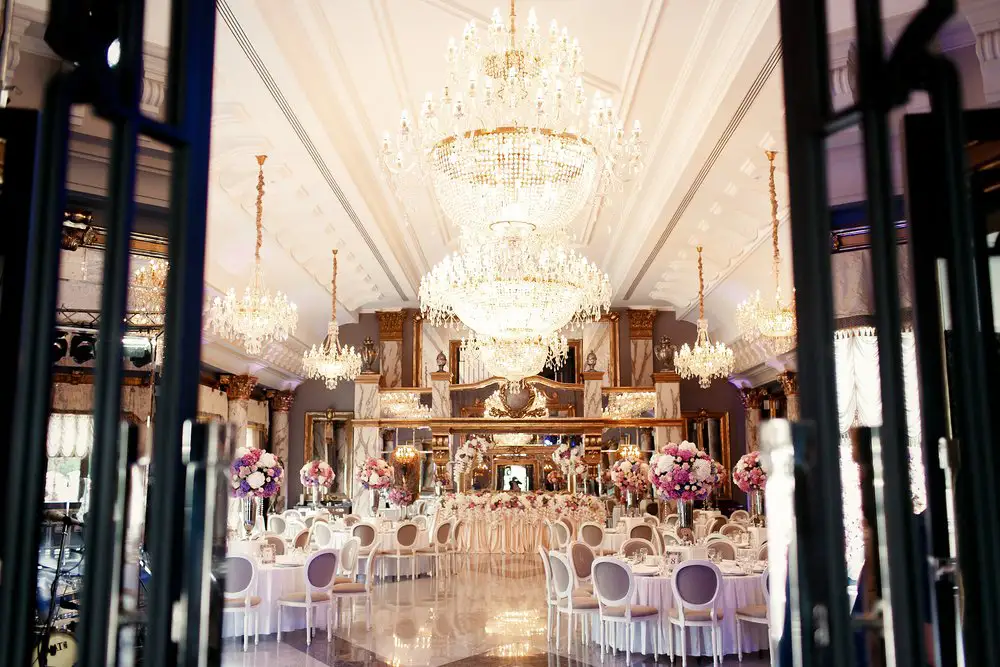
By the time the reception was in full swing, the ballroom had filled with music and laughter and the overlapping chatter of a room full of people who genuinely wanted to be there. Julian’s family surrounded me with such easy, effortless affection that I realized, somewhere around the second hour, I had gone that entire stretch of time without thinking once about my mother or my sister. That realization surprised me. I had always assumed that if my family ever truly abandoned me at something this important, I would spend the whole day quietly grieving their absence underneath the surface of everything else. Instead I was discovering something different — that absence loses a surprising amount of its power when the space around it fills up with something real.
During a lull between toasts, Julian took my hand and suggested we grab a photo with Arthur and Evelyn. The four of us stood together near the edge of the dance floor — Arthur grinning broadly, Evelyn with one arm wrapped around my waist, Julian at my other side. When I looked at the photo afterward on my phone, something settled inside me that I hadn’t expected. Not revenge. Not anger, even. Recognition, maybe. That photograph seemed to capture the actual truth of the day better than anything I could have said out loud.
So I posted it. Just that one photo, still in my wedding dress, tagged at the venue, with a simple caption: Surrounded by the family who truly showed up for us today. Deeply honored to have our extended family standing beside us as supporters and official witnesses on such an important day.
That was all I wrote. I didn’t mention my parents. I didn’t need to.
Within minutes, reactions started coming in. Friends congratulating us. A cousin commenting to ask, with visible curiosity, why Arthur Vance was standing in the front row. Business acquaintances of my father’s, people from the same regional circles, recognizing Arthur immediately and clearly understanding exactly what his presence at the front of that chapel implied. The photograph moved quickly through our overlapping social circles, the way things do in a community small enough that everyone eventually knows everyone else’s business.
Miles away, at a beach resort, my mother and Chloe were apparently lounging by the pool, checking their phones idly, probably expecting to see whatever ordinary wedding photos might filter through from a day they’d chosen to skip. Instead they saw mine.
I wasn’t there to watch my mother’s face change when she understood what she was looking at, but I pieced together enough of it afterward to know roughly how it unfolded. The moment she recognized Arthur standing beside me as an official witness, the photograph stopped being just an ordinary wedding picture and became something else entirely — visible, public evidence of exactly where she and my father had been expected to stand, and exactly who was standing there instead. At the same time, people throughout our overlapping circles had started quietly noticing, and quietly wondering, why neither of my parents nor my sister appeared anywhere in any of the wedding photos being shared that evening.
That was when my phone started buzzing. I’d put it on silent hours earlier, tucked into my clutch, and I never felt a single vibration. My mother called, I later learned, six separate times that evening. I never heard any of it. At the resort, she and Chloe hurriedly packed up, checked out early, and started the long drive back toward the city. Meanwhile, I was on the dance floor with my husband, completely unaware, and for maybe the first time in my adult life, their unfolding emergency wasn’t automatically becoming mine.
It was nearly ten o’clock when the reception had started winding down, guests drifting toward the bar for one last drink or gathering their things near the coat check, when the ballroom doors opened suddenly and my mother and Chloe walked in.
They were breathless, visibly rumpled from the drive, pale in a way that had nothing to do with the beach sun they’d presumably spent the day under. The careless, laughing voice I’d heard on the phone that afternoon was completely gone. My mother’s eyes swept rapidly around the ballroom until they landed on me, standing near Julian, with Arthur just a few feet away.
“Scarlet, sweetheart,” she said, moving toward me quickly, reaching for my hands.
I stepped back, just slightly, enough to keep the distance between us.
“There was a terrible delay on the highway,” she said, the words coming fast, tumbling over each other. “The car had some kind of trouble, we’ve been trying to get here all day, you have to believe me.”
Chloe stood behind her, nodding along, though something in her expression looked less committed to the story than my mother’s did.
The version she was offering now was so completely different from what she’d told me on the phone hours earlier that I almost couldn’t process the audacity of it. I had heard the ocean. I had heard Chloe giggling in the background, heard the clink of a drink being ordered. I had heard my own mother tell me, plainly, that a beach trip sounded like more fun than my wedding. And now, standing in front of me in a ballroom full of witnesses, she was trying on a car trouble story like she genuinely expected me to swap it in for the truth I’d already lived through.
Before I could find words for any of that, Arthur stepped quietly into the space between us. His voice, when he spoke, stayed completely calm.
“Brenda,” he said. “I think that’s enough.”
My mother froze mid-sentence.
Arthur looked at her steadily, without any particular hostility in his expression, just a kind of unshakeable clarity. “I’ve known Scarlet through Julian for a little over a year now. She’s conducted herself today with remarkable dignity, under circumstances that would have broken plenty of people. What happened here today speaks for itself.”
My mother’s face lost what little color it had left. “Mr. Vance, please—”
“It was just a misunderstanding,” Chloe added, her voice barely above a whisper, though nobody in the room seemed to believe it, least of all her.
Arthur turned toward her. “No,” he said simply. “I don’t believe it was.”
The ballroom around us had gone noticeably quieter, conversations trailing off as people nearby realized something significant was unfolding. Arthur never raised his voice, never once sounded anything other than composed, and somehow that composure made the moment land with far more weight than shouting ever could have.
“Vance Capital takes the character and reliability of the people we do business with seriously,” he said. “After what I’ve personally witnessed today, I believe certain existing arrangements deserve a proper review.”
Chloe stared at him, her mouth slightly open. My mother’s lips parted like she wanted to respond but couldn’t find anything to say.
“Tomorrow morning,” Arthur continued, “I’ll ask our board to review the backing connected to the boutique, along with the relevant commercial property agreements currently in place. Nothing further will be decided tonight.”
It was measured. Professional. And absolutely, unmistakably serious.
My mother turned to look at me then, and for the first time all day, I watched something shift in her expression — the slow, dawning understanding that I was no longer going to step in and rescue everyone from the consequences of their own choices.
“Scarlet,” she said, quieter now.
I stood beside Julian, my voice steady when I finally answered her. “You chose a beach trip over your daughter’s wedding, Mom.”
She opened her mouth to interrupt.
I shook my head. “You made your choice. I’m not going to argue with you about it tonight, in front of everyone, after the day I’ve already had.” I glanced toward the doors. “Please leave my reception.”
Julian spoke quietly to one of the venue staff standing nearby, and a few minutes later my mother and sister were escorted out, quietly, without a scene. Nobody shouted. Nobody chased after them into the parking lot. The band eventually started playing again. Someone brought me a glass of water. Julian took my hand and held it, not saying anything, just staying close.
And the reception simply continued.
That might have been the strangest part of the entire evening, looking back on it. For most of my life, my mother’s distress had a way of stopping everything around her, pulling the whole family’s attention toward whatever crisis she’d manufactured or stumbled into. Her problem became everyone’s problem. Her disappointment became my responsibility to fix. But that night, the ballroom doors closed behind her, and the room kept moving. The music kept playing. People kept dancing. And so, somewhat to my own surprise, did I.
The weeks that followed the wedding were quieter than I’d expected them to be. There was no single dramatic moment where everything in my life reorganized itself overnight — real consequences rarely arrive that neatly, in one clean turn. Instead, the arrangements I’d been quietly holding together for years began to shift, one decision at a time, slower than I would have imagined but steadier too.
I stopped functioning as my parents’ automatic financial safety net. I stopped absorbing every problem that came attached to Chloe’s name. I went through the various financial commitments I’d made over the years — the lease guarantee, the auto loans, the trust paperwork — and dealt with each of them deliberately and responsibly, rather than continuing to simply carry them because that had always been easiest.
Vance Capital conducted its own internal review, as Arthur had said they would, and without the outside backing and guarantees Chloe’s boutique had quietly depended on, the business closed its doors within two months. My parents had to make real adjustments too. They downsized out of the leased house I’d been paying for, moved into something considerably smaller and more modest. They reduced their expenses across the board, in ways that were, I imagine, genuinely uncomfortable after years of not having to think that carefully about money. For possibly the first time in decades, they had to build their lives around what they themselves could actually afford, instead of quietly assuming I would cover whatever gap appeared.
They tried, repeatedly, to reach me in the months that followed. Phone calls. A handwritten letter or two. Messages relayed through relatives who felt caught in the middle and wanted, understandably, for the family to find some kind of peace. Apologies arrived in different forms and different tones. Some sounded genuinely sincere. Some sounded like they were motivated more by fear of what continued distance might cost them than by any real reckoning with what they’d done. Some came wrapped in familiar phrases about family obligation, about how daughters are supposed to forgive their mothers eventually, about blood being thicker than whatever grievance I was apparently still nursing.
I read what I felt capable of reading. I listened when I had the emotional bandwidth to listen. But I kept the boundary I had finally, after thirty-two years, managed to draw. I didn’t spend my days consumed with hatred toward either of them. I didn’t want revenge, and I want to be clear about that, because it would be easy to tell this story as some kind of triumphant payback narrative, and that was never really what it was for me. Anger takes energy too, and I had already spent so much of mine on that family. What I actually wanted was distance from a pattern that had spent decades teaching me my worth was measured by what I could provide.
That pattern had followed me through most of my adult life without my fully realizing how deeply it had settled into how I moved through the world. My wedding day, as painful as it was, finally gave me the clarity and the nerve to stop participating in it.
Today, Julian and I have built a quiet, steady life together, the kind of life I hadn’t fully understood I was allowed to want. There’s real peace in our home. There’s mutual respect that doesn’t come with strings attached. There’s affection that never once arrives with an invoice tucked inside it.
Arthur and Evelyn have remained a steady, loving presence in both of our lives since that day. They never tried to replace my parents, and I don’t think either of them would have wanted to. They didn’t need to. They simply did something much simpler and, it turned out, much more meaningful. They showed up. They remembered birthdays without being reminded. They invited us to dinner regularly, not out of obligation but because they genuinely enjoyed our company. They asked about my work because they actually wanted to hear the answer, not as a polite transition toward talking about something else. When Julian and I needed advice, they offered it without ever trying to control the outcome. When we didn’t need anything at all, they still called, just to talk.
For someone who had spent years quietly believing that love had to be earned through usefulness, those small, ordinary gestures changed something in me more thoroughly than any dramatic speech or grand reconciliation ever could have.
I still think, sometimes, about those thirty empty chairs. For a long time after the wedding, I understood them as pure rejection, a visible, countable measure of exactly how little I mattered to the people who were supposed to matter most. I see them differently now. I’ve come to think of them as evidence — clear, undeniable evidence of a truth I’d spent years actively avoiding. I could not force people to value me by making myself more useful to them. I could not purchase genuine consideration through sacrifice, no matter how much of myself I handed over. I could not earn real affection by making myself endlessly, permanently available. And I could not keep spending the rest of my life waiting for people to eventually become the family I’d always wished they were.
Standing up for myself on my wedding day did more than simply protect my dignity in the moment. It gave me permission to build an entirely different kind of life going forward. For years I had confused boundaries with punishment. I’d believed that saying no to my mother meant I was being selfish. I’d believed that refusing to solve someone else’s financial problem meant I was abandoning them. I’d believed, somewhere underneath all of it, that love required constant, uncomplaining sacrifice in order to count as real.
But love without respect eventually curdles into exhaustion. Generosity without any limits eventually becomes expectation, and then eventually becomes entitlement. And responsibility, when it’s carried by only one person for long enough, stops being a virtue and quietly turns into a burden nobody ever asked whether you wanted.
My mother’s decision to miss my wedding hurt me in a way I will never pretend it didn’t. There are certain moments in a life that simply cannot be repeated later, no matter how sorry someone eventually claims to be. There was only one first walk down that aisle. Only one moment when the chapel doors opened and I saw Julian standing there waiting for me. Only one first exchange of vows. My mother and sister chose, deliberately, not to be present for any of it. I eventually accepted that the choice had belonged entirely to them.
What happened afterward belonged entirely to me.
I could have spent years afterward trying to make them fully understand how deeply they’d hurt me that day. Instead, I chose to spend that same energy understanding something about myself instead. I deserved relationships where my presence mattered even when I wasn’t paying for something, fixing something, signing my name to some guarantee, or rescuing somebody from a crisis they’d created themselves. That realization became, in the end, the real gift of my wedding day. Not the photograph. Not Arthur’s influence, or the business consequences that followed from it. Those were just circumstances, details of how the story happened to unfold. The deeper change happened earlier than any of that, back in the bridal suite, when I looked at my own reflection in that mirror and finally stopped asking myself why I wasn’t enough for people who had grown comfortable, over decades, taking me completely for granted.
I was enough before that phone call. I was enough during it. And I was still enough after I hung up.
Family, I’ve come to believe, isn’t defined only by bloodlines or some inherited sense of obligation. Sometimes family is found, instead, in the people who make the drive without being asked twice. The people who take the empty seat. The people who reach for your hand before you even have to ask them to. The people who remember the important day without needing a reminder. The people who show up when there’s absolutely nothing in it for them except the simple chance to stand beside you.
I remember walking through the reception near the very end of that night, once things had started winding down. The flowers on the tables had begun to droop slightly in the heat of the ballroom. Half-finished champagne glasses sat scattered across the linens. One of Julian’s cousins was quietly helping collect the gift envelopes into a box. The DJ had lowered the music to something soft and unhurried. Staff moved between tables clearing plates.
It wasn’t the perfect ending I had imagined for myself back when Julian and I first started planning the wedding, months and months earlier, back when I’d still assumed my whole family would be sitting proudly in those thirty seats. But I’ve come to think that perfect endings might be a little overrated anyway.
Julian found me near the edge of the dance floor, slipping an arm around my waist. “You okay?” he asked, quietly, just for me.
I looked out across the room. Arthur and Evelyn were deep in conversation with Julian’s mother near the bar. Friends were still laughing together at one of the back tables. Someone had left my bouquet resting on an empty chair. Beyond the ballroom’s tall windows, the night outside was ordinary and dark, parking lot lights humming, cars waiting patiently to carry everyone home eventually.
I thought, for just a second, about the phone call from earlier that afternoon. The laughter. The ocean crashing somewhere behind my mother’s voice. Thirty empty chairs standing in for thirty absent choices.
Then I looked at my husband, standing right there beside me, exactly where he’d been all day.
“Yes,” I said.
And this time, I actually meant it, all the way through.

Ethan Blake is a skilled Creative Content Specialist with a talent for crafting engaging and thought-provoking narratives. With a strong background in storytelling and digital content creation, Ethan brings a unique perspective to his role at TheArchivists, where he curates and produces captivating content for a global audience.
Ethan holds a degree in Communications from Zurich University, where he developed his expertise in storytelling, media strategy, and audience engagement. Known for his ability to blend creativity with analytical precision, he excels at creating content that not only entertains but also connects deeply with readers.
At TheArchivists, Ethan specializes in uncovering compelling stories that reflect a wide range of human experiences. His work is celebrated for its authenticity, creativity, and ability to spark meaningful conversations, earning him recognition among peers and readers alike.
Passionate about the art of storytelling, Ethan enjoys exploring themes of culture, history, and personal growth, aiming to inspire and inform with every piece he creates. Dedicated to making a lasting impact, Ethan continues to push boundaries in the ever-evolving world of digital content.