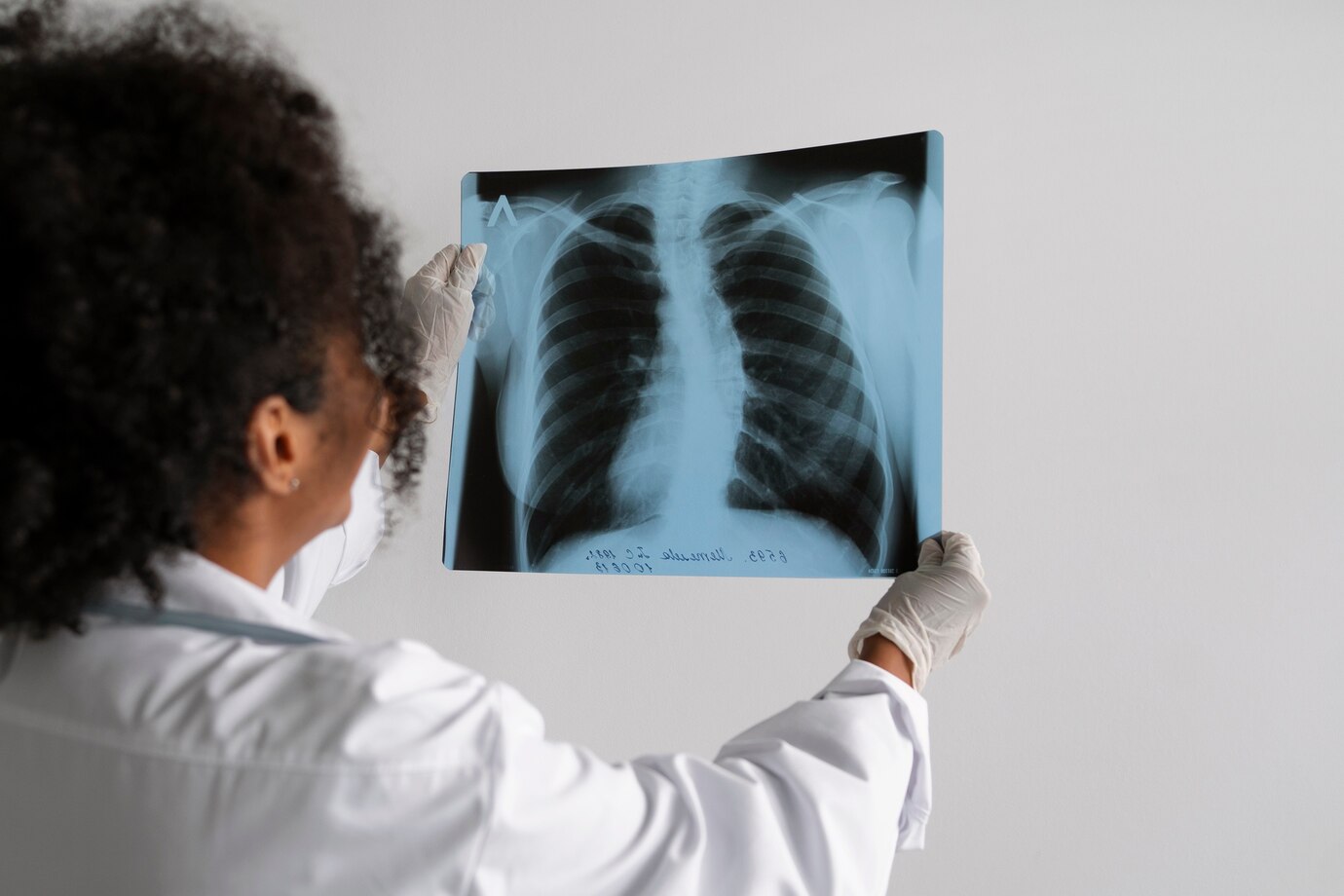
The pain started on a Saturday afternoon, sharp and sudden, low on my right side, the kind of pain that makes you stop mid-sentence and grip the counter. I told myself it was nothing, maybe something I ate, maybe a pulled muscle from the gym class I’d taken that morning. By six that evening I was doubled over on the bathroom floor, sweating, unable to stand up straight, and Caleb was the one who half carried me to the car.
“You’re scaring me,” he said, running two red lights on the way to the hospital, his knuckles white on the steering wheel.
“I’m scared too,” I admitted, because I was. The pain had gotten worse, not better, and something about the way my body was reacting told me this wasn’t a pulled muscle.
The ER was busy that night, the waiting room full of coughing children and a man holding a bloody towel to his hand, but they took me back faster than I expected once I described the pain. Blood tests. An IV. A CT scan that felt like it took forever, lying still in a cold room while a machine hummed around me. Caleb paced the hallway outside, checking his phone, texting his mother updates because that was what he did, that was what he’d always done, kept his family informed the way other people breathed.
It turned out to be my appendix, inflamed but not yet ruptured, caught early enough that they could treat it without immediate surgery, just observation, antibiotics, and a promise from the doctor that if anything changed overnight they’d operate right away. They admitted me for observation, put me in a thin gown that tied crookedly in the back, and hooked me up to monitors that beeped softly through the night.
Caleb stayed with me until almost midnight. He held my hand while nurses came in and out, asked good questions of the doctors, brought me ice chips when my mouth went dry. For those first hours, I thought, this is what marriage is supposed to look like. This is someone showing up.
Around eleven, his phone buzzed. I watched his face change as he read the screen.
“It’s my mom,” he said. “Just checking in.”
“Tell her I’m okay.”
He typed something back, then set the phone face down on the little rolling table beside my bed. I didn’t think anything of it. Not yet.
Around midnight, visiting hours technically over, a nurse gently suggested he head home and get some rest, that I was stable, that they’d call if anything changed. Caleb kissed my forehead and told me he loved me and that he’d be back first thing in the morning to take me home once they discharged me.
“I’ll be here,” he said. “Whatever time they let you go, just call me and I’ll come straight over.”
I believed him completely. Why wouldn’t I have?
The next morning, a Sunday, the doctor came by around ten and said everything looked good, my white blood cell count was trending down, the antibiotics were working, and they were ready to discharge me with instructions to rest and follow up with my regular doctor in a week. I felt relief flood through me, that particular lightness that comes after fear passes. I texted Caleb the news.
Discharging me in about an hour. Can you come?
I waited. No response for twenty minutes, which wasn’t unusual for Caleb on a Sunday morning, he sometimes silenced his phone or left it in another room. I got dressed slowly, still sore, still moving carefully, and packed my small overnight bag with the things Caleb had brought me the night before, my phone charger, a change of clothes, the paperback I hadn’t opened once.
By the time they wheeled me down to the discharge area, the standard hospital policy, a wheelchair to the door even though I could walk, I still hadn’t heard back from him. I checked my phone again in the elevator. Nothing. I told myself he was driving, that he’d see the message the second he parked, that any minute now I’d see his car pull up to the curb.
The automatic doors opened onto the pickup lane, bright with midday sun, cars circling slowly, families helping loved ones into passenger seats. I found a bench near the entrance and sat down, my bag on my lap, and checked my phone one more time.
That’s when the text finally came through.
Hey, so change of plans, I already left for the airport, Mom and Dad’s anniversary trip flight was earlier than I thought and I couldn’t push it back. You should be fine to call a ride home, I know it’s not ideal but you’re stable and it’s only a couple miles. I’ll see you when I get back Wednesday. Love you.
I read it three times, sitting there on that hospital bench in my wrinkled clothes, my body still aching from surgery-adjacent trauma, trying to make the words rearrange themselves into something that made sense. He knew about this trip. He’d told me weeks ago, his parents’ twenty-fifth anniversary, a long weekend trip the whole family had been planning for months. But he’d also promised, less than twelve hours earlier, sitting beside my hospital bed holding my hand, that he would be the one to pick me up.
I called him. It went straight to voicemail, which meant his phone was already off, which meant he was already through security, which meant this hadn’t been some sudden emergency. This had been planned. He had known when he left my bedside the night before that he wasn’t coming back for me in the morning, and he had let me believe otherwise anyway.
I called a rideshare with hands that weren’t quite steady. The driver, a kind older man who didn’t ask questions, helped me get my bag into the trunk and drove me the twelve minutes home in near silence, glancing at me in the rearview mirror a couple of times like he could tell something was wrong.
I was almost home, watching familiar streets pass by the window, when my phone buzzed again. Not Caleb. His sister, Kayla.
Hey Leah!! So excited, we’re all at the gate now, can’t wait for this trip, tell Caleb I said his outfit is fire lol. Hope you’re feeling better!
I stared at that message for a long time. Hope you’re feeling better, tucked in almost as an afterthought after excitement about a plane and an outfit. Which meant they all knew. Which meant this hadn’t been some rushed, last-second decision Caleb had been forced into by a flight time. His entire family had known, for however long, that he was choosing to get on that plane instead of picking his wife up from the hospital, and not one of them, including him, had thought that was worth mentioning to me directly.
I let myself into my own house alone, carried my own bag up the stairs alone, and sat down on the edge of our bed and cried in a way I hadn’t cried in years, not from the pain in my side, but from something that felt much deeper and much older, a slow, sick understanding settling into my chest like a stone.
I thought about calling my mother. I thought about calling my best friend, Renata, who would have driven across three states to pick me up if I’d asked. Instead I just sat there, quiet, running back through the last several years of my marriage, looking for the moment this pattern had started, and realizing with growing dread that I couldn’t find a single point of origin, because it had always been there. It had just gotten louder.
Caleb’s mother, Pamela, had a particular gravity to her, the kind that bent everything and everyone around her without her ever having to raise her voice. If she was disappointed about a restaurant choice, the reservation changed. If she didn’t like a weekend plan, the weekend moved. If a holiday didn’t fit her preferred schedule, someone extended it, rearranged flights, canceled other commitments. And somewhere along the way, I had become the family’s unofficial minister of Pamela management. I was the one who remembered her birthday three weeks in advance so there was time to order something she’d actually like. I booked the cabin every summer because I was the one who checked reviews and availability. I bought joint gifts from Caleb and me both because if I left it to him, it would be a last-minute gift card that Pamela would receive with a too-bright smile and a comment about how thoughtful gifts used to be. I kept a running list in my phone of everyone’s dietary restrictions before every holiday meal. I reminded Caleb, gently, over and over, to call his parents on Sundays.
I had told myself for years that I did all of this because I loved him, because I wanted his family life to feel easy for him, because that was what being a good partner meant. And there was truth in that. But somewhere along the way, doing all of it quietly had curdled into something else, a low simmering resentment I hadn’t let myself name, because naming it felt like admitting I’d built my own trap.
Caleb texted again around two that afternoon, from what I assumed was a layover.
Landed for the connection, everything okay? Xoxo
I didn’t answer. I sat with my phone in my lap for a long time, staring at the ceiling, feeling something in me go very cold and very still.
The trip lasted through Wednesday. I spent those four days mostly alone, moving slowly through the house, my incision site tender, my appetite gone, replaying the hospital bench over and over in my mind. Renata came by twice with soup and groceries, sitting with me on the couch while I finally told her everything, the promise, the text, the sister’s message, the four days of silence I was choosing to hold instead of pretending things were fine over text.
“You are allowed to be furious,” she told me, gripping my hand.
“I don’t even know if furious is the right word,” I said. “It’s more like I finally saw something I’ve been looking away from for years.”
By the time Caleb’s flight landed Wednesday evening, I had made a decision. I texted him one line.
Stay with your brother tonight. We need to talk but not tonight.
He called four times. I let it ring out each time. Finally, a text came through.
Okay. I’m sorry. I’ll stay at Marcus’s. Can I come by tomorrow after work?
I told him yes.
That Sunday night, alone in the house, I’d also done something I hadn’t planned on doing. I’d gone through years of old text threads, not obsessively, just enough to see the shape of a pattern I’d been too close to notice while living inside it. Christmas three years ago, when Pamela had been upset about the seating arrangement and I was the one who’d called the restaurant to rearrange the whole reservation. The summer Pamela hadn’t liked the cabin Caleb had booked without me and I’d spent two full evenings finding a replacement she’d approve of. The dozens of times I’d smoothed something over, absorbed some friction, made some accommodation, all so that Caleb wouldn’t have to be the one his mother was disappointed in.
And I understood, sitting there with my phone glowing in the dark, that I had built a role for myself inside this marriage that nobody had explicitly asked me to build, but that everyone, including me, had quietly relied on. And when the moment came that actually mattered, when I was the one who needed someone to show up, that entire elaborate system of accommodation had produced exactly nothing for me. Nobody had rearranged a flight. Nobody had called to smooth things over. I had been left on a bench outside a hospital with a bag on my lap and a text telling me to find my own ride.
Caleb came by Tuesday evening, not Monday like he’d first suggested, because I’d told him Monday didn’t work, I needed more time, and for once he didn’t push. He texted Monday instead. Can I come by after work tomorrow? I said yes.
He arrived Tuesday at 6:15, carrying a small insulated bag from the pharmacy, medication my doctor had called in for the pain that still hadn’t fully faded. He didn’t bring flowers.
I was glad. Flowers would have made this feel like something we could fix with a gesture, a bouquet standing in for an actual conversation, and I didn’t want that. I wanted the conversation.
He set the bag down on the kitchen counter and stood there for a second, looking older than I remembered, tired in a way that had nothing to do with jet lag.
“Can I sit down?” he asked.
I nodded, and we sat across from each other at the kitchen table where we’d eaten a thousand ordinary dinners.
For a minute, neither of us said much. The house looked almost normal again. My weekend bag had finally been unpacked and put away. The hospital wristband had gone into the trash days ago. I’d washed out the little bottles of electrolyte drink someone had left in the fridge for me and put them in the recycling bin. Everything looked like an ordinary Tuesday, except for the enormous, unspoken thing sitting at the table with us.
Caleb finally broke the silence. “I told my family the truth,” he said.
“What truth.”
“That you never told me it was fine for me to go. That I decided to leave and told everyone you’d approved of it because I didn’t want Mom to be angry with me.”
“How did that go over,” I asked, genuinely curious.
He rubbed his forehead, a gesture I’d seen a thousand times, the one that meant he was choosing his next words carefully. “She said she never told me to abandon you.”
“That’s technically true,” I said. “She never used those words.”
“I know. She also said I’m an adult, that she can’t make me do anything, that whatever I chose to do was on me.”
“That’s true too.”
He nodded slowly, and for the first time in this entire conversation, he wasn’t trying to turn his mother’s behavior into the whole explanation for his own choices. That mattered to me more than I expected it to.
“I kept thinking about what you said the last time we actually talked, before all this,” he continued. “That you’ve spent eleven years helping me manage her disappointment.”
I waited, not filling the silence, letting him sit in it.
“You have,” he said. “You’ve spent our whole marriage doing that.”
I appreciated, more than I could easily explain, that he didn’t add a but to the end of that sentence. No but I never asked you to. No but that was your choice. Just an acknowledgment, plain and unqualified.
“I should have stopped doing all of that years ago,” I told him. “I’m not saying what you did on Sunday was my fault. It wasn’t. Leaving me on a hospital bench was entirely your decision, and I need you to understand that I’m not going to let you or anyone else turn that into something I somehow caused. But I kept volunteering to make everything run smoothly for your family, year after year, and then quietly resenting everyone for never noticing the work it took.”
He nodded slowly, absorbing that.
“So what happens now,” he asked, and his voice had a rawness to it I hadn’t heard in a long time.
“I don’t know yet,” I said, and it was the most honest answer I had. I wasn’t ready to tell him our marriage was fine. I also wasn’t ready to tell him it was over. Both of those felt like decisions I hadn’t earned the clarity to make yet.
I told him I wanted another week of sleeping in separate rooms. I wanted him in the guest room whenever he was home. I wanted us to find a couples counselor, someone neutral, someone who could help us actually look at this instead of just talking around it the way we always had. And I told him I wanted one rule to start immediately, something non-negotiable.
“You do not answer for me anymore,” I said.
He looked at me, uncertain. “Meaning.”
“If your mother asks whether I’m coming to something, you tell her you’ll ask me. If your sister wants me to organize something, she asks me directly, not through you. If I’m sick, or upset, or busy, or just undecided, you do not translate that into whatever answer makes everyone else comfortable. You stop being my spokesperson to your family.”
“Okay,” he said.
“And your family’s logistics are yours from now on. The birthdays. The gifts. The reservations. The reminders. All of it.”
He almost smiled, a small, rueful thing. “That part I heard loud and clear.”
“I mean it, Caleb.”
“I know you do.”
The first test of that new rule came faster than either of us expected.
That Thursday afternoon, Pamela sent a message to the family group chat, the one that had my name in it even though I rarely posted in it, mostly just used to see photos of nieces and nephews and coordinate holiday plans I usually ended up executing.
Since Leah already has everyone’s food preferences, can she handle the Thanksgiving reservations again this year?
I saw the message while standing in the checkout line at the grocery store, my heart immediately tightening with the old, familiar reflex to type out a gracious yes before anyone could think I was being difficult. I held my thumb over the screen, waiting, testing whether I could actually let it sit.
Before I could decide anything, Caleb’s reply appeared.
Mom, I’ll handle the reservation this year. Leah isn’t coordinating family events anymore.
I stood there in line, groceries slowly moving up the belt toward the cashier, and felt something unfamiliar and quietly powerful move through me. Relief, maybe. Or the first real proof that something had actually shifted.
Pamela wrote back almost immediately. I was only asking.
Caleb answered, I know. I’m answering.
Nothing dramatic happened after that. No fight erupted in the group chat. No family split down the middle. My phone didn’t light up with twenty missed calls demanding I explain myself. The conversation simply moved on to someone posting a photo of a cousin’s new puppy, as if nothing significant had happened at all.
That was new. That quiet, unremarkable normalcy was the newest thing of all.
Counseling turned out to be far less comfortable than that one small text exchange. Our therapist, a calm woman named Dr. Okafor with a soft voice and an uncomfortable habit of letting silences stretch until someone finally broke them, spent our second session gently pulling something out of Caleb that I suspected he hadn’t even fully admitted to himself yet.
“When you realized Leah might miss the anniversary trip departure timing, or that picking her up might conflict with your flight, what was the actual feeling,” Dr. Okafor asked him.
Caleb was quiet for a long moment. “Embarrassed,” he finally said.
“Embarrassed about what?”
“Not because Leah was sick. Because I knew if I missed that flight, or even showed up late to the airport gate, Mom would make it the center of the entire weekend. She’d bring it up at dinner. She’d mention it to relatives. It would become this whole thing hanging over four days that were supposed to be about her and Dad.”
“So what did you decide to do with that feeling,” Dr. Okafor asked.
“I thought I could avoid all of it,” he said slowly, “if I just got Leah home safely and then left before anyone could say anything.”
“And how did you get her home safely,” Dr. Okafor pressed, “if you weren’t the one who picked her up?”
Caleb didn’t answer that one right away. I watched him struggle with it, watched something in his face crack open just slightly.
“Why did you tell everyone Leah had approved of you leaving,” the therapist asked, gentler now.
“Because then nobody could say I chose the trip over my wife,” he said finally.
I looked at him across the small space between our two chairs. “But you did,” I said. “You did choose the trip over me.”
“Yes,” he said. It was the first time, in this whole unraveling, that he’d said it plainly, without softening it, without wrapping it in some justification about his mother or timing or logistics.
It didn’t fix anything by itself. Saying a hard true thing out loud rarely fixes anything immediately. But it made something else possible that hadn’t been possible before, a kind of repair that could only start once the truth was sitting plainly on the table between us instead of hidden underneath excuses.
Over the months that followed, I found myself watching behavior far more closely than I listened to apologies, because I’d learned the hard way that apologies in my marriage had always come easily, while actual change had not.
Caleb handled his mother’s birthday dinner that year entirely on his own, choosing the restaurant, making the reservation, remembering to ask about a gluten allergy one of the cousins had developed. He bought his father’s Christmas gift without texting me twice asking what he should get, something that would have been unthinkable a year earlier. When his brother Marcus started a group text about a spring fishing trip, Caleb answered for himself directly and left me entirely out of the thread unless I specifically said I wanted to be included.
I stopped checking his phone calendar to see if he’d remembered his parents’ anniversary. I stopped quietly setting reminders on his behalf. A few things did get forgotten along the way, a cousin’s graduation announcement that went unacknowledged for a week longer than it should have, a gift that arrived a few days late. Nobody died. The world did not end because Caleb occasionally dropped a ball that used to always land safely in my hands before it ever hit the ground.
Pamela was cooler toward me for a while, a distance I felt in the slightly shorter phone calls, the group chat messages that no longer included little personal notes to me the way they once had. I let that distance exist without rushing to close it myself, without calling her to smooth things over the way I once would have, automatically, almost without thinking.
Then one Sunday afternoon, a few months into all of this, my phone rang and it was Pamela’s name on the screen.
“I’m making a big lunch this weekend,” she said, her voice a little more careful than usual. “Would you like to come?”
Not, are you and Caleb coming. Not, tell Caleb we’re expecting the two of you. She had asked me, specifically, directly, whether I wanted to come.
“Yes,” I said. “I’d like that.”
Lunch itself was slightly awkward, conversation a little more careful than it used to be, both of us feeling out the new shape of whatever this relationship was becoming. She never gave me the sweeping apology I’d imagined during that long, silent car ride home from the hospital, the one where she’d finally acknowledge everything, where she’d cry and take responsibility for the whole pattern she’d built her family life around for decades. That apology never came, not in the form I’d pictured.
Instead, while we were clearing plates together in her kitchen, rinsing dishes side by side at her sink, she said quietly, almost to the plate in her hands rather than to me, “I shouldn’t have pushed him about that weekend.”
“No,” I said. “You shouldn’t have.”
She nodded, just once, and didn’t say anything else about it. I didn’t need her to turn it into more than that. It was enough, that small, plainly stated acknowledgment, sitting there between us like a stone finally set down after being carried too long.
Six months after that awful Sunday on the hospital bench, I had a follow-up appointment for an unrelated issue, something routine, nothing urgent, at the same medical complex where everything had unraveled.
The night before, Caleb asked me, “Do you want me to drive you, or would you rather go alone?”
That question mattered more to me than he probably understood in the moment. Not an assumption that of course he’d drive me, and not an assumption that I’d rather go alone either. An actual question, waiting for an actual answer.
“I want you to drive me,” I told him.
“Okay,” he said simply, and he blocked off the whole morning on his work calendar without being asked twice.
The next day, we arrived at the medical complex fifteen minutes early. While I checked in at the front desk, I heard his phone buzz in his pocket. He glanced at the screen. Pamela’s name.
He silenced the call and slid the phone back into his pocket without a second thought.
“You can answer that,” I told him, meaning it.
“I’ll call her back later,” he said, and he sat down beside me in the waiting room chairs, staying right there until my name was finally called.
After the appointment, we walked back out through the same glass doors I had walked through alone six months earlier, into the same busy pickup lane full of circling cars and families helping each other in and out of passenger seats. For just a second, I felt the ghost of that other morning settle over me, the blue hospital wristband still on my arm, the paper pharmacy bag, the text telling me to find my own way home.
Caleb didn’t make a speech about it. He didn’t turn the moment into something bigger than it needed to be. Neither did I. He simply walked ahead a few steps and opened the passenger door of the car for me, the way he used to do years earlier, before either of us had let so much go unspoken between us.
On the drive home, he asked what I wanted for dinner.
“Soup,” I said, and he nodded, and turned the car toward the grocery store without needing anything more explained to him, without needing me to organize a single other detail of the evening ahead of us.

Ethan Blake is a skilled Creative Content Specialist with a talent for crafting engaging and thought-provoking narratives. With a strong background in storytelling and digital content creation, Ethan brings a unique perspective to his role at TheArchivists, where he curates and produces captivating content for a global audience.
Ethan holds a degree in Communications from Zurich University, where he developed his expertise in storytelling, media strategy, and audience engagement. Known for his ability to blend creativity with analytical precision, he excels at creating content that not only entertains but also connects deeply with readers.
At TheArchivists, Ethan specializes in uncovering compelling stories that reflect a wide range of human experiences. His work is celebrated for its authenticity, creativity, and ability to spark meaningful conversations, earning him recognition among peers and readers alike.
Passionate about the art of storytelling, Ethan enjoys exploring themes of culture, history, and personal growth, aiming to inspire and inform with every piece he creates. Dedicated to making a lasting impact, Ethan continues to push boundaries in the ever-evolving world of digital content.