The rain came down without mercy on the rooftops of the town, drumming and hissing, and I pulled my coat tighter around me and quickened my pace toward the notary’s office with my head bent against it. My father was gone. That single fact kept arriving in me over and over, fresh each time, as though some part of me refused to file it away and be done with it. My father was gone, and I could not seem to hold the thought still long enough to make sense of it.
He had always been my rock, the one fixed and dependable thing in my whole life, the person I called when the car made a noise I did not understand, or when a job fell through, or when a man broke my heart, or when I simply needed to hear a voice on the other end of the line that was glad, unconditionally glad, to hear mine. For thirty years he had been that voice. He raised me alone, and he did it well, and I never once doubted, growing up, that I was the most important thing in his world, because he told me so, and showed me so, in a thousand small daily ways.
But over the last few years, that rock had crumbled, slowly at first and then all at once, under the weight of debts I could not even fully comprehend. They had appeared out of nowhere, or so it seemed to me, and then they had multiplied, letter after letter arriving in envelopes with red printing on them, and he would not explain them to me, and he could not seem to escape them, no matter what he did. He grew gray and quiet and secretive in his last years, a man carrying something heavy that he would not set down and would not let me help him carry. And now the house we had lived in together, the house I had grown up in, the only home I had ever known, was about to be taken by the bank, and I no longer had the strength or the money or the will to fight for it. I had watched my father sink slowly under all of it, and then I had watched him die, worn out and worried to the very end, and now here I was, walking through the cold rain to hear a stranger read me the last of what he had left behind, and I could not imagine it would be anything at all but one more reminder of everything the two of us had already lost.
What’s even left, I wondered bleakly, as I reached the office door and paused under the small awning to catch my breath and shake the rain off my sleeves. Probably nothing. Probably nothing at all but more paperwork, and more debts I would somehow inherit, and the hollow echo of a life that was already over. I had come to hear about an ending. I had no idea I was walking in to be handed a beginning, wrapped up to look exactly like one more loss.
A secretary showed me inside, and a middle-aged man in a gray cardigan motioned for me to sit down across from him at a wide desk covered in neat stacks of documents. He had a kind, tired, careworn face, the face of a man who has read a great many last wishes aloud to a great many grieving people across that same wide desk, and who has learned, over the years, to do it slowly and gently, to leave pauses where they are needed. He poured me a glass of water I did not touch and waited until I had settled before he began.
“Let’s get started,” he said, and began flipping through the papers in front of him.
As he read the will aloud, in that low careful practiced voice, I confess that I barely listened to a word of it. My mind kept drifting away from him, off into the past, replaying small ordinary moments with my father as though I could hold onto him by remembering hard enough. The way he used to hum tunelessly while he cooked, always the same few bars of some song he never named. The way he told me everything, or so I had always firmly believed. The way he had held my hand at my grandmother’s funeral when I was nine years old and crouched down to my level and told me, gently, that it was all right to cry, that crying was not weakness, that it was love with nowhere else to go.
He had told me everything. That was the thing I had always been most sure of in my life, more sure of than almost anything. My father and I had no secrets between us, not one. We were a team of two against the world, and teams of two do not keep secrets. I would have staked my life on it. And then the notary’s quiet voice cut clean through the fog of my remembering, and it turned out I would have lost that bet.
“And a house,” he said.
My head snapped up. “I’m sorry,” I said. “Did you say a house?”
“Yes,” he said, and slid a document across the desk toward me. “Not your current residence. That, as you know, is encumbered. This is a different property. Another house your father owned, free and clear, in his name alone.”
I stared down at the paper he had pushed across the desk toward me, at the neat lines of legal type, at the address printed near the top. Another house. Owned outright, free and clear, no bank, no lien, no debt. My father, who had spent his last years drowning in debts I could not understand, who had lost the very home we lived in, who had told me everything, or so I had believed with my whole heart, had quietly owned a second house the entire time, a house I had never once heard him so much as mention in thirty years of being his daughter.
“Another house,” I said slowly, the words strange in my mouth. “I don’t understand. He never said a word about it. Not ever, not once, in my whole life. How could he hide something like this from me? Why would he? He lost our home. We were being put out on the street. And he had this the whole time and never told me?” The notary only spread his hands gently, a man who delivered surprises for a living and had long ago learned not to try to explain them.
My hands were trembling as I picked up the documents and looked at the address. It meant nothing to me whatsoever. It was a road I had never once driven in my life, in a quiet rural part of the county I rarely had any reason to visit, a place that was, as far as I knew, entirely disconnected from every part of the life my father and I had shared. Why didn’t he tell me, I thought. Why would he keep this one thing secret when he had kept nothing else, or so I had thought? Was this his way of trying to make something up to me, at the end, some small gift left behind to soften the loss of everything else?
I did not have answers. But one thing was suddenly, completely clear to me, sitting there in that quiet office with the rain still coming down outside. I had to go and see that house. It was the only thread I had left of my father, and I had the powerful, unshakable feeling that if I pulled on it, it would lead me somewhere I needed to go. It felt like the only way left to me to understand a man I had just discovered I had not fully known.
The next day was a Friday, and I called in to work and took the day, and I decided that I would face the unknown rather than sit at home and let it eat at me. I drove out of town along a winding country road that I did not know and had no memory of ever driving, a road that curved and rose and fell through countryside that grew steadily more beautiful and more remote the farther I went. The trees on both sides had turned, their leaves gone to deep gold and burnt copper and rust red, and they were beginning to let go of them now, so that every gust sent a slow drift of color down across my windshield, and I found myself slowing the wipers just to watch it fall.
The farther I drove, the more the world seemed to soften and quiet around me. The traffic thinned and then disappeared. The strip malls and gas stations fell away behind me. The houses grew farther apart and then vanished altogether, until it was just my car and the road and the tunnel of turning trees and the low pewter sky pressing down over all of it. I had the strange sensation of driving not just out of town but backward, out of my own life and into some older story I had not known I was part of, and I could not shake the feeling, the whole way, that I was being drawn somewhere rather than simply going there.
When I finally arrived and pulled off onto the gravel shoulder, the sight of the house sent a strange shiver straight through me.
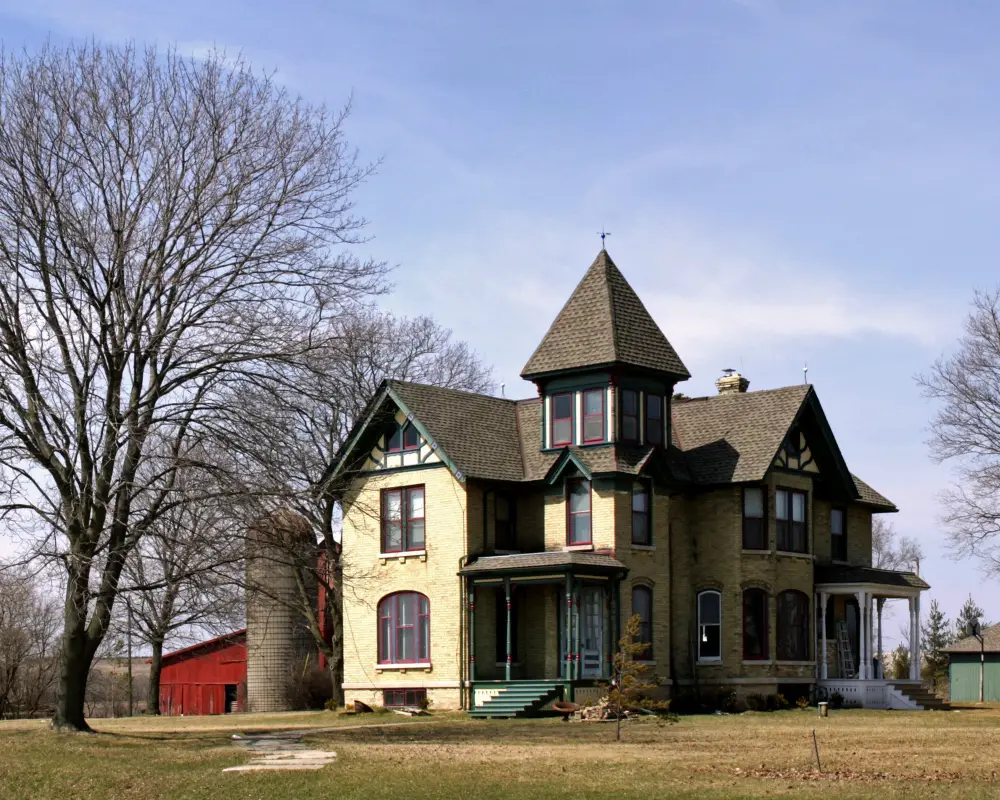
It was old, clearly old, but it was not neglected, which was the first thing that struck me and did not fit. The large windows caught what little light there was and held it, warm and clean. The porch had been freshly painted, a soft cream color, and it stood in gentle contrast to the moss that had crept green and thick across the old shingled roof, so that the whole place had an almost storybook quality to it, a house out of a children’s picture book, tucked into its trees. It was beautiful. And it was cared for, unmistakably, lovingly cared for, down to the swept steps and the trimmed hedge and the clean bright windows. And that was exactly the thing that made the unease in my chest grow heavier and colder as I sat there looking at it, because a house that had been sitting empty and secret and forgotten for years, a house no one but a dead man was supposed to know about, should not have looked cared for at all. It should have been sagging and dark and choked with weeds. Instead someone had painted that porch, and recently. Someone had planted those flowers. Someone had been here, all this time, living. The secret my father had left me was not an empty house. It was an occupied one.
“This is it,” I murmured to myself, sitting in the car for a long moment just looking at the place through the rain-streaked windshield, at the moss on the roof and the warm light in the windows and the freshly painted porch. My father had owned this. My father had painted, or paid to have painted, that porch. My father had a whole life out here that I knew nothing about, and it was waiting behind that door, and I was afraid of it and I wanted it more than I had wanted anything in a long time. I gripped the key the notary had given me until its cold teeth bit into my palm, and I made myself get out of the car, and I walked up the freshly painted steps to the front door, my heart going hard the whole way.
I slid the key into the lock, and it went in smoothly enough, and I turned it, and nothing happened. The key did not work. I frowned, and I pulled it back out, and I checked it, and I tried again, jiggling it, turning it hard one way and then the other, pressing my shoulder against the door. Nothing. The lock did not give at all, not even the smallest fraction, and the key turned uselessly in it as though it belonged to some other door entirely.
And then I understood, standing there on the freshly painted porch with the rain dripping off the eaves, with a slow cold certainty that started in my stomach and spread outward. It was not the wrong key. The notary would not have handed me the wrong key. The lock had been changed. At some point, someone had come to my father’s secret house, the one no one was supposed to know about, and had changed the lock on the front door. Which meant that someone had a reason to keep people out. Which meant that someone was inside, or had been, and did not intend to let anyone new walk in.
I bit my lip and stepped back off the porch and made my way around the side of the house through the wet unmown grass, my shoes soaking through, meaning only to peer in through one of the large windows and get some sense of what was inside, whether the rooms were empty and dust-sheeted or lived in, whether anyone was actually staying here, whether the changed lock meant what I was afraid it meant. I cupped my hands against the cold glass and leaned in close to look.
That was when the front door flew open behind me with a sudden violent force that made me jump nearly out of my skin and spin around, my heart slamming up into my throat.
“Can I help you?” a stern voice demanded.
I turned. Standing in the open doorway was a woman, somewhere in her sixties, I guessed, with sharp features and a straight hard mouth and an expression that left absolutely no doubt about how unhappy she was to find me creeping around her house. Her eyes were tired, deeply tired, but there was a defiant spark in them, a readiness to fight, that made me take a half step back.
“I, uh,” I stammered, holding up the key like an apology. “I’m sorry. This is my house. It was left to me. By my father. He passed away recently, and this house was in his will.”
“Your house.” She said it flatly, and something almost like a laugh moved across her face, though there was no humor anywhere in it, only a hard weary disbelief. “Your house. I have lived in this house for twenty years, girl. Twenty years. I have paid every bill that ever came to this address. I have fixed the leaks in the roof with my own two hands, and patched the shingles, and painted that porch you just walked your muddy feet across, and dug the garden, and kept the pipes from freezing every winter for two decades. This is not your house. It has never been your house. And I am not going anywhere, so you can turn right back around and drive back to wherever it is you came from.”
My grip tightened on the key until the metal teeth of it bit into my palm. Something in me, some exhausted and grieving and utterly cornered thing that had nothing left to lose, refused to back down, refused to get in the car and drive away. “Look,” I said, and I heard my own voice shaking and steadied it. “I don’t know who you are. I really don’t. I’ve never seen you before in my life, and I’m sorry to just show up like this. But I have the paperwork. I have the deed, in my hand, right now. Legally, this house belongs to me. It was my father’s, it was in his name, and he left it to me in his will. So I’m afraid it’s mine.”
“Paperwork.” She spat the word. “Paperwork means nothing to me. I have put my blood into this house. My sweat. My tears. Twenty years of them. And you think I am going to walk out the door and hand it over to you because you are holding a piece of paper you have never seen before in your life?”
“And you think I’m just going to turn around and walk away from it?” My voice cracked and rose, and I heard the raw desperation in it and I could not stop it and I did not try to. “I have lost everything. Do you understand that? Everything. My home, the house I grew up in, is gone, taken by the bank. My father is gone, in the ground two weeks now. My whole life, everything I ever counted on, all of it is just gone, and I am standing in the rain in front of a house I never knew existed because it is the only thing, the only single thing, I have left in the entire world. It is all there is. So no. No, I am not walking away from it. I can’t. There’s nothing to walk back to.”
She glared at me across the threshold, and her mouth tightened into a thin white bloodless line, and for one long moment I was completely certain that she was going to step back and slam the heavy door in my face and leave me standing alone out there in the wet grass with my useless key. Instead she let out a sharp hard breath through her nose, and something in her posture shifted, some recalculation moving through her, not a softening exactly, nothing so warm as that, but the look of a person revising her estimate of the thing in front of her. She had expected, I think, a greedy stranger who would fold at the first resistance. She had not expected someone with nothing left to lose.
I stepped away and called my lawyer from the yard, turning my back to her, my hand cupped around the phone against the wind.
“You hold the deed,” he told me, after I had explained the whole strange situation to him in a low rush, my hand cupped around the phone. “That’s the bottom line. It’s in your father’s name, it’s willed to you, and you’re telling me it’s unencumbered, no liens, nothing owed. Legally, then, you are well within your rights. Whoever this woman is, whatever she says she’s done for the place, the deed is what matters in the end. Possession is one thing but the deed is another. We’ll file first thing Monday morning and sort it all out properly through the court. In the meantime, don’t let her intimidate you into leaving. You’re entitled to be there. It’s your name on the paper.”
I thanked him and I hung up, and I stood in the yard for a second gathering myself, and when I turned back around the woman was still standing in the open doorway, exactly where she had been, unmoving, watching me with those tired defiant eyes, and I had the distinct and uncomfortable impression that she had heard, or guessed, every word of both sides of the conversation, and that none of it had frightened her in the slightest.
“I’m staying here,” I said, “until we get this figured out. Legally.”
“Fine,” she said, after a long, weighing moment, and there was something almost bitter, almost defeated, underneath the hardness of it. “Fine. Play house, if that’s what you want to do. Stay. See how you like it.” And she stepped back from the doorway at last, grudgingly, just far enough to let me pass by her into the warmth, and as I came up the last of the steps and over the threshold she said it, flatly, without warmth, without offering me her hand, giving me only the one word. “Deborah.”
“Emmeline,” I said, and I watched something flicker across her face when I said my own name, something quick and pained that I did not understand and would not understand for four more days, a flinch she covered almost before it appeared.
And as I passed close by her in the narrow doorway, close enough to catch the scent of tea and old wood and wool on her, something tugged at me, sharp and strange and impossible to place, some deep wordless recognition that I could not account for and did not want. It was her face. Something about her face. And then I saw what it was. It was the faint dimple that appeared in her left cheek when her mouth moved, a small particular crease, set just so, that I had seen ten thousand times before in my whole life, though never on another human being. I had seen it every single morning in my own face, in my own bathroom mirror. She had my dimple. Or, I would come to understand, I had hers, had carried a small piece of her on my own face my whole life without ever knowing whose it was. I noticed it, and a cold strange unaccountable feeling moved through me, a shiver that had nothing to do with the rain, and I pushed the noticing away hard and fast, because it made no sense at all, and because I had no room left in me that grief-worn day for one more thing that made no sense, and because some deep animal part of me was already afraid, even then, standing in the doorway of a house I had only just met, of what it might turn out to mean.
I stepped over the threshold into the house.
Inside, it was warm, warmer than the raw wet day outside, warm with the particular warmth of a house that is actually lived in. And it was cared for, everywhere I looked, and there were small quiet touches of a life being actively and lovingly lived, all through the rooms. A folded knitted blanket lay over the arm of a worn reading chair. A book sat open and face down on a side table, its spine cracked at whatever page she had been reading before I interrupted. A kettle stood on the stove, still faintly warm to the eye, steam ghosting up from its spout. There were dried flowers in a jar on the windowsill and a pair of reading glasses on the mantel and a calendar on the wall with things written on it in a small careful hand.
It did not feel, any of it, like a secret house standing empty and waiting for a will to be read. It felt like a home, a real and settled one, a place where someone woke and slept and made tea and turned the pages of books and marked the days on a calendar. My father’s home, somehow, in some way I could not begin to understand, and yet kept warm and alive all these years not by him, who I had watched grow gray and worried in a different house entirely, but by this hostile gray-cardiganed stranger I had never once heard him mention, and could not account for, and did not know how to think about.
I could not tell, standing there in that warm front room with my wet coat dripping steadily onto the old floorboards, which of two things was true. Whether I was an intruder trespassing on this woman’s whole settled life, barging in with a piece of paper to tear down twenty years of someone else’s home. Or whether, instead, the house itself had been quietly waiting for me all along, all these years, holding my father’s secrets patiently inside its walls, keeping them warm, until the day I finally came up the road to claim them. Both felt true at once, and neither felt like enough.
And Deborah, I understood even then, on that very first day, before I knew a single thing about who she really was, was the one line my father had deliberately left out of the will. She was the thing he had not written down. There had been the house, and the deed, and my name, all of it neat and legal on the notary’s desk. And then there was this woman in the doorway, unmentioned, unexplained, unaccounted for, a whole living person my father had left out of every document and every conversation of my entire life. The house was what he had left me. Deborah was what he had hidden. And I was only just beginning to understand that the two were the same thing.
Living under the same roof as Deborah, over the strange tense days that followed, felt like a war I had never enlisted for and did not know the rules of and could not seem to win. We circled each other warily through the rooms of that warm house, two strangers forced into a standoff, each waiting for the lawyers and the courts to decide who belonged and who did not. And she seemed to take a genuine, quiet, almost artistic satisfaction in finding fresh new ways, every single day, to drive me right to the ragged edge of my patience and hold me there.
At midnight, just as I was finally drifting off to sleep in the small spare room she had grudgingly allowed me to occupy, she would begin rattling pans down in the kitchen below me, a great deliberate clattering symphony of pots and lids and cast iron, a performance that would go on just exactly long enough to wake me fully and get my heart pounding, and then stop, abruptly, leaving me lying there in the dark wide awake and furious. At dawn, when I dragged myself to the bathroom to brush my teeth, the water would mysteriously refuse to run, the faucet coughing and spitting out nothing but air and a groan of pipes, only to work again perfectly, sweetly, an hour later once I had given up and the point had been made.
“Really, Deborah?” I would mutter under my breath, standing there staring at the dry tap with my toothbrush in my hand.
And when I confronted her about it, standing in the bathroom doorway with my toothbrush foaming in my hand and murder in my heart, her look of wide-eyed wounded innocence was so exaggerated, so theatrically overdone, so obviously and deliberately false, that it was almost, almost, comical. “Must be those old pipes,” she would say gravely, shaking her head with deep sorrow at the sad unknowable mysteries of old country plumbing, as though she and I were both helpless together before the whims of the water. But the bright hard glint of satisfaction in her eye gave her away completely, every single time, and we both knew it, and that was rather the point. She wanted me to know. Half the pleasure of it, for her, was that I knew and could prove nothing.
She misplaced things, endlessly, ingeniously. My car keys would vanish from the hook where I had hung them and turn up three hours later tucked behind the flour canister in the back of the pantry, where no keys had any business being. My shoes would disappear from beside the front door where I had left them and reappear, mysteriously, far under the couch. My phone charger went missing entirely one evening and surfaced two days later in the bottom drawer of a dresser in a spare room I had never once set foot in. None of it was ever anything I could prove, or accuse her of outright without sounding as though I had lost my mind. It was all petty, and childish, and small, a campaign of tiny deniable irritations.
And it was remarkably, maddeningly, brilliantly effective. She was waging a quiet war of attrition against my nerves, and she was very good at it, and I began to understand that she had probably been fighting quiet wars against the world for most of her life and had gotten a great deal of practice. By the time that long strange weekend had finally passed and Monday morning arrived at last, I was mentally exhausted, frayed at every single edge, running on almost no sleep and a great deal of cold anger, and yet somehow, underneath all of it, more stubbornly determined than ever to hold my ground and not be driven out, because I understood, in some wordless place, that holding my ground in that house was the only thing I had left to hold onto at all.
My lawyer was coming out to the house that Monday, and I needed everything about the day to go smoothly, to look right, to feel, at least on the surface, like I was a competent adult who had herself together and deserved to be taken seriously. I had washed my good clothes by hand the night before and hung them out on the line in the side yard to air overnight in the cool clean air, my white dress and my few other nice things, everything I owned that was worth wearing to meet a lawyer, all of it pinned up and laid out ready for the morning. Or so I believed when I finally fell asleep. I should have known better by then. I should have known that nothing I left out overnight in that house was safe.
When I went outside that Monday morning to gather the clothes off the line, I found them instead in a sodden, filthy heap in the mud beneath it, thrown down and trampled. My white dress was streaked all over with dirt and green smears of grass, ruined.
“Are you kidding me?” I shouted, snatching the muddy tangle up off the ground and storming back into the house with it.
Deborah was sitting calmly at the kitchen table, sipping her tea, and she barely lifted her eyes as I came thundering in. “Something wrong?” she asked mildly.
“You threw my clothes in the mud.” I could hear my own voice shaking. “You threw them off the line into the mud.”
Her calm, her total unbothered calm, only stoked the fire in me higher. “I’m sure I don’t know what you’re talking about,” she said, and took another sip of her tea.
I slammed the wet ruined heap of clothes down onto the kitchen table in front of her, right beside her saucer, mud spattering across the clean cloth. “This,” I said. “This is what I am talking about. Look at it. What is wrong with you? What have I ever actually done to you? I have done nothing, Deborah. Nothing. I lost my father and I got handed a key to a house I never knew about and I drove out here in the rain and I have been nothing but polite to you, and you treat me like I’m a criminal who kicked in your door in the middle of the night. You rattle pans to keep me awake. You hide my things. You shut off the water. And now this. Why? What did I do? Just tell me. Just tell me why you hate me so much, because I truly do not understand it.”
Her teacup clinked, sharp and hard, against the saucer as she set it down, and her hand, I noticed, was not quite steady. And something in her face, some wall she had been holding up with enormous effort since the moment she flung open that door, finally cracked and gave way, and when she spoke again her voice had dropped low and gone rough at the edges.
“You don’t belong here,” she said, and it did not come out as an accusation now so much as a kind of grief. “This house was never yours. It was never supposed to be yours. You have no idea. You have no idea what this house even is.”
“What are you talking about?” I said. “What does that even mean?”
And then it all came pouring out of her, everything, in a rush, the way a wall gives way all at once after holding back the water for years.
“This was my home,” she said, and her voice was rising now, cracking and trembling, thirty years of something breaking loose all at once. “This was my home. Mine. This was where I lived, where I was happy once, before any of it went wrong. And your father took it from me, along with everything else he took. Your father took everything I had in the world. He took this house. And he took you.” Her voice broke completely on the last word. “He took our daughter, and he walked out that door with you in his arms, and he left me standing here with nothing at all. Nothing. For thirty years.”
The room seemed to tilt slowly around me, the floor sliding. “What?” I said. The word came out of me as barely more than a breath, no sound behind it. “What did you just say? Our daughter?”
Deborah’s eyes were burning now, filled with a mixture of old anger and older pain, and they were fixed on my face as though she were trying to memorize it, or to find something in it.
“He told you I was dead, didn’t he,” she said. “That’s what he did. He told you your mother was dead. He could never forgive me for what I did, so he simply erased me. He buried me while I was still alive. But I wasn’t dead. I was your mother. I am your mother, Emmeline.”
I could not speak. I could not make a single sound. I stood there in that warm kitchen with my ruined muddy dress lying on the table between us and I stared at this woman, this hostile stranger, and everything I thought I knew about my own life came quietly apart at the seams. She had my name on a baby’s bracelet in her pocket. She had lived thirty years in the house where I took my first steps. And the small faint dimple that appeared in her left cheek when she spoke, the very one I had noticed on that first day and pushed away, the one I had seen in my own bathroom mirror every single morning of my life, seemed suddenly to be the loudest thing in the entire room, louder than the rain, louder than my own heartbeat. It was my dimple. It had always been hers first. My father had raised me to believe my mother was dead, and my mother had been carrying my dimple around on her own face for sixty years, an hour up the road.
Her hand was shaking badly now as she reached into the pocket of her gray cardigan and drew something out, closed in her fist, and held it across the table toward me, and slowly opened her fingers. It lay there in her open palm. It was a small bracelet, a delicate thing sized for the wrist of an infant, the silver of it gone soft and dull and slightly tarnished with the passage of many years, worn smooth by a great deal of handling.
“Look at it,” she said, and her lips were trembling so that she could barely form the words. “Please. Just look at it. Take it and look.”
I reached out, and I took it from her open hand, and my own fingers were not steady either. I turned the tiny thing over, holding it up toward the gray window light, and there, engraved in minuscule worn letters on the inside curve of the band, so small I had to squint to read them, were my own name and my own date of birth. My name. The day I was born. On a baby’s bracelet, in the hand of a woman I had met four days ago and spent every one of those days hating.
“Why?” I whispered. I could barely get the word out. “Why would he do that? Why would he tell me you were dead?”
And all the anger, all the hard defiant fury she had worn like armor since the moment she flung open that door, drained out of Deborah’s face, all at once, like water out of a cracked basin. And what was left underneath it, exposed, was a grief so deep and so old and so raw that it was almost unbearable to look at directly, the grief of a woman who has spent thirty years alone in a house with the consequences of a single terrible choice, rehearsing an apology she never once got to give.
“Because I left,” she said, very quietly now, all the fight gone out of her, only the grief left. “That is why. Because I left the two of you. I made a terrible mistake, Emmeline. The worst mistake of my entire life, the one I have paid for every single day since. I was young, and I was foolish, and I was unhappy in a way I did not understand, and I let myself believe, God forgive me, that I could have some better, brighter life with another man who had turned my head. I convinced myself of it. I told myself all the lies a person tells themselves when they want to do a selfish thing. So I left. I left your father, and I left you, my own baby daughter, when you were so small, too small to remember my face or my voice or anything about me at all.
And that man, the one I threw everything away for, he left me too, in the end. Of course he did. He left me exactly as I had left your father, and I understood it as a kind of justice, exactly what I deserved and no more. And when I finally came crawling back, months later, ashamed and broke and begging on this very porch, your father would not forgive me. He would not even let me in the door. And I cannot, even now, even after everything, entirely blame him for it, because I broke something in him that does not mend. He took you, and he took a lawyer, and he went to court, and the court looked at a mother who had abandoned her infant and gave him everything, full custody, sole custody, the right to raise you however he saw fit. And what he saw fit to do, in his grief and his fury, was to tell you that your mother was dead. To bury me in your mind. To take you away to another town and raise you to believe I was gone, so that you would never come looking, and never know, and never be hurt by me again.”
I could not speak. I could not move. The woman I had spent the last several days resenting with my whole exhausted heart, the woman who had rattled pans at midnight and hidden my keys behind the flour and thrown my good clothes down into the mud, the hostile gray-cardiganed stranger I had driven out here fully intending to evict from her own home, was my mother. She was my mother. The mother I had quietly grieved my entire life without ever once knowing that grief had a name and a face and an address, because the man I trusted most in all the world had looked me in the eye when I was small and told me she was already in the ground.
Deborah went on, and the tears were running freely down her lined face now, and she made no move to wipe them away.
“He left me this house, in the end,” she said, more softly now, looking around the warm room as she spoke, at the blanket and the books and the dried flowers. “That is the part I have never fully understood. In his will he left it to you, on paper, the deed in your name. But all these years he let me stay in it, live in it, keep it. And I have always understood it, or tried to, as his way of half forgiving me. Not all the way. He could never forgive me all the way, and I don’t blame him. But halfway. A small mercy he could manage from a distance, when he couldn’t manage the rest.
Because this was our first house, Emmeline. Do you understand what I am telling you? This was the first house your father and I ever had together, when we were young and had nothing and were happy anyway. This is where we brought you home from the hospital, wrapped in a blanket. This is where you took your very first steps, in that front room, right about where your suitcase is sitting now. Yours and mine and his, the three of us, for a little while, before I ruined it. And your father could never once bring himself to come back and live here after everything fell apart, because every board and every windowpane in it was full of the memory of what we had been and what I had thrown away. It hurt him too much. So he took you, and he moved far away, and he built a whole new life in a house with no ghosts in it, and he left me here alone with all the ghosts, in the house where we had been happy, and he never told either of us one single word about the other for thirty years. He kept us in separate sealed rooms of his life, you in one and me in the other, and he carried the whole weight of both of us by himself until it finally killed him.”
Before I could find anything at all to say to her, before I could even begin to sort through the wreckage of everything she had just poured out onto that kitchen table, before I could decide whether to reach for her hand or run out the back door, the doorbell rang, sharp and shrill and jarring, and it yanked me violently back into the present moment, out of thirty years of hidden history and into the here and now of a Monday morning.
For a moment neither of us moved. We just looked at each other across the muddy clothes and the cold tea and the tiny silver bracelet lying on the table between us. And then I understood who it was. My lawyer was standing out on the freshly painted porch, exactly on time, with his briefcase and his neat folder of papers, ready and willing to help me do the precise thing I had driven out here to do, which was to take this house, legally and permanently, away from the woman who had just, sixty seconds ago, told me she was my mother. I walked to the door on legs that did not feel like mine, and I opened it, and I looked at his kind professional face, and I could not for the life of me remember what I had wanted.
The days that led up to the court date were tense and very quiet. Deborah and I barely spoke, and when we did it was short and careful, both of us moving around each other in that warm house like two people afraid of setting off something neither could control. I could not undo the legal machinery I had already set in motion, and I was not sure, in those strange suspended days, that I even wanted to.
I spent hour after hour alone in that spare room, turning it all over and over in my mind, unable to land anywhere, unable to make it settle into any shape I could live with. I was furious with my father. Furious in a way I had never once been able to be while he was alive, because you cannot be furious with your rock, and now the rock was gone and the fury came flooding into the space it left behind. Furious at the enormous, decades-long lie he had told me and made me live inside my entire life. At the mother he had killed on paper and buried in my imagination and hidden the whole time in a house an hour up the road. At every birthday I had spent quietly grieving a woman who was alive and drinking tea and painting a porch sixty minutes away.
And then, just as quickly, the fury would turn and rush the other direction, and I was furious with Deborah instead, with my mother, for having left in the first place, for having lit the match that burned all of it down, for being the original crack at the center of everything that had ever broken in my family. If she had not left, my father would never have lied. If she had not left, I would have had a mother my whole life. It all came back, in the end, to her leaving.
And then, underneath both of those furies, running the whole time like a cold current beneath ice, I was furious with myself. For not knowing how to hold any of it. For not knowing what a good person was even supposed to feel when her dead mother turns out to be alive, and hostile, and living in a secret house full of her own baby pictures. There was no map for this. No one had ever told me what the correct emotion was supposed to be. So I felt all of them at once, all the time, and none of them ever resolved into anything I could act on, and that churning directionless storm of anger and grief stayed with me through every one of those quiet tense days and right up into the gray morning of the hearing itself.
The ruling itself, when it finally came, was clear, and it came more quickly than I had expected. Because Deborah had lived in the house openly and continuously for twenty years, because she had paid the property taxes and the utility bills and maintained the place as her sole and undisputed residence for two full decades, entirely in the open, without concealment, the court found in her favor. There were established legal doctrines for exactly this kind of situation, the judge explained from the bench in a dry patient voice, long-standing protections that accrue over many years to a person who openly, continuously, and notoriously occupies and cares for a property as though it were their own. My father, by leaving her there for twenty years and saying nothing, by letting her pay the taxes and paint the porch and put down two decades of roots, had, in the eyes of the law, allowed those protections to ripen fully into a claim.
Whatever the deed in my hand said, whatever my father had written down, the law now recognized Deborah as the rightful owner of the house. It was hers. It had, in every way that the court cared about, been hers for a very long time already.
And when the ruling came down, when the gavel fell and it was final, I felt the loss of the house go through me like a physical blow, a dull heavy impact somewhere in my chest, and for one terrible moment it felt exactly like losing my father all over again, like the last thin thread connecting me to him had just been cut in an official courtroom by a stranger in a robe. The house had been the last of him. And now it was gone too.
But then I looked across the courtroom at Deborah, expecting to see triumph on her face, expecting to see the hard defiant woman who had thrown my clothes in the mud finally getting what she had fought for. And that was not what I saw at all. She was not triumphant. She was weeping, quietly, one hand pressed over her mouth, her shoulders shaking, and she was not looking at the judge or at the deed or at the house she had just won. She was looking at me. And in her grief I saw my own grief reflected straight back at me, the very same grief, wearing the very same face, down to the dimple in the left cheek. And I understood, all at once, with a strange sudden aching clarity that cut right through my anger, that the two of us had just lost the exact same man. That we were, in all the world, the only two people left alive who had truly loved him. And that we were sitting here on opposite sides of a courtroom fighting each other over the house he had left behind precisely, precisely, because he had never once in thirty years found a way to bring the two of us into the same room while he was still alive to do it. He had made us enemies from beyond the grave because he could not bring himself to make us a family while he lived.
That afternoon, back at the house, in a heavy silence, I packed my suitcase. I had lost. I had no legal right to stay any longer, and I would not have known how to stay even if I had. So I folded my few clothes, the ones that had survived the mud, and I closed the case, and I dragged it out to the front door, to the same threshold I had crossed on that first rainy day full of righteous anger and total certainty, when I had believed this was simply my house and she was simply a squatter and the world was simple. It did not feel simple now. Nothing felt simple now. I reached for the door handle, ready to leave the house and this woman and the whole impossible tangle of it behind me for good, to drive back down that road of golden trees and never return.
Deborah stood in the middle of the front room, the room where she said I had taken my first steps, watching me closely, saying nothing, her hands twisting together in front of her cardigan. And just as my fingers closed on the door handle, she spoke.
“Wait,” she said.
I turned back, my hand still on the door, confused, my eyes stinging. “What is it?” I said. “You won. The house is yours. I’m going.”
Her face was working, struggling visibly with something enormous, thirty years of it, and then she forced it out. “I don’t want you to leave.” Her voice broke clean in half on the words. “I have spent thirty years in this house blaming myself for what I did, for every single day of your life that I missed, for your first day of school and your birthdays and the nights you must have cried for a mother you thought was dead. I have made my peace, as much as anyone can, with losing almost everything I lost. I lost your father. I lost this house today, and then I won it back, and it feels like ash in my hands. None of it matters. Do you hear me? None of it. Not the house, not the deed, not any of it.
But you.” She pressed her hand flat to her chest. “You are my daughter, Emmeline. You are my daughter. And I only just got you back, after thirty years, four days ago, walking around the side of my house in the rain. And I have been so cruel to you, so frightened and so cruel, because I did not know how to say any of this, because I was terrified that you would find out who I was and hate me and leave, so I tried to make you leave first, before it could hurt so much. And now I don’t want to lose you again. Not now. Not after all of this. I can’t. I cannot survive doing it twice.” The tears were streaming down her face and she made no move at all to stop them. “I want us to try to fix this. Whatever is left of it to fix. Even if it can never be perfect, even if it’s thirty years too late for most of it, even if all we have is whatever comes next. I am so sorry. I am so sorry for all of it, for leaving you when you were a baby, for the pans and the water and your dress in the mud, for every cruel thing I have done. Please. Please don’t get in that car.”
And without thinking, without deciding to do it, without giving any of the anger I had been carrying for four days and thirty years a single chance to object or argue or hold me back, I let go of the suitcase handle. I heard it topple over onto the floorboards. And I crossed the room, the front room where she said I had taken my first steps, and I put my arms around my mother, this woman I had met four days ago and buried my whole life, and I held on to her as hard as I could.
She was thinner than I expected, and smaller, and she smelled of tea and old wool, and for a second she went completely rigid with shock, as though she could not believe it was happening, as though she had braced so long for me to leave that she no longer knew how to be held. And then she broke, all at once, and her arms came up around me and she shook with the force of thirty years of it, sobbing into my shoulder, and I found that I was crying too, both of us standing there in that warm room holding on to each other and weeping for the man we had both lost and the years we had all thrown away.
“I’m sorry too,” I said, into her shoulder, and I meant it, I found, meant it completely, the anger not vanished but set down at last. “I’m sorry too. Mom.”
The word felt strange and enormous in my mouth, a word I had never once said aloud to a living person, and it also felt, somehow, exactly right, like a key finally turning in a lock that had been changed long ago.
In the weeks that followed, the house on the winding road slowly changed, from a battleground into something else entirely, a place of slow and careful and often clumsy healing. I did not move away. There was nothing to move away to, for one thing, my old life having dissolved, but that was not really the reason, and we both knew it. Deborah, my mother, had won the house in a court of law, and it turned out that the only thing she truly wanted to do with the house she had fought me so bitterly for was to fill it, finally, after thirty long empty years of ghosts, with her daughter.
We had thirty years to try somehow to account for, thirty years of birthdays I had spent thinking her dead and she had spent thinking me lost, thirty years of ordinary Tuesdays and scraped knees and school plays and heartbreaks, all the small daily furniture of a life together that we had been robbed of and could never get back. And we did not try to get it back, because you cannot. Instead we started from exactly where we were, two grieving, stubborn, sharp-tongued, dimpled women rattling around a storybook house full of a dead man’s long silence, and we set about the slow strange work of learning each other, one careful, awkward, tender day at a time. She taught me to make her tea the way she liked it. I fixed the pans that no longer needed rattling. Some days were hard and we retreated to opposite ends of the house. Most days, slowly, got a little easier than the one before.
I never did get all of my questions answered. My father was gone, and the full truth of why he did what he did, the exact shape of his anger and his grief and his strange, stubborn, half-completed mercy, went with him into the ground and stayed there. Why he told me she was dead instead of simply that she was gone. Why he left her the house to live in but never let her back into his heart. Why he could not, in thirty years, find the few words it would have taken to give the two of us to each other while he was alive to see it. I turned those questions over for a long time, and eventually I made my peace, as Deborah had made hers, with never fully knowing the answers.
But I came to understand the important part, the only part that finally mattered in the end. He had left me a house I had never heard of, out at the end of a winding road lined with golden trees, and I had driven out to it that first rainy day expecting to find nothing but dust and silence and one last bitter reminder of everything I had already lost. And instead I had found a door with a changed lock. And behind the door, a hostile woman in a gray cardigan. And behind the woman, once all the anger had burned away, the mother I had been told was dead and had grieved my whole life without knowing her name. And behind all of it, underneath his thirty years of silence, the one thing my difficult, secretive, heartbroken father had somehow known, at the very end, that I would need far more than I would ever need a house. He had left me a way back to her. It was clumsy, and it was too late, and it came wrapped in confusion and grief and a lawsuit, but it was the last thing he gave me, and it was the best thing he ever gave me, and I believe now that he knew exactly what he was doing when he wrote that house into his will.
And I learned, in that storybook house among the golden trees, living out my days with the mother the world had told me to bury, the one thing all of it had to teach. Family is not the paperwork, and it is not the deed, and it is not even the hard buried truth of what happened long ago and who wronged whom. Family is the willingness to forgive what can still be forgiven, and to sit down together anyway in the wreckage of all the things that never can be, and to find, somehow, between two stubborn people who share a dimple, the ordinary daily courage to begin again.

Lila Hart is a dedicated Digital Archivist and Research Specialist with a keen eye for preserving and curating meaningful content. At TheArchivists, she specializes in organizing and managing digital archives, ensuring that valuable stories and historical moments are accessible for generations to come.
Lila earned her degree in History and Archival Studies from the University of Edinburgh, where she cultivated her passion for documenting the past and preserving cultural heritage. Her expertise lies in combining traditional archival techniques with modern digital tools, allowing her to create comprehensive and engaging collections that resonate with audiences worldwide.
At TheArchivists, Lila is known for her meticulous attention to detail and her ability to uncover hidden gems within extensive archives. Her work is praised for its depth, authenticity, and contribution to the preservation of knowledge in the digital age.
Driven by a commitment to preserving stories that matter, Lila is passionate about exploring the intersection of history and technology. Her goal is to ensure that every piece of content she handles reflects the richness of human experiences and remains a source of inspiration for years to come.