The Toolbox
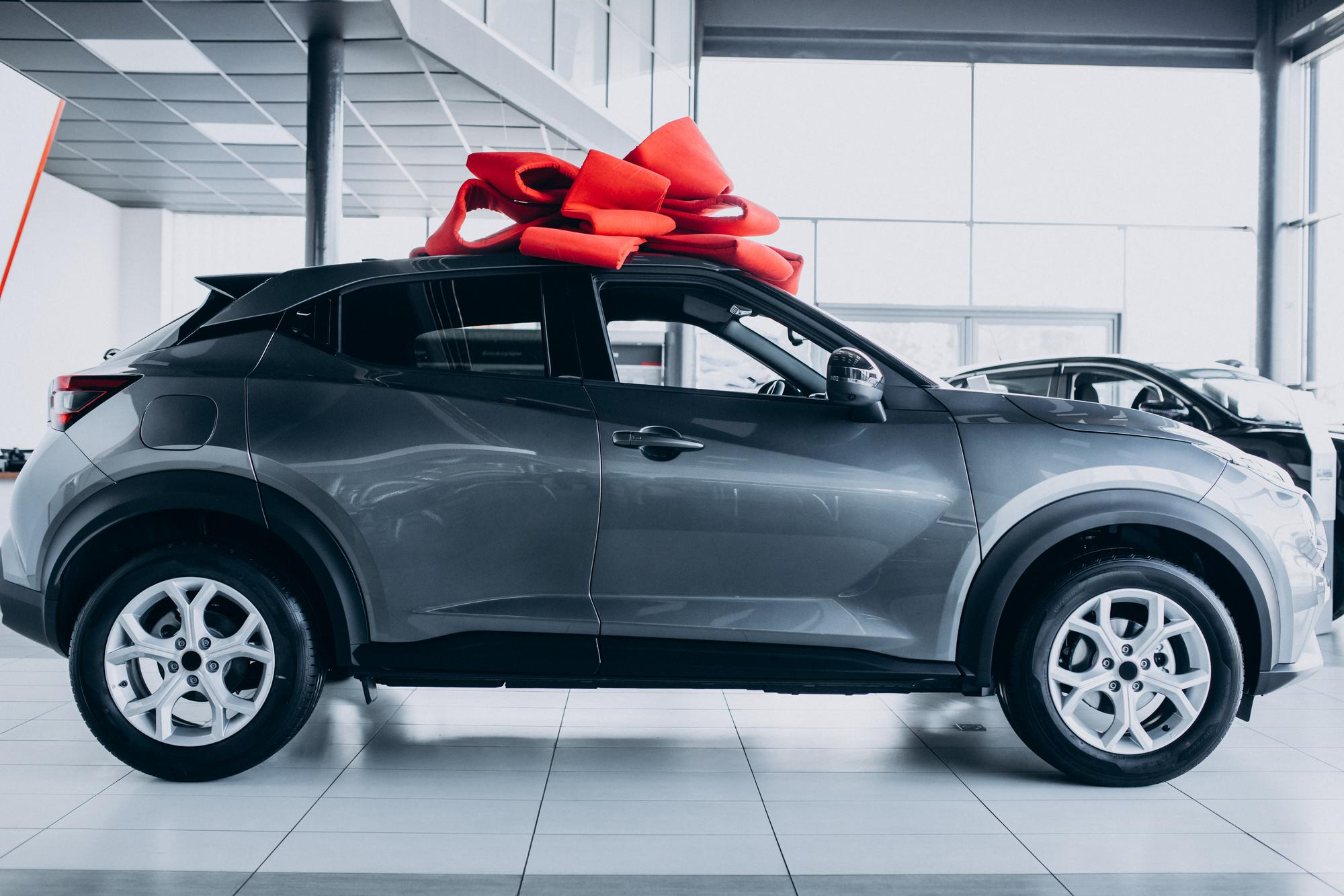
“Come on, son.” My father was smiling at me, but he said it loud enough for the porch. “Your stepdad COULD NEVER compete with this.”
Ray looked at the ground.
On the kitchen table behind him was what he’d given me that morning. It had taken him about six weeks of evenings in the garage, and it had cost him almost nothing, and I hadn’t stopped thinking about it since seven a.m.
My father held the keys out on his open palm and waited.
I didn’t take them.
For a second I thought about the fourteen years, the way you sometimes think about a whole stretch of time in one compressed flash, not in order, just pieces of it arriving all at once. I thought about being three and not understanding why the house had gotten quieter, not understanding that quieter meant a person was gone, just knowing that certain sounds didn’t happen anymore — a car in the driveway at six, a particular laugh from the kitchen, the specific weight of a hand on the back of my head when I fell asleep on the couch. I thought about being seven and asking Mom, once, only once, because I saw what it did to her face, whether my dad was ever coming back, and her saying, “I don’t know, baby,” in a voice that made it clear she’d stopped hoping the answer was yes a long time before I’d asked.
I thought about being eleven, the year money got tightest, the year Mom worked the extra shifts at the hospital and I learned to make dinner for myself three nights a week out of whatever was in the pantry, and how I never once thought of that as deprivation, because I didn’t know yet what having more looked like, so lacking didn’t feel like lacking, it just felt like Tuesday.
I thought about being sixteen, the year Ray showed up at the door for the first time to pick Mom up, nervous in a way I found sort of funny at the time, wearing a shirt that still had the fold-creases from the packaging, and how he’d looked past Mom at me standing in the hallway and said, not to her, to me, “You mind if I take your mom to dinner?” — asking my permission, like it mattered, like I had a vote, when nobody had ever once asked me if things happening in my own house were all right with me.
I thought about all of that standing there in the driveway with my father’s hand still out, palm up, keys glinting, and none of it took more than two or three seconds, the way memory does that, compresses fourteen years into the space between one heartbeat and the next.
I turned toward the porch instead. “Ray. Come here a second.”
For a second nobody moved. My father’s hand stayed out, palm up, keys catching the morning light like he was offering me the sun. Down the street a sprinkler kicked on and hissed against somebody’s fence. Mom had her arms crossed tight over her chest, not in anger, more like she was holding herself together, and Danny and Cara were standing in the doorway in their pajamas because it was a Saturday and nobody had told them to be dressed for this.
Ray came down off the porch slow, like he wasn’t sure the invitation was really for him. He had grease under two of his fingernails that hadn’t come out in the shower, which meant he’d been up before any of us, in the garage, doing something.
“Yeah, bud?” he said.
I looked at my father. He was still holding the keys out, and now the smile had gone a little fixed at the edges, the way a smile does when it’s waiting on something that isn’t coming.
“I want to show you something,” I said. Not to my father. To Ray.
“Show me?” Ray said.
“Yeah. Hang on.”
I went inside. The house was quiet in that specific way houses get when everyone in them is listening for what happens next. On the kitchen table was the thing Ray had given me at seven that morning, before my father’s truck had even turned onto our street, back when it was just supposed to be an ordinary birthday with pancakes and a card and whatever this was going to turn out to be.
It was a toolbox.
Not a store one. Ray had built it himself, out of a stack of old oak flooring he’d pulled up from Danny’s room two summers ago when we redid the floors, wood he said was too good to throw out and had been sitting in the garage rafters ever since, waiting, he said, for the right project. He’d dovetailed the corners by hand — I knew that because he showed me how, one of those nights, my hands over his hands, cutting joints in a piece of scrap first so I wouldn’t ruin the real thing. It had two drawers and a top lid that opened on a piano hinge, and he’d sanded it until the grain looked like something you’d see in a magazine, and then he’d rubbed it with oil instead of finish because he liked the way oil let the wood keep breathing, that’s what he said, wood needs to breathe, and I hadn’t understood what that meant until I picked it up that morning and it was warm somehow, warmer than a piece of furniture should be.
He’d carved something into the underside of the lid, where you’d only see it if you were looking, if you opened it all the way and tipped it back. I hadn’t shown Mom that part yet. I hadn’t told anyone.
I carried it out onto the porch and then down the steps, and my arms ached a little because the wood was heavier than it looked, dense old oak, and I set it down on the hood of my father’s brand new car, right there in front of the bow, because it was the only flat surface around and because some small mean part of me wanted it there.
My father’s eyebrows went up. “What’s that?”
“Ray made it,” I said. “For me. This morning. Well — the last six weeks, but he gave it to me this morning.”
“It’s a toolbox,” my father said, like he was being generous by identifying it correctly.
“It’s not really a toolbox,” I said.
Ray had come up beside me now, hands still in his pockets, looking uncertain, like he didn’t know if I was about to embarrass him or myself or both of us. I opened the lid. The hinge didn’t make a sound, because he’d oiled it, because Ray does not let a hinge squeak in his house, ever, on principle.
Inside, the top tray held tools. Not brand new ones. A ratchet set with the finish worn off two of the handles. A crescent wrench with a chip in the jaw. A screwdriver with blue electrical tape wrapped around the grip because the original plastic had cracked. A tape measure that stuck a little at the sixteen-foot mark, I knew, because I’d used it enough times to know its habits.
“These are just old tools,” my father said, and he wasn’t wrong, and I think he thought that observation was going to be the end of it.
“They’re not old tools,” I said. “They’re the tools we used to fix the garbage disposal the week after you and Mom got married.” I looked at Ray. “Remember? You had me hold the flashlight and I dropped it in the sink.”
Ray almost smiled. “Down the drain. We had to take the trap apart twice.”
“This one” — I picked up a hex key with a strip of yellow paint worn to a ghost of itself — “is the one we used on my bike when the pedal came loose in eighth grade, and you said if I didn’t learn to tighten my own crank arm I’d be walking home from every ride I ever took for the rest of my life.”
“You still don’t tighten it enough,” Ray said. “You baby it.”
“This” — a putty knife, the blade slightly bent — “is from the drywall in Cara’s room, when she put her rollerblade through it.”
Cara, from the doorway, said, “That was an accident,” in the specific outraged voice of a nine-year-old defending a three-year-old grievance, and a couple of people almost laughed, which broke something loose in the air, just a little.
I kept going, because now that I’d started I found I didn’t want to stop, like each tool was a small stone I was setting down in a row so everyone could see the path they made. I picked up a pair of channel-lock pliers, the rubber grip split down one side and mended with a wrap of black tape.
“These are from under the kitchen sink, the winter the pipe froze,” I said. “You had me hold the space heater six inches from the pipe for forty-five minutes while you swore at a shutoff valve that wouldn’t turn. Mom kept yelling down the stairs asking if we were dead yet.”
“I remember,” Ray said. “You fell asleep on the floor waiting for it to thaw.”
“I was thirteen. It was midnight.”
Next was a small brass compass, dented on one edge, which didn’t look like it belonged with the rest of the tools at all until I explained it. “This isn’t even from a repair. This is from the camping trip sophomore year, when Danny and I got turned around on the ridge trail and you found us by following the sound of Danny complaining. You gave me this after, said every man ought to carry something that tells him which way is which, even if he thinks he already knows.”
Danny, from the doorway, said, “I wasn’t complaining, I was informing everyone we were lost,” which got an actual laugh this time, even from Mom, a short surprised one that seemed to catch her off guard as much as anyone.
I set the compass down gently, on top of the pliers, and looked at the last item in the top tray, a small stub of yellow chalk worn down to almost nothing.
“Driveway,” I said, before Ray could explain it, because I remembered this one clearest of all. “You taught me to check my own oil with this. Drew a line on the pavement where the front tire needed to sit so it’d be level, so I’d get an honest reading on the dipstick. I still check the chalk line every time, even though I’ve probably got it memorized by now.”
“Habits stick better than memory does,” Ray said quietly. “That’s sort of the whole idea behind the box.”
“Every tool in here,” I said, and now I wasn’t really talking to my father anymore, I was talking to the driveway, to the whole scene, to whoever was listening, “is from something we fixed together. He kept them. I didn’t even know he was keeping them. He just — every time something broke, he kept the tool we used, and put it somewhere, and I guess for six weeks he’s been in the garage building this so he’d have somewhere to put them all at once.”
My father’s jaw did something complicated. “That’s — ” He stopped. Started again. “That’s a nice sentiment, but son, tools aren’t exactly—”
“There’s a bottom drawer,” I said, and pulled it open.
That was where the letters were. I hadn’t known about those either, not really, not until that morning. There were maybe thirty of them, small pieces of paper folded in thirds, each one dated, going back four years, to right around when Ray and Mom got married. I picked up the top one and read it out loud because I wanted my father to hear it in Ray’s handwriting even though I was the one saying the words.
March, the year I turned fourteen. Helped him with the science fair board tonight. He did all the actual thinking, I just held things and asked questions so he’d explain his reasoning out loud. Kid’s smarter than he knows. Proud of him. Didn’t say it. Should have.
I picked up another one, a year later.
He didn’t make varsity. Cried in the truck where he thought I couldn’t hear him over the radio. Didn’t let on I heard. Told him ice cream, my treat, no reason given. He knew there was a reason. Let him have the dignity of not saying so.
I put that one down and picked up a third, from the fall of my junior year, and I hadn’t meant to keep reading, I think I’d meant to just show my father one or two and stop, but something about being fourteen years behind on being known by somebody made me greedy for the rest of it, right there in the driveway, in front of everyone.
He asked me tonight why I never talk about his biological dad, whether I hate him. Told him I don’t have room to hate a man I’ve never met, that hate takes up too much space and I’d rather use the room for something useful. Don’t know if that was the right answer. It was the true one. Hope someday he gets to decide for himself what he feels, without me putting my thumb on the scale either direction.
I looked up at my father when I read that one, and something in his face had gone very still, like a man hearing, for the first time, that the person he’d assumed was his rival had spent years deliberately not turning a child against him, had left that particular door open on purpose, at some cost to himself, for no reason except that it seemed like the right thing to do.
I put that letter down too, carefully, and picked up the last one, from a week ago.
Birthday’s Saturday. Been building the box six weeks, told him it was a “garage project,” which was true, technically. Hope it’s not a stupid thing to give a seventeen-year-old. Hope he knows what I mean by it, since I’ve never been good at saying it straight. Whatever he needs fixed the rest of his life, I want him to have the tool for it and know somebody kept it for him on purpose.
Nobody said anything for a second. A dog barked two yards over. My father was very still, holding those keys, and for the first time since he’d pulled into the driveway he didn’t look like a man delivering a gift. He looked like a man watching a bill come due that he hadn’t known he owed.
“There’s one more thing,” I said, and I tipped the lid all the way back so the underside caught the light, and I showed him — showed everyone — what Ray had carved there, small, in careful block letters, the kind of lettering that takes a steady hand and a lot of ruined practice pieces to get right.
Built by hand, for a kid who was never a burden. Not for one day of my life.
I set the box down on the porch step, gently, the way you set down something you’ve decided is going to outlast you.
Then I turned to my father.
“I know what a car costs,” I said. “I’ve known what everything costs since I was about six years old, because Mom used to do the math out loud without meaning to, standing at the kitchen counter with the bills, and I’d hear her, and I learned to do math I probably shouldn’t have had to know at six. So I know exactly what that car cost you. And I know exactly what this cost him.” I put my hand on the lid of the box. “And they’re not the same currency. You can’t hold them up next to each other and say one obviously wins, because they’re not measuring the same thing.”
“I drove four hours,” my father said. His voice had an edge now, something defensive climbing up under the smile that had finally, fully, given out. “I bought you a car, and you’re standing here quoting some — some scrapbook a man who isn’t even your father put together—”
“He’s not my father,” I said. “You’re right. You’re my father. You’re also the guy who left when I was three and didn’t call on my birthday for fourteen years and showed up on the fifteenth with a bow on a car and expected me to hand you the last fourteen for free, in one afternoon, because the car was shiny enough to buy them back.” My voice had gone quiet, which surprised me, because I’d expected it to shake, and instead it came out flat and certain, like something I’d been rehearsing for years without knowing it. “He’s not my father. He’s the guy who showed up at every single game, including the year I sat the bench the whole season and there was nothing to see, and he came anyway, every Friday, and sat in the cold, and never once made me feel like it was a waste of his time.”
Behind me, I heard Mom make a small sound, not quite a sob, more like a breath that had been held too long finally let go.
“I’m not saying no to you because I hate you,” I told my father, and I meant it, because I didn’t, not really, hate is too big and too simple a word for what I felt looking at him. “I’m saying no because you’re asking me to make a choice between two people who were never actually competing, and pretending like the outcome should be obvious. It’s not obvious. It’s not even close. But it’s not close in the direction you think.”
My father looked at the toolbox. Then at Ray, who still hadn’t said a word, who was just standing there with his hands in his pockets and his eyes wet in a way he was clearly trying very hard to control, because Ray does not cry in driveways, Ray is not that kind of man, or at least he’s spent four years trying not to be, in front of us anyway.
“I have money,” my father said, and it came out smaller than he probably meant it to. “I can give you things he can’t. That’s not nothing. That’s real.”
“It’s real,” I agreed. “I’m not saying it’s not real. I’m saying it’s not enough, on its own, and it never was, and I think some part of you knew that, or you wouldn’t have needed to say your stepdad could never compete loud enough for the whole porch to hear. If you actually believed that, you wouldn’t have needed anyone to hear you say it. You’d have just handed me the keys and let the car speak for itself.”
Silence. The kind where you can hear a bird two trees over deciding whether to keep singing.
“I don’t want to fight with you on your birthday,” my father said finally, quietly, and for a second I almost felt something crack open toward him, some small door I hadn’t known was still unlocked.
“I don’t want to fight either,” I said. “I want you to know me. That’s different from wanting to buy me. If you want to know me — actually know me, not the fourteen-year gap version of me, not the birthday-card version — I’m around. I’m here most weekends, I go to school four miles from this house, I have a life you could actually be part of, slowly, the boring way, the way that doesn’t come with a bow. But I’m not doing the fast way. The fast way doesn’t work. I don’t think it’s ever worked for anybody.”
My father looked at the car like he’d forgotten it was there, like it had turned, in the space of about ten minutes, from a triumph into an accusation sitting in our driveway with a bow going a little limp in the morning heat.
“What do you want me to do with it?” he asked, and there was something almost boyish in the way he asked it, like the question had knocked something loose in him too.
“That’s yours to figure out,” I said. “It’s not my car. I never asked for it. I’m not going to pretend I don’t want a car — everybody wants a car, I’m seventeen, I’m not made of stone. But I want the one I earn, or the one that means something, not the one that’s supposed to prove a point about who loves me more efficiently.”
He stood there a long moment. Mom had come down off the porch by then and was standing near me, not touching me, just standing close, the way she does when she wants me to know she’s there without making it a whole thing. Danny and Cara had come out too, barefoot on the driveway, Cara still holding her stuffed rabbit by one ear, both of them watching this like it was a show they didn’t fully understand but knew mattered.
“I’ll go,” my father said. He didn’t sound angry anymore. He sounded tired, and a little smaller than he’d looked getting out of the car forty minutes before. “I’ll — I’ll call you. If that’s all right. Not with a car next time. Just to call.”
“That’d be good,” I said, and I meant it, even though some old, small, three-year-old part of me wanted to hate him cleanly and completely and this wasn’t going to let me do that, and maybe that was for the best, because hate is heavy to carry around for fourteen more years.
He got back in the car. He sat there a second before starting it, looking at the house, at all of us standing in a loose cluster on the driveway around a wooden box full of borrowed tools and secret letters, and something in his face looked like grief, or maybe just the particular grief of realizing you bought the wrong thing with the wrong currency and there’s no store that’ll take it back.
The car pulled out slow, the bow still stuck crooked to the roof, and none of us watched it all the way down the street. We just sort of turned back toward the house at the same time, like a held breath finally letting out.
Mom got to me first. She didn’t say anything, just put both arms around me and held on hard enough that I felt her shaking a little, and I understood that she’d been holding something in for the entire fourteen years, or at least for the whole forty-five minutes my father had been standing in our driveway, and it was coming out now in a hug that lasted longer than hugs usually last in our family, which isn’t a family that goes in for long hugs, generally, we’re more of a shoulder-squeeze family, so this was new.
“You didn’t have to do that,” she said into my shoulder, because I’d gotten tall enough the last year that her voice landed at my shoulder now instead of my ear, which still felt strange every time it happened. “I would have understood if you took the car. Nobody would have blamed you.”
“I know,” I said. “I didn’t do it for you. I did it because it was true.”
She pulled back and looked at me, and her eyes were doing the thing where they’re bright and wet but she’s refusing to actually let anything fall, out of some stubbornness she’d probably needed a lot of over the past fourteen years and had never fully put down.
“He’s a good man,” she said, meaning Ray, obviously, and nodding a little toward where he was standing a few feet off, still holding his hands together in front of him like he didn’t know what to do with them now that the moment had passed and nobody was performing anything anymore.
“I know that too,” I said.
I went over to him. Danny and Cara had already gotten there first, Cara hugging him around the middle the way she does, burying her face against his stomach, and Danny standing next to him not hugging because he’s eleven and thinks he’s too old for that now, but standing close enough that his shoulder was touching Ray’s arm, which is Danny’s version of the same thing.
“Hey,” I said.
“Hey,” Ray said back. His voice came out rough.
“You kept all that stuff,” I said. “For four years. You just — kept it.”
“Didn’t know what else to do with it,” he said, trying for casual and not quite landing it. “Couldn’t exactly throw away the flashlight-in-the-drain wrench. Felt like it belonged to something.”
“It belonged to us,” I said, and Ray’s face did something complicated, something that looked like it was fighting very hard not to fall apart in the driveway in front of his stepson and his own two kids and the neighbor two doors down who’d definitely been watching this whole thing from her window pretending to water a plant that did not need watering at nine in the morning.
“I’ve never known how to say it,” Ray said. “The — the thing where I don’t say it. Your mom’s told me. I know I don’t say it. I say it in garages instead. I don’t know why that’s how I ended up wired, but it’s how I’m wired, and I figured if I couldn’t say it out loud I could at least build a box that said it for me and hope you’d open the right drawer.”
“I opened the right drawer,” I said.
“Yeah,” he said. “You did.”
I hugged him then, which surprised both of us a little, because we’re not really a hugging family and definitely not a stepdad-and-stepson hugging pair, we’re a pair that communicates mostly through him teaching me things with his hands over my hands and me pretending I already half-knew whatever he was showing me so I wouldn’t have to say thank you out loud too many times in one afternoon. But I hugged him anyway, right there on the driveway, and he hugged me back hard enough that I felt something in my own chest finally let go too, something I hadn’t known was clenched until it wasn’t anymore.
“Happy birthday, bud,” he said into my shoulder, quiet, just for me.
“Thanks, Ray,” I said. “For all of it. Not just today.”
We had pancakes eventually, cold by then, because nobody had felt like eating while all of that was happening in the driveway, but Mom heated them back up and we ate them at the kitchen table with the toolbox sitting in the middle of it like a centerpiece nobody wanted to move, and Cara kept opening and closing the little drawer just to watch the piano hinge not squeak, delighted by it in the specific way nine-year-olds get delighted by mechanisms that work exactly as promised.
Later that afternoon Ray asked me to come out to the garage, said there was one more thing, and I figured it was something small, maybe a card he’d forgotten to give me with the box, or maybe just an excuse to have five quiet minutes together after a morning that had been loud in ways none of us expected.
It wasn’t a card.
Under a canvas tarp in the far corner of the garage, the corner I hadn’t been allowed into for six weeks, the corner Ray had told me was “just organizing junk, don’t worry about it,” was a truck. An old Ford, the kind of dull faded blue that paint gets after twenty years of sitting somewhere, but the engine bay was clean, spotless even, and there was a new-old battery in it and tires that still had the little rubber nubs on them from the factory.
“This isn’t the box,” Ray said. “This is a different thing.”
He pulled the tarp back the rest of the way, folding it over his arm like he was unveiling something in a museum, careful with it even though it was just a paint-flecked canvas tarp that had covered half the projects in that garage over the years. Dust hung in the slant of light coming through the one high window, and for a second neither of us said anything, just stood there looking at the truck like it might do something if we watched it long enough.
“You built me a truck?”
“I didn’t build it,” he said. “I found it. Guy at the shop was going to scrap it for parts, engine was seized, I told him I’d take it off his hands for nothing if he let me haul it myself. It’s not new. It’s not going to make anybody’s jaw drop in a driveway. But it runs, and I know it runs because I rebuilt the engine myself, nights, after you’d go to bed, and I know every bolt in it because my hands put every bolt in it, and I figured—” He stopped, cleared his throat. “I figured a kid who’s spent four years learning how to fix a garbage disposal and a bike crank and a hole in drywall ought to have something of his own to keep fixing. Something that’s his to take care of, not something that shows up finished and expects a thank-you.”
I didn’t say anything for a second because I couldn’t.
“It’s not much to look at,” Ray said, mistaking my silence for disappointment, already backpedaling. “We can get it painted eventually, if you want, once you’ve saved up, I’ll help—”
“Ray,” I said. “Stop talking for a second.”
He stopped.
“This is the best thing anybody’s ever given me,” I said, and I meant every word of it, more than I’d meant almost anything I’d said that whole loud, strange day. “Including the box. Including all of it.”
“You don’t have to say that.”
“I’m not saying it because I have to. I’m saying it because a car with a bow on it is a car with a bow on it. Anybody with enough money can buy that. This is six weeks of your nights. This is you not sleeping so I could have something that runs because your hands put it together. Nobody buys that. You can’t write a check for that.”
Ray looked at the truck for a long moment, running his hand along the hood the way you’d touch something you were proud of and a little embarrassed to be proud of, both at once.
“Your mom said I shouldn’t try to compete today,” he said. “Said whatever your dad brought, it wasn’t my job to match it, that it wasn’t a competition and I shouldn’t act like it was one.”
“She’s right.”
“I know she’s right. But some stubborn part of me heard ‘he’s bringing a car’ and thought, well, I’ve got a truck under a tarp that’s about eighty percent done, and if I pull two weeks’ worth of late nights into six days I bet I can get it running by Saturday. So I did. Not to compete. Or — ” he laughed, short, a little rueful — “maybe a little bit to compete. I’m not going to stand here and tell you I’m above it, because apparently I’m not, not entirely. But mostly I just wanted you to have something.”
“You didn’t need six weeks of late nights to give me something,” I said. “You’ve been giving me something for four years. The truck’s just the loudest version of it.”
He didn’t say anything to that, just nodded, and I understood that was as far as the conversation was going to get in words, that whatever else needed saying was going to get said the way things always got said between us — with his hands over my hands, teaching me something, both of us pretending it was just about the task.
“Come here,” he said, and popped the hood. “Let me show you where everything is. If something goes wrong on the road someday and I’m not around, you should know your own engine.”
He walked me through it piece by piece, patient the way he always was, patient in a way I don’t think I fully appreciated until I was older and understood how rare that particular kind of patience actually is. The alternator, the serpentine belt, the radiator cap you had to let cool before you touched it or you’d regret it, the little reservoir for the brake fluid that you checked by eye, not by dipstick. He made me repeat each name back to him, the way he had with the tools over the years, not because he doubted I’d remember but because he believed saying a thing out loud made it stick better than just hearing it.
“What’s this one?” he asked, pointing to a black rectangular box near the firewall.
“No idea.”
“Fuse box. Every electrical problem you’ll ever have starts or ends right here. First thing you check before you start taking anything apart. Save yourself the trouble.”
“How do you know all this?”
He shrugged, wiping his hands on a rag that was more grease than rag at that point. “My dad taught me, in a garage that looked a lot like this one, actually, growing up. Wasn’t much of a talker either, my dad. This was how he did it too. I guess it runs in whatever family this is, biological or not — the not-talking, the showing instead.” He glanced at me. “Didn’t mean for that to sound sad. It’s not sad. It’s just how some of us are built. We say the big things with our hands because our mouths never quite figured out how.”
“I think I understood everything you were saying, even before today,” I told him. “The garage nights. The games. All of it. I never needed the box to know what you meant.”
“I know,” he said. “But some things are worth saying anyway, even after they’ve already been understood. Doesn’t hurt to say it twice. Once with your hands, once with words, if you can manage it.”
We spent the rest of the afternoon out there, him naming parts, me forgetting half of them and asking him to say them again, both of us with grease under our fingernails by the time Mom called us in for dinner, hollering from the back porch that everything was getting cold for the second time that day and neither of us seemed to care one bit. It was, without question, one of the best birthdays of my entire life, and it had almost nothing to do with a car and everything to do with a man who’d spent four years proving something to me one broken thing at a time, long before he ever had to prove it in a driveway.
My father did call, a couple weeks later, like he said he would. The first call was short and stiff, both of us feeling around for footing neither of us had, mostly trading facts — how school was going, what the weather had been doing, whether I’d started looking at colleges — the kind of conversation two strangers have at a bus stop, except we shared half a set of chromosomes and fourteen years of silence sitting between every sentence.
The second call, a few weeks after that, he asked about the truck. I told him the whole story, the tarp in the corner, the seized engine, the six weeks of nights, and he was quiet for a while on the other end, and then he said, “I used to be pretty good with engines myself. Before.” He didn’t finish the sentence, and I didn’t ask him to, because I understood before meant before he left, before whatever version of himself he’d been when he was still a father who showed up, and I think that admission cost him something to say out loud, a version of himself he’d apparently misplaced somewhere in fourteen years the way you misplace a good pair of pliers and only notice they’re gone when you need them.
By the third call he asked if he could come watch one of my games, not show up with anything, just come, sit in the stands, leave when it was over if that’s what I wanted. I said yes. He came. He sat two rows behind Ray and Mom, by himself, and didn’t try to insert himself into the group, and after the game he waited by his car until I came over, and he just said, “You’re good out there,” plain, no theatrics, and got in his car and drove home, and it was, strangely, one of the better conversations we’d had, mostly because there’d been so little of it.
It kept going like that. Not every week, not even every month sometimes, but real when it did happen, without props, without anything with a bow on it. I won’t pretend it turned into something it wasn’t. Fourteen years doesn’t undo itself over a handful of phone calls and a couple of bleacher visits. There were stretches where he went quiet again for a month or two and I had to decide, each time, whether to be the one who reached back out, and mostly I decided yes, because I’d meant what I said in the driveway about not wanting to carry fourteen years of hate around, it really is heavy, and I’d rather spend the energy on almost anything else. But it became something, slowly, the boring way, which is the only way I’ve ever seen anything real get built — a box, an engine, a relationship, whatever it is. Nobody hands you the finished thing. You put the bolts in yourself, one at a time, usually at night, usually when you’re tired, and you keep at it because you’ve decided it’s worth keeping at.
Graduation came at the end of that year, hot for June even by our standards, the kind of afternoon where the folding chairs on the football field practically shimmered and everyone’s programs turned into fans by the second speech. I sat in my row scanning the crowd before they called my name, the way you do, looking for your people, and I found them fast because Cara had made a sign — an actual poster board sign, with my name on it in glitter glue that had clearly not been dry when she rolled it up in the car, because half the letters had smeared — and she was waving it over her head hard enough that Danny kept telling her to sit down, she was blocking people, and she wasn’t sitting down for anybody.
Mom was next to her, already crying, the good kind of crying, dabbing at her eyes with a tissue she’d clearly brought for exactly this purpose. And Ray was on the end, not waving anything, not making any noise, just sitting there in the good shirt he wore maybe three times a year, watching the stage with the same steady attention he gave an engine he was trying to diagnose, like if he watched close enough he’d understand something important about how a kid gets from three years old and abandoned to this — cap and gown, a scholarship letter in a drawer at home, a truck in the parking lot with a chalk line still faintly visible under the front tire.
My father was there too, a few rows back from the family section, by himself, which had been his choice — he’d asked, beforehand, whether it would be all right if he came, and where he should sit, and I’d told him to sit wherever felt comfortable, and he’d chosen a spot that put him close enough to see but far enough not to crowd anyone, and I understood that as its own kind of gift, the gift of a man who was finally, slowly, learning where his own edges were supposed to be.
When they called my name I looked for Ray first, out of habit, the same habit that had me looking for him in every bleacher and every parking lot and every hard conversation for the past four years, and he was on his feet before I’d even finished walking, not shouting, not really, Ray doesn’t shout, but he had both hands cupped around his mouth and he was saying something, and it took me a second across the whole width of the football field to make out what it was.
“That’s my boy,” he was saying, over and over, loud enough to carry. “That’s my boy.”
Nobody had ever needed to tell me whether that was true. I’d known it for years by then. But hearing him say it out loud, in front of a thousand strangers, on the one day designed for exactly this kind of declaration, undid something in my chest that I hadn’t realized was still waiting to be undone.
Afterward, in the parking lot, photos got taken — too many, the way they always do at these things, Mom directing everyone into different combinations, Cara insisting on one where she was doing bunny ears behind my head, Danny complaining about the sun in his eyes in every single shot. My father came over during the shuffle, hung back at the edge of it, and Mom, without making a thing of it, without saying anything at all, just waved him in for one, and he stood on the far side of the group, a little apart, still finding his footing, and I put one arm out and pulled him half a step closer, because a photo’s not a driveway, a photo doesn’t have to choose anything, it can just hold everyone who showed up.
He cried a little, standing there, trying not to let anyone see, and I understood that too — not everything, not all fourteen years of it, I don’t think I’ll ever fully understand what made him leave in the first place, and I’ve stopped needing to, some questions don’t actually have answers worth the asking — but I understood that particular kind of crying, the kind that comes from realizing you got let back into a room you’d assumed the door was shut on for good.
I drove that truck to school every day my senior year. It broke down twice — once in the school parking lot, which was mortifying for about four minutes until three of my friends came over just to look at the engine with me, and once on the highway, where I sat on the shoulder and called Ray, and he talked me through fixing it myself over the phone instead of driving out to do it for me, because he said if I could learn to do it on the phone with him talking, I’d be able to do it alone the next time, and he was right, I was.
I still have the toolbox. It sits at the foot of my bed now, in the dorm room I moved into last fall, because Mom and Ray managed — I found out later, going through more of what was in that bottom drawer, more letters I hadn’t read yet — to keep putting money into that account he never told me about, right up through my senior year, even the months it was only forty dollars, even the months it was nothing, and between that and a partial scholarship and a summer of work, I’m here, at a school four hours from home, further than my father’s original drive, and Ray drove the truck up with me himself the first weekend, because he said a kid should know how to get himself home if he ever needs to, and he wanted me to have practiced the route once with somebody who knew the way.
On the drive up, somewhere past the state line, he was quiet for a long stretch, and then he said, out of nowhere, not looking at me, eyes on the road the way he always kept them: “I never resented paying that support. For Danny and Cara’s mom, I mean. Just so you know. In case you ever wondered if that’s what made those months tight.”
“I know,” I said. “I never wondered that.”
“Just wanted to say it anyway.”
“I’m glad you did.”
We didn’t talk for another twenty minutes after that, but it wasn’t an uncomfortable silence, it was the kind two people share when they’ve said the thing that mattered and don’t need to say much else for a while.
He helped me carry boxes up three flights of stairs, and when it was time to go, standing by the truck in the parking lot outside my dorm, he didn’t hug me the way Mom had — Ray’s still not really a hugger, four years or fourteen more won’t change that fully, I don’t think — but he put his hand on my shoulder, the same shoulder my father had put his hand on that morning eight months before, and for a second the two gestures sat next to each other in my memory, close enough to compare.
They weren’t the same at all.
“Call if something breaks,” he said. “The truck, I mean. Or — anything, really. Call if anything breaks.”
“I will,” I said.
“You did good that day,” he said. “In the driveway. I never told you that straight. Figured I’d tell you now, since we’re four hours from home and I don’t have a toolbox handy to say it for me.”
“You already told me,” I said. “Underneath the lid.”
He almost smiled at that, the closest thing to a full smile I ever really get out of him, and got in the truck — his truck now, for the drive home, since I was staying and he needed a way back — and pulled out of the lot slow, the way he always drives, careful, like the vehicle under him is something worth taking care of, which I guess, by then, I understood was exactly how he’d always driven through everything, not just trucks. Careful. Steady. Worth trusting with the things that mattered.
I thought, watching his taillights disappear around the corner of the lot, about the two hands that had reached toward me that same year — one holding out a set of keys on an open palm, waiting, expecting; the other resting on my shoulder without asking for anything back at all. It had taken me most of a year to understand that the difference between them was never really about money, or about who could give more, or even about who had earned the right to be called what. It was about which hand had been there in the dark, doing the unglamorous, unwitnessed work of showing up, over and over, on nights nobody was keeping score.
I understood, too, that my father was trying, in his own slower and more complicated way, and that trying counted for something, even if it could never fully replace the fourteen years he hadn’t been there for. I didn’t need him to compete with Ray. I don’t think, in the end, either of them had ever really needed to compete with anything except their own doubts about whether they’d done enough — and only one of them had spent those doubts building something with his hands instead of buying something with his wallet.
I went back up to my room and set the toolbox at the foot of my bed, and that night, before I turned the light off, I opened it one more time and tipped the lid back to read the words underneath, the way I still do most nights when the day’s been hard or the day’s been good or the day’s just been a day, because some things are worth reading more than once, and because some men say the truest things they’ll ever say to you in the fewest words, carved carefully by hand, meant to outlast the moment they were made in.
Built by hand, for a kid who was never a burden. Not for one day of my life.
I believed it the first time I read it. I believe it more every time since.

Specialty: Legal & Financial Drama
Michael Carter covers stories where money, power, and personal history collide. His writing often explores courtroom battles, business conflicts, and the subtle strategies people use when pushed into a corner. He focuses on grounded, realistic storytelling with attention to detail and believable motivations.