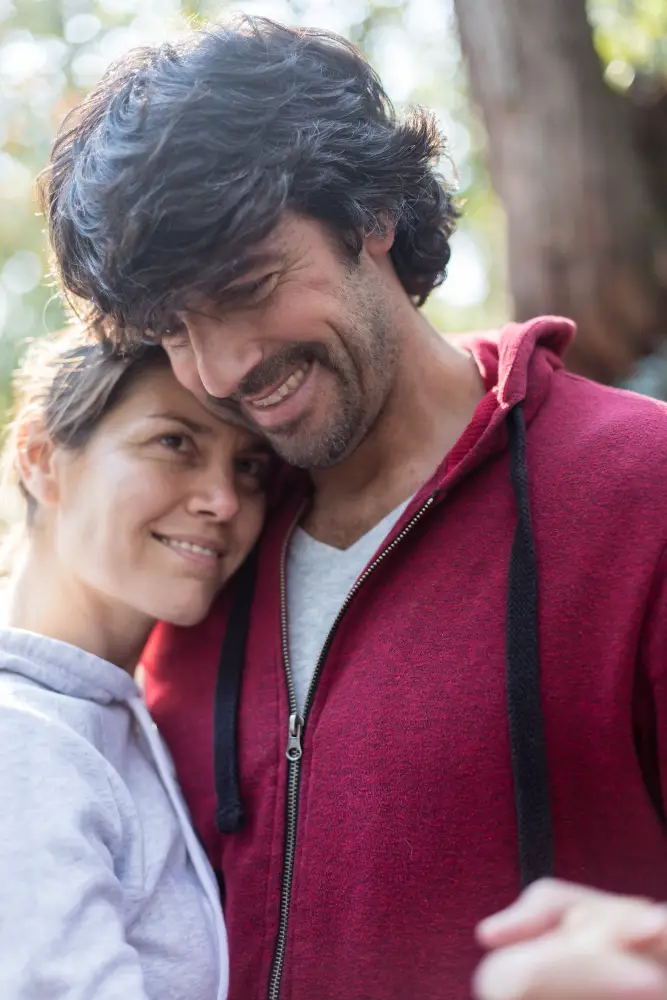
For years, I believed that my husband choosing me was the single luckiest accident of my entire life. That was the word I used for it, privately, always. Accident. A wonderful accident, but an accident all the same, a lightning strike, a coin landing on its edge, something that had happened to me rather than something I had earned or deserved. I built a whole quiet theory of my marriage on that one word, the way you might unknowingly build a beautiful house directly on top of a fault line, never suspecting that the ground itself was the problem, that everything I had built would one day have to be built again on better footing.
And then, on an ordinary Saturday afternoon a long, long way into that marriage, sorting through a box I had carried unopened from house to house for a decade, I found a letter my husband had written the night before our wedding. And a single sentence in it made me question everything I thought I understood about how the two of us had ever come to be standing in the same room together in the first place. It pulled the one thread, and the whole story I had told myself for ten years began to come apart in my hands, and what was underneath it was nothing like what I had feared.
But to understand why that letter undid me the way it did, why one sentence could reach back through ten good years and stop my heart, you have to go back with me first to the bakery. To the morning it all started. And, more than that, to the frightened, doubting person I was on the day I walked into it.
“Well,” a voice said behind me. “You’re beautiful.”
I turned around so fast that I nearly dropped my coffee, hot liquid sloshing dangerously close to the rim of the paper cup.
The man standing behind me in line was, frankly, ridiculous. Ridiculously handsome, I mean, in a way that did not seem quite fair to the rest of us. He was tall, and easy in his own body in the way that only certain people ever are, confident without seeming to work at it, the kind of man whose face made women glance twice on the street and then pretend they hadn’t. And he was looking directly at me, and he was smiling.
My very first thought, my honest and immediate reaction, was that he had to be making fun of me. That this was a setup, a joke, the opening line of some cruel little performance. I really looked around. I scanned the bakery for his friends, for a phone held up recording, for a knot of people somewhere trying not to laugh. I was so certain it was coming that I could almost feel the shape of the humiliation before it arrived.
But there was nothing. No friends. No camera. No laughter. Just an ordinary Saturday morning, the espresso machine hissing, the smell of warm bread and cinnamon, and this impossible man smiling at me as though he had said something completely unremarkable.
So I did the only thing that made sense to me. I rolled my eyes, and I turned back around to face the counter, and I decided to pretend the whole thing had not happened.
A second later, he tapped me lightly on the shoulder.
“Can I get your number?” he said.
I turned back and stared at him. “Why,” I said slowly, “would you need my number?”
He laughed, an easy genuine laugh, not unkind. “Because,” he said, “I’d like to take you out for coffee sometime.”
I was, and I mean this completely, baffled. Not flattered, not charmed, not swept off my feet, not even suspicious anymore, just purely and simply confused, the way you are when a stranger presses an object into your hands and tells you warmly that it belongs to you and always has, when you have never once in your life seen it before. No man had ever crossed a room to ask for my number. It was not a thing that happened to me, in the way that being struck by a meteor was not a thing that happened to me. It belonged to a whole category of events I understood happened to other people, prettier and louder and more visible people, and simply never to me.
And least of all would it happen with a man who looked like this one, a man who could have turned to nearly any woman in that entire bakery and been met with a delighted yes, who had no earthly reason to lower his gaze to the quiet woman with the cooling coffee and the sensible coat. It made no sense to me. My whole understanding of how the world was arranged, of exactly where I fell within it, said that this was not possible, and yet it was happening anyway, right in front of me, and my mind simply could not get the two facts to occupy the same space at the same time.
I had spent most of my life being the woman men described, when they described me at all, as nice. Sweet. Kind. A good person. Good adjectives, all of them, every one, and every single one of them also a small quiet door closing somewhere. Nice was the word people reached for when there was nothing more exciting to say. It was the participation ribbon of description. I had been the bridesmaid a truly heroic number of times. I was the friend that men confided in about the women they were pursuing, sitting across from me in coffee shops asking my advice about someone else, never once suspecting that the advice cost me anything to give.
I was the good listener. The reliable one. The one people trusted with their secrets and their spare keys and their emergencies, and did not think to flirt with, because I did not register to them as that kind of woman, the kind you cross a room for. I was never the one the stranger noticed. I was the one standing next to her. And I had made a kind of peace with all of it, the slow quiet way you make peace with weather you cannot change, by simply deciding to stop expecting it to be otherwise and building a life indoors. I had a good life, indoors. I told myself that was enough. Most of the time I even believed it.
And yet, somehow, standing there in that bakery with my coffee going cold in my hand, I gave him my number.
His name was Luca. He texted me that same evening, only a few hours later, a short easy message that made me laugh out loud alone in my apartment, which annoyed me more than a little, because I had been working so hard all afternoon not to hope, and here he was undoing all that careful work with one line of text. I had already, in the space of those few hours, constructed an entire sensible story for myself about how he would never really text, about how the whole thing in the bakery had been a passing whim he had already forgotten. The text demolished the story. I read it four times.
Our first date lasted nearly four hours. We had planned on dinner, just dinner, a safe contained hour or two. But we closed the little restaurant down, the staff stacking chairs around us, and then when they finally turned us out we walked around the block, and then we walked around it again, because neither one of us was willing to be the one to say goodnight first. He was funny, in a low unshowy way, and he asked me actual questions and then listened to the actual answers, which I had learned by then was rarer in a man than it should have been. And the entire time, all four hours of it, some watchful part of me sat back with its arms folded and waited. Waited for the moment he would glance at his watch, and clear his throat, and let a little distance into his voice, and gently explain that there had been some kind of misunderstanding. That this had been a lovely mistake. That he had, somehow, mixed me up with someone else, and was too polite to say so directly. I waited for it the way you wait for a phone to ring. It did not come.
That moment never came. Not on the first date, not on the third, not ever. And within a few weeks I found myself, to my total astonishment, dating the most attractive man I had ever met in my life.
The insecurity did not leave, though. That is the thing I have to be honest about. You would think it would have. You would think that being chosen, visibly and repeatedly and publicly chosen, would have finally quieted the small mean voice that had lived in me since I was a girl. It did not. The voice simply changed its argument. It stopped saying he will never want you and started saying he will realize his mistake any day now. The insecurity stayed even when he told me he loved me, the first time, his voice a little unsteady. It stayed when he introduced me to his friends and I watched them accept me easily, warmly, as though I obviously belonged there. It stayed when he made it clear, in every way a person can, that he was serious about us, about me, about a future. The doubt just moved into the basement and kept the lights on.
His parents did not help.
His mother, whose name was Deirdre, made her feelings about me plain during one of the very first dinners I attended at their house. When Luca introduced us, she looked me up and down, a slow deliberate assessment, head to toe and back again, the way you might appraise a piece of furniture you suspected had been overpriced. She did not quite manage to hide her conclusion. I saw it land, and I saw her decide not to bother concealing it, and I felt myself grow smaller in the doorway of her lovely home.
I tried to ignore it. I really did. I told myself I was imagining things, that I was projecting my own insecurity onto a woman I had only just met. Dinner was polite enough, all the right questions asked and answered, the food passed and praised. But later, while I was helping Luca’s father carry the dinner plates into the kitchen, I heard Deirdre’s voice from the hallway, lowered, meant for her son and not for me.
“Are you sure about this relationship?”
There was a pause. I froze with a stack of plates in my hands.
“Sure about what?” Luca said.
“You know what I mean.”
“No, Mom,” he said, and there was a new edge in his voice. “I really don’t know what you mean. Say it.”
I walked into the kitchen quickly, before I could hear how the sentence ended, before she could say the thing she meant out loud and make it real. I set the plates down by the sink and I smiled at Luca’s father and I made some remark about the weather, and inside I was burning with a humiliation so total it felt like a fever.
On the drive home that night I stared out the passenger window at the dark streets sliding past, saying nothing, until Luca finally reached over and touched my knee and asked me what was wrong.
“Maybe they’re right,” I said, to the window.
“Who’s right?”
“Your parents.”
“Right about what?”
I swallowed hard. “You could be with anyone, Luca,” I said. “Anyone at all. And you’re with me.”
Luca pulled the car over. Just like that, right there on the side of the road, he put on the blinker and eased onto the shoulder and put the car in park and turned in his seat to face me fully.
“What?” he said. “No. Absolutely not.” He shook his head. “I only want to be with you. There is no version of this where I want to be with someone else.”
“You don’t have to say that,” I said. “I know your mother.”
“I’m not saying it because I have to say it.” He took my hand, both of his wrapped around mine, and he waited until I looked at him. “Mira,” he said. “I want you. Not someone like you. Not a better version of you. You.”
And then he kept proving it, over years, in a hundred ordinary ways that a lesser man would not have bothered with.
When I lost my job, in a round of company layoffs that had nothing at all to do with me or my work and yet felt, the way these things always feel, like a personal verdict handed down about my worth, he stayed. He did not flinch, not even for a second. Some part of me, the old braced part, had almost expected the job loss to be the thing that finally revealed the catch, that gave him his exit, that let him off the hook he had somehow gotten himself onto. It was not. He barely seemed to register it as a threat to us at all. He never once, not by a word or a look or a sigh, made me feel like a burden while I sent out application after application and watched my small savings drain away week by week. He brought me coffee in the mornings and asked how the search was going and believed, out loud, that I would land somewhere good, right up until I did. And when I finally found another position, a better one, he celebrated as though the offer had come to him, popping a bottle of cheap sparkling wine and toasting me in the kitchen until I was laughing and crying at the same time.
And then my sister died.
I fell apart. There is no gentler or more dignified way to say it, and I have stopped trying to find one. My sister, Junie, was two years older than me and had been the first person to ever make me feel interesting, and she died suddenly, and I came undone. Some mornings the simple act of getting dressed felt really impossible, the clothes too heavy, the buttons too many. I forgot appointments. I let phone calls ring out unanswered. I would be standing in the grocery store and see the brand of tea she liked and have to leave my cart in the aisle and go sit in the car and cry.
Luca practically carried me through all of it, on his back, for months. He cooked, every single night, simple things, soup and eggs and toast, and he set a plate down in front of me even on the nights when I only moved the food around with my fork and ate none of it, and he never once made me feel bad about the untouched plate. He simply made another one the next night. He handled the phone calls I could not make myself face, the endless condolences that required a response, the logistics, the flowers, the awful practical paperwork of a death, the accounts to close and the forms to sign, all the bureaucracy that grief drags in behind it like a tide.
He drove me everywhere, because for a while I could not trust my own concentration behind the wheel of a car, my mind sliding off the road and back to her without warning. He handled the people who did not know what to say and said the wrong thing anyway. And on the worst nights, the ones where the grief came in and would not go back out, where it came in waves that knocked me down again every time I tried to stand, he did not try to fix it, because he understood it could not be fixed. He simply sat beside me on the couch, close, one hand on my back, and he let me cry, for as long as it took, an hour, two hours, until I was hollowed out and empty, and he never once, in all those months, suggested by so much as a glance that I ought to be further along than I was, that it had been long enough, that it was time. He let it take exactly as long as it took.
He never told me to move on. Not once. He never made my grief about him, never sighed about how hard it was on him, never made me manage his feelings about my loss on top of my own. He just stayed, steady, present, there, for months.
One night, a long way past the funeral, I turned to him on the couch and I apologized.
“I’m not much fun anymore,” I said. “I know that.”
Luca looked at me, and his face was puzzled, as if I had said something in a language he did not speak. “Why are you apologizing?”
“Because,” I said, “this isn’t what you signed up for.”
He smiled then, a small soft smile, and he reached across the couch and took my hand. “Mira,” he said. “I signed up for you. All of you. This is part of you right now. There’s nothing to apologize for.”
I cried harder after that, but it was a different kind of crying.
Eventually, slowly, in the way these things happen, life became manageable again. The waves came further apart. I laughed one day at something on the television, a real surprised laugh, and then braced for the guilt to come, and it did not come, or came only faintly. I started to sleep through the night again. I started to feel, cautiously, tentatively, like a person again, like myself, or like some new version of myself that had been through something and come out the other side changed but still standing.
And then Luca proposed. At the same bakery where we had met.
I thought we were only stopping in for coffee, a nostalgic little visit on a Sunday morning. But he led me past the counter to the small table by the window, the very one near the spot where he had first spoken to me all those years before, and he sat me down, and he took my hand across the little table. And then, before I understood what was happening, he was not across from me anymore. He was down on one knee on the bakery floor, on the same worn tile where I had once paid a stranger’s three dollars and hurried away, and there was a small box in his hand, and the other people in the bakery were beginning to turn and look and go quiet and smile the way people do.
And for once, for the very first time in the entire long history of the two of us, I did not wonder why. I did not look around the room for the hidden joke, for the friends stifling laughter, for the catch. I did not brace. The old watchful folded-arm part of me, for once, had nothing to say. I looked at his face, at this man kneeling on a bakery floor asking to spend his life with me, and I simply said yes, and I meant it with my whole chest, and there was no asterisk on it at all.
His parents hated that too.
Deirdre tried, at least, to dress her reaction up as concern, which I suppose was a kind of progress. “Marriage is a very big commitment, Luca,” she told him, in that reasonable voice.
“I know it is.”
“There’s no reason to rush into anything.”
“We’re not rushing, Mom. We’ve been together for years.”
She glanced at me then, a quick flick of the eyes and away again, as though I were a stain she was trying not to look at directly, and she said, in a tone of pure warm maternal concern, “You have your whole life ahead of you, Luca. You don’t want to close doors you can’t reopen.”
And Luca’s expression, which had been patient with her all evening, patient the way you are with an elderly relative who keeps repeating themselves, hardened all at once into something I had rarely seen on his face. “So does Mira,” he said. Two words. Flat and final. So does Mira. Her whole life ahead of her, the same as mine, of equal weight, not a door I was closing but a person I was choosing.
That ended the conversation, completely. Deirdre pressed her lips together and looked at her plate and did not raise the subject again. And he married me anyway, three months later, on a bright spring morning, with her sitting in the second row wearing an expression she had clearly practiced in a mirror.
I remember standing at the altar, looking at his face as he said his vows, and thinking, with something close to disbelief, how did I get this lucky. And yet, even there, even in that moment, some tiny stubborn part of me was still braced, still waiting, still half expecting that one day I would finally discover the catch, the fine print, the thing that would explain it all and take it all away. Maybe that is simply what years of insecurity do to a person. They train you to distrust your own happiness, to keep one hand on the exit even inside the thing you wanted most.
Luca never gave me a single reason to doubt him. Not one, in all those years. I supplied all the doubt myself, manufactured it out of nothing, a private little factory running day and night.
The years passed. And eventually, gradually, without my quite noticing the moment it happened, I stopped looking for the catch. Our marriage was not perfect, because no real marriage is. We argued about dishes left in the sink and about bills and about whose turn it was to go buy the groceries. Luca snored, loudly, whenever he slept on his back, and I would poke him until he rolled over. I left coffee cups in places no coffee cup had any logical reason to be, on bookshelves, on the edge of the bathtub, and he would find them days later and hold them up at me with an eyebrow raised. It was ordinary. It was real. It was ours.
Deirdre and I never became close. I will not pretend otherwise. But after several more uncomfortable comments from her over the first year or two, Luca made something very clear to her, quietly and firmly, in a conversation I was not part of. He made it clear that disrespecting me meant seeing considerably less of both of us. And things improved after that, not because Deirdre suddenly adored me, she did not, but because she came to understand that her son would not permit her to treat me as though I were a temporary fixture, a phase he would grow out of. She learned the boundary, and she stayed on her side of it, and that turned out to be enough for a kind of peace.
Our life settled into something wonderfully, gloriously ordinary. And it stayed that way, year after good year.
Until the afternoon I found the letter.
I was cleaning out an old box of wedding things, the kind of box that follows you faithfully from apartment to apartment and house to house across years and never once gets opened, that you carry up and down stairs and shove into the backs of closets and forget about entirely until the next move. It was full of the sediment of that one day. The guest cards with their careful handwriting. A pressed and browning flower from a bouquet. Cocktail napkins printed with our names and the date. Loose photographs that had never made it into an album. I was going through it slowly, half smiling, letting myself remember, and buried underneath all of it, right down at the bottom of the box, I found an envelope I did not recognize.
My name was written across the front of it in Luca’s handwriting, that familiar hand with its slight leftward slant that I would know anywhere, that I had seen on a thousand grocery lists and birthday cards. Just my name, nothing else. And then, in the corner, I saw a date written in the same hand. I looked at it, and did the arithmetic, and my breath caught a little. The date was the night before our wedding.
I smiled. For one warm moment, sitting there cross-legged on the floor with the box in front of me, I thought I had stumbled onto some sweet forgotten thing, a love letter he had written the night before we married and I had somehow never seen. What a lovely surprise, I thought. What a gift, to find this now.
I settled myself on the floor beside the box, and I slid a finger under the flap, and I opened it.
The first line made my smile disappear.
If you’re reading this, then I didn’t have the courage to tell you before we got married.
My heart began to pound, hard and high in my chest. That was not how a love letter began. I read the next sentence.
There’s something about the day we met that I’ve kept from you, and you deserved to know it before you became my wife.
I stared at the words on the page. Something about the day we met. Kept from me. My mind went white and loud. What could he possibly have kept from me about the day we met? What was there to keep? I kept reading, my eyes racing ahead of my understanding.
It wasn’t an accident that I spoke to you in that bakery.
My hands went cold. Truly cold, the blood dropping out of them. Because there it was, the sentence, the catch, the fine print, the thing I had been braced for from the very first morning and had finally, foolishly, allowed myself to stop expecting. It wasn’t an accident.
And every single insecurity I thought I had spent a decade outgrowing came flooding back into me all at once, as fresh and total as it had ever been. I remembered standing in that bakery on that first morning, looking around for his friends. I remembered scanning the room for the hidden camera, for the people trying not to laugh. I remembered thinking, with total certainty, that a man who looked like Luca would never in a thousand years randomly approach a woman like me, that there had to be a reason, an angle, a joke.
What if I had been right all along? What if the girl in the bakery, the one everyone kept telling me to stop being, had in fact understood something true?
I forced myself to keep reading. My eyes moved to the next line.
I had seen you there before.
And there were more pages underneath that one. I could feel them through the paper, folded, waiting. But before I could turn to the next page, before I could learn what he meant, I heard the front door open.
“Mira?”
Luca was home.
His footsteps came down the hall, closer, and then he appeared in the doorway of the room and his face broke into an easy smile when he saw me sitting there on the floor among our old wedding photographs, the box open in front of me.
“Hey,” he said. “What are you doing down there?”
I did not move. I could not seem to make myself move. And his eyes dropped, the way eyes do, to the paper in my hand, to the pages, and I watched the smile fall off his face like something knocked from a shelf. He recognized it instantly. There was no mistaking the recognition.
“Where,” he said, and his voice had changed completely, “did you find that?”
My stomach dropped straight through the floor. All those years of wondering whether there had been a catch, whether the other shoe was still up there somewhere waiting to fall. And judging by the look on my husband’s face, a look I had never seen on him before, I was finally, at long last, about to find out.
Luca stood there in the doorway staring at the letter in my hands, and neither of us spoke for a long moment.
“Mira, baby,” he said finally, softly.
“What is this?” My voice did not sound like mine.
He exhaled, slowly, the breath going out of him. “I can explain,” he said.
Those were not the words I wanted to hear. Those are never the words anyone wants to hear. Those are the words that come before the floor gives way.
“You wrote,” I said, and my voice was climbing now, “that meeting me wasn’t an accident.”
“It wasn’t,” he said quietly.
My chest tightened until it was hard to breathe. And now that the dam had cracked, all the old questions came pouring through it, the ones I had swallowed for a decade, the ones I had told myself were beneath me.
“Was it a bet?” I asked.
His eyes widened. “What?”
“Was it a bet, Luca? Did one of your friends dare you to ask for my number that day? Was that it?”
“No,” he said. “God, no.”
“Was somebody watching? Was somebody filming it?”
“Mira, no. Nothing like that. I promise you, nothing like that.”
“Then why,” I said, and my voice broke, “did you stand there in that bakery and pretend you had never seen me before in your life?”
He took a step toward me, into the room, and I raised my hand to stop him, and he stopped.
“Just tell me,” I said. “Please. Just say it, whatever it is. I have been waiting ten years to find out and I would rather just know.”
Luca looked at the letter in my hand, and then back at my face. “Read the rest of it,” he said gently. “It’s all there. I wrote it all down so I wouldn’t get it wrong.”
“I don’t want to read it,” I said. “I want to hear it from you. Out loud. Right now.”
He was silent for a moment, gathering himself. And then, instead of standing over me, he came and lowered himself down onto the floor across from me, so that we were both sitting among the wedding photographs, at the same level, close.
“Okay,” he said. “Okay. I saw you in that bakery a few days before I ever spoke to you.”
I waited, my heart pounding.
“I was there with my mother,” he said.
Of all the answers I had imagined in the last ninety seconds, of all the catches and jokes and bets and cruelties my mind had raced through, that one had not appeared anywhere on the list.
“With Deirdre?” I said.
“Yes.”
He nodded toward the pages in my hand. “It’s all in there,” he said. “But I’ll tell you. Just, read that page while I do. So you know I’m not making it up now to make it sound better.”
I unfolded the next page with hands that were not quite steady.
In his careful handwriting, Luca had described a busy Saturday morning at the bakery, weeks before the morning he spoke to me. He and Deirdre had been standing in line waiting for their order. And ahead of them, ahead of me, an elderly woman at the counter had discovered, with rising panic, that she did not have enough money to pay for what she had ordered.
I remembered her. The memory surfaced slowly at first, a shape rising through water, and then all at once it was there, complete, clear as if it had happened that morning. I remembered the woman, small and gray-haired and flustered, in a good wool coat that had seen many winters, digging deeper and deeper through her handbag with a growing edge of panic while the line behind her grew restless and long. I remembered the particular quality of that restlessness, the sighs, the shifting of weight from foot to foot, the pointed checking of phones, the way a crowd can turn cold and impatient toward one embarrassed old woman without a single person doing anything openly unkind. I remembered how her hands had begun to shake as she searched and did not find, how the flush had climbed up her neck into her face, how she had started to apologize to the young person behind the register, who looked stricken and helpless and glanced back at the growing line as if hoping someone would tell them what to do.
It was one of those small ordinary public agonies that most people look away from, that you forget by lunch. And I had not been able to look away from it. I had felt her embarrassment as if it were happening to my own grandmother, as if it were happening to me.
And I remembered stepping forward and quietly paying the difference. It had been a few dollars. Three, maybe four. It was nothing. I had done it almost without thinking, the way you would pick up something someone dropped. I had barely remembered doing it at all until that exact moment, reading it back in my husband’s handwriting a decade later.
“You saw that?” I said, looking up at him.
“Yes.”
“Luca, it was a few dollars. It was nothing.”
“That’s not what I noticed,” he said.
He told me, then, the part I had forgotten, the part the letter described. He told me how the old woman had been so embarrassed, and how she had kept trying to press the money back on me, to repay me, insisting. And how I had told her not to worry about it, gently, and then moved away, out of the line, before she could make a fuss, before she could thank me properly, before anyone could really see what I had done.
“You weren’t performing for anybody,” Luca said. “That’s the thing. That’s the whole thing. You didn’t look around afterward to see if anyone had noticed. You didn’t want a single person to notice. You just did it and got out of the way so she wouldn’t feel embarrassed, and then you took your coffee and you left. I watched the whole thing. My mother was talking to me about something and I completely stopped listening to her.”
I stared at him. My eyes were beginning to sting.
“So you asked me out,” I said slowly, “because you felt sorry for me? Because you saw me and thought, there’s a sad kind woman who buys strangers’ coffee, I’ll do her a favor?”
“No.” His answer came instantly, before I had even finished the question, sharp and certain. “Absolutely not. That is the opposite of what happened.”
“Then why?” I said. “Explain it to me. Because I’ve spent our entire marriage not understanding it.”
“Because I noticed you,” he said. “And I don’t mean I noticed you were kind, although I did. Mira, listen to me. Not just the dimples you get when you really smile, the real one, not the polite one. Not just your eyes, which are the warmest brown I’ve ever seen on a person. Not just those ridiculous long eyelashes you have that you always said you hated.” He paused, and he looked right at me, and he did not blink. “Yes, Mira. I thought you were beautiful. I thought you were beautiful the second I saw you, and I have thought so every day since, whether you believed me or not. But that morning I also saw what you did when you thought nobody who mattered was watching. I saw who you are when there’s nothing in it for you. And you have no idea, you have never had any idea, how rare that is, and how much it does to a person to witness it.”
The tears spilled over then. I could not stop them.
He gave me a small, careful smile. “Then I went back to that bakery a few days later,” he said, “on a Saturday, at the same time, on purpose, because I couldn’t stop thinking about you. And you were there. And I stood behind you in line and I thought, if I don’t say something to this woman right now, I am going to regret it for the rest of my life.”
I looked down at the letter, at his handwriting swimming through my tears.
“So when you said,” I whispered, “that first thing. When you said, well, you’re beautiful.”
“I meant it,” he said. “Completely.”
“And when you asked for my number?”
“I wanted your number,” he said simply. “I wanted to know you. That was the whole of it.”
There had been no bet. There had been no joke. There had been no hidden camera, no group of friends stifling laughter, no dare, no cruelty, no catch. For ten years I had carried around a phantom, a thing that did not exist, and the truth underneath it was not a knife at all. The truth was the kindest thing anyone had ever done for me.
But one question still remained, and it was the one that truly mattered.
“Why didn’t you tell me?” I said. “Any of it. In ten years. Why keep it a secret?”
Luca looked down at his own hands. “At first,” he said, “I I didn’t think it mattered. It was a nice story about how I first noticed you. I figured I’d tell you eventually, on some anniversary, as a sweet thing. And then.” He stopped. “And then I started to realize how insecure you were about us. About me. About whether you deserved to be there.”
I winced. I could not help it.
“You kept asking me why I wanted you,” he went on. “Over and over, in a hundred different ways. Why you, why not someone else, are you sure, you could have anyone. And by then I was afraid. Because I thought, if I tell her now that the reason I first noticed her was that I saw her do this quiet selfless thing for a stranger, she’s not going to hear it the way I mean it. She’s going to hear pity. She’s going to decide I only asked her out because I felt sorry for her, that I was doing charity, and it’ll become one more piece of evidence for the case she’s always building against herself.” He looked up at me. “And I couldn’t stand that. So I kept waiting for the right moment, when you’d be secure enough to hear the truth as the compliment it in truth was. And the moment kept not coming.”
I almost laughed, wetly, through the tears, because that was exactly, precisely what I had assumed only minutes earlier. He had seen me do it. He had known me better than I knew myself, even then, before he knew my name.
“And then,” Luca said, “my mother made everything so much worse.”
I looked back down at the letter in my hands, at the folded pages still waiting. “Is that why you wrote this?” I asked. “The night before the wedding?”
He nodded. “She came to see me that night,” he said. “The night before.”
My jaw tightened on its own. “What did she say to you?”
“She asked me, one last time, whether I was sure.” He said it flatly, without drama, but I could hear what it had cost. “She’d been asking it in one form or another for years, and that night, the night before I married you, she asked it one more time. Straight out. Was I sure.”
“And what did you say?”
Luca was quiet for a moment. “She said something first,” he said. “She said that I had spent our entire relationship convincing you that you were good enough for me. Those were her words. And then she asked me whether I really wanted to spend the rest of my marriage doing the same thing. Whether I wanted that to be my whole life. Convincing you.”
I stared at him. My throat had closed almost completely.
“What did you say?” I managed.
“I told her she’d gotten it exactly backward,” he said. And he looked directly at me, and he did not look away. “I told her that the truth was the opposite of what she thought. I told her that being with you had spent years making me wonder whether I was good enough for you. That’s what I said to my mother, the night before our wedding. Not the other way around. That being loved by someone as kind as you was the thing that made me want to be better.”
The tears were coming freely now, and I did not try to stop them. “Luca,” I said.
“It’s true,” he said. “It has always been true.” He pointed at the letter. “That’s why I wrote that, that night, after she left. I sat down and I realized that there was still this whole thing about us, about how we started, that you didn’t know. And I did not want to marry you the next morning with a secret sitting between us, even a good secret, even a kind one. So I wrote it all down. Everything. The old woman, the money, going back to find you, all of it. I wrote it so you’d finally understand exactly why I chose you.”
“Then why,” I said, “didn’t you give it to me?”
His shoulders dropped, and he looked, suddenly, deeply embarrassed. “I meant to,” he said. “I swear to you, I meant to.”
He told me the rest. On the morning of our wedding, he had seen me briefly, before the ceremony, some small stolen moment in the chaos of the day. And I had been, that morning, completely overwhelmed. Nervous, and shaking, and underneath all of it grieving, because my sister Junie was not there, would never be there, should have been my maid of honor and instead was a photograph on a table near the front. I had been holding myself together with both hands.
“I had the letter with me,” Luca said. “In my jacket. I’d brought it, all folded up, ready to give to you. And then I saw your face, how much you were already carrying that morning, how hard you were working just to stay standing, and I thought, I cannot hand her a stack of pages that begin with a confession. Not today. Not when she’s already barely holding on. She’ll read the first line, if you’re reading this then I didn’t have the courage, and she’ll panic, on our wedding day, and I can’t do that to her.” He shook his head at his younger self. “So I lost my nerve. I told myself I’d explain it all after the wedding. When things were calmer. When we had time.”
“And then?” I said.
“And then we got married,” he said. “And it was perfect, and you were happy, and I didn’t want to bring up anything heavy. And then we went on the honeymoon, and I certainly wasn’t going to do it there. And then we came home, and life just, happened. Work. The apartment. Everyday things.” He looked plainly pained. “And at some point, I don’t even know when, the letter got packed away in a box with all the other wedding things, and I plainly, truly forgot it existed. Until I walked in just now and saw it in your hands, and it all came back.”
I shook my head slowly, looking at him. “You idiot,” I said, and there was no heat in it at all.
“I know,” he said. “I know.”
“Your mother knew,” I said, as it settled on me. “This whole time. Deirdre knew you’d seen me before.”
“She knew I’d seen you before we officially met,” he admitted. “Yes. She was standing right next to me in that bakery, remember. She saw the whole thing too. She saw exactly what you did.”
Something cold and clear moved through me. “And all those times,” I said, “all those years, when she looked at me like she couldn’t understand what on earth you were doing with me. When she acted like I was some mystery, some mistake. She knew. She’d seen who I was, the same as you had. And she just decided it didn’t count.”
Luca’s jaw tightened. “That,” he said, “is one of the things I regret most in my whole life.”
“What is?”
“Not stopping her sooner. Not shutting it down the very first time, the first dinner, when she asked if I was sure about you and wouldn’t say what she meant.”
He told me then what he had done, over the years, that I had never fully known about. That after that first dinner, the one where I had overheard her in the hallway, he had confronted his mother directly, alone, and told her that her question had been out of line. That when we got engaged and her comments continued anyway, disguised now as concern about commitment and rushing, he had drawn a much harder line. He had told her, in plain words, that if she could not find a way to respect me, to treat me as his partner and not his poor decision, then she was simply not going to have much access to our life together. To either of us.
“That’s why,” I said slowly, understanding it now for the first time. “That’s why her comments suddenly got so much less frequent. After the first year. I always wondered what happened. I thought maybe she’d just given up on me, or gotten used to me. I didn’t know you’d. I didn’t know.”
“I should have done it sooner,” he said. “And I should have told you I was doing it. I kept you out of it because I didn’t want you to feel like you were causing a rift between me and my family. But that meant you were sitting there thinking her coldness was about you, about something wrong with you, when it was never that. It was about something wrong with her. I should have let you see me defending you. I’m sorry I didn’t.”
I sat with all of it for a moment, the letter in my lap, the photographs scattered around us on the floor, my husband sitting across from me looking like a man braced for a verdict.
“You should have told me,” I said finally. “About the bakery.”
“You’re right.”
“You should have told me about your mother, too. What you said to her.”
“You’re right about that as well.”
I stared at him. “You’re making this argument very difficult,” I said. “You know that. I’m trying to be angry at you.”
He smiled, just a little, unable to help it. “I’ve been married to you long enough,” he said, “to know when I’m wrong. And I’m wrong. On both counts. I should have told you, years ago, both things.”
And despite everything, despite the tears still drying on my face, I laughed.
Then I noticed something. Near the end of the letter, on the last page, there was a paragraph I had not read yet, and I could see, even upside down, that it was longer than the others, and that one word in it was a name.
Luca had written about my sister.
I read it slowly. He had written about Junie, about the way I loved her. He wrote about how, in the time he had known us both before we married, he had watched me rearrange my entire life whenever she needed me, drop everything, drive across the state, sit up all night on the phone. He wrote about how fiercely and unconditionally I loved her, and how he had known, watching it, that a person who loved like that was a person he wanted to build a life beside. He had written it all down the night before our wedding, when she was still alive, when neither of us had any idea how little time was left.
My throat closed completely.
“You wrote about her,” I said, barely able to get the words out. “In the letter. Before she.”
“You loved her,” Luca said softly. “It was one of the first things I understood about you. It was one of the reasons I knew.”
And after she died, he had done all of it. He had cooked and answered the phones and driven me places and sat beside me through the endless nights, without complaint, without making it about himself, for months and months, when I was barely a person at all.
I looked up at him. “Why did you stay through all of that?” I asked. It was a question I had never once dared to ask out loud in all the years since. “Really. When Junie died. I wasn’t myself. I wasn’t anyone. For a long, long time. Why did you stay?”
His eyebrows pulled together, sincerely puzzled by the question. “What do you mean, why did I stay?”
“I mean I was a mess, Luca. For the better part of a year. I contributed nothing. I was just grief in the shape of a wife. Anyone would have understood if you’d.”
“You were grieving,” he said, as if that were a complete answer, because to him it was.
“I was a wreck.”
“You’re the love of my life,” he said. He said it plainly, without any special weight, without a speech attached to it, the way you would state a plain fact about the weather or the day of the week, as though it were the most obvious and settled and unremarkable thing in the entire world, a thing so established it barely needed saying, and he could not understand why I was asking him to explain it. To him it was not a question that had an answer. It was not a question at all. Of course he had stayed. I was the love of his life and I was suffering. Those two facts together did not produce a decision to be made. They produced the only place a person like him could possibly be.
“Where else,” he said, and he was not being rhetorical, he truly wanted to know, “would I have been?”
And maybe there truly was nothing else to explain. Maybe that really was the whole of it, the entire mechanism, and it was only my own long deep habit of disbelief, the factory I had run since girlhood, that had ever made it seem as though there should be something more, some hidden reason, some catch, some cost I had not yet been charged for. Maybe love, real love, the kind that stays, was really as simple and as unglamorous as a man making soup for a grieving woman for months and being confused that anyone would ask him why.
I looked down at the pages in my lap, this letter my husband had written a decade ago and lost, this confession that turned out to be the opposite of everything I had feared. And I understood, sitting there on the floor of our home, something that had taken me my whole life to arrive at.
For most of my life, I had measured beauty by the wrong things entirely. I had looked at Luca and seen a man who could have had anyone, and I had looked at myself and seen someone he had somehow, inexplicably, settled for. I had spent years quietly certain that I was the lesser half of my own marriage, the one who had gotten lucky, the one who owed. His mother, apparently, had looked at us and seen the very same thing, had done the very same shameful arithmetic. She had looked at me and totaled up my face and my clothes and my quiet job and my ordinary life, and she had concluded I did not add up, that I was beneath the running total of her son.
Luca had never once done that arithmetic. Not once, in all the years. That was the whole thing, the thing I had somehow never been able to see. Not in the bakery, not at the altar with everyone watching, not through the layoff or the long grief or any of the hundred ordinary trials of a real marriage. He had never sat back and totaled me up and found the sum wanting. He had thought I was beautiful from the very first second he saw me, and he had told me so, out loud, standing behind me in a coffee line, and I had rolled my eyes at him. But that, it turned out, had not even been the reason he crossed the room to find me a second time.
He had crossed that room because he had seen, entirely by accident, what I did when I believed that no one who mattered was watching me, when there was nothing at all to be gained by it, no audience, no credit, no reward, only a stranger’s small dignity to be quietly protected. And he had understood something in that moment that I had never once understood about myself in all my years of standing next to more noticeable women. He had understood that this, precisely this, was the rarest and most valuable thing a person could possibly be. Not beautiful, though he thought I was that too. Not impressive, not dazzling, not the woman other women watched walk into a room. Just good. Good when it cost something and returned nothing. Good when no one was keeping score. He had seen it in three dollars and a walk away, and he had known, and he had spent ten years trying to tell me, and I had spent ten years refusing to hear it.
There had been no catch after all. There never had been. The thing I had braced for my entire marriage did not exist and had never existed. He had not married me despite anything. He had not overlooked some deficiency out of kindness or pity or low standards. He had married me because of exactly who I was, all the way down, the face and the heart both, and he had known it before I had even told him my name.
Luca was watching me carefully, still braced, still uncertain. “Are you angry?” he asked.
I considered it really. “A little,” I said.
“At me?”
“Mostly,” I said, “at the person who hid this letter in a box for ten years and let me spend all that time not knowing.”
He winced. “Fair,” he said. “That’s completely fair.”
I folded the pages back up carefully along their old creases. “But I’m angry at myself too,” I said. “More, maybe.”
His small smile faded. “Why would you be angry at yourself?”
“Because,” I said, and my voice wavered, “I’ve spent half of our marriage waiting for you to slip up and prove that you didn’t really mean what you said to me in that bakery. Half of it, Luca. Waiting for the catch. Bracing for the joke. Keeping one hand on the door. When all along.”
He reached across the scattered photographs for my hand, and I let him take it, this time without any hesitation at all, without the old reflexive flinch of unworthiness. I looked down at the old letter resting between us on the floor, this thing he had written the night before he married me and then loved me for ten years without my ever knowing it existed.
“And apparently,” I said, “you’ve spent all of it proving that you did.”
His eyes filled. He did not bother to hide it or wipe it away.
I leaned across the box and the photographs and the years, and I put my head against his shoulder, and he wrapped his arm around me, and we sat there together on the floor of the home we had built, in the middle of the ordinary Saturday afternoon, holding on.
For most of my life, and for all of my marriage, I had wondered, over and over, how I had gotten so impossibly lucky. That afternoon, on the floor of our house with his letter in my lap and his arm around me, for the very first time, I stopped asking the question. Because I finally understood that it had never really been luck at all. There had never been some hidden joke waiting all these years to be revealed, some cruel punchline with my name on it. There had only ever been a man who had happened to glance across a crowded bakery at exactly the right moment, and who had seen my face, and then seen my heart, and decided, quietly and completely, that he wanted to spend his life learning both.
And a woman who had taken far, far too long, ten whole years too long, to simply believe him. To take him at his plain word. To accept that she had been seen, and known, and chosen, on purpose, for the truest parts of herself, and that there was no bill coming for it, no catch, no other shoe hanging in the air above her marriage all this time waiting to drop.
But a woman who believed him now, at last, finally, sitting on the floor of their home in his arms with the box of wedding things beside her and the truth, the real truth, in her hands at last. A woman who would spend the whole rest of her ordinary, imperfect, unglamorous, wonderful, real life believing him, without the folded arms, without the braced shoulders, without one hand kept always near the door. That, in the end, was the only thing the letter had ever been asking of me. Not forgiveness, though I gave him that. Not even an apology, though we traded those too, sitting on the floor. Just belief. He had spent ten years, and one lost letter, and a thousand ordinary unremarkable kindnesses, asking me only to believe that he had meant it. And on the floor of our house, on an ordinary Saturday afternoon, with his arm around me and his handwriting resting in my lap, I finally, completely, and for the rest of my life, did.

Laura Bennett writes about complicated family dynamics, difficult conversations, and the quiet moments that change everything. Her stories focus on real-life tensions — inheritance disputes, strained marriages, loyalty tests — and the strength people find when they finally speak up. She believes the smallest decisions often carry the biggest consequences.