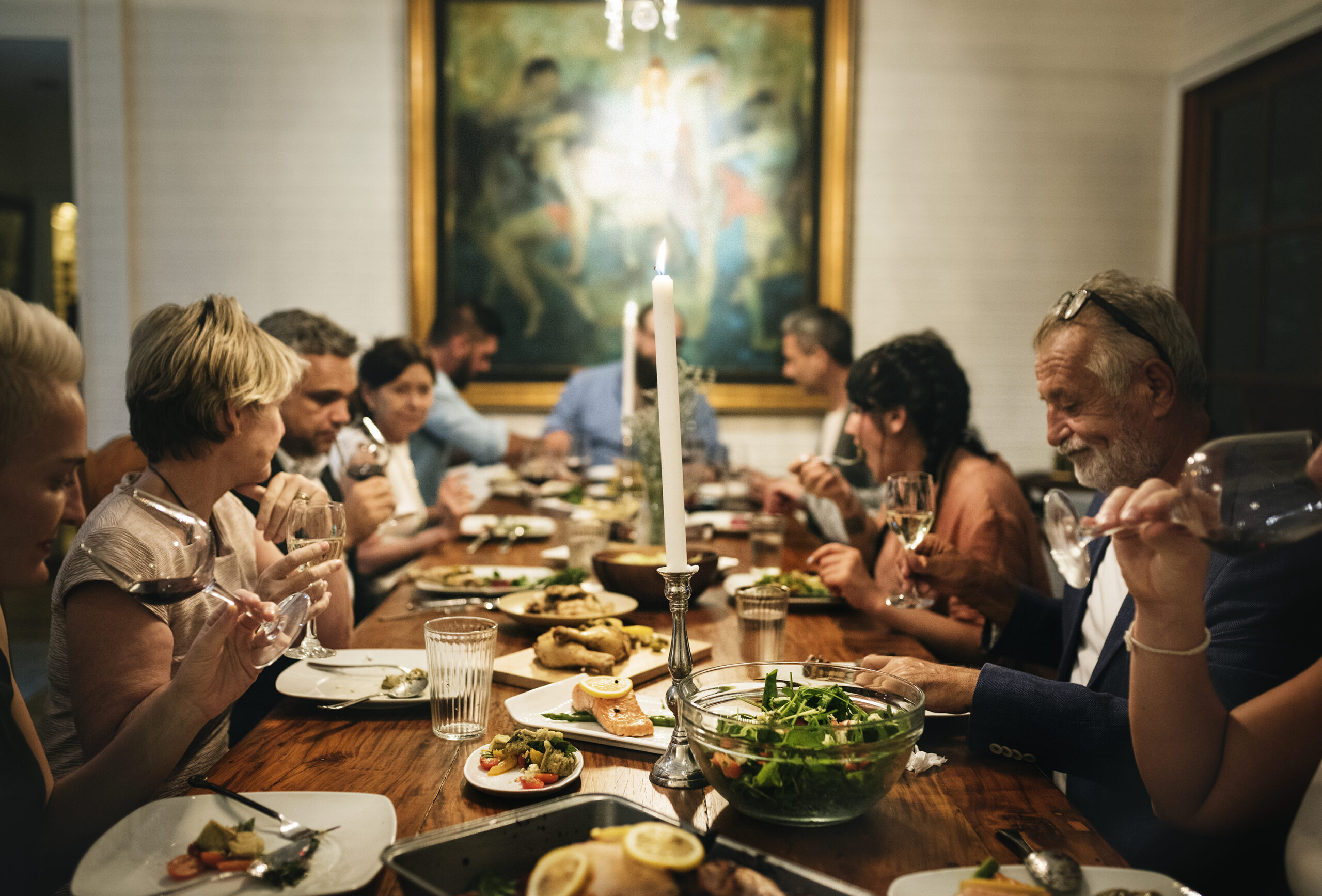
Frank turned back to me and asked whether I had ever explained to anyone at that table how the nickname Mad Dog had started. Jenna went so still beside Mark that I heard her chair give a tiny creak when she stopped shifting. I looked down at my water glass.
“No,” I said. “I haven’t.”
Mark gave a short laugh, but there was no confidence left in it. “Okay, Uncle Frank. Come on. I was messing around.”
Frank didn’t even look at me this time. He looked at Mark. “Apologize. Right now.”
The words weren’t loud. That made them land harder.
Mark blinked. “For asking about a nickname?”
“For spending half the night trying to make her service into a joke because you assumed there couldn’t be anything behind it.”
I want to back up, because to understand how we got to that moment, you have to understand the whole evening, and honestly the whole year leading up to it. My sister Jenna had been engaged to Mark for eight months by the time this dinner happened, a dinner his family had organized to formally welcome me into things, a phrase his mother had actually used on the phone, formally welcome you into things, like I was joining a company rather than meeting my future brother-in-law’s relatives.
I’d known Mark was going to be a certain type the first time Jenna brought him to my apartment for coffee. He’d looked around at my modest living room, at the secondhand couch and the bookshelf I’d built myself out of reclaimed lumber, and said, with what I think he genuinely believed was a compliment, “This is nice. Very functional.” He worked in private equity, something involving portfolio management that he explained to me in detail I hadn’t asked for, and he had a habit of asking people what they did for a living in a tone that made it clear he was already sorting the answer into categories of impressive and not impressive before you’d even finished your sentence.
When Jenna told him I’d served in the Navy for eleven years, he’d nodded and said, “That’s great. My uncle Frank was Navy too. What’d you do, admin stuff?” I told him I’d worked in damage control and firefighting, shipboard emergency response, and he’d nodded again in that same distracted way, already moving on to a story about his college roommate’s cousin who’d been a Marine.
That was eight months before the dinner. By the time we all sat down at his parents’ long mahogany table, china set out like it was a photo shoot, I already had a fairly settled read on Mark. Not a bad person exactly. The kind of person who had never once in his life needed to reconsider a first impression, because the world had rewarded his first impressions often enough that he’d stopped questioning them.
The dinner started fine. Mark’s mother, a warm woman named Delia who clearly adored her son more than she’d examined him, asked me thoughtful questions about where I grew up, about how Jenna and I had ended up so different, me in the military and her in marketing. I answered easily, comfortably, the way you do at these things, keeping most of my actual history folded up small and out of the way.
It was Mark who started pulling at threads. “So you’re retired now, right? What was that, like, twenty years in?” “Eleven,” I said. “Eleven, right. Must be nice, taking it easy after that. What do you do now, some kind of desk position?” There was a particular emphasis on desk position, like he was offering me a soft landing, a category he could file me under that made sense to him.
“I consult now,” I said. “Emergency response training, mostly for civilian maritime companies.” “Oh, nice. Nice.” He said nice the way people say nice when they’ve already stopped listening. Then, a beat later, to the table generally, “Funny how it works out. You spend years training for the intense stuff, and then you end up basically teaching PowerPoints.” A small laugh went around the table, the polite kind people give when they’re not sure if something was actually funny but want to be agreeable.
I let it go. I’d let worse go, from worse people, for longer.
Twenty minutes later came the age comment, when Jenna mentioned I was thirty-nine, and Mark said, with mock surprise, “Thirty-nine? Huh. I would’ve guessed older, honestly. No offense, just, you know, military years probably age you fast, all that stress.” Jenna’s jaw had tightened at that one. I’d simply taken a sip of wine and said nothing, filing it away with the rest.
Then came the moment that actually mattered, the moment that pulled Frank’s attention across the table like a hook catching cloth. Jenna, trying to smooth over one of Mark’s comments, had mentioned, offhandedly, proudly even, that some of the sailors I’d served with used to call me Mad Dog.
Mark had laughed, delighted, the way you laugh at a punchline. “Mad Dog? Seriously? What, you bit somebody?” He looked around the table for backup, grinning. “I’m picturing this five-foot-six woman just, like, snapping at people. Mad Dog Evie. That’s incredible.” He kept going, riffing on it, asking whether I growled at people who didn’t fold their laundry right, whether Mad Dog was my callsign for parking too aggressively, each joke landing a little harder than the last, the table’s laughter thinning out with each one until it was really just Mark laughing at himself.
That’s when Frank, who’d been quiet most of the meal, a solidly built older man at the far end of the table who I’d been told was Mark’s uncle, someone who worked in shipping logistics, set down his fork.
He asked me how the nickname had started. Jenna went still. I looked down at my water glass. “No,” I said. “I haven’t.”
Mark gave that short, deflating laugh. “Okay, Uncle Frank. Come on. I was messing around.” Frank didn’t look at him. He looked at Mark and said, quietly, “Apologize. Right now.”
“For asking about a nickname?” “For spending half the night trying to make her service into a joke because you assumed there couldn’t be anything behind it.”
Jenna’s eyes moved toward Mark. I knew that look. She was replaying the evening. Retired already? Desk position? The little grin after every comment. The way he’d squeezed my hand when we first met, like he was waiting to see whether I would prove something.
Mark glanced around the table, searching for someone to rescue the mood. Nobody did. He finally looked at me. “Evie, I’m sorry. I didn’t mean anything by it.” I nodded once. “All right.” I meant it as an exit.
Frank didn’t take it as one. “No,” he said quietly. “Not all right yet.” I lifted my eyes to him. There was something in his face I hadn’t noticed earlier. Not admiration. Not curiosity. Recognition. That bothered me more than Mark’s jokes ever had.
“Frank,” I said, “how do you know that name?” His fingers tightened around the base of his glass. Then he said something that changed the entire shape of the dinner. “Because my son came home because of somebody they called Mad Dog.”
Jenna made a small sound beside me. Mark’s mother stared at Frank. Mark himself leaned forward. “What are you talking about?” Frank ignored him. His attention stayed on me. “Night operation at sea,” he said. “Machinery casualty. Smoke in the passageway. One sailor cut off after the first route became unusable.”
My stomach tightened. There are memories that fade around the edges with time. That one never did. I could still remember the heat through my gloves. I could still remember the taste of metal behind my teeth. I could still hear someone yelling over the noise that we had to back out and try another approach.
I put my water glass down. “Your son was there?” Frank nodded. “He was the one you went back for.”
Mark’s mouth opened. Nothing came out. Jenna turned fully toward me. “Evie?” I hated the way everybody was looking at me now almost as much as I’d hated Mark laughing earlier.
People think there are only two ways to talk about military service. Either you tell the polished version, where every choice sounds fearless and every ending makes sense, or you say nothing and let people invent whatever version suits them. Most of my life, I chose nothing. That night had never belonged to me alone. It belonged to everyone who had been there. It belonged to the people who did their jobs while scared. It belonged to the man who didn’t know if he was getting out. So I hadn’t turned it into a dinner story. I hadn’t used it to win arguments. I hadn’t even told Jenna the details.
Frank seemed to understand my hesitation. “You don’t have to tell it,” he said. I looked at Jenna. Her face wasn’t asking for a performance. She simply looked hurt that there was an entire piece of my life she had never understood. Then I looked at Mark. He was no longer amused.
“I’ll tell enough,” I said. The room stayed quiet while I tried to decide where enough began.
“We were at sea,” I said. “It was late. Most of us were tired, and then suddenly nobody was tired anymore.” An equipment failure had triggered a fire in a machinery space. Smoke pushed into a passage faster than anyone expected, and the first reports were confused. People were counting heads. Someone was missing. We knew where he’d last been working, but the direct route toward him became too dangerous to use.
That was Frank’s son. I didn’t know his father. I barely knew anything about his family. At that moment, none of that mattered. He was one of ours, and he was still somewhere on the wrong side of that smoke.
“Were you in charge?” Jenna asked. “Not of the whole response,” I said. “No.” That mattered to me. I wasn’t going to rewrite six people’s work into one person’s legend because a dinner table wanted a hero. “There were a lot of people doing what they were trained to do. I was responsible for my part of it.”
The first attempt failed. A second access point didn’t give us what we needed either. Communications were messy. Heat and smoke were limiting how long anyone could stay where we needed to be. Somebody suggested we withdraw farther and wait until conditions improved. That suggestion wasn’t cowardly. It was reasonable. But I had heard something through the bulkhead. Three hits. A pause. Then two more. I thought someone was still conscious on the other side.
“So I kept pushing for another route,” I said. Mark leaned forward despite himself. “You went in alone?” I looked at him. “No. That’s movie nonsense.” Frank’s mouth twitched, but he didn’t smile.
I continued. We found a narrower access route that could get a small team closer. It wasn’t clean. It wasn’t fast. Nobody made a speech before going through it. We checked equipment, confirmed what we could, and moved. The farther we went, the worse visibility became. I remember one of the people with me grabbing the back of my gear because I nearly moved past a turn. I remember crawling low. I remember my own breathing sounding too loud. Then I heard the banging again. Closer.
“He’d gotten himself behind part of the structure that gave him some protection,” I said. “But he was hurt and he couldn’t get back out the way he’d gone in.” Frank looked down at his hands. I knew he had heard some version of this before. Probably many times. But he had heard it from the other side. From the son who survived it. Not from the woman sitting across from him with roast chicken going cold between us.
“We reached him,” I said. “Then the hard part was getting everybody back.” His son was conscious enough to respond, but not in any condition to make the trip without help. We moved in pieces. A few feet. Stop. Check. Move again. At one point the passage behind us got worse, and somebody farther back shouted that we had to speed it up. Apparently, I started answering every instruction with the same word. Again. Move him. Again. Check the line. Again. Pass him back. Again.
One of the sailors with me later said I sounded like an angry dog that had gotten its teeth into something and refused to release it. When we finally cleared the worst section, one of the chiefs called me Mad Dog. It stuck. Not because I was the toughest person there. Not because I had done it alone. Because once I knew that sailor was alive, apparently I became extremely irritating about the idea of leaving without him.
That finally pulled a quiet laugh from Frank. His eyes were wet when he lifted them again. “That sounds exactly like the story my son told.” I looked at him. “He made it? Fully?” Frank inhaled through his nose and nodded. “He made it home. Took him a while to recover, but he made it.”
My shoulders loosened before I could stop them. I had known he’d survived the incident itself. After that, careers move, people transfer, commands change, and names disappear from your daily life. You don’t always get the later chapters. Frank gave me one. “He’s got a family now,” he said.
I looked away for a second. That one hit harder than I expected. Jenna reached under the table and put her hand over mine. She didn’t squeeze. She just left it there.
Mark finally spoke. “I didn’t know any of that.” Frank turned to him. “That’s the problem.” Mark frowned. “I said I was sorry.” “You’re still explaining why you were entitled to say it before you knew better.” “I was joking.” Jenna pulled her hand away from mine and faced him. “You keep saying that.” Mark looked surprised by her tone. “Because I was.” “No,” Jenna said. “You made the desk comment before dinner. You made the age comment. Then you did it again in front of everybody.” “Jenna—” “You didn’t tell one bad joke. You kept going until you thought you found something that would embarrass her.”
That landed. Mark looked at me, then back at Jenna. “Why would I want to embarrass your sister?” Jenna answered before I could. “I don’t know.” Two words. They were worse for him than an accusation would have been. Because now she was actually asking herself.
Mark pushed his chair back a few inches. “This is ridiculous. Frank recognizes some nickname from a story years ago, and suddenly everybody’s acting like I attacked her.” “Nobody said you attacked me,” I said. He looked at me. “Then what exactly are you saying?” I thought about it. “That you met someone you didn’t understand and immediately decided the safest place for her was beneath you.”
Mark stared at me. I didn’t add anything else. I didn’t need to. For most of the dinner, he’d been waiting for me to become angry enough to confirm whatever idea he’d formed about me. I had no interest in helping him.
Frank leaned back in his chair. “My son talked about that night for years,” he said. “Not constantly. But every now and then something would bring it up. He never knew whether he’d see the people from that team again.” He looked at me. “He always said there was one woman whose nickname he never forgot.” Mark rubbed his thumb across the edge of his expensive watch. It was the first nervous thing I’d seen him do all evening.
“Fine,” he said. “I get it. I made a mistake. What do you want me to do?” I almost answered. Jenna beat me to it. “Stop asking Evie to tell you how to fix the thing you did to her.” Mark’s expression changed. Not anger exactly. Something closer to offense. He was used to controlling the temperature of a room. He could tease, then declare it harmless. He could push, then call the other person’s reaction too serious. Now Jenna had stopped letting him set those terms.
“Can we talk privately?” he asked her. “Later.” “Jenna.” “Later, Mark.” She stood.
That was the first moment I understood the dinner wasn’t really about me anymore. Frank’s recognition had changed the story everyone thought they were watching, but the bigger change was happening beside me. Jenna was seeing her future husband under pressure. Not work pressure. Not money pressure. Not some emergency where everybody gets excused for being rough around the edges. Just the simple pressure of being wrong in front of other people. And he was handling it badly.
Mark stood too. “You’re leaving?” Jenna reached for the light sweater she’d draped over the back of her chair. “I’m going with Evie.” “Over this?” She stopped with one arm halfway into the sleeve. “That’s not helping you.” He shut his mouth.
I rose more slowly. Part of me wanted to tell Jenna she didn’t need to choose sides. Another part knew that saying it would let Mark reduce the whole night back down to one joke and one overreaction. So I let my sister make her own decision.
Frank stood when I did. He didn’t reach for me. He didn’t turn the moment into a ceremony. He simply said, “Thank you.” I shook my head. “There were six of us in that route.” “I know,” he said. “My son made sure we knew that too.” Then he held my gaze. “I’m thanking the one who’s standing in front of me.” That was harder to deflect. So I didn’t. “You’re welcome,” I said.
Outside, the air felt cooler than it had when I arrived. My car was still where I’d left it, the porch light reflecting across the windshield. Jenna followed me down the walkway without speaking until we reached the driveway. Then she stopped. “Why didn’t you ever tell me?” There was no accusation in it. That somehow made answering harder.
“Because most of the important things that happened over there involved other people’s worst days,” I said. “I never knew how to turn them into stories about me.” She looked toward the house. “I feel stupid.” “Don’t.” “I let him keep doing it.” I leaned against the car door. “You told him to stop.” “Once.” “Once should have been enough.” She nodded slowly. That sentence wasn’t really about tonight anymore, and both of us knew it.
Jenna folded her arms against the night air. “Has he always been like that with me?” I could have answered too quickly. I could have listed every moment I’d disliked Mark, every arrogant little thing I’d noticed since Jenna started bringing him around. But that would have turned her decision into mine. “You know him better than I do,” I said. “Think about what happens when you tell him no. Think about what happens when somebody else knows more than he does. Think about whether he apologizes because he hurt somebody or because the room turned against him.”
Jenna stared at the driveway for a long moment. Then the front door opened behind us. Mark stepped onto the porch. “Jenna, please. Can we just talk?” She turned toward him. “Not tonight.” “You’re seriously going to drive away with her without even hearing me out?” “I have been hearing you out all night.” Mark stopped at the top of the steps. He looked at me. For one second, I expected him to blame me. He didn’t. Maybe Frank was still standing somewhere behind him. Maybe even Mark knew that would be a mistake.
“I really am sorry, Evie,” he said. This time his voice sounded different. Less polished. I believed he regretted the evening. I wasn’t yet sure he regretted what he’d done. Those aren’t always the same thing.
“Good night, Mark,” I said. Jenna opened the passenger door. That was her answer too. We drove away without music.
At the first stoplight, Jenna suddenly laughed once, then covered her face with both hands. “Mad Dog? Seriously?” I glanced at her. “I didn’t pick it.” “You let me spend twenty years thinking the scariest thing you’d ever done was threaten that kid who stole my bike.” “He brought it back.” “Because you chased him three blocks.” “Effective conflict resolution.” She laughed again. This one lasted longer. It was the first normal sound either of us had made since dinner.
We drove the rest of the way to my apartment mostly in silence, the kind of comfortable silence that settles after something big has happened between two people who trust each other enough not to fill every gap with words. When I pulled into my complex, Jenna didn’t get out right away.
“Can I stay over?” she asked. “I don’t really want to go back to my place tonight.” I hadn’t expected that, but it made sense once she said it, the idea of returning to an apartment full of Mark’s things, his jacket on her hook by the door, his coffee mug in her cabinet, the wedding binder probably still sitting on her kitchen table with its color swatches and venue photos. “Of course,” I said.
We stayed up later than either of us should have, sitting on my old secondhand couch with tea neither of us finished, and she asked me more questions, careful ones, about the Navy, about that night, about years of my life she’d apparently absorbed only in fragments over the years without ever putting them together into a whole picture. I told her some of it. Not all of it. Some things I still keep for myself, the way you keep certain rooms in a house closed even to people you love, not because you’re hiding something shameful but because some spaces just aren’t built for visitors.
The next afternoon, Jenna called me. Mark had gone to see her. He’d apologized again. Then he’d spent nearly twenty minutes explaining that Frank had humiliated him, that the dinner had gotten out of control, and that everyone now thought he was some terrible person because of one misunderstanding. Jenna had listened. Then she’d asked him one question. “If Frank hadn’t known who Evie was, would you still think what you said was wrong?”
Mark hadn’t answered. Not really. He’d said that wasn’t fair. He’d said it was hypothetical. He’d said people joke about military stuff all the time. He’d said Jenna was letting one awkward dinner damage something much bigger. But he never said yes.
“So I postponed everything,” she told me. I sat on the edge of my couch with the phone against my ear. “Everything?” “The wedding.” I didn’t speak. “I’m not saying I know what happens next,” she continued. “I’m saying I’m not marrying somebody while I’m still asking myself that question.” That sounded like Jenna. Careful. Practical. Not dramatic enough for the kind of story people like to tell afterward. Real enough to matter.
Over the following weeks, I watched my sister go through something I recognized from my own life, though I didn’t say so directly. The particular disorientation of realizing a person you’d built plans around had shown you something true, and now you had to decide whether the truth changed the plans or just added an asterisk to them. She didn’t rush it. She met Mark for coffee twice, had one long, difficult dinner with him where, she told me afterward, he’d finally, actually apologized without qualifying it, without explaining why he’d been justified, without turning it into a story about how unfairly he’d been treated by an ambush at his own family’s dinner table.
“He asked me what he should have done differently,” she said, on the phone that night. “Not what he should say now to fix it. What he should have actually done, back at the beginning, before any of this happened.” “What did you tell him?” “I told him he should have asked you a real question instead of deciding he already knew the answer.”
I don’t know, even now, exactly how things will end up between Jenna and Mark. Some weeks it seems like they’re finding their way back toward the wedding date they postponed. Other weeks Jenna sounds further away from it than ever. What I do know is that she stopped making the decision quickly, stopped letting the fear of an awkward explanation to relatives or a deposit on a venue or the general momentum of an engagement carry her forward faster than she actually wanted to go. And Mark, for the first time since I’d met him, had to sit with the discomfort of not being able to talk his way back to comfortable ground on his own schedule.
A few days after that first phone call, Frank got my number from Jenna and called. He asked permission before telling his son that he’d found me. I said yes.
The conversation that followed wasn’t cinematic either. There was no speech. No swelling music. No perfect line that could hold all the years between one terrible night and an ordinary afternoon. Frank’s son simply told me he remembered my voice before he remembered my face. He remembered hearing somebody say, “Again,” every time the route became harder. He remembered thinking that whoever was saying it sounded furious at the entire ocean.
I laughed harder than I had in weeks. Then he told me about the life that came afterward. Work. Marriage. Kids. A dog that apparently destroyed half his backyard one summer. Ordinary things. That was the part I wanted to hear. Not gratitude. Not what I had done. What he had done with the years he nearly didn’t get.
He told me about his daughter’s soccer games, about a fixer-upper house he and his wife had bought two years back and were slowly, badly renovating themselves. He told me he’d thought about looking me up more than once over the years but had never quite known how to start that conversation, what you say to someone after that kind of night, whether gratitude even covers it or whether it’s the wrong word entirely for something that large. I told him he didn’t owe me anything, that showing me the ordinary shape of his life afterward was already more than most people ever get to hear.
When we ended the call, I sat in my quiet living room for a while with my phone resting in my palm. For years, Mad Dog had been a nickname attached to one night I rarely discussed. Mark had heard it and assumed it was funny. Frank had heard it and remembered the worst phone call his family almost received. I had heard it and remembered smoke, gloves, shouting, and six people refusing to leave somebody behind. Same two words. Completely different weight.
Jenna never rushed her next decision about Mark. That mattered to me more than whether she eventually forgave him. She stopped letting embarrassment, deposits, family expectations, or the fear of starting over make the decision for her. And Mark, for the first time since I’d met him, had to live without controlling how quickly somebody accepted his explanation.
Several weeks later, Jenna invited me over for dinner. Nothing formal. Just the two of us, roast chicken from the grocery store, a bowl of salad, and bread she’d warmed too long because she got distracted telling me about work. The smell hit me when I walked in, and for half a second I was back at that other table. Jenna noticed. “Too soon for chicken?” “I’ll survive.” She snorted and pushed a plate toward me.
We ate. We talked about ordinary things. Traffic. A leaking faucet. Whether the bread was actually burned or merely “aggressively toasted,” as Jenna insisted. Nobody asked me to prove anything. Nobody needed the impressive version of my life. At one point Jenna reached across the table and slid the bread basket toward me before I could ask.
I took a piece. And that was enough.

Specialty: Legal & Financial Drama
Michael Carter covers stories where money, power, and personal history collide. His writing often explores courtroom battles, business conflicts, and the subtle strategies people use when pushed into a corner. He focuses on grounded, realistic storytelling with attention to detail and believable motivations.