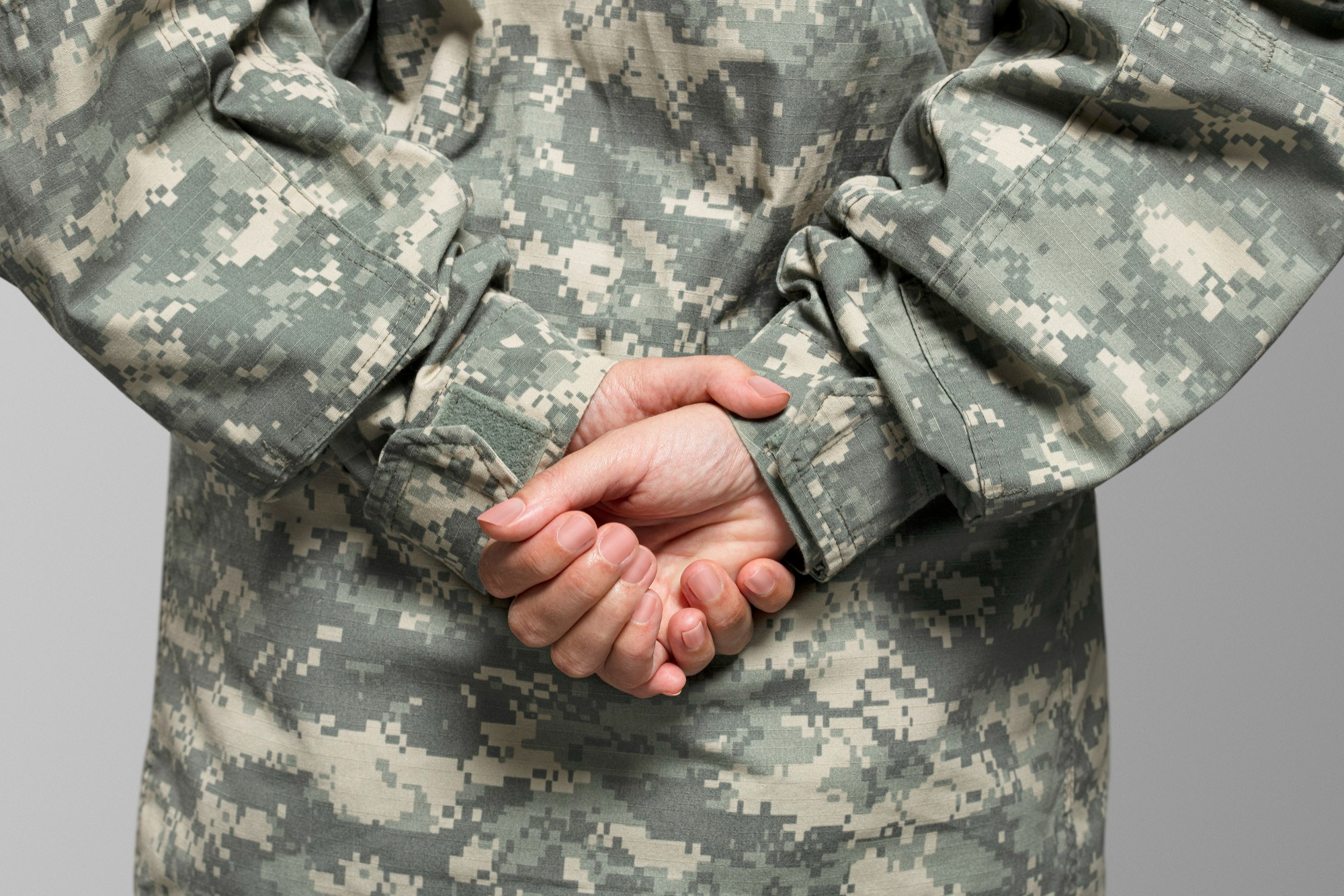
My mother told the security guard I was just the disappointing sister and asked him to move me out of the front row, while my father chuckled like she had made a joke instead of cutting me open in front of everyone.
My brother Ryan stood twenty feet away in his dress whites, the gold Trident already shining beneath the California sun on his chest. The morning smelled of sea salt, warm asphalt, and paper coffee cups going cold under the white tents at Naval Amphibious Base Coronado. Somewhere behind us, a child waved a small American flag until the plastic handle tapped against the chair legs.
Ryan looked straight at me and said, “Don’t embarrass me today, Emily.”
So I folded my hands neatly in my lap.
I smiled.
And I stayed quiet.
That was the part my family always hated most.
Not when I fought back.
Not when I cried.
Not when I left birthdays early or stopped coming to Thanksgiving.
They hated it when I went silent, because silence meant I had already read the room, counted every exit, and decided how much of myself they were allowed to see.
My mother touched the pearls around her neck and leaned toward Aunt Patricia.
“She wore black,” she whispered, loud enough for three rows to hear. “To her own brother’s proudest day.”
I looked down at my simple black dress.
Knee length.
No jewelry except a slim silver watch.
No makeup except enough concealer to hide the shadows under my eyes from driving six hours through the night.
Black was not disrespectful.
Black was practical.
Black traveled well, wrinkled less, and did not show blood easily.
But they did not know that.
They only knew the version of me that made them comfortable.
Emily Carter, the quiet one.
The difficult one.
The one who dropped out of college and stopped giving explanations.
The one who missed Christmases, weddings, funerals, and church cookouts, then mailed expensive gifts without a return address.
The one who came home with steady eyes and scars nobody had been given permission to ask about.
Ryan had always been the golden son.
Football captain.
Homecoming king.
The boy my father praised in every hardware store, church hallway, and Fourth of July barbecue back in Virginia Beach.
“Ryan is serving his country,” Dad loved to say.
Then he would glance toward me and add, “Emily is still trying to figure things out.”
Figuring things out was what people said when they wanted a lie with softer edges. It made them feel kind while they erased ten years of your life.
I think about the moment that phrase first took hold, because I can trace it, actually, to a specific Thanksgiving when I was twenty three, home on leave for the first time in over a year, unable to explain where I’d actually been or what I’d actually done, offering instead some vague, deliberately unsatisfying answer about training and assignments that my father clearly found insufficient. He’d pressed, gently at first, then with increasing frustration, until I’d finally said, as evenly as I could manage, that I couldn’t discuss the specifics, that some of what I did required a level of confidentiality I couldn’t set aside just because we were sitting around a turkey.
He’d looked at me for a long moment, something like genuine hurt crossing his face, though I understood now, years later, that the hurt had less to do with actual concern for my wellbeing and more to do with feeling excluded from a story he felt entitled to know. “Fine,” he’d said. “Keep your secrets.” And from that Thanksgiving forward, the phrase still figuring things out had entered the family lexicon, repeated at every gathering, every introduction, every casual conversation where my absence needed some explanation that didn’t require anyone to sit with genuine uncertainty about what I actually did.
At 6:14 a.m., the base security guard checked my visitor pass against the ceremony list, then frowned because my name was marked in a different column from the family seating. My mother noticed his hesitation and stepped in before I could speak.
“She is just his sister,” Mom said. “Not important. Please don’t let her make this uncomfortable.”
The guard looked at me. Then at the clipboard. Then back at my mother.
I said, “This seat is fine.”
I could have corrected her. I could have shown the email from the protocol office, the one with my full name and rank written in the subject line. I could have asked for the senior chief whose number had been saved in my phone since 5:42 a.m.
Instead, I sat down.
Sometimes dignity is not a speech.
Sometimes it is keeping your hands folded while other people mistake your control for weakness.
My cousin Madison turned around in her red sundress, her polished smile already sharpened.
“Emily, seriously, why are you sitting here? This area is for immediate family.”
“I am immediate family.”
“I meant supportive immediate family.”
Aunt Patricia gave a soft laugh.
Dad did not tell them to stop.
Mom did not tell them to stop.
Ryan heard it too, standing with the other candidates, his jaw tight and his eyes forward. But when Madison said it, the corner of his mouth shifted.
Not a smile.
Worse.
Agreement.
The stage held a podium, neat rows of polished chairs, an American flag, and a table covered with velvet cases. The Tridents inside caught the morning light like tiny sparks of fire. Families moved beneath the tent, programs crinkling, coffee lids clicking, proud fathers standing a little taller than usual.
Then my father leaned across my mother and said, “Emily, after this, don’t try to come to the private reception unless Ryan invites you. This is a military crowd. People will ask questions.”
The words landed softly.
That was how my father liked to hurt people, with a quiet voice and enough manners that everyone nearby could pretend they had not heard him.
I turned my head slowly.
“What questions?”
His smile tightened.
“About what you do. Where you’ve been. Why you never talk about it.”
Mom gave a small helpless laugh for the people around us.
“Honey, today is about Ryan. Don’t make this strange.”
“I drove here for Ryan.”
“No,” Ryan said from near the line of candidates, too quiet for the microphone but loud enough for our row. “You drove here so people would notice you.”
The white tent seemed to still around us.
Not completely.
Nothing in public ever freezes all at once.
A program kept trembling in a woman’s hand. A coffee cup rolled beneath a chair. Somewhere behind me, a little boy asked his grandfather why that lady looked sad.
I did not look sad.
I looked at my brother in his perfect uniform. At my mother clutching her pearls. At my father leaning back like the verdict had already gone his way.
For one ugly second, I wanted to open my purse, take out the folded invitation with the protocol stamp, and place it on my father’s knee so everyone could read what he had never cared enough to ask.
I did not.
I smoothed the black fabric over my knees and turned my eyes toward the podium.
That was when Commander Nathaniel Hayes stopped speaking to the senior chiefs.
His gaze moved over the family section once. Then a second time. No longer searching. Recognizing.
He looked at the security guard beside our row, then at the empty reserved chair near the front of the stage, and then directly at me.
My mother noticed first.
Her laugh disappeared so quickly it left her mouth slightly open.
Commander Hayes stepped away from the podium.
The senior chiefs turned with him. Ryan’s expression changed by the smallest amount, but it was enough. The confidence slipped from his jaw as if someone had cut a cord.
Every family beneath that tent watched the SEAL commander walk straight toward the woman my mother had just called disappointing.
Then Commander Hayes stopped in front of my chair, clicked his heels together, and lifted his right hand to his brow.
“Ma’am,” he said, his voice pitched to carry across the front rows without shouting, the particular projection of a man accustomed to being heard clearly over wind and engine noise and worse. “We’ve been expecting you.”
I stood, because you do not remain seated when a senior officer salutes you, whatever the circumstances, and returned the gesture with the crisp economy of motion that had been drilled into me long before I ever set foot on this base.
The tent had gone properly silent now, the kind of silence that has weight to it, that presses against your ears the way pressure does at depth. My mother’s hand had frozen halfway to her pearls. My father’s mouth hung open in an expression that would have been comical in any other setting. Madison had turned fully around in her chair, her earlier smugness replaced by something closer to confusion trying to reorganize itself into panic.
“Commander,” I said, keeping my voice level, though I could feel my heart working harder than it had any right to, given how many times I had rehearsed some version of this moment in my head during the long drive from Virginia.
“Lieutenant Commander Carter,” he said, and I watched the rank land on my family like a physical blow, watched my father’s face go through several rapid recalculations, watched my mother’s hand finally complete its journey to her pearls, though now gripping them rather than touching them delicately. “I apologize for the confusion at check in. There was clearly a miscommunication about your seating. We have a reserved space for you at the front, alongside the other invited officers.”
“I appreciate that, sir,” I said, “but I’m happy to remain here with my family.”
Something flickered across his face, a brief, professional acknowledgment that he understood exactly what kind of family situation he had just walked into, though he was far too disciplined to let anything beyond that flicker show.
“Of course,” he said. “Though I would ask you to join us briefly during the ceremony’s second portion. There’s a recognition scheduled that involves you directly, and I’d rather you hear it from the podium than secondhand.”
I felt every eye in the surrounding rows fix on me with a new, sharpened attention, the particular quality of attention that comes when people realize they have badly misjudged someone and are scrambling to reconstruct their understanding in real time.
“A recognition,” my father repeated, his voice unsteady in a way I had genuinely never heard from him before, not once in thirty two years of watching him hold court at hardware stores and church hallways and backyard barbecues. “What kind of recognition?”
Commander Hayes glanced at him with the polite, distant courtesy of a man addressing someone he had no particular obligation to explain himself to. “That will become clear shortly, sir. If you’ll excuse me, I need to return to the podium.”
He saluted me once more, a gesture that felt, this time, less like formal protocol and more like a small, deliberate act of solidarity, and then turned and walked back toward the stage, his senior chiefs falling into step behind him.
The silence that followed his departure was different from the silence that had preceded it. Before, the quiet had belonged to me, a controlled stillness I had constructed deliberately to keep myself steady against my family’s casual cruelty. Now the quiet belonged to them, and I watched it settle over my mother and father and Ryan and Madison and Aunt Patricia like something they had never expected to have to wear.
“Emily,” my mother said finally, her voice small in a way I had never once heard it, not in thirty two years, “what is happening right now?”
I sat back down, smoothing my dress over my knees again, the same gesture I had made moments earlier, though it felt entirely different now, less like armor and more like simple composure.
“I’ve been serving for eleven years, Mom,” I said quietly, keeping my voice pitched for our row alone, not wanting to turn this into more of a spectacle than it had already become. “Since I left college. I couldn’t tell you most of what I actually did, because most of what I did was classified, and telling you would have put people at risk. So I let you believe whatever story was easiest, because the truth wasn’t mine to give away just to make you comfortable.”
“Eleven years,” my father said, and I watched him doing arithmetic in his head, counting backward through birthdays and holidays and the long silences he had never once questioned closely enough to actually understand. “You’ve been in the military this whole time. Doing what, exactly?”
“I can’t tell you everything,” I said. “I can tell you I’ve deployed six times. I can tell you I hold a rank most people never reach without spending decades working toward it, and I reached it in eleven years because the work I did required it. I can tell you the scars you’ve never asked about came from doing that work, and that every single time you introduced Ryan to a room full of people while telling them I was still trying to figure things out, I was somewhere I couldn’t tell you about, doing something that mattered considerably more than whatever story you’d constructed to explain my absence.”
My mother’s mouth opened and closed several times without producing any sound, and I watched, with something that was not quite satisfaction and not quite grief but some complicated combination of both, the particular process of a person’s entire understanding of another person collapsing all at once.
Ryan, still standing near the line of candidates, had gone very pale, and I could see him working through something considerably more complicated than our parents’ shock, the specific horror of realizing that the sister he had just told, in front of witnesses, that she had driven six hours purely to seek attention, was in fact a decorated officer who had spent a decade in service he apparently knew nothing about.
The ceremony’s formal proceedings resumed a few minutes later, Commander Hayes returning to the podium to continue the Trident presentation, calling each candidate forward in turn to receive the pin that marked them as fully qualified Navy SEALs. I watched Ryan step forward when his name was called, watched the Commander pin the gold Trident to his chest with the same careful ceremony he’d shown every other candidate, and felt, watching my brother’s face during that moment, a complicated tangle of genuine pride alongside everything else churning in my chest.
Ryan had worked hard for this. Whatever else was true about him, about the casual cruelty he’d shown me for years, about the comfortable golden son role he’d occupied his entire life without apparently ever examining what it cost the people around him, the Trident represented years of genuine sacrifice and effort, and I found I could hold both truths at once, pride in his accomplishment and clear eyed anger at how he’d treated me, without either canceling out the other.
After the last candidate received their Trident, Commander Hayes returned to the podium and cleared his throat, the particular sound of a man about to say something he considered important enough to interrupt the ceremony’s usual flow.
“Before we conclude today’s proceedings,” he said, “I want to take a moment to acknowledge someone in our audience who many of you may not realize is among us. Lieutenant Commander Emily Carter has an extensive record of service that overlaps, in ways not widely known outside a small circle, with today’s graduating class.”
I felt my stomach drop slightly, understanding, in that moment, exactly what was about to be revealed, something I had hoped might remain private even while standing in a place where privacy about my career had already begun crumbling.
“Three years ago,” Commander Hayes continued, “Lieutenant Commander Carter served as part of a joint operations team that conducted a rescue mission under conditions I am not at liberty to detail publicly. That mission recovered two SEAL candidates who had been separated from their unit during a training exercise gone wrong in hostile terrain, a rescue that required decisions made under extreme time pressure and considerable personal risk. One of those candidates is standing on this stage today, having just received his Trident.”
The tent had gone entirely silent now, the earlier murmuring stillness replaced by something closer to held breath, and I understood, with a sudden, sickening clarity, exactly where this was going, understood it a full second before Commander Hayes said the words that would change everything about how my family understood the past decade of my life.
“That candidate is Ryan Carter,” he said. “Lieutenant Commander Carter’s brother.”
I heard my mother make a sound beside me, something between a gasp and a sob, and I saw Ryan’s face, still standing at attention on the stage, go through an expression I had genuinely never seen on him before, complete, undefended shock.
“I did not learn until reviewing today’s ceremony roster that the officer who led that rescue operation shared a surname with one of the candidates being honored today,” Commander Hayes continued. “When I inquired further, I confirmed that Lieutenant Commander Carter is indeed Petty Officer Carter’s sister, and that she has never once, in the three years since that mission, disclosed this connection to him or to anyone in this command.”
I felt every eye in the tent turn toward me now, a different quality of attention than before, no longer curious about a family mystery but genuinely stunned by what they were hearing, the particular hush that follows a revelation too large to immediately process.
“I want to be clear about something,” Commander Hayes said, his voice carrying the weight of genuine conviction now rather than simple ceremonial formality. “What Lieutenant Commander Carter did that night, and what she has continued to do throughout her career, represents exactly the kind of quiet, uncelebrated excellence this community depends on. She has never sought recognition for that mission. She requested, specifically, that her role remain unacknowledged in any after action reporting beyond what operational necessity required. I am disclosing it today, with her prior knowledge though not entirely her enthusiastic consent, because I believe some things deserve to be said in the light rather than buried in classified files where only a handful of people will ever know they happened.”
I felt tears threatening for the first time all morning, not from grief or hurt but from something more complicated, the strange, disorienting experience of having something I had genuinely never wanted acknowledged suddenly acknowledged anyway, in front of the exact people who had spent years dismissing everything about my life as unworthy of real attention.
Ryan was crying openly now, standing at attention on the stage with tears running freely down his face, and I understood, watching him, that whatever complicated history existed between us, whatever casual cruelty he’d shown me for years without apparently understanding its weight, none of that had prepared him for learning that the sister he’d dismissed as attention seeking had, three years earlier, without his knowledge, been part of the operation that saved his life during the worst night of his training.
“Petty Officer Carter,” Commander Hayes said, addressing Ryan directly now, “would you like to say anything?”
Ryan stepped down from the stage, and I watched him cross the space between us with none of his usual golden son confidence, his composure entirely stripped away, replaced by something raw and unguarded that I hadn’t seen from him since we were children.
“You saved my life,” he said, standing in front of me now, his voice breaking. “Three years ago. That night in the mountains, when everything went wrong and I thought, I genuinely thought we weren’t getting out of there. You were part of that team?”
“I was,” I said quietly. “I didn’t know it was you until we’d already extracted your unit. By the time I recognized your name on the roster, the mission was already complete, and there wasn’t really an appropriate moment to say anything, especially not one that wouldn’t have compromised operational security.”
“You never told me,” he said. “All this time. You never once said anything.”
“What would I have said, Ryan? Congratulations on surviving the night I helped pull you out of, by the way, don’t mention it, and also please stop telling people I’m still figuring things out?”
He flinched at that, the bitterness in my voice more pointed than I’d intended, though I found I didn’t particularly regret it.
“I’m sorry,” he said. “I don’t, I don’t even know where to start with how sorry I am. Everything I said today, everything I’ve said for years, about you embarrassing me, about you seeking attention, I had no idea. I had absolutely no idea.”
“I know you didn’t,” I said. “That’s rather the point, Ryan. You never asked. None of you ever asked, in eleven years, what I was actually doing, where I was actually going, why I came back with scars nobody wanted to talk about. You built a story that was convenient, that made me the difficult one, the disappointing one, and you never once considered that maybe the story was wrong because you never bothered to look closely enough to find out.”
My mother had come up beside us now, her earlier composure entirely gone, tears streaming down her face in a way I had rarely witnessed, my mother having always prided herself on maintaining appearances regardless of circumstance.
“Emily,” she said, “I am so sorry. I called you disappointing in front of everyone. I told that guard you weren’t important. I don’t, I don’t know how to take that back.”
“You can’t take it back,” I said, not unkindly, but with a clarity I felt I owed both of us at this point. “What’s said is said, Mom. What you can do, if you actually want to, is start asking real questions from here forward, instead of assuming you already know the answers.”
My father had approached more slowly, his face working through something that looked less like shame and more like genuine bewilderment, the particular disorientation of a man realizing that a decade of casual dismissiveness had been aimed at someone who had, in fact, been quietly extraordinary the entire time.
“Lieutenant Commander,” he said, testing the words carefully, as though trying them on for the first time. “I don’t, I genuinely don’t know what to say to you.”
“You could start with an apology,” I said. “Not for today specifically, though today certainly deserves one. For eleven years of assuming the worst about me simply because I couldn’t explain myself in a way that fit neatly into a hardware store conversation.”
He was quiet for a long moment, and I watched him struggle visibly with something that had clearly never come easily to him, genuine, uncomfortable self reflection rather than the easy confidence he usually wore.
“I’m sorry,” he said finally. “I don’t think that covers it, but I don’t know what would. I spent years telling people my son was serving his country while implying my daughter was doing nothing worthwhile with her life, and the whole time, you were doing something that apparently saved my son’s life. I don’t know how to sit with that.”
“You’ll have time to sit with it,” I said. “I’m not going anywhere. I’d like the chance to actually have a relationship with this family, going forward, one that isn’t built on you all deciding who I am without bothering to find out.”
Commander Hayes, who had allowed this family reckoning to unfold with considerable patience, gently interjected. “Lieutenant Commander, if you’re amenable, several of the other officers would appreciate the chance to meet you properly. I know this is a personal moment for your family, but your reputation precedes you in certain circles, and I suspect more than a few people here would like to shake your hand.”
I looked at my family, at Ryan still visibly shaken, at my mother still crying, at my father working through something that looked almost like the beginning of genuine humility, and felt, for the first time in longer than I could remember, something that resembled hope rather than the careful, guarded distance I had maintained for years as protection against exactly this kind of dismissal.
“I’d like that,” I said to Commander Hayes. “But I’d also like a few minutes with my family first, if that’s all right.”
He nodded, understanding immediately, and stepped back to give us space, the surrounding crowd, having witnessed the entire exchange, offering us a similar courtesy, conversations resuming at a respectful volume around us while our small, fractured family group worked through the wreckage of everything that had just been revealed.
Madison, who had retreated several steps during the revelation, approached hesitantly, her earlier sharpness entirely gone. “Emily, I’m sorry too. For what I said about supportive immediate family. I didn’t know.”
“None of you knew,” I said, “because none of you asked. I’m not trying to be cruel saying that, I’m just stating what actually happened. I spent eleven years being quietly dismissed by people who never once wondered whether the story they’d built about me might be incomplete.”
Aunt Patricia, standing slightly apart from the group, looked genuinely stricken. “I laughed,” she said quietly. “When Madison said that thing about supportive family. I laughed along with it.”
“I remember,” I said, and let the simple observation carry whatever weight it needed to carry without softening it further.
We stood there for a while, the five of us, in a strange, suspended silence, the ceremony continuing around us with its own separate momentum, families embracing their newly minted SEALs, photographs being taken beneath the white tents, the ordinary joy of the day proceeding alongside our own smaller, more complicated reckoning.
Eventually, Ryan spoke again, his voice steadier now, though still carrying the rawness of everything that had just happened. “Can I ask you something? About that night. About the mission.”
“I can tell you some of it,” I said. “Not everything. Some of it will always stay classified, and I need you to understand that’s not me being difficult, that’s genuinely how this works.”
“I understand,” he said. “I just, I want to understand what happened. What you actually did.”
I told him, carefully, the parts I was permitted to share. A training exercise that had gone wrong when a sudden storm separated his unit from their planned extraction point, forcing them into unfamiliar terrain as darkness fell and conditions deteriorated rapidly. My team had been called in as part of a joint rescue operation, working through the night to locate and extract the stranded candidates before conditions became genuinely life threatening.
“It was raining sideways by the time we got the call,” I said, keeping my voice steady, though the memory itself still carried a certain weight even years later. “Visibility was almost nothing. We had partial coordinates from your unit’s last known position, but the terrain had shifted things enough that our initial search grid came up empty for nearly two hours. I remember thinking, at some point during that search, that we were running out of window before hypothermia became a bigger threat than the terrain itself.”
“I remember that,” Ryan said quietly. “The cold. I don’t think I’ve ever been that cold in my life, before or since. We’d lost radio contact with command, and Diaz, one of the other candidates, had gone quiet in a way that scared me more than anything else that night. I kept thinking, if we don’t get found soon, this is actually how it ends.”
“We found your secondary signal about an hour after the search grid expanded,” I said. “A flare, barely visible through the rain. My team was closest, so we diverted. I didn’t know, obviously, whose unit we were reaching, only that there were three candidates in deteriorating condition and a narrow window to get them out before the storm made extraction impossible entirely.”
“You carried Diaz,” Ryan said, something dawning in his expression. “I remember that now, actually remember it, not just from the after action report. Someone carried Diaz almost the entire last quarter mile because he couldn’t walk on his own anymore. I never saw that person’s face clearly, it was so dark, and everything was moving so fast.”
“That might have been me,” I said carefully. “I don’t want to claim credit for something I can’t fully verify given how chaotic that extraction was, but the timeline matches. I remember carrying someone that night. I remember how much lighter he felt than I expected, how scared I was that we wouldn’t get him warm enough in time.”
“I didn’t recognize your voice,” I said, “when we finally made contact. It was dark, everyone was exhausted, and honestly, in those situations, you’re focused on the mission itself, not on individual faces or voices beyond what’s necessary for coordination. I didn’t put it together that one of the candidates was my brother until I reviewed the after action documentation days later and saw your name.”
“What did you do, when you realized?”
I thought about that moment carefully, remembering the particular disorientation of seeing Ryan’s name on a roster of candidates I had helped extract from a genuinely dangerous situation, the strange collision of my professional life and my personal history in a way I had never anticipated.
“I requested a copy of the incident report be sent to your training command, unmarked, without my name attached to the extraction team’s role beyond what was operationally necessary,” I said. “I didn’t want you finding out that way, secondhand, through paperwork. I told myself I’d find the right moment to tell you directly, eventually, when circumstances made it appropriate. That moment never quite arrived, because every time I considered it, I imagined exactly the reaction I got today, disbelief, followed by all of this,” I gestured at the tent, at Commander Hayes standing a respectful distance away, at the assembled crowd still processing what they’d witnessed, “and I wasn’t ready to have my career become a spectacle in front of people who’d spent years insisting I didn’t have one worth mentioning.”
Ryan absorbed that for a long moment, his jaw working, and when he finally spoke again, his voice had lost most of its earlier composure. “I’ve spent my entire life needing you to be less than me,” he said. “I don’t even know when it started, but somewhere along the way I decided that me being the golden son required you to be the disappointment, like there wasn’t room for both of us to actually succeed at something. And the whole time, you were succeeding at something I couldn’t even imagine, and I was too busy needing you to be small to notice.”
“I don’t think that excuses it,” I said, “but I appreciate you saying it plainly instead of finding some softer way to avoid the actual truth of it.”
“It doesn’t excuse it,” he agreed. “I don’t expect it to. I just want you to know I understand, finally, what I actually did. Not just today, but for years.”
We stood together for a while longer, the conversation gradually softening into something less raw, less immediately confrontational, though I understood, even as it happened, that this single conversation would not undo eleven years of accumulated dismissal in a single afternoon. Real repair, I had learned over the course of my career, required sustained effort over time, not a single dramatic reckoning, however cathartic that reckoning might feel in the moment.
Commander Hayes eventually returned, gently indicating that several officers were waiting to meet me, and I excused myself from my family for a while, moving through the crowd beneath the white tents, shaking hands with men and women who had apparently heard fragments of my service record through channels I’d never fully appreciated existed, each conversation a small, strange experience of being seen clearly for the first time by people who had no preexisting story about who I was supposed to be.
A senior chief named Torres approached me at one point, his handshake firm, his expression carrying the particular respect of someone who understood exactly what my service actually represented. “Ma’am, I served under Commander Hayes during that extraction. I want you to know, we don’t forget what happened that night. What you did got two men home who might not have made it otherwise.”
“Thank you,” I said. “I appreciate you saying so.”
“Your brother’s a good operator,” he added. “Whatever’s going on with your family, and I could tell something was going on the second the Commander walked over there, that kid earned his Trident today. Genuinely earned it.”
“I believe that,” I said, and meant it, understanding that Ryan’s accomplishments and Ryan’s failures as a brother could exist simultaneously without canceling each other out, a distinction I found myself grateful to be capable of holding, even after everything.
A woman I hadn’t met, introduced to me simply as Captain Reyes, approached shortly afterward, her expression carrying a kind of knowing warmth that told me she’d likely navigated her own version of a complicated family reckoning at some point in her career. “I overheard some of what happened this morning,” she said, not unkindly. “I don’t want to pry, but I wanted to say something, if you’ll indulge an old officer for a moment.”
“Please,” I said.
“I spent fifteen years in this service before my own family fully understood what I actually did,” she said. “My mother used to tell people I worked in logistics, which wasn’t wrong exactly, but wasn’t remotely the full picture either. It took a promotion ceremony not unlike this one, and a fairly blunt admiral, before she finally understood the shape of what I’d actually built. I remember feeling exactly what I suspect you’re feeling right now, some strange mixture of vindication and grief, vindication that the truth finally came out, grief for all the years it took to get there.”
“That’s exactly it,” I said, surprised by how precisely she’d named something I hadn’t fully articulated even to myself. “I don’t know quite what to do with both feelings at once.”
“You don’t have to resolve them today,” she said. “Some things take longer to settle than a single afternoon allows for, however dramatic that afternoon turns out to be. Give yourself time. And give your family time too, if you decide they’re worth extending that to. People can surprise you, given enough of it.”
I thanked her, and found myself thinking about her words for the rest of that day and considerably longer afterward, a small, unexpected piece of wisdom offered by a stranger who understood, in ways few people could, exactly what I was navigating.
The ceremony wound down eventually, the crowd beginning to disperse toward the private reception my father had specifically told me, only hours earlier, that I would not be welcome to attend unless personally invited. I found myself standing near the edge of the tent, watching families take final photographs, uncertain whether I still wanted to attend that reception given everything that had happened, when Ryan approached me again, this time with his newly pinned Trident catching the afternoon light.
“Will you come to the reception?” he asked. “As my guest. I want you there. I should have wanted you there from the beginning, without needing all of this to happen first, but I’m asking now, genuinely.”
I looked at him for a long moment, weighing the invitation against everything that had happened that morning, against eleven years of accumulated hurt that a single ceremony, however dramatic, could not simply erase.
“I’ll come,” I said finally, “but I want you to understand something, Ryan. This doesn’t undo everything. I’m not angry anymore, not in the way I was an hour ago, but I’m also not going to pretend the last decade didn’t happen just because today turned out to be complicated in a way none of us expected. If we’re going to actually rebuild something real between us, it’s going to take more than one ceremony and one apology.”
“I understand,” he said. “I’m willing to do the work, if you’ll let me.”
“I’ll let you,” I said. “But you’ll have to actually show it, over time, not just today.”
We walked together toward the reception, my parents falling into step a short distance behind us, and I felt, walking across that base under the bright California sun, something I hadn’t expected to feel that morning when I’d driven six hours through the night, arrived exhausted, and been told by my own mother that I was just the disappointing sister who didn’t need a proper seat.
I felt, for the first time in longer than I could clearly remember, genuinely seen.
The reception itself unfolded with a strange, careful energy, my family navigating introductions to officers and fellow SEAL families with visible uncertainty about how to now describe me, the old, comfortable story about their difficult, disappointing daughter no longer available to them, replaced by something they were still learning how to articulate.
My mother approached me quietly at one point, away from the main crowd, her composure mostly restored though still carrying visible strain. “I don’t know how to introduce you to people,” she admitted. “I’ve spent years having a story ready, and now I don’t have one that’s true.”
“You could try the truth,” I said. “My daughter serves in the Navy. She’s a Lieutenant Commander. I’m not entirely sure what she does day to day, because much of it is classified, but I know she’s saved lives, including my son’s, and I’m proud of her.”
Mom absorbed that slowly, testing the words the way Ryan had tested Lieutenant Commander earlier that morning. “I could say that,” she said. “I should have been able to say that a long time ago, without needing proof first.”
“Yes,” I said, “you should have. But I appreciate you being willing to say it now.”
We talked for a while longer, tentative and careful, both of us navigating unfamiliar territory, a relationship that had operated for years on assumption and dismissal now attempting, awkwardly, to find some new foundation built on actual understanding rather than convenient fiction.
My father found me later, standing near the edge of the reception with a glass of lemonade I hadn’t particularly wanted but had accepted simply to have something to hold. “I keep thinking about all the times I told people Ryan was serving his country,” he said, “and I’d look at you and say you were still figuring things out. I said that so many times, Emily. At the hardware store, at church, at every barbecue for years. I have no idea how many people I said that to.”
“Probably quite a few,” I said, not unkindly, simply honestly.
“I don’t know how to undo that,” he said. “All those conversations, all those years of implying you were less than your brother, when the whole time you were doing something I can barely even comprehend, something that apparently saved his life.”
“You can’t undo the conversations that already happened,” I said. “But you can change what you say going forward. That’s really the only thing available to any of us at this point, Dad. Not erasing the past, just choosing something different from here.”
He nodded slowly, and for the first time in longer than I could remember, I saw something in his expression that looked genuinely humbled rather than simply performing humility for an audience, a distinction I had learned to recognize carefully over years of watching him navigate social situations with practiced ease.
“I’m proud of you,” he said finally. “I should have found a way to say that a long time ago, regardless of whether I understood exactly what you were doing. You’re my daughter. I should have been proud of you simply because of who you are, not because a commander had to tell me what you’d accomplished.”
“Thank you,” I said, and found the words landed with more weight than I expected, eleven years of withheld pride finally, however belatedly, being offered.
I stayed at the reception for another hour, meeting more officers, accepting more handshakes, watching Ryan move through the crowd with his new Trident catching the light, his earlier golden son confidence now tempered by something more genuine, a humility I hoped might actually last beyond this single, extraordinary day.
Before I left to begin the long drive back toward my next assignment, Ryan caught up with me in the parking lot, his dress whites still crisp despite the hours that had passed.
“I want to actually know you,” he said. “Not the story I built about you, the actual person. I want to call you, regularly, not just at holidays. I want to ask real questions and actually listen to the answers, even the ones I can’t fully understand because of security clearances or whatever else. Can we start there?”
“We can start there,” I said. “But I need you to understand, Ryan, this is going to take time. I spent eleven years building walls because every time I let you or Mom or Dad close enough to see something real, you found a way to dismiss it. Rebuilding trust isn’t something that happens in one afternoon, no matter how dramatic that afternoon turns out to be.”
“I know,” he said. “I’m willing to put in the time. I owe you that much, and honestly, I owe you considerably more than that, given everything.”
I drove away from Coronado that afternoon with the ocean fading in my rearview mirror, replaying the entire strange, unexpected day in my mind, the humiliation of the morning giving way to Commander Hayes’s salute, giving way to the revelation about Ryan’s rescue, giving way to a family reckoning I had never anticipated needing, let alone receiving.
I thought about all the years leading up to that moment, the careful compartmentalization required to serve in silence while my family constructed increasingly unflattering stories about my absence, the particular loneliness of being genuinely extraordinary in ways nobody around me was permitted to know about, forced instead to accept being cast as the difficult daughter, the disappointing sister, the one still figuring things out.
I understood, driving through the California hills toward the highway that would eventually carry me back toward my next posting, that today had changed something fundamental, not just in how my family saw me, but in how I finally allowed myself to be seen. I had spent eleven years protecting myself through silence and distance, and there had been real wisdom in that protection, given how quickly my family reached for the worst possible interpretation of anything they didn’t fully understand.
But I also understood that some walls, even necessary ones, eventually needed to come down, carefully and on my own terms, if I wanted any chance at the kind of family relationship I had quietly, privately longed for during all those years of silence.
Ryan called me two weeks later, exactly as he’d promised, and our conversation lasted nearly two hours, longer than any conversation we’d had together in a decade. He asked real questions this time, about my training, about the parts of my service I was permitted to discuss, about what it had actually felt like to build a career in near total silence while watching him receive praise for choices that, while genuinely brave and difficult in their own right, had also been visible and celebrated in ways mine never could be.
My mother began calling more regularly too, her questions still occasionally clumsy, still sometimes revealing how much she still had to learn about actually seeing me clearly rather than through the convenient story she’d maintained for years, but genuine in their effort nonetheless.
My father remained more reserved, less immediately transformed than Ryan or my mother, though I noticed, during subsequent visits home, a new carefulness in how he spoke about me to others, no longer the dismissive figuring things out but something closer to a genuine, if still somewhat uncertain, pride.
I don’t want to suggest that single ceremony fixed everything between my family and me, because it didn’t, not completely, not immediately. Real repair takes considerably longer than one dramatic afternoon, however cathartic that afternoon might have been. There were still awkward conversations in the months that followed, moments where old patterns threatened to reassert themselves, times when my mother slipped back into old assumptions before catching herself and course correcting.
But something had genuinely shifted that day beneath the white tents at Coronado, a fundamental crack in the story my family had told themselves about who I was and what I was worth, a crack that let something truer finally begin working its way into the light.
I think about Commander Hayes often, about his decision to disclose something I had specifically asked to keep quiet, and I understand now, in a way I couldn’t quite access in the raw immediacy of that morning, why he made that choice. He had recognized something in that tent, watching my family’s casual dismissiveness play out in front of him, that some truths deserve to be spoken aloud precisely because the people who need to hear them most have spent years constructing careful walls against ever having to.
I never did tell him how grateful I was for that decision, not directly, though I suspect he understood it anyway, the particular gratitude of someone whose quiet sacrifice had finally, if only once, been witnessed by exactly the people who needed to witness it most.
These days, when my father introduces me at church or the hardware store or the Fourth of July barbecue, he no longer says I’m still figuring things out. He says, simply and with genuine pride I can hear even over the phone, that his daughter serves her country in ways she can’t always discuss, and that he couldn’t be prouder of the person she’s become.
It isn’t a perfect ending, because real families rarely get perfect endings, only ongoing, imperfect efforts at doing better than they did before. But it is, I think, a considerably better beginning than the one I drove six hours through the night to arrive at, expecting nothing more than another day of quiet dismissal, and finding instead, beneath white tents on a base overlooking the Pacific, the first real acknowledgment my family had ever offered me, however belated, however unexpected, however much it took a stranger’s salute to finally make them see clearly what had been standing quietly among them all along.

Laura Bennett writes about complicated family dynamics, difficult conversations, and the quiet moments that change everything. Her stories focus on real-life tensions — inheritance disputes, strained marriages, loyalty tests — and the strength people find when they finally speak up. She believes the smallest decisions often carry the biggest consequences.