I never imagined that burying my son would be easier than sitting in that lawyer’s office three days later. The funeral had been a blur of black clothes and sympathetic faces. But this moment, this was when reality truly hit me.
“Mrs. Patterson,” the lawyer said, adjusting his glasses as he opened the thick folder containing Michael’s will. “I know this is difficult, but we need to go through your son’s final wishes.”
I sat stiffly in the leather chair, my hands clasped tightly in my lap. Beside me, Zuri shifted constantly, her manicured nails tapping against her designer purse. My daughter-in-law had been unusually quiet since we’d arrived, but I could feel the tension radiating from her like heat from a furnace.
Michael had been gone for only a week. A heart attack at thirty-eight, so sudden, so final. The doctor said it was a genetic condition, something that could strike without warning. All those years, I’d worried about car accidents or dangerous situations, never thinking his own heart would betray him.
“To my beloved wife, Zuri,” the lawyer began reading, and I felt my stomach tighten. “I leave the family home at 1247 Oakwood Drive, along with all furnishings, vehicles, and the sum of seventeen million dollars from my investment accounts and life insurance policies.”
Seventeen million. The number hit me like a physical blow. Michael had built a successful tech consulting firm, but I’d never realized just how wealthy he’d become. Zuri’s sharp intake of breath told me she hadn’t known either. But when I glanced at her, I saw something that made my blood run cold. Not surprise, but satisfaction, as if she’d been expecting this all along.
The lawyer continued reading, but his voice seemed to fade into background noise. Seventeen million. And the house where I’d lived with Michael and his father for over thirty years, the house where I’d raised my son, where I’d nursed my husband through his final illness, where every room held memories of our family.
“And to my mother, Eileen Patterson.” The lawyer’s voice brought me back to the present. “I leave the property located at 847 County Road 15, known as Willow Creek Cabin, along with all structures and contents therein.”
That was it. The entire reading took less than ten minutes, and in that time, my whole world had been redistributed. Zuri got millions, and the home I’d lived in for three decades. I got a run-down cabin in the middle of nowhere that Michael’s grandfather had built in the 1960s.
“Is that, is that all?” I managed to whisper, my voice barely audible.
The lawyer nodded sympathetically. “Your son was very specific about his wishes, Mrs. Patterson. The cabin property includes forty-three acres of land.”
Forty-three acres of worthless forest land with a cabin that hadn’t been maintained in years. I’d been there maybe five times in my entire life, and each time I’d wondered why Michael’s grandfather hadn’t just sold the property.
Zuri finally spoke, her voice sickeningly sweet. “Oh, Eileen. I’m sure Michael thought you’d love having a peaceful place to retire. You know how much you enjoy solitude.” The way she said solitude made it sound like a character flaw.
I looked at her, really looked at her, and saw something I’d been too grief-stricken to notice before. There was no sadness in her eyes, no trace of the devastation I felt at losing Michael. Instead, there was a cold calculation that made my skin crawl.
“I suppose I should start looking for somewhere else to live,” I said quietly, the reality of my situation sinking in.
Zuri’s mask slipped just slightly. “Actually, Eileen, I think it would be best if you move to the cabin as soon as possible. I need time to process Michael’s death in our home.” Our home. She’d already claimed it completely, erasing my thirty years there with two simple words.
The drive back to Oakwood Drive, back to what I could no longer call home, passed in silence. Zuri disappeared into the master bedroom immediately, leaving me standing alone in the living room where Michael had taken his first steps, where we’d celebrated every Christmas, where just last month he’d told me about the new contract that would secure his company’s future.
That night, I couldn’t sleep. I walked through the house like a ghost, touching familiar objects that would soon belong to someone else. In Michael’s office, I found myself staring at the family photos on his desk. There was one of him at five years old, gap-toothed and grinning, holding up a fish he’d caught at Willow Creek Cabin. I’d forgotten about that day until now.
The next morning, Zuri emerged from the master bedroom fully dressed, her hair and makeup perfect despite the early hour. She found me in the kitchen sitting at the table with a cup of coffee I hadn’t touched.
“Eileen,” she said, her tone brisk and businesslike. “I’ve arranged for a moving company to help you pack. They’ll be here this afternoon.”
“This afternoon?” I looked up at her in shock.
“I know this is hard,” she interrupted, but her voice held no sympathy. “But honestly, staying here is just prolonging the grieving process for both of us. The cabin will be good for you. Fresh air, nature, time to reflect.” She made it sound like a vacation instead of an exile.
I spent that morning packing forty years of my life into cardboard boxes. The movers Zuri had hired worked efficiently, loading my belongings into their truck with the indifference of people handling objects rather than memories. I kept expecting Zuri to appear, to offer some small kindness or acknowledge what this move meant to me. Instead, she stayed locked in the master bedroom until it was time for me to leave.
As I stood in the driveway watching the moving truck pull away, Zuri finally emerged. She walked toward me with the measured steps of someone who’d been waiting for this moment.
“I want you to know, Eileen,” she said, stopping just close enough that her words would cut deep, “that Michael and I discussed this. He felt it was time for you to have your own space. He was worried about you becoming too dependent.”
The lie was delivered with such practiced sincerity that for a moment I almost believed her. But I knew my son. I knew the relationship we’d had. This wasn’t his voice speaking. This was Zuri rewriting history to suit her narrative.
“Now go live with the pigs, you useless old woman,” she added, her mask finally dropping completely. “That cabin is exactly where you belong.”
The cruelty in her voice hit me like a slap. Me. This was the woman my son had loved, had chosen to share his life with. This was the person he’d trusted with seventeen million dollars and the home that held our family’s entire history.
I got into my car without responding. What could I say? The law was on her side. Michael’s will was clear. I had no legal recourse, no way to fight what felt like the ultimate betrayal.
As I drove away from Oakwood Drive for the last time, I caught sight of Zuri in my rearview mirror. She was standing in the doorway of the house, watching me leave with an expression of unmistakable triumph.
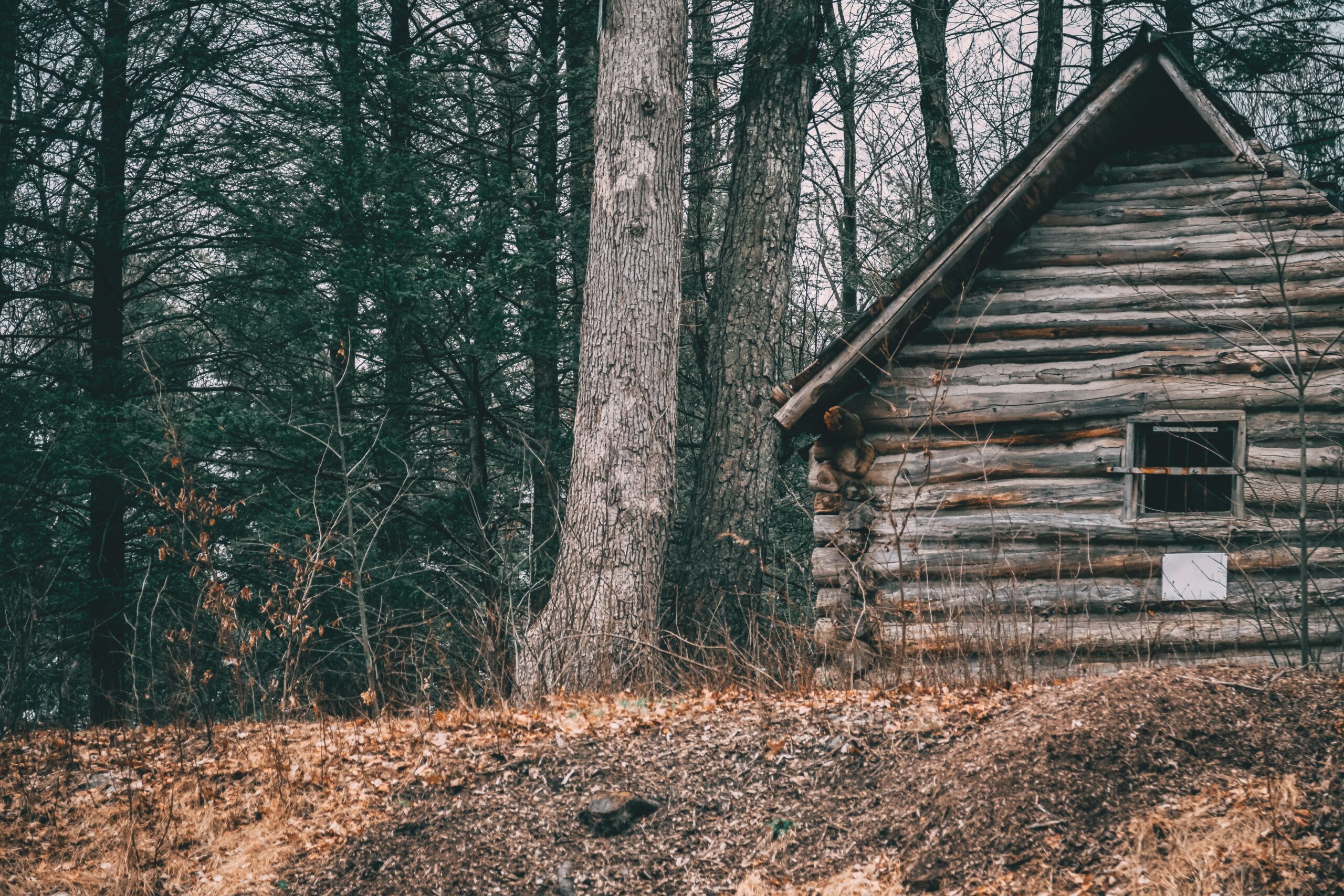
The drive to Willow Creek took two hours through increasingly rural roads. By the time I reached the cabin, the sun was setting, casting long shadows through the overgrown trees that surrounded the property. The structure looked even worse than I remembered. Weathered wood, a sagging porch, windows so dirty they were nearly opaque. This was my inheritance. This was what my son had thought I deserved.
Standing there in the gathering darkness, listening to the sounds of the forest around me, I felt more alone than I ever had in my sixty-four years. But somewhere in the back of my mind, a small voice whispered that something about all this didn’t make sense. Why would Michael, who called me every Sunday and never missed my birthday, suddenly decide I needed to be isolated in the middle of nowhere? Why would he give his wife everything and leave me with practically nothing?
I pulled out my phone to call him, forgetting for a moment that he was gone. The reality hit me again like a physical blow, but this time mixed with the grief was something else. Suspicion.
The moving truck arrived at Willow Creek the next morning, looking absurdly out of place on the narrow dirt road. The driver took one look at the cabin and shook his head. “You sure this is the right address, lady?” I wanted to tell him no, that this had to be some terrible mistake. But instead, I just nodded and pointed toward the sagging porch. “Just put everything inside, please.”
It took the movers three hours to unload forty years of my life into a space that felt like it could barely contain four decades of dust. My beautiful dining room set looked ridiculous in the small main room. My china cabinet, which had belonged to my grandmother, stood awkwardly against a wall of knotty pine that hadn’t been stained since the Carter administration.
After the movers left, I stood surrounded by boxes, feeling completely overwhelmed. The cabin had electricity, barely, and running water that came out brown for the first few minutes. The heat came from an old wood-burning stove that I had no idea how to operate. This wasn’t retirement. This was exile.
I spent the first night on an air mattress, too exhausted to set up my bed frame. Every sound made me jump. The settling of old wood. The scurrying of what I hoped were just mice. The wind whistling through gaps in the walls I hadn’t noticed during the day.
By morning, I’d made a decision. I would clean this place up and sell it as quickly as possible. Forty-three acres had to be worth something, and whatever I could get would help me find a small apartment somewhere civilized.
I started in the main room, unpacking boxes and trying to arrange my furniture in a way that made sense. That’s when I found the first strange thing. A box I didn’t remember packing, tucked behind my couch. When I opened it, I found old photographs and documents that had belonged to my late husband, Robert. Robert had died eight years ago, and I thought I’d gone through all his papers. These must have been stored somewhere in Michael’s house that I’d forgotten about.
As I sifted through the yellowed documents, I found insurance papers, old tax returns, and at the bottom, something that made my hands tremble. A deed to the Willow Creek property, but not the one I’d expected to see. This deed was different from the one the lawyer had shown me. It was older, dating back to when Robert’s father had first purchased the land in 1962. According to this document, the property wasn’t just forty-three acres of forest. The original survey showed mineral rights, oil and gas leases, technical terms I didn’t understand but which filled me with a strange mixture of hope and confusion.
I set the document aside, telling myself it probably didn’t mean anything. Mineral rights to land that had never produced anything were essentially worthless. But something about finding these papers in a box I didn’t remember packing bothered me.
I was still thinking about it when I heard a car approaching. Through the dirty window, I watched a sleek black sedan navigate the rutted driveway. My heart sank as I recognized the driver.
Zuri stepped out of the car wearing designer jeans and boots that probably cost more than I’d spent on groceries in the past month. She looked around with obvious distaste, picking her way carefully toward the cabin as if the ground might contaminate her.
“Eileen,” she called out in that false sweet voice she’d perfected. “I thought I’d check on how you’re settling in.”
I opened the door, not bothering to invite her inside. “What do you want, Zuri?”
“I brought you some things from the house,” she said, holding up a small cardboard box. “Some of Michael’s old clothes and a few items I thought you might want.” She pushed past me into the cabin, and I saw her eyes scanning everything with an intensity that made me uncomfortable. This wasn’t a casual visit from a concerned daughter-in-law. This was an inspection.
“It’s rustic,” she said, setting the box down on my kitchen counter. “I’m sure you’ll grow to love it here. All this nature.”
“Why are you really here, Zuri?”
She turned to face me, and for just a moment, her mask slipped. “I wanted to make sure you had everything you needed, that you weren’t missing anything important.” The way she emphasized important made my skin crawl. Her eyes kept darting around the room, and I realized she was looking for something specific.
“Like what?” I pressed.
“Oh, you know, documents, papers, anything that might have gotten mixed up during the move.” She moved toward the box I’d found behind the couch, but I stepped between her and it. “I can’t imagine what papers of mine would concern you.”
Zuri’s smile became strained. “Of course not. I just want to make sure there aren’t any loose ends. Legal matters can be so complicated when someone dies.”
She stayed for another twenty minutes, making awkward small talk while her eyes continued to search the room. When she finally left, I felt like I could breathe again. But her visit had accomplished one thing. It had confirmed my growing suspicion that something wasn’t right about Michael’s will or my inheritance.
That evening, I went through the box of Robert’s papers more carefully. Most of it was routine. Old insurance policies, warranty information for appliances we’d replaced years ago, receipts for home repairs. But at the very bottom, wrapped in a rubber band, I found something that made my heart race. A letter addressed to me, in Michael’s handwriting.
My hand shook as I opened it.
Mom, it began. If you’re reading this, something has happened to me, and you’re probably confused about why I left you the cabin. I know it doesn’t seem like much compared to what Zuri inherited, but I need you to trust me. The cabin is more important than it appears. Look in Dad’s old toolbox in the shed. There’s something there you need to find. And Mom, be careful who you trust. Not everything is what it seems. Love, Michael.
I read the letter three times before it fully sank in. Michael had known something might happen to him. He’d planned for this. But what was in Robert’s toolbox? And why had Michael hidden this letter among his father’s papers instead of with the will?
I looked out at the darkening forest surrounding the cabin. Somewhere out there was a shed I hadn’t even explored yet. And in that shed, apparently, were answers to questions I didn’t even know I should be asking.
The realization hit me like a bolt of electricity. Zuri’s visit hadn’t been about concern or loose ends. She’d been looking for this letter, or something like it. She’d been searching for evidence of whatever Michael had discovered.
As I folded the letter carefully and tucked it into my pocket, I felt something I hadn’t experienced in days. Hope. Mixed with that hope, though, was a growing dread. If Michael had felt the need to hide a message for me, if he’d been worried enough to write that letter three months before his death, then what exactly had he stumbled upon? And more importantly, what was Zuri so desperate to find?
The wind picked up outside, rattling the windows of the old cabin. But for the first time since Michael’s funeral, I didn’t feel afraid. I felt determined. Tomorrow, I would find that toolbox.
I barely slept that night. Michael’s letter felt like it was burning a hole in my pocket, and every creak of the old cabin made me wonder if Zuri had come back. By dawn, I was dressed and ready to search.
The shed stood about fifty yards behind the cabin, half hidden by overgrown bushes and leaning slightly to one side like it might collapse at any moment. The door stuck, swollen from years of moisture, and I had to put my full weight behind it to get it open. Inside, everything was covered in a thick layer of dust and spiderwebs. Rusty garden tools hung from hooks on the walls, and wooden shelves held paint cans so old their labels had faded to illegibility. It looked like no one had been in here for years.
But there in the far corner sat Robert’s red metal toolbox, the same one he’d carried to every home repair project for thirty years. My throat tightened with memories of watching him fix leaky faucets and squeaky hinges. Always patient, always thorough.
The toolbox was heavier than I remembered, and it took both hands to lift it onto the workbench. The latches were corroded but still functional. When I opened it, the familiar smell of metal and old oil hit me, along with something else. The faint scent of Robert’s cologne that had somehow lingered all these years.
The top tray held the usual assortment of screwdrivers, wrenches, and measuring tape. But when I lifted it out, I found something underneath that definitely hadn’t been there when Robert was alive. A manila envelope thick with documents, and a small brass key attached to a piece of string.
My hands trembled as I opened the envelope. The first document was a geological survey of the Willow Creek property dated just six months before Michael’s death. Technical language filled the pages, but certain phrases jumped out at me. Significant petroleum deposits. Estimated reserves. Commercial viability confirmed.
The next document was even more shocking. A letter from Blackstone Energy Corporation offering to purchase the mineral rights to the property for fifty million dollars.
Fifty million dollars. I had to read it three times before the number felt real. The letter was addressed to Michael, dated two months before his death, and marked urgent response required.
But that wasn’t the most devastating discovery. At the bottom of the envelope was a copy of Michael’s real will, not the one read in the lawyer’s office, but a different version dated one week before his death. In this will, everything was reversed. The cabin and its mineral rights were left to me, along with detailed instructions about the oil deposits and the pending offer from Blackstone Energy. Zuri was left with only the house and a modest trust fund of two hundred thousand dollars.
Attached to this will was a note in Michael’s handwriting.
Mom, I discovered Zuri has been slowly poisoning me. I have proof, but I’m not sure how much time I have. If something happens to me, this is your insurance policy. The key opens a safety deposit box at First National Bank. Box two forty-seven. Everything you need is there. I love you, Michael.
The world seemed to tilt around me. I gripped the edge of the workbench to keep from falling as the implications crashed over me like a wave. Zuri had murdered my son. She had poisoned him slowly, methodically, while he figured out her plan and tried to protect me from beyond the grave. And somehow she had managed to substitute a fake will for the real one, stealing both Michael’s life and his intended legacy.
The key felt impossibly heavy in my palm. Box two forty-seven at First National Bank. Whatever Michael had discovered about Zuri’s crimes was waiting there.
I was so absorbed in the documents that I didn’t hear the car approaching until it was too late. Through the grimy shed window, I saw Zuri’s black sedan pulling up beside the cabin. My heart hammered against my ribs as I quickly stuffed everything back into the envelope and shoved it under the toolbox.
By the time I emerged from the shed, trying to look casual, Zuri was standing on the cabin’s porch with two men in expensive suits.
“Eileen,” she called out, her voice bright with false cheer. “Perfect timing. I’ve brought some people who want to meet you.”
I walked toward them slowly, the brass key clutched in my fist behind my back. “What’s this about?”
“These gentlemen represent a development company,” Zuri explained, gesturing to the taller of the two men. “They’re interested in purchasing your property.”
The man stepped forward with a predatory smile. “Mrs. Patterson, I’m David Hutchkins from Riverside Development. We specialize in converting rural properties into residential communities. Your forty-three acres would be perfect for our next project.” He turned to his partner, who added, “We’re prepared to make you a very generous offer. Seventy-five thousand dollars cash. With a quick closing, you could be out of this rustic situation within a week.”
Seventy-five thousand dollars for property that Blackstone Energy wanted to pay fifty million for. I looked at Zuri, who was watching me with barely concealed anxiety. She needed me to sell this land, and she needed it to happen before I discovered what Michael had left for me.
“That’s very generous,” I said carefully. “But I’m not interested in selling right now. I’m just getting settled.”
Hutchkins exchanged a glance with his partner. “Mrs. Patterson, I don’t think you understand the reality of your situation. This property needs significant work to be habitable long-term. The plumbing, the electrical system, the structural integrity of the cabin, you’re looking at tens of thousands in repairs.”
“And let’s be honest,” Zuri added with false sympathy, “at your age, living out here alone isn’t practical. What if you had a medical emergency? What if something happened and no one could find you for days?”
The threat was subtle but unmistakable. I was sixty-four years old, living alone in an isolated cabin with no close neighbors and spotty cell phone service. If someone wanted to make me disappear, this would be the perfect place to do it.
“I appreciate your concern,” I said, forcing my voice to remain steady. “But I’m not ready to make any decisions about the property yet.”
Hutchkins’s smile never wavered, but his eyes hardened. “Perhaps you’d like to take a day or two to think it over. We’ll be staying at the Pine View Motel in town if you change your mind.”
After they left, I sat in the cabin staring at the brass key, my mind racing. Zuri wasn’t just a gold digger who had married Michael for his money. She was a calculating murderer who had planned everything from the beginning. The fake will, the rushed sale of the mineral rights, even my isolation at the cabin. It was all part of her scheme.
But Michael had been smarter than she’d given him credit for. Even while she was poisoning him, he’d managed to gather evidence and create a backup plan. The real question was, how much time did I have before Zuri realized I’d found it?
I looked out at the gathering dusk, knowing that tomorrow I would drive to First National Bank and open that safety deposit box. Whatever Michael had left there would give me the weapons I needed to fight back. But tonight, alone in the cabin with only the wind for company, I couldn’t shake the feeling that Zuri already suspected I knew more than I was letting on.
The game had begun, and I was no longer the grieving mother who could be easily dismissed. I was a woman with nothing left to lose and everything to fight for. And Zuri had no idea what was coming.
The drive to First National Bank took me through the small town where Michael had grown up, past the elementary school where he’d learned to read, and the park where we’d spent countless Saturday afternoons. Every familiar sight felt different now, colored by the knowledge of what Zuri had done to him.
The bank sat on Main Street, a solid brick building that had been there since the 1940s. I’d had an account there for over thirty years, but I’d never rented a safety deposit box. My hands shook slightly as I approached the receptionist. “I need to access safety deposit box two forty-seven,” I said, producing the brass key and the copy of Michael’s real will that established my legal right to the contents.
The bank manager, Mrs. Chen, reviewed the documents with the careful attention of someone who’d seen plenty of family drama played out in her office. After twenty minutes of verification calls and paperwork, she led me down a narrow staircase to the vault. “Take as much time as you need, Mrs. Patterson,” she said, sliding the metal box from its slot. “Ring the bell when you’re finished.”
Alone in the small viewing room, I lifted the lid of the safety deposit box with trembling fingers. Inside was a world of evidence that Michael had carefully assembled in his final months. A paper trail that would destroy Zuri completely.
The first item was a thick folder labeled medical evidence. It contained copies of Michael’s medical records from his regular doctor, along with reports from a private lab that had analyzed his hair and blood samples. The results showed consistent levels of thallium, a heavy metal that when administered in small doses over time could cause heart failure while being nearly undetectable.
Thallium poisoning. That’s how Zuri had murdered my son.
The next folder contained financial records showing that Zuri had been systematically moving money from Michael’s accounts into offshore holdings in her name. Over the past year, she’d transferred nearly three million dollars, always in amounts small enough to avoid triggering automatic reporting requirements.
But the most damning evidence was in the third folder: surveillance footage. Michael had installed hidden cameras in their home after he began suspecting Zuri. The USB drive contained hours of footage showing her adding something to his coffee each morning, crushing pills into his dinner, even injecting something into his insulin pen when he’d been briefly diabetic the year before.
There was also audio recordings, conversations where Zuri spoke to someone on the phone about the old woman, and how I needed to be handled after Michael was gone. The voice on the other end was male, and while I couldn’t identify it, the conversations made it clear that Zuri had an accomplice.
The cabin situation is temporary, Zuri’s voice came through clearly on one recording. Once we get her to sign over the mineral rights, she won’t be a problem anymore.
And if she won’t sign, the man’s voice asked, then we’ll have to convince her one way or another.
The threat was unmistakable. They were planning to kill me too.
The final item in the box was a letter addressed to the FBI, already stamped and ready to mail. Michael had prepared everything. All I had to do was drop it in a mailbox and federal agents would begin investigating Zuri for murder, fraud, and conspiracy.
But as I sat in that small room surrounded by evidence of my son’s murder, I realized I wanted more than justice. I wanted Zuri to know that she’d been outplayed. I wanted her to experience the same fear and helplessness she’d put Michael through in his final months.
I photographed everything with my phone, then carefully returned the originals to the safety deposit box. The letter to the FBI would stay there for now, my insurance policy, in case something happened to me.
The drive back to the cabin gave me time to plan. Zuri expected me to be a helpless old woman, easily manipulated and disposed of. I would let her continue thinking that while I prepared my counterstrike.
I was almost back to the cabin when my phone rang. Zuri’s name flashed on the screen and I let it go to voicemail. When I played the message back, her voice was tight with barely controlled panic. “Eileen, it’s me. Those developers called. They’re increasing their offer to a hundred thousand dollars, but only if you decide by tomorrow. I really think you should consider it. This property is just too much for you to handle alone.”
A hundred thousand. Still a fraction of what the land was really worth, but the increased urgency told me everything I needed to know. Something had spooked them. Maybe they’d discovered that I’d been to the bank. Or maybe they were just getting nervous about how long this was taking. Either way, it was time to force their hand.
I called Zuri back, injecting just the right amount of weariness into my voice. “I got your message. You’re right. This place is too much for me. I think I’m ready to sell.”
The relief in her voice was palpable. “Oh, Eileen, I’m so glad you’re being reasonable about this. Should I call the developers?”
“Actually, I was hoping you could bring them by tomorrow morning. I’d like to discuss the terms in person before I sign anything.”
“Of course. What time works for you?”
“How about ten? That will give me time to have my coffee and get my thoughts together.”
“Perfect. And Eileen, I’m really proud of you for making this decision. Michael would want you to be comfortable and secure.”
The casual invocation of my murdered son’s name made my blood boil, but I kept my voice steady. “Yes, I think he would.”
After I hung up, I spent the evening preparing. I cleaned the cabin thoroughly, arranged my furniture to create clear sight lines to all the windows, and set up my phone to record everything that was about to happen. Then I sat down and wrote my own letter, not to the FBI, but to the local sheriff’s department. I explained everything I’d discovered, attached copies of the evidence from the safety deposit box, and sealed it in an envelope addressed to Sheriff Morrison, a man I’d known since he was Michael’s classmate in high school. If something went wrong tomorrow, if Zuri’s threats turned violent, at least the truth would survive.
The next morning dawned gray and overcast, perfectly matching my mood. I made coffee and toast, going through the motions of a normal breakfast while my heart hammered against my ribs. At exactly ten, I heard cars approaching. Through the window, I watched three vehicles pull up. Zuri’s sedan, a white SUV carrying the two fake developers, and a third car I didn’t recognize.
Four people got out instead of the expected three. The fourth person was a woman in her fifties, professionally dressed, carrying a briefcase. She had the look of someone who’d done this before, someone who specialized in making inconvenient people disappear.
My phone was already recording as they approached the cabin. I took a deep breath, opened the door, and smiled as if I were genuinely happy to see them. “Good morning, everyone. Please come in.”
As they filed into my small living room, I saw Zuri’s eyes scanning for any sign that I’d discovered her secrets. She was nervous but not panicked. Not yet.
“Eileen,” she said, “I’d like you to meet Sarah Martinez. She’s a notary who will help us make everything official.”
Martinez nodded professionally. “Mrs. Patterson, I understand you’re ready to sell your property. Do you have any questions about the paperwork?”
“Just one,” I said, settling into my armchair with the calm of someone who held all the cards. “I’m curious about why you’re all so interested in forty-three acres of worthless forest land.”
The temperature in the room seemed to drop ten degrees. Hutchkins and his partner exchanged glances while Zuri’s smile became noticeably strained.
“It’s not worthless, Mrs. Patterson,” Hutchkins said carefully. “As I mentioned, it has development potential.”
“Oh, I see. And that development potential wouldn’t have anything to do with the fifty million dollars worth of oil deposits under my property, would it?”
The silence that followed was deafening. Zuri went pale and Martinez actually took a step backward toward the door. I pulled out my phone and held it up. “Did you know this has been recording our entire conversation, including the part where you all conspired to defraud me out of fifty million dollars?”
Zuri’s composure finally cracked completely. “You don’t know what you’re doing, Eileen. You’re in over your head.”
“Am I? Because it seems to me like I know exactly what I’m doing. Just like my son knew what he was doing when he hid evidence of his own murder.”
The words hung in the air like a physical presence. Zuri’s face cycled through shock, fear, and finally cold calculation.
“I don’t know what you think you found,” she began.
“I found everything, Zuri. The thallium poisoning, the forged will, the offshore accounts, the surveillance footage. All of it.”
Martinez was already heading for the door, clearly wanting no part of whatever was about to happen. Hutchkins and his partner weren’t far behind her, but Zuri stepped closer, and for the first time, I saw the real woman beneath the mask, the cold-blooded killer who had methodically murdered my son.
“You can’t prove anything,” she said, but her voice lacked conviction.
I smiled, feeling truly calm for the first time in weeks. “Actually, Zuri, I can prove everything. The question is, what are you going to do about it?”
The fake developers and the notary were already in their cars, engines running, when Zuri turned back to face me. Her mask had completely fallen away now, revealing the predator underneath.
“You think you’re so clever,” she said, stepping closer to where I sat in my armchair. “But you’re just a foolish old woman who doesn’t understand the game she’s playing.”
I kept my phone positioned to capture everything, my finger hovering over the emergency call button. “I understand perfectly. You murdered my son for money. And now you want to kill me too.”
“Michael was weak,” she spat, her voice dripping with contempt. “He actually believed in love and family. He never saw what was right in front of him until it was too late.”
“He saw enough. He gathered evidence, changed his will, made sure you’d never get away with this.”
Zuri laughed, but it was a harsh, brittle sound. “Evidence? You mean that pathetic collection of papers he thought he was hiding so cleverly? Did you really think I didn’t know about his little spy cameras and his secret trips to doctors?”
My blood ran cold. “What are you talking about?”
“I’ve known about Michael’s investigation for months. Every doctor he visited, every test he ran, every piece of evidence he thought he was gathering. I was three steps ahead of him the entire time.” She pulled out her phone and scrolled through what looked like a series of text messages. “Dr. Henderson was very cooperative once I explained the situation to him. Amazing how quickly medical professionals will falsify records when their own families are threatened.”
The implications hit me like a physical blow. “The medical records in the safety deposit box,” I whispered.
“Completely fabricated. The blood tests showing thallium, fake. The hair samples, tampered with. Even those surveillance videos you’re so proud of, I made sure Michael’s cameras captured exactly what I wanted them to capture.”
My hands started shaking as the full scope of her deception became clear. “You let him think he was building a case against you.”
“I encouraged it. Poor Michael, so desperate to protect his mommy. He had no idea that every piece of evidence he collected was actually strengthening my position. When the authorities eventually investigate his death, and they will, thanks to all his paranoid preparations, they’ll find a mentally unstable man who was convinced his loving wife was trying to poison him.”
She moved to the window, looking out at the empty driveway where the other cars had disappeared. “The tragic truth will be that Michael suffered a psychotic break in his final months. Paranoid delusions, wild accusations, secret meetings with doctors who will testify that he was exhibiting signs of severe mental illness.”
“But the will, the real will that leaves me everything—”
“Also fake. I had Michael create that secret will himself. Convinced him it was necessary to protect you from me. He wrote it in his own handwriting, signed it willingly, even had it notarized by someone who will swear Michael seemed perfectly rational at the time.”
The room seemed to spin around me. Every piece of evidence I thought I had, every weapon Michael had left me to fight with, all of it was part of Zuri’s elaborate trap.
“The best part,” she continued, her voice taking on an almost dreamy quality, “is that Michael died believing he’d outwitted me. In his final moments, when the massive heart attack hit, he probably felt satisfied knowing that his dear mother would be protected.”
I felt sick to my stomach. “Why are you telling me this?”
“Because I want you to understand how completely you’ve lost before I finish what I started.” She turned back to face me, and I saw something in her eyes that made my skin crawl. “Michael wasn’t the only one who underestimated me. Eileen, you did too.”
She walked to the kitchen and opened the cabinet where I kept my coffee mugs. “Did you enjoy your coffee this morning? I noticed you made a fresh pot before we arrived. Very hospitable of you.”
The mug I’d used for breakfast was still sitting in the sink, and suddenly I understood why I’d been feeling slightly dizzy since they’d arrived. The room seemed to tilt, and I gripped the arms of my chair to steady myself.
“What did you do?”
“The same thing I did to Michael, just much faster. Concentrated thallium solution, completely tasteless, virtually undetectable, unless you know exactly what to look for.” She checked her watch. “You’ve got maybe twenty minutes before the heart palpitations start. Thirty minutes after that, complete cardiac arrest.”
I tried to stand, but my legs wouldn’t support me. The phone slipped from my fingers and clattered onto the floor.
“The beautiful irony,” Zuri said, settling into the chair across from me as if we were having a pleasant conversation, “is that everyone will believe you committed suicide. A grieving mother overwhelmed by financial problems and living alone in this depressing cabin. It writes itself.” She pulled a piece of paper from her purse and placed it on the coffee table between us. Even through my growing confusion, I could see it was a suicide note written in what looked remarkably like my handwriting.
“I can’t go on without Michael,” she read aloud. “The guilt of knowing I failed him as a mother is too much to bear. I’m sorry for the pain I’ve caused everyone. Very touching, don’t you think?”
My vision was starting to blur, but I forced myself to focus. There had to be something, some way to fight back. The recording on my phone. But even as I thought it, I realized Zuri was right. Who would believe a recording made by a woman everyone would think was mentally unstable?
“The property will go to Michael’s estate, of course,” she continued conversationally. “As his widow, I’ll inherit everything, including those valuable mineral rights. Blackstone Energy is prepared to pay sixty million now. Apparently the deposits are even larger than originally estimated.”
Sixty million dollars. My son had died for sixty million dollars.
“You won’t get away with this,” I managed to whisper, though even forming the words was becoming difficult.
“I already have gotten away with it. Michael’s death was ruled natural causes. Your death will be ruled suicide, and I’ll be the grieving widow who lost both her husband and her mother-in-law to tragic circumstances beyond anyone’s control.”
She stood up and walked to the door. “I’m going to leave now, Eileen. When they find you tomorrow, I’ll be at the spa in town getting a massage and building an alibi. By the time anyone thinks to question me, all the evidence will point to a depressed old woman who couldn’t handle her grief.”
The cabin door opened, letting in a gust of cold air that made me shiver. Or maybe that was the poison working its way through my system. “Goodbye, Eileen. I’d say I’m sorry it had to end this way, but we both know that would be a lie.”
The door slammed shut and I heard her car starting up outside. Within moments, the sound of her engine faded into the distance, leaving me alone with the growing certainty that I was going to die.
But as I sat there fighting against the fog that was clouding my thoughts, I remembered something Zuri didn’t know about, something I’d done that morning before anyone arrived. The letter I’d written to Sheriff Morrison wasn’t sitting on my kitchen counter where I’d left it. It was already in the mail, dropped into the post office box in town during my early morning drive to get supplies. Sheriff Morrison would receive that letter tomorrow along with copies of everything I’d found in the safety deposit box. Even if Zuri had manipulated the original evidence, my letter would raise enough questions to trigger a real investigation. It wasn’t much, but it was something.
As my heart began to race erratically and the room spun around me, I held on to that single thought. Zuri thought she’d won, but she’d made one critical mistake. She’d underestimated a mother’s love for her child. And now, even if I didn’t survive, she was going to pay for what she’d done to Michael.
The room was spinning violently now, and my heart felt like it was trying to beat its way out of my chest. Each breath was a struggle, and I could feel my body shutting down just as Zuri had planned. But in those moments when I expected to slip into unconsciousness, something extraordinary happened. My phone, which had fallen to the floor during Zuri’s confession, began ringing with an incoming call.
The sound seemed to pierce through the fog in my brain, and I realized I wasn’t as far gone as I’d thought. With enormous effort, I managed to slide out of the chair and crawl toward the phone. The caller ID showed Sheriff Morrison’s name. My letter. Somehow he’d gotten it early.
“Mrs. Patterson,” his voice crackled through the speaker when I managed to answer. “I got your letter this morning. Are you all right? You sound off.”
“Zuri,” I gasped into the phone. “She just left. Thallium in my coffee.”
“Jesus Christ. I’m sending an ambulance right now. Stay on the line with me, Eileen.”
The next few minutes were a blur of sirens, paramedics, and the strange sensation of being lifted onto a stretcher. But I remained conscious, fighting against the poison with a determination I didn’t know I still possessed.
It turned out that Zuri had made a crucial miscalculation. In her arrogance, she’d assumed that a sixty-four-year-old woman would succumb to the same dose that had killed my son. But I was smaller than Michael, and ironically, a lifetime of drinking strong coffee had given me a tolerance for certain toxins that she hadn’t accounted for.
The emergency room doctors pumped my stomach and started chelation therapy to remove the heavy metals from my system. It was touch and go for several hours, but by evening they told me I was going to make a full recovery.
Sheriff Morrison was waiting by my hospital bed when I woke up the next morning. “How are you feeling?” he asked, his expression grim.
“Like I’ve been run over by a truck. But alive.”
He nodded. “Eileen, I need you to tell me everything that happened yesterday. Everything Zuri said. Everything she admitted to.”
I told him the whole story, from finding Michael’s letter in the toolbox to Zuri’s confession about manipulating all the evidence. Morrison took careful notes, occasionally asking for clarification.
“The problem we have,” he said when I’d finished, “is that most of what she told you about falsifying the medical records, manipulating the will, even the surveillance footage, might actually be true. If she’s been planning this for as long as she claims, she could have covered her tracks very thoroughly.”
My heart sank. “So she’s going to get away with murdering Michael?”
“Not necessarily. See, the thing about people like Zuri is that they’re often too clever for their own good. She manipulated evidence to make it look like Michael was paranoid and mentally unstable, but she had to leave some traces of her activities to make that story believable.” He pulled out a folder thick with documents. “After I got your letter yesterday, I started making some calls. Turns out the FBI has been watching Zuri for months as part of a larger investigation into a network of people who specialize in marrying wealthy individuals and then, well, becoming widows. She’s done this before. Three times that we know of. Each time the husband died of apparent natural causes, leaving everything to his grieving wife. Each time there were just enough suspicious circumstances to raise questions, but never enough evidence to prosecute.”
Morrison flipped through the papers in his folder. “But this time she got sloppy. Maybe it was because she was dealing with you as well as Michael. Or maybe she was just overconfident. Either way, she made mistakes.”
“What kind of mistakes?”
“Well, for starters, she tried to poison you with the same method she used on Michael. The FBI has been monitoring her communications for weeks. They heard her discussing the old woman problem with her accomplice.”
“You mean they recorded her planning to kill me?”
“They recorded everything. Her phone calls, her meetings with those fake developers, even her conversation with the notary who helped forge the sale documents.” Morrison smiled grimly. “The woman you met yesterday wasn’t really a notary. She was an undercover federal agent.”
The revelation hit me like a lightning bolt. “The FBI knew what was happening.”
“They’ve been building a case against Zuri’s entire operation for over a year. When they learned she was planning to eliminate you, they decided it was time to move. The problem was they needed her to actually commit a crime they could witness directly.”
“So they used me as bait.”
Morrison’s expression became uncomfortable. “They had agents positioned around the cabin yesterday, ready to intervene if things went too far. But when you managed to survive the poisoning and record her confession,” he gestured to my phone, which was sitting on the bedside table, “well, let’s just say you’ve given them everything they need to put her away for life.”
“Where is she now?”
“In federal custody. She was arrested this morning at the spa where she was building her alibi. Turns out the FBI had been watching that location too.”
Over the next several days, as I recovered in the hospital, the full scope of Zuri’s crimes became clear. The FBI investigation revealed a sophisticated network of people who targeted wealthy individuals for murder. Zuri was what they called a black widow, someone who married her targets, slowly poisoned them while building a case for their mental instability, then inherited their wealth before moving on to the next victim.
Michael hadn’t been her first husband. Robert Chen, a software executive in California, had died three years earlier under circumstances remarkably similar to Michael’s. Before that, there had been James Mitchell, a real estate developer in Florida, and David Torres, a surgeon in Arizona. Each time, Zuri had used the same playbook. Marry a wealthy man, isolate him from his family, slowly poison him while documenting his paranoid behavior, then inherit everything after his natural death.
But Michael had been different. His investigation, even though Zuri had manipulated much of the evidence, had still uncovered patterns that connected her to the previous deaths. The FBI had been following those connections when they identified Zuri as their primary suspect.
“Your son saved a lot of lives,” Agent Sarah Martinez told me when she visited the hospital. I recognized her as the notary who had been at the cabin that day. “If we hadn’t stopped her here, Zuri would have moved on to her next target within six months.”
“How did you know she was planning to kill me?”
“We’ve been monitoring her communications since before Michael died. When she started talking about the mineral rights problem and how she needed to handle you, we knew we had to act.” Agent Martinez pulled out a tablet and showed me surveillance footage from around the cabin. “We had teams positioned in the woods, ready to intervene if the poison acted faster than we expected. The plan was to let her confess to you because we knew she couldn’t resist gloating, then move in before any real harm was done.”
“But I almost died.”
“You almost died because you’re tougher than any of us expected. Most people your age wouldn’t have survived even half the dose she gave you.” Martinez smiled. “Your son would have been proud of how you fought back.”
The legal proceedings moved quickly. Faced with overwhelming evidence, including the recording I’d made of her confession, Zuri agreed to a plea bargain rather than risk the death penalty. She was sentenced to life in prison without the possibility of parole for the murder of Michael and the attempted murder of me. Her accomplices, including the fake developers and several others involved in the broader conspiracy, received sentences ranging from ten to twenty-five years.
The forged will was invalidated, and Michael’s real final wishes were honored. The house on Oakwood Drive, along with all of Michael’s legitimate assets, came to me as his sole heir. But more importantly, the mineral rights to the Willow Creek property were officially recognized as mine. Blackstone Energy’s final offer was actually seventy-two million dollars, even more than Zuri had known about. Apparently the geological surveys had been updated since the original assessment, revealing deposits that were significantly larger than initially estimated.
I sold the mineral rights but kept the cabin. After everything that had happened, that little structure in the woods had become something special to me. Not a place of exile, but a sanctuary where I’d found the strength to fight back against someone who thought she could destroy my family.
Six months later, I was sitting on the cabin’s newly renovated porch, watching the sunrise paint the forest in shades of gold and amber. The place looked nothing like it had when I’d first arrived in despair and confusion. New windows, fresh paint, a solid roof, and modern plumbing had transformed it into the peaceful retreat Michael had always intended it to be.
I’d kept the house on Oakwood Drive as well, but I found myself spending more and more time at Willow Creek. There was something healing about the silence here, about the way the morning mist rose from the stream and the way the trees whispered secrets to each other in the wind.
My phone buzzed with a text message from Agent Martinez. Thought you’d want to know. The FBI recovered over fifty million that Zuri had stolen from her previous victims. The money is being returned to the families.
I smiled, thinking about the justice in that. Zuri’s greed had ultimately been her downfall. If she’d been content with Michael’s life insurance money and a modest inheritance, she might have gotten away with murder. But her need for more, for the mineral rights, for complete control, had led her to make the mistakes that brought her down.
Another text came in, this one from Sheriff Morrison. Grand jury returned indictments in three more cases. Zuri’s going to be charged with additional murders in California, Florida, and Arizona. Justice for all her victims.
I set the phone aside and picked up the framed photograph sitting on the small table beside my chair. It showed Michael at age ten, holding up that fish he’d caught during one of our rare visits to Willow Creek. His gap-toothed grin filled the frame, and his eyes sparkled with the joy of a child who knew he was loved.
“We got her, sweetheart,” I whispered to the photograph. “She’ll never hurt anyone else.”
A gentle breeze rustled the leaves overhead, and for just a moment, I could swear I heard Michael’s voice carried on the wind, not speaking words, but conveying a feeling of peace, of completion, of a son’s love for his mother that death itself couldn’t diminish.
I had my justice. I had my freedom. And I had my memories of the boy who had loved me enough to reach back from beyond the grave, to save me from the woman who had destroyed him. In the end, that was worth more than all the oil in the ground beneath my feet.

Sophia Rivers is an experienced News Content Editor with a sharp eye for detail and a passion for delivering accurate and engaging news stories. At TheArchivists, she specializes in curating, editing, and presenting news content that informs and resonates with a global audience.
Sophia holds a degree in Journalism from the University of Toronto, where she developed her skills in news reporting, media ethics, and digital journalism. Her expertise lies in identifying key stories, crafting compelling narratives, and ensuring journalistic integrity in every piece she edits.
Known for her precision and dedication to the truth, Sophia thrives in the fast-paced world of news editing. At TheArchivists, she focuses on producing high-quality news content that keeps readers informed while maintaining a balanced and insightful perspective.
With a commitment to delivering impactful journalism, Sophia is passionate about bringing clarity to complex issues and amplifying voices that matter. Her work reflects her belief in the power of news to shape conversations and inspire change.