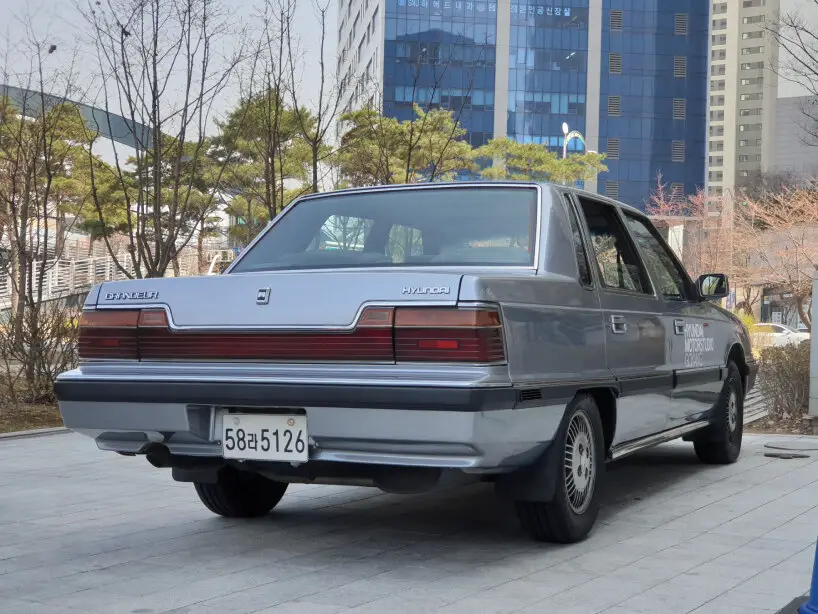
My billionaire grandfather left hundreds of millions of dollars to the rest of our family. To me, he left a dented, ten-year-old sedan.
In the marble boardroom of Walton Enterprises, my father smirked. My older brother laughed openly, making one more joke about the six years I had spent in the United States Army while the two of them prepared to divide luxury homes, a private aviation division, and investment accounts worth more money than most people could imagine.
I accepted the worn brass key without protest.
But when I lowered myself into the cracked driver’s seat and turned the ignition, the outdated navigation screen flickered awake. It did not show a map, a menu, or the address of my grandfather’s estate outside Denver. It displayed one locked destination.
HOME.
My grandfather had not lived anywhere near those coordinates in forty years.
I followed the route into the Colorado foothills, unaware that the old car had never really been intended as transportation. It was a vault on wheels, carrying a secret my grandfather had preserved for the one member of his family he still trusted.
My name is Alexandra Walton. I was twenty-eight years old when Arthur Walton died, and I had returned to Colorado after six years of military service with two duffel bags, a carefully folded dress uniform, and the quiet grief of losing the only man in my family who had ever believed I was capable of building a life on my own terms.
My grandfather had founded Walton Manufacturing in a rented warehouse near Denver’s old industrial corridor. Over six decades, it had grown into Walton Global Holdings, a private business empire with factories, commercial property, aviation assets, and investments across the United States. Financial magazines estimated his net worth at more than two billion dollars.
To strangers, Arthur Walton was a hard, disciplined industrialist. To me, he was the man who taught me to change a tire before I was old enough to drive, who mailed handwritten letters to every military address I had, and who never once called my decision to enlist a phase or an embarrassment.
During the final three months of his life, while he received hospice care at his home, I sat beside him whenever leave and duty allowed. My father, Richard, came when lawyers needed signatures. My brother, Julian, came when photographers were expected.
Neither of them was present the night Grandpa squeezed my hand and said, “People reveal themselves when they believe the outcome is already decided.”
At the time, I thought he was talking about death. I did not understand that he was preparing me for the reading of his estate documents.
I remember that night in more detail than almost any other from those three months. The hospice nurse had just left, dimming the lamp on her way out, and the room smelled faintly of eucalyptus and the lavender lotion she rubbed into his hands each evening to ease the stiffness. Grandpa’s voice had grown thin by then, but his grip was still surprisingly strong when he reached for me.
“Alexandra,” he said, “I need you to listen carefully, even if none of this makes sense tonight.”
“I’m listening.”
“Whatever happens after I’m gone, don’t confuse what people say they deserve with what they’ve actually earned. Your father and brother have spent years telling themselves a story about their own importance. Stories like that don’t hold up well under pressure.”
I had assumed, at the time, that he was simply rambling, the way people sometimes do near the end, looping back through old grievances and half-formed warnings. I sat with him until he drifted to sleep, and I didn’t think about the conversation again until months later, standing in a mountain parking lot with a flashlight in my hand and a locked steel compartment at my feet.
The conference room occupied the fortieth floor of Walton Tower in downtown Denver. Snow remained on the distant Front Range, bright beneath a hard blue Colorado sky. Inside, the air smelled of polished wood, expensive coffee, and the faint citrus cleaner used on the long mahogany table.
I sat at the far end in a plain navy suit. Across from me, Richard and Julian wore tailored Italian jackets and the calm, proprietary expressions of men who believed the building already belonged to them.
Julian checked his gold watch. “Let’s make this quick,” he said. “We all know why we’re here.”
Elias Callahan, my grandfather’s longtime attorney and closest confidant, regarded him for a moment before opening the thick document in front of him.
The first distributions sounded enormous. Richard was named beneficiary of several prime downtown properties and the family estate. Julian was to receive the private aviation subsidiary, along with specific investment portfolios and vacation properties. Additional assets were divided among relatives, charitable interests, and longtime executives.
Hundreds of millions of dollars seemed to change hands in less than twenty minutes.
Richard leaned back in his chair. Julian’s face brightened each time another asset was named. They were already speaking in whispers about renovations, aircraft sales, and a reception they intended to hold that evening.
Then Callahan reached my name.
“To my granddaughter, Alexandra Walton,” he read, “I leave my 2014 silver sedan, currently parked on level P3 of Walton Tower, together with its title, keys, and full contents.”
For one beat, there was silence. Then Julian laughed. “A ten-year-old beater for the soldier girl.” He turned toward our father. “Dad, make sure she pays the parking fee on her way out.”
Richard did not laugh, but the satisfaction in his expression was worse. “Your grandfather understood that people should receive what suits them,” he said. “You always claimed you didn’t care about money, Alexandra. I suppose he listened.”
I kept my face still. Military training had taught me many things, but one lesson had proved useful far beyond uniformed service: never let another person’s contempt determine your next move.
Callahan placed the worn brass key on the table. His fingers rested beside it for half a second longer than necessary. When I looked up, his expression revealed nothing.
I stood, picked up the key, and walked out without saying a word.
The elevator descended forty floors in near silence. Julian’s laughter followed me anyway. It mixed with older memories, my father’s disapproval when I enlisted, my brother calling my career a waste, the two of them treating my visits to Grandpa’s bedside as evidence that I had nothing more important to do.
By the time the doors opened into the underground garage, the hurt had settled into something quieter.
The silver sedan waited in the dimmest corner of level P3. Its paint had faded, a shallow dent marked the passenger-side door, and a film of dust covered the windshield. It looked exactly like the kind of car a billionaire’s family would consider an insult.
I unlocked it and opened the driver’s door. The scent reached me first: old leather, peppermint, and the faint trace of my grandfather’s pipe tobacco. He had stopped smoking years earlier, but the smell seemed woven into the upholstery. My throat tightened so suddenly that I had to grip the top of the door.
Inside, the car was immaculate. The floor mats had been vacuumed. The glove compartment held a current registration card, an insurance certificate, and a flashlight with fresh batteries. The fuel tank was full. The tires were nearly new.
This was not a forgotten vehicle. Someone had prepared it.
I sat behind the wheel and fitted the brass key into the ignition. The engine started with a deep, finely tuned purr that did not match the sedan’s tired exterior. A moment later, the navigation screen in the center console flickered brightly. Instead of loading its usual menu, the system bypassed every setting and opened a single route. I tried the touchscreen, then the buttons beneath it. Nothing changed. The destination field glowed in red letters.
HOME.
The coordinates did not point to the Walton estate or the modest suburban house where I had grown up. They led toward Blackwood Ridge, forty miles west of Denver, along a winding mountain road my grandfather had not traveled, as far as I knew, in four decades.
Then a soft click sounded through the speakers. Static crackled, followed by a voice I knew better than my own.
“Alexandra,” Grandpa said, steady and close, as though he were sitting beside me. “Follow the route alone. When you arrive, check the rear compartment. Trust what you can verify, not what you are told.”
The recording ended. For several seconds, I could hear only the engine and my own breathing. Then I shifted into drive.
Traffic thinned as I left Denver behind. Office towers gave way to neighborhoods, then foothill towns, gas stations, and stretches of pine darkening beneath the late-afternoon sky. The road climbed steadily. Fog gathered between the trees, and patches of old snow shone along the shoulder. I found myself gripping the wheel tighter than the driving required, some old instinct from convoy routes overseas, scanning the tree line out of habit even though nothing here could possibly threaten me.
Forty-five minutes later, the GPS directed me onto a narrow access road ending at an abandoned scenic overlook. A weathered ranger station stood beyond a gravel lot. Far below, the lights of the Denver metro area were beginning to appear, including the industrial district where Arthur Walton had opened his first manufacturing plant sixty years earlier.
The GPS chimed once. YOU HAVE ARRIVED HOME.
I shut off the engine. The silence was absolute until gravel crunched somewhere beyond the headlights.
A tall silhouette emerged from behind the ranger station. My body responded before thought did: shoulders squared, feet planted, attention fixed on the stranger’s hands. Then the man stepped into the light, and I recognized the weary face beneath a heavy wool coat.
“Mr. Callahan?”
“I knew you would make the drive, Alexandra.” His breath misted in the cold mountain air.
I climbed out and closed the door behind me. “What is this? What did my grandfather leave here?”
Callahan studied the sedan, then looked toward the lights below. “Arthur knew exactly what Richard and Julian would do once he was gone. The meeting this afternoon was a test, but it was also a legal diversion. The specific bequests they heard were contained in an earlier estate instrument. It was genuine when it was signed, but it was superseded by a later trust amendment and related corporate resolutions.”
“So they inherited nothing?”
“They inherited exactly what the final documents permit them to inherit. The distinction matters.”
He reached inside his coat and removed a heavy electronic key fob stamped with the old Walton crest. “Your grandfather did not leave you a broken-down car,” he said, placing the cold metal in my palm. “He left you the evidence, the controlling interest in the company, and the authority to stop what they began.”
We walked to the rear of the sedan. I opened the trunk and lifted the carpet liner. Beneath it sat a spare tire and an ordinary tool kit.
“Remove the tire,” Callahan said.
Under the metal well, almost invisible beneath a layer of factory-matched paint, was an aftermarket electronic console welded into the reinforced chassis. I held the fob against a small sensor. A green light appeared. With a quiet hiss, a steel panel released and slid aside.
Inside were neatly bound folders, encrypted drives, notarized declarations, and sealed copies of corporate records. At the top lay a dark leather binder bearing my grandfather’s initials.
My hands trembled as I opened it. The first document was the final amendment to the Arthur Walton Revocable Trust, executed three weeks before his death, when two physicians had separately confirmed his mental capacity. Behind it were minutes from an emergency board meeting, an assignment of voting shares, and a succession agreement naming me trustee and holder of the controlling interest in Walton Global Holdings.
The car title did not magically confer ownership of the company. My grandfather had been too careful for a trick that fragile. Instead, the sedan had been specifically identified in the trust as the physical delivery point for the original stock certificates, signed transfer instruments, authentication devices, and evidentiary records. Accepting lawful possession of the car and its contents completed a chain of custody Callahan had designed to withstand challenge.
“The documents read this afternoon covered individual properties and subsidiaries,” Callahan explained. “But every one of those assets remains subject to the debts, liens, and obligations attached to it. Walton Global Holdings owns the controlling interests, the viable contracts, and the majority of the unencumbered accounts. Arthur transferred control of the parent company to you.”
I turned another page. “Why hide it here?”
“Because your father had begun monitoring office records, household staff, and electronic communications. Arthur needed the originals somewhere Richard would never think to search. He also needed to know whether you would accept something with no visible value.”
Beneath the corporate documents lay several financial forensic reports. They contained bank statements, internal emails, falsified authorizations, and records of wire transfers routed through offshore entities. The same names appeared again and again: Richard Walton and Julian Walton.
While Grandpa had been in hospice care, they had diverted millions of dollars, concealed losses, pressured employees to alter reports, and placed company guarantees behind private transactions. They had expected his death to bury the trail.
It had done the opposite.
Arthur had quietly retained an outside forensic accounting firm. Every suspicious transfer had been traced. Every disputed signature had been examined. Several employees had given sworn statements, and the evidence had already been shared with state and federal investigators under a sealed cooperation agreement.
My grandfather had not merely left me a fortune. He had left me a responsibility, and an ironclad trap for the people who believed his declining health had made him powerless.
I closed the binder and stared across the valley. “They think they won this afternoon,” I said.
“They were supposed to,” Callahan replied. “Arthur believed they would move quickly once they felt protected. They did. This morning, Julian attempted to transfer two aircraft. Richard authorized a draw against property already securing undisclosed debt. Those acts supplied the final evidence investigators needed.”
I looked at him. “Where are they now?”
“At the Walton estate. They turned tonight’s memorial reception into a victory gala.”
I secured the documents in the portfolio Callahan had brought, locked the steel compartment, and lowered the spare tire back into place.
“Then let’s go.”
Before returning to the estate, I stopped at the downtown hotel where I had left my luggage and changed into my Army dress uniform. I did not wear it to intimidate anyone. I wore it because Grandpa had attended my commissioning ceremony in that same uniform, standing in the front row with tears in his eyes. On the last night he was fully awake, he had asked whether it still fit.
It did.
Standing in front of the hotel mirror, buttoning the jacket with hands that hadn’t quite stopped shaking since the mountain overlook, I thought about how strange the day had been, starting with humiliation in a boardroom and ending, potentially, with the restoration of everything my grandfather had spent sixty years building. I did not feel triumphant. I felt like someone about to walk into a room full of people who had already decided who I was, carrying proof that they were wrong.
I drove the silver sedan through the wrought-iron gates of the Walton estate just after eight o’clock. The long driveway was packed with luxury cars and black limousines. Through the tall windows, crystal chandeliers illuminated a ballroom crowded with executives, donors, local dignitaries, and members of Denver society who had been invited to honor my grandfather.
Instead, Richard and Julian were celebrating themselves.
I parked the dusty sedan directly in front of the entrance. Callahan stepped from the car behind us. Two investigators from the Colorado financial-crimes unit arrived in an unmarked vehicle, accompanied by federal agents who had been working the wire-transfer case. Their presence was restrained, but unmistakable.
When we entered the ballroom, conversations faded one by one.
Julian noticed me first. He stood near the stage with a champagne flute raised in one hand. “Well, look who decided to show up,” he called. “Did you drive that rust bucket all the way here?”
Several guests shifted uncomfortably.
Julian pointed toward the doors. “Security, escort my sister out. This reception is for the legitimate heirs.”
Two guards approached, but Callahan opened a leather folder and showed them a court order preserving the estate and corporate records. They stopped immediately.
I continued toward the stage. Richard stood behind a podium, one hand resting on a microphone. His expression tightened as I climbed the steps with the portfolio beneath my arm.
“You can save your speech, Richard,” I said. The microphone carried my voice across the hall.
“You did not inherit an empire. You inherited the consequences of what you did while its founder was too ill to confront you publicly.”
His mouth hardened. “What kind of performance is this? You were written out of the will.”
“No,” I said, opening the audit report on the podium. “You were removed from control of the parent company. And the investigators behind me have records of every falsified authorization and concealed transfer they allege you made.”
The room became so still that I heard the soft hum of the chandeliers.
Callahan joined me and produced certified copies of the final trust amendment, corporate resolutions, and probate filings. “Ladies and gentlemen,” he said, “the distributions discussed earlier today came from an estate document that was later superseded. Under Arthur Walton’s final trust amendment and the controlling corporate instruments, Walton Global Holdings transfers to Alexandra Walton. The real estate, aviation assets, and accounts named in the earlier document remain subject to the liabilities lawfully attached to them, and their proposed transfer is now stayed pending judicial review.”
Color drained from Julian’s face. His champagne flute slipped from his hand and struck the marble floor. The stem snapped, and pale liquid spread across the stone.
“That’s impossible,” he said. “Grandpa gave us the properties. He gave me the aviation division.”
“He identified the assets,” I replied. “He also documented the debts and unauthorized guarantees you placed against them. You were so eager to claim the prizes that you never asked what obligations came with them.”
Richard gripped the edge of the podium. “This can be challenged.”
“You have the right to challenge it,” Callahan said. “You do not have the right to destroy records, move funds, or misrepresent ownership while the court reviews it.”
One of the investigators stepped forward. He spoke calmly, reading Richard’s and Julian’s names from two warrants authorized earlier that day. The allegations included wire fraud, embezzlement, conspiracy, and falsification of corporate financial filings.
No one applauded. No one needed to.
Shock moved through the ballroom in a low murmur. People who had laughed at Julian’s jokes now looked away from him. Richard sank into a dining chair, not defeated by a clever speech, but confronted by records he had believed no one possessed. Julian protested, blamed accountants, blamed executives, and finally blamed our grandfather.
The agents did not argue. They escorted both men from the room while cameras flashed outside the entrance.
I watched them pass the old silver sedan. Only hours earlier, they had considered it proof that I was insignificant. Now it stood beneath the estate lights as the one possession they had failed to understand.
The ballroom did not empty quickly. For a long while, guests stood in small clusters near the windows, murmuring, glancing at me as though trying to reconcile the woman in the plain navy suit from that afternoon with the one now standing where Richard had meant to stand, delivering remarks he had never intended to hear. A few approached to offer condolences that felt more like curiosity than sympathy. Others simply left without a word, unwilling to be photographed near whatever had just happened.
Callahan found me near the emptied stage sometime after eleven, when the caterers had begun quietly clearing untouched trays of food.
“You held up better than most people would have,” he said.
“I don’t feel like I held up. I feel like I watched my family disintegrate in front of two hundred strangers.”
“They disintegrated months ago,” Callahan said. “Tonight was only the moment everyone else found out.”
I thought about that sentence for a long time afterward, on the drive back to the hotel, in the silver sedan that smelled faintly of my grandfather’s pipe tobacco, its old GPS screen dark now that the single locked route had finally delivered me where it needed to.
The months that followed were far less dramatic than that night and much harder. Real accountability did not happen in a ballroom. It happened in courtrooms, audit meetings, creditor negotiations, and long days spent separating a legitimate company from the private schemes hidden inside it. Richard and Julian were eventually convicted on multiple federal financial charges. Their personal assets were used, where the courts permitted, to repay creditors and people harmed by their misconduct.
I did not take pleasure in watching my father and brother lose their freedom, reputations, and wealth. Grief is complicated when the people who hurt you are still family. Some mornings I felt furious. On others, I remembered Julian at twelve years old teaching me to ride a bicycle, or my father waiting outside the emergency room when I broke my wrist. Those memories did not erase what they had done. Their crimes did not erase every human part of them, either.
Accountability required me to hold both truths.
There was a particular afternoon, maybe four months after the reading of the will, when I drove out to the federal courthouse for one of the preliminary hearings. I sat in the back row, out of view of the defense table, and watched my father’s shoulders as he listened to the charges read aloud in a flat, procedural voice that made the enormity of what he’d done sound almost administrative. He never turned around. I don’t think he knew I was there. I left before the hearing ended, sat in the silver sedan in the courthouse parking garage, and cried for the first time since the night my grandfather died, not because I regretted anything I had done, but because grief doesn’t ask permission about timing.
I restructured Walton Global Holdings from the ground up. Executives who had reported wrongdoing were protected. Employees whose retirement accounts had been placed at risk were made whole before any family distribution was considered. An independent compliance board replaced the circle of loyalists Richard had assembled.
The restructuring itself consumed most of that first year. I spent long nights in the same fortieth-floor conference room where Callahan had first read my grandfather’s earlier estate document, this time surrounded by forensic accountants, compliance attorneys, and a rotating cast of executives who had spent years watching Richard operate and had never quite known how to say anything about it. Some of them left the company once the truth came out, ashamed of what their silence had allowed. Others stayed and became some of my most valuable allies, people who had wanted to do the right thing all along and simply hadn’t had the standing, or the courage, to act on it alone.
Then I established the Arthur Walton Foundation.
Its first center opened in Colorado to provide transitional housing, job training, counseling, and legal assistance for military veterans returning to civilian life. Later, we partnered with community colleges and employers in several other states. I knew from experience that leaving the service could feel like stepping out of a clearly marked road into open country with no directions. Grandpa had given me a route when I needed one. The foundation became our way of offering routes to others.
I remember standing at the ribbon-cutting for that first center, a converted warehouse not far from where my grandfather had opened his original manufacturing plant sixty years earlier, and thinking about the strange symmetry of it. He had built something out of nothing in a rented building in that same industrial corridor. Now I was building something out of what remained after two people tried to tear down everything he’d made.
A veteran named Marcus, one of the first residents to move through the transitional housing program, told me once that the thing he appreciated most wasn’t the housing itself, though it mattered, but the fact that someone had bothered to design a program that assumed he was capable of rebuilding his own life, rather than one that treated him as a problem to be managed. I thought about my grandfather’s voice in that old recording. Trust what you can verify, not what you are told. I hadn’t fully understood, in the moment, that the lesson extended beyond legal documents. It extended to how you saw people, what you assumed they were capable of, whether you gave them a locked door or a battered key and a full tank of gas.
None of it was about revenge. It was about restoring the meaning of the name Arthur Walton had spent his life building.
For several years, the silver sedan remained my daily car. I repaired the dent but kept the original paint. I replaced worn mechanical parts without changing the cracked driver’s seat. Whenever the navigation screen started, it still displayed the word HOME, though the locked route had disappeared after that first journey.
Driving it through downtown Denver, executives from other firms would sometimes glance twice, clearly expecting the controlling shareholder of Walton Global Holdings to arrive in something considerably more impressive. I never explained myself to them. The car wasn’t a statement I owed anyone. It was simply mine, given to me by a man who had understood, better than anyone else in our family, that value and appearance rarely traveled together.
Eventually, when the car could no longer be driven regularly without risking its preservation, I placed it in the central courtyard of company headquarters. Not on a jeweled platform and not behind velvet ropes. It sits on the same concrete used for the walkways, close enough for employees and visitors to see the worn steering wheel and ordinary cloth headliner.
A small plaque beside it carries no estimate of its value. It says only: What appears humble may still carry a great trust.
Every time I pass that car, I remember the lesson my grandfather left inside it. Wealth can reveal character, but so can disappointment. Richard and Julian believed worth announced itself through polished marble, private aircraft, and the number printed on an account statement. Grandpa understood that the most important inheritances are often quieter: judgment, patience, responsibility, and the courage to act when silence would be easier.
He did leave me a company worth a fortune. But that was not his greatest gift.
His greatest gift was the knowledge that he had watched the choices I made when no reward was visible, and that he trusted me not merely to possess what he built, but to protect it.
The old GPS called the mountain overlook home because that was where Arthur Walton had once stood as a young man, looking down at the warehouse district and imagining a future no one else could see. Years later, he sent me to the same place so I could understand that home was never the mansion, the tower, or the fortune.
Home was the point from which you chose what kind of person you intended to become.
And sometimes the road toward it begins with a battered key everyone else is too proud to accept.
I still drive out to Blackwood Ridge sometimes, on quiet weekends when the company’s demands allow it, though the car that carried me there the first time now sits permanently in the courtyard downtown. I park at the same overlook, walk to the same spot near the old ranger station, and look down at the lights of the city the way my grandfather must have looked at them as a young man with nothing but a rented warehouse and an idea nobody else believed in.
I think about how easily that idea could have been lost, not to competitors or bad luck, but to the two people who should have protected it most. And I think about how close I came to walking away entirely, to accepting the sedan as the insult it was meant to be and simply leaving Colorado behind, the way part of me wanted to that night in the parking garage.
I didn’t leave. I followed the route instead, alone, the way he asked me to. Some inheritances announce themselves the moment they’re handed to you. Others require you to earn them one turn of the key at a time, trusting that the person who left them behind knew exactly what they were doing, even when everyone else in the room was laughing.
A few years after the trial concluded, I received a letter from Richard, forwarded through his attorney per the terms of his eventual release conditions. I sat with it unopened on my desk for nearly a week before I found the nerve to read it. Part of me expected another attempt at justification, the same tone he’d used at the podium that night, insisting the world had misunderstood him. Instead, the letter was short, almost clumsy in its plainness, the handwriting of a man unused to admitting anything.
He wrote that he used to believe inheritance was simply a matter of who arrived first and claimed loudest. He wrote that prison had given him more time than he wanted to think about what he’d actually built in his life, and that the answer, when he was honest with himself, was very little that hadn’t depended on someone else’s name. He didn’t ask for money. He didn’t ask for a relationship. He asked only whether the foundation was doing well, whether the veterans’ program had helped the people it was meant to help.
I wrote back with a short, factual answer. The foundation had opened its fourth center that spring. Over three hundred veterans had moved through the transitional housing program since the first year. I didn’t offer forgiveness in that letter, because I wasn’t sure yet whether I’d found it, and I refused to hand him something I hadn’t actually earned myself.
Julian never wrote. I heard, secondhand, through people who still moved in those circles, that he’d taken a plea agreement shorter than Richard’s, that he’d resurfaced eventually under a different last name, working some sales job in Arizona, telling people at parties an entirely different version of what had happened to the Walton fortune. I let that version exist wherever it needed to exist. I no longer felt obligated to correct every distortion of the truth just because it involved my own family. The court records said what they said. The people who mattered to me knew what was real.
Some nights, closing up the office long after everyone else had gone home, I would walk down to the courtyard and stand beside the old sedan under the security lighting, running my hand along the same dented panel I’d never bothered to have repaired a second time after it inevitably got scratched again during transport. I thought about how strange it was that the least valuable thing my grandfather owned had turned out to be the only thing worth trusting completely.
Worth, I had learned, was rarely where people expected to find it. It hid in glove compartments and steel panels welded beneath spare tires, in handwritten letters mailed to overseas addresses, in the decision to teach a granddaughter how to change a tire instead of simply hiring someone to do it for her. It hid, most of all, in the quiet, unglamorous choice to keep showing up for someone even when nobody else in the family thought it mattered.
That was the inheritance no court could seize and no sibling could contest. I carried it with me long after the sedan itself had become something closer to a monument than a car, and I intended to keep carrying it for the rest of whatever I managed to build from here.

Specialty: Legal & Financial Drama
Michael Carter covers stories where money, power, and personal history collide. His writing often explores courtroom battles, business conflicts, and the subtle strategies people use when pushed into a corner. He focuses on grounded, realistic storytelling with attention to detail and believable motivations.