My neighbor smashed my brand-new sprinklers with a golf club because a few drops of water had landed on his spotless new car. As a single mother, I had saved for months to be able to afford them. I could have called the police that morning, and part of me wanted to. But after years of quietly enduring his bullying, I found a better way, a way to make sure that Dale finally, at long last, faced some consequences.
The early morning air was entirely still. A soft grey mist hung low over the manicured lawns of our quiet suburban street, and the only sound was the far-off hum of a sprinkler two houses down and a single bird somewhere in the maples. Then a sharp, metallic crack split the stillness wide open.
I sat bolt upright in bed, my heart slamming.
Crack.
The sound came again, harder this time, unmistakable, a violent ringing impact of metal on metal that had no business existing in the soft grey hush of six in the morning.
I threw back the covers and pulled on my robe and hurried down the stairs, my mind still thick with sleep, certain in some half-dreaming way that something had fallen, that a shelf had come down, that a branch had struck the house. I pulled open the front door and stepped out, and I stopped cold on the porch steps, one hand still gripping the door frame, because what I was looking at made no sense to my sleep-fogged brain at all.
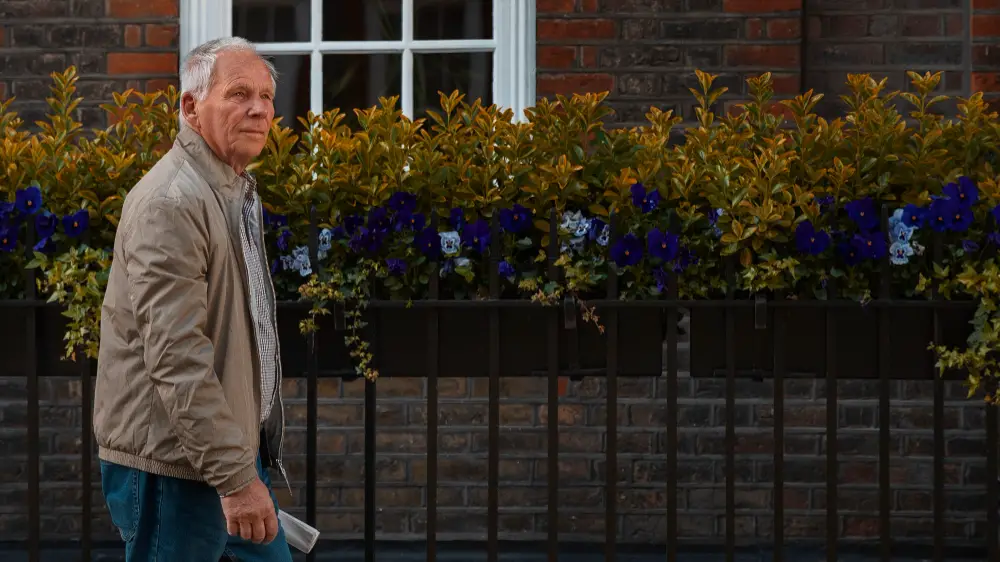
My neighbor, Dale, was standing in the middle of my front lawn, in his weekend clothes, in the grey six-o’clock mist, with a golf club in his hands.
And as I stood there watching, unable at first to make sense of what my own eyes were showing me, he lifted a golf club up over his shoulder and swung it down, hard, onto one of my brand-new sprinkler heads. The little brass fixture shattered and went spinning off into the wet grass.
“Dale!” I called out, my voice cracking. “What are you doing?”
He glanced up at me, completely unbothered, not even startled, and rested the head of the golf club against his shoulder the way a man rests a rake he has paused from using. There was no guilt in his face at all. If anything, he looked mildly annoyed at having been interrupted.
“Your sprinklers,” he said, “are spraying onto my driveway. And guess what. My car is wet now. My brand-new car.”
My voice shook as I tried to answer him, and I hated that it shook, because I did not want him to hear how frightened and how furious I was all at once.
“Dale, I am a single mother. I have two young kids. I saved for months to put those sprinklers in. Months. And you’re telling me you smashed them because a few drops of water got on your car?”
He frowned, as though I were the one being unreasonable, and he jabbed the golf club in my direction, out toward me, a small threatening gesture.
“I have a brand-new car,” he said, “and I am not going to put up with water spots all over it. Not from you, not from anybody.”
I stared past him at the broken pieces of brass and plastic scattered across my wet grass, glinting in the early light.
Two months of saving. That was what those sprinklers represented. Two months of skipping the small things that make a hard life bearable, the coffee I did not buy myself on the way to work, the movie nights I told the kids we would do later, the little unnecessary treats and comforts that I went without, one after another, quietly, so that I could set aside forty dollars here and sixty there until I finally had enough to have a proper irrigation system put in. I had done it so that my two children could have a green, living, growing yard to run and play in all summer long instead of the patchy brown scrub the lawn always turned into by July when I could not keep up with the hand-watering. It had felt, when the installer finally left and I turned the system on for the first time, like a real accomplishment, like proof that I was managing, that I was giving my kids something good. Two months of going without. And Dale had erased all of it in about ninety seconds, whistling to himself the whole time, for the unforgivable crime of my grass being watered a little too close to his car.
“You had absolutely no right to do that,” I said, and I made my voice as steady as I could manage. “That is my property. You came onto my lawn and you destroyed my property.”
“I don’t care,” he said flatly.
“You can’t just do this,” I said. “You can’t just come onto my property and destroy things.”
“Your property,” he cut in, “is ruining mine. And this isn’t the first time your stuff has caused me a problem, is it. If you can’t control your own sprinklers, then maybe you don’t get to have sprinklers.”
And with that, he turned, and he walked back across my lawn and down toward his own house, the golf club swinging loosely in one hand. And as he went, he whistled. He really whistled, a light cheerful tune, like a man strolling home from a satisfying morning of yard work, entirely at peace with himself and the world.
I stood there on my porch steps in my robe, in the cold grey mist, looking at the ruin of two months of my life scattered across the grass, and I felt something inside me that had been holding for years finally, quietly, crack straight down the middle.
But here is the thing. Dale had miscalculated, badly, though he did not know it yet, whistling his way back to his spotless driveway. Because in smashing those sprinklers, in coming onto my property in broad daylight and destroying it in front of me, he had finally, after all these years, given me the one thing I had never once managed to get from him before.
Proof.
Because Dale had always been like this. Always. This was not some sudden aberration, some one-time loss of temper from an otherwise decent man. This was simply Dale, distilled.
Once, a couple of years back, he had strolled onto my lawn in the middle of a bright Saturday afternoon, in full view of anyone who cared to look, and picked up my two big terracotta flowerpots, the tall ones that flanked my front steps, and simply carried them off, one under each arm, because he had unilaterally decided that they were ugly and did not suit the aesthetic of the street. I had planted geraniums in them that spring, red ones, and my daughter had helped me do it, patting down the soil with her small hands. I found them that evening dumped by the curb three houses down, both pots cracked clean through where he had set them down too hard, the soil and the broken geraniums spilled out across the gutter and already wilting. When I asked him about it, careful and polite, he looked at me as though I were slow, and told me they had been an eyesore, and that I ought to thank him. I did not thank him. But I did not press it either. I bought two new pots, and I told myself it was not worth the fight.
Another time, he had picked up my son’s bicycle, which my boy had left lying on the shared walkway for all of twenty minutes, and thrown it, thrown it, into my own flowerbed, snapping the stems of half my perennials, because it had apparently been in his way.
Once, most memorably of all, he had filed a formal written complaint with the homeowners’ association about my children’s treehouse. The treehouse was nothing grand. It was a simple platform with a low railing and a little slanted roof, built into the crook of the big oak in my backyard, and my brother had spent two weekends helping me put it up as a birthday surprise for my son. My kids loved that treehouse more than almost anything they owned. They ate lunch up there in the summer. They read up there. My son called it his fort. And Dale had filed a complaint calling it, in writing, in an official document, an unsightly structure that lowered the tone and the property values of the entire neighborhood. Nothing had come of the complaint at the time, thankfully. But I had never forgotten that he had done it, that he had looked at a place where my children were happy and seen only a rule he might be able to use to take it away from them. I should have understood, even then, what kind of man does that. I filed it away with everything else and kept the peace.
He had an incredible, almost breathtaking sense of entitlement. He behaved, at all times, as though the entire street existed for his comfort and his convenience alone, as though the rest of us were merely tenants in a kingdom he happened to preside over, permitted to remain only so long as we did not inconvenience him.
And every single time, for years, I had swallowed my anger, and bitten my tongue, and kept the peace. That was what good neighbors did, I told myself. That was what a sensible, mature adult did, especially a single mother who could not afford to make her life any harder than it already was. You did not escalate. You did not make war with the man who lived forty feet from your front door and would go on living there for years to come. You absorbed it, and you let it go, and you kept things civil, for everyone’s sake, and above all for your children’s sake, because the last thing two small kids needed was to watch their mother locked in an ugly running feud with the neighbor. I had told myself all of that, for years, and I had believed it, and it had felt like wisdom. It had felt like being the bigger person. It had felt like exactly the kind of quiet strength a good mother was supposed to have.
But standing over my ruined sprinklers in the cold that morning, I understood something that I had been refusing to understand for a very long time. My silence had not kept the peace at all. My silence had only ever taught Dale one single lesson, the same lesson, over and over, reinforced every time I let something go: that there were no consequences. That he could do whatever he liked to whomever he liked, and nothing would ever come of it. My patience had not been virtue. It had been fuel.
And what I did not yet know, standing there, was just how many other people on our quiet suburban street had been taught that very same painful lesson, alone, in silence, for years.
Later that same morning, once the sun had properly come up and burned off the mist, I stood at the edge of my driveway staring down at the little pool of mud where my sprinkler heads used to be. My hands were still trembling faintly, a fine tremor I could not quite make stop. I had swept up the broken pieces and put them in a plastic bag, though I was not sure why, some instinct to preserve the evidence, maybe.
It took me a moment to notice that a woman named Renee, who lived two houses down in the other direction, had walked over and was standing at the end of my drive.
“I saw the whole thing, Noelle,” Renee said quietly. “From my kitchen window. I could not believe what I was watching.”
“He smashed them,” I said, and my voice came out small and disbelieving. “He just walked over here and smashed them like they were nothing. Like they were his to smash.”
Renee crossed her arms and looked down the street toward Dale’s house, toward the pristine driveway and the gleaming car sitting on it in the morning sun.
“He took my patio chairs last summer,” she said. “Did you know that? A whole matching set, four of them and the little table. He just walked into my backyard while I was at work, bold as anything, and carried them out one by one and left them at the curb, because he had decided the color clashed with the street. His exact words. Clashed with the street. Two hundred dollars of patio furniture I’d saved for, sitting out at the curb for the garbage truck to haul away. And when I went over and asked him about it, do you know what he did? He acted like I was the crazy one. Like I was being difficult. Like any reasonable person would have thanked him for his input on my own furniture.” She shook her head slowly, and there was old anger in it, anger that had been sitting a long time with nowhere to go. “I never did anything about it. I told myself it wasn’t worth the trouble. That’s what I always told myself, every single time.”
I turned to face her, truly startled. “He did that to you too?”
“He’s done something to half the street,” Renee said. “More than half, probably. But nobody ever says anything. Nobody ever does anything. Because everybody is scared of him. He always threatens to report people to the HOA. Every single time anyone pushes back, that’s what he does. He threatens the fines, the violations, the whole machinery of it. And people have kids, and jobs, and lives, and they just, they don’t want the trouble. So they let it go. We all just let it go.”
And that was the exact moment I understood something about Dale that I had never once managed to see clearly before, in all the years of putting up with him. His real weapon had never been his temper. It had never been the golf club, or his loud voice, or his sheer brazen physical willingness to walk onto your property in broad daylight and take or break whatever he wanted. Those were only the visible parts, the parts that frightened you in the moment. His real weapon, the true source of his power, the thing that had allowed one unpleasant man to quietly rule an entire street of decent people for years, was fear. Nothing more than that. Everyone’s private, separate, carefully isolated fear of what he might do to them next, the fine he might trigger, the complaint he might file, the trouble he might bring down on a family that just wanted to be left alone.
He had never once had to ever defeat any of us. That was the thing I saw, standing there with Renee. He had never had to win a single fair fight. He had only ever had to make sure that each of us stayed afraid by ourselves, in our own separate houses, each of us certain we were the only one, each of us convinced that pushing back would only make our own private situation worse. Divided, we were eleven frightened households who each thought they were alone. That division was the whole of his power. It was, I was beginning to realize, his only power. And it existed only as long as none of us ever compared notes.
Something shifted in my chest as I stood there. The trembling in my hands began, slowly, to still. And in the place where the fear had been all morning, a different feeling began to rise, something slower and steadier and warmer.
“So I’m not the only one,” I said.
“Not even close,” Renee said. “Not by a long way. The Prescotts, over on the corner. The Marchetti family. That young couple with the painted mailbox, the ones he’s always going on about. He has bullied every single one of them, at one time or another. You could go door to door down this street and hardly find a house he hasn’t gotten to.”
For a long moment, I did not say anything at all. I was thinking. Something was assembling itself in my mind, piece by piece, a shape I had never let myself imagine before.
I thought about calling the police. That was the obvious thing, the thing everyone would tell me to do. But I already knew, more or less, exactly how that would go. An officer would come out, eventually, and take a report about some broken sprinkler heads, a property dispute between neighbors, small potatoes. He would give Dale a warning, perhaps, or maybe not even that. He would shrug, and get back in his car, and drive away. And Dale would be back on my lawn the following week, angrier than before, and now with a grievance, and nothing at all would have changed except that I would have made an enemy even more openly than I already had.
And then I thought about my security camera. The little one I had installed above the garage after the flowerpot incident two years earlier, mounted up under the eave, pointed out across my front lawn and driveway. It ran all day and all night. It had a clear, wide view of exactly the patch of grass where Dale had stood that morning swinging his golf club.
And that was when the better idea arrived, whole and clear.
“Renee,” I said slowly, “do you think people would be willing to say all of this out loud? Not just to me, over a fence. In writing. Officially. Signed.”
Renee studied my face for a moment, and then she glanced back toward Dale’s house, and something wary crossed her expression.
“Before you decide anything,” she said, lowering her voice, “there’s something you should probably know. Something I heard this week.” She paused. “Dale has been trying to get himself onto the HOA board. There’s a vacant seat, and he’s been campaigning for it, quietly, for a few weeks now.”
I stared at her. “Dale? On the HOA board?”
“That’s what I’ve heard. From the Marchettis. He’s been talking to people, calling in favors, the whole thing.”
My stomach tightened into a hard knot. Because of everything she could have told me, that was the worst possible piece of news, and its implications unfolded in front of me all at once. A man who had spent years treating the HOA’s rules as a personal weapon, who threatened people with violations and fines to keep them frightened and compliant, was now trying to get his hands on the actual machinery of that weapon. To sit on the very board that reviewed and ruled on complaints. To become, officially, the thing he had only ever been able to threaten to be.
“Then maybe,” I said slowly, the idea hardening as I spoke it, “we need to act before he does.”
Renee looked at me. “What exactly are you thinking?”
“I’m thinking,” I said, “that Dale has spent years using the HOA rules as a weapon against every single person on this street. Threatening people with them. Hiding behind them. Maybe it’s finally time those same rules got pointed the other way. At him.”
Renee’s eyes brightened, and I watched something wake up in her face, something that had been asleep for a long time.
“You mean file a complaint,” she said. “A real one. Against him.”
“One complaint,” I said. “One single complaint, signed by every last person he has ever pushed around on this street. Backed with evidence. With footage. With dates. Not one frightened person alone, that he can pick off and threaten. All of us at once, on the same piece of paper.”
“You’ve got footage?”
“My camera caught the whole thing this morning,” I told her. “Every swing. Him standing on my lawn with the club, smashing my sprinklers, saying his car was wet. It’s all on there, timestamped, clear as day.”
And for the first time in all the years Dale had ruled that street, his word was not going to be the only version of events that anyone ever heard. That was the thing I kept coming back to. He had always been able to deny, to reframe, to make the person he had wronged sound hysterical and unreasonable. Now, for the first time, there would be a record he could not talk his way around.
Renee let out a long slow breath that turned, at the end, into something almost like a laugh.
“You know,” she said, “for years now I have been waiting for somebody, anybody, to finally just do something about that man.”
“I was waiting too,” I admitted. “For years. I kept telling myself that staying quiet was the responsible thing. That it was protecting my kids, keeping the peace, keeping us out of trouble. But it wasn’t protecting anybody. It was just letting him win, over and over. It was just teaching him he could.”
Renee reached out and squeezed my arm, hard.
“Then let’s not stay quiet anymore, Noelle,” she said. “Either of us. I’ll come with you. I’ll go door to door with you, right now, today. I’ll knock and you talk, or you knock and I’ll talk. Whatever you need.”
I looked one more time at the muddy patch on my lawn where the sprinklers had been, and then over at my son’s bicycle, leaning safely against the porch where he’d left it the evening before, and I felt my resolve settle into something solid.
“He thinks nobody is ever going to stand up to him,” I said. “He’s built his whole life on that. On everybody being too scared and too alone to do anything.”
“So let’s give him a surprise he won’t forget,” Renee said.
I nodded. And for the first time in longer than I could remember, I felt steady. Steadier than I had felt in years. Somewhere in the course of that one conversation at the end of my driveway, I had stopped seeing myself as Dale’s target, as his victim, as the frightened single mother he could push around. I had started seeing myself as something else. As the person who was finally going to do something.
I expected, going door to door that day, to collect a few sympathetic complaints. What I was completely unprepared for was how much evidence those doors would turn out to be hiding.
By the evening of that first day, I had spoken with seven of my neighbors, walking the street with Renee beside me, knocking, explaining, listening. And what came pouring out, once people understood that they were not being asked to stand alone, astonished me.
One neighbor, a quiet man named Tom whom I had barely exchanged ten words with in five years of living across the street from him, invited me in without hesitation and pulled up footage on his own doorbell camera of Dale dragging his recycling bins off the curb and up onto his front lawn and tipping them over, scattering the contents across the grass, apparently because the bins had been set out an inch or two over some invisible line only Dale could see. He had saved the clip. He had been saving it for a year, he admitted, not knowing what he would ever do with it, only certain that he did not want to be the only one who had seen it.
Another neighbor, a young woman with a toddler on her hip, had photographs on her phone, taken months earlier, from the very afternoon Dale had thrown my son’s bicycle into my flowerbed. She had shot them from her upstairs window because she had not been able to believe what she was watching, and some instinct had told her, even then, to make a record of it. She had never shown them to anyone. She had been afraid to.
And a retired couple two doors down, the Merricks, told me, taking turns finishing each other’s sentences at their kitchen table, the long weary story of how Dale had harassed them for the better part of a year over the exact placement and the paint color of their mailbox. He had filed complaint after complaint after complaint, each one triggering an official letter, each letter costing them worry and time, until finally, exhausted, in their seventies, they had simply torn the whole mailbox out and replaced it with a new one at their own expense, in the exact spot and the exact color Dale had demanded, just to make the letters stop coming. They had been ashamed to tell me, I could see. Ashamed that they had given in. I told them what I was fast coming to believe with my whole heart, which was that there was no shame in it at all, that the shame was entirely Dale’s, and that the only mistake any of us had ever made was making it alone.
Every door I knocked on had a story behind it. Every single one.
And then I reached the Prescotts’ door.
Mrs. Prescott, a soft-spoken woman in her sixties, opened it only partway, and when I explained why I was there, her face closed up with a fear I recognized instantly, because I had worn it myself for years.
“I’m sorry,” she whispered, already beginning to close the door. “I really don’t want any trouble. Please.”
And I understood, completely, in my bones. “Neither did I,” I told her gently. “For years, I didn’t want any trouble either. I understand. I do.”
And I turned, and I started back down her front steps, ready to let her be.
“Wait,” she said, behind me.
I turned back.
She had opened the door wider now, and she was looking at me with something struggling on her face. “Did he really do it?” she asked. “What I heard? Did he really smash your sprinklers?”
I came back up the steps, and I pulled the footage up on my phone, and I held it out so she could see. And she watched Dale swing the golf club. Once. Twice. A third time, the brass heads flying. And I watched her soft frightened face slowly, as she watched, go hard.
“Come inside,” she said.
Ten minutes later, she set a manila folder down on her kitchen table in front of me and opened it. Inside were three separate HOA warning notices, official ones, that Dale had triggered against her family over the previous year alone. Over a garden gnome. Over the height of a hedge. Over a wind chime he had decided was too loud.
“He told us,” Mrs. Prescott said quietly, her hands flat on the table, “that he would just keep reporting us, and keep reporting us, filing complaint after complaint, until we finally gave up and moved away. He said it to my husband’s face. That he’d make it so expensive and so exhausting to live here that we’d have no choice but to sell.”
I stared at her across her own kitchen table, and something cold and clarifying settled over me. Because I understood, now, that Dale had not merely been a rude man with a bad temper and too much time on his hands. He had been running a strategy. A deliberate, patient, years-long strategy. And the entire strategy depended on one single thing: on all of us being afraid separately. On each household believing itself alone. He had counted on it. He had built everything on it.
Mrs. Prescott became the eighth name on our complaint.
By the end of that long night, walking the dark street with Renee, knocking on lit doorways, there were eleven. Eleven households. Eleven names, ready to sign, each with its own story and, in most cases, its own piece of evidence.
And somewhere in the middle of that evening, something changed in how the whole thing felt to me. What had started that morning with my own broken sprinklers, my own private fury and grief, had stopped being my fight somewhere around the seventh door. It had become something bigger and older than me, a reckoning that had been waiting years to happen, that a whole street had been quietly needing.
What I had no way of knowing, as I walked home that night feeling more hopeful than I had in years, was that Dale had a plan of his own already in motion. A plan that would turn my small, hard-won act of courage into something far more dangerous to me and my children than I had ever imagined.
I spent the next two nights, after the kids were bathed and read to and finally asleep, sitting at my kitchen table under the one bright light, assembling everything. It was painstaking work, and I found I loved doing it, in a grim satisfied way I had not expected. Video clips, downloaded and saved and carefully labeled with the date and the neighbor’s name and a short description of what each one showed. Timestamped photographs, printed out at the drugstore so there would be hard copies. Written witness statements, one from each household, each one signed at the bottom and dated, in eleven different hands. Tom’s recycling footage. The young mother’s photographs of the bicycle. The Merricks’ year of mailbox complaints, photocopied. Mrs. Prescott’s three warning notices. And at the very center of all of it, the heart of the whole thing, my own footage of Dale standing on my lawn in the flat grey morning light, in his weekend clothes, swinging that golf club down onto my sprinklers, again and again and again, while I could be heard off camera crying out his name.
I organized every single piece of it into one folder, arranged in order, cross-referenced, each item numbered and matched to the statement that described it, thick and heavy in my two hands and, I finally let myself believe, sitting back in my chair at midnight, truly undeniable. Eleven homeowners signed the cover page, one name written carefully under another, a long column of them running down the page. Eleven families who had each, alone, for years, been sure they were the only one.
My phone rang just after nine on the second night.
“You need to see this,” Renee said, the second I picked up. Her voice was tight.
And she texted me a screenshot from the HOA’s online portal.
I opened it. And at the top of the page was an announcement, cheerful and official, welcoming the newest member of the neighborhood association board.
Dale.
My stomach dropped straight through the floor.
For two nights, at my kitchen table, I had been carefully, painstakingly building a case against him, labeling clips and printing photographs and collecting signatures, feeling with every hour more certain and more powerful. And while I had been doing exactly that, in those very same two quiet nights, Dale had been busy too. He had quietly finished doing the precise thing Renee had warned me at the end of my driveway that he was trying to do. He had gotten himself inside the very organization I had been so carefully preparing to bring my case to. I had built a beautiful, thorough, undeniable complaint, and I was about to walk it straight into a boardroom that now had Dale himself sitting at the table, with a vote, and a title, and access to every file. It felt, staring at that screenshot on my phone, like showing up to a fight with exactly the weapon you had spent two nights forging, only to find that your opponent had spent those same two nights becoming the referee.
For the first time since I had started down my own driveway with that idea, I wondered whether we had already lost. Whether I had led eleven frightened families out into the open, gotten them to finally put their names on paper, only to walk them straight into a trap.
And then I looked down at the thick folder sitting on my kitchen table, the one with eleven signatures on the cover page. Eleven people who had finally, after years, been brave enough to write their names down. Some of them had wept at their own kitchen tables, telling me their stories. Mrs. Prescott had been shaking when she signed.
The old version of me, the one from just three days earlier, would have quietly shredded that folder out of fear the moment she saw Dale’s name on that board. Would have called each of the eleven and apologized and told them to forget the whole thing.
But I was not that person anymore. Somewhere in the last three days, I had stopped being her. And I was not going to back down now. Not after all of this. Not with eleven names on that page.
The next morning, I drove straight to the neighborhood HOA office, the folder on the passenger seat beside me. My hands felt clammy on the wheel, but I told myself, over and over, that this was the right way to do it. Through the front door. On the record. By the rules. The exact opposite of how Dale had ever done anything.
And Dale himself walked out of the manager’s office just as I was reaching the front door, so that we very nearly collided on the threshold. He was wearing a smug, satisfied grin that stopped me cold where I stood.
“Well, well,” he said, looking me over. “Come to file a little complaint, have we?”
“As a matter of fact, yes,” I said, and I held up the folder so he could see it. “I have. I’ve got video of you destroying my sprinklers, for a start.”
He laughed then, a truly ugly, delighted, satisfied sound, the sound of a man who believes he holds every card at the table.
“You’re too late,” he said, almost gently, savoring it. “Haven’t you heard? I’m on the board now. As of last night. Voted in. So you can carry your little folder around all you like. I’m on the board that reads the folders.”
My stomach turned over, but I kept my face perfectly still. I had learned, over years of dealing with Dale, that the one thing he fed on above all else was the visible reaction, the flinch, the crack in your composure. He wanted to watch it land on me. He wanted to see the hope go out of my face. And I decided, standing there in the doorway of that office, that whatever else happened, I was not going to give him that. Not this time. He could take my sprinklers and threaten my house, but he was not going to get to watch me crumble in a doorway.
“That doesn’t change what you did, Dale,” I said.
“It changes everything,” he said, and he leaned in close to me, dropping his voice to something low and confidential and vicious. “I sit on the board now. The board that reviews all the complaints. And guess whose treehouse happens to be in violation of code? Yours. I’ll write you up for it. And I’ll fine you for it. Every single day. I’ll fine you every day until you can’t afford to live here anymore, and then you can take your kids and get out of my neighborhood.”
And there it was. Until that exact moment, this whole thing had been about broken property. Sprinklers, and flowerpots, and patio chairs, and a child’s bicycle. Things. And things, however much they cost, however many months of saving they represented, could in the end be replaced. I could buy new sprinklers. I had bought new flowerpots. But now Dale was standing six inches from my face in the doorway of the HOA office, threatening the actual home that my two children slept in every single night, the home I had fought and scraped and sacrificed to keep for them after their father left, the one stable thing in their whole world. He was threatening to use the machinery of the association, the machinery he had just gotten his hands on, to fine me, day after day after day, until I could no longer afford to make the mortgage, until I had no choice but to sell the house out from under my own children and move them somewhere smaller, somewhere else, somewhere that was not home. He had found the one threat that could still reach all the way down into me. And he knew it. I could see in his face that he knew exactly what he was doing.
I stood frozen on the sidewalk as he straightened up, smirked, and strolled off toward his car, whistling again, that same cheerful tune.
And every old instinct I had, every reflex I had built over years, screamed at me to retreat. To apologize. To back down, to smooth it over, to protect the fragile brittle peace I had always clung to at any cost. That was the voice that had run my life for years.
But I understood something now that I had not understood before. This time, staying quiet did not mean keeping the peace. This time, staying quiet meant losing my home. The old strategy did not just fail now. It actively cost me everything. And so, for once, I did not listen to the voice.
I walked into the office, and a few minutes later I was handing the folder across a desk to the president of the homeowners’ association, a solid, plain-spoken man in his fifties named Silas.
Silas opened the folder and looked at the cover page for a long moment, at the eleven signatures running down it.
“This is extensive,” he said, and he glanced up at me. “You understand that this involves a sitting member of the board? Dale took that seat just last night.”
“I understand that he took that seat yesterday,” I answered steadily. “And I understand that he found me outside your office ten minutes ago and threatened to fine me out of my home over my children’s treehouse. Because of this complaint. So yes. I understand exactly what it involves.”
Silas’s expression changed slightly at that. He began to flip, slowly and carefully, through the pages of statements, reading as he went. And when he reached the still image I had printed of Dale mid-swing, the golf club up over his shoulder and my sprinkler head shattering beneath it, he stopped. He looked at it for a long time.
“Eleven homeowners signed this,” he said. It was not quite a question.
“Yes,” I said. “Eleven. Every one of them has a story. Most of them have evidence of their own.”
“And you’re telling me Dale threatened you directly, just now, after joining the board.”
“He said he would fine me every single day until I couldn’t afford to stay,” I said. “Over the treehouse. He said to take my kids and get out of his neighborhood.”
Silas looked at me for several long seconds, saying nothing, and I could not read his face at all, and my heart was pounding.
“Leave this with me,” he said finally.
My stomach sank. It was not what I had hoped to hear. “That’s it?” I said. “Leave it with you?”
“That’s all I can tell you right now,” he said, not unkindly.
“So he just gets to sit on the board,” I said, “while you decide whether the board is going to investigate him? He gets to keep the power while you think about whether to look into how he’s used it?”
Silas closed the folder, and rested one broad hand flat on top of it.
“Go home,” he said, and though it was an instruction, there was something steadier in it now than there had been a moment before, something that was almost, not quite but almost, reassuring. “And whatever you do, whatever he says to you, do not confront Dale again. Not once. Do not give him a single thing he can turn around and use, no argument on a lawn, no shouting match at the mailbox, nothing. Let me handle this the right way, through the process, on the record. That part matters more than you know. Can you do that for me?”
I looked at him, and I made myself believe there was something behind his careful words, some intention he was not yet free to say out loud.
“Yes,” I said. “I can do that.”
It was not the reassurance I had driven over there hoping for. Eleven families had finally, after years, found the courage to speak, and I drove home with absolutely no idea whether the one man in the room with any actual power had just quietly taken all of it and made it disappear.
When I got home, there was a yellow notice tucked under the handle of my front door.
I pulled it out and unfolded it. PROPERTY COMPLIANCE REVIEW, it said across the top, in the official typeface of the association. And underneath, in aggressive block handwriting that I did not need a signature to recognize: TREEHOUSE. REINSPECTION REQUIRED.
My son appeared in the front hall behind me, having heard the door.
“Mom?” he said, looking at the yellow paper in my hand. “What is that? Are they going to take our treehouse?”
I folded the notice quickly and tucked it into my back pocket, out of my son’s sight, and I made myself smile at him.
“No, baby,” I said, as lightly as I could manage. “Nobody is taking your treehouse. Go on and wash up for dinner.”
He looked at me a moment longer, the way children do when they can feel something is wrong even when the words say otherwise, and then he went. And I stood there in the front hall with the folded yellow notice burning in my back pocket, and for the first time since I had started down my own driveway with this whole idea, I was not sure that what I had just told my son was true. Dale had not been bluffing. Not even a little. He had walked out of that HOA office not twenty minutes ahead of me, and he had driven straight to my house, and within the hour he had made his first move against my home, in writing, on official paper, exactly as he had promised he would. The machinery he had spent weeks climbing into had already, that very afternoon, begun to turn against my children’s treehouse. And I had no way of knowing yet whether anyone on that board had the will to stop it, or whether I had simply made everything worse for the three of us.
Later that same day, in the afternoon, I ran into Dale near the cluster of mailboxes at the end of the street. He must have heard, through whatever channels he had, that I’d gone door to door, because his grin had a new, crueler edge to it now.
“I know exactly what you’ve been doing,” he said, before I had even reached the mailboxes, his voice carrying down the street. “Going house to house with your little clipboard. Knocking on doors. Your sad little petition. It won’t work, you know. None of it will work. I’m on the board now. I’m untouchable. Whatever grubby little list of signatures you managed to scare up out of these people, it is worthless. It is less than worthless. It’s a joke.”
“Is it?” I said, keeping my voice as calm and as level as I possibly could, which I had learned by now was the single thing that unsettled Dale most. He wanted shouting. He wanted me rattled. Calm was the one thing he had no answer for.
“You think a stack of signatures scares me?” He laughed. “I make the rules now. Do you understand that? Me. I’m the one who decides what the rules mean around here.”
“Then I suppose,” I said, “we’ll find out what those signatures are worth.”
“I suppose we will,” he said, with total confidence, and he collected his mail and walked off, whistling.
A few hours later, the answer to that question was sitting and waiting on Dale’s own front porch.
That evening, just as the light was going golden and long across the street, Dale pulled his spotless car into his driveway, got out, and started up the path toward his front door. And halfway there, he froze. And then he yelled, loud enough that I heard it clearly from my own porch two houses away.
“What is that? What is that on my porch? No. No, this can’t be happening.”
Because sitting on his front porch, squarely in front of his door, was a large white document box. And fixed across the front of it, in bold official lettering, was a notice from the homeowners’ association.
FORMAL DISCIPLINARY REVIEW. BOARD MEMBER CONDUCT.
And beneath that heading was a list of names. Dale’s, at the top, as the subject. And then mine. And then all the others. All eleven of us, from all up and down the street.
I crossed the lawn toward his house, slowly, and I was not alone. Renee walked on one side of me. Two other neighbors walked with us. And beside us, in a windbreaker with the association’s small logo on the breast, walked Silas, the president of the HOA himself.
Dale tore the notice off the front of the box and scanned it, his eyes moving fast down the page. And then, to my genuine surprise, he laughed.
“A hearing?” he said, waving the paper at us. “You’ve got to be joking. A hearing? Please. I’m on the board. Do you people even understand what that means? This complaint is worthless. I’ll have it thrown out before it’s read.”
“It isn’t worthless, Dale,” I said. “It’s signed by eleven homeowners. And every single claim in it is documented.”
“Documented,” he scoffed. “Documented by what, exactly? Your word against mine, like always?”
And Renee stepped forward, beside me, and held up her phone.
“My camera recorded you,” she said, “carrying my patio chairs off my property and dumping them out at the curb. All of it. Your face, clear as anything.”
“And my neighbor filmed you throwing a child’s bicycle into a flowerbed,” said one of the others.
“And my own camera,” I said quietly, “caught you smashing my sprinklers with a golf club. Every swing, Dale. From three feet away. In good light.”
Dale’s grin flickered, but he crossed his arms and held his ground. “None of that matters,” he said. “None of it. I’m on the board. You can’t touch me. Do you understand? You cannot touch me.”
And it was then that Silas finally spoke, in his plain, steady, unhurried voice.
“Dale,” he said. “I need to explain something to you, and I need you to listen carefully, because I don’t think you understand your situation. When you accepted that board seat last night, you signed the board member code of conduct. You remember signing it. That agreement doesn’t lower the standard you’re held to. It raises it. Considerably. A board member held to have harassed the very homeowners he was elected to serve is in a far worse position than an ordinary resident would be. You didn’t climb out of reach, Dale. You climbed into a much smaller cage.”
Dale’s smile faded from his face entirely.
“You will attend the disciplinary hearing,” Silas went on, “like any other member of this association would. And the matter of restitution, and the matter of your possible expulsion from the board, will be decided there, by the rest of us, on the evidence.”
“But I only took the seat so that I could…” Dale started, his voice rising, indignant, before his own brain caught up to his mouth.
And then he stopped himself. He stopped himself hard, all at once, one word too late, his jaw snapping shut.
And in the silence that followed, standing on that lawn in the long golden evening light, every single person there understood exactly, precisely what he had been about to say. So that I could fine her. So that I could push them out. So that I could finally have the power to do to all of you what I have only ever been able to threaten. He had grabbed the seat specifically as a weapon, and he had very nearly announced it, out loud, in front of the president of the board and half the people he had spent years tormenting. The unfinished sentence hung there in the evening air, and it finished itself in everyone’s mind, and it was more damning than anything the rest of us could have said about him.
Because in reaching for the weapon, in scrambling onto that board for the express purpose of hurting us with it, Dale had finally done the one single thing he had never once done in all his careful years of isolated, deniable, one-at-a-time bullying. He had stepped inside the rules. He had signed his name to them. He had made himself accountable to the very code he had always stood safely outside of while he wielded it against everyone else. And now the rules, the rules he loved so much, the rules he had treated as his personal property, had quietly closed around him like a hand.
I looked around at the faces of my neighbors gathered on that lawn, the stunned and slowly dawning faces, Renee and Tom and the Merricks and the young mother and the others, all of them watching Dale realize what had happened to him, and I felt something rise in my chest that I had not felt in years, perhaps had never once felt in all my time on that street. Because for the first time since the day I had moved into my house, I was not standing alone against Dale. I was not a single frightened mother facing him across a lawn by myself, calculating how much I could afford to lose. There were people standing on my right and on my left. There were eleven names on a document, and most of the faces that went with them were right here, in the golden evening light, standing with me.
And that, it turned out, made all the difference in the entire world. That was the whole thing. That had always, from the very beginning, been the only thing that would ever have worked against a man like Dale. Not a better argument. Not a louder voice. Not the police. Just this. Just people, refusing any longer to be afraid separately, standing in the same place at the same time and letting him see them do it. It was so simple. It had been available to us the whole time. All it had ever required was for one of us to knock on the first door.
That evening on the porch took Dale’s power away from him. It happened quietly, in the space of about five minutes, but it was total, and everyone standing there felt it happen.
Four days later, the hearing decided what it was all going to cost him.
Dale did not keep his seat on the board. He did not keep it for a week. He barely kept it three days. The footage of him destroying my sprinklers, all on its own, standing there in the grey morning light swinging that club, was more than enough on its face to order restitution, and he was made to pay, in full, for every sprinkler head he had shattered, plus the not inconsiderable cost of the labor to dig them out and replace them. He paid it. He had no choice. It was on video.
But it was the rest of it that finished him. It was the eleven signed statements, the years and years of documented harassment laid out end to end in one place for the first time, the patio chairs and the recycling bins and the bicycle and the flowerpots and the endless vindictive mailbox complaints, together with the compliance notice he had so transparently, so vindictively rushed through against my children’s treehouse on the very same afternoon he first learned about our complaint. That last piece was what did it, I think. It was such naked proof of exactly the abuse of power the board was being asked to judge, committed against a sitting complaint, that not even Dale’s staunchest defender on the board, had he owned one, could look past it. They removed him. Formally, on the record, by a vote that was not remotely close. The man who had schemed and campaigned and called in favors for weeks to get himself onto that board lasted barely seventy-two hours on it, and left it censured, and disgraced, with a restitution order attached to his name in the permanent records of the very association he had tried to rule.
He did not smash anything else, after that. He did not file another complaint against anyone. He did not carry off anyone’s flowerpots or tip over anyone’s bins. Something went out of him, I think, some engine that had run him for years, on the evening he stood on that lawn and understood at last that the street was no longer eleven frightened people who could be picked off quietly, one at a time, in the dark, but was instead simply eleven people, standing together in the daylight, watching him, comparing notes at last. A bully requires his victims kept apart and kept ashamed. He cannot function any other way. And ours, after that evening, were neither apart nor ashamed any longer.
He kept almost entirely to himself in the months after the hearing. He washed his spotless car in his driveway in silence, and did not look up when the neighbors passed, and something in the set of his shoulders had changed. And within the year, a quiet real estate sign went up on his lawn, and then it came down, and a moving truck arrived, and Dale packed up his gleaming car and his golf clubs and moved away to some other street in some other neighborhood, where I can only hope the neighbors learned to compare their notes a great deal more quickly than we ever did. I did not say goodbye to him. Neither did anyone else on the street, as far as I know. He simply, one Tuesday, was gone, and the block let out a breath it had been holding for years.
A week after the hearing, I stood on my own front lawn in the late afternoon and watched a repairman finish installing the last of my brand-new sprinkler heads, every single one that Dale had smashed, replaced and paid for out of his own pocket by order of the board he had tried to rule.
Renee stood beside me on the grass as the repairman gave a nod and flipped the system on to test it.
There was a soft mechanical click, and then a rising hiss, and then, all across my lawn, one after another, the brand-new sprinkler heads rose up out of the grass and turned and came to life, throwing long silver arcs of water out over the green in the golden late-afternoon light, each spray catching the low sun and scattering it into little drifting rainbows. My kids came running out the back door at the sound of it, shrieking with delight, and went tearing through the spray in their bare feet the way children do, the way I had saved for two months so that they could, and their laughter carried right out across the whole quiet street.
And one of the sprinklers, the one out at the edge nearest the driveway, sent a fine bright arc of spray a foot or so over the property line, out over the pavement, exactly where it had always gone, exactly where it would go on going. I looked at it for a moment, that little defiant arc of water crossing the line, and I did not adjust it. I was not going to adjust it. Let a few drops land where they landed.
“Perfect,” Renee said beside me, and there was a wide grin in her voice.
And I stood there on my own lawn, on my own property, in front of the home where my two children were safe and laughing and soaked to the skin, watching the water fall in the golden light, and I smiled from somewhere very deep down.
“Perfect,” I agreed.

Lila Hart is a dedicated Digital Archivist and Research Specialist with a keen eye for preserving and curating meaningful content. At TheArchivists, she specializes in organizing and managing digital archives, ensuring that valuable stories and historical moments are accessible for generations to come.
Lila earned her degree in History and Archival Studies from the University of Edinburgh, where she cultivated her passion for documenting the past and preserving cultural heritage. Her expertise lies in combining traditional archival techniques with modern digital tools, allowing her to create comprehensive and engaging collections that resonate with audiences worldwide.
At TheArchivists, Lila is known for her meticulous attention to detail and her ability to uncover hidden gems within extensive archives. Her work is praised for its depth, authenticity, and contribution to the preservation of knowledge in the digital age.
Driven by a commitment to preserving stories that matter, Lila is passionate about exploring the intersection of history and technology. Her goal is to ensure that every piece of content she handles reflects the richness of human experiences and remains a source of inspiration for years to come.