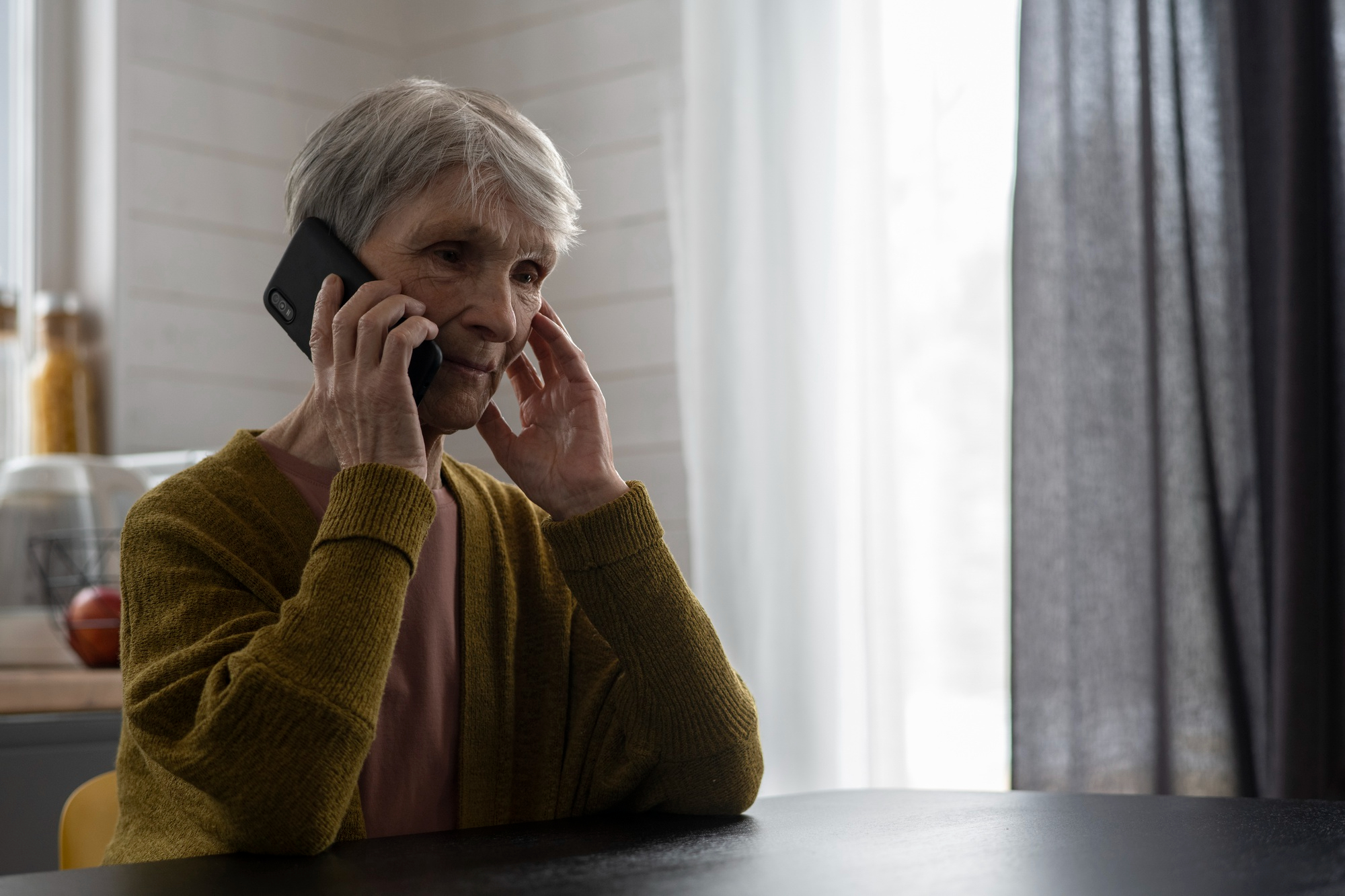
The grandfather clock in the hallway chimed three times as I stared at my children’s faces around the dining table. My dining table, in my house, the home where I’d raised them, where I’d nursed their injuries, celebrated their victories, and comforted them through heartbreaks.
“Mom, you need to be reasonable,” Caroline said, her voice carrying that professional detachment she used with difficult patients. My daughter, the successful doctor, the one for whom I’d sacrificed the most.
“Reasonable?” My voice quivered. “You’ve divided your father’s inheritance among yourselves without even consulting me. And now you’re telling me I need to sell my home.”
Michael, my eldest, wouldn’t meet my eyes. “Dad’s will was clear, Mom. The assets were to be divided among his children.”
“And what about me? His wife of forty-two years?”
The question hung in the air like a heavy cloud. Nobody answered.
“We’ve discussed it,” Caroline continued, tapping her manicured nails against her coffee cup. “You can stay with us.”
For a moment, a flicker of hope sparked in my chest. Perhaps they did care.
“In the garage,” she added flatly. “We’ve converted it. It has a bathroom. It’s all we can offer. We don’t have space for you in our lives, Mom.”
The garage, like an old car they couldn’t bear to part with, but didn’t want inside the house.
“Caroline,” I whispered, “I paid for your medical school. I worked two jobs while caring for your father. I—”
“And I’m grateful,” she interrupted, her tone suggesting anything but gratitude. “That’s why I’m offering you a place to stay. Michael and David aren’t even doing that.”
My son shifted uncomfortably, but didn’t contradict her. David, my youngest, just stared at his phone.
When had they become so cold?
Michael cleared his throat. “The market is good right now. You’ll get a decent price for the house.”
“This is my home,” I said, my voice breaking. “Your father and I built this together. We planted those trees out front when you were born.”
“It’s just a house, Mom.” Caroline sighed, exasperated. “You’re being emotional.”
Just a house. The walls that had witnessed our entire family history. Just brick and mortar to them.
“You have three weeks to decide,” Michael announced, standing up. “If you don’t want to sell, you’ll need to buy us out of our shares. Otherwise, we’ve already talked to a realtor.”
They had already talked to a realtor for my house without telling me.
As they gathered their things to leave, a horrible realization washed over me. I was sixty-five years old with limited savings and nowhere to go. My husband’s pension had died with him. The small teacher’s pension I received barely covered groceries and utilities.
“I’ll text you the moving company’s information,” Caroline called over her shoulder. “They’re very efficient with seniors.”
The front door closed behind them, and suddenly my home of four decades felt foreign, as if it too was preparing to reject me.
I walked slowly to the mantelpiece, picking up the family portrait taken on our last vacation together. We were smiling. We looked happy. When had that changed? When had I become a burden to be shuffled off to a garage?
That night, I lay awake in the bed I’d shared with Harold, staring at the ceiling. “What am I supposed to do now?” I whispered to his side of the bed, empty for nearly a year. The silence that answered me was deafening.
Three days later, I stood in Caroline’s converted garage. The concrete floor was covered with a thin, cheap carpet. A folding screen separated the toilet and shower from a twin bed that looked like it came from a dorm room. A small desk served as both dining table and workspace. The walls were bare cinder block painted a stark white that only emphasized the coldness of the space.
“It’s all we can manage,” Caroline said, arms crossed defensively. “We’re using the spare bedroom as Jason’s home office now, and the kids need their space.”
I nodded, unable to speak. This garage, this afterthought, was what my life’s devotion had earned me.
“You should be grateful,” Caroline added, checking her watch. “Some elderly parents end up in terrible facilities.”
Elderly? When had I become elderly in my daughter’s eyes? When had I transformed from mom to burden?
I sat on the edge of the thin mattress after she left, my suitcases still packed at my feet. Through the small window, I could see into the main house. Caroline was already on her phone, laughing as if she hadn’t just relegated her mother to a concrete cell.
This wasn’t how it was supposed to be. After a lifetime of giving, I had nothing left. Not even a place in my children’s hearts.
The first night in Caroline’s garage, I couldn’t sleep. The unfamiliar sounds, the hum of the water heater, the occasional car passing by, kept me awake. Or maybe it was the heaviness in my chest, the disbelief that still hadn’t quite settled in.
As I lay on the narrow bed, my mind wandered back through the years, like flipping through a photo album where every page showed my hands serving others. I remembered Harold’s diagnosis fifteen years earlier. Parkinson’s. The neurologist had spoken so clinically, as if he were describing the weather rather than the slow deterioration of my husband’s body. “You’ll need help,” he’d said. But we couldn’t afford help. Not with three kids still needing college tuition.
So my hands learned new skills. They learned to administer medications, to bathe a grown man with dignity, to massage cramping muscles at three in the morning. They picked up a needle and thread, taking in sewing jobs I could do from home. While Harold slept in his armchair, I remembered the endless piles of mending, the wedding dresses I altered, the curtains I hemmed, all to keep our family afloat while medical bills mounted. My fingers would be raw, pricked countless times. But I kept going. What choice did I have?
Caroline had been in medical school then. The irony doesn’t escape me now. I was working myself to exhaustion so my daughter could learn to heal others, while she apparently never learned to care for her own mother.
I got up and walked to the small window looking out at the dark yard. In the distance, I could see the light still on in Caroline’s kitchen. Was she up late studying medical journals as she often claimed, or was she simply enjoying the spacious home she had while I was relegated to this concrete box?
I remembered the summer of Caroline’s residency, when she’d called in tears, overwhelmed by the demands of her program. “I can’t do this, Mom,” she’d sobbed. “It’s too much.” Though Harold needed me, I’d packed a bag and stayed with Caroline for three weeks. I cooked, cleaned, and listened as she processed the trauma of losing her first patient. My hands had wiped her tears just as they’d wiped her tears when she was a little girl afraid of thunderstorms.
When her twins were born a few years later, I was there again. Jason, her husband, was launching his architecture firm and worked sixteen-hour days. I moved in for six months, rocking colicky babies through endless nights, changing diapers, sterilizing bottles. My own sleep came in short, broken segments between their cries.
Caroline had kissed my cheek when I finally returned home. “I don’t know what I would have done without you, Mom,” she’d said. “You’re amazing.”
Where was that Caroline now? When had her gratitude calcified into this cold dismissal?
I opened my suitcase, still unpacked, and pulled out an old journal. The leather was worn smooth from years of handling. Harold had given it to me on our twentieth anniversary. “Write your dreams,” he’d said. “Not just ours.” But the pages contained little about my dreams. Instead, they chronicled the daily struggles and small victories of our family: the time Michael won the science fair, David’s soccer championship, Caroline’s medical school acceptance letter.
I flipped to an entry from almost thirty years ago. April 15th, 1994. The university called today. They’re holding a place for me in the master’s program for next fall. After all these years, I might finally finish my education degree. Harold says we’ll make it work financially. Caroline’s piano lessons are expensive, but she’s so talented. I couldn’t possibly ask her to give them up. Perhaps I can pick up more sewing jobs on weekends.
I never did go back for that master’s degree. Caroline’s piano lessons became competitions, which became prestigious summer camps, which became college applications that highlighted her musical talents alongside her academic ones.
I closed the journal, my chest tight with an emotion I couldn’t quite name. Not quite regret, not quite resentment. Something in between. Something that tasted like sacrifices unacknowledged.
The next morning, Caroline knocked on the garage door at seven a.m. sharp. “Mom, we need to talk about house rules,” she said without preamble, not even asking how I’d slept. “We can’t have you coming and going at all hours. It disturbs the twins.”
“House rules?” As if I were a tenant, not her mother.
I nodded silently, noting the dark circles under her eyes, the same eyes that had once looked up at me with complete trust and dependence.
“And we’ll need you to contribute to groceries, of course. Just because you’re living here doesn’t mean you get everything for free.”
My hands, the hands that had fed her, clothed her, nursed her through illness, clenched involuntarily, but I kept my voice steady. “Of course,” I said, wondering how I would manage on my small pension.
As Caroline rattled off more rules, I glanced down at my hands. They were older now, spotted with age, the knuckles slightly swollen from years of work. These hands had served my family faithfully for decades. Now they were empty.
Two weeks passed in Caroline’s garage. Each day a fresh humiliation. The concrete walls seemed to close in tighter as I struggled to adjust to this new reality, a reality where I was an imposition rather than family.
The garage’s inadequacies became more apparent with each passing day. During rainstorms, water seeped in under the door, dampening the thin carpet. The space heater Caroline had grudgingly provided barely took the edge off the morning chill. At night, I could hear mice scurrying in the corners. Uninvited roommates in my concrete box.
“We need to talk about bathroom schedules,” Caroline announced one morning, barging in without knocking. I was still in my nightgown, a fact she didn’t seem to register.
“Bathroom schedules?” I echoed, pulling my robe tighter around me.
“You can’t use the main house bathroom between six-thirty and eight-thirty a.m. That’s our family time.” She emphasized family as if I were no longer included in that category. “And preferably not between three and nine p.m. either. The kids need space.”
I glanced at the tiny shower stall in the corner of the garage. The water pressure was so weak it took ten minutes just to rinse shampoo from my hair, and the hot water rarely lasted more than three minutes.
“Caroline, the shower here barely—”
“Mom,” she interrupted, “you need to understand that we’re making sacrifices to accommodate you. Jason is irritated enough as it is.”
My heart sank. “Jason doesn’t want me here.”
Caroline sighed impatiently. “Nobody anticipated having their mother-in-law in the garage, did they? We had plans for that space.”
Her words stung more than I wanted to admit. I had become an inconvenience, a wrench in their perfect lives.
Later that day, I ventured into the main house to make a cup of tea. The twins, Emma and Ethan, were sprawled across the couch playing video games. At thirteen, they had reached the age where grandmotherly affection was met with eye rolls.
“Hi, kids,” I said, trying to sound cheerful.
Ethan barely glanced up. “Mom said we’re not supposed to let you use the TV.”
“I—I just came in for tea,” I stammered.
Emma snickered. “Grandma, your stuff is in the garage, remember? Mom says you shouldn’t be in here when she’s not home.”
I stood frozen, the empty mug dangling from my fingers. My own grandchildren had been instructed to police my movements. When had I become a trespasser in my daughter’s life?
Back in the garage, I noticed my few possessions had been rearranged. The photo of Harold and me that I kept beside my bed was now face down. I set it upright, hands trembling with a combination of grief and anger.
That weekend, Caroline hosted a dinner party. I wasn’t invited, of course, but I could hear the laughter and conversation through the thin walls. I recognized Michael’s voice, and David’s too. My own children were gathering just thirty feet away, and I wasn’t welcome.
When the doorbell rang again, I peered through my small window. It was Helen, my closest friend for over thirty years. Caroline greeted her warmly, ushering her inside. Helen knew I was living here. Why hadn’t she come to say hello?
Two hours later, as guests were leaving, Helen glanced toward the garage. Our eyes met through the window. She quickly looked away, following Caroline back into the house. Even my friends were choosing sides.
Later, I heard a soft knock. Caroline stood there, arms folded. “Mom, I need you to help clean up. The housekeeper isn’t coming until Tuesday.”
Not, would you like to join us? Not, sorry we couldn’t include you. Just another demand.
As I scraped plates and loaded the dishwasher, Caroline and Jason discussed their upcoming vacation to the Bahamas in front of me, never once acknowledging that the woman washing their dishes had been deliberately excluded from their gathering. I noticed the beautiful serving platter I’d received as a wedding gift among the dirty dishes. Caroline had taken it from my house without asking.
“That was your grandmother’s,” I said quietly.
Caroline barely glanced at it. “Yes, and now it’s mine. Dad wanted us to have the family heirlooms.”
“I don’t remember him saying that,” I replied, my voice surprisingly steady.
Jason cut in, his tone condescending. “Elizabeth, we’ve been through this. The inheritance was clear.”
I said nothing more as I continued cleaning. What was the point?
The next morning, I found an itemized bill slipped under my door. Monthly contribution was written at the top in Caroline’s precise handwriting. Rent four hundred, utilities a hundred and fifty, food three hundred, Wi-Fi fifty. Total, nine hundred. My entire monthly pension was twelve hundred dollars.
I sat heavily on my bed, the paper trembling in my hands. This wasn’t living with family. This was exploitation disguised as generosity.
That afternoon, as I folded laundry in the corner of the garage I designated as my kitchen, I overheard Caroline on the phone through the open window. “It’s exhausting having Mom here,” she was saying. “She expects to be treated like some honored guest, but honestly, she should be grateful we didn’t put her in a home.” A pause. “Well, if she complains about the bill, I’ll remind her how much we spent on Dad’s medical care. It’s time she carried her own weight.”
I pressed my hand against my mouth to stifle a sob. After everything I had sacrificed, after the years spent caring for Harold, after emptying my retirement account to help with Caroline’s down payment on this very house, this was how she saw me. A burden. A parasite.
That night, I couldn’t sleep. The truth had finally settled over me like a shroud. I had no home anymore, no place where I truly belonged. In the silence of the garage, surrounded by the remnants of my life, I finally allowed myself to weep.
The evening air was unusually chilly for May. As I walked the three blocks back to Caroline’s house, my part-time job at the local thrift store barely paid enough to cover the expenses Caroline demanded, but it gave me somewhere to go during the day, somewhere I was treated with basic dignity.
The smell of pot roast, Harold’s favorite, greeted me as I approached. Through the dining room window, I could see them all gathered around the table. Caroline, Jason, the twins, and Michael’s family. David too, looking down at his phone as usual. A family dinner I hadn’t been invited to.
I slipped quietly into the garage, my appetite gone. They wouldn’t miss me. They never did.
“Grandma.” A small voice startled me. Emma stood in the doorway, a plate of food in her hands. “I thought you might be hungry,” she mumbled, not quite meeting my eyes.
My heart swelled. Perhaps not all connection was lost. “Thank you, sweetheart. Would you like to sit with me while I eat?”
She glanced nervously over her shoulder. “Mom said I shouldn’t stay out here too long. She says you’re difficult when you get too much attention.”
The warmth in my chest cooled. “I see. Well, thank you for the food.”
After she left, I picked at the meal, noticing they’d given me none of the apple cobbler I could smell baking earlier. Even in this small gesture, I was an afterthought.
I was washing my plate in the utility sink when I heard raised voices from the house. Curious, I moved closer to the door.
“Can’t keep doing this,” Michael was saying. “It’s not sustainable.”
“What do you suggest?” Caroline’s voice, sharp with frustration. “You and David aren’t exactly stepping up.”
“We could sell the vacation property,” David suggested. “Use that money for her care.”
“That’s our inheritance,” Jason cut in. “Why should we have to spend it on your mother?”
My stomach dropped. They were discussing me as if I were a problem to be solved, a burden to be distributed.
“The garage situation is temporary,” Caroline said. “I’m looking into other options.”
“Assisted living costs a fortune,” Michael replied. “Unless we find somewhere basic. No frills.”
“She doesn’t need anything fancy,” Caroline agreed. “Just somewhere with medical supervision. She’s becoming forgetful.”
I pressed my hand against my mouth. Forgetful. I’d forgotten to pay Caroline’s bill on the exact day she wanted it once. Once.
“What about her things?” David asked. “The stuff still in storage from the house.”
“Sell it,” Caroline said flatly. “Most of it’s outdated anyway. We can use the money for the facility’s deposit.”
I backed away from the door, my legs suddenly unsteady. They were planning to institutionalize me, to sell my possessions, Harold’s books, our wedding china, the antique desk where I’d written a thousand love notes to my husband over the years, all to be liquidated without my consent.
I sank onto my bed, mind racing. This couldn’t be happening. Yet the evidence was all around me. The garage that was never meant to be a home. The expenses that ate up my pension. The way they spoke about me rather than to me. I was being erased.
A soft knock interrupted my thoughts. Michael stood awkwardly in the doorway. “Mom didn’t realize you were back,” he said, not quite meeting my eyes.
“Clearly,” I replied, my voice steadier than I felt.
He shifted his weight. “We were just talking about some family matters.”
“Yes, I heard. Selling my things to pay for my care in some bargain basement facility.”
Michael’s face flushed. “You were eavesdropping.”
“It’s hard not to hear through these walls, especially when you’re discussing disposing of me.”
“Mom, it’s not like that. We’re trying to figure out what’s best for everyone.”
“Everyone except me, it seems.”
He sighed, running a hand through his hair, just like Harold used to. “You’re being dramatic. We’re trying to help.”
“By selling my possessions without asking? By making decisions about my life without including me?”
“You’re not thinking clearly,” he said, his tone condescending. “You’re emotional.”
Those words, so dismissive, so belittling, ignited something in me. I stood, straightening my shoulders. “I am emotional, Michael. I’m your mother. I carried you for nine months. Raised you for eighteen years and loved you for forty-two. If that doesn’t earn me the right to emotions, what does?”
“See, this is exactly why we need to—”
“Need to what? Lock me away? Pretend I don’t exist? I’m still here, Michael. I’m still the woman who taught you to read, who nursed you through chickenpox, who co-signed your first apartment lease.”
His expression hardened. “That was a long time ago.”
“Not to me,” I whispered. “To me, it feels like yesterday.”
After Michael left, I sat motionless on the edge of my bed, watching shadows lengthen across the concrete floor. The finality of my situation settled over me like dust. My children saw me as a problem to be solved, not a person to be loved. I was utterly alone.
Later that night, long after the dinner guests had departed, I heard the garage door creak open. Caroline appeared, her silhouette framed against the dim light from the house. “I need to talk to you,” she said, her voice clinical and detached, “about your future arrangements.”
I looked at my daughter, my beautiful, accomplished daughter, who had once crawled into my lap for comfort during thunderstorms, and saw only a stranger.
“I know about your plans,” I said quietly. “I heard everything.”
Caroline’s mouth tightened. “Then you understand why we need to make changes. This situation isn’t working.”
“No,” I agreed. “It isn’t.”
“We found a place,” she continued as if I hadn’t spoken. “It’s not fancy, but it’s clean. They have activities, medical staff.”
“Stop,” I interrupted. “Just stop, Caroline.” She blinked, unused to being challenged. “I am not going to a facility. I am not selling my possessions, and I am not going to be treated like a burden by my own children for one more day.”
“Don’t be ridiculous, Mom. Where will you go? What will you do? You can’t afford—”
“That’s no longer your concern,” I said, surprising myself with my calm. “You’ve made it very clear that I’m not part of this family anymore. So be it.”
Caroline’s expression flickered between irritation and uncertainty. “You’re being childish. You need us.”
Those three words crystallized everything. You need us. Not, we love you. Not, we want to help you. But you need us. A statement of power, of control.
“No,” I said softly. “I don’t think I do.”
Caroline left without another word, clearly assuming I would come to my senses by morning. But as I sat in the stillness of my garage prison, watching moonlight filter through the small window, something shifted inside me. I was Elizabeth Anderson. I had raised three children, supported my husband through fifteen years of illness, built a life from nothing. I had strength I’d forgotten was there.
I reached for my phone and dialed a number I hadn’t called in months. “Diana, it’s Elizabeth. I’m sorry to call so late. Yes, I’m all right. Actually, no, I’m not all right at all. I need help.”
Dawn was breaking as I slipped out of Caroline’s garage, a single suitcase in hand. After my late-night call to Diana, I’d spent hours carefully selecting what little I would take with me. My wedding photo, Harold’s pocket watch, the faded birthday cards my children had made me when their love was still unconditional. I’d left a note on the small desk. I’ve made other arrangements. Don’t worry about me. Short, simple. They probably wouldn’t worry anyway.
Diana was waiting in her car at the end of the block, just as promised. Her silver hair gleamed in the early morning light, her smile warm and welcoming. “Oh, Lizzy,” she sighed, embracing me after I settled into the passenger seat. “I should have checked on you sooner.”
“You’re here now,” I replied, my voice steadier than I felt. “That’s what matters.”
As we drove away, I didn’t look back at the house where my daughter lived. I couldn’t bear to see the garage that had been my prison for the past month. Instead, I focused on the road ahead. Each mile bringing me closer to something I hadn’t felt in a long time. Possibility.
Diana lived in Oakridge, a modest retirement community about forty minutes outside the city. Her apartment was small but bright, with windows that overlooked a courtyard garden.
“It’s not much,” she apologized, showing me to her spare room. “But it’s yours for as long as you need it.”
The room was tiny, barely fitting a twin bed and a small dresser, but it had something the garage never did. Warmth. A handmade quilt covered the bed. Fresh flowers sat on the windowsill. Diana had prepared for my arrival with care.
“Thank you,” I whispered, overcome with emotion. “I don’t know how to repay you.”
Diana waved away my gratitude. “Remember when Harold first got sick? You still found time to sit with me every day after Tom died. Some debts don’t need repayment, Lizzy. They just need to be passed forward.”
That afternoon, as we shared tea in Diana’s sunlit kitchen, my phone rang. Caroline. I let it go to voicemail. It rang again. Michael, this time, then David. One after another, my children suddenly discovered they wanted to talk to me.
“Aren’t you going to answer?” Diana asked.
I set my phone face down on the table. “Not yet. They’ll leave messages.”
And they did. Caroline first, her voice tight with annoyance. “Mom, this is childish. Where are you? Call me back immediately.” Michael next, attempting concern, but landing on condescension. “Mom, we’re worried about you. This behavior isn’t helping your case for independence.” Finally, David, his message the shortest. “Mom, just come back. You’re making things complicated.”
Not one of them said I love you. Not one asked if I was safe, if I was scared, if I needed anything. Their concern was for themselves, the inconvenience my absence caused them. I deleted the messages without responding.
The days at Diana’s passed with a gentle rhythm. Mornings spent reading in the garden. Afternoons exploring the community center where residents gathered for book clubs, card games, and art classes. Evenings cooking simple meals together, sharing stories and memories.
One week stretched into two. My children’s calls became less frequent, their messages more irritated than concerned. I still wasn’t ready to speak with them.
“You’ll have to talk to them eventually,” Diana said one evening as we folded laundry together. “Not for their sake, but for yours.”
“I know,” I admitted. “But not until I figure out what comes next. I can’t stay with you forever.”
Diana stopped folding, her hands resting on a towel. “Actually, I’ve been thinking about that. Margaret in 3B is moving to Florida next month to be near her daughter. Her apartment will be available.”
My pulse quickened. “I couldn’t afford it. My pension is supplemented by social security.”
“Yes.” Diana smiled. “Several residents here live on fixed incomes. There’s a sliding scale for rent.”
Hope, that fragile bird I thought had died, fluttered in my chest. “You think I could qualify?”
“I know you could. And there’s something else.” Diana hesitated. “You mentioned you used to sew. Did you know we have a little shop in the community center? Alterations, mending, custom work. The woman who ran it moved to assisted living last year. No one’s taken it over.”
I stared at her, memories flooding back. The careful stitches I’d made on wedding dresses. The curtains and slipcovers I’d created to supplement our income during Harold’s illness.
“I haven’t sewn in years,” I whispered.
“But you could again,” Diana said gently. “Your hands remember, even if you think they’ve forgotten.”
That night, I dreamed of fabric, silk and cotton and wool sliding through my fingers, transforming under my touch. I woke with purpose for the first time since Harold died.
The next morning, Diana took me to meet Evelyn, the community manager. A no-nonsense woman in her sixties, she listened attentively as I explained my situation.
“We have many residents who’ve been abandoned by their children,” she said matter-of-factly. “It’s the shame of this generation.”
She showed me the vacant apartment, small but perfect, with a bay window that caught the morning light. Then the sewing room in the community center, dusty from disuse, but equipped with two serviceable machines.
“We need someone,” she said simply. “The residents miss having alterations done in house. Many can’t drive to the mall anymore.”
My heart raced as I ran my fingers over the sewing machine. Could I do this? Start again at sixty-five.
“I’d need supplies,” I said cautiously. “Thread, scissors, measuring tape.”
“We have a small budget,” Evelyn replied. “And a waiting list of people needing alterations. You could start tomorrow if you wanted.”
As we walked back to Diana’s apartment, my mind whirled with possibilities. A place of my own, work that mattered, people who valued what I could contribute. I was so lost in thought that I almost missed the familiar car parked outside Diana’s building. My stomach dropped as I recognized it. Caroline’s sleek silver BMW.
She stepped out when she saw us approaching, her face set in the tight smile she used with difficult patients. “Mother,” she said coolly. “You’ve led us on quite a chase.”
Diana squeezed my arm reassuringly before slipping inside, giving us privacy.
“How did you find me?” I asked, my voice surprisingly calm.
“Phone GPS,” Caroline replied. “I’m listed as your emergency contact, remember? I can track your location.”
Of course. The invasion of privacy shouldn’t have surprised me.
“It’s time to come home,” she continued. “This little adventure has gone on long enough.”
I looked at my daughter, truly looked at her, and saw not the child I’d raised, but a stranger who viewed me as property, not a person.
“No,” I said simply.
Caroline blinked, thrown off script. “What do you mean, no?”
“I mean I’m not coming back to your garage. I’m not going to a facility. I’m staying here.”
Her expression hardened. “Don’t be ridiculous. You can’t afford to live on your own.”
I smiled, the calm certainty in my chest spreading through my entire body. “Watch me.”
One year. That’s how long it had been since I walked out of Caroline’s garage with nothing but a suitcase and determination. I stood in my small apartment, morning light streaming through the bay window, illuminating my new life, a life I had sewn together, stitch by careful stitch, just as I now did for the residents of Oakridge.
The sewing room at the community center had become my sanctuary. What started as simple alterations, hemming pants, taking in waistbands, had evolved into something more meaningful. I created custom clothing for elderly bodies that the fashion industry ignored. Dresses with hidden adaptive features for women with arthritis. Pants with dignified closures for those with limited dexterity.
Word spread beyond our community. Orders came in from neighboring retirement homes, from families with elderly relatives, from people who appreciated craftsmanship over mass production. My hands, once idle in that concrete garage, now created daily acts of dignity.
A knock at my door interrupted my reflections. Diana stood there, elegant in the lavender dress I’d made for her birthday. “Ready for our Sunday brunch?” she asked, sweeping into my apartment. “They’re expecting us.”
They were our circle. Six women who had become my chosen family. Women who had also been discarded by society, by families, by a world that valued youth over wisdom. Together, we had formed bonds stronger than blood.
As we walked to the community dining room, residents called out greetings. “Elizabeth, the blouse fits perfectly.” “Elizabeth, can you take in my jacket next week?” Each acknowledgment warmed me. Here, I mattered.
The dining room buzzed with conversation. Our table by the window was already half full with our friends. Ruth, a retired librarian. Maryanne, who had been a civil rights attorney. Pearl, who had raised five children alone after her husband died young. Women with stories, with wisdom, with lives that continued to unfold.
“There she is,” Pearl called as we approached. “The miracle worker who made me look ten pounds lighter in my grandson’s wedding photos.”
Laughter rippled around the table as I took my seat. These Sunday brunches had become sacred, a time to share triumphs and struggles, to remind each other that we were not invisible.
“Did you hear back from the hospital?” Maryanne asked as she passed me the coffee carafe.
I nodded, still hardly believing it myself. “They want two dozen adaptive gowns for the geriatric ward. Designed for dignity, they said.”
A cheer went up from our table, drawing smiles from nearby diners.
“From garage to entrepreneur in one year,” Diana said, raising her coffee cup in a toast. “To Elizabeth, who taught us all that it’s never too late to begin again.”
As their cups clinked against mine, I felt a fullness in my chest that had nothing to do with pride and everything to do with belonging.
After brunch, Diana and I walked through the community garden, enjoying the late spring blooms. My phone buzzed in my pocket, a rare occurrence these days. The screen showed a name I hadn’t seen in months. Emma, my granddaughter.
With trembling fingers, I answered. “Hello?”
“Grandma.” Her voice sounded smaller, younger than her fourteen years. “It’s me, Emma.”
“I know, sweetheart. How are you?”
“I’m okay.” A pause. “Mom doesn’t know I’m calling you.”
Of course not. Caroline had made her position clear during our last conversation six months earlier. If I wouldn’t return to her supervision, then I was no longer part of the family.
“Are you all right?” I asked, concern sharpening my voice.
“Yeah, I just, I miss you. And I wanted to tell you something. I got an A on my sewing project.”
My heart swelled. Before I left, I had taught Emma basic stitches during secret visits to the garage. Caroline had discouraged it, claiming sewing was obsolete, and Emma should focus on coding.
“That’s wonderful. What did you make?”
“A skirt. It’s not very good. Not like what you could do, but my teacher said I have a natural eye for it.”
“I’m sure it’s beautiful,” I said, my voice thick with emotion.
Another pause. “Mom still talks about you sometimes when she thinks we’re not listening. I think she misses you, even if she won’t admit it.”
I doubted that very much, but I wouldn’t burden Emma with adult complexities. “Perhaps.”
“Could I? Could I come see you sometime? I saved up my allowance. I could take the bus.”
Diana squeezed my arm supportively, though she could only hear my side of the conversation.
“I would love that, Emma, but we should talk to your mother first.”
“She’ll say no,” Emma replied, defeat in her voice.
“Then we’ll wait until she’s ready,” I said gently. “I’m not going anywhere.”
After we hung up, I sat heavily on a garden bench, emotions swirling.
“Your granddaughter?” Diana asked.
I nodded. “She wants to visit. She’s learning to sew.”
Diana smiled. “The thread continues.”
The following Saturday, as I was measuring fabric for a new project, there was a commotion at the community center entrance. I looked up to see Caroline standing in the doorway, Emma half hidden behind her.
My heart stopped, then raced. Caroline looked thinner, the shadows under her eyes more pronounced.
“Mom,” she said, her voice oddly uncertain.
I set down my scissors carefully. “Caroline, this is a surprise.”
She looked around the sewing room, taking in the orderly workspace, the projects in various stages of completion, the bulletin board covered with thank-you notes from satisfied clients.
“Emma told me about her phone call,” she said. “I was angry at first. Then I realized it’s been a year.”
A whole year without her mother. A year I had survived, no, thrived, without my children.
“You look well,” she continued, a question in her voice.
“I am well,” I replied simply.
Emma edged out from behind her mother, eyes bright with excitement. “Is this where you work, Grandma? It’s amazing.”
I smiled at my granddaughter’s enthusiasm. “Would you like to see what I’m making?”
As Emma eagerly joined me at the cutting table, Caroline remained by the door, her posture stiff, uncertain. She was used to controlled environments, her operating room, her immaculate home, her relationships. This new dynamic left her unbalanced.
After showing Emma a few techniques, I looked up to find Caroline examining one of my adaptive dresses displayed on a mannequin. “This is remarkable,” she said, running her fingers over the hidden magnetic closures. “You designed this?”
I nodded. “For people with dexterity issues. It looks like a regular dress, but it’s easier to put on independently.”
Something flickered across her face. Recognition, perhaps, of the skilled woman who had raised her, not the burden she had relegated to her garage.
Emma said, “You’re selling these to hospitals now?”
“Yes, and taking private commissions. I’m actually quite busy these days.”
Caroline’s gaze swept around the room again, then back to me. I saw the calculation in her eyes, the reassessment.
“We should talk, Mom,” she said finally. “About everything. Maybe dinner sometime.”
A year ago, I would have jumped at this olive branch, desperate for any connection to my children. But I was no longer that woman.
“I have dinner with friends on Wednesdays and Sundays,” I said. “But I could do lunch next Thursday.”
Caroline blinked, clearly expecting immediate acquiescence. “I—yes, Thursday works.”
As they prepared to leave, Emma hugged me tightly. “Can I come back soon? I want to learn how to make a dress like that one.”
“Of course, sweetheart. Anytime.”
Caroline hesitated at the door. “Mom, I—” She stopped, seemingly at a loss for words.
I waited, neither helping her nor hindering her.
“You’ve built something good here,” she finally said. “I didn’t think, I didn’t know you could.”
It wasn’t an apology. It wasn’t even a complete acknowledgment of the harm she’d done, but it was a start, a recognition that I existed beyond the role of mother, of dependent, of burden.
“There’s a lot you don’t know about me, Caroline,” I said softly. “But perhaps it’s not too late to learn.”
After they left, Diana found me sitting quietly at my workstation, emotions too complex to name swirling within me.
“How was it?” she asked.
I considered the question carefully. “It was a beginning, not of what was, but of what might be.”
That evening, I stood at my bay window, watching the sunset paint the sky in brilliant oranges and pinks. The same sun that had set on my old life now rose on my new one. Caroline might come back into my life or she might not. Michael and David might follow, or they might remain distant, but their presence or absence no longer defined me.
I was Elizabeth Anderson. I had survived being discarded. I had rebuilt myself from scraps, like the beautiful quilts I now created, from fabric others might throw away. The future stretched before me, an uncut length of fabric full of possibility. And my hands, these capable, weathered hands, were ready to shape it into something beautiful, one stitch at a time.
Thursday’s lunch with Caroline took place at a small café near the community center, her choice, though she’d offered to let me pick and seemed almost relieved when I suggested somewhere close to home rather than somewhere she was used to, somewhere I knew. We sat across from each other, two women who shared blood and thirty years of complicated history, and for the first few minutes, neither of us quite knew how to begin.
“I’ve thought about that year a lot,” Caroline finally said, turning her water glass slowly on the table. “About the garage. About the bill I left under your door. I keep trying to understand who I was when I did that, and I can’t quite recognize her.”
“She was frightened,” I said, surprising myself with the generosity of the observation. “Frightened of what caring for me might cost her, so she decided the cost wasn’t worth paying, and she found ways to make that feel reasonable.”
Caroline’s eyes filled. “That’s not an excuse.”
“No,” I agreed. “It isn’t. But it’s probably the truth, and the truth is a better place to start than another apology I’m not sure either of us is ready for yet.”
We talked for two hours that afternoon, longer than we had spoken honestly in years. She told me about the strain in her marriage that had started around the same time she’d relegated me to the garage, how Jason’s resentment toward the arrangement had somehow become resentment toward her, how the whole household had absorbed a kind of coldness none of them had accounted for. I didn’t tell her I wasn’t surprised. Cruelty rarely stays contained to a single room.
Michael reached out a few weeks later, more tentative than Caroline had been, showing up unannounced at the sewing room with a toolbox, offering to fix a wobbling table leg I hadn’t even mentioned to anyone. We didn’t talk much that visit. He worked, I sewed, and something in the companionable silence between us felt like the first honest conversation we’d had in years, conducted entirely without words.
David took the longest. He sent a single text message that Christmas, nearly two years after I’d left the garage: I should have said something that day. I’m sorry I didn’t. I read it a dozen times before responding, and when I finally did, I kept it simple. Thank you for saying it now. Some things arrive on their own schedule, not ours.
The Aldridge Trade, no, that was another story entirely, another life I’d never lived. My own small enterprise grew instead, quietly, the way the best things do. Within two years, the community sewing room outgrew its dusty origins and expanded into a proper workshop, staffed now by three of us, all women the world had once been ready to write off as finished. We trained residents from other facilities. We shipped adaptive clothing to hospitals two states away. Evelyn joked that Oakridge had accidentally become famous, and I supposed, in our small corner of the world, it had.
Emma visited every school break, her stitches growing steadier each time, her questions growing sharper, more curious about the business side of things as much as the craft. By sixteen, she’d designed her own line of adaptive backpacks for kids with mobility aids, a project she brought to me for feedback with the same nervous pride I remembered from Caroline decades earlier, presenting a piano recital piece she’d worked on for months.
“You have a natural eye for it,” I told her, echoing her teacher’s words from that very first phone call.
“I learned from the best,” she said, and I let myself, just for a moment, feel entirely, uncomplicatedly proud.
Caroline and I never returned to what we once were, not exactly. Some bridges, once burned that thoroughly, rebuild into something different rather than something restored, sturdier in places, still scorched in others. But we built something real, lunch every other Thursday, honest conversations that no longer required either of us to pretend, a relationship conducted between equals rather than between a mother expected to give endlessly and a daughter who had once believed that endless giving required no acknowledgment at all.
I think of the garage sometimes, the concrete floor, the thin carpet, the mice scurrying in the corners at night. I don’t think of it with bitterness anymore, not most days. I think of it the way you might think of a particularly hard winter that, against every expectation, taught the ground something essential about what could grow back once the thaw finally came.
My hands are still capable. They still create. And every morning, when I unlock the door to my small workshop and the sunlight catches the fabric bolts lined up along the wall, I remember exactly what it feels like to belong somewhere entirely on my own terms, stitched together by no one’s hands but my own.

Adrian Hawthorne is a celebrated author and dedicated archivist who finds inspiration in the hidden stories of the past. Educated at Oxford, he now works at the National Archives, where preserving history fuels his evocative writing. Balancing archival precision with creative storytelling, Adrian founded the Hawthorne Institute of Literary Arts to mentor emerging writers and honor the timeless art of narrative.