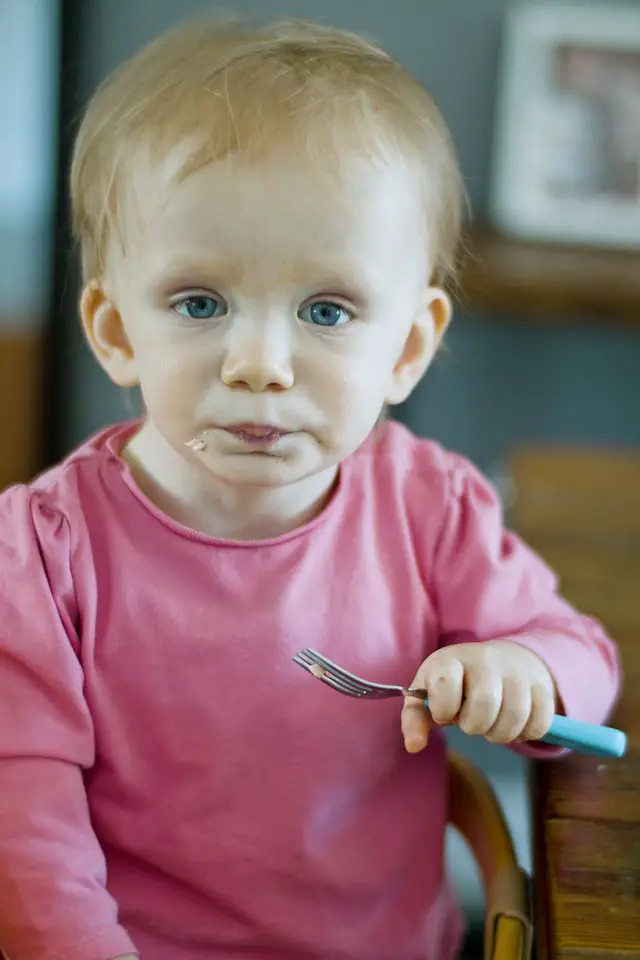
Alex was halfway through his second bowl of cereal when he announced that dinosaurs would make terrible firefighters because their arms were too short to reach the hose.
“That’s a serious design flaw,” I said.
“Right?” He said it with the full weight of a scientist who has been trying to get the world to listen for years. Milk dripped off his spoon and back into the bowl, and he did not notice, because he was too busy demonstrating with his own arms exactly how short a Tyrannosaurus rex would come up when reaching for a fire hose.
I laughed and leaned across the table to wipe a streak of syrup off his cheek before it migrated into his hair. He tolerated this the way he tolerated most of my maintenance of him, with a small put-upon sigh, as though being loved were a chore he was performing on my behalf.
Motherhood, I had learned in five years of it, was not made up of the grand moments they show you in the movies. There was no soft-focus montage. There was no swelling music. It was sticky counters and made-up songs and long serious conversations about dinosaurs before nine in the morning, conducted between someone who genuinely needed answers and someone who was inventing them on the spot. It was the same seven meals in rotation. It was finding a raisin in the couch cushions three weeks after you were sure all the raisins were accounted for. It was small and repetitive and, most days, it was so quietly wonderful that I could hardly stand it.
I loved our little routine. Alex in the mornings, all questions and syrup and dinosaur logic. Laundry after lunch, folded warm out of the dryer on the living room floor while some show murmured in the background. And Brandon home late from the construction site with dust in his hair and sawdust ground into the knees of his jeans and that tired half-smile he saved, it always seemed, just for the moment he came through the door and saw us. That was our life. It was not a large life. We were not wealthy and we were not going anywhere in particular. But it was ours, and it fit us the way a worn shirt fits, soft in all the right places.
“Mommy, can I have juice again?” Alex asked, already reaching his cup toward me.
“You just had juice, buddy.”
“But the cup was small.” He held it up as evidence, this tiny plastic cup with a faded dinosaur on the side, as though its smallness were a technicality that entitled him to a retrial.
I laughed and poured him another half glass, and he swung his sneakers under the chair, the rubber toes squeaking against the table leg, satisfied that justice had been served.
No matter how late Brandon got home, the last part of every single evening belonged to him and Alex. That was the fixed point around which our days turned. Some nights Brandon walked in so exhausted he could barely get his boots off, and still, without fail, he would haul himself down the hallway to Alex’s room, and he would kneel by that little bed, and he would whisper something, and Alex would giggle the way children do when they have swallowed a secret whole and are trying, unsuccessfully, to keep it from bursting out of them.
Sometimes I stood in the hallway with a folded towel in my arms and just listened. Not to the words, which I could rarely make out, but to the sound of it, the low rumble of my husband’s voice and the bright bubble of my son’s laugh, the two of them building something together in the dark that I was not quite part of.
“Are you two plotting against me in there?” I would call.
“Never, Cece,” Brandon would call back, using the name only he used, the one that had started as a joke early in our marriage and become, over seven years, the sound of home. “We would never.”
“Never, Mommy,” Alex would echo, and then the two of them would dissolve into laughter, thick as thieves, and I would smile and walk away.
There was a pinch of envy that sat under my ribs in those moments, I will admit that. But it was the good kind of envy, the kind that was mostly gratitude wearing a disguise. Because I had grown up in a house where my father came home from work and lowered himself into a chair and made it silently, unmistakably clear that he did not want to be bothered by the children he had made, and I had spent my childhood learning to move quietly around the edges of a man who was present in body and absent in every way that a child actually counts. I had promised myself, long before Alex existed, long before I even met Brandon, that if I ever had a child, that child would have a father who knelt by the bed. Who whispered. Who invented secret games in the dark and laughed at his own jokes and treated bedtime as the best part of the day instead of the last obstacle before quiet.
And Alex had exactly that. Whatever small ritual I was being left out of in that room, it was the precise thing I had wanted most in the world for my son, the thing I had not been given and had sworn he would be, and I would not have traded it for anything, not even for a place inside it. So I stood in the hallway with my folded towels and I let the envy turn into thankfulness, which is what the good kind of envy does if you let it, and I walked away smiling almost every single night.
The forks came later. I want to be precise about how it started, because at the time it seemed like nothing at all, one of those small domestic mysteries that dissolve as quickly as they appear, and it was only much later that I understood I had been standing at the very beginning of something.
I opened the drawer on a Tuesday to grab a fork for Alex’s pancakes, and my hand closed on air. I looked down. There were three forks. Three. Out of a set of eight that had lived in our kitchen since our wedding, matte-handled and slightly bent at the tines from years of being run through the dishwasher, forks I had eaten a thousand meals with and never once actually looked at, the way you never look at the things that are simply always there.
“Alex, honey,” I said, keeping it casual, “did you play with the forks?”
He looked up from his plate, his eyes going wide as saucers, and there was something in that widening, some flicker I would only recognize later, that I misread in the moment as ordinary surprise.
“No, Mommy.”
“Are you sure? It’s okay if you did, I’m not mad. I just want to know where they went.”
“I didn’t touch them,” he said, and he said it fast, and then he looked back down at his pancakes very deliberately, the way you look at a thing when you are trying not to look at another thing.
I checked the dishwasher. I checked the trash, holding my breath and moving aside coffee grounds. I checked under the couch cushions and then, feeling ridiculous, behind the couch entirely, hauling it away from the wall to find nothing but dust and a single sock and a Cheerio fossilized into the carpet. I even opened the dryer, half convinced I had finally lost my mind, that I had somehow put five forks through a wash cycle. But there was nothing. Five forks had simply walked out of my kitchen and vanished.
That night, when Brandon shuffled through the door with sawdust on his jeans and that dust in his hair, I told him about it while he unlaced his boots on the mat by the door.
“The forks are gone,” I said. “Like, all of them.”
“All of them?” He did not look up. He was working at a knot in his laces.
“There are three left. Three, Brandon. Out of eight.”
He rubbed his eyes with the heels of his hands and let out a tired laugh. “Cece, he’s five. He probably chucked them in the yard playing some game. Don’t stress about it.”
“I already looked in the yard.”
“Then order more. It’s forks.” He finally got the boot off and dropped it by the door. “It’s not a mystery.”
I wanted to push. There was something in his voice that sat a half step off the note it usually landed on, a flatness, a too-quick arrival at the conclusion that this was nothing. But he was so tired, and the lines around his eyes were so deep, and Alex was already climbing up onto his lap and wrapping small arms around his neck and burrowing his face into that dust-smelling shirt, and I did not have the heart. I let it go.
I opened Amazon on my phone and clicked the first stainless steel set I saw, forty-eight pieces, more than we could ever possibly need, on the theory that if the universe was going to eat our forks I would simply overwhelm it with supply. Two-day shipping. Problem solved.
“See?” Brandon said, kissing the top of Alex’s head, his chin resting in that soft hair. “Fixed.”
“Fixed,” I agreed.
Later, I stood at the kitchen sink drying my hands on a dish towel and heard him carry Alex down the hallway, heard the familiar sounds of the bedtime routine, the water running as teeth were brushed, the thump of a small body hitting a mattress, the click of the bedroom door swinging most of the way shut but not all the way, the way it always did, leaving a strip of hallway light across the floor of Alex’s room.
And then I heard Brandon’s voice, low, through the crack.
I moved closer. I don’t know why I did it. I had never once eavesdropped on their bedtime ritual, had always considered it a small private country that belonged to the two of them. But something that night pulled me down the hallway on quiet feet, and I stood just outside the door and I listened.
“Remember what I told you, buddy,” Brandon murmured. “That’s our thing. Okay?”
“Okay, Daddy.”
“You promise?”
“I promise.”
Something in me tightened, a small cold hand closing around something in my chest. I opened my mouth to call in, to ask, to make it light, what are you two promising in there, and then I closed it again. Whatever their little game was, it was theirs. Every family has its small rituals, its inside jokes, its secret handshakes. I did not want to be the mother who came barging in and broke something small and sweet just because she felt, for one irrational moment, left out of it. I turned and walked back to the kitchen.
I told myself it was nothing. I told myself that if it mattered, Brandon would have said. I was wrong about both of those things, though not in any of the ways I feared.
The new forks arrived that Thursday, forty-eight of them sealed in plastic and stamped with a cheerful little brand logo, a whole silver army of them. I washed them because I always washed new things before we used them, dried each one, and lined them up in the drawer in neat rows, tines up, handles aligned, more forks than a family of three could go through in a month. I remember feeling a small foolish satisfaction at the abundance of them, at having solved the problem so decisively.
By the following Friday, there were seven.
I stood in the kitchen with the drawer pulled half open and I counted them again, and then a third time, because surely I had miscounted, surely forty-one forks had not evaporated in eight days. But I had not miscounted. Seven forks. I could feel my heartbeat in my ears.
“Alex,” I called out, and I worked to keep my voice light, easy, unbothered. “Buddy, can you come here a second?”
He shuffled in from the living room, still holding the plastic dinosaur he had been dragging around all morning, a green stegosaurus with one leg chewed soft. His eyes went to the open drawer and then snapped back to my face, quick as a blink, quick as a boy who knows exactly where the missing thing is.
“Sweetheart, do you know where the forks went?”
He shook his head, hard, his whole body committing to it.
“Are you sure? Because Mommy just bought a whole bunch of new ones, and now almost all of them are gone again.”
“I don’t know, Mommy.”
“You can tell me if you were playing with them. I promise I won’t be mad. I just want to understand.”
He pressed his lips together into a thin line and shook his head again, and his fingers gripped that stegosaurus hard enough that his little knuckles went pale, white as the bone underneath, and I saw it, and I did not know what to do with it. My son was frightened. My open, easy, chattering son, who told me about dinosaur firefighters and negotiated for juice and had never in his short life had a single thing to hide from me, was standing in our kitchen gripping a toy in terror because I had asked him about forks.
I let him go. I did not know what else to do.
I called Brandon on his lunch break. He picked up on the fourth ring, sounding distracted, wind in the background, the clatter of a job site behind him.
“Hey, everything okay?”
“The forks are gone again.”
“The what?”
“The forks, Brandon. I bought forty-eight new ones a week ago and there are seven left. Seven.”
He laughed, and the laugh was too easy, too ready, a laugh reaching for a lightness that was not actually in the room. “Cece, come on. He’s five. Kids do weird things at that age, it’s practically their job. Remember when he tried to flush his socks down the toilet? We had to call the plumber.”
“This is different, and you know it’s different. He’s hiding them somewhere and he’s lying to me about it. Brandon, he has never lied to me. Not once. And now he can’t look me in the eye.”
“He’s not lying, he’s playing. There’s a difference.”
“Then why does he look terrified every single time I open a drawer?”
There was a pause. A small one, barely a beat. But I had been married to this man for seven years and I knew the texture of his silences the way you know a room in the dark, and this one was wrong. This was not the pause of a man who was confused. This was the pause of a man who was choosing his next words.
“Babe,” he said, and his voice had shifted into something softer, more careful, “you sound really stressed. Have you eaten anything today? Maybe put on some cartoons for him and take a nap. It’s forks. We’ll figure it out, I promise.”
“Don’t tell me I’m stressed.”
“I’m not saying you’re stressed in a bad way. I’m just saying, don’t spiral over silverware, okay? It’s not worth it.”
I hung up before I said something I would regret, and I stood in the kitchen with the phone hot in my hand and a feeling I could not name spreading through my chest, because the thing about that phone call, the thing that would not leave me alone for the rest of the afternoon, was that my husband had just spent our entire conversation trying to convince me that a real thing was not happening. And he was good at it. He had reached, smoothly, for the oldest tool there is, the suggestion that the woman noticing the problem was the problem. Have you eaten. Take a nap. Don’t spiral. As though my counting were the malfunction, and not the forty-one forks that had walked out of my drawer.
That night I watched him tuck Alex in, and he stayed longer than usual. I heard the low murmur of his voice through the not-quite-closed door, and then a small giggle, and then a long stretch of quiet that was somehow more intimate than the giggle had been. When Brandon finally came out, he was smiling.
“He’s out cold,” he said.
“What were you two talking about in there?”
“Nothing.” He was already moving past me toward the bathroom. “Boy stuff.”
I searched his face for something, some crack, some tell. He kissed my forehead, warm and dry and ordinary, and headed off to the shower as if there were nothing in the world the matter, and I stood in the hallway feeling like a woman who has walked into a room and knows, without being able to say how, that a conversation stopped the moment she opened the door.
The next morning, he announced the trip.
“Warehouse thing,” he said, scrolling his phone, not looking up. “Out of town, two days. They’re paying overtime rates just to have bodies there. I couldn’t say no to it.”
“Since when do you travel for work?” I set his coffee down harder than I meant to. “You’ve never once traveled for a job.”
“Since they asked. It’s good money, Cece. Really good. I couldn’t turn it down.”
He packed a duffel bag while I stood in the doorway of our bedroom with my arms crossed, watching him fold shirts I had washed a hundred times, and there was something about the way he would not quite meet my eyes, the way his gaze kept sliding off mine and back down to the folding, that made my chest go tight and cold.
“Brandon.”
“Yeah?” He kept folding.
“Is everything okay with us?”
And he stopped. For one long second his hands went still on the shirt, and I thought, this is it, he is going to sit down on the edge of the bed and finally tell me the real thing, whatever it is. I could see it hovering right there behind his face, some heavy true thing he was carrying. And then he smiled, that same easy smile, the one that had gotten him out of a hundred smaller conversations, and he crossed the room and pulled me into a hug, tucking my head under his chin the way he had since we were twenty-three.
“Everything’s fine, baby,” he said into my hair. “I promise. I promise everything’s fine.”
He was gone by noon. And I want to tell you that I felt relieved to have the space, but I didn’t. I felt the way you feel when a storm is still an hour out, when the air has gone strange and yellow and too still, and every animal instinct in you knows that something is coming even though the sky, for the moment, is clear.
That evening I made grilled cheese and cut it into triangles the way Alex liked, four little triangles fanned out on his plate. He ate exactly half of one and pushed the rest around and then asked, in a small voice, if he could go to bed early.
That should have been my first clue. Alex never asked to go to bed early. Bedtime was a nightly negotiation conducted with the tenacity of a hostage situation, one more book, one more song, one more glass of water. A child who asks to go to bed early is a child who is trying to get away from something, or trying to get to something, and either way it is not nothing.
I carried his book into his room and sat down on the edge of the mattress beside him, and that was when I felt it.
Something was wrong with the bed. The surface under the sheet was not soft, and it was not lumpy the way an old mattress goes lumpy. It was ridged. Firm and even and ridged, like someone had laid a row of pencils side by side beneath the fitted sheet, a whole architecture of small hard things arranged in careful lines under my son’s body.
“Alex, honey, sit up for a second.”
“Why?” His voice climbed at the end of it, thin and quick.
“Just for a minute. Mommy needs to check something under the sheet, okay?”
“No, Mommy, please don’t.” He was clutching at my sleeve now, both hands fisted in the fabric. “Please.”
“Baby, why not? Why can’t Mommy look?”
His eyes were already filling, spilling over, his lower lip going. “Please. Please don’t look. Please, Mommy.”
And there is a particular kind of dread that comes when your child begs you not to look at something, because half of you is afraid of what you will find and the other half already knows that whatever it is, it is big enough to have frightened a five-year-old into keeping it for weeks. I lifted him gently, my hands under his arms, and I set him down on the floor beside the bed, and he stood there in his dinosaur pajamas with his hands out toward the mattress, and I peeled back the fitted sheet and raised the edge of the mattress and looked underneath.
They were arranged in perfect rows.
Dozens and dozens of them. More than I could count in a single glance. Forks, all of them, the old matte-handled wedding forks and the new stainless ones together, silver tines all pointing in the same direction, handles lined up with a precision that made my throat close, laid out under the mattress with a care that was almost unbearable, the care of someone who believed these objects mattered enormously, who had arranged them not the way a child scatters toys but the way a person arranges something sacred.
Alex burst into tears behind me, great heaving sobs.
“Please don’t take them away, Mommy. Please, please don’t take them.”
“Baby, calm down, it’s okay,” I said, though my own hands were shaking. “Why shouldn’t I take them away? Talk to me.”
“I need them,” he wailed. “Me and Daddy need them. Please.”
I turned around slowly, still on my knees by the bed. He was standing there in his pajamas, snot running down over his lip, his face crumpled and wet, his arms stretched out toward the bed as though I were about to steal something he could not live without.
“Alex, sweetheart,” I said, and I made my voice as gentle as I have ever made it. “Why? Why do you need the forks? You can tell me. I promise it’s okay.”
“Daddy said.”
“Daddy said what, baby?”
“Daddy said not to tell anybody. Not even you.” He hiccuped around the words. “Especially not you.”
“Baby, listen to me. I’m Mommy. You can tell Mommy anything in the whole world. There is nothing you could ever tell me that would make me upset with you.”
He shook his head, crying harder, his whole small body shaking with it. “It’s Daddy’s secret. I promised. I pinky promised.”
I did not push him any further. He was too upset, and whatever this was, it was clearly not his to carry and never had been. I gathered him up and I held him against my chest and I rocked him the way I had when he was a baby, and I made a decision in that moment that I did not fully understand. I tucked him back into bed with the forks still there underneath him. I could not bring myself to take them, not with him begging like that, not when they so obviously meant something I did not yet understand. I smoothed his hair and I sat with him until his breathing evened out and his eyes finally closed, still wet at the lashes.
Then I closed his door, and I walked into the hallway, and my hands were shaking so badly it took me two tries to pull up Brandon’s name and press call.
He answered on the third ring, and his voice sounded strained, thinner than usual, like a wire pulled too tight. “Cece, hey. I was actually about to call you.”
“Care to explain,” I said, keeping my voice low so it would not carry down the hall to Alex’s room, “why there are dozens of forks arranged in rows under our son’s mattress?”
Silence.
“I asked you a thousand times, Brandon. I asked you what was going on. And you told me not to spiral over silverware. You lied to my face.”
There was a long pause, and I could hear him breathing on the other end, a ragged in and out.
“It’s not a big deal,” he said finally. “It’s a game. That’s all it is.”
“A game.”
“Yeah. I called it treasure knights. Alex hides silver swords under his mattress to protect the castle from dragons. That’s it. That’s the whole thing. It’s just a game I made up.”
I pressed my forehead against the cool wall of the hallway and closed my eyes. “Then why,” I said, “did you tell him not to tell me? Why would you make a five-year-old keep a secret from his mother? Why especially not me, Brandon? He said especially not you.”
“Cece, come on.”
“Don’t Cece me. Answer the question. Answer it right now.”
He exhaled, a long shaky breath. “I’ve been picking up less overtime,” he said. “A lot less. And I didn’t want you worrying about money on top of everything else you already do around here. So I made up the game to keep him busy at night, to make bedtime fun when I got in late and tired. That’s all it is, I swear.”
But something in his voice was still wrong. It had the shape of a true thing without the weight of a whole one, like a house built to look right from the street with nothing behind the front wall.
“How long,” I said slowly, “has the overtime been down?”
“A few weeks.”
“How many is a few, Brandon?”
“I don’t know. Two months, maybe. Look, Cece, I’m at the hotel and I’ve got an early call in the morning. Can we please just do this Sunday, when I’m home and we can talk properly?”
“No. We are doing this now.”
“Please.” He said it so softly that it stopped me cold. Brandon did not beg. In seven years I had never once heard him beg for anything. “Please, Cece.”
I stood there in the dark hallway, and against everything my sister would later tell me, against the alarm ringing through my whole body, that one soft please got through to me.
“Fine,” I said. “Sunday. But you are going to explain every single thing to me, all of it, no more games and no more managing me. Do you understand?”
“I understand.”
I hung up before he could say anything else, before he could soften it or shape it or make it easy. And then I stood there for a long time in the dark hallway, the phone warm in my hand, listening to the small sounds of the house settling, the refrigerator humming in the kitchen, the tick of the water heater, all the ordinary noises of a home that had, an hour ago, felt completely solid and now felt like a stage set I had been living inside without knowing it.
And then I did the thing I had never done in seven years of marriage. I had never gone through Brandon’s things. It was not a rule we had, exactly, just a foundation we stood on, the assumption that there was nothing to find, that our lives were laid open to each other by default. I had never checked his phone or read his messages or wondered what was in his pockets, because it had never once occurred to me that there might be an answer I did not already have. But that night I walked into our bedroom and I opened his side of the closet, and I felt like a stranger in my own marriage doing it, like I was crossing a line I could never uncross, and I crossed it anyway.
I did not know what I was looking for. I only knew that the shape of his voice on that phone call had not matched the words coming out of it, that the pieces he had handed me on the phone were the wrong size and shape to fit together, and that somewhere in this house was the thing that would make them line up. I went through his side of the closet with a thoroughness that shamed me even as my hands did it, patting down the jacket pockets, checking the shelf above the hanging clothes, lifting stacks of folded jeans and setting them back exactly as they had been out of some instinct I did not examine. And behind the jeans, pushed all the way to the back against the wall, underneath an old shoebox that I knew held nothing but his good work boots, my fingers found the edge of a manila folder.
I pulled it out slowly. It was heavier than a folder should be, thick with paper, and there was something else in it too, something with weight and hard edges. I carried it to the bed and sat down and opened it under the lamp.
Inside there were bills. Credit card statements with PAST DUE stamped across the top in red, an angry mechanical red, dates I recognized as recent, balances that made my stomach drop. There was a cheap prepaid phone, a second phone, one I had never seen in my life, black and plastic and generic, nothing like the phone he carried in his pocket every day, the kind of phone you buy with cash at a drugstore. And there was a printout, several pages, a listing for a studio apartment across town, small and grim in the photographs, one room with a kitchenette against the far wall, and on the last page, on a line marked applicant, was my husband’s name written out in his own familiar handwriting, the same hand that signed our son’s school forms and left me notes on the counter.
I sat and stared at it, and each object rearranged the story a little further into something monstrous. A second phone. A separate apartment he had applied for and told me nothing about. Past due bills he had hidden in a shoebox in the closet like contraband. Two months, he had said, of a lie about overtime. And a game, a secret game, that he had built with our son and sworn him not to tell me about, especially not me, especially not you.
I did not know how to hold all of it at once. It kept sliding out of my hands into the worst possible shape. And I knew, sitting there, that there was only one person I could call, the person I had called at every crisis of my life since we were girls sharing a bedroom, my sister Marion.
She picked up on the second ring, her voice thick with sleep. “Cece? It’s late. What’s wrong?”
“I think Brandon’s cheating on me.”
I heard her sit straight up in bed, all the sleep gone from her voice in an instant. “Okay. Tell me everything. Right now. Start from the beginning.”
So I told her. The forks, and the way Alex had been lying, and the secret game, and the trip that came out of nowhere, and the folder in the closet, the second phone and the past due bills and the studio apartment across town with his name on the application.
“Honey,” Marion said, and her voice went flat and hard in the way it did when she had made up her mind about something. “A second phone he hid from you and a whole separate apartment he never mentioned? Come on. Come on, Cece. You know what that is. We both know what that is.”
“He said the overtime is down. He said he was ashamed about money.”
“They always say the overtime is down. Do you have any idea how many times I heard that exact sentence before Danny finally walked out the door? The overtime is down. The company’s restructuring. I’m just picking up extra shifts. It is always, always the overtime, right up until it’s a woman named Stephanie.”
“Marion.”
“I’m sorry. I am. I know you don’t want to hear it.” Her voice gentled a little, but only a little. “But listen to me. A separate apartment. A second phone he kept in a shoebox. Secret behavior he pulled your son into and made him lie about. Cece, you need to get a lawyer’s number tonight, and you need to not confront him until you have your ducks in a row. Do not tip your hand. Get everything documented first.”
I hung up sicker than I had been before I called, which I suppose is what happens when you take the worst version of a story you are already terrified of and hand it to someone who loves you enough to be furious on your behalf. Marion had been through her own version of this, and she was reading my life through the lens of hers, and I could not blame her for it, but sitting there on the edge of my bed with the folder open beside me, I felt the last of my caution burn away.
I picked up my own phone. My fingers were shaking so hard I had to retype it twice. And I typed, to my husband, the message I had spent seven years never imagining I would send.
I found the studio listing. And the second phone. Don’t come home Sunday. Don’t come home at all.
I hit send before I could take it back.
My phone rang almost immediately, before the message had even had time to settle, his name lighting up the screen. I stared at it. I let it ring once, twice, three times, four, and then I picked it up.
He was crying.
I had been married to this man for seven years, and I had never once, not at our wedding, not when Alex was born, not at his own father’s funeral, heard Brandon cry. And now he was crying so hard he could barely form the words.
“Cece. Please. Please just wait until I get home, I’m begging you, please. It is not what you think. I swear to you on Alex’s life, it is not what you think.”
“Then tell me what it is. Right now, on this phone, tell me.”
“Not on the phone. Please. Not like this, not over the phone in the dark, I can’t. Please just let me come home and say it to your face. Please let me look at you when I say it.”
“Brandon.”
“I love you. I love you and Alex more than anything in this entire world, more than my own life, and I know how this looks, I know exactly how this looks, and I am begging you, please, please just let me come home and explain.”
I could not answer him. My own throat had closed. I hung up the phone, and I slid down the bedroom wall until I was sitting on the floor, and I stopped trying to be quiet about the crying. It came out of me in the ugly heaving way it does when you have been holding it for hours, for days, and somewhere down the hall I heard Alex’s door creak open.
Small footsteps padded down the hallway toward me.
He came around the corner in his dinosaur pajamas, his hair sticking straight up on one side from the pillow, and he was holding one of the forks in his fist, gripped like a sword, tines up. He stopped a few feet away and looked at me sitting on the floor with my back against the wall and my face wet, and his own face went soft with worry.
“Mommy? Why are you crying?”
“I’m okay, baby,” I managed. “I promise I’m okay. Go back to bed.”
But he did not go back to bed. He walked over, slow and careful, and he sat down on the floor beside me, close, his small warm shoulder pressed against my arm. And he took the fork out of his fist, and he set it down very gently in my lap, laying it there the way you would lay down something precious.
“You can have one,” he whispered.
“Alex, honey, I don’t need”
“Daddy said the forks were so you wouldn’t be alone if he had to go away.”
Everything in me went still. “What did you say?”
He looked up at me with those serious dark eyes, my son who explained dinosaurs, and he told me the thing he had been forbidden to tell, told it carefully, as if reciting something he had memorized so he would get it exactly right.
“Daddy said every fork is a promise,” he said. “He said if he ever couldn’t come home for a really long time, you would still know he was coming back, because you’d have the promises. He said I had to keep them safe under my bed so they wouldn’t get lost. And he said Mommy has to have some too, so Mommy’s not alone.” His lip wobbled. “But I forgot. I forgot to give you any. I was keeping them all safe and I forgot Mommy needs promises too.”
And he started to cry again, not the frightened crying from before but a different kind, the crying of a child who believes he has failed at a job that mattered, who thinks his mother is sad on the floor because he did not distribute the promises correctly.
I pulled my son into my chest and I held him so tight he squeaked in protest, and I pressed my wet face into his sticking-up hair, and I understood, all at once, that I had been chasing the wrong betrayal.
Whatever Brandon was hiding, it was not what Marion thought. It was not the thing I had typed in a shaking rage and sent into the dark. A man who is leaving his family does not build his son a system for believing he is always coming back. A man who is walking out the door does not turn silverware into promises. Whatever the second phone was, whatever the apartment was, whatever the past due bills stamped in red were, they were pieces of a different story than the one I had assembled, a story I had gotten backward, and my son had just handed me the key to reading it right in the form of a single fork laid in my lap.
I picked up my phone, and I typed one more message, and this one I did not have to force through shaking fingers. It came easily, and it was true.
Come home Sunday. We’ll talk.
Sunday was two days away, and they were the two longest days of my life. I did not call Marion back, because I did not yet have the words to explain the turn the night had taken, the way the ground had shifted under a story she had already decided the ending of. She had hung up certain she was helping me see clearly, and she had, in her way, given me exactly the thing a frightened person reaches for, permission to believe the worst so that at least the not knowing would be over. I could not fault her for it. She had walked her own version of this road and it had ended with Danny and a woman named Stephanie and a lawyer’s office, and she loved me too much to watch me walk it blind. But I had seen something on my hallway floor at midnight that she had not seen, and until I understood it myself I could not hand it to her.
I moved through those two days in a strange suspended state, like a person walking through a house after the power has gone out, feeling my way along walls I thought I knew by heart. I cared for Alex, who had brightened considerably now that the secret had cracked open, who still kept his one fork close but no longer flinched when I opened the kitchen drawer, as though the terrible weight of keeping his father’s secret had been the whole of what was pressing on him, and lifting it had let him float back up to the surface of himself. He chattered again. He negotiated for juice again. He told me over lunch on Saturday that sharks were older than trees, which turned out to be true, and I held onto that small fact like a handrail, grateful for anything that was simply, uncomplicatedly real.
At night, though, after he was asleep, I lay awake in our bed turning a single fork over and over in my hands, trying to see the shape of what my husband had built and why. I would arrange the pieces one way and get the story Marion had given me, the leaving, the other woman, the escape hatch across town. Then I would remember Alex’s small voice saying every fork is a promise, so you wouldn’t be alone, and the whole picture would flip inside out like one of those drawings that is a vase until suddenly it is two faces, and I could not make it hold still. A man planning to leave does not teach his son that Daddy always comes back. But a man with a second phone and a secret apartment is not telling his wife the whole truth either. Both things were real. I lay in the dark holding a fork, waiting for Sunday, when the man who had made both of those things true would finally have to stand in front of me and account for them.
I thought a great deal, in those two nights, about how sure I had been. How completely and instantly I had assembled the worst story out of the pieces in that folder, how naturally it had come to me, how ready I had apparently been to believe that the man who knelt by our son’s bed every night was capable of walking out on us. And I wondered where that readiness had come from, whether every long marriage carries inside it a small dark cabinet of the worst thing your person could do, kept locked but always there, and whether the folder had simply handed me the key. I did not like what it showed me about myself, how quickly I had reached for betrayal, how the story of abandonment had felt almost familiar, almost expected, as though some part of me had been braced for it all along. That was its own thing to sit with. That was its own small wound, self-inflicted, that I would have to tend later.
Brandon came home Sunday night. I heard his truck in the driveway and I met him at the door with the manila folder in my hand and my throat so tight I could barely swallow. He looked at the folder in my hand, and his whole body seemed to sag, his shoulders dropping like a rope that has finally been let go of after being pulled taut for weeks.
“Sit down,” I said quietly.
“Cece, I can explain, I”
“Then explain. All of it. From the beginning. And look at me while you do it.”
He set his bag down by the door, the same duffel bag, and he sat down heavily on the couch, and his eyes were red before he had even said a word. I sat across from him in the chair, the folder in my lap, and I waited.
“I was laid off,” he said. “Six weeks ago. Not less overtime. Laid off. The whole crew, the project got cancelled and they let half of us go with two weeks’ notice.”
The room seemed to tilt. Six weeks. Not the two months of reduced overtime he had confessed on the phone, and not the small thing he had waved away. Six weeks of no job at all.
“I couldn’t tell you,” he said, and his voice broke on it. “I couldn’t. You gave up your career for us, Cece. You gave up everything you’d worked for so you could be home with Alex, and you did it because we agreed, because I promised you I would handle it, I would always handle it, that money would be my job so being with him could be yours. I made you that promise. And six weeks ago I couldn’t keep it, and I could not stand to look at you and say the words.”
“So you put on your work clothes every morning,” I said, and my own voice was shaking now. “You laced up your boots and you kissed us goodbye and you left. Where did you go, Brandon? Where have you been going every day for six weeks?”
“The library, mostly. To use the computers, to apply for things. Everywhere, Cece. I applied everywhere. I filled out hundreds of applications. And in between I picked up whatever I could get. Warehouse shifts. Day labor. Loading trucks, hauling drywall for a guy I used to know, standing in a parking lot at five in the morning hoping somebody needed bodies. That’s what the overtime story was covering. That’s why I’d come home so tired and so dusty. It was real work. It just wasn’t my job anymore, because I didn’t have a job anymore.”
I looked down at the folder in my lap. “And this,” I said. “The second phone. The apartment. Explain these to me, because these are the things that made me send that message. These are the things that made me think”
“I know what they made you think.” He pressed the heels of his hands into his eyes. “The phone was for the job stuff. Recruiters, gig postings, foremen texting at five in the morning about whether they needed you that day. It never stopped buzzing, all hours, and I couldn’t have my regular phone going off like that with you right there, because you’d see the notifications and you’d ask, and I’d have to lie more, or I’d have to tell you the truth, and I wasn’t ready. So I got a cheap phone and I kept it in the closet and I only checked it when you weren’t around. That’s the whole secret of the second phone, Cece. It was a job-hunting phone. There’s no woman. There has never been a woman. There is you. There has only ever been you.”
I made myself ask the last one. “And the studio apartment. With your name on it.”
He was quiet for a moment, and when he spoke his voice had gone very small. “That one’s the worst, in a way. That was me planning for the bottom to fall out completely. I thought, if I can’t fix this, if the money runs out and we can’t make the mortgage, then at least I could go there. To the studio. It was cheap, it was the cheapest thing across town. I thought if the very worst happened, I would move into that little apartment and I would keep sending you everything I made, and you and Alex would stay in the house. You’d keep his room and his yard and his school. I wasn’t planning to leave you, Cece. I was planning to take the failure somewhere else so it wouldn’t land on you. I was planning how to disappear the disaster and leave you the home.”
I pressed my hand over my mouth. Everything Marion had read one way, the way her own broken marriage had taught her to read it, had meant the exact opposite thing. The apartment was not an escape hatch from us. It was a plan to absorb the wreckage himself so that it would not touch us. The second phone was not a channel to another woman. It was a dam he had built to keep the flood of his own fear and shame from reaching me.
“And the forks,” I said, and now I was crying too. “Brandon. Why the forks? Why did you pull our son into this? Why did you make a five year old keep a secret from me and cry when I opened a drawer?”
And that was when he really broke. Not the tears from before, but something deeper, a sound I had never heard from him, his whole face coming apart.
“Because I was so ashamed,” he said. “Because I would come home at the end of these awful days, days of standing in parking lots and getting turned away and filling out applications that went nowhere, and I would feel like a failure, like I had broken the one promise I ever made you that mattered. And I couldn’t fall apart in front of you, and I couldn’t fall apart in front of him, so I made it into a game. I told him every fork under his mattress was a promise. That Daddy always comes back. Even when Daddy’s gone all day, even when Daddy looks tired and sad, the promises are still there under the bed, and as long as the promises are there, it means Daddy’s coming home. And I made him swear not to tell you, because if he told you about the forks then you’d ask why, and I’d have to explain the promises, and if I explained the promises I’d have to explain that I was afraid I might not be able to come home someday, that I was afraid I was going to lose everything. I couldn’t let you see me like that. I couldn’t let you see how scared I was.”
I sat down on the floor. My legs simply would not hold me anymore, and I slid off the chair and onto the floor of our living room, and Brandon slid down off the couch too, and we were both on the floor, a few feet apart, wrecked.
“You thought I would love you less,” I said. “Because you lost a job. You thought I’d love you less.”
“I thought you’d stop believing in me,” he said. “I thought you’d look at me and see the thing my own father was, a man who couldn’t provide, a man who let his family down, and I couldn’t stand the idea of becoming that in your eyes. So I lied. Every day, I lied. And I told myself I was protecting you.”
I crawled across the floor to him and I took his face in my hands, this face I had loved for a third of my life, and I made him look at me.
“Listen to me,” I said. “Listen. The wound isn’t the job, Brandon. I don’t care about the job. Jobs come and go, we’ll figure out the money, we’ve figured out worse. The wound is that you thought my love came with conditions. You thought there was a version of you I would stop loving. You thought you had to earn your way into your own family, that if you couldn’t provide you had to plan how to remove yourself. Where did you get the idea that my love was a paycheck? That it was something you could be laid off from?”
He crumpled against me, and I pulled him in, and we sat on the floor of our living room and held onto each other while the shame he had been carrying alone for six weeks finally, finally came out, and I understood that this was the thing that had been under the mattress all along. Not the forks. The fear. The forks were just where he had hidden it, in rows, under our son, arranged with terrible care.
We talked most of the night. About the money, which was frightening but survivable, savings we still had and a mortgage we could get help with and my own résumé, which was not as cold as either of us had feared. About the shame, which he agreed to stop carrying alone, which is the only way shame can ever actually be put down. About the promises we had made each other seven years ago and how neither of us had understood, back then, that the real promise was not I will always provide but I will always tell you the truth, even when the truth is that I am afraid.
And I told him about Marion, and the message, and the studio, and how close I had come to reading his fear as betrayal, and he took my hands and said he understood, that he had handed me every reason to think the worst, that he had built a mystery around himself and then been shocked when I solved it wrong.
The next morning, the three of us sat together on Alex’s bed. Brandon lifted the mattress, and there they were, the forks in their careful rows, and Alex watched anxiously to see what would happen to his promises. Brandon told him that the knights did not have to protect the castle anymore. That the danger had passed. That Daddy was home, and Daddy was going to keep being home, and that the biggest promise of all, the one that did not need a fork, was that from now on there would be no more secrets in this house, not even the kind you keep because you love somebody too much to let them see you scared.
Alex listened with his whole solemn face, taking it in the way he took in everything, and then he nodded, and he helped us gather the forks up out of their rows. But when we were nearly done, he stopped, and he reached out and took just one, and he tucked it carefully back under his pillow.
“Just in case,” he said.
And Brandon laughed, a wet cracked laugh, and I laughed too, and I let him keep it. Because some promises you hold onto even after you no longer need them, as a reminder of the time you did.
We are all right now. It was a hard year, the hardest we have had, and Brandon found work eventually, and I went back to work part of the time, and the studio apartment listing went in the trash where it belonged. The forks all came back to the kitchen drawer except the one under Alex’s pillow, which is still there, as far as I know, a single silver promise a boy decided to keep just in case the world ever needs protecting again.
But the thing I carry from all of it is not the fear and it is not the six weeks of lies. It is my son on the hallway floor at midnight, taking the one thing he believed was keeping his family together and laying it in my lap because he thought I was alone. He had gotten the details wrong, the way children do, but he had understood the most important thing more clearly than either of his parents had. That a promise is only worth anything if you give it away. That you cannot keep the people you love safe by hiding things under the bed. That love, real love, is not something you earn or lose or ration out. It is something you hand over, open, in the dark, to the person who is crying, whether or not you think you have the right.
Brandon had spent six weeks believing he had to be worth loving. It took a five year old with a fork to teach us both that he already was, that he always had been, and that the only thing either of us had ever actually needed to survive was for the truth to be laid out plainly between us, tines up, in the light where we could finally see it.

Ethan Blake is a skilled Creative Content Specialist with a talent for crafting engaging and thought-provoking narratives. With a strong background in storytelling and digital content creation, Ethan brings a unique perspective to his role at TheArchivists, where he curates and produces captivating content for a global audience.
Ethan holds a degree in Communications from Zurich University, where he developed his expertise in storytelling, media strategy, and audience engagement. Known for his ability to blend creativity with analytical precision, he excels at creating content that not only entertains but also connects deeply with readers.
At TheArchivists, Ethan specializes in uncovering compelling stories that reflect a wide range of human experiences. His work is celebrated for its authenticity, creativity, and ability to spark meaningful conversations, earning him recognition among peers and readers alike.
Passionate about the art of storytelling, Ethan enjoys exploring themes of culture, history, and personal growth, aiming to inspire and inform with every piece he creates. Dedicated to making a lasting impact, Ethan continues to push boundaries in the ever-evolving world of digital content.