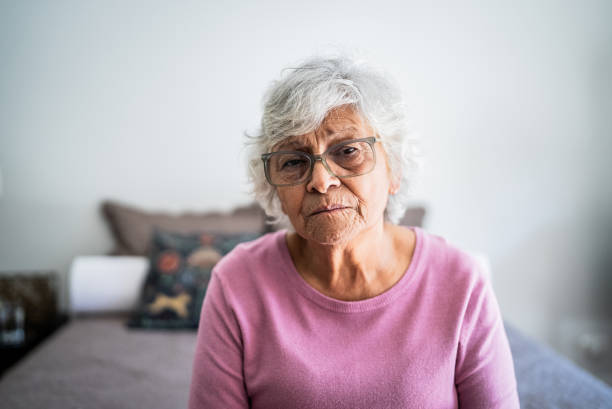
“If you don’t want to go to the nursing home, pack your suitcase and get out of my house.” My son Robert’s words echoed in the walls like thunder. For a few seconds, time stopped. His voice, so much like his father’s when he was angry, pierced my chest with the same force one uses to break a beloved glass. Only this time, the glass was me.
I looked at him without answering. His eyes were not those of the boy who once ran toward me with open arms, but those of a man hardened by pride, ambition, and ingratitude.
Behind him, Laura, his wife, watched with her arms crossed, with that icy smile she always wore when something pleased her.
“Come on, Robert,” she said. “Don’t make this any harder. Your mother will understand. She can’t live alone anymore.”
Your mother. That’s what she called me. Not Mom. Not my dear old lady. Just your mother, as if I were a burden, a piece cluttering up their immaculate home in New York.
I remained silent, not out of fear or resignation, but because I understood that talking would be useless. I had spent too many years screaming in silence, begging for love with my eyes, waiting for gratitude in a home that was no longer mine.
So I took a deep breath, forced a smile, and said in a calm voice, “All right, son. If that is what you want, I will go.”
Laura sighed with relief, as if she had just been freed from an uncomfortable obligation. Robert looked down, perhaps ashamed, perhaps also relieved. I will never know.
I went up the stairs slowly, my soul heavier than the suitcase I hadn’t yet started to fill. Every step was a memory: the print of Robert’s small foot when he learned to climb, the railing that George, my late husband, varnished with his own hands, the smell of wood and the past. All of that belonged to me, but none of it remained mine.
I entered my room and looked around. The mirror reflected a woman with gray hair, deep wrinkles, and a look more tired than sad. On the dresser, the portrait of George was still in its place. I took it delicately, wiped the dust with the edge of my blouse, and murmured, “Do you see what we achieved, George? A son with his own house, a wife, money, and an empty heart.”
I took the old leather suitcase out of the closet. It wasn’t large, but it was enough for what was left of my life. I folded each garment with an almost ritual calm: a white blouse, two skirts, the shawl knitted by my mother before she died, and a pair of worn but clean shoes. At the bottom, I tucked away a small wooden box with my costume jewelry and the letters George wrote to me when we were young. On top, I placed a photo album, the only witness to the years that vanished like dry leaves.
As I closed the suitcase, I heard Robert and Laura laughing in the living room. They were planning a dinner party that night. I was apparently a nuisance who had to disappear before the guests arrived. I swallowed. I felt a knot in my throat. But I didn’t cry. Not anymore. The tears had dried up the day I understood that children don’t always love as mothers expect.
An hour later, I went downstairs with the suitcase in my hand. Silence filled the house. Robert was standing by the door, avoiding looking me in the eyes. Laura, on the other hand, had that expression that mixes false compassion and satisfaction.
“Do you have everything, Mom?” he finally asked.
I nodded. “Yes, son. Everything I need.”
“The car will take you to the residence. I already spoke with the director. It’s a nice place. You’ll like it.”
Residence. Another pretty word to disguise abandonment.
I watched him in silence, engraving every feature of his face, every line of his expression. I didn’t want to remember him like this. But the heart doesn’t choose what it keeps.
When I opened the door to leave, a sound interrupted the moment. The engine of a powerful vehicle stopped right in front of the house. Robert frowned. “What is that?”
We approached the window. A black limousine was parked at the door, gleaming under the afternoon sun. The driver, in a dark suit and gloves, got out and walked toward me.
“Mrs. Mary Jones?” he asked with respect.
“Yes, that’s me.”
“I’ve come to pick you up. Mr. William Miller asked me to accompany you.”
The color drained from my son’s face. “William Miller?” he repeated, incredulous.
“Yes, sir,” the chauffeur replied. “He said the lady would know what it’s about.”
I smiled softly. I remembered that name, a name from the past that had marked my youth with tenderness and promises I couldn’t keep. Destiny, capricious as always, brought him back just when life was trying to erase me.
Robert looked at me, confused. Laura, mouth open.
“What is happening, Mom?”
I picked up the suitcase, took a deep breath, and replied, “Nothing, son. It’s just that the residence waiting for me is much bigger than you imagined.”
The chauffeur opened the limousine door. Before getting in, I turned to Robert. “Take care of this house, Robert. Someday you will understand what you lost.”
I crossed the threshold without looking back. The sun hit my face and the wind moved my white hair. For the first time in many years, I didn’t feel old. I felt free.
The car door closed, and the engine started with a gentle roar. As we drove away, I saw my son in the rearview mirror, standing paralyzed on the curb, watching his mother disappear inside a limousine he never would have imagined. I smiled calmly. Destiny had just taken its first step.
The limousine drove slowly along the highway, leaving behind the neighborhood in New Jersey where I had lived the last thirty years of my life. I looked out the window without blinking, watching the trees blur and the small houses grow increasingly distant, like memories fading into the distance.
The silence inside the car was so profound that I could hear the beating of my heart. The chauffeur, a man with gray hair and impeccable manners, watched me in the rearview mirror. “Mr. Miller asked me to take you directly to his estate,” he said kindly. “He’s very excited to see you.”
I nodded without speaking. My throat was tight, as if the words had gotten trapped over the years.
William Miller. I hadn’t heard that name in more than forty years. I loved him when I was twenty-two, in a time when life still seemed generous, and love was a certainty, but poverty, responsibilities, and decisions that couldn’t be undone pulled him away from me. I never heard from him again, although sometimes on sleepless nights his memory visited me with the softness of an old perfume.
The car stopped in front of a wrought iron gate. On the other side stretched an estate that seemed to be from another world: expansive lawns, a stone path, a white house with enormous windows that reflected the sky.
The chauffeur got out, opened the door, and offered me his hand. As I stepped onto the ground, I felt that I was crossing not just an entrance, but a destiny.
A man was waiting at the door. When I saw him, my heart leaped. Completely white hair, a face furrowed with wrinkles, but the same eyes, those warm, steady eyes that once promised me the world.
“Mary,” he said in a whisper that pierced my soul.
I couldn’t move. I just looked at him, trying to recognize among the shadows of time the young man who once gave me a flower at the county fair and told me that my smile was the most beautiful thing he had ever seen.
“William,” I finally replied.
We stood looking at each other for a few seconds, as if the past weighed on us, but without regret. He took a step toward me and hugged me. Not a hug of love or passion, but one of recognition, one that said, finally.
“I looked for you for years,” he told me with a trembling voice.
“Why, William?” I asked softly. “Time already took care of driving us apart.”
“Because there are some things that time doesn’t erase. I heard what happened with your son. A neighbor of mine mentioned it, and when I heard your name, I felt like destiny was knocking on my door again.”
I lowered my gaze, ashamed, not because I had been kicked out, but because of the pain of knowing that someone else had witnessed my humiliation. He took my hand. “You don’t have to be ashamed, Mary. The people who did that to you should be ashamed.”
His words were so simple and so necessary that I had to look away so he wouldn’t see my tears. No one had spoken to me with tenderness in years. I had forgotten how it felt.
We went inside the house. The interior was elegant but warm: soft rugs, the aroma of fresh flowers, old paintings. Nothing ostentatious, everything in balance, as if wealth were not a display, but a refuge.
A young maid greeted us with tea and freshly baked biscuits. William motioned for me to sit in front of the fireplace. “This house is too big for just one man,” he said with a melancholic smile.
“I know that too,” I replied.
He sat opposite me and looked at me tenderly. “You know, you haven’t changed as much as you think.”
“You have,” I joked. “Now you look like a CEO.”
He laughed, and his laugh was the same as before, the kind that lit up everything around it. For a moment, I felt young again.
We spent hours talking. He told me that he had been widowed more than ten years ago, that he hadn’t had children, and that he had dedicated his life to building a company that his partners now managed. “But money, Mary,” he said with a sigh, “doesn’t buy quiet nights or the memories you wish you could relive.”
I told him my story in a low voice, but hiding nothing. George’s illness, the years of sacrifice, the effort to raise Robert alone, the work, the absences, and finally the betrayal. William listened without interrupting, his gaze fixed with a compassion that had nothing to do with pity. When I finished, he remained silent for a few seconds.
“You were too good,” he finally said. “But you forgot about yourself.”
“That’s what mothers do,” I replied. “We erase ourselves so others can exist.”
“Well, it’s time for you to write your name again, Mary.”
His words shook me. I didn’t know if it was a promise or a challenge, perhaps both.
That night, he settled me in a bright room with a large bed and a balcony overlooking the ocean. The sound of the waves was different from the one at my old house. Softer, less sad. On the nightstand, I found an envelope with a handwritten note. No one can take away what you deserve. Rest. Tomorrow, we will start again. W.M.
I put the note in my purse like someone preserving a seed. Because deep in my heart, something was beginning to awaken. It wasn’t love or hope. It was dignity. The same dignity my son had tried to rip away with his shouts. The same that time had not been able to destroy.
I turned off the light, took a deep breath, and looked out at the dark horizon. The future, for the first time in a long time, made me curious.
I woke up to the sound of the ocean spilling through the balcony. The air smelled of salt, jasmine, and something I hadn’t felt in a long time. Freedom. For the first time in years, I didn’t have anyone rushing me or a list of chores waiting or a look judging me for moving too slowly. Only silence. And silence, when it doesn’t hurt, can be a blessing.
I got up slowly, put on a linen robe, and walked to the balcony. The sun caressed the surface of the water as if the sea were alive and breathing.
Behind me, the door opened gently. It was William with two cups of coffee. “I thought you’d be awake by now,” he said with that deep, serene voice.
“The ocean didn’t let me sleep too much,” I replied, smiling.
He handed me the cup. “Then we have something in common. Neither the ocean nor memories let us rest.”
We sat together looking at the horizon. For a few minutes, we didn’t say anything. We just shared the silence of those who don’t need to fill the emptiness with words.
“You know, William,” I finally said, “sometimes I think the past doesn’t age. It just waits for the moment to return.”
“And when it returns,” he replied with sadness, “sometimes it surprises us with how little we’ve changed inside.”
His words made me think of George. I didn’t hate him. I only remembered him as one remembers a season with resignation. He was a decent, hard-working man, but he never learned to listen to me. He was more worried about what the neighbors would say than about what his wife felt. And I accepted everything, believing that resignation was part of love.
That morning, while William left for a meeting, I stayed alone in the living room. There was an old piano on the table. I ran my fingers over the keys, not daring to play. I hadn’t done so in more than thirty years. When I was young, I played in the church in town. It was my refuge. But when Robert was born, and money started to run short, I had to sell my piano and my dreams along with it.
I closed my eyes and pressed a key. The sound was soft, almost timid, but it awakened something inside me. And without thinking, I began to play a melody I remembered by heart, one I used to sing when Robert was a boy and was afraid to sleep alone. My hands trembled, but my soul did not. When I finished, I felt a lump in my throat. The echo of the notes mixed with my tears, old, contained tears, the kind one keeps out of pride or habit. At that moment, I knew that the past is not healed by ignoring it, but by facing it without fear.
In the afternoon, William returned with a folder in his hand. “I brought you something,” he said, placing it on the table. Inside were papers, blueprints, and documents. “I’m selling some properties, and I thought you could help me with the administration.”
“Me?” I asked, surprised. “I haven’t worked at anything in years.”
“Precisely because of that,” he replied with a smile. “It’s time for you to remember what you’re worth.”
I didn’t know what to say. For decades, my life revolved around others. Thinking about myself felt almost selfish. But there was something in the way he looked at me, something that made me believe I still had strength.
That night after dinner, I went up to my room with the folder under my arm. I sat down at the desk and started reading. The words property, land, value seemed written in another language. But slowly, my mind began to wake up. I remembered that when I was young, I was good with numbers, that I kept the accounts for George’s business. I remembered that I too had dreams. I closed my eyes and smiled. It was as if a sleeping part of me was starting to move again.
Before sleeping, I looked out the window. The moon was high and the ocean was calm. I thought about Robert. Was he thinking about me? Did he regret what he said? Maybe not. But that didn’t hurt me so much anymore. The pain had begun to transform into something stronger. Determination.
I touched the envelope where I kept William’s note. No one can take away what you deserve. I smiled. Perhaps after so many years, destiny was giving me a second chance. And this time, I wasn’t going to waste it.
The days passed with an unfamiliar calm for me. I got up early, made coffee for two, and then walked in the garden, touching the flowers with my fingertips, as if I wanted to make sure that all of it was real. Then I would sit at the desk with William’s folder, and immerse myself in papers, numbers, and decisions.
At first, I doubted myself. Too many years had passed obeying orders, asking permission, living in the shadow of others. But little by little, I began to remember what it was like to take charge. The brain, just like the heart, only needs a spark to burn again.
William noticed it. Sometimes, seeing me concentrated, he would stand silently at the door, watching me with a mixture of admiration and tenderness. “You look different,” he said one day, “as if time were giving back something it took from you.”
“Perhaps it’s giving me back myself,” I replied.
The afternoons were another story. William and I used to walk along the beach. The sun slowly set, staining the sky with a melancholic gold. He spoke little, but when he did, his words always left an impression.
“Do you know what I admire about you, Mary?” he asked one of those afternoons.
“I don’t know. Sometimes I think there’s not much left in me to admire.”
He smiled. “You’re wrong. You’ve endured things that many wouldn’t tolerate, and yet you are still good.”
His words moved me more than I wanted to show. I spent so long believing that being good was synonymous with being weak that hearing that made me doubt for an instant. What if kindness wasn’t weakness but strength? What if forgiveness wasn’t surrender but a way to look forward without letting hatred drag us down?
That night, I slept in peace for the first time in many years.
As the weeks passed, William began to delegate real responsibilities to me. I helped him review contracts, organize meetings, and make important decisions about the properties. The partners initially looked at me with suspicion, but they soon understood that my intuition was accurate. “Your wife was right,” one of them said on one occasion. “Women see things that we don’t.”
William smiled. “She is not my wife. She is something much more important. The person who taught me to start over.”
That day, I realized something. William was not only offering me a job or a refuge, he was offering me respect. And after so long living without it, that gesture was worth more than any inheritance.
One morning, while reviewing the bank statements, I found something that caught my attention. A property in the registry with a familiar last name. Jones. My last name. It was my house. The house Robert wanted to sell. It had been mortgaged for a debt I didn’t know existed.
My heart sank. I reread the documents over and over. My son had mortgaged my home and forged my signature months before kicking me out. I closed my eyes. I no longer felt rage, but a cold, lucid calm. Justice sometimes comes in the form of opportunity, and this one had just knocked on my door.
I took the papers to William. He reviewed them carefully without saying a word. “What do you plan to do?” he finally asked.
“I don’t know yet,” I replied. “But this time, I’m not going to keep quiet.”
He nodded slowly, like someone approving a decision he had been waiting to hear. “Then count on me. I’m not going to stop you.”
That night, in front of the mirror, I looked at myself differently. The face was still full of doubts, yes, but my eyes had a different light. I no longer saw a fragile or broken woman, but someone who had learned to survive. Someone who was about to claim what was hers, not for revenge, but for justice.
I took an old notebook from the drawer and began to write. Every line was a part of my story: the humiliations, the sacrifices, the lonely nights, the day they kicked me out, the moment I got into the limousine. I wrote it all. And when I finished, I added a phrase at the end. Someday the son who kicked me out will learn what it means to be homeless.
I closed the notebook and turned off the lamp. The wind came in through the window, bringing the smell of the sea and destiny. I knew that the time to return would soon arrive. Not as the expelled mother, but as the woman who returns to occupy her place.
The day my son knocked on my door, the sky was covered with gray clouds, as if the universe itself knew that something uncomfortable was about to happen. I was in the living room reviewing some documents when I heard the knocking at the entrance. Three strong, impatient knocks, identical to those he gave when he was a child and came home hungry from school.
When I opened the door, I saw him standing there, his head bowed and his gaze tired. He was wearing a wrinkled suit, his hands trembling, and an air of defeat I had never seen on him before.
For an instant, my heart clenched. I wanted to hug him, but I remembered the words that kicked me out of his house, the tears I held back while folding my clothes. So I took a deep breath and said in a serene voice, “Robert, what a surprise.”
He looked up and, upon seeing me, his expression immediately changed. He froze. I don’t think he ever imagined finding me like this. Standing tall, elegantly dressed, with the security in my eyes that he lacked in his.
“Mom,” he murmured.
“You weren’t expecting that I wouldn’t be dead,” I interrupted calmly. “Don’t worry, son. Life hasn’t finished with me yet.”
He was speechless. It was clear that he hadn’t come to visit me out of love. Something was forcing him, something more powerful than remorse. And I, even though my mother’s heart recognized everything, decided to listen first.
“Can we talk?” he finally asked.
“Of course, but this time in my house.”
I invited him in. His eyes darted around the place with a mixture of surprise and envy: the fine furniture, the smell of freshly brewed coffee, the antique paintings, the impeccable silence. That space had nothing to do with the small house where he had yelled at me.
We sat face to face. For the first time in a long time, the power was on my side.
“Mom,” he began, “I know I have no right to ask you for anything, but I’m going through a difficult time.”
“Oh, really?” I asked softly. “And when in your life were you not, son? You were always an expert at turning your decisions into my fault.”
He lowered his head. The silence between us was so heavy that you could hear the ticking of the dining room clock.
“I lost my job,” he continued. “Laura left, and I’m complicated with some debts.”
Complicated, he said. That elegant word concealed the truth I had already discovered. The mortgage, the forgery, the betrayal.
“And what do you expect from me, Robert?” I asked in a firm voice.
“I thought maybe you could help me, even for a while.”
“Help you?” I repeated, savoring the irony. “Like you helped me when you kicked me out onto the street?”
He didn’t answer. His eyes welled up. For a second, I thought his repentance was real. But the heart, once wounded, learns to recognize falsehood.
“Mom,” he finally said in an almost pleading voice, “I made mistakes, but I’m still your son.”
“And I’m still your mother,” I replied calmly. “The difference is that I’ve learned not to allow myself to be disrespected, even by someone who is my own flesh and blood.”
He got up abruptly. “So you’re going to deny me your help after everything I did for you?”
I smiled. “For me? Do you want us to make a list, Robert? Because if we talk about sacrifices, mine starts from the day you were born.”
His silence was my victory.
At that moment, William entered the living room. He was wearing a gray suit and carrying a folder in his hand. “Excuse the interruption,” he said courteously. “But I need to review some partnership documents with Mary.”
Robert looked at him with wide eyes. “Partnership?”
“That’s right,” William replied serenely. “Your mother and I are partners in several projects.”
My son’s face contorted. I didn’t know if it was astonishment, jealousy, or pure anger. “You, partners?”
“Yes, son,” I replied with a calm smile. “It turns out that life gave me a second chance, and I took it.”
Robert couldn’t believe it. His lips moved, but no words came out. And at that instant, I understood that his pride had been broken.
William placed the folder on the table and looked at me. “When you finish here, we’ll review the numbers.”
“Of course, William. Thank you.”
When he left, Robert looked at me with a mixture of anger and confusion. “What is all this, Mom? Why didn’t you tell me anything?”
“Because you didn’t have to know. You turned your back on me. I didn’t need your approval to get back on my feet.”
He clenched his fists. “This isn’t going to end here.”
“No, of course not,” I replied. “This time things are going to end as they should.”
I got up and walked toward the door. “You can leave, Robert. I have nothing to offer you except a piece of advice. Never humiliate someone who knows how to wait.”
He opened his mouth to reply, but didn’t. He left without a word. When the door closed behind him, silence filled everything again. But this time it wasn’t a sad silence. It was the silence of justice, beginning to take shape.
When I decided to invite them to dinner, I didn’t do it out of nostalgia or for reconciliation. I did it for justice. After all, there are wounds that only close when you look them in the eye.
William at first doubted. “Are you sure you want that, Mary?” he asked me, worried. “You don’t have to face them if you don’t want to.”
“I don’t want to face them,” I replied. “I want them to look at me and see what they tried to destroy and what they couldn’t.”
A week later, the main dining room table was set as never before. White tablecloth, tall candles, crystal goblets, and a meal prepared with care by the house’s personal chef. I wore a dark blue dress, discreet but elegant, and a silver brooch that belonged to my mother.
At eight, the doorbell rang. The butler opened the door and announced, “Mr. Robert Jones and Mrs. Laura.”
They both entered arm in arm. She, as always, impeccable and haughty, with a fake smile. He, nervous, looking around, uncomfortable with so much opulence.
“Mom,” Robert said. “Thank you for inviting us.”
“Don’t thank me,” I replied softly. “Families should see each other once in a while, if only to remember where they come from.”
We sat down. William was by my side, calm, with that impenetrable gaze he used when something important was about to happen. The atmosphere was tense, although appearances disguised it well.
Laura feigned interest in everything around her, the lamps, the china, the paintings. “What a beautiful house,” she said admiringly. “It must be a relief for you to have someone to take care of you, Mrs. Mary.”
Her smile was as sharp as a knife.
“I don’t need anyone to take care of me, Laura,” I answered. “I just needed someone to remind me who I was.”
She laughed, but her laugh sounded hollow. William intervened calmly. “Mary doesn’t need care. In fact, she helps me with everything. We are partners, you know.”
Silence fell like a stone in the water. Laura blinked, surprised. “Partners?”
“That’s right,” I replied, looking directly into her eyes. “We work together in the real estate business. In fact, several of the largest contracts are in my name.”
Robert looked at me with a mixture of confusion and wounded pride. “I didn’t know that.”
“Nor did you need to know,” I retorted. “There are things that are only shared when you prove you deserve them.”
Dinner progressed with forced courtesy. Halfway through, William stood up and said, “Before dessert, I have an announcement to make.” We all looked at him. He took my hand delicately and spoke in a firm voice. “I have decided to retire permanently, and I want to leave all my legal and financial affairs in the hands of someone I completely trust. Mary Jones.”
The silence was absolute. Laura choked on her wine. Robert looked at her, stunned. “What?” he managed to say. “You’re going to leave everything to her?”
William smiled. “I’m not leaving her anything, Robert. She has earned it. She has proven to have admirable intelligence and strength.” He looked at me tenderly. “I have something that you lost. Respect for her.”
Robert stood up abruptly. “This is crazy.”
“No,” I replied in a low but firm voice. “The craziness was thinking you could humiliate me and the world would applaud you.”
He looked at me with anger, but behind that anger was fear. Laura tried to intervene, but I gave her a look that stopped her. “Calm down, Laura. There’s nothing you can say that will change what is already done.”
William excused himself for a few minutes, leaving us alone. Robert rested his hands on the table. “Why are you doing this, Mom? To humiliate me?”
“No, son. To teach you.”
“To teach me what?”
“Not to despise the person who gave you life.”
He looked at me with a frown, as if he was suddenly seeing me for the first time. His voice broke. “I just wanted to make my life.”
“And you made it,” I replied. “At the cost of destroying mine. But I don’t blame you. I forgive you.”
His eyes filled with tears. For a moment, he looked like the child who once asked me for help with his homework. But it was too late. The damage was done, and the lesson was learned.
Laura got up, offended. “We don’t need this, Robert. Let’s go.”
“Yes,” I said, smiling. “Go. But remember something. This house is not mine or William’s. It is the reflection of what a woman can build when she stops waiting for respect and starts respecting herself.”
They left without saying goodbye.
That night, William returned to the dining room and found me sitting in front of the extinguished candles. “Are you feeling okay?” he asked.
“Yes,” I replied. “For the first time in a long time, yes.”
He looked at me with that calm smile that characterized him. “Mary, today you did something greater than take revenge. You showed them what dignity is.”
Three weeks passed since that dinner. One afternoon, the butler’s voice broke the calm. “Mrs. Mary, your son and Mrs. Laura wish to speak with you.”
I took a deep breath. I wasn’t surprised. I knew they would return. Those who hurt you almost always come back, but not to ask for forgiveness, but to reclaim what they believe they can still possess.
Robert entered first. He had deep circles under his eyes, an unshaven beard, and the look of someone who had hit rock bottom. Laura, on the other hand, was still impeccable, although her elegance no longer shone. She looked like a dull mirror.
“Mom,” he began with a trembling voice. “I need to talk to you.”
“Go ahead,” I said without getting up from the armchair.
“I don’t know how to start.”
“Start with the truth,” I replied.
“We know that William left you in charge of everything,” Laura said, “but we believe it wouldn’t be fair if we were left out of your plans.”
I smiled serenely. “Out of my plans. What an interesting choice of words.”
Robert pressed his lips together. “Mom, I know I hurt you, but things got out of control. I had debts, pressure, and I made mistakes.”
Mistakes. That’s what he called forging my signature, mortgaging my house, and kicking me out onto the street. Sometimes people destroy your life and then disguise it as carelessness.
“Mistakes, you say?” I asked. “Come, I want to show you something.”
I got up and led them to the living room. There was a black folder on the table. I opened it slowly and spread out the documents. “You recognize this, right?” I said, showing the copy of the mortgage with his forged signature.
The color drained from his face. Laura stepped back. “Where did you get that?” she asked nervously.
“From your hands,” I replied, “or rather from yours, Robert.”
He started to sweat. “Mom, I—”
“Relax,” I interrupted him. “I’m not going to report you. I won’t do anything that will send you to prison. Not because you don’t deserve it, but because it would be a waste of time. The greatest punishment you already have: living knowing what you are.”
Laura tried to maintain her composure. “All of this is a misunderstanding. Robert didn’t mean to hurt you.”
“Nor did you, I suppose,” I replied. “Although I perfectly remember your laughter when I was being kicked out of my own house.”
Her eyes filled with fury. “You were a burden.”
“And you were an unwanted guest, I’d counter. But look at the irony, Laura. Burdens get lifted. Parasites fall off on their own.”
At that moment, William entered the room. He held another folder in his hand, but his gaze was different. Cold, distant. “Mary, everything all right?” he asked.
“Yes, William. We just finished a pending conversation.”
He nodded and placed the papers on the table. “Perfect, because there is something else you should know.” He looked at them both. “I am ill,” he said firmly. “It’s not serious yet, but it’s time to put my affairs in order. And so there are no confusions: all my legal inheritance and my business assets will be transferred to Mary Jones’s name.”
Robert’s eyes went wide with despair. “What? That can’t be.”
“Yes, it can,” William replied. “She earned my trust, my respect, and something more valuable, my admiration.”
Laura tried to fake a smile. “That must be a mistake, Mr. Miller. Robert has always wanted to mend what happened.”
William looked at her with disdain. “Repentance born of self-interest is worth nothing, ma’am.”
Robert collapsed into the armchair, strengthless. For the first time, I saw him without masks. Just a lost, empty man who no longer knew whom to blame.
I walked over to him, placed my hand on his shoulder, and said in a low voice, “I warned you, son. Houses are built with love, not with selfishness. You chose fire, and now you live among the ashes.”
His tears began to fall. Laura moved away, annoyed, embarrassed. “Let’s go,” she said harshly.
Robert didn’t move. He just looked at me with red eyes and murmured, “Forgive me, Mom.”
“Forgiveness is not asked for, son,” I said in a firm voice. “It is earned.”
When they left, the air felt lighter. William approached and offered me his arm. “Are you okay?”
“Yes,” I replied. “It just hurts to realize that sometimes the cleanest mirrors show the dirtiest truths.”
That night, I slept deeply, for the first time, without guilt or remorse. I knew the worst was over, but something in my soul told me that destiny had not yet said its last word.
The dawn arrived covered by a strange silence. That morning, I knew before they told me that something had ended. I entered the office and found him there, leaning back in the armchair, his eyes closed, his face at peace, and a slight smile. William Miller had passed away in his sleep, without pain, without warning, without saying goodbye.
For an instant, the world seemed to stop. I approached slowly, took his cold hand, and pressed it against my chest. “Thank you,” I whispered, “for having given me back to myself before you left.”
The tears came by themselves, but they were not of sadness. They were of gratitude, because he did not leave me alone, but full of strength, of dignity, of a new life.
The lawyer arrived at noon. “Mrs. Mary,” he told me, “Mr. Miller left a clear will. All his assets, properties, and shares legally passed to your name. There are no possible challenges.”
I nodded in silence. I didn’t feel joy, only an immense responsibility. True love is not measured in inheritances, but in what one leaves in the other’s soul.
The news spread quickly, and it wasn’t long before the one who most feared hearing it arrived. My son, Robert. He arrived that same afternoon, sweating, his shirt unbuttoned, his eyes red with rage. He entered without knocking.
“So now all this is yours?” he said, almost shouting. “The old man’s entire fortune, too?”
I looked at him in silence. Not a word. Just my calm, the one that always drove him crazy.
“Answer me, Mom,” he insisted, pounding the table. “You don’t know how to handle that money. It doesn’t belong to you.”
I slowly got up, walked toward him until I was in front of him, and, looking him straight in the eyes, said in a low but firm voice, “Do you realize what you just said? It doesn’t belong to me. That’s what you also said about my house, my life, my dignity. But look, son, life comes full circle. And now you are in the place where you left me.”
He stepped back. His lips trembled. “I only wanted the best for everyone,” he murmured.
“No, Robert. You wanted the best for yourself.”
I walked to the window. The ocean was gray, restless, as if it also remembered. I turned back to him. “You know, when you yelled at me, pack your suitcase and get out of my house, I didn’t cry because I was leaving. I cried because I realized I had raised you without teaching you the essential thing: the value of a mother.”
His eyes filled with tears. “Forgive me, Mom.”
“I can’t forgive you yet,” I replied softly. “But I can teach you what it feels like.” I looked at him steadily. “Pack your suitcase, Robert.”
“What? What are you saying?”
“Pack your suitcase,” I repeated, “and get out of my house.”
He froze. “Are you kicking me out?”
“No. I’m only returning the lesson you gave me.”
“I have nowhere to go.”
“I didn’t either,” I said, walking to the door. “But I left anyway.”
When he crossed the threshold, he stopped and looked at me with tear-filled eyes. “Does this make you happy, Mom?”
“No, son,” I replied. “Happiness is not in seeing you fall, but in seeing myself stand.”
I closed the door slowly. Through the glass, I watched him walk away, dragging a small backpack. He didn’t turn around. Neither did I.
I went to the living room and lit a candle for William. “I did it,” I whispered. “What you wanted. To reclaim my place.”
The butler entered and handed me an envelope. “This was on Mr. Miller’s desk, addressed to you.”
I opened it. It was a letter. Mary, if you are reading this, I am gone. Don’t mourn me. Death doesn’t steal anything from me. It just changes my location. Take care of what you built. But above all, take care of yourself. Of the forgiveness you give too easily and the love you don’t know how to deny yourself. Money passes. Dignity remains. W.M.
Tears blurred my vision. That letter was his last gift. A warning and a blessing.
Several months had passed since William’s death. Winter had settled on the coast, and the wind brought a cold that hurt the bones but purified the air. My days passed between work, reading, and walks in the garden. I had found something that many search for all their lives. Peace.
Until that afternoon, the sound of the doorbell broke the calm. The butler appeared. “Mrs. Mary, there is a woman who insists on seeing you. She won’t leave.”
“Who is it?”
“She says her name is Laura.”
The name hit me like a piece of ice. For an instant, I thought about saying I wasn’t home, but then I took a deep breath. The time had come to close the last wound. “Show her in,” I said in a firm voice.
The door opened, and there she was. She was no longer the arrogant, haughty woman who once looked at me with contempt. Her face was gaunt, her makeup badly applied, her hair messy. She was wearing a worn coat and empty eyes without a spark, without arrogance. She was barely a shadow of herself.
“Mrs. Mary,” she said in a thread of a voice. “I’m sorry for coming like this without calling.”
“Don’t worry,” I replied calmly. “Come in.”
We sat face to face. “I need your help,” she began without preamble. “Robert is missing.”
My heart tightened. “Missing?”
“Yes. He left weeks ago. He had problems with dangerous people. He lost everything, even the house. And I have nowhere to live.”
I watched her without saying anything. Every word of hers was like a piece fitting into the puzzle of destiny’s justice. She, who once laughed while kicking me out of my house, was now begging for a roof over her head.
“And what do you expect from me, Laura?” I asked serenely.
“Just a place to stay. Not for long, until I can start over.”
“Do you remember when you told me that a house was no place for useless old women?” I asked her softly.
“Mrs. Mary, I was wrong.”
“I know. But words, just like stones, leave a mark.”
She fell silent, her eyes filled with tears. “Please,” she murmured. “I have no one else.”
I slowly got up and walked to the window. The ocean was gray, turbulent, just like that afternoon when William died. “I can’t offer you a home, Laura,” I said without turning back, “but I can offer you something worth more.”
“What is that?”
“The same advice you gave me one day, though with different words. Learn to start alone.”
She bowed her head, defeated. She got up with effort and walked toward the door. Before leaving, she stopped. “You know, I always thought you were weak, that your silence was cowardice.”
I turned and looked her in the eyes. “You were wrong, Laura. My silence was patience, and patience always collects its price.”
She opened the door. The wind from the ocean rushed in, cold, like a reminder. She looked at me one last time and whispered, “I hope someday I can forgive myself.”
“I hope so,” I replied. “But forgiveness must also be earned.”
And then she left without looking back, her coat fluttering in the wind like a surrendered flag.
I stayed staring at the closed door for a long time. I didn’t feel joy. I didn’t feel sorrow, only a strange sense of relief. I went out to the garden. The waves crashed against the rocks, furious, but beautiful. I thought about Robert. Where was he? Was he alive?
“Dear God,” I whispered to the wind. “Watch over him, wherever he is. And if he ever returns, may he come with a clean soul.”
That night, I lit the fireplace, poured a glass of wine, and for the first time thought neither of the past nor of revenge. Only of the silence. A silence that this time did not hurt. It was the sound of peace.
Time passed without warning. The days became slower, the ocean more serene, and winter began to surrender to spring. The house was no longer a refuge of sadness, but of calm.
But one afternoon, as the sun was setting and the sky was stained with gold, the butler approached with a pale face. “Mrs. Mary, there is someone who insists on seeing you. He says he is your son.”
My heart skipped a beat. “Show him in,” I said, trying to keep my voice steady.
Robert entered slowly, but he wasn’t the same man who had yelled at me years ago. His face was aged, his skin pale, his steps clumsy. He carried a cane in his hand and a cough that sounded like a farewell.
“Mom,” he whispered.
My name on his lips sounded different. There was no anger or pride, only exhaustion and a silent plea. He fell to his knees in front of me and began to cry. “Forgive me, Mom. Please forgive me.”
His crying was genuine, different from other times. He cried like a lost child. And at that moment, I understood that he was no longer my enemy, but a soul defeated by his own mistakes.
I leaned down, took his face in my hands, and said with a trembling voice, “I don’t know if I can forgive you for everything, son. But I can love you, even if there is no more time left for you to change the past.”
He cried harder. “I’ve been sick,” he confessed. “The doctor says I don’t have much time left, and I just wanted to see you one last time.”
My eyes filled with tears. “Why did you wait so long?” I asked.
“Because shame weighs more than pain.”
I helped him up and led him to the armchair by the fire. His hands trembled as he held the teacup I poured him. The silence between us was not uncomfortable. It was necessary.
“What happened to Laura?” I asked after a while.
“She left the country. I never heard from her again.”
I nodded. Destiny does not forgive arrogance, but I didn’t feel joy at her downfall, only compassion.
Robert looked at me and smiled weakly. “You know, Mom, when I saw you get into that limousine, I hated you.”
“Why?”
“Because I knew at that instant that I would never be stronger than you again.”
His words pierced my heart. That’s life. You spend decades waiting for a recognition that only arrives when you no longer need it.
We spent hours talking. He told me what he lived through after I kicked him out: the sleepless nights, the failed businesses, the alcohol, the loneliness. Each story was a piece of the punishment that life had already imposed on him without my intervention.
When he finished, I looked at him steadily and told him, “Life took everything you thought was yours, to give you back the only thing you forgot to take care of: your soul.”
He nodded, crying again. “I just want you to know that I regret it, Mom. Not for losing the money, but for losing you.”
I leaned down and kissed his forehead. “You didn’t lose me, Robert. You just moved away. But sons always come back, even if it’s at the end.”
That night, he fell asleep in the guest room. I covered him with a blanket and sat by his side for a long time, watching his weak breathing, his serene face. It was as if time had finally caught up with him. Before closing his eyes, he looked at me and murmured, “Thank you, Mom.”
“For nothing, son?”
“For not letting me hate you.”
When dawn broke, he was no longer breathing. His face, incredibly, was at peace. I took his hand and whispered through tears, “Now, my son, you can rest.”
The funeral was simple, without expensive flowers or fake speeches, only the sound of the ocean accompanying the farewell. As the coffin was lowered, I felt something release inside me. It wasn’t relief. It was forgiveness. The real kind. The kind that doesn’t erase the pain but transforms it into understanding.
I returned home at sunset. I lit the fireplace and looked at the fire. I remembered William’s letter, Robert’s tears, Laura’s words. Everything fit. Everything had a purpose. I poured myself a glass of wine, looked up at William’s portrait, and murmured, “Everything comes back, my dear friend. Even the love we gave without expecting anything.”
The ocean roared outside, serene, eternal, and I felt its sound embracing me. For the first time, I felt neither a victim nor an avenger, just a woman, just a mother, just alive.
Today, I know that life is not about what we lose, but about what we learn to let go of. Forgiving is not surrendering. It is regaining control of the soul. And even though justice arrives late, it always arrives. Time is responsible for putting every heart in its place.
Now that everything has passed, I look back and the woman I was seems incredible to me, next to the woman I am. I was a mother, a wife, a shadow, a silence. I was the woman everyone believed was weak, the one no one defended, the one who left home with a suitcase and an empty soul. But I was also the one who learned to be reborn without asking permission.
Today I understand that time does not erase wounds but makes them wise. I learned that there is no harsher punishment than conscience, nor more elegant revenge than dignity, and that sometimes forgiveness is not for others, but for being able to keep walking without the weight of resentment.
I close my eyes, listen to the ocean, and smile. Because in the end, they didn’t kick me out of my house. They pushed me toward my freedom.

Laura Bennett writes about complicated family dynamics, difficult conversations, and the quiet moments that change everything. Her stories focus on real-life tensions — inheritance disputes, strained marriages, loyalty tests — and the strength people find when they finally speak up. She believes the smallest decisions often carry the biggest consequences.