What I Left on the Island
He rang me at 4:52.
I was on the bus, three stops from my friend Jess’s flat, still wearing my coat. I had timed the leaving deliberately to be in transit when he arrived home, because I had no interest in being there for the opening of the envelope and no interest in performing a reaction to his reaction.
I let the call ring out.
He rang again at 4:58.
Then Steph rang at 5:04, which surprised me.
Steph is my brother’s wife and she is, in the careful taxonomy of my family, someone I like independently of Ryan. She has a quality of directness that I have always found refreshing in someone who married into my family, which tends toward the oblique. She is also the person in the marriage who tracks the house finances, and I had known, when I was putting together the envelope’s contents, that she would understand the document faster than Ryan would.
He rang a third time at 5:11.
At 5:22, a text came through from Ryan.
It said: Katie. Come on.
I put my phone face down on the seat beside me.
Let me tell you what was in the envelope.
I had spent Thursday and Friday evenings at Ryan’s kitchen table, which had very good light and a surface I used as a desk. The dogs were usually on the sofa by nine, Bear breathing the heavy regular breath of an old dog, Nell tucked into the corner of the cushions with her nose on her paws. The house was quiet in the specific way of a house that belongs to someone else, the familiar turns of pipe and creak of floor that you notice when you are alone in a place that is not yours.
I had thought, those evenings, about what fair meant.
Ryan had used the word fair.
It’s just fair, he had said, that nobody’s out of pocket.
This is the word that people use when they are trying to establish an accounting system that benefits them, and they want the system to feel like a principle rather than a preference. Nobody wants to argue against fair. It is like arguing against honesty or arguing against safety; the word itself performs a kind of preemptive legitimacy.
I had agreed to watch two dogs.
I had not agreed to pay for ten days of living expenses in exchange for doing so.
These are different things.
But Ryan had framed them as the same thing, and the laminated list had made the framing physical, and the smiley face had made it cheerful, and the call from the departure gate had made it final, because what was I going to do, unpack my bag and go home and leave Bear and Nell without anyone for ten days because I was annoyed?
Ryan had known I wasn’t going to do that.
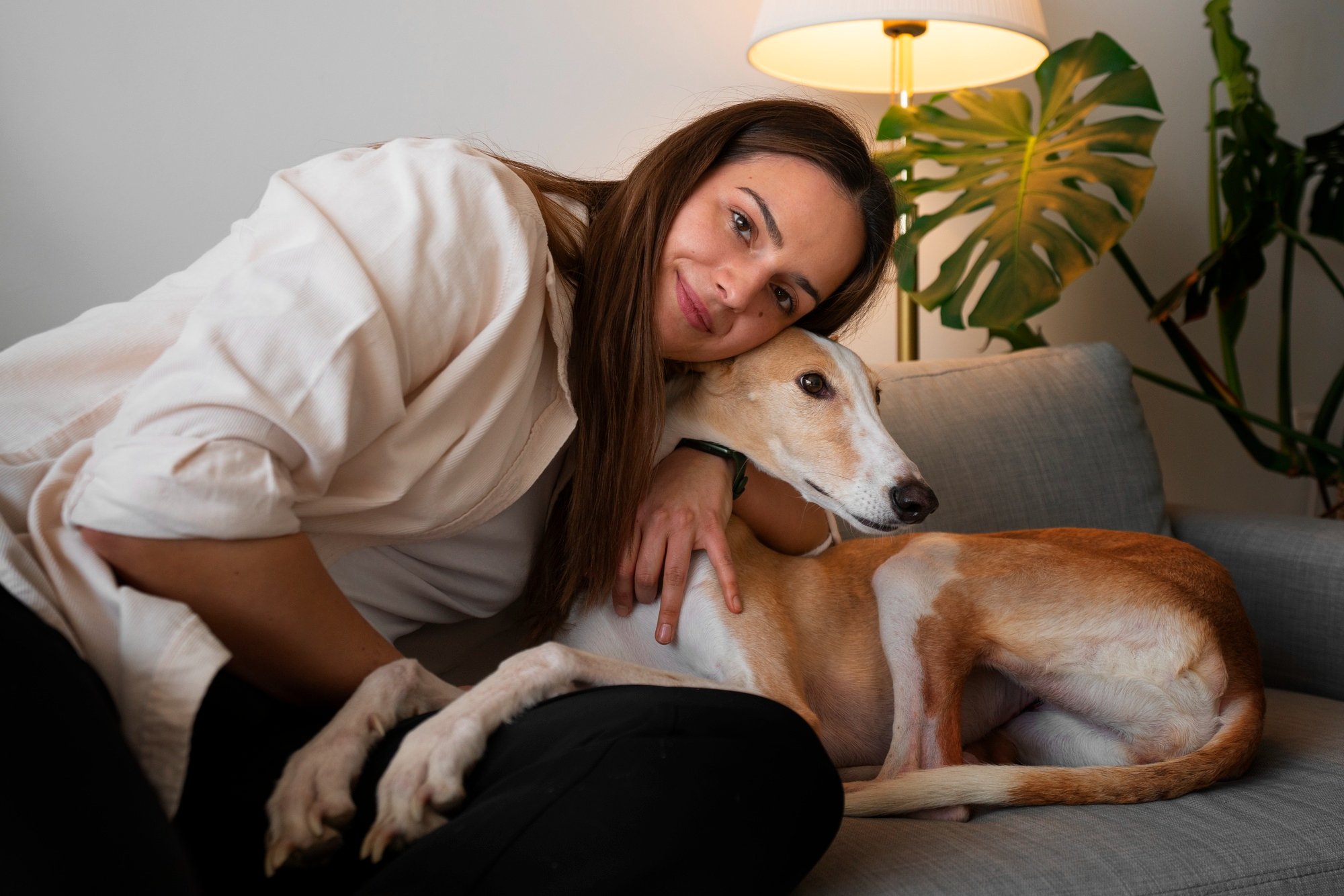
He had known it because I had known Bear since he was eight weeks old, a fat serious puppy who had followed me around Ryan’s old flat with a gravity that I found moving. Bear is twelve now and he has a slow back end and two kinds of tablets at different times and he will settle into my legs on the sofa with a weight that is very specific to old dogs, a deliberate anchoring.
Ryan had known I would stay for Bear.
So I had stayed.
And I had done the thing properly, because I do things properly whether or not the situation deserves it, which is something I am still working out whether to continue or to stop.
The invoice in the envelope.
I had been a contracts administrator for six years. This is a job that sounds less interesting than it is, and the most interesting part of it is rates. The rate for any piece of work is a conversation about what the time and expertise and physical effort of a person are worth in a given context, and the conversation is always more complicated than the number, and the number is always more contested than it first appears.
I had sat at Ryan’s kitchen table and I had made a list.
The list began with Bear’s medication.
Bear took 5mg of Prednisolone twice daily and 100mg of Tramadol twice daily. I had been given the bottles and the schedule in a note that Steph had left on the counter, hand-written on the back of a shopping receipt, which told me the medication schedule had been remembered at the last moment. The medications had to be given with food. The first morning, Bear had refused the food with the tablets in it, then accepted it when I sat beside him on the floor and put the bowl between my knees. He had done this every morning for ten days. Eleven minutes on the floor per morning, twice daily, twenty two minutes per day across ten days: three hours and forty minutes of administration support.
I had used a rate of £12 an hour for this, which is what a registered veterinary nurse charges for basic care administration in our area. I had found this figure on the website of a pet care service that Bear had been with before his mobility declined.
The invoice listed it as:
Medication administration – specialist care, twice daily, with physical positioning support for reluctant patient: £44.
Next was walking.
Two dogs, four walks per day, average forty minutes each walk, accounting for Bear’s pace which required the second walk of each pair to be taken separately because Bear could not keep Nell’s pace and Nell could not sustain Bear’s slowness. I had walked them separately from day three when I understood this. Forty minutes times four, adjusted for the Bear split which added twenty minutes per day: two hours and forty minutes of walking per day across ten days. At the rate charged by the local dog walker whose number Ryan had left on the counter, presumably as a backup, which was £15 per hour, this came to:
Walking services, ten days, Bear and Nell separately from day three per behavioral assessment: £400.
Then administration of the house.
The laminated list had charged me for electricity, laundry, and hot water. I had used Ryan’s utilities to wash his sheets, his towels, to shower. I accepted this accounting, in principle. The envelope also contained an accounting of the utilities I had used in service of the dogs and the house.
Two washing machine loads of dog bedding: Ryan’s rate of £2 per load for laundry.
Vacuuming the house twice including furniture to remove dog hair: £25, which is the going rate for a cleaner in our area for a four-bed house, which I had also found online.
Mopping the kitchen floor, which Nell had tracked mud across on day six: £10.
Cleaning the bathrooms, changing the bedding in the spare room where I slept, wiping all surfaces in the kitchen: I did not charge for these. They were the normal cost of living in someone’s house and I accepted that argument because it was the one Ryan had made and I was applying his logic consistently.
Emergency call.
On day four, Bear had vomited twice in the morning and then been lethargic in a way that felt different from his ordinary old-dog slowness. I had called the vet, held on for seventeen minutes while they checked him, described his symptoms and medications, and been advised to withhold food for four hours and monitor. He recovered by afternoon. I had not bothered Ryan and Steph with this because there was nothing they could do from Portugal and because the situation resolved. I had sat beside Bear on the floor for most of that morning.
I listed this as:
Veterinary consultation, telephone, day four: £0. Bear’s care and monitoring: £35, being three hours at the standard care rate.
On the back page, I had written a note.
I had spent time on the note.
It said:
Ryan,
I have itemized what I consider to be a fair accounting of the services provided during ten days of dog-sitting. I have used third-party market rates wherever possible so that the pricing is not personal but reflects what the work would cost in the open market.
I want to be direct about something, because I think we are getting into a pattern in this family where things that should be said are not said, and things that should not be said are dressed up as things that should.
You said you were saving £600 by not kennelling Bear and Nell. I don’t know what you mean by fair, because I didn’t charge you £600. The invoice total is £514. That is less than market rate. I have left out charges I could have included. I did not charge for being forty minutes in the wrong direction from work for ten days, because petrol and time are hard to quantify and I chose not to.
I did all of this because I love Bear, and because Bear is old, and because a kennel at twelve with his mobility would have been miserable for him and you knew it and you knew I knew it.
I don’t want the £514.
I want you to understand that when you say “just keep a running total,” you’re asking me to do the accounting on a transaction that you’ve already decided the terms of, in a house I was helping you with, with a laminated list.
If you had said: Katie, I know you’re in a hard patch, I want to make sure you’re comfortable, here’s some money toward your food while you stay—I would have said no but I would have felt the gesture. That’s what the list could have been, if it had been a gesture.
It wasn’t a gesture. It was a system.
The difference matters to me.
The invoice stands. Pay it or don’t. But have it, so you have some sense of what this week was worth.
Bear is very well. He’s been walking slowly but without obvious pain. Nell has started coming into the kitchen if the floor mat is down; I put it down every meal time and she’s been eating normally. I think she’s been anxious with you away and is settling back into routine. You should watch that.
I’ve left the dogs fed and the house clean.
Katie
The invoice total was £514.30.
The 30p was for what I had actually consumed from his fridge and cupboards over ten days: four coffees, because I mostly brought my own, three slices of bread, no eggs (I’d bought my own eggs and taken them with me), a third of a pint of milk.
I had added the 30p to show him I had used his list. That I had actually tracked it. That I had not, as he expected, let the laminated sheet perform its function and then been quietly embarrassed out of mentioning it.
I had tracked it. I had turned it into a column on a spreadsheet. The 30p was on a separate line at the bottom, and the line was formatted in the same style as every other line.
He rang at 5:41.
I had arrived at Jess’s by then and I was sitting in her kitchen with the coat still on and a mug of tea I hadn’t started.
I answered.
There was a pause.
“Right,” he said. “Right.”
This is Ryan when he doesn’t have a line ready.
“You actually invoiced me.”
“You gave me a laminated list,” I said.
“That’s not— those are different things.”
“Are they?”
Another pause.
“Katie. I’m not going to pay you five hundred and fourteen pounds to watch my dogs.”
“You don’t have to,” I said. “I said that in the note.”
“You said it but you put a total on it.”
“Because the total is what the work is worth,” I said. “Not what you’re required to pay me. What it’s worth.”
He breathed. Steph was in the background, quieter than I expected.
“I could’ve got a dog walker for a lot less than five hundred quid,” he said. “I’m just pointing that out.”
“You could have,” I said. “A dog walker wouldn’t have done Bear’s medication. Bear needs someone he knows for the medication. You knew that. That’s why you called me.”
“You’re being incredibly—”
“I’m being clear,” I said. “You taught me how. You set up a system where we’d keep a running total and settle up. I settled up.”
“I wasn’t asking you to invoice me.”
“You gave me a laminated price list.”
There was a long silence.
“She’s given me a full invoice,” he said, not to me, to Steph. There was a quality to his voice that I couldn’t entirely read, somewhere between exasperated and something else.
Steph said something I couldn’t hear.
“Steph says—” he started.
“I can ring Steph separately,” I said. “That’s between you two. I wanted you to have it. Like I said. Pay it or don’t. But have it.”
“That note was a bit—”
“Probably,” I said.
“You didn’t have to go into all that about the gesture.”
“Maybe not,” I said. “But I meant it.”
He was quiet again.
“Bear’s all right?”
“Bear’s all right,” I said. “He was good company.”
“Okay.” A pause. “I’ll— yeah. Okay.”
He rang off.
I took off my coat.
I drank my tea.
Jess had been very carefully doing things in the other room during the call, which is one of her qualities I find most useful in a friend. She came back in when she heard me put the phone on the table.
“How was it?”
“He didn’t shout,” I said. “So that’s something.”
“Did you think he would?”
“Maybe,” I said. “He usually deflects instead. He was deflecting.”
“The you-taught-me-how line was very good,” Jess said. She had helped me draft the note. I had not told her I was going to use that line because I had not known I was going to use it until it came out.
“I think it landed,” I said.
I did not hear from Ryan again that evening.
The next day, a Sunday, Mum rang.
I should have known this would happen.
In my family, the information runs from Ryan to Mum in approximately the time it takes Ryan to find a moment when Steph isn’t in the same room. I don’t know why he does this. I think it’s because Mum’s response to Ryan’s problems has always been to be on Ryan’s side of them, which is a position that gives Ryan something he finds useful: external validation that the person disagreeing with him is being unreasonable.
“Katie.” Her opening when she rings me with a mission. Not a question.
“Hi Mum.”
“Your brother’s quite upset.”
“Ryan’s upset because I invoiced him for ten days of dog-sitting,” I said. “At market rate, which came to less than the kennel would have cost.”
“He says you wrote him a letter.”
“I did. There was a note with the invoice.”
“About gestures.” A pause. “He found that hurtful.”
“Good,” I said. “Not that he’s hurt. But that he read it.”
“Katie—”
“Mum. He gave me a laminated list. He charged me sixty pence for a cup of coffee. In his house where I was watching his elderly dog. He laminated it.”
A pause.
“It was just to keep things even,” she said.
“Even,” I said.
“Well, yes. He said—”
“Mum. He called me at the departure gate and laughed at me for objecting. When I was holding the laminated list. Standing in his house.”
She did not say anything.
“Has he told you about the list?”
“He mentioned that he’d—”
“Has he shown you the list?”
A silence.
“No,” she said.
“He laminated it,” I said again. “Sixty pence for a coffee. Thirty pence for milk. Two pounds a wash.”
There was a longer silence this time.
“Well,” she said, and the word had a different weight than it had at the start of the conversation.
“I don’t want the money,” I said. “I said that in the note. I want him to understand what the work was worth. And I want to not be charged for a cup of coffee in the house I’m watching for free.”
She breathed.
“You should talk to him,” she said. But she said it differently than she had intended to at the start of the call. Less like instruction, more like what she said when she didn’t have a better option.
“I rang him at the gate,” I said. “He laughed.”
She was quiet.
“I’ll have a word with him,” she said. This was a different phrase from the one she had started with. This was Mum shifting the focus of the intervention.
“Thank you,” I said.
We talked about other things for a few minutes, the way we do when the thing we were actually talking about has come to a point where neither of us wants to push it further. Then she rang off and I sat for a while and thought about the conversation.
The thing about Mum is that she is not a bad person, and the thing about Ryan is that he is not a bad person, and these two facts make the specific pattern they have created together harder to talk about than it would be if one of them were simply awful.
They are not awful.
They are a particular shape.
Ryan is younger than me by three years and was the youngest of three until our brother Paul moved to Canada and thereby, somewhat accidentally, ceased to be actively part of the family’s daily negotiation of who owes what to whom. Ryan had been the baby in a specific way: not spoiled, exactly, not indulged, but the one whose needs got described as smaller than they were when he was struggling and larger than they were when he needed something done. He was good company, Ryan. He was funny in the way of people who have learned to defuse things with comedy, and he was generous in the large ways that people notice, the birthday dinners and the lifts and the rounds bought without being asked. He was less good at the small ways, the ones that don’t get noticed and don’t get tallied, the favors that come in ten-day increments and that look like staying rent-free in a four-bed.
The laminated list was Ryan thinking he was being fair.
He genuinely thought it was fair.
That was the part I kept returning to. Not the anger of someone who knows they’re being unreasonable and doesn’t care. The confidence of someone who had thought this through and arrived at a system and was genuinely puzzled that I was doing the thing.
He thought the list was the fair version of things.
The note in the envelope was, in part, an attempt to show him what the list looked like from where I was standing. Not from the list’s own logic, which was internally consistent, but from the position of someone who had agreed to something and then been handed a bill for the living expenses incurred while doing it.
Monday Ryan texted.
The text said: I had a look at the invoice. The rate you used for the walks is what they charge for two walks a day, not four.
He was right. I had not noticed this. I had used the dog walker’s standard daily rate rather than checking whether it scaled.
I looked it up.
He was correct. Four walks a day was fifty percent more than the standard daily rate.
I sent back: You’re right. The corrected total would be £681.50.
A pause.
He sent back: I’m not paying you six hundred and eighty quid.
I sent: I know.
He sent: You didn’t have to correct it.
I sent: Yes I did. You pointed out a genuine error. I’m not going to win an argument about what’s fair by doing the maths wrong.
Longer pause.
Then: The note was a bit much.
I sent: Probably.
He sent: Steph thinks I should’ve asked what you needed when I rang you. Instead of making it about the house.
I sent: Steph’s right.
He sent: I know.
A pause.
He sent: We’ve got good olive oil from Portugal. If you come for dinner I’ll cook.
I thought about this.
I sent: When?
He sent: Saturday? Steph’ll make her thing with the peppers.
I sent: I’ll come for Bear.
He sent back the eye-roll emoji, which is a different thing from the smiley face at the bottom of the laminated list. The eye-roll meant he knew he was being ribbed and he was accepting it.
I sent him the lamb emoji. Because Bear is very old and round and looks, from behind, like a lamb.
He sent back the laughing face.
That was the conversation.
I went to dinner on Saturday.
The olive oil was good. Steph’s peppers were good. Bear met me at the door, or as near to the door as he could manage at his pace, and he pushed his head against my knee the way he did when he was glad to see someone.
I sat on the floor with him for a while before dinner, the way I had in the mornings over the ten days, and he lay against my leg with the weight of an old dog who knows exactly where he wants to be and is in that place.
Ryan was in the kitchen, talking too loudly, which is what Ryan does when he is in a situation that has had a conversation attached to it and has not yet had the conversation’s air cleared. He was doing the thing with the olive oil, and it smelled good, and Steph was at the island with a glass of wine and her quality of lateral attention to a situation.
She came and sat on the floor near me, not near Bear because Nell had appointed herself near Bear’s other side.
“He was up until two last night looking at the dog walker’s website,” Steph said. “Convinced you’d got the rate wrong.”
“I had got the rate wrong,” I said. “He was right.”
“He was so sure you’d done it to make him wrong that he stayed up to find the right number.”
“Did he find it?”
“Yes,” she said. “And then he sat there for about twenty minutes.”
I looked at Bear.
“He didn’t mean it the way it landed,” Steph said. “The list. He had this idea in his head about being systematic and fair and he’d laminated it before I’d seen it.”
“You didn’t know about the list?” I said.
“I knew he was making one,” she said. “I didn’t know about the laminating.”
I thought about Ryan, alone with a laminator.
“What did you say when you saw the invoice?”
She picked up her wine glass. “I said I thought it was a fair response to a laminated price list.”
“Thank you,” I said.
“I also said the note was a bit much.”
“Everyone keeps saying that.”
“The gesture line,” she said. “It was true. It was also going to make him defensive.”
“I know,” I said. “I knew that when I wrote it. I decided it was worth it.”
“Was it?”
I thought about it.
“I think so,” I said. “He’s been doing a version of this since we were kids. The thing where the terms of an exchange get set before anyone’s agreed to them. And I’ve been going along with it because he’s my brother and I love him and it’s easier.”
“The rent thing,” Steph said.
The rent thing was from two years ago, when I had been between flats briefly and Ryan had suggested I stay with them for a month, and there had been a month, and then it had started to become something that was being talked about in terms of monthly contributions to utilities, which I had given, and then in terms of how long I was planning to stay, which I had not established, and I had left for a friend’s floor after week seven because the atmosphere had become something I couldn’t name but could feel.
“The rent thing,” I said.
“He felt terrible afterward,” Steph said. “He just has this— he genuinely believes that even accounting is kind.”
“I know,” I said. “That’s the thing. He believes it.”
“The list was love,” she said. “Misshapen love. He wanted you to feel like you weren’t a burden. So he made you a list.”
I sat with this.
“He made me feel like a lodger,” I said.
“I know,” she said. “And that was wrong. He knows that now. He just can’t quite say it directly.”
“Neither can I,” I said.
She smiled.
“Hence the invoice,” she said.
“Hence the invoice,” I said.
Bear breathed against my knee. Nell had gone to sleep against him, her nose on his side.
Ryan called from the kitchen that it was ten minutes.
I got up off the floor.
I washed my hands at the sink while Ryan was at the hob.
“Good olive oil,” I said.
“I got it from this place near the market,” he said. “They had about forty kinds.”
“How’d you pick?”
“Steph told me which one.”
“Wise.”
He was quiet for a moment, doing things with the pan.
“For what it’s worth,” he said, “if I’d known it was going to cost six hundred quid I’d have split it with you. Kennel costs aside. The full thing.”
This was not an apology.
It was Ryan moving toward something through the available route, which was numbers.
“I know,” I said.
“I still think the system was fair.”
“I know you do,” I said.
“But I think the conversation I should’ve had was— what do you actually need. Not what’s the daily rate for a cup of coffee.”
“The conversation you should’ve had was: how are you, what do you need, and can you help me with the dogs.”
“Yeah,” he said. “That.”
“Instead of calling me at the departure gate after you’d already set up the laminated system.”
“Yeah,” he said again. “That too.”
He moved the pan.
“The lamb emoji,” he said.
“Bear does look like a lamb.”
“From behind,” Ryan said, and laughed, and the laugh was not the one from the departure gate. This was a real one.
“From behind,” I agreed.
Dinner was good.
The peppers were very good.
Bear slept between my chair and Ryan’s chair and occasionally one of us would reach down without planning to and put a hand on him.
On the drive home, Jess asked how it went.
“Good,” I said. “Not resolved. But good.”
“Did he apologize?”
“In Ryan,” I said. “Sort of.”
“What does that mean?”
“He told me if he’d known the full cost he’d have split it. That’s Ryan for I understand now that I handled this wrong.”
“And that’s enough?”
I thought about it.
“It’s a start,” I said. “He has to sit with the invoice for a while. He’ll keep thinking about it. He went back to the dog walker’s website at two in the morning to check my maths. He cares. He just cares in the wrong direction sometimes.”
“And you’ll keep going to dinner.”
“I’ll keep going to dinner,” I said. “For Steph. For the peppers. And because Bear is twelve years old and doesn’t have an enormous amount of dinners left, and I want to be at as many of them as he’ll let me sit on the floor for.”
Jess said that was a good reason.
I think it is.
I have not asked Ryan to pay the invoice.
The invoice stands. It was printed. It has a total. The total is accurate.
I have not asked him to pay it.
The invoice is not about money.
The invoice is a document.
It says: this is what the work was worth, and I know what the work was worth, and I want you to know what the work was worth, and I am not going to let a laminated list teach you that I don’t know.
Ryan has the invoice in his house.
Whether it’s in a drawer or on the island or in the recycling by now, I don’t know.
But it exists. It’s been seen.
The work was worth £681.50, corrected for rate.
I would have done it for nothing, for Bear.
That’s not the same thing as it being worth nothing.
I know the difference.
I was hoping, in the end, that the envelope taught Ryan the difference too.
I think, on Saturday, watching him move the pan and say in Ryan that the conversation should’ve been different, I think he is starting to.
That’s enough.
It’s a start.
Bear put his head in my lap on the way out, because that’s what Bear does with people he knows and trusts, and I stood in their hallway for a moment with my coat half on and his chin very heavy on my forearm.
He’s twelve.
He’s a very good dog.
He deserves people who show up for him, and I will keep showing up, laminated list or no laminated list, because that’s what he’s owed.
I put my coat on and went home.
The invoice is filed.
The account, in the human sense, is still open.
But things, between Ryan and me, are moving.
That’s enough for now.
That has to be enough.
I want to tell you a few more things that happened after Saturday dinner, because the story does not end with the olive oil and the peppers and Bear’s chin on my forearm.
The first thing was a message from Paul.
Paul is in Vancouver and has been there for nine years, and our family’s communication with him is sporadic in the way of families who are fond of each other but have not built the infrastructure of regular contact. He rings at Christmas and on birthdays and occasionally when something has happened that has filtered through to him through Mum or through his wife Sophie, who maintains better contact than Paul does.
He sent a voice message, which is how Paul communicates when he has something to say that is longer than a text but shorter than a phone call.
He said: “So Mum rang me. She does this thing where she tells me something as an update and it’s actually her processing something by saying it out loud. She told me about the dog-sitting thing and I just wanted to say— mate. Well done. Genuinely. The invoice is very you and very correct.”
Then a pause.
“Also Ryan’s been doing that thing our whole lives. I feel like I should have said something about it earlier. I just want to say that.”
Another pause.
“Anyway. Sophie says hi. Bear sounds like he’s doing all right. Love you.”
I played the message twice.
Paul was six years older than me, which made him nine years older than Ryan, and he had left for Canada when Ryan was twenty and I was twenty three and we were both still young enough that the patterns of the family felt like the texture of the world rather than specific choices that specific people had made. His removal had not shaken the patterns, because the patterns were already set, but his distance had meant that when I was inside the patterns, Paul was not there to see them.
He had seen them from the outside, across nine years, in the things Mum had processed out loud and the things Ryan had said in passing.
He had not said anything.
He knew that.
The voice message was Paul saying something about it now that there was something to say it about.
I sent back: Thank you for saying that.
He sent a thumbs up and a dog emoji.
The second thing was a conversation with Jess, who had not been involved in anything since the Saturday debrief but who had been thinking.
She is my oldest friend, Jess, and she has known my family since we were eleven years old, and her perspective on the Ryans of the world is shaped by twenty years of watching me navigate this specific one. She is also the person I was staying with, which gave her some stake in the question of how the situation with Ryan affected my housing situation.
We were in the kitchen one evening, a week after the dinner.
“Has he paid it?” she said.
“No,” I said.
“Do you want him to?”
I thought about this.
“Not really,” I said. “I want him to understand it. I want him to sit with the number and know that’s what the ten days was worth.”
“And then what? When he understands it?”
“Then we’re in a better position,” I said.
“For what?”
“For the next time he needs something,” I said. “Because there will be a next time. There’s always a next time with Ryan. And when he rings about the next thing, I want to be talking to someone who’s seen the invoice and knows what the thing is worth.”
Jess looked at me.
“Is that sustainable?” she said. “Having a brother where every favour comes with an internal invoice?”
This was a fair question.
“No,” I said. “Probably not. But it’s more sustainable than having a brother where every favour comes with an external laminated list that I’m expected to pay and not react to.”
“Middle ground,” she said.
“There’s always a middle ground in families,” I said. “You just have to find the spot where everyone’s uncomfortable in a bearable way.”
She laughed.
“How’s the flat hunt?” she said.
“Slow,” I said. “But moving.”
“Take your time,” she said.
I was not taking Ryan’s help with the flat hunt. I had decided this while I was at his kitchen table on the Thursday evening, looking at the spreadsheet, thinking about systems. Ryan had offered, when we first talked in March, to put some money toward my deposit if the right place came up. He had offered in the way he offered things: genuinely and generously and without the precise terms attached.
I had decided to not take the offer.
Not because I was angry with him. Because I had learned something about how Ryan’s generosity worked, and what it meant to receive a gift from someone who would later have thoughts about what the gift had entitled them to, and I wanted the next place I lived to be straightforwardly mine.
I found a flat in November.
One bedroom, second floor, good light in the mornings. The kitchen was small but it had enough counter. The lease was straightforward.
I signed it myself.
I sent Ryan a picture of the view from the window.
He sent back: proper nice. When are you in?
I sent: December 1st.
He sent: I’ve got a van I can borrow.
I thought about this.
I sent: That would be good, thank you.
He sent: I’ll bring Steph. She’s stronger than she looks.
We moved me in on a Saturday in December. Ryan and Steph and Jess and a man from Jess’s office who owed her a favour. It took four hours and Ryan made two trips and didn’t charge me for the petrol.
He didn’t charge me for the petrol.
I noted this internally and I noted that I was noting it, which told me something about where I was in the process of recalibrating what Ryan and I were to each other.
In the new kitchen, small but with good counter, I made everyone tea and we sat on boxes because the chairs were not unpacked and it was one of those afternoons that is too tired and too satisfied to be anything other than exactly what it is: four people in a new flat that smells of fresh paint and old carpet, drinking tea out of mugs wrapped in newspaper.
Ryan looked at the view.
“It’s a good flat,” he said.
“I know,” I said.
“The light’s better than ours.”
“The light’s much better than yours,” I said.
“God, yeah.” He drank his tea. “You did this yourself.”
“I did.”
“The deposit and everything.”
“Yes.”
He was quiet for a moment.
“You could’ve let me help,” he said.
“I know,” I said.
“Why didn’t you?”
I looked at him.
“Because I wanted to be sure the flat was mine,” I said. “Cleanly. Without anything attached.”
He looked at his tea.
“I get that,” he said. “I think.”
“You do,” I said. “You just spent a week googling the dog walker’s website at two in the morning. You think about what things cost.”
“Not the same thing,” he said.
“Close enough,” I said.
He was quiet again.
“I’ve been thinking about the invoice,” he said.
“I know,” I said.
“Not about paying it,” he said quickly.
“I know,” I said.
“About the thing you said in the note. About gestures.” He drank his tea. “I think I wanted to make it a system so it felt fair. But the thing that would’ve been fair was just— asking you properly.”
“Yes,” I said.
“And the call at the gate was—”
“Yes,” I said.
“Yeah.” He put the mug down on a box. “I’m not good at asking for things in a way that makes the other person feel like they can say no.”
This was the truest thing Ryan had said about himself in all the years I had known him as an adult.
“No,” I said. “You’re not.”
“Mum’s the same,” he said.
“I know.”
“We set things up so they’re already decided and then ask.”
“I know.”
He looked at his hands.
“I’m going to try to do that differently,” he said.
“Good,” I said.
“I probably won’t manage it all the time.”
“Nobody does,” I said.
Steph appeared from the other room where she and Jess had been unpacking books.
“Are you two having a moment?” she said.
“We’re having a moment,” Ryan said.
“You should have the moment faster, there’s about sixty boxes of books that need a system.”
Ryan stood up.
“She’s going to have a system for the books,” he said to me.
“She’s always had a system for the books,” I said.
“It’s a good system,” Steph said. “Stop saying it like it’s a character flaw.”
We unpacked the books.
The system was fine.
Bear came for Christmas.
Ryan and Steph came to me this year, which meant Bear and Nell came with them, and it was the first Christmas I had hosted in four years and the first one in the new flat, and I had the table set for five and the kitchen, small but good counter, had a turkey that was the right size and the specific smell of a Christmas kitchen that I had missed.
Bear lay under the table.
He is slow but he is content. His back end is worse than it was in the summer but the vet says the pain is managed. Ryan had taken him for a check-up in October and had sent me the report, which I had not expected. The report showed the medication working, the mobility declining, the quality of life assessment good. Ryan had written underneath: Bear sends his love.
I had not replied to that message for a day because it had hit me somewhere quiet.
Then I had sent the lamb emoji.
Then the heart emoji.
At Christmas dinner, Ryan poured the wine without being asked, which is one of his large-way generosities that still functions consistently. He told a story about Portugal that was longer than it needed to be but funnier at the end than I’d expected. Steph raised her glass and said something that was essentially a toast to new starts without calling it that, and we drank.
Bear slept under the table.
After pudding, Ryan was quiet for a moment and then said, without preamble, in the way of someone who has been constructing a sentence for several weeks: “I put fifty quid behind the bar at the restaurant for your birthday next month. Steph’s already booked it. I know it’s not six hundred and eighty quid.”
I looked at him.
“It’s not nothing,” he said.
“It’s not nothing,” I said.
“It was the right amount for me to put in,” he said. “Without it being— I don’t know. Without it being about the invoice.”
“Right,” I said.
“The invoice thing,” he said. “I’ve been thinking about it. You said you didn’t want the money. You wanted me to understand what it was worth.”
“Yes,” I said.
“I think I do,” he said. “Understand. A bit better.”
Bear lifted his head from under the table and rested his chin on Ryan’s knee.
Ryan put his hand on Bear’s head.
“He does that,” I said.
“He’s always done that,” Ryan said.
“With people he trusts,” I said.
Ryan looked at Bear.
“Yeah,” he said.
We did the washing up together, Ryan and I, in the small kitchen with the good counter and the light that was better than theirs.
He washed.
I dried.
Neither of us talked about the invoice again.
The invoice is filed.
It is accurate.
It says what the ten days was worth.
I know what it was worth.
That is the whole of it, in the end.
Not the payment.
The knowing.
Bear trusts me.
I trust Bear.
Ryan is getting there.
So am I.
That is enough.
For now, that is everything.
One last thing.
In January, the month after Christmas, Ryan texted on a Thursday.
He said: Bear’s okay. Wanted you to know.
I had not known he was not okay.
I sent back: What happened?
He sent: He had a rough couple of days. Wouldn’t eat. We thought it might be time to talk to the vet about next steps.
I sat with this for a moment.
I sent: And now?
He sent: He ate this morning. Slowly. Steph sat with him. He ate.
I sat with that for a longer moment.
I sent: Tell me when you need me.
He sent: Will do.
Then, after a pause: Thanks for the ten days in the summer. I mean it. He was with someone he knew.
I sat with that for the longest moment.
I sent: He’s a very good dog.
Ryan sent the lamb emoji.
I sent the heart.
That was the conversation.
The invoice exists.
Bear ate this morning.
Steph sat with him.
That is what family is, in the end.
Not the laminated list.
Not the invoice.
The sitting with someone while they eat.
The knowing who the person is that needs to be there.
The being that person.
I am that person.
I have always been that person.
Ryan is starting to know it.
That is the whole of it.
That is everything.
Bear ate.
That is enough.
I need to tell you about the corrected invoice.
On a Wednesday in February, a bank transfer arrived for sixty eight pounds.
Not six hundred and eighty one.
Not five hundred and fourteen.
Sixty eight.
I looked at the reference.
It said: 10% settlement, with interest (Portugal olive oil).
I sat with this for a minute.
Then I laughed.
It was a real laugh. The kind that doesn’t require an audience.
Ryan, at two in the morning at his kitchen table, had divided the invoice by ten and added an olive oil surcharge.
I sent him a message.
I said: This is not how settlement works.
He said: Yes it is. I looked it up.
I said: You absolutely did not look it up.
He said: I looked up olive oil. It was good, right?
I said: The olive oil was very good.
He said: Then we’re square.
We are not square.
The invoice still stands.
The full corrected total is £681.50.
Ryan knows this.
He has sixty eight pounds of it.
He will probably do another ten percent at some point, with a different reference in the payment.
Possibly something about Bear.
Probably the lamb emoji.
This is not resolution in any tidy sense.
It is Ryan, in his specific language, saying: I know. I see it. I’m working on it.
In Ryan, that is quite a lot.
In me, that is enough.
The bank transfer is in my account.
Bear is eating.
The flat has good light.
The invoice is filed.
Things, between Ryan and me, are better than they were.
Not fixed.
Better.
That is the whole of it.
That has to be.
That is enough.
I want to say one more thing about the laminated list, and then I am done.
The laminated list was, in Ryan’s mind, a kindness.
I have said this already but I want to say it more specifically because I think it matters.
Ryan’s version of the summer was: Katie needs somewhere to stay. I’m offering her a four-bed house and a chance to be useful, which she’ll prefer to being purely a burden. I’ll set up a system so she doesn’t feel like a charity case. I’ll laminate it so it’s clear and official and she knows exactly where she stands.
He had put thought into it.
He had put thought into the wrong thing.
What I needed was not a system.
What I needed was someone to say: how are you, actually, not as a preamble to what I need from you, but as the whole of the conversation. How are you finding it. What do you need. Is this okay.
These questions have never cost anything.
They cost less than laminator film.
What Ryan gave me instead was organization where I needed acknowledgment, and precision where I needed warmth, and a smiley face where I needed to not be handed a bill.
The invoice said: I see what you gave me. I have measured it. I know it was real.
The sixty eight pounds said: I know I was wrong. I am going to pay for it in installments in my own language.
The lamb emoji said: I know you love him.
These are all the same conversation.
They are the conversation Ryan and I have been trying to have for thirty some years in the language available to us at each point, which has never been entirely adequate and which is getting, slowly and imperfectly, closer to what we actually need it to be.
Bear is twelve years old.
He is heavy and slow and he still pushes his head against the knee of the person he loves.
He doesn’t have much time left.
I want to spend it not arguing about the invoice.
I want to spend it on the floor, with his chin on my leg, in a room that smells of dogs and olive oil and a family that is trying.
The laminated list is somewhere in Ryan’s house.
I hope he kept it.
I hope, someday, he looks at it and sees the whole thing.
What he was trying to do.
What it cost me.
How far apart those two things were.
How close we have gotten to closing the gap.
Not all the way.
But closer.
Always closer.
That is the whole of it.
That is everything.
That is enough.
Bear ate this morning.
That is the news.
That is the whole news.
Everything else follows.
I sat on the floor with him this morning, before work, because Ryan sent me a picture of him in the garden and I wanted to be there, so I was there in the only way I could be.
I sat on the floor of my new flat with the good morning light and thought about Bear in the garden and felt the specific weight of an old dog in a space I could not reach.
It was enough.
It is always enough to love something from where you are.
Ryan knows that.
I know that.
We are learning to say it.
That is the whole of the whole of it.

Sophia Rivers is an experienced News Content Editor with a sharp eye for detail and a passion for delivering accurate and engaging news stories. At TheArchivists, she specializes in curating, editing, and presenting news content that informs and resonates with a global audience.
Sophia holds a degree in Journalism from the University of Toronto, where she developed her skills in news reporting, media ethics, and digital journalism. Her expertise lies in identifying key stories, crafting compelling narratives, and ensuring journalistic integrity in every piece she edits.
Known for her precision and dedication to the truth, Sophia thrives in the fast-paced world of news editing. At TheArchivists, she focuses on producing high-quality news content that keeps readers informed while maintaining a balanced and insightful perspective.
With a commitment to delivering impactful journalism, Sophia is passionate about bringing clarity to complex issues and amplifying voices that matter. Her work reflects her belief in the power of news to shape conversations and inspire change.