The house felt too big after Richard died.
Two months had passed, and I still could not get used to the size of the silence. I still reached for his coffee mug every morning out of pure habit, my hand going to the second shelf before my brain caught up and reminded me there was no one to pour a second cup for. The mug sat there where I always kept it, blue with a chip on the handle, and every morning I looked at it and set it back and made coffee for one.
I had married Richard at twenty-two. I had never lived alone in my life, not once. I went from my father’s house to my husband’s house without a single day in between where I was answerable only to myself, and so at sixty-two I was learning solitude the way a child learns to swim after being thrown in, all panic and flailing. The nights were the worst of it. The house made sounds I had never noticed when he was in it, the furnace ticking, the ice maker dropping cubes, the settling of old wood, and I lay awake cataloging each one, aware for the first time in four decades that if something went wrong in the night there was no one to handle it but me.
But the worst part of losing Richard, I came to understand in those first weeks, was not the grief. Grief I had expected. Grief was the price of forty years, and I would have paid it gladly. No, the worst part of losing Richard was the way his death slowly exposed, one small humiliation at a time, everything I could not do without him.
I could not buy my own groceries. I could not visit his grave. I could not drive myself the six blocks to the pharmacy to pick up my blood pressure medication. I could not get myself to my own cardiology appointments, the ones that mattered now more than ever, at my age, with my heart. For forty years, all of that had been Richard’s job, and he had done it faithfully, and I had told myself, the way you do, that this was simply how our marriage worked, that we each had our lane. He always said my reflexes were too slow for the road. He said, more than once, with the easy certainty of a man who has never once been contradicted, that driving simply was not a woman’s business. And I had never learned, because when the person you love tells you something about yourself every single day for four decades, it stops being an opinion and becomes a fact, as fixed and unquestioned as the color of your own eyes.
So after he was gone, my daughter became my chauffeur. She was patient about it, but she was also a grown woman with a job and a family and a life of her own, and I could see the strain of it settling into her, the way an obligation you love can still wear you down. She would rearrange her workday to take me to the pharmacy. She would leave her own children with a sitter to drive me to a doctor’s appointment across town. She never complained in words, but I saw the tiredness gather at the edges of her, and it shamed me, at sixty-two, to be a task on my own daughter’s calendar.
Mom, she said to me one afternoon, gently, as she pulled out of the pharmacy parking lot with my little white bag of pills in my lap, you can’t keep depending on me for every single errand. It isn’t good for you and honestly it isn’t sustainable for me. I love you. But I’m stretched so thin already.
I know, sweetheart, I said. Your father always handled this part. I never had to think about it.
She sighed and drummed her fingers on the steering wheel at a red light. I don’t get it, she said. Grandma Eleanor has always been so independent. She drives everywhere, she does everything for herself, she’s like that at eighty. Why would Dad, of all people, not want you to be the same way?
Just hearing my mother-in-law’s name spoken aloud in that car made something in my chest go tight. Eleanor has always been strange, I said. It came out more clipped than I intended.
My daughter frowned at the road. That doesn’t sound like Grandma, she said. She’s always been so warm with us.
Maybe with you, I said, looking out the passenger window at the shops going by. But Eleanor never liked me. She thought I wasn’t good enough for her son. She made that very clear, a long time ago.
Huh, my daughter said, and I could hear her turning it over, trying to fit it against the grandmother she knew. But maybe now is a good time to mend some of that. Now that Dad’s gone. Life’s short, Mom. You saw how short.
I shook my head, firm. You were a child, I told her. You didn’t hear the things she said to me. You didn’t sit at that table and feel her looking at you like you were something the cat brought in. I folded my hands in my lap. Your father spent decades keeping the peace between the two of us. He carried that so I wouldn’t have to. I am not going to undo all that careful work of his now that he’s not here to manage it.
She didn’t push it any further, but I could feel her disapproval filling up the car, that particular silence a grown child gives you when they think you’re being stubborn about the wrong thing.
It’s just sad, that’s all, she murmured after a while. Family shouldn’t be this broken. You only get the one.
Some things can’t be fixed, I said. Please. Let’s just get home.
We drove the rest of the way without speaking.
That night I sat alone in my too-quiet kitchen and looked at the wall calendar Richard had always used to keep track of our life. Doctor’s appointments. Oil changes. The dates the property taxes were due, the reminder to call about the homeowners insurance renewal, my own cardiology follow-ups. Every single entry was in his handwriting. Every plan we had ever made, he had made. I turned back through the months and I could not find one thing on that calendar that had been my idea, one appointment I had booked myself, one place I had decided on my own to go.
I kept turning the pages backward, year over year, and it became a kind of terrible inventory. Here was the reminder for the anniversary trip he had planned and booked and driven us to without asking where I might like to go. Here were the notes about the bank, the investment account, the meetings with the financial adviser he had always attended alone because, he said, I would only worry myself over the numbers. I did not know, sitting there, what we owned or what we owed or where any of it was kept. I did not know the passwords. I did not know which drawer held the will. He had handled all of it, every dollar and every mile, and I had let him, and I had called that being taken care of.
And it landed on me, sitting there under the kitchen light, that in sixty-two years of living I had never once made a decision that carried me somewhere under my own power. Not one. I had been driven my whole life, in every sense of the word.
Enough, I whispered to the empty room. I am sixty-two years old, and I have never even driven a car.
The thought terrified me. It genuinely did. But underneath the fear, for the first time in longer than I could remember, something else flickered to life, something I had not felt since I was a young woman, a small stubborn spark that felt almost like anger and almost like hope.
The next morning I put on my walking shoes and set out. The local driving school was two miles away, and I walked every step of it, and with each block I passed I felt something in me lift a little higher, as though I were shedding weight I had not known I was carrying. It was a bright cold morning and I passed people out with their dogs and children on their way to school and I thought, with a small private thrill, that not one of them knew what I was about to do, that this ordinary old woman in her walking shoes was on her way to steal back a piece of her own life.
I’d like to learn to drive, I told the young man at the counter when I finally got there, a little out of breath.
He looked up from his paperwork. Of course, ma’am, he said. His smile was easy and kind. Have you driven before? Just need a refresher?
Never, I said. Not once in my life. My husband always said I couldn’t.
Something flickered across the young man’s face, some flash of understanding he was too polite to name. Well, he said gently. Let’s find out if he was right, shall we.
For the next several weeks, I practiced in secret. I told no one, not my daughter, not my son. I am not entirely sure why I kept it hidden. Part of it was fear of failing in front of them. But part of it, I think now, was that this was the first thing in my whole adult life that was mine alone, and I did not want anyone else’s hands on it, not even loving hands. I did not want to be encouraged or managed or worried over. I did not want anyone asking me, over dinner, how the lessons were going, turning my one private rebellion into a family project. I just wanted to do it, in the quiet, and find out for myself whether I could.
I would tell my daughter I had a hair appointment, or that a friend was picking me up for lunch, and then I would walk to meet the instructor’s car around the corner, feeling like a teenager sneaking out, feeling twenty years younger than I had felt in decades. There was a giddiness to the secrecy that I had not felt since I was young. For the first time in forty years I was doing something no one had approved, no one had scheduled, no one had driven me to. It was the smallest possible act of freedom, a middle-aged woman learning a thing every teenager learns, and it felt enormous.
It was hard at first. I stalled the car over and over at the first few lessons. I gripped the wheel so tightly my knuckles went white and my arms ached afterward. I flinched at every truck that passed. But slowly, lesson by lesson, something shifted in me. The panic drained down. My hands learned what to do. And one afternoon I realized, merging into traffic without a second thought, that I had stopped being afraid.
I paid for the lessons out of a small account I had almost forgotten I had, a little bit of money my own mother had left me decades ago, that Richard had always called my rainy day fund and discouraged me from touching. It felt right, spending my mother’s money on this. She had driven, my mother. She had driven a delivery route during the war, before she married my father, and she used to talk about it sometimes with a light in her eyes I never fully understood until I felt it myself, that afternoon on the road. I thought about her a great deal during those lessons. I thought about how the women in my family had known how to move through the world once, and how somewhere along the line I had let that knowledge be talked out of me.
You’ve got a natural feel for this, my instructor told me one day as I eased us smoothly around a corner. Honestly, better than half the teenagers I teach. You should have done this years ago.
My husband would be shocked to hear that, I said, and I meant it lightly, but it came out with an edge.
Sometimes people are wrong about us, the young man said, watching the road. Even the ones who love us. Especially them, sometimes.
I did not understand, that afternoon, just how right he was. I only nodded and kept driving.
And then, yesterday, at sixty-two years old, I passed my road test on the very first try. The examiner, a stern woman who had not smiled once during the whole ordeal, shook my hand at the end and told me I had done well, and I stood there in the testing center parking lot and cried like a child. For the first time in forty years, I could go anywhere I wanted. Anywhere at all. And there was no one left on this earth who could tell me I couldn’t.
I sat in my instructor’s car afterward, holding the little paper slip that said I had passed, and I could not stop the tears, and the poor young man did not know what to do with a weeping old woman, so he just handed me a napkin from the glovebox and let me cry. It’s a big thing, he said finally. It’s not just a license. I could tell it wasn’t. And it wasn’t. It was forty years lifting off my chest all at once.
I let myself imagine all of it, standing there with my wet face and my new license in my hand. The trips I would finally take. The long drives to nowhere. And most of all, I imagined driving myself, alone, to Richard’s grave, and laying flowers there with my own hands instead of standing helplessly beside a car someone else had driven me in. It surprised me, how much I still wanted to bring him flowers, even then. Grief does not care what you have just learned.
But there was one thing I wanted to do before any of that.
I wanted to sit behind the wheel of Richard’s beloved pickup truck and drive it as my own.
I had no idea, climbing the steps to the garage that morning, that inside that truck a secret had been waiting for me the whole time. A secret that would take everything I believed about the man I had loved for forty years and turn it inside out.
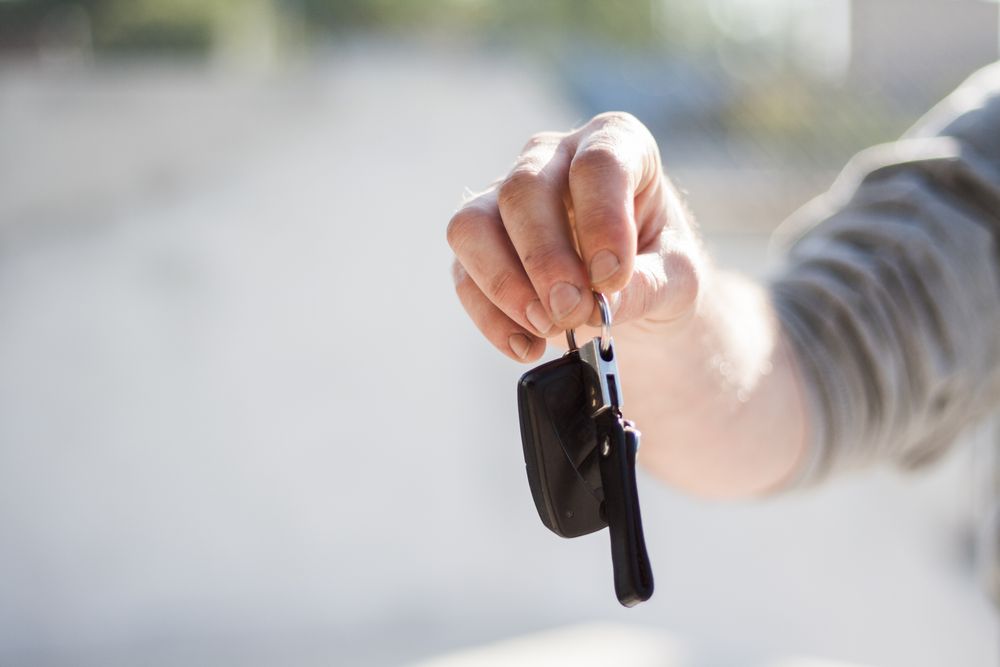
The truck sat gleaming in the garage, exactly as he had left it, untouched since the day he died. Richard had loved that truck in a way I had almost been jealous of. He had washed and polished it every single Sunday, out in the driveway with his bucket and his special cloths, treating it with a tenderness and patience I sometimes wished he would spare a little of for me. Nobody drives this but me, he used to say, dangling the keys just out of my reach with a grin, like it was a joke we both found funny. I had laughed along, every time. Now those keys hung on the hook by the garage door, and they were mine, and no one was left to dangle them.
I climbed up into the driver’s seat, which I had to slide all the way forward, and I breathed in the smell of the cab, leather and old coffee and something underneath that was just him. I put the key in and the engine rumbled to life under my hands, big and powerful, and I sat there feeling the whole heavy machine idling and waiting for me to tell it where to go, and for the first time in my entire life I felt genuinely, completely powerful.
It is hard to explain what that felt like to someone who has always been able to drive. For most people a truck is a truck, a way to get from one place to another, nothing more. For me, sitting in that seat, gripping that wheel, it was the whole of the world suddenly within reach. Every place I had ever been driven to, I could now take myself. Every place I had never been allowed to go, I could now decide to go. The seat that had been forbidden to me for forty years held me now like it had been waiting.
Look at me now, Richard, I whispered to the empty cab.
I ran my fingers over the dashboard, over all the buttons and dials he had never once let me touch. It had been his domain, this cab, as forbidden to me as the driver’s seat itself. I felt almost like I was trespassing. The navigation screen lit up when I tapped it, glowing bright in the dim garage, and there in the corner was a little house icon, labeled simply Home.
I pressed it, expecting our own address to load, expecting to see the familiar route to the house I was sitting behind at that very moment. Instead, the screen filled with an unfamiliar street name in a town about twenty minutes away, a place I had no memory of and no reason to know.
I stared at it, certain the machine had made some kind of error. That’s not our house, I said aloud, absurdly, as though the truck might explain itself to me.
I pressed it again. The same address came up. The little checkered flag, the estimated time, the calm promise of a route. Home. Not my home. Somewhere else entirely.
My hands went cold on the wheel.
Richard had a home that was not our home.
Every terrible possibility crowded into my mind at once, tumbling over one another. Another woman. Another family. A whole other life he had been driving off to in this truck he wouldn’t let me touch, this truck he washed so lovingly every Sunday. I thought of all the hours he had spent away from the house over the years, the errands that took a little too long, the fishing trips I was never invited on, the way he sometimes came home smelling of a coffee I didn’t make. I had never once suspected any of it of being anything. Now, in the space of thirty seconds, forty years of small unremarkable absences rearranged themselves into a pattern I couldn’t stop seeing. None of it fit the man I thought I had known, the man who marked my cardiology appointments on the kitchen calendar in his careful hand. But then, I was beginning to understand, sitting there, that I might not have known him at all.
Curiosity is a strange thing. It can burn hotter than grief. It burned hotter than fear, in that moment, hotter than the part of me that wanted to turn the whole thing off and go back inside and pretend I had never seen it. I sat there in the idling truck and I felt something I had not felt in years, which was the sheer force of my own wanting, the need to know a thing badly enough to go and find it out myself.
I have to know, I said to myself.
And I put the truck in reverse, and I backed carefully out of the garage, and I drove.
I drove slowly, following the calm robotic voice of the navigation, my heart hammering the entire way. The familiar streets of my own town gave way to roads I didn’t recognize. The town changed around me, grew older, the buildings closer together. And then the streets narrowed into a quiet neighborhood of old brick houses with mature trees and small tidy yards, the kind of neighborhood that has been settled for generations.
You have arrived at your destination, the voice announced pleasantly, as if it were the most ordinary thing in the world.
I pulled the big truck to the curb and looked at the house on my left, and for a long moment my brain simply refused to accept what my eyes were reporting to it.
The blue shutters. The rose bushes lining the front walk, heavy with blooms. The porch swing hanging at the far end of the porch, the same swing where I had once sat, forty years ago, as a nervous young bride being looked over by my new husband’s mother. I remembered that swing. I remembered sitting on it that first summer, before everything closed down between us, when Eleanor had brought me lemonade and asked me about my painting and seemed, I had thought at the time, genuinely interested. I had been happy on that porch once, for one afternoon, before the story I would be told for forty years took hold.
No, I breathed. It can’t be.
It was Eleanor’s house. My mother-in-law’s house. The home of the woman Richard had spent forty years teaching me to fear and avoid. The mother-in-law who, according to everything my husband had ever told me, had never respected me, had never thought me good enough, had never truly wanted me in the family at all.
Eleanor and I had stopped speaking nearly forty years ago, back when the marriage was still new and I was still soft enough to be shaped. When Richard took the children to visit her over the years, I had always stayed home. It had simply become the arrangement, the way so many things had simply become the arrangement, without my ever quite deciding on them.
I sat frozen behind the wheel, and my mind spun through everything he had ever told me about her. She thinks you’re beneath us, Richard used to say, in that low confidential voice, whenever I so much as mentioned the idea of reaching out. She said terrible things about you, things I won’t even repeat because they’d only hurt you. Trust me. You’re so much better off keeping your distance from that woman.
I remembered specific occasions now, dragged up out of the years. The time early in our marriage when a card had come from Eleanor for my birthday and Richard had taken it from the mail and I never saw what was inside, only heard afterward that it had been something unkind, that I shouldn’t let it bother me. The holidays he took the children to her house while I stayed home nursing the hurt of not being wanted, a hurt he tended carefully, refilling it whenever it started to drain. He had been so gentle about it, that was the thing. He had never forbidden me from seeing her, not in so many words. He had simply made her into a wound and then appointed himself the only one who could keep it from hurting worse. And I had been grateful. God help me, for forty years I had been grateful to him for protecting me from a woman who, I was beginning to understand, had done nothing at all.
And I had believed him. Of course I had believed him. Why would I not believe my own husband, the man who handled everything, the man who knew best about the road and the money and the calendar and, apparently, about which people in my life were safe to love?
So why, in the final months of his life, had Richard programmed this woman’s address into his truck and labeled it Home?
There has to be an explanation, I whispered. But even as I said it, some deeper part of me was quietly certain that I was not going to like whatever the explanation turned out to be.
My whole marriage, sitting there at that curb, suddenly felt like a room I had been living in for forty years with the curtains drawn tight, never once wondering what the view might be.
I gripped the wheel and stared at those blue shutters until my vision blurred with tears. Part of me, a large and frightened part, wanted to simply turn the key, back away from the curb, and drive straight home. I could pretend I had never pressed that button. I could put the truck back in the garage and hang the keys on the hook and go on believing what I had always believed. That would be easier. That would be safer.
But that part of me, I realized, was the old woman. The passenger. The one who had let Richard decide every single thing for four decades. And I was not a passenger anymore. I had not walked two miles to a driving school and gripped that wheel until my hands ached and cried in a testing center parking lot just to sit frozen at one more curb, waiting for someone to tell me what to do.
Richard’s truck had not led me to a mistress. Whatever was behind those blue shutters, it was not the betrayal I had first imagined in the garage. But a different kind of betrayal had been playing out somewhere behind my back, for a very long time, and I needed to know what it was. I could not turn back now without the answer. I had spent forty years turning back, forty years choosing not to know, forty years letting the curtains stay drawn because a man I trusted told me the view would only upset me. I was finished with that. Whatever was inside that house, I would rather have it than one more day of the comfortable dark.
I opened the heavy door and set my feet down on the pavement. My hands were trembling as I climbed the porch steps, past the rose bushes, and I made myself press the doorbell before my courage could fail me.
The door opened, and Eleanor stood there.
She was older and smaller than I remembered, of course she was, nearly forty years had passed. Her hair had gone completely white and she stood with the slight stoop of her age, but her eyes were sharp and clear, and they moved from my face, past my shoulder, to the truck parked at her curb. Richard’s truck, which she plainly recognized.
You drove here, she said slowly. Yourself.
I did, I said, and I lifted my chin the way I had rehearsed lifting it, expecting to need the armor. I finally learned. I got my license just yesterday.
I braced myself for her to scoff. For the sneer that would prove Richard right about everything, that would confirm the whole story I had been told, that this was a cold woman who thought I was nothing. I had spent the drive over half hoping for it, honestly, because a cruel Eleanor was a simple thing, a thing I already knew how to hold. A cruel Eleanor would mean Richard had been telling the truth, and if Richard had been telling the truth about her, then maybe he had been telling the truth about everything, and my whole life could stay the shape I had always believed it was.
Instead, her face crumpled into something I had no name for. Something that looked like grief, and like relief, and like a door opening after decades of being shut. It was not the face of a woman who despised me. It was the face of a woman who had been waiting a very long time for something, and had almost given up on it ever coming, and here it was on her porch.
Then he never told you, she whispered.
Told me what, I said.
She stepped back and pulled the door wide open. You’d better come inside, she said. Sit down. This is going to take a while, and I don’t think either of us should be standing up for it.
I followed her into a modest living room that smelled of lavender and old paper, full of soft worn furniture and framed photographs, and I saw with a small shock that some of those photographs were of my own children as babies, that this woman I had avoided for forty years had watched them grow up in pictures on her wall. There was my daughter at maybe two, gap-toothed and laughing, in a photo I had never seen. There was my son in a school uniform. A whole gallery of the grandchildren, tended and dusted and clearly loved, in the home of a grandmother I had been told did not care. I stood in the doorway looking at them and felt the first crack run through forty years of certainty.
She poured two cups of tea with hands that shook even worse than mine, and she set one in front of me, and she lowered herself into the chair across from me with a slow carefulness. I noticed she used the good cups, the thin ones with the gold rims, the kind you save for company that matters. She had answered her door to find a daughter-in-law she had not spoken to in forty years standing on her porch, and her instinct had been to bring out the good cups. Something in that small gesture undid a little of the wall I had brought with me.
Richard told me you hated me, I said. I could not wait for tea and small talk. Forty years he told me that. That you thought I was beneath him. That you said terrible things about me.
Eleanor’s face went very still. And he told me, she said, that you never wanted anything to do with me. That you had asked him to keep me away. That you found me common and difficult and did not want your children exposed to me more than necessary. Her voice cracked right down the middle. We were both lied to, she said. By the same man. For forty years. And we let him, because who questions their own son. Who questions their own husband.
Why, I said. It came out as barely a sound. Why would he do that? What could possibly be worth that?
She set down her cup, and she looked at me directly, and she asked me a question I was not expecting at all.
Do you remember, she said, forty years ago, back when you were first married, that you used to paint? Those little watercolors of the harbor?
The question knocked the wind clean out of me. I had not let myself think about those paintings in decades. I had folded that part of myself up and put it away so long ago I had almost forgotten it had ever been unfolded.
I gave them up, I said. My voice sounded strange to me. Right after we married. Richard said they were a childish little hobby, that it was time to grow up and be a wife. So I stopped.
They were not childish, Eleanor said, and she leaned forward, and there was a fierceness in her old face now. They were good. That is the whole point. A gallery owner I knew, a real one, a serious man, saw one of your harbor paintings at a church fair. Just hanging there among the crafts. And he wanted to represent you. He offered you a place in a group show, and more than that, he offered to take you on and teach you, to study under him. It was a real chance. A real beginning.
She told me his name, and it meant nothing to me then, though I would look it up later and find that he had been exactly what she said, a respected man who had launched two or three careers I had actually heard of. She told me about the show, where it would have been, the other painters who had been in it. She had kept all of it in her memory, polished and intact, the way you keep the details of the great missed chances of your life.
That’s impossible, I said. My mouth had gone dry. I never heard one word about any of that. Not one word, ever.
Because, Eleanor said, and her lips pressed into a thin hard line, I gave the letter to Richard to pass along to you. The studio was two towns over. He came back and told me he couldn’t be driving you all that way regularly, that it wasn’t practical, that you had the children to think of. So I offered to teach you myself. I would have driven out to you. I would have taught you everything I knew. I offered to be part of it, to be in your life that way.
The room seemed to tilt slowly around me.
He told me you weren’t interested, she went on, her voice thickening. He said you had laughed at the whole idea. That you thought it was silly. That you only wanted to be a wife and a mother and nothing more, and that I was insulting you by suggesting you wanted anything else. He said if I pushed it, I would only drive a wedge between the two of you, and did I want to be the reason his marriage struggled.
I never laughed, I whispered. I never even knew. Eleanor, I never knew any of it existed.
She nodded slowly, as though she had suspected as much for a very long time.
And what did he tell you about me, she asked. Exactly. What were the terrible things I was supposed to have said.
That you thought I was too simple, I said, and my own voice broke apart in my mouth. That I was common. That I would never amount to anything and I wasn’t good enough for your son and you couldn’t understand why he’d married down.
Eleanor closed her eyes. When she opened them, they were wet. I never said one word of that, she said quietly. Not one. I thought you were talented, and I thought you were kind, and I wanted to know you. That is the truth. He took that from both of us.
I sat there staring at my own hands in my lap. The hands that had held a paintbrush once, that had been good enough for a real gallery owner to want. The same hands that had, for the forty years since, held nothing but grocery bags and the handles of car doors someone else was driving me in.
And then Eleanor said the thing that made all of it click horribly into place.
That is why he never wanted you to drive, she said. Don’t you see? It was never about your reflexes. It was because the moment you could take yourself somewhere, anywhere, on your own, you might find the door I had opened for you. You might come here. You might go looking. So he made certain you would depend on him for every single mile of your life. As long as he was the only one with the keys, he controlled where you could go and who you could see and what you were allowed to find out.
I thought about forty years of being told my reflexes were too slow. Forty years of waiting to be driven. I thought about how neatly it had all worked, how complete the cage had been, and how I had helped him build it, bar by bar, by believing everything he told me about myself. The driving had not been one small controlling habit among many. It had been the master key. Everything else, the isolation from Eleanor, the abandoned painting, the way I had shrunk year by year into a smaller and smaller version of the young woman he married, all of it had depended on that one thing, on my never being able to take myself anywhere he had not chosen. I sat there staring at my own hands in my lap, the hands that had held a paintbrush once and been good enough for a real gallery to want, and then held nothing for forty years but grocery bags and the handles of doors other people opened for me. I turned them over and looked at the palms and thought of everything they might have made and had not.
Why are you telling me now, I asked. And why not years ago, Eleanor? Why did we lose all that time?
I tried, she said, and she wiped at her eyes with the back of her hand. God knows I tried, in the early years. But every letter I sent came back. Every time I telephoned, he answered, and he told me you didn’t want to speak to me, and then eventually the number changed and I didn’t have the new one. That is why we never spoke. He kept us apart on purpose, all those years, so that we could never once sit in a room like this and compare our two stories. Because the moment we did, the whole thing would fall apart. And here we are.
She told me she had watched my children grow up through the narrow window Richard allowed, the supervised visits, the photographs on her wall. She had loved them, and she had bitten her tongue, because she had learned early that if she said one word against their father she risked losing even the little access she had. So she had stayed quiet for forty years, a grandmother who came to the birthdays and holidays and never once let on that a whole other truth sat locked in a file box in her corner cabinet. I thought of how lonely that must have been, to know everything and be able to say nothing, and I felt the strangest thing then, sitting across from the woman I had been taught for four decades to think of as my enemy. I felt kinship. We had been kept in separate cells of the same prison, by the same jailer, and neither of us had known the other was in there.
But he came here, I said. At the end. This address, in his truck, saved as Home. He was coming here.
Eleanor gave a sad, tired little smile. Near the end, she said, something in him softened. I don’t know if it was knowing his heart was failing, or just being old and tired and afraid. But he started coming by. He’d sit right there, right where you’re sitting now, and he’d stare at that wall for an hour at a time and hardly say a word.
What did he want, I asked. After all of it, what did he come here for?
To confess, I think, she said. Now that I’ve heard your side, I’m sure of it. He was working himself up to it. To undoing some of it before he ran out of time. Her voice dropped. And then his heart gave out, before he ever got there. Before he told either of us anything.
I sat in the silence of that lavender-smelling room and felt forty years rearranging themselves behind my eyes, every memory shifting to reveal a different shape underneath, the way a landscape looks different when the sun moves. Every kindness of his I now had to hold up to the light and turn over. Every I’m only looking out for you. Every you’re better off staying home. Every time he had said let me handle that, sweetheart, in that warm voice, and I had felt cared for. All of it recast, in an afternoon, into the patient work of a man building a smaller and smaller room around his wife and calling it love. The worst part was that I did not think he had experienced it as cruelty. I think, in his own mind, he had been keeping me safe, keeping me close, keeping me his. I think he had told himself a story about our marriage every bit as false as the one he told me, and had believed it just as completely. That did not make it hurt less. But it made it sadder, somehow, that a whole life could be ruined not by a villain twirling his mustache but by an ordinary frightened man who could not bear the thought of a wife who might, if given the keys, choose to drive away.
Nobody will believe me, I said finally, and the hopelessness of it rose up in me. The children worshipped him. They’ll say I’m a bitter old woman, or that I’m confused, or that grief has gotten to me. They’ll defend him. You should hear how my daughter talks about him.
Eleanor rose from her chair, slowly, and crossed to a small cabinet in the corner of the room. She unlocked it with a little key and lifted out a worn cardboard file box, soft at the corners from age.
I kept everything, she said, setting it down. Every letter. Every copy. I always suspected, somewhere in me, that I might need to prove it one day. I didn’t know if that day would ever come. But I couldn’t bring myself to throw any of it away.
She handed me the box, and it was heavier than I expected, and I understood that I was holding forty years of evidence that I had been lied to.
We sat together a while longer, Eleanor and I, and she showed me some of what was inside. Copies of the letters she had sent that came back unopened. A photograph of one of my harbor paintings, the one the gallery owner had seen, which she had kept all these years because it was the only one she had. I looked at that photograph of my own long-ago work and I did not recognize the woman who had made it, and I grieved her, that young painter, more in that moment than I had grieved Richard in two months. Eleanor watched me look at it and she did not say anything, which was its own kindness. She had been waiting forty years for me to see this, and now that I was seeing it she had the grace not to crowd me while I did.
An hour later, I drove Eleanor back to my house in Richard’s truck, the two of us riding together in the cab he had never let me sit in, and I called all three of my children and asked them to come over right away.
I helped Eleanor to the good chair in my living room, and I brought her a glass of water, and I waited until my children were all there, gathered around, their faces still puffy and tired from weeks of mourning their father. My daughter looked from me to her grandmother and back with open confusion.
Your grandmother has something to tell you, I began.
My daughter’s face flickered with a cautious little hope. Mom, she said. You took my advice? You reached out to her?
Not exactly, I answered quietly. It found me.
Eleanor lifted her chin, this small white-haired woman in my living room, and she spoke clearly. Forty years ago, she said, I offered your mother a chance to build something of her own. A real chance, as a painter. And your father threw it in the trash and lied to both of us about it, and he spent the rest of his life making sure we never found out.
My son shot to his feet. That’s a horrible thing to say, he said, his voice tight, about a man who isn’t even here to defend himself. We just buried him.
He controlled everything, I said. As gently as I could, because I loved them, and because this was their father I was taking apart in front of them. The driving. The distance from your grandmother. What I was allowed to want. All of it, for forty years.
Dad was a little overprotective, my daughter snapped, and I could hear the fear underneath the anger. Sure. But overprotective isn’t the same as a liar, Mom. You’re talking about him like he was some kind of monster. He loved you. He took care of you. Everybody said so.
That was the word that stopped me, took care of you. Because it was true, and it was also the whole trick of it. He had taken care of me the way you take care of a bird by clipping its wings, so it can never leave and you never have to worry about losing it. I had spent forty years mistaking the clipping for love, and so had everyone else who watched us, and so, now, had my own daughter, repeating the word back to me like a defense.
Then explain this, Eleanor said.
She reached into the worn file box on her lap and drew out a single folded, yellowed piece of paper, and her hands trembled as she held it out into the middle of the room.
This, she said, is the reply he sent back to the gallery owner. In his own hand. He filled it out himself, declining the offer on your mother’s behalf, claiming she wasn’t interested and wanted no part of it. He signed it. The gallery owner kept it all these years and gave me this copy, because even he thought something about it was wrong.
My daughter took the page slowly, as though it might burn her. I watched her eyes move across the writing, and I watched something inside her face give way and collapse.
This, she whispered. This is Dad’s handwriting.
The room went completely silent. My son leaned over her shoulder to read it, and I watched the defiance drain right out of him as his eyes reached the bottom of the page.
He signed her name, my son said, very quietly, almost to himself. He answered for her. He signed Mom’s name to it.
He answered for me for forty years, I said. This is just the only time he wrote it down.
My daughter looked up at me with the tears finally spilling over. Mom, she said. Mom, I’m so sorry. We didn’t know. We fought you on this, on Grandma, on all of it, and you were telling the truth the whole time and we didn’t listen to you.
You were children, I said. You believed your father, the same as I did. That’s not your fault. He was very good at being believed. It was the one thing he was best at.
I crossed the room and I reached down and took Eleanor’s small hand in mine, two women finally sitting in the same room after decades stolen from us by the same man, and I held on to her.
I don’t need apologies, I said to my children. Truly. I’m not doing this to make you sorry, or to make you hate your father. He was your father, and he loved you, and that was real, whatever else was true. I just needed all of you to finally see the whole of it. To see me. Not the version of me he handed you, the helpless one who couldn’t drive and didn’t want anything. The real one. The one who could have painted, and could have known her own mother-in-law, and can, as it turns out, drive a truck just fine.
And so we sat together, the five of us, in the heavy weight of the truth, our polished golden image of Richard gone now and never coming back, replaced by something more complicated and more honest. It was not a comfortable thing to sit in. My daughter cried, and my son sat with his head in his hands, and Eleanor and I held on to each other across the little gap between our chairs. Grieving a man is hard enough. Grieving a man and being furious at him at the same time, discovering the fraud at the center of him in the same season you are laying flowers on his grave, is a thing I would not wish on anyone. But it was ours now, all of ours, out in the open at last, and open was better than the alternative. Forty years of a lie kept small and quiet and manageable had cost me a life. I was done keeping anything small.
The children stayed late that night, and something began to knit itself back together, slowly, the four of us and Eleanor, a family that had been carefully divided finally sitting in one room comparing its stories. My daughter drove her grandmother home in the end, and the two of them talked the whole way, I heard later, forty years of things to say.
A few days after that, I drove myself to Richard’s grave. Alone, in his truck, with a bundle of flowers on the seat beside me that I had bought myself at a shop I had chosen myself. I found the row and the stone without any help, and I stood there in the grass for a long time. I had thought I might scream at him, or weep, or feel the anger boil over. Instead I felt something quieter and heavier. I laid the flowers down, and I looked at his name cut into the granite, and I said the only thing I had come to say.
You were wrong about me, I told him. About all of it. And you knew you were wrong, at the end, or you wouldn’t have started driving to her house to try and fix it. I’m sorry you ran out of time to be brave. I would have listened. That’s the part I can’t forgive, not the lie itself but the forty years you had to undo it and didn’t. But I’m not going to run out of mine. I’ve only just started using it.
Then I got back in the truck, and I drove myself home, the long way, for no reason except that I could.
I have started painting again. I want to tell you that, because it matters more to me than anything else that came out of that terrible, clarifying day. I bought a cheap set of watercolors and a block of paper, and I sat down at my own kitchen table, and my hand remembered more than I expected it to, the way my hands had remembered the wheel. They are not good yet, the new paintings. Forty years is a long time to be away from a thing. But they are getting better, and they are mine, and Eleanor comes over on Thursdays and sits with me and tells me what she sees, and sometimes we drive out to the harbor together so I can paint the boats the way I used to.
For the first time in my entire life, I am free to decide where I go next. And I am finding out, one mile and one brushstroke at a time, exactly where that is.

Lila Hart is a dedicated Digital Archivist and Research Specialist with a keen eye for preserving and curating meaningful content. At TheArchivists, she specializes in organizing and managing digital archives, ensuring that valuable stories and historical moments are accessible for generations to come.
Lila earned her degree in History and Archival Studies from the University of Edinburgh, where she cultivated her passion for documenting the past and preserving cultural heritage. Her expertise lies in combining traditional archival techniques with modern digital tools, allowing her to create comprehensive and engaging collections that resonate with audiences worldwide.
At TheArchivists, Lila is known for her meticulous attention to detail and her ability to uncover hidden gems within extensive archives. Her work is praised for its depth, authenticity, and contribution to the preservation of knowledge in the digital age.
Driven by a commitment to preserving stories that matter, Lila is passionate about exploring the intersection of history and technology. Her goal is to ensure that every piece of content she handles reflects the richness of human experiences and remains a source of inspiration for years to come.