My sister called at half past six in the morning to tell me that our father had died in the night.
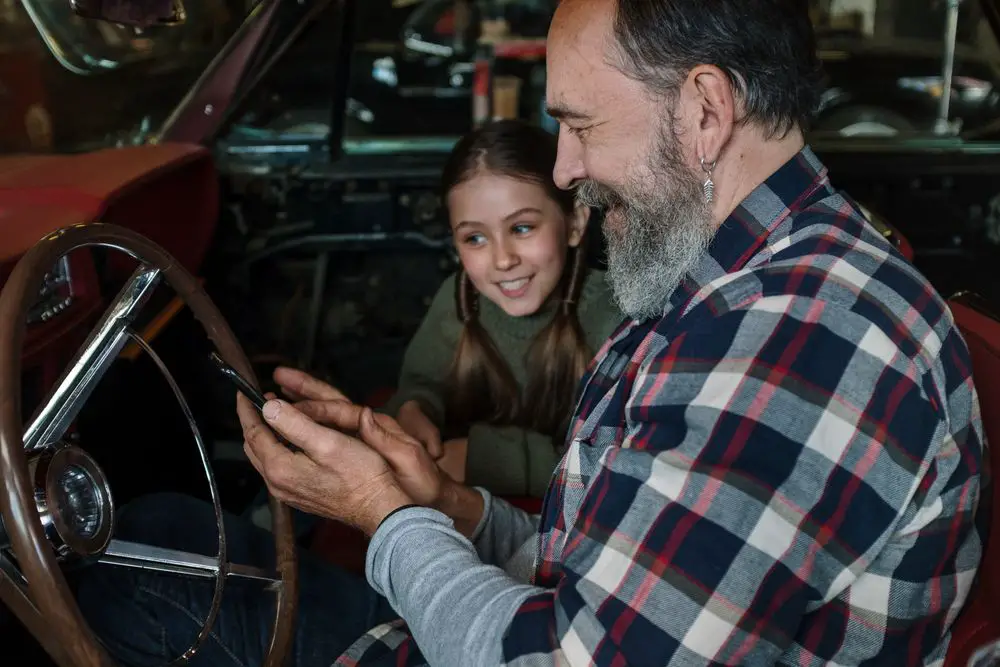
The trouble with this news was that our father was sitting three feet away from me at my kitchen table, wearing his navy blue robe, drinking my coffee, and reaching across to steal bacon off my plate.
For a few seconds I just stared at Vanessa’s name glowing on the screen. My older sister almost never called before noon. She was not a morning person and never had been, and she especially never called me before the sun was properly up unless she wanted something from me. So when the phone started buzzing and skittering across the table, my first thought was that there had to be an emergency of some kind. I had no idea the emergency was going to be one she had invented herself.
Vanessa and I had spent our whole lives at a slight angle to each other. We were not enemies, exactly, or at least I had never thought of us that way. We were two women who loved the same father and had never once agreed on what loving him was supposed to look like. She had stayed in our hometown, in the same county where we grew up, and she had built her entire sense of virtue out of that fact, out of geography, as if remaining within twenty miles of the house you were raised in were itself an accomplishment. I had moved away, and to her that settled the matter of which of us was the good daughter and which was the one who had abandoned the family. We did not fight about it often, because I had learned young that fighting with Vanessa was like arguing with the weather, but it sat under everything, a low current, for decades. That morning it finally surfaced all the way.
Dad reached for another strip of bacon while I picked up.
Vanessa, I said.
For the first couple of seconds there was nothing on the line but the sound of a car engine and the steady tick of a turn signal. Then she said it.
Natalie. Dad died last night.
My hand stopped halfway to my coffee mug. Across the table, Dad stopped chewing. We looked at each other. He slowly lowered the piece of bacon in his hand back onto the plate, and something passed over his face that was not quite alarm and not quite amusement, the expression of a man hearing a thing so strange his brain has not decided yet how to feel about it.
I set the phone down beside the sugar bowl and tapped it onto speaker. I am not sure why. Some instinct told me I was going to want a witness to this, and the only witness available was the dead man himself.
When, I asked.
Sometime during the night, Vanessa said. Harold found him.
Dad’s whole expression changed at that name. Harold Pike had been his closest friend for more than forty years. They had fished together in every season, watched more football than either of their wives could stand, and carried each other through two bad marriages, a couple of health scares, a layoff, and the sort of private mistakes that men only start confessing to one another after they have known each other long enough to stop pretending to be anything but human. Harold had also, until he retired, owned the only funeral home in town. Of all the names Vanessa could have reached for to make the lie sound solid, Harold was the most believable one available, and for one deeply uncomfortable second the whole thing sounded prepared enough to be real.
What happened, I asked.
Vanessa sighed. She did not cry. She did not pause to steady her voice, or catch her breath, or do any of the small involuntary things a person does when they have just lost a parent. She sighed, the particular put-upon sigh she had been aiming at me our entire lives, as though my questions were dragging out an already inconvenient morning.
Does it matter? she said. He’s gone.
Dad set his fork down.
And then Vanessa moved on to the part of the conversation she actually cared about, which she did with a speed that told me everything about how much grief was really involved.
Grant and I are handling everything, she said. There’s really no reason for you to come to the house.
Dad’s eyes narrowed.
The locks are being changed this morning, she went on.
From somewhere near her phone, close enough to carry clearly over the speaker, I heard Grant laugh.
Why, I said, are the locks being changed?
Because Grant and I found Dad’s papers, Vanessa said. He left the house to us. The truck too. The accounts. Everything else.
Dad and I stared at one another across the table, and I watched a lifetime of things move behind his eyes.
Then Vanessa delivered the line she had clearly been saving, the one she had probably rehearsed in the car.
You were specifically excluded, she said.
Grant laughed louder in the background, and then his voice came closer to the phone, warm with a satisfaction he did not bother to hide.
You’re finally out of the family, he said.
Dad’s fingers tightened slowly around the handle of his coffee mug.
Grant kept going, on a roll now, enjoying himself. No more showing up every few months and pretending to be the devoted daughter, he said.
That part, at least, was familiar. For years, Vanessa had told anyone who would sit still long enough that I was the daughter who had run away. What she actually meant was that I had moved three states away after being offered a job I could not afford to turn down, a job that had, incidentally, allowed me to help our father in about a dozen quiet ways over the years. But to Vanessa, distance was proof of disloyalty, full stop. The phone calls did not count. The plane tickets did not count. The money I had sent, without announcement, whenever Dad needed something he was too proud to ask for, did not count. And the previous forty-eight hours, it seemed, counted for less than any of it, though neither Vanessa nor Grant had the faintest idea what the previous forty-eight hours had actually contained.
I could have defended myself right then. I could have told them exactly where I had been and what I had been doing. I did not, and the reason I did not was sitting across the table from me. Because Dad set his coffee mug down on the table with an extraordinary, deliberate care, the kind of care a man uses when he has decided that the next thing he does needs to be done exactly right. That scared me more than shouting would have. My father got quieter when he was truly angry, not louder. The angriest I had ever seen him in my life, he had said almost nothing at all.
Vanessa was still going. Grant already has someone coming out to evaluate the truck, she said. We contacted the bank. We’re going through Dad’s office today.
Dad raised one eyebrow at the word office.
And the house, I said.
Obviously we’re keeping it, Vanessa said.
Grant called from the background, gleeful. Might renovate the kitchen!
They laughed together at that, the two of them, sharing the joke across the front seat of a moving car. Dad did not laugh. He was watching the phone the way you watch a snake you have not decided whether to kill.
Vanessa then informed me, in the tone of someone being generous, that she would go ahead and box up whatever was left in my childhood bedroom and have Grant set the boxes out near the garage so I could collect them without needing to come inside. My whole childhood, sorted and stacked by the garage like things left out for the trash.
Then Grant took over again.
Don’t make this difficult, he said. Don’t go challenging the will, don’t start demanding things that aren’t yours. Vanessa stayed close to home. She earned this. She deserves it.
I looked out the kitchen window at the frost whitening the grass in my backyard and said nothing.
You made your choice years ago, Grant continued.
And then he said the one thing that changed my father’s face completely.
Your father obviously knew who really loved him.
Dad went perfectly still.
I reached for the phone, ready to end the call, done, finished, unwilling to let them say one more word. But Dad raised a hand off the table. Stop. I stopped. Then he pointed at his own chest, once, deliberately. I hesitated, not understanding, and he pointed again, more firmly. Give me the phone. Or better, let me in.
I understood, looking at him, that he did not want me to defend him, and he did not want me to defend myself. He wanted the two of them to keep going. Every cruel sentence they said believing he was dead was a sentence they could never take back, and my father, who had spent a career I never fully understood negotiating with difficult people, knew the value of letting someone finish digging. If I interrupted now, if I announced he was alive, they would clam up and start managing the situation. If I stayed quiet and let them believe the coast was clear, they would show us exactly who they were. So I sat on my hands, literally, and I let it happen.
Vanessa’s voice sharpened over the speaker. Natalie? Are you still there?
Oh, I said. I’m here.
Good, she said. Then understand this clearly. Dad made his decision. Everything belongs to Grant and me now.
Grant laughed again. Finally, he said.
Dad stood up.
He tightened the belt of his robe with the unhurried motion of a man who has all the time in the world, and he walked around the kitchen table to my side, to where the phone sat beside the sugar bowl. Vanessa was still talking, still spinning out her plans, funeral arrangements and property and accounts and everything she believed she had just inherited from the man now leaning down toward the speaker with his hands braced on the table.
Grant was still laughing when my father finally spoke.
Interesting, Dad said.
The laughing stopped. Everything stopped. There was absolute silence on the line. The car engine still hummed in the background, the turn signal still ticked, but neither Vanessa nor Grant made a sound.
Dad leaned a little closer to the phone.
Tell me more, he said, about my funeral.
There was a sharp sound from Vanessa’s end, a slap of a palm against the dashboard, maybe, or the phone slipping out of her hand. And then, in a small cracked whisper, she said, Dad?
He looked at me while he waited. I had not seen that particular expression on his face since I was sixteen and had backed his truck into the mailbox at the end of the driveway. It was not rage. Rage would have been easier. It was disappointment, honed down over a few long seconds into something colder and far more deliberate.
Morning, sweetheart, he said.
Vanessa inhaled so hard the sound of it crackled through the speaker. You’re alive, she said.
Apparently, Dad said.
Why, she said, and I could hear her scrambling now, why are you at Natalie’s house?
Dad pulled out the chair beside me and sat back down, unhurried, and reached again for his coffee. He took a sip before he answered, letting the silence do some of the work.
Why, he said, are you telling people I’m dead?
Vanessa recovered faster than I expected. That has always been her real talent, the quick pivot, the instant reframe. We weren’t telling people, she said. I was only trying to reach you, Natalie. That’s all it was.
You told her Harold found me, Dad said.
A pause.
Dad, listen, Vanessa started.
And you said you found my papers, Dad said.
Another pause, longer. And then Grant’s voice, faint but unmistakable, from the passenger seat. Hang up. Just hang up.
Dad heard it. So Grant’s there too, he said.
Nobody answered.
Dad took another sip of coffee. Excellent, he said. Saves time.
And here is the thing I watched happen over the next few minutes, sitting at my own kitchen table in my pajamas while my resurrected father conducted the strangest interrogation of my life. Vanessa’s whole tone changed. The grief, thin as it had been, vanished entirely. So did the authority, the smug certainty of a woman handing down verdicts about who was and was not in the family. What replaced both of them was irritation, plain and petty, the irritation of someone whose plan has hit a snag.
Dad, she said, there’s been a misunderstanding.
Dad gave a low, humorless laugh. Misunderstandings, he said, are when somebody gets a date wrong. Or forgets a dinner reservation. He glanced at me. They are not, generally, when a person announces a man’s death while he is sitting down to breakfast.
Then Vanessa started talking fast, and this was the part that gave her away completely, because she could not settle on a single version of events. First she said Harold had called her. Then she said no, she had misunderstood something Harold said. Then she said actually it was Grant, Grant had seen some paperwork and assumed something had happened to Dad. The story changed three separate times in under a minute, each version contradicting the last, and my father did the thing I had watched him do my whole childhood whenever one of us was lying. He said nothing. He let her talk. It had always been his method. He would not interrupt, would not correct, would just wait, patient as weather, and let a person keep adding details until the lie collapsed under its own weight and the truth had nowhere left to stand.
Finally he asked, quietly, Where are you going right now?
The turn signal was still ticking away in the background.
We’re driving, Vanessa said.
I can hear that, Dad said. Where to?
To your house, she admitted.
Dad looked at me. Why? he said into the phone.
We were worried, Vanessa said.
Grant muttered something I couldn’t make out.
Dad’s mouth tightened. Were you worried, he said, before or after you arranged for someone to come evaluate my truck?
No answer.
Were you worried, he said, before or after you decided to change my locks?
We haven’t changed anything yet, Vanessa snapped.
Dad leaned back in his chair. That, he said, is the first useful sentence you’ve said all morning.
She went quiet again.
Then he asked the question that changed the temperature of the whole call. Who told you, he said, that I left the house to you?
I saw the documents, Vanessa said.
What documents?
Your estate papers.
Dad set his coffee down. My estate papers, he said slowly, are not in the house.
This time the silence was different. It had a texture to it. Dad and I both heard it, and he turned his head slowly to look at me, and I could see him beginning to understand that this was no longer just a cruel prank that had blown up in his daughter’s face.
Vanessa finally said, very small, What?
My original estate documents, Dad said, are with my attorney. His voice had gone very calm, calmer than the situation seemed to call for, which with my father was always the most dangerous sign of all. The copies in my office, he said, are old.
In the background Grant said something under his breath.
Dad heard enough of it. Grant, he said, if you are going through my desk right now, put your hands back in your pockets.
We’re not at your house yet, Vanessa said.
Dad looked up at the clock on my kitchen wall. It read 6:38. Good, he said.
And then he ended the call.
For several seconds neither of us spoke. I stared at him. He stared at the dark phone lying beside the sugar bowl. Finally I asked the only question that mattered.
Why are they so certain you’re dead?
Dad pushed his plate away, the bacon forgotten. That, he said, is exactly what I would like to know.
There was a reason my father was at my house that morning, and it is a small and ordinary reason, which is what made everything that followed so strange.
Two days earlier, Dad had called me to report, in the aggrieved tone he reserved for household betrayals, that his furnace had started making a strange noise. He was seventy-three years old, stubborn as a fence post, fiercely independent, and privately convinced that paying a professional to fix anything he might conceivably fix himself was a small moral failure, a little surrender to softness. I told him, clearly, not to touch it. He ignored me, of course. Twenty minutes later he called back to admit, grudgingly, that the entire heating system had now shut down completely and would not come back on.
A serious winter storm was rolling in that week, the kind that brings warnings on the radio and empties the grocery shelves of bread. I told him I was driving over. He told me not to. So naturally I drove over.
By the time I got there the house was already going cold, that deep settling cold that gets into the walls. Dad had packed a single duffel bag and announced that he would simply check into the motel by the highway until the repair company could get out to him, which with the storm coming might be days. I refused to let him. He complained about that for a solid forty minutes, standing in his cold kitchen listing all the reasons he did not need to be fussed over, and then he climbed into my car.
That was my father in miniature, that whole scene. A seventy-three-year-old man who would rather sit alone in a freezing house through a winter storm than admit he needed his daughter’s spare room. It was not that he did not love us. He loved us ferociously, in his undemonstrative way. It was that need itself embarrassed him, that accepting help felt to him like a small defeat, a crack in the self-sufficiency he had built his entire identity around after our mother died and left him to finish raising two daughters alone. He had spent twenty years being the one who provided, the one who fixed things, the one who did not ask, and he did not know how to be anything else even when his own body and his own furnace were telling him it was time. I had learned, over the years, that the only way to help him was to simply override him, cheerfully, and let him grumble, and never once make it a thing he had to be grateful for.
The visit itself was not entirely unplanned. Because I lived three states away, I had already arranged to be in the area later that month. I had flown in for a work commitment nearby and rented a car for the week, and I had built in a few days to see Dad the way I did every couple of months. When the furnace died, I simply moved the whole thing up and brought him back to stay with me for a few days while the heat got sorted out.
Vanessa knew none of this. Neither, apparently, did Grant. Dad had not told them, and when I later asked him why, he said, with a flash of his old irritation, that he did not require committee approval every time he chose to spend a weekend with one of his own children. It had been a small decision, made on impulse in a cold kitchen. And that small decision, it was turning out, had accidentally exposed something that neither of us yet understood.
At 7:04, Dad called Harold, and put the phone on speaker between us.
Harold answered sounding as though he had been asleep about four minutes earlier. If you’re calling about fishing, he growled, it is freezing outside and you have officially lost your mind.
Dad looked at me across the table. Harold, he said. Did you find my body last night?
There was a long pause. What, Harold said.
Vanessa says I died in the night, Dad said. Says you’re the one who found me.
Harold became fully, instantly awake. The hell I did, he said.
You talk to Vanessa lately? Dad asked.
Not since Sunday, Harold said.
Dad nodded slowly. Anybody call you about me at all?
No, Harold said. And then he stopped. Wait.
What, Dad said.
Somebody called the funeral home yesterday, Harold said.
Dad’s face changed. Harold had sold the funeral home years ago when he retired, but the new owner still called him from time to time when older families in town asked for him by name, wanting the man they knew. He kept a hand in.
What did they want, Dad asked.
They were asking general questions, Harold said. About prepaid arrangements.
Whose, Dad said.
Harold hesitated, and I felt the hesitation before he spoke. Yours, he said.
The kitchen seemed to drop a few degrees. Dad’s prepaid funeral contract was real. He had set it up years earlier, after his second heart scare, because, as he had put it at the time with grim humor, he did not want his two daughters arguing over caskets while he himself was unavailable to referee the fight. It was a very Dad decision, practical and a little dark, made to spare us a conflict he apparently understood better than either of us did. Vanessa knew about it. So did I. But only one of us, it seemed, had started checking up on it before he was actually dead.
Who called? Dad asked.
They didn’t leave a name, Harold said. The office manager told me it was a woman. She was asking what paperwork would be required if the policyholder passed away at home.
Dad’s jaw tightened. What time was this?
Yesterday afternoon, Harold said.
I looked at Dad. Yesterday afternoon he had been sitting on my couch, warm and very much alive, complaining that my television remote had too many buttons and demanding to know why anyone needed that many streaming services. And at the same time, somewhere, someone had been on the phone asking what would happen if he died at home.
Harold promised to get whatever information the funeral home still had on the call, the number, the time, anything. Dad thanked him and hung up.
Then he called his attorney. This time he did not use the speaker. He stood up, walked into my living room, and spoke quietly for almost ten minutes with his back to me, one hand braced against the window frame. When he came back into the kitchen, he looked older than he had twenty minutes earlier. Not frightened. Just deeply, heavily tired, the way you look when you learn something about a person you love that you cannot unlearn.
What, I said.
He sat down. Vanessa called him too, he said. Yesterday.
My stomach tightened. What did she ask him?
Whether a beneficiary, he said, could access estate property before probate. In the event of an emergency.
I stared at him. She told your attorney you were dead?
No, Dad said. He looked toward the window, at the frost. She told him I was unreachable. And that there might be a medical situation.
Why didn’t he just call you? I asked.
He did, Dad said.
He pulled his cell phone out of the pocket of his robe and held it up and showed me the screen. There was no missed call from his attorney. Nothing.
And that was when I remembered something I had dismissed entirely at the time. The previous afternoon, Dad’s phone had simply stopped receiving calls for almost two hours. He had grumbled about the service, about how you pay these companies a fortune and still can’t get a signal, and eventually we had restarted the phone and it had started working again, and neither of us had thought about it for one more second.
Now Dad thought about it.
He called his carrier. That conversation took twenty-three minutes, most of it on hold, some of it spent answering security questions in a flat, careful voice. When it finally ended, his expression was unreadable.
What happened, I said.
Someone, he said, tried to move my phone number to another device yesterday.
My skin prickled. Can Vanessa even do that?
She’s listed as an authorized contact, Dad said. On an old family account. One of those plans we set up years ago and I never bothered to unwind. He stared down at the phone in his hand. I forgot she was still on it, he said, almost to himself.
The transfer request had failed, it turned out, because the carrier had recently added an extra verification step, one more hoop that whoever tried it had not been able to clear. But the attempt itself explained the two hours of dead service the day before. Somebody had tried to take control of his phone, and had very nearly succeeded, and the only thing that had stopped them was a security measure none of us had known was there.
I sat with what that meant for a moment, and the more I sat with it, the colder I got. Taking over someone’s phone number is not a petty thing. It is the master key to a person’s whole financial life. Banks text you a code before they let you log in. Attorneys and brokerages send verification messages. If you control the phone, you control the codes, and if you control the codes, you can, given a little time, walk straight through nearly every locked door a person has. This had not been a spiteful daughter lashing out in grief. Grief does not think to reroute a phone number. This had been a plan, a real one, with steps, and the fake death call to me had been only the most visible piece of it, the part that happened to blow up because it landed in the one kitchen where the corpse was sitting at the table.
And suddenly the fake death call sounded like something else entirely. It was no longer just a cruel, spiteful lie told by a resentful daughter. Someone had been checking on the funeral contract. Someone had contacted his attorney under false pretenses. Someone had tried to hijack his phone number, which, I realized with a cold feeling, would have meant intercepting exactly the kind of verification texts a bank or an attorney sends before they let you move money or access an estate. And Vanessa had called me before sunrise to tell me our father was dead, while she and Grant drove toward his empty house.
Dad stood up. Get dressed, he said.
Where are we going?
My house, he said.
I looked at him. You really think they’ll go inside? They know you’re alive now.
They told us, Dad said, that they were going through my office. He picked his keys up off the counter and weighed them in his hand. And people who have already made one bad decision, he said, tend to make another one when they panic.
He was right, as it turned out.
By the time we reached his neighborhood, Vanessa’s SUV was parked at the curb in front of his house. Grant’s truck sat behind it. Dad told me to keep driving.
Why, I said, slowing but not stopping.
Because I want to see, he said, what they do when they think I’m not here.
We parked two blocks away, around a corner, out of sight of the house. Dad called the police non-emergency line. He did not say his daughter was robbing him. He simply and calmly explained that people were attempting to enter his home after falsely reporting his death, and that he was concerned. The dispatcher asked whether he believed anyone inside might be armed. Dad said he did not know, which was true. And then we waited, the heater running, both of us watching the corner.
Seven minutes later a patrol car turned onto the street, no lights, moving slow. Dad and I got out and walked back toward the house.
Vanessa was standing on the front porch, arguing with a man kneeling at the front door. A locksmith, his kit open on the welcome mat. Grant was over by the garage. And a third man, a stranger in a canvas jacket with a clipboard, stood near Dad’s truck in the driveway, taking notes. The evaluator. They really had called someone to come appraise the truck. They had actually done it.
Vanessa saw Dad first, and the color simply drained out of her face, all at once, the way water runs out of a sink. Grant turned next and went rigid. The man with the clipboard looked from my father to the truck and back to my father, and slowly lowered his pen, and you could watch him understanding, in real time, that he had been called out on a job that was not what he had been told it was.
Dad stopped at the bottom of the front walk. Morning, he said.
Nobody answered him.
The locksmith looked up from the lock, then over at Vanessa. You told me the homeowner passed away, he said.
Dad raised one hand, mild as anything. Rumors of my death, he said, appear to have been exaggerated.
The two police officers came up the walk behind us. And the moment she saw them, Vanessa started to cry. Real tears this time, or real enough, her face crumpling. Dad, please, she said. We panicked. We just panicked.
Dad ignored her and looked at the locksmith. Did she show you any proof that I was dead? he asked.
No, sir, the locksmith said.
Any proof she owned this house?
No, the man said.
Vanessa stepped forward. Dad, we can explain, she said.
You’ve been doing a lot of explaining today, Dad said.
Grant’s face went hard. This is a family matter, he said to the officers.
One of the officers looked him over without much warmth. Then you should probably stop trying to change the locks on property you don’t own, he said.
Grant went quiet.
Dad walked up onto his own porch and checked his front door. Still locked. No damage. They had not gotten in yet. The locksmith had not finished the job.
The officers asked Dad whether he wanted Vanessa and Grant removed from the property. Dad looked at his older daughter for a long, long moment, and I watched him weigh something enormous, a lifetime of something, and then he said, quietly, Yes.
Vanessa looked stunned, as though this were the unthinkable part. You’re choosing Natalie over me, she said.
And there it was. Dad’s expression shifted again, and I understood that she had just handed him the real grievance, the thing underneath all of it. Not death. Not grief. Not paperwork or property or wills. Competition. It had always, my whole life, been a competition, one I had not known I was even entered in.
Dad shook his head slowly. This was never, he said, about choosing one daughter over the other. He pointed back at the house. This is about the fact that you decided I was more useful to you dead than alive.
Vanessa flinched.
Grant stepped between them. That’s ridiculous, he said.
Dad turned toward him, and his voice stayed low. You told Natalie she was finally out of the family, he said.
Grant said nothing.
You arranged to have my truck appraised, Dad said, before you’d seen so much as a death certificate.
Nothing.
You came here this morning to change my locks.
Nothing.
And yesterday, Dad said, somebody called my funeral provider, contacted my attorney, and tried to move my phone number to another device.
That one finally landed. Vanessa’s head turned, and she looked, for just a fraction of a second, not at Dad but at Grant. It was fast, involuntary, gone almost before it happened. But I saw it. And Dad saw it too.
Grant said, immediately, too immediately, I didn’t touch your phone.
Dad did not blink. I didn’t ask if you did, he said.
The officer nearest us went noticeably more attentive.
Vanessa whispered, Grant.
What, he snapped.
Stop talking, she said.
Dad looked over at me, and in that look I finally understood why he had insisted we drive over here instead of simply finishing the fight on the phone. On the phone, you can hang up. In a driveway, with two police officers standing in the cold, with a locksmith and a truck appraiser as unwilling witnesses, there is nowhere to hang up. People reveal different truths when there is no way to end the call, when they have to keep standing there in front of everyone. He had wanted them somewhere they could not disconnect.
The officers separated Vanessa and Grant, walking them a few paces apart, and began asking them questions in low voices. Dad stood beside me in the cold morning air, and for the first time all day he looked genuinely exhausted, wrung out. I touched his arm. Do you want to go inside? I asked. He shook his head. Not yet, he said.
Harold called while we were standing there. Dad answered. The retired funeral director had gotten the number that had been used to make the inquiry about Dad’s arrangements the day before. It was not Vanessa’s number. It belonged to Grant.
Dad closed his eyes, just briefly, and when he opened them something had settled into place behind them. Not vengeance. I want to be careful about that word, because it was not what I saw. What I saw was decision.
The police, they explained, could not arrest anyone simply for asking questions on the phone or for telling an ugly lie to a family member. That is not, in itself, a crime. But the attempted lock change on a house they did not own, the false representations, the activity on the phone account, the funeral inquiry, the call to the attorney, all of it together gave Dad more than enough to document. He asked the officers to file a full incident report, names and times and details, everything on the record.
Then he called his attorney again, standing there in his driveway in his robe with a coat thrown over it, and by noon he had begun systematically closing every door. Every old authorization Vanessa had ever held over any account of his was revoked. His banking passwords were changed. His phone account was locked down with new security. His garage code was reset. The spare house key Vanessa had carried for years was rendered useless, because Dad’s front lock was electronic and he simply reprogrammed it. And the truck appraiser was informed, in writing, that no one but Dad himself had any authority whatsoever to sell anything of his.
Vanessa stood near her SUV, crying, her arms wrapped around herself against the cold. This is insane, she said.
Dad looked at her. No, he said. What happened at breakfast was insane.
I was angry, she said.
You announced my death, Dad said.
I thought, she started.
No, he said. You didn’t. His voice never rose. You planned.
That silenced her, because it was true, and she knew it was true, and she knew that he knew.
And then Vanessa said something I had not expected, something that had clearly been sitting in her for a very long time.
You always favored Natalie, she said.
I almost interrupted, almost jumped in to defend the record, but Dad stopped me with a small motion of his hand.
No, he said to her.
Vanessa’s eyes filled again, and this time I did not think the tears were performance. She gets to move away, she said. She gets to call whenever she wants. She gets to fly in and show up and be the hero. I stayed here.
Dad looked at her steadily. Stayed here doing what? he said.
Her mouth opened, but he went on before she could answer.
You visited when you needed money, he said.
That’s not fair, she said.
You borrowed my truck, he said. For months at a time.
I helped you, she said.
You used my address for two years, he said, when it suited you.
Dad, she said.
You asked me to cosign Grant’s equipment loan, he said, after I told you no.
Grant took a step forward at that, and Vanessa grabbed his sleeve and held it.
Dad looked back at his daughter, and something in his face gentled without softening, if that makes sense, the way a hard truth can be delivered kindly. Natalie moved away, he said, because she got a job. He nodded toward me. And she also called me every Sunday. For years. Never missed one.
My throat tightened.
She paid for my hearing aids, Dad said, when the insurance wouldn’t.
Vanessa turned and looked at me.
She flew back for my surgery, Dad said. Sat in that waiting room for six hours.
And then he said the part Vanessa did not know, the part that hung in the cold air between all of us.
And she paid the furnace company, he said. Two days ago.
Vanessa stared at me.
That was why Dad had been at my house. His furnace repair had come in far more expensive than either of us expected, some part that had to be ordered, labor on top of it, and I had simply paid the invoice before he could get his wallet out and start arguing about it. I had not done it because I wanted the house. I had not done it because I expected to be paid back, or thanked, or remembered in any document. I had done it because he was my father and there was a storm coming and he needed heat. That was the entire reason. It had never once occurred to me that it was the sort of thing a person keeps score of, because I had never been keeping score.
Dad looked at Vanessa. You decided, he said, that proximity entitled you to everything.
Then he looked at Grant. And you, he said, decided that my daughter’s resentment was something you could turn into property.
Grant laughed, bitter and short. You think you’re some rich old man? he said. It’s one house and an old truck. That’s it. That’s what all this is about.
Dad nodded. Exactly, he said.
The answer seemed to confuse Grant, which was, I think, precisely the point. It had never been about the size of the estate. It had been about the smallness of the thing they were willing to do for it.
Dad looked toward his house for a moment, then back at the two of them. You both embarrassed yourselves, he said, over something you never once bothered to actually understand.
He reached into the pocket of the coat he had thrown over his robe and pulled out a folded sheet of paper. His attorney had emailed it that morning, and Dad had printed it at my house before we drove over, a thing I had not even registered him doing in the rush. He unfolded it now.
Vanessa stared at it. What is that? she said.
A summary, Dad said, of my current estate plan.
Her face changed.
Because here was the thing that neither Vanessa nor I had known. Dad had quietly updated his will about eighteen months earlier. He had done it, he told me later, after watching two of his friends’ families tear themselves apart over inheritance, grown children who stopped speaking over furniture and land, and he had decided he was not going to leave that particular bomb behind for his own daughters to step on.
The house, under the new plan, would not go directly to either of us. After his death, it was to be sold. A portion of the proceeds would cover his final expenses, all of it prepaid and arranged so no one would have to fight about it. Another portion would fund a small scholarship at the community college where our mother had taught for many years before she died, in her name. And the remainder would be divided equally, evenly, between Vanessa and me. The truck, the one Grant had already called an appraiser about, was promised to Harold’s grandson, a good kid who had spent three summers in that driveway helping Dad rebuild its engine, elbow deep in grease, asking nothing. Dad’s retirement accounts had named beneficiaries. His actual checking balance was almost comically modest compared to whatever fortune Vanessa and Grant had apparently imagined they were racing to seize.
Vanessa stared at him. You were splitting it equally, she said. There was disbelief in it, and something underneath the disbelief that might have been shame.
I was, Dad said.
It was a small word, was. But Vanessa heard the tense of it, the way you hear a floorboard give.
Were, she said.
Dad looked down at the summary in his hand. I haven’t decided, he said, what changes I’m making.
Her face collapsed. Dad, she said.
He folded the paper back up along its crease. What I know, he said, is that I am not going to reward anyone for rehearsing my death.
Grant muttered, This is because of Natalie.
Dad turned toward him so fast that Grant actually stepped back. No, Dad said, and his voice still was not loud, which made it worse. This is because at six-thirty this morning, while I was alive and eating breakfast, you laughed, and you told my daughter she was finally out of the family.
Nobody spoke.
Dad pointed toward Vanessa’s SUV. Go home, he said.
And Vanessa went. For the first time in my entire life, my older sister left a room, left a whole confrontation, without getting the final word.
In the weeks that followed, more of it came out, the way these things do once the first stone is turned over. Grant had been under real financial pressure. His business had lost two major contracts that year. There were overdue tax payments, and a line of credit that Vanessa had apparently taken out and never mentioned to Dad. None of that excused a single thing that had happened. But it explained the terrible urgency of it, the appraiser and the locksmith all on the same freezing morning, the sense of people scrambling to grab something before it slipped away.
Vanessa had, at some point during an argument about money, mentioned Dad’s prepaid funeral arrangements to Grant. And Grant, hearing it, had become very interested in what would happen to the house after Dad was gone. From there, in the way these things curdle, curiosity had turned into expectation, and expectation into entitlement. Months earlier they had come across that outdated copy of the old will in Dad’s desk, the version from years back that did, in fact, leave the house jointly to Vanessa and me. Grant either never noticed the date on it or chose not to. And by the week of the phone call, he had talked Vanessa into believing that surely Dad must have revised it since then in her favor, because she was the one who had stayed close, because she deserved it, because they needed it to be true. There was no document anywhere that supported that belief. They simply wanted it to be true badly enough that they had started acting as though it already was.
The strangest part of the whole thing, the part I kept circling back to, was the fake death itself. Why call me at all? Why not just quietly go to the house?
Vanessa finally answered that question months later, and she did it in a way that surprised me. She did not text. She did not email. She sent a handwritten letter, pages of it, in the careful cursive our mother had taught us both at the kitchen table. In it she admitted that the point of the call had been to keep me away from Dad’s house long enough for her and Grant to find what they believed were the newest estate documents. The theory, such as it was, had been that if I believed Dad was already dead and that she and Grant were handling the funeral, I would spend the next several hours doing what a grieving daughter three states away would naturally do, which is frantically arranging flights and rental cars and time off work. Those hours were the hours they needed. What they had not counted on was that I was already in town. And they certainly had not counted on Dad being alive and well and sitting at my kitchen table stealing my bacon when the call came in. The lie had been designed to buy them a few hours of time. Instead it had detonated in their hands and exposed the whole thing.
Dad did change his estate plan, in the end. But not the way Vanessa had feared, not in the theatrical, disinheriting, cut-off-without-a-cent way she had braced for. He did something quieter, and I think it hurt her more precisely because it was so measured. Her share of the eventual estate remained, but it was placed in a trust, administered independently, with Grant given no access to it and no control over it whatsoever. My share he left exactly as it was.
He explained it to me one evening, plainly. He was not interested, he said, in using the inheritance as a weapon, in punishing Vanessa from beyond the grave the way she had half expected him to. What he was interested in was making certain that his death could never again become an opportunity for someone to manipulate his family. He also removed Vanessa from every single emergency authorization, financial contact, medical release, phone account, and property access list that had ever borne her name. Trust, he told me, was worth more than money, because if someone takes your money you can go earn more of it, but if someone shows you they cannot be trusted, there is no check you can write to buy that back.
Vanessa and Dad did eventually speak again. Not quickly, and not comfortably. She came to the house the first time alone. Grant waited out in the car, because Dad refused, flatly, to let him inside, and I do not think he ever set foot in that house again. Vanessa sat at the kitchen table where she had eaten thousands of meals growing up, and she cried, and Dad listened to her for a long time without saying much. And then, when she had finished, he asked her a single question.
If Natalie had believed you, he said, and I really had been dead, how long were you going to let her go on thinking that?
Vanessa could not answer him. She opened her mouth and closed it and looked at the table, and no answer came.
That was the part, Dad told me later, that he could not quite get past. Not the house. Not the truck. Not the locksmith on his porch or the appraiser in his driveway. The cruelty of it. Because for however long that lie was meant to last, hours, a whole day, however long it took them to find what they were looking for, Vanessa had been willing to let her own sister believe that their father had died alone in the night, with no one beside him. She had been willing to let me carry that grief, real and crushing, as a tool, a distraction, a way to keep me busy while she searched his desk. That was the thing my father struggled to forgive, and honestly, so did I.
I want to be fair to my sister, even now, because the version of this where she is simply a monster is too easy and I do not think it is true. Vanessa had spent her adult life feeling like the daughter who got the duty and none of the credit, watching me leave and build a life somewhere sunnier while she stayed behind in the town we both grew up in, managing the small unglamorous business of being nearby. That resentment was real, and some of it was even earned, because I had left, and leaving does put more of the weight on whoever stays, even when the one who stays is not carrying it well. But Grant had found that resentment sitting there like dry kindling, and he had brought the match. What started as an old wound about fairness had been steered, patiently, into something that looked at our living father and saw an obstacle between them and a house. That is the part I will never fully understand, how you get from feeling unappreciated to timing your father’s death like a business transaction. Somewhere on that road a person makes a choice, and Vanessa made it, and no amount of old grievance covers the distance.
Months later, Dad came to visit me again. He drove up himself this time, no furnace emergency, no crisis, just a visit. We sat at the same kitchen table, with the same sugar bowl between us, the same window looking out over the same backyard, brown now instead of frosted. I made bacon. He stole half of it off my plate, the way he always did, the way he had been doing since I was small enough to need a booster seat at that table.
At 6:31 in the morning, my phone buzzed on the table.
Dad looked at the screen. Then he looked at me.
Vanessa? he said.
I nodded.
He reached, unhurried, for another strip of bacon. You answering? he said.
I considered it for a moment. We were not healed, Vanessa and I, not fully, maybe not ever all the way. But the letter had been real, and the crying at the kitchen table had been real, and she had been trying, in her stiff and halting way, to find a road back. And I had come to believe something that year, watching my father handle the worst thing his own child ever did to him, which was that families do not heal by pretending nothing happened. They do not heal by going quiet and letting the lie sit in the room forever, politely unmentioned. If they heal at all, it is by making the truth harder to avoid than the lie.
So I picked up the phone.
Morning, Vanessa, I said.
Across the table, my father lifted his coffee mug and smiled at me over the rim of it, very much alive.

Lila Hart is a dedicated Digital Archivist and Research Specialist with a keen eye for preserving and curating meaningful content. At TheArchivists, she specializes in organizing and managing digital archives, ensuring that valuable stories and historical moments are accessible for generations to come.
Lila earned her degree in History and Archival Studies from the University of Edinburgh, where she cultivated her passion for documenting the past and preserving cultural heritage. Her expertise lies in combining traditional archival techniques with modern digital tools, allowing her to create comprehensive and engaging collections that resonate with audiences worldwide.
At TheArchivists, Lila is known for her meticulous attention to detail and her ability to uncover hidden gems within extensive archives. Her work is praised for its depth, authenticity, and contribution to the preservation of knowledge in the digital age.
Driven by a commitment to preserving stories that matter, Lila is passionate about exploring the intersection of history and technology. Her goal is to ensure that every piece of content she handles reflects the richness of human experiences and remains a source of inspiration for years to come.