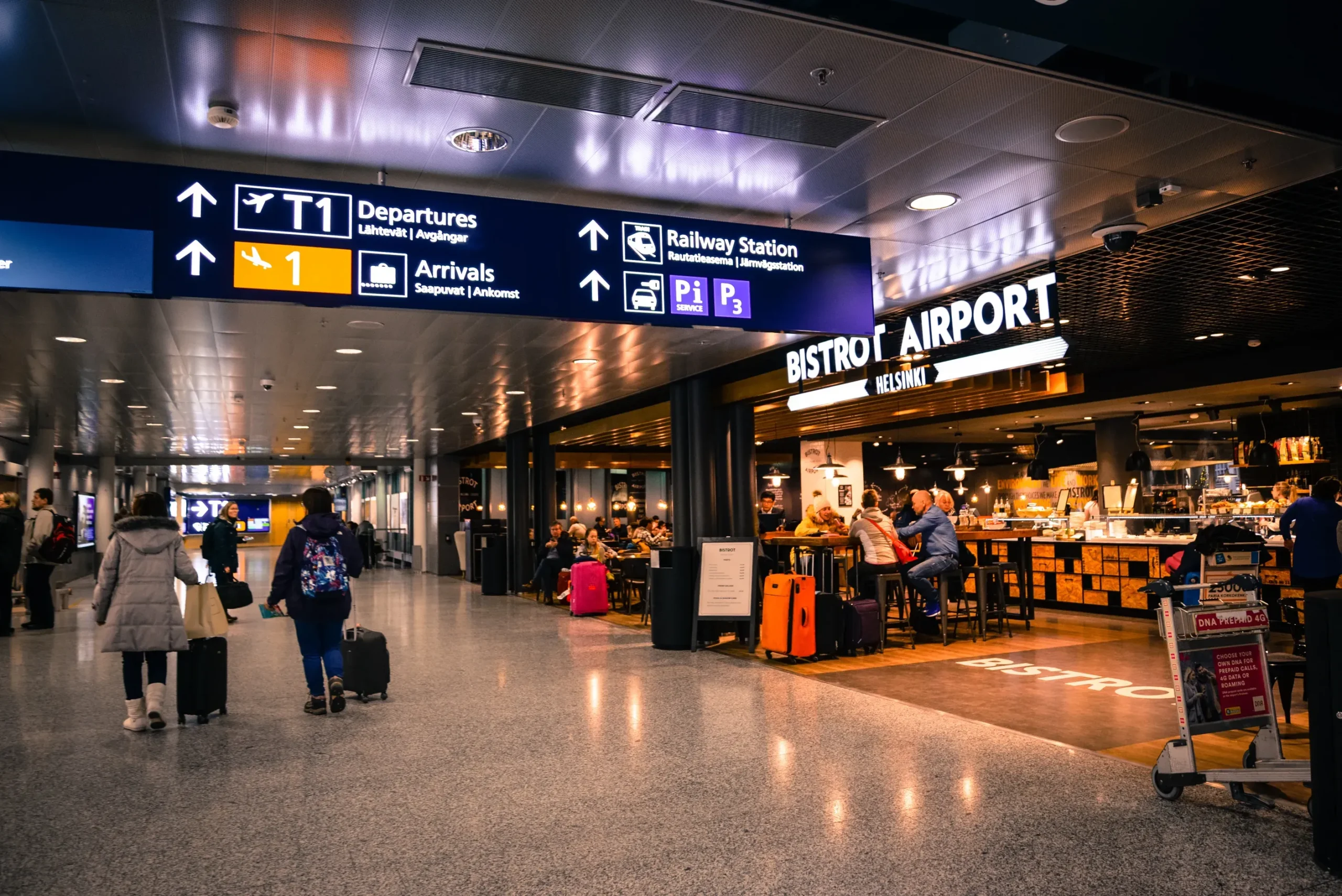
I discovered I was likely the father of five-year-old twin boys while standing on the cold marble floor of Terminal 4 at O’Hare International Airport, thirty-five minutes after cursing an unexpected flight delay I thought was going to ruin my career.
At forty-four, I had turned punctuality into a personal religion. I owned a boutique hotel chain with properties in Miami, Charleston, Savannah, and Key West, and that morning I was supposed to fly to Boston to close the acquisition of a historic estate. It was the largest deal of my career, three years of negotiations compressed into a single signature I was supposed to deliver by two o’clock that afternoon.
I had arrived at the airport with two hours to spare, the way I always did, because my father used to say that a man who shows up late has already told you everything you need to know about how he treats his obligations.
Then the departure monitor flashed red. MECHANICAL DELAY.
I immediately called my chief financial officer. “Start the board meeting without me if you have to. I’ll get there as soon as they clear this aircraft.”
Looking for a quiet spot away from the crowded gate, I walked toward the floor-to-ceiling windows and opened my laptop. I didn’t even get through two lines of my financial summary before I noticed her.
A few yards away, a woman was sleeping upright against the wall next to a scuffed blue suitcase, the kind with a wheel that had clearly given out somewhere along the way, judging by the scrape marks along one side. Beside her were two small boys. One had his head resting against her leg; the other slept with his small fingers tightly wrapped around the suitcase handle, as if letting go meant losing everything he had left in the world.
I would have kept walking if I hadn’t recognized the exact, delicate way she brushed her hair behind her ear, even in her sleep, an unconscious habit I hadn’t seen in six years and had somehow never forgotten.
Evelyn.
The woman who had vanished from my life six years ago, the woman I had once planned an entire future around, standing at the front of a rented banquet hall rehearsing vows I never got the chance to say to her.
I froze in my tracks.
Evelyn was thinner than I remembered, her face bore the deep lines of exhaustion that come from years of carrying something alone, and she wore plain clothes, nothing like the bright, unapologetic colors she used to favor, but it was unmistakably her. For six long years, I had tried to bury her memory under grand openings, investor contracts, flights, and endless business dinners that all blurred together into a single gray decade of forward motion. My mother, Eleanor Vance, had repeated a comforting explanation so many times that I had eventually swallowed it as truth, the way you swallow a story you’ve heard often enough that questioning it starts to feel like questioning yourself.
“Evelyn realized she didn’t belong in our world, Marcus. Let her walk away with her dignity.”
I had wanted to believe my mother because the alternative — that the woman I loved had simply abandoned me without a word — hurt too much to hold onto for long.
I had met Evelyn when she was coordinating charity galas for my family’s foundation in Chicago. I was thirty-five; she was thirty-one. She wasn’t intimidated by the Vance name, she challenged me when she thought I was wrong, usually in front of other people, which mortified me at first and then, gradually, became one of the things I loved most about her. She openly laughed at the stuffy formal traditions that surrounded my family — the seating charts calibrated by donation size, the way my mother introduced people by their net worth before their names.
My mother had despised her from day one.
“Enjoying someone’s company is one thing, Marcus,” Eleanor had warned me over dinner one night, cutting her chicken into precise, even pieces the way she did everything. “Building a family legacy with them is quite another.”
I had told my mother that Evelyn was the only woman I ever wanted to build a family with. I remember the silence that followed, the particular quality of it, the silence of someone recalculating rather than listening.
A few months later, I had to travel out of the country for three weeks to oversee a hotel opening in the Caribbean. When I returned to Chicago, Evelyn’s apartment was completely cleared out — not messy, not abandoned in a hurry, but cleared, the way a professional moving crew clears a place, nothing left behind, not even a forwarding address taped to the mailbox. Her phone was disconnected. My text messages went undelivered, the little red exclamation marks stacking up day after day until I stopped sending them. The letters I mailed to her parents’ address in Ohio returned to me unopened, stamped RETURN TO SENDER in a hand I didn’t recognize. My mother assured me, gently, patiently, that Evelyn had explicitly begged us not to track her down, that some women simply weren’t built for the kind of life the Vance name required, and that the kindest thing I could do was let her go quietly.
Wounded, angry, and far too proud to keep chasing a woman who had apparently chosen to disappear rather than talk to me, I stopped searching. I told myself it was dignity. I understand now it was simply the easier kind of grief — grief with an ending, instead of grief with a mystery attached to it.
Now she was sitting right in front of me.
Suddenly, one of the little boys stirred in his sleep and sat up, rubbing his eyes with the back of one small fist.
My mouth went completely dry.
The child had my dark, wavy hair, the exact square jawline of my late father, and a distinct, tiny notch in his left eyebrow — the very same notch I stared at in the mirror every morning while shaving, the one my own father used to joke came from some long-forgotten Vance ancestor who’d gotten into a fight over a horse.
Evelyn opened her eyes.
When she locked eyes with me, every drop of color drained from her face. Instinctively, she pulled both boys toward her chest, one arm around each, the reflex of a mother who has learned, somewhere along the way, that the world sometimes shows up to take things from her without warning.
I took a slow, hesitant step forward. “Evelyn.”
She stared at me as if she were seeing a ghost step out of the shadows. “It can’t be…”
“I’ve been asking myself the same thing for six years,” I choked out.
Evelyn pressed her lips together tightly. She looked down at the boys, then looked back up at me, her eyes filled with a terrifying mix of grief and caution, the look of someone deciding, in real time, how much of the truth she could afford to give me.
“Marcus…” she whispered, her voice trembling. “Your mother never told you, did she?”
“Your mother never told you?” I repeated, barely able to speak, the words coming out smaller than I meant them to.
Evelyn shook her head slowly. “No, Marcus. She made sure you never found out.”
The noise of Terminal 4 seemed to disappear around us. The gate announcements, the rolling suitcases, the distant hum of a floor polisher somewhere down the concourse — all of it faded until there was nothing left but her voice and the small, warm weight of understanding settling over me like a stone.
“Are they mine?” I whispered.
Tears filled Evelyn’s eyes before she answered. She didn’t need to say anything. The silence between us already held the truth, the way silence sometimes tells you more than any sentence could.
I looked at my sons — my sons, a phrase I had never had occasion to use in my life and now couldn’t stop repeating in my head — and felt a pain unlike anything I had ever experienced in forty-four years of losses and disappointments and hard business failures. Six years of birthdays missed. First steps I never witnessed. Bedtime stories I never told. Every ordinary, unremarkable moment of a childhood, stolen from all three of us at once.
“Why didn’t you tell me?” My voice cracked.
Evelyn looked away, out toward the tarmac where a plane was taxiing slowly past the window. “Because I tried.”
Those three words froze me.
She reached into her worn handbag and pulled out an old envelope, its edges yellowed from time, softened at the corners the way paper gets when it’s been carried around and handled too many times by hands that couldn’t decide whether to throw it away. My name was written across the front in Evelyn’s handwriting, the loops of the letters exactly as I remembered them.
“I sent this to you the week I left,” she said quietly. “Your mother intercepted it before it ever reached you.”
My hands trembled as I opened it. Inside was a letter I had never seen, filled with words of love, fear, and a desperate plea for help — sentences about being pregnant and terrified and not knowing where else to turn, about hoping I would come find her before it was too late to fix anything.
But before I could finish reading, my phone began ringing.
It was my assistant.
The Boston acquisition meeting was starting. The biggest business deal of my life was waiting on a screen full of lawyers and investors who had cleared their calendars around my signature.
Normally, I would have answered immediately. Punctuality was my religion, and I had never once, in twenty years of building this company, let a deal slip because I couldn’t be bothered to pick up a phone.
But then one of the boys opened his eyes and looked directly at me.
“Mommy,” he whispered, rubbing sleep from his face, “is that the man from the pictures?”
My heart stopped.
Pictures.
I turned back to Evelyn, confused. “What pictures?”
Her expression changed instantly. Fear replaced sadness, sharp and sudden, the look of someone who has just realized a door she thought was locked has swung open.
Before she could answer, another voice came from behind me. A voice I knew too well.
“Marcus?”
I turned around.
My mother, Eleanor Vance, stood there with a calm smile that didn’t reach her eyes, dressed for travel in the kind of tailored coat she wore whenever she wanted to look unassailable, a small leather bag over one shoulder as though she, too, had simply happened to be passing through this terminal on this particular morning.
For a moment, nobody moved.
Then Eleanor looked at Evelyn and said coldly, “I see you finally decided to show him the children.”
The way she said it made my blood run cold. Because she wasn’t surprised. She wasn’t confused. She had known. Not suspected — known, with the flat, practiced calm of someone reciting a fact she had lived with for a long time.
And in that moment, standing on the marble floor of a terminal with my forgotten flight blinking overhead and my sons blinking up at me, I understood that the woman who had raised me — who had taught me to shake hands firmly and negotiate without flinching and always, always assume the worst intentions in strangers — had been hiding something far bigger than Evelyn’s disappearance.
My phone stopped ringing. Then started again.
I silenced it without looking at the screen.
“Mom,” I said slowly, “what is she talking about?”
Eleanor’s composure didn’t crack, but something behind her eyes shifted, some internal calculation running its course. “This isn’t the place, Marcus.”
“It’s the only place,” I said. “You’ve had six years to pick a better one.”
Evelyn had gone very still beside me, both boys awake now, watching the three adults with the particular quiet alertness of children who have learned that grown-up silences usually mean something is about to break.
“I have a car outside,” Eleanor said. “We can discuss this at the house, like civilized people.”
“We’re discussing it here.”
For the first time in my adult life, I watched my mother hesitate.
“Marcus,” she said, lower now, “there are things about your father’s affairs that are far more complicated than a lovers’ quarrel from six years ago. If you start pulling at this thread in the middle of an airport—”
“Then let it unravel in the middle of an airport.”
She looked at Evelyn, then at the boys, then, finally, at me, and something in her face folded, just slightly, the way a hand folds when it finally sets down a weight it’s been carrying too long.
“Not everything I did,” she said quietly, “was to hurt you.”
“You’ll have to explain that to me,” I said, “because from where I’m standing, it looks exactly like six years of hurting me very efficiently.”
My phone buzzed again. A text this time, from my CFO. Board is asking. Do we proceed without you?
I looked at the screen for a long moment. Three years of work sat behind that acquisition. My whole professional identity had been built, brick by brick, on being the man who never let anyone down, who always closed the deal, who treated a missed meeting as a personal failure of character.
I typed one line back. Proceed without me. Something more important came up.
Then I turned my phone off entirely and put it in my pocket.
Evelyn watched me do it with an expression I couldn’t quite read — surprise, maybe, or the beginning of something like relief.
“Tell me everything,” I said to my mother. “Right here. Right now.”
She didn’t. Not entirely, not that morning in the terminal, surrounded by travelers dragging suitcases and gate agents making boarding announcements over the intercom. But she told me enough — that Evelyn had come to her six years earlier, pregnant and frightened, asking for help finding me before I left for my hotel opening; that Eleanor had told her I didn’t want to be found, the same lie in reverse, aimed at two people who had never stopped wanting each other; that she had arranged, quietly, efficiently, for Evelyn to receive a settlement large enough to disappear on, and small enough to guarantee she’d never come back with leverage.
“You paid her to vanish,” I said, the words feeling foreign and ugly in my mouth.
“I protected the family.”
“You protected yourself from having a daughter-in-law you didn’t choose.”
Eleanor’s jaw tightened, but she didn’t deny it.
We didn’t resolve anything that morning. I took Evelyn and the boys — Noah and Ethan, she told me later, in the taxi, watching me carefully as though the names themselves might set something off in me — to a hotel near the airport, not one of mine, because I didn’t want the concierge staff recognizing me and calling ahead to my mother the way half the city seemed to do without being asked. I got them a suite with two bedrooms. I sat on the edge of a hotel bed while my five-year-old sons fell asleep watching cartoons, and I felt, for the first time in longer than I could remember, entirely unprepared for anything in my life.
Evelyn told me the rest over the next several days, in pieces, the way you tell someone a story you’ve rehearsed so many times in your head that saying it out loud feels like performing a smaller version of the real thing. She told me about the six years — three different cities, a string of jobs that never paid quite enough, two evictions, a stretch of eight months where she’d worked two jobs and still couldn’t cover daycare, so Noah and Ethan had spent their days with an elderly neighbor who watched four other children in a cramped apartment two floors down. She told me about the letters she’d sent, first to me, then, when those went unanswered, to my company directly, letters that had apparently never made it past whatever screening process my mother had quietly put in place around my mail.
She told me, too, about the pictures — old photographs of me, cut from magazine profiles and company newsletters, that she’d kept and shown the boys over the years so they would know, at least, what their father looked like, even if they’d never expected to actually meet him.
“I never stopped trying,” she said, on the third night, sitting across from me in the hotel suite’s small kitchenette while the boys slept in the next room. “I want you to understand that. I didn’t give up on you. I ran out of ways to reach you.”
I believed her. I think some part of me had believed her from the moment I saw her sleeping against that wall in Terminal 4, before she’d said a single word.
The legal document came up on the fourth day.
I’d gone to my mother’s house — the family mansion, as everyone in Chicago still called it, though it had always struck me as more of a monument than a home — to demand a fuller accounting of what she’d done. I found her in my father’s old study, a room she rarely used, going through a locked filing cabinet I’d never seen opened in my life.
“What are you looking for?” I asked from the doorway.
She startled, which was itself unusual; my mother did not startle.
“Nothing that concerns you.”
“Everything in this house concerns me now, Mom. You made sure of that.”
She closed the drawer, but not fast enough. I’d already seen the edge of a folder, thick, tabbed, official-looking in a way that had nothing to do with household paperwork. I crossed the room before she could stop me and pulled it free.
Inside was a legal document, several pages, dense with the kind of language lawyers use when they want a thing to be enforceable and unreadable at the same time. And there, at the bottom of the third page, was a signature.
My signature.
Or something built to pass as my signature — close enough to fool a notary, close enough to fool a bank, but wrong in the small ways I would only have noticed because I’d signed my own name several thousand times over the course of my career and knew exactly how my M curved and where my pen usually caught on the downstroke of the S in Vance.
“What is this?” I asked, my voice very quiet.
Eleanor didn’t answer right away.
“Mom. What is this?”
“It’s a release,” she finally said. “A waiver of parental claim, executed six years ago, transferring certain financial obligations related to Evelyn’s situation into a private settlement in exchange for her agreement not to pursue contact.”
“I never signed this.”
“I know.”
The two words sat there between us, plain and terrible.
“You forged my signature.”
“I authorized someone else to.”
“Who?”
She didn’t answer that either, not directly, but the name would come to me two days later, through my CFO Rachel, in an entirely different context that would eventually connect every thread of this story into something far larger and far uglier than one mother’s overreach.
That was the day I found the second document — not the forged waiver, but a folder Rachel brought to my office after I asked her, almost as an afterthought, to pull up every notarized document connected to my family’s holdings over the past twenty-five years. I hadn’t been looking for Daniel. I hadn’t even known, at that point, that I had a brother to look for.
But his name was on nearly a dozen of those documents, dated from a period when I would have been in college, filings related to company shares, family trust distributions, board appointments — all of it belonging to a Daniel Alexander Vance whose name I had never once heard spoken in my parents’ house.
I brought the folder home that night and confronted my mother with it, laying the pages out on the same dining table where she’d once told me Evelyn didn’t belong in our world.
“Daniel?” I said.
Her face changed. Not slightly. Completely. The confident woman who had controlled boardrooms, family meetings, and entire generations of Vances suddenly looked like someone who had been caught hiding in the dark.
“Marcus…”
“Tell me I’m reading this wrong.”
She didn’t answer.
That silence destroyed me. Because I already knew.
My brother was alive. Or at least, someone believed he was.
I grabbed the document again. The handwritten note underneath the witness signature repeated the same sentence, over and over, in different hands, as though multiple people had copied it out at different times for different reasons: Marcus must never know what happened to his brother.
My hands shook.
“What happened to him?”
My mother sat down slowly, lowering herself into a chair the way a much older woman would, her hand braced against the table. For the first time in my life, I saw her as something other than powerful. I saw her as broken.
“Your father made mistakes,” she whispered.
“My father?”
“Yes.”
I laughed bitterly, the sound scraping out of me before I could stop it. “Everyone keeps blaming dead men. First Evelyn disappears because of you. Now Daniel vanished because of Dad. When does someone finally tell me the truth?”
My mother looked at me.
“Your brother did not die.”
The words hit harder than I expected. The room became silent. The air felt impossible to breathe.
“Then where is he?”
She closed her eyes.
“I don’t know.”
“You don’t know?”
“No.”
I stepped back.
“You expect me to believe that?”
“I spent years trying to find him.”
“After hiding him?”
“I was trying to protect you.”
I hated those words. Because every terrible thing my family had done had been wrapped in the same excuse. Protection. A beautiful word people used when they wanted to justify hurting someone, dressed up in enough love to make the hurt look almost reasonable.
Evelyn entered the room quietly. She had heard enough.
“Marcus.”
I turned.
She looked at the document. Her face went pale.
“You found it.”
I stared at her.
“You knew?”
She hesitated. “I knew your family had another secret.”
My heart sank. “How?”
“Because Daniel was the one who helped me.”
The room froze.
“What?”
Evelyn sat down.
“Six years ago, when your mother forced me to leave Chicago, I had nowhere to go. I was pregnant. I was terrified. I thought I had lost you forever.”
She swallowed.
“Then someone found me.”
“Daniel.”
She nodded. “Your brother.”
I felt dizzy, the floor of my own dining room suddenly unreliable beneath me. “Why would he help you?”
“Because he knew what your mother had done.”
My mother looked away.
“Daniel was different from the rest of us,” she whispered.
“No,” I said. “Don’t say that like he was the problem.”
She looked at me. “He believed the Vance name meant nothing if we destroyed the people we loved.”
That sentence stayed with me long after that night, because it sounded exactly like something I wished I had said years earlier, something I hadn’t even realized I believed until I heard it attributed to a brother I’d never known I had.
“What happened to him?” I asked.
Evelyn looked down. “He tried to expose everything.”
My mother’s expression changed. “Enough.”
I turned sharply. “No.”
“Marcus, this conversation ends now.”
“No, Mom. It started six years ago.” I picked up the document. “And tonight, I’m finally reading the first page.”
Over the following hours, sitting at that dining table while Evelyn made coffee neither of us drank and the boys slept upstairs in a guest room, my mother told me the rest, piece by reluctant piece, the way people confess when the alternative — silence — has finally become more painful than the truth.
Before my father died, he had discovered something inside the Vance company. A hidden financial network. Secret accounts. Illegal transfers, money moved through shell companies that existed only on paper, siphoning funds out of the hotel chain’s early expansion capital in amounts small enough to escape casual notice but large enough, over years, to represent millions of dollars.
Daniel had found the evidence, working then as a young executive inside the company, eager and idealistic in a way I apparently never got the chance to see for myself. He wanted to expose it. But someone stopped him. Someone powerful. Someone inside our own family.
The final page contained one sentence: If anything happens to Daniel Vance, the responsibility belongs to the person who fears the truth.
There was no name. Only a blank space.
But everyone in that room knew, or thought they did, and the not-knowing precisely which relative had left that blank unsigned somehow felt worse than any name could have.
The next morning, I walked into my company headquarters carrying a folder. Not a business proposal. Not a contract. Evidence.
My employees immediately noticed something was wrong. I had built Vance Hospitality through discipline and reputation, always the man who walked into a room already knowing exactly what to do. But that morning, I was different. Because I finally understood something. The greatest enemy of my life was not outside my family. It was sitting at my dinner table.
My chief financial officer, Rachel, looked at me carefully. “Marcus, are you okay?”
I placed the documents on the table. “No.”
She opened the folder. Within minutes, her expression changed.
“Where did you get this?”
“That’s what I’m trying to find out.”
Rachel studied the papers. “There’s something strange.”
“What?”
She pointed. “These signatures.”
“What about them?”
“They were notarized by someone named Victor Hale.”
I froze. The name meant something. I just didn’t know why.
“Who is Victor Hale?”
Rachel looked at me. “Your father’s former attorney.”
My heart stopped. “The man who handled the family trust?”
“Yes.”
“But he died.”
Rachel shook her head. “No.”
A cold feeling moved through me. “No?”
“He disappeared twenty years ago.”
Just like Daniel. Just like Evelyn. Too many disappearances. Too many secrets. Too many coincidences stacking up around the edges of a family that had always presented itself, to the world and to me, as a portrait of unbroken continuity.
That afternoon, I confronted my mother again. This time, I came prepared, with copies of everything, laid out on the same table, refusing to let her steer the conversation into whichever room felt most controllable to her.
“Where is Victor Hale?”
Her expression changed immediately. “You found his name.”
“Yes.”
She sat quietly. Then she whispered, “Your father trusted the wrong people.”
“Who?”
She looked at me. “His own brother.”
I stared. “My uncle?”
She nodded.
My family tree suddenly felt like a battlefield, every branch of it hiding some conflict I’d never been told about, every name I’d grown up trusting rearranged, overnight, into a stranger.
“Why didn’t anyone tell me?”
“Because you were young.”
“I was twenty-two.”
“You were still my child.”
“No, Mom. I was your son. There’s a difference.”
She looked hurt. But I couldn’t stop.
“You decided what truths I was allowed to know.”
A tear appeared in her eyes. Something I had never seen before, not at my father’s funeral, not at any board crisis, not once in forty-four years.
“My biggest mistake was believing I could control pain.” She looked toward the window. “I thought if I removed the people who could hurt you, you would be safe.”
“And instead?”
She whispered, “I became the person who hurt you most.”
That night, I received a message from an unknown number. One sentence.
If you want the truth about Daniel, come alone.
There was an address. An abandoned warehouse near the old Chicago docks.
I knew it could be a trap. But after six years of lies, and only four days into learning how deep they went, I was done being afraid.
I told Evelyn where I was going, and against her protests, I told her I’d call her the moment I arrived, and again the moment I left, and I meant both promises. Then I drove out through the industrial edge of the city, past shuttered warehouses and empty rail yards, until I found the address, a long low building with broken windows and a rusted loading door standing half open.
The warehouse smelled like rust, rain, and forgotten memories.
I entered slowly.
“Hello?”
No answer.
Then a voice came from the darkness.
“You got your father’s stubbornness.”
I stopped. Because I knew that voice. Not from memory. From blood.
A man stepped forward. Older. Tired. But unmistakable.
Daniel Vance was alive.
For several seconds, neither of us moved.
Then he whispered, “Hello, little brother.”
My knees almost gave out.
“Daniel?”
He smiled sadly. “You got taller.”
A laugh escaped me. A broken, emotional laugh, the kind that comes out sideways when you don’t have any other way to release what’s built up.
“You disappeared.”
“I know.”
“You let everyone tell me you were dead.”
“I had no choice.”
“No choice?”
His face hardened. “Marcus, our family has been built on people believing they have no choice.”
The anger inside me exploded. “Six years, Daniel.”
“I know.”
“I lost my children.”
His expression changed. “What?”
I showed him a picture of Noah and Ethan on my phone.
For the first time, Daniel looked truly shocked. “You have sons?”
“Yes.”
He closed his eyes. “Then she did it.”
“Who?”
“My wife.”
I froze. “What?”
Daniel looked at me. “The person behind everything.”
I felt the room disappear.
“Your wife?”
He nodded. “Your mother’s sister.”
My mind struggled to understand. Another family member. Another betrayal. Another hidden connection stretched across a family I had thought, until four days earlier, I understood completely.
“She manipulated everyone,” Daniel said. “She wanted control of the company. She convinced your father that outsiders were threats. She convinced your mother that protecting the family meant controlling everyone.”
“Then why did my mother help her?”
Daniel looked away. “Because your mother was afraid.”
“Afraid of what?”
“That she would lose the only thing she had left.”
Me.
Daniel revealed the final piece that night, sitting on a pair of overturned crates in that cold, echoing warehouse while I recorded everything on my phone because some instinct, some habit built by twenty years of closing careful business deals, told me I would need proof of every word.
Years ago, my father discovered his brother’s corruption — the hidden accounts, the shell companies, the slow bleeding of company capital into a private empire nobody was supposed to know existed. He planned to expose everything. But before he could, he died. Officially, it was an accident, a fall on an icy staircase at the lake house, the kind of thing nobody questions when a sixty-one-year-old man with a bad hip lives alone half the year. But Daniel never believed that. He investigated on his own, quietly, and he found evidence — bank records, internal memos, a pattern of transactions too consistent to be coincidence. And then someone tried to make him disappear too.
“Why didn’t you come back?” I asked.
“Because I thought I would put you in danger.”
I stared at him. “You protected me by leaving?”
“Yes.”
I looked away. It was the same mistake everyone in my family made. They confused distance with protection. Silence with love. My mother had done it to Evelyn. Daniel had done it to me. And somewhere above all of it sat my father’s brother and Daniel’s own wife, using that same instinct — the family’s deep, inherited belief that the truth was too dangerous to be shared — as cover for whatever they were actually protecting, which was never any of us. It was only ever themselves.
We stayed in that warehouse for hours, Daniel filling in twenty-two years I’d never known were missing, me filling in six that he’d never known about either. By the time I drove home, the sky had gone from black to the pale gray of early morning, and I called Evelyn from the driveway before I even got out of the car, my voice raw from talking and crying and talking again.
The next week changed everything.
The evidence Daniel had collected, combined with what Rachel and I found once we knew where to look, was enough to reopen old investigations into the company’s finances and into the circumstances of my father’s death. Once we had names — my uncle, Victor Hale, Daniel’s wife, whose real involvement went back further than any of us had guessed — the rest came apart quickly, the way a structure does once you find the one support beam holding up everything else.
The Vance family secrets began appearing publicly. News reporters surrounded the company. Investors demanded answers. People who had spent decades pretending nothing was wrong suddenly wanted explanations, board members who had shaken my hand at a hundred galas now avoiding my calls, then, once the evidence became undeniable, calling me back within the hour.
But the biggest surprise came from Eleanor.
My mother walked into the board meeting and did something nobody expected.
She confessed. Not privately. Publicly, in front of the same directors and investors and reporters who had spent the week speculating about how much of this she had known.
“I failed my son,” she said.
The room went silent.
“I believed power was protection. I believed control was love. I was wrong.” She looked directly at me. “I stole six years from Marcus and Evelyn.”
The confession shocked everyone. But it shocked me most. Because for the first time, my mother wasn’t trying to win. She was trying to repair.
Months passed. The company survived, restructured under new oversight, with Rachel stepping into a larger role and Daniel, once his legal situation was resolved, coming on as an advisor to help untangle what remained of our uncle’s shell network. The truth came out, piece by piece, in depositions and settlement hearings and one long, difficult afternoon in a courtroom where my uncle refused to look at either of his nephews. The people responsible faced consequences — not everything the law could offer, but enough, finally, to close the file on twenty-two years of silence.
But healing was harder than revenge. Because revenge was simple. Forgiveness was complicated, especially when the person who hurt you was someone who once held your hand when you were afraid, who had sat beside your hospital bed with the flu when you were seven, who had, in her own broken, controlling way, genuinely believed she was keeping you safe.
One evening, I found Evelyn sitting outside our new home. Not a mansion. Not a family estate. Just a quiet house on a tree-lined street where our children could run freely between yards without anyone worrying about which family owned which acre.
“Are you happy?” I asked.
She smiled. “I’m learning.”
I sat beside her.
“I’m sorry.”
She looked at me. “You don’t have to apologize for what you didn’t know.”
“But I should have fought harder.”
She shook her head. “You were lied to.”
“I still lost time.”
She reached for my hand. “Then don’t lose more.”
A year later, Noah and Ethan called me Dad without hesitation. The first time it happened, I cried. I didn’t hide it. I didn’t care. Because there are moments when a person realizes they have finally arrived somewhere they were always meant to be, even if the road there was longer and crueler than it should have been.
I attended school meetings. I read bedtime stories. I learned their favorite foods, learned that Noah hated thunderstorms but loved superheroes, that Ethan collected small rocks because he believed every stone had a story, and would present each new addition to his collection to me with a solemnity that made me laugh every single time. I had missed their beginning. But I was determined to be there for everything after.
Daniel became part of our lives again. At first, it was awkward — twenty-two years could not disappear overnight, and there were whole categories of ordinary brotherly history, inside jokes and shared childhood memories, that simply didn’t exist between us and never would. But slowly, we rebuilt. One conversation. One memory. One honest moment at a time, over dinners at my new, smaller house, over Sunday afternoons watching the boys chase each other around the yard while their uncle taught them, badly, how to throw a curveball.
Then came the biggest surprise.
Daniel found another file hidden inside our father’s old belongings, boxes that had sat untouched in a storage unit since the funeral. A letter. Written before his death. Addressed to both of us. Marcus and Daniel.
My hands trembled as I opened it. My father’s words were simple.
“If you are reading this, then my greatest fear came true. My family turned love into control.”
He wrote that he knew the Vance family had become obsessed with legacy, that wealth without love was just another form of poverty, dressed up nicer than the kind most people recognized. And then he revealed something impossible. The company was never meant to belong to one person. It was meant to become a foundation. A place that helped families like the ones we had failed to protect.
My father’s final wish was clear: “Build something better than what I left behind.”
Two years later, the Vance Foundation opened its doors. Not as a monument to wealth. But as a promise — a promise that no child should lose a parent because powerful people decided they knew better, a promise that families should not be controlled. They should be loved.
At the opening ceremony, Eleanor stood beside me. She looked older. But peaceful.
“I never thought I would see this day,” she said.
I smiled. “Neither did I.”
She looked at Evelyn and the boys. “Thank you.”
Evelyn nodded. There was still pain between them. But there was also something new. Acceptance, the kind that doesn’t erase what happened but decides to build somewhere alongside it anyway.
After the ceremony, I found an envelope waiting for me. No sender. No address. Inside was one final document.
I opened it. And froze.
It was a birth certificate. Not for Noah. Not for Ethan. For me.
But the information on it was different from the one I had known my entire life. My father’s name was there. My mother’s name was there. But underneath was a handwritten note.
“Marcus, there is one final truth you deserve to know.”
My heart raced. The note continued: “You were not the only child your father tried to protect.”
I looked up. Daniel was standing across the room. His expression told me he knew.
“What is it?” I asked.
He walked toward me slowly. Then he smiled.
“Your father had another secret.”
I stared at him. “Another?”
Daniel nodded. “One he hid because he thought he was protecting us.”
My hands tightened around the paper. “Who?”
Daniel looked toward the doorway.
A woman stood there. Older. Tired. But alive.
My breath stopped. Because I recognized her from a photograph that had hung in our family mansion before it mysteriously disappeared sometime during my childhood, taken down without explanation, never mentioned again.
My father’s first wife. Daniel’s mother. The woman everyone told me had died before I was born.
She smiled through tears. “Hello, Marcus.”
The world became silent. Because the biggest secret my family buried for decades was not about money. Not about power. Not about betrayal.
It was about a woman who had been alive all along, and a family story that had only just begun to tell itself honestly.

Adrian Hawthorne is a celebrated author and dedicated archivist who finds inspiration in the hidden stories of the past. Educated at Oxford, he now works at the National Archives, where preserving history fuels his evocative writing. Balancing archival precision with creative storytelling, Adrian founded the Hawthorne Institute of Literary Arts to mentor emerging writers and honor the timeless art of narrative.