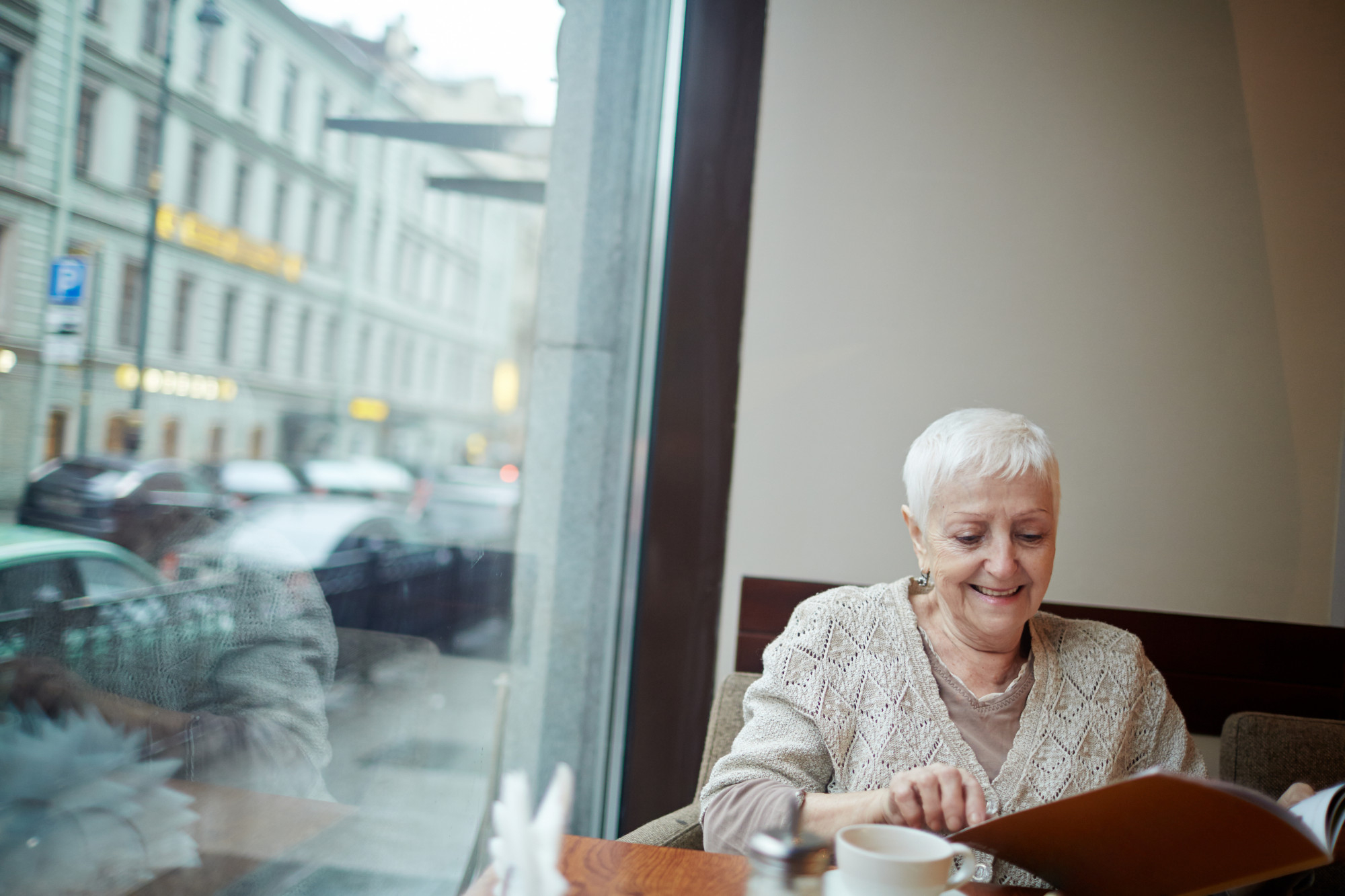
The Birthday Dinner
His name was Enzo.
I did not know that yet. I only knew that a man in his late seventies, wearing a white chef’s jacket with sauce on the sleeve and flour on his hands, had come through the kitchen door at a pace that you do not expect from a man his age, and had stopped three feet from my mother as though he had run into something invisible.
He looked at her.
She looked at him.
He said, in Italian: “Giulia.”
My mother’s cane clattered to the floor.
My mother’s name is Giulia. In America she has been Julia for fifty years, because it was easier, because the people she met could not hear the softness of the original, and she had learned early that making yourself slightly easier to pronounce was the cost of belonging. But she was Giulia before she was anything else, and the name in his mouth was the Italian version, the one with the specific sound that you do not produce unless Italian is your first language.
She said, in Italian: “Enzo.”
The entire dining room had been silent since the moment he came through the door, with the specific silence of strangers who understand they are witnessing something that belongs to other people but that they cannot look away from.
He was on his knees.
He was holding her hands.
He was crying.
My mother’s face had gone through several things in the previous ten seconds: confusion, then recognition, then something deeper and older that I did not have a word for in English and that I associated, from childhood, with the specific quality of the Italian she spoke when she was talking about home.
She said his name again.
Then she started crying too.
The hostess, whose name I would learn was Tara, was standing behind her podium with the expression of someone who has made a serious error and is computing the dimensions of it.
I was standing with my mother’s cane in my hand, having picked it up from the floor.
I did not know yet who Enzo was to my mother.
I would learn over the next three hours.
Let me tell you my mother’s story first, because Enzo’s story is inside my mother’s story, and you cannot understand what the restaurant meant without understanding where she had come from.
My mother was born in 1946 in a village in the Campania region of southern Italy, the kind of village that appears on no maps important enough to locate easily, that has a church and a square and a bakery and families who have lived there for four or five generations and who know each other with the total knowledge that comes from that kind of proximity.
She grew up in a house with her mother and her father and three siblings and, across the square, the family of a boy named Enzo Marchetti.
They had grown up together the way children in villages grow up together, which is to say in each other’s houses and on each other’s streets and with the kind of knowledge that accrues without being sought, the complete familiarity of people who have never needed to introduce themselves.
By the time they were eighteen, everyone in the village understood that Enzo and Giulia were going to marry.
Then her father died.
And her mother’s health failed.
And there was a cousin in Naples who knew someone in New York who had a job for a young woman who was willing to work hard, and her mother said you should go, and she went.
She was twenty two years old.
She was, though she did not know it yet, three weeks pregnant with my brother.
She arrived in New York in 1968 with a suitcase and a cousin’s address written on a piece of paper and enough English to ask for directions and misunderstand the answer.
She never went back.
Not because she didn’t want to. Because life has a momentum, once it starts, that is difficult to redirect. There was my brother’s birth. There was a husband she met in the Italian neighborhood of Queens, a man named Marco who worked in construction and who died when I was seven of the kind of heart attack that took Italian men of his generation with specific cruelty. There were three children to raise alone. There was work, always work, cleaning other people’s houses and then, when her back made that impossible, alterations, taking in the hemming and the zipper replacements and the buttons that needed reattaching, which she did at the kitchen table in the evenings with the television on and which paid, just barely, for what three children needed.
She never had money for plane tickets to Italy.
And Enzo, in the village, had his own life.
She knew this in the general way of someone who has lost contact with a person: they are out there, living, and you are here, living, and the two lives are happening in parallel and separately and eventually the parallel becomes so long-established that the gap between them is more than distance.
She had not heard from him in fifty years.
He had, apparently, also been in America.
Not always. He had come later, in his forties, with money he had saved from thirty years of cooking in restaurants in Naples and Rome, and he had come to New York because New York was where the Italian restaurant business was, and he had found a partner and they had opened a place in Queens and then another in Manhattan and eventually, twenty years ago, this one.
This small Italian bistro downtown.
The one her church friends kept talking about.
The one she had wanted to try for her birthday.
He had not known she was in America.
He had spent fifty years thinking she was in the village, or somewhere in Italy, continuing the life that he had also left behind.
He told us this at the table, after he had risen from the floor and Tara had been sent somewhere by the force of the situation and the maitre d’ had appeared and seated us at the best table in the house, the round one in the corner with the good light that was clearly reserved for important people.
Enzo sat with us.
He was not going to cook tonight. He had a sous chef who was more than capable. Tonight he was going to sit with Giulia Parker, who had been Giulia Romano before she was anything else, and find out what fifty years looked like.
I sat across from them and listened.
They spoke mostly in Italian.
My Italian is functional but not fluent, the Italian of someone who grew up hearing it and who uses it primarily to understand what their mother is saying about them when she thinks they don’t know. But this Italian I understood, or understood enough of, because it was the Italian of two people who were catching up on fifty years and who were using the language they had both been children in, and the language had a quality of directness that I associated with what my mother was like before America had taught her to make herself easier.
Enzo had a wife. Forty years married. Her name was Carmela and she was in Florida visiting their daughter, which was why he was in the kitchen tonight instead of at home. He had four grandchildren. He had a son who was a doctor in Boston and a daughter who was a teacher in Miami.
My mother had three children. She had two grandchildren and one great-grandchild. She lived in the house I had grown up in, which she owned now outright, which had taken thirty years of mortgage payments to own.
He told her he had tried to find her, years ago, when he first came to New York. He had gone to the old neighborhood in Queens, the Italian one, and asked after a family named Romano, and had found only a woman who remembered a family by that name who had moved away and left no forwarding address.
My mother listened to this.
She said: I moved to New Jersey when your oldest was two.
He said: I didn’t know you had children.
She said: I didn’t know you had come to America.
They looked at each other.
He said: Fifty years.
She said: Fifty years.
The food started arriving.
He had gone back to the kitchen for twenty minutes, not to cook but to instruct, and what emerged from that instruction was the meal I would think about for the rest of my life.
Not because of its complexity. Because of its specificity. Every dish was from the region, the particular Campanian tradition that my mother had grown up with and that I had grown up with in a translation, the versions she could make with American ingredients that were always good and always slightly wrong in the way that things are slightly wrong when they are made without the original water and oil and flour.
These dishes were not slightly wrong.
These were the original.
The bread was a specific kind that I did not have a name for, that my mother tore a piece of and held for a moment and then ate without saying anything, but with an expression that I had not seen on her face before.
She said: My mother made this.
He said: I know. I learned it from her.
She looked at him.
He said: She taught me before you left. I don’t think she knew you were leaving.
My mother put the bread down.
She said: She knew. She just didn’t say.
They were both quiet.
Then he said: She was a good woman. Your mother.
And my mother said: Yes. She was.
Tara had appeared at some point in the previous hour, in my peripheral vision, hovering near the hostess stand with the expression of someone who wants to say something and knows it is not the moment.
The moment came eventually.
She came to the table during a pause in the conversation, when the main course had been cleared and the dessert had not yet arrived, and she stood at the edge of the table’s light.
“Mrs. Parker,” she said.
My mother looked at her.
“I owe you an apology,” Tara said. “What I said was wrong and I want you to know I understand that.”
My mother looked at the girl for a moment.
Tara was perhaps twenty two. She had the expression of a person who has genuinely understood that they did something wrong and who is not deploying the apology strategically but feeling it.
“Sit down,” my mother said.
Tara looked surprised.
“Please,” my mother said.
Tara sat.
My mother looked at her for a moment, with the particular quality she had when she was deciding how to say something.
“When I came to this country,” my mother said, in English, slowly, “I had nothing. Less than nothing. My English was so bad I could not read a menu. I went to restaurants sometimes, when I had a little money saved, and I sat down and I ordered by pointing at what someone else was eating. Because I could not read.”
Tara listened.
“Do you know what the people in those restaurants were to me?” my mother said.
Tara shook her head.
“Everything,” my mother said. “They were the first people in this country who sat me down and fed me like a person. When no one else knew I existed. When I was invisible to everyone.”
She paused.
“A restaurant is not a test,” she said. “It is not a place where you decide who deserves to come in. It is a place where you feed people. That is all. That is everything.”
Tara was looking at the tablecloth.
“I’m sorry,” she said again. “I’m very sorry.”
“I know,” my mother said. “I can see that you are.”
She paused.
“You are young,” she said. “Young people make mistakes because they have not yet lived long enough to understand what certain things mean. That is not an excuse. But it is an explanation.”
Tara looked up.
“Do you forgive me?” she said.
My mother looked at her.
“I am a Catholic woman who goes to Mass every Sunday,” my mother said. “I forgive everyone. It is the most annoying thing about me.”
Tara laughed, slightly, the surprised laugh of someone who was not expecting to laugh.
My mother smiled.
“Go home,” she said. “And the next time someone walks in who you think cannot afford the bill, think about what it would mean to them to be fed. Just that.”
Tara stood.
She looked at Enzo, who had watched this whole exchange with the expression of a man watching something he already knew to be true be demonstrated.
Then she left.
Enzo looked at my mother.
He said, in Italian: You were always like this.
She said: I was not always like this. I learned it. It took a long time.
He said: I would have liked to watch you learn it.
She looked at him.
She said: You had your own life to live.
He said: Yes. But still.
The dessert arrived.
It was a pastiera, the Neapolitan Easter cake that my mother made every spring, the one with the ricotta and the candied citrus and the faint orange blossom water, the one that had been the smell of Easter in our house since I was old enough to remember smells.
My mother looked at the pastiera.
She looked at Enzo.
She said: It’s not Easter.
He said: I know. It’s your birthday. And you wanted to feel at home.
She put her hand over her mouth.
He said: Is it right?
She tasted it.
She looked at him.
She said: It’s my mother’s recipe.
He said: Yes. She gave it to me before I left the village. She said keep this for when you need to remember where you came from.
My mother did not say anything.
We ate the pastiera.
We ate it slowly, the way you eat something that means something, with the specific attention that belongs to food that is also a memory.
When we were finished, the dining room had mostly emptied. It was late. The kitchen had been quiet for an hour.
Enzo called his wife in Florida.
He handed the phone to my mother.
My mother talked to Carmela, in Italian, for twenty minutes, while I sat at the table and watched my mother’s face do things I had not seen it do in years: the ease of speaking her first language with someone who spoke it natively, the specific relaxation of a person who has been slightly translated for fifty years and is temporarily not translated.
Carmela, apparently, had heard of my mother.
Enzo had told her, at some point in their forty years of marriage, about a girl in the village named Giulia Romano. Carmela had the quality, which I inferred from my mother’s side of the conversation, of a woman who was genuinely happy rather than threatened by the existence of this story, which told me something important about Carmela and also about the forty years of their marriage.
My mother hung up.
She held the phone for a moment.
She said, in English, to me: She sounds like a good woman.
I said: She sounds like she is.
She said: He chose well.
I said: He did.
She looked at the phone.
She said: I did too. Your father was a good man.
I said: Yes.
She said: I think about what would have happened. If I had stayed.
I looked at her.
She said: I would have married Enzo. And you would not exist.
I thought about this.
She said: I am glad you exist.
I said: I’m glad you came here.
She said: I am also. Eventually.
Enzo came back from the kitchen.
He had a small box, the kind that bakeries use for pastries, tied with string.
He set it on the table.
He said, in Italian: For tomorrow. In case you want it again.
My mother opened the box.
Another pastiera.
She closed it carefully.
She said: Thank you, Enzo.
He sat down.
He said: Fifty years.
She said: We were young.
He said: We were children.
She said: Yes.
He said: Are you happy? Here. In this life.
She thought about it.
She said: I have three children and two grandchildren and a great-grandchild. I own my house. I know everyone on my street. I go to Mass every Sunday and afterward I eat pastries with the women from my church. I am very happy.
He said: Good.
She said: Are you?
He said: I am very happy. I have a beautiful wife and a son who is a doctor and a daughter who calls me every day. I am very happy.
She said: Good.
They looked at each other.
He said: I am also glad we did not lose each other completely.
She said: We did not lose each other. We were just in different rooms for fifty years.
He smiled.
He said: That is a very Italian way to think about it.
She said: I have been Italian my whole life. It is the only way I know how to think.
We left at eleven o’clock.
Enzo walked us to the door.
He kissed my mother’s hand.
He said: Come back. Bring the whole family.
She said: I will bring them all. They will eat everything you have.
He laughed.
He said: Good. That is what restaurants are for.
He held the door while we walked out.
On the sidewalk, my mother took my arm.
We walked to the car.
She was quiet for a while.
Then she said: I have not spoken Italian like that since your grandmother visited. In 1981.
I said: Forty years.
She said: Yes.
I said: How did it feel?
She said: Like putting on a coat I thought I had lost.
We drove home.
I carried the pastiera box and her cane to the door.
Inside, I made tea, which is what my mother did at the end of a significant day.
We sat at the kitchen table.
She held the tea.
She said: I want to tell you something.
I said: Okay.
She said: When that girl said what she said. When she called us cheap.
I said: You don’t have to.
She said: No. I want to. When she said that, I felt something I had not felt in a very long time.
She looked at the tea.
She said: I felt like I did when I first came here. When I did not speak the language and I did not know where anything was and people looked at me like I was something they needed to step around.
I looked at my mother.
She said: I thought I was past that. I thought that was fifty years ago.
She said: Apparently it is always only one bad moment away.
I said: Mom.
She said: No. It’s all right. I’m telling you this because the rest of tonight was also true. Enzo was also true. Carmela was also true. The pastiera was also true. All of that happened in the same night.
She looked at me.
She said: That is what I want you to remember about tonight. Not the girl. All of it. The whole thing.
I said: I will.
She finished her tea.
She took the pastiera box and put it carefully in the refrigerator.
She said: We will have it tomorrow with your brother and sister. I want them to taste it.
I said: Okay.
She said: And I want to tell them about Enzo.
I said: They’ll want to know.
She said: Yes. It’s a good story.
She went to bed.
I stayed at the kitchen table for a while.
The house was quiet in the way it was quiet late at night, the particular quality of a house that has been lived in for a long time and that holds the accumulated sounds of all the years in its walls.
My mother had sat at this table every evening for forty years. She had done the alterations here, the hemming and the buttons, with the television on. She had helped with homework here. She had done the bills here, in the way of a woman who understood that the margin between what came in and what went out had to be managed carefully and permanently, and who had managed it.
She had built a life on this table.
A whole life.
Starting with nothing. Less than nothing. A suitcase and an address on a piece of paper and enough English to ask for directions and misunderstand the answer.
And tonight she had sat across from a man she had known since childhood, in a restaurant downtown, and eaten a pastiera made from her mother’s recipe.
That girl behind the hostess stand would not remember my mother in ten years. Possibly not in one. She would remember the night, perhaps, in the abstract, the way you remember a professional embarrassment: with the particular wince of something that clarified your own behavior to you.
But she would not know what she had been part of.
She would not know about the village in Campania. About Enzo Marchetti across the square. About the suitcase and the address and the fifty years of parallel lives.
She would not know what it had meant for my mother to walk into that restaurant.
My mother knew.
I knew.
Enzo knew.
That was enough.
That is what my mother had said she wanted for her birthday: to feel at home again.
She had, in the end, felt at home again.
Not because of the restaurant itself, though the restaurant was beautiful. Because the man who had built it had carried the recipe for her mother’s pastiera for fifty years, waiting for a reason to use it.
And tonight, in a small Italian bistro downtown, the reason had walked through the door.
I turned off the kitchen light.
I went to bed.
In the morning, we would call my brother and sister.
We would eat the pastiera at this table, all of us, the way my mother ate everything that mattered: with the whole family, with no hurry, with the understanding that the meal was the occasion and the occasion was the people and the people were the whole of it.
That was what my mother had brought from Italy.
Not the recipe. Not the language. Not the name she was born with.
The understanding that you sat people down and fed them and that was how you told them they mattered.
She had been doing it for fifty years.
Enzo had been doing it longer.
The restaurant downtown was his version of the same thing.
A place where you fed people.
That was all.
That was everything.
I slept well.
In the morning, my mother was already at the kitchen table with her coffee when I came downstairs.
She was looking at the refrigerator.
She said: I dreamed about the village.
I said: Was it a good dream?
She said: It was like a photograph. Everything exactly as I remember it. The square. The church. His family’s house across the square.
She looked at the refrigerator.
She said: I have not dreamed about it in many years.
I said: What changed?
She said: I heard the language again. Real Italian. Not television Italian. The real kind.
She looked at her coffee.
She said: It woke something up.
I said: Is that good?
She thought about it.
She said: Yes. I think so. I think it is good to know that the things you put away are still there. Still in good condition. Waiting for the right moment to be taken out.
She said this about the language.
She was also saying it about other things.
I made my coffee.
I called my brother.
He said he would be there at noon.
I called my sister.
She said she would be there at noon.
At noon, my mother took the pastiera out of the refrigerator.
She set it on the kitchen table.
She told my brother and sister about Enzo, about the village, about fifty years.
They listened the way we had listened to her stories our whole lives: with the specific attention of people who understand that the person telling the story was somewhere else before they were here, and that the before is part of who they are.
My brother said: Do you wish you had stayed?
My mother looked at him.
She said: I could not stay. My mother needed me to go.
She said: But also: if I had stayed, I would not have you. And I cannot imagine not having you.
She said: So no. I do not wish I had stayed.
She said: I wish the world had been arranged so that I could have had both. But it was not. So I chose this one.
She cut the pastiera.
She served it in the way she always served things, which was with the assumption that everyone needed more than they thought they did and that the right amount was the amount that was slightly too much.
We ate.
My brother said: This is extraordinary.
My mother said: It is your grandmother’s recipe. Enzo kept it for fifty years.
My sister said: He kept it?
My mother said: He said she gave it to him before I left. In case he needed to remember where he came from.
She looked at the pastiera.
She said: He gave it back to me last night.
We finished it completely.
My mother washed the plate.
She said, from the sink, without turning around: I am going to go back next Sunday. For lunch.
I said: Do you want company?
She said: No. I want to go alone. I want to sit at a table and have a meal and speak Italian. By myself.
She turned around.
She said: I have been speaking English for fifty years. It is a good language. But it is not my first language. And I would like to speak my first language more often.
I said: Then go every Sunday.
She said: Maybe I will.
She put the plate away.
She said: Also I want to see if he has a different pastiera recipe. There is one from the other side of the region that uses a different grain. I have been thinking about it.
This is my mother.
Seventy eight years old on her birthday.
She was thinking about the other grain.
She picked up her cane.
She said: Thank you for taking me.
I said: Happy birthday, Mom.
She smiled.
She said: It was a very good birthday.
She went to take her afternoon rest.
I stayed at the kitchen table.
Outside the window, the street was doing what streets do on Sunday afternoons: the particular slow quality of a neighborhood at rest, people coming back from errands, the light going golden at the edges of the afternoon.
My mother had wanted to feel at home again.
She had felt at home.
Not in spite of what the hostess had said.
Not because of what the hostess had said.
But because underneath the long surface of fifty years of translation and accommodation and making yourself easier to pronounce, the original thing was still there.
The village. The square. The language. The recipe.
The man across the square.
All of it, still there.
Waiting to be taken out.
Still in good condition.
Still exactly as she remembered it.
The kitchen smelled of orange blossom water and ricotta and the particular warm sweetness of a dish that had been made the same way in the same region for two hundred years and that had traveled, in the pocket of a young man’s memory, across an ocean and fifty years, to arrive on this table on this Sunday afternoon.
My mother was asleep in the next room.
She would go back next Sunday.
She would speak Italian.
She would find out about the other grain.
I looked at the window.
I thought: she will be all right.
I have always thought this about her.
She has always proven me right.
That is the whole of it.
That is the birthday.
That is my mother.
I want to tell you what happened in the weeks after the birthday, because the birthday was not the end of the story. It was the beginning of a different phase of my mother’s life that I did not anticipate and that I have been watching with a specific kind of gratitude that is different from ordinary gratitude.
She went back the following Sunday.
She went alone, as she had said she would.
She called me when she got home.
She said: I sat at the table by the window. The one with the light. Enzo was in the kitchen but he came out and sat with me for an hour between the lunch service and the dinner preparation.
I said: What did you talk about?
She said: Everything. His wife. His grandchildren. The village. People we knew. Who had married who. Who was still alive.
She said: It turns out the Ferraro family, the ones from the east side of the square, they have a grandson in New Jersey. He works for an insurance company. Enzo has been giving him lunch on Sundays for two years.
I said: Small world.
She said: Italy is a very small world, even in America.
She paused.
She said: He made me the other pastiera. The one with the different grain.
I said: How was it?
She said: Different. Not better. Just a different version of the same memory.
She said: I told him about the one my mother made. The exact ingredients. He wrote it down.
I said: You taught him your grandmother’s recipe.
She said: I taught him my mother’s recipe. He taught me his mother’s version. We are trading recipes across fifty years.
This, I thought, was the most Italian thing I had ever heard.
The Sunday visits became a regular arrangement.
By the third Sunday, Enzo had introduced my mother to several of his other regulars, who turned out to include a small community of Italian immigrants of my mother’s approximate generation who had been eating at his restaurant for years and who had built, over those years, the kind of Sunday afternoon community that I associated with the descriptions my mother had given of the village: the gathering after Mass, the slow meal, the conversation that moves through three generations in an hour.
She called them the Sunday people.
She said: They are mostly from the south, like me. One woman is from my region. We went to the same kind of church. We understood each other immediately.
I said: Did you exchange numbers?
She said: We are meeting for coffee on Wednesday.
I said: Mom.
She said: What?
I said: Three weeks ago you didn’t know these people existed.
She said: Three weeks ago I had not been to the restaurant. Things change when you do new things.
This was my mother’s philosophy of life, compressed into one sentence.
The woman from her region was named Assunta, which was an old-fashioned name that you rarely heard anymore and that made my mother’s face soften when she said it because it was the kind of name that belonged to a specific era of southern Italian life, the kind of name your great-aunt had. Assunta had come to America in 1971, three years after my mother, also for a cousin, also for work that was available, also having left behind a family she had spent decades not having the money to go back to.
They were the same person, more or less, arrived at the same place by different roads.
They had coffee on Wednesday.
They had coffee the following Wednesday.
By the fourth Wednesday, Assunta had brought her daughter, who was my approximate age and who worked in healthcare administration and who I met when I went to pick up my mother.
The daughter’s name was Rosa.
We shook hands in the parking lot of the coffee shop where our mothers were inside talking.
She said: Your mother told my mother about the restaurant. About Enzo. Apparently they have been talking about nothing else for three weeks.
I said: I know.
She said: My mother has been calling relatives in Italy. People she hasn’t spoken to in thirty years.
I said: Really?
She said: Yes. Apparently hearing your mother talk about the village made her remember things she had put away.
She looked at me.
She said: I didn’t know she had put things away. I knew she was from Italy and that she had come here young. I didn’t know how much of herself she had translated.
I said: I’ve been learning the same thing.
She said: It’s a lot.
I said: Yes.
We stood in the parking lot.
She said: Thank you. For taking your mother to that restaurant.
I said: I didn’t know what I was doing. She wanted to try the food.
She said: That’s usually how these things happen.
Our mothers came out.
Assunta and my mother were in the middle of a conversation that had apparently reached its conclusion, both of them with the specific pleased quality of people who have just established something important.
Assunta said, in Italian, to Rosa: We are going to Italy.
Rosa stared at her.
Assunta said: In the spring. Giulia and I are going to Italy.
Rosa stared at me.
I stared at my mother.
My mother said: It is time.
I said: Mom. Italy.
She said: Yes. Italy. The place I am from. I have not been there in fifty three years. I think it is time.
I said: Can you—I mean, the travel, the distance—
She said: I am seventy eight years old with a cane. I am not dead. I can get on a plane.
Assunta said, in Italian: We are not so old that we cannot go back. We are old enough to know we should go before we cannot.
My mother looked at me.
She said: I want to see the village. I want to see the church. I want to see if the square is the same.
She said: I want to go before I die, and I would rather go with a friend than alone.
She said: Assunta’s daughter can come. You can come. We will go together.
I said: Mom.
She said: What?
I said: Yes.
She smiled.
She said: Good. Assunta knows a travel agent.
This is how the Italy trip started.
I am telling you about it because it is the direct consequence of the birthday, of the restaurant, of Tara’s ignorant cruelty and Enzo’s recognition and the pastiera made from a dead woman’s recipe. The trip would not have happened without all of it.
The planning took four months.
My mother and Assunta were meticulous about it, in the way of women who have spent their whole adult lives being careful with money and who approach any significant expense with the thoroughness of people who cannot afford waste. They researched flights. They compared hotels. They consulted with people who had made similar trips. They made lists.
Enzo helped.
He called his cousin in Naples, who knew people in the region, who knew someone in the village who ran a small bed and breakfast and who would give them a good price for five nights.
The village still existed.
This was not something my mother had been certain of, in a specific way that I had not fully understood until she said: I was afraid it might not be there anymore. I was afraid it would be parking lots.
It was not parking lots.
It was, according to Enzo’s cousin’s report, substantially the same, smaller in population, the young people having moved to cities the way young people everywhere moved to cities, but the church was there and the square was there and some of the families were still there.
The Marchetti family was still there.
Enzo’s nephew and his wife, third generation, lived in the house across the square.
My mother was going to go back to the village and across the square was going to be a Marchetti.
We flew in May.
My mother, Assunta, Rosa, and I.
I had never been to Italy.
I want to tell you what I expected and what I got, because they were different in a way that I am still absorbing.
I expected beauty. Italy is beautiful. Everyone knows this.
What I did not expect was the specific quality of watching my mother move through a landscape that had made her. She moved differently there. Not more easily, physically, she still needed the cane and the walking was slow. But the quality of her presence was different. She looked at things with recognition. Not the recognition of places you’ve seen in photographs, but the recognition of places your body remembers, the specific angle of a street, the way the light comes through at a certain hour, the smell of a bakery that is chemically identical to something you smelled fifty years ago.
She cried on the plane landing.
She said: I forgot how the light looks.
I said: The light?
She said: In Italy the light has a quality. I cannot explain it. I forgot.
We stayed in the village for five days.
On the second day, we went to the square.
Enzo’s nephew was waiting.
His name was also Lorenzo, which was Enzo’s full name, and he was in his fifties with his uncle’s quality of presence, the specific warmth of someone who greets a stranger as though they have been expecting them.
He had been told the story.
He shook my mother’s hand.
He said, in Italian: My uncle has been talking about you since last fall. He says you are the best student of Italian cooking he has ever met.
My mother laughed.
She said: He has been teaching me for months. I have been teaching him.
He said: He calls you on Sundays now. After your lunch.
My mother looked surprised.
She said: He told me he was calling his wife.
Lorenzo said: He calls his wife first. Then he calls me and talks about you. About what you remember. About the village.
He looked at the square.
He said: He has not talked about the village like this in years. It is good for him.
My mother looked at the square.
She said: It is the same.
Lorenzo said: Mostly. The bakery closed. There is a different one now, down the street.
She said: And the Romani house? My family’s house?
He said: There is a family there now. Different. But the house is the same.
We walked to her family’s house.
She stood on the street in front of it.
She looked at it for a long time.
The house was the same in the way of things that are substantially unchanged but have been inhabited by time: the proportions were right, the door was the same wood though it had been repainted, the garden her mother had kept was gone, replaced by a small paved area.
She said: My mother’s garden was here.
I said: I know.
She said: She grew tomatoes.
I said: You told me.
She said: The best tomatoes. I have never found tomatoes like them in America.
She stood for another moment.
Then she said: All right. I have seen it.
She turned around.
She walked back to the square.
She sat on the bench by the church, the same bench she had sat on as a girl, and she looked at the square.
I sat beside her.
She said: I thought coming back would make me sad.
I said: Is it not?
She said: It is a little sad. But it is also good. It is the same kind of thing as the pastiera. A different version of the memory. Not better or worse. Just the actual thing, instead of the version I had been carrying.
She said: It is good to see the actual thing.
We sat in the square.
Assunta and Rosa were somewhere in the village, also walking, also looking at the actual thing instead of the version they had been carrying.
The church bell rang.
My mother crossed herself automatically.
She said: In all the years. Every time a bell rings. I still cross myself.
I said: That’s home.
She said: Yes. That is home.
We went back to the bed and breakfast for lunch.
The woman who ran it had made food.
Of course she had made food.
We ate on the terrace with the mountains in the background and the afternoon light doing what it does in the south of Italy in May, which is be absolutely unreasonable in its beauty.
My mother ate everything.
She had been eating everything since we arrived.
She said: You cannot get this in America. Not exactly.
I said: No.
She said: It is the water. The oil. The wheat. Everything grows differently here.
She said: I did not realize how much I missed the taste of things that taste right.
I thought about Enzo in his restaurant kitchen, reproducing these flavors with American ingredients, achieving something close but not exact, not exactly the water and the oil and the wheat.
He had gotten close enough that my mother had said: It is my mother’s recipe.
That was not nothing.
That was, in fact, extraordinary.
We flew home after five days.
In the airport, waiting, my mother called Enzo.
She said: We are coming back tomorrow.
She said: I saw the square. I saw the church. I went to the house.
She said: Yes. The garden is gone. But the house is the same.
She listened.
She said: Your nephew was very kind. He looks like you.
She listened again.
She said: I have something to tell you. A recipe. For the tomatoes. The way my mother made them. For summer, with the bread. I know you will figure out how to do it with American tomatoes but I want you to have it anyway.
She listened.
She laughed.
She said: Yes. Next Sunday. Save me the table by the window.
She hung up.
She looked at me.
She said: He says the tomato recipe will be the best thing I have ever given him.
I said: He’s probably right.
She said: Probably.
She looked at the departures board.
She said: I am glad we went.
I said: Me too.
She said: I am also glad I live in America. I was afraid going back would make me regret coming here. But it did not.
I said: What did it do?
She said: It made me understand that where I came from is part of me and where I live is also part of me. They are both mine. I do not have to choose.
She said: I have been choosing for fifty years without knowing it. Choosing to be American because it was easier. Putting the Italian away. Translating myself.
She said: I am done translating.
I said: What does that mean?
She said: I am going to speak Italian more. I am going to make the food the right way even when it takes longer. I am going to teach my grandchildren some words.
She said: I am going to go back to Italy before I die. Again.
I said: We’ll plan it.
She said: Yes. Next year. Before I am seventy nine.
She picked up her cane.
She said: Also I want to try to grow tomatoes in the yard this summer. The way my mother did. I know American tomatoes are not the same. But I want to try.
I said: I’ll help.
She said: You do not know how to grow tomatoes.
I said: You’ll teach me.
She considered this.
She said: Yes. All right. I will teach you.
The flight was called.
We boarded.
My mother slept most of the way home, which she had not done on the flight out, the sleep of someone who has set something down that they have been carrying for a long time.
I watched her sleep.
I thought about the birthday. About the restaurant. About Tara’s face when the kitchen door opened and about Enzo on his knees in the dining room and about the pastiera and about Assunta and about the village square in May and about the tomatoes my mother was going to grow.
That girl at the hostess stand had seen an old woman with a cane and orthopedic shoes and had decided she did not belong in the restaurant.
She had been wrong.
She had been wrong in every way it was possible to be wrong.
But she had also, without knowing it, set something in motion.
If she had seated us quietly, we would have had a nice dinner and gone home.
Because she did not, Enzo came through the kitchen door.
Because Enzo came through the kitchen door, my mother spent the winter speaking Italian on Sunday afternoons.
Because my mother spent the winter speaking Italian, she met Assunta.
Because she met Assunta, they went to Italy.
Because they went to Italy, my mother stopped translating herself.
The cruelty was not necessary.
The cruelty did not have to happen.
But it happened, and what came after was also real, and my mother, who is a Catholic woman who goes to Mass every Sunday and forgives everyone because it is the most annoying thing about her, had already forgiven Tara by the time we were eating the pastiera.
She was thinking about the recipe.
She is always thinking about the recipe.
She woke on the plane as we were descending.
She said: I was dreaming about the tomatoes.
I said: What about them?
She said: I remembered how my mother planted them. She sang while she planted. The same song every time. I can hear her voice.
She said: I have not heard her voice in my memory in many years.
She said: It is nice to hear it again.
The plane landed.
We came home.
My mother’s Italian is a little louder now than it was a year ago.
The tomatoes did not grow the first summer.
They are growing this summer.
Everything, eventually, grows.
That is what my mother says.
She has been saying it for fifty years.
She is not wrong.
That is the whole of it.
The birthday.
The restaurant.
Enzo on his knees in the dining room.
The pastiera.
Assunta.
The village square in May.
The tomatoes, growing now.
My mother’s Italian, a little louder.
Her mother’s voice in her memory.
Still there.
All of it still there.
Everything, eventually, grows.
She has always known this.
She has just not always been able to say it in her first language.
She can now.
She does.
Every Sunday.
At the table by the window.
In the small Italian bistro downtown.
That is where you will find her.
That is where she is at home.
Her name is Giulia.
Not Julia.
Giulia.
She has been Giulia her whole life.
She is seventy eight years old.
She is going back to Italy next spring.
She is teaching me to grow tomatoes.
She is the most Italian woman I have ever known.
She is also the most American.
Both of these things are true.
She does not have to choose.
She never did.
She knows that now. That is everything. That is the whole of it. That is my mother.

Adrian Hawthorne is a celebrated author and dedicated archivist who finds inspiration in the hidden stories of the past. Educated at Oxford, he now works at the National Archives, where preserving history fuels his evocative writing. Balancing archival precision with creative storytelling, Adrian founded the Hawthorne Institute of Literary Arts to mentor emerging writers and honor the timeless art of narrative.