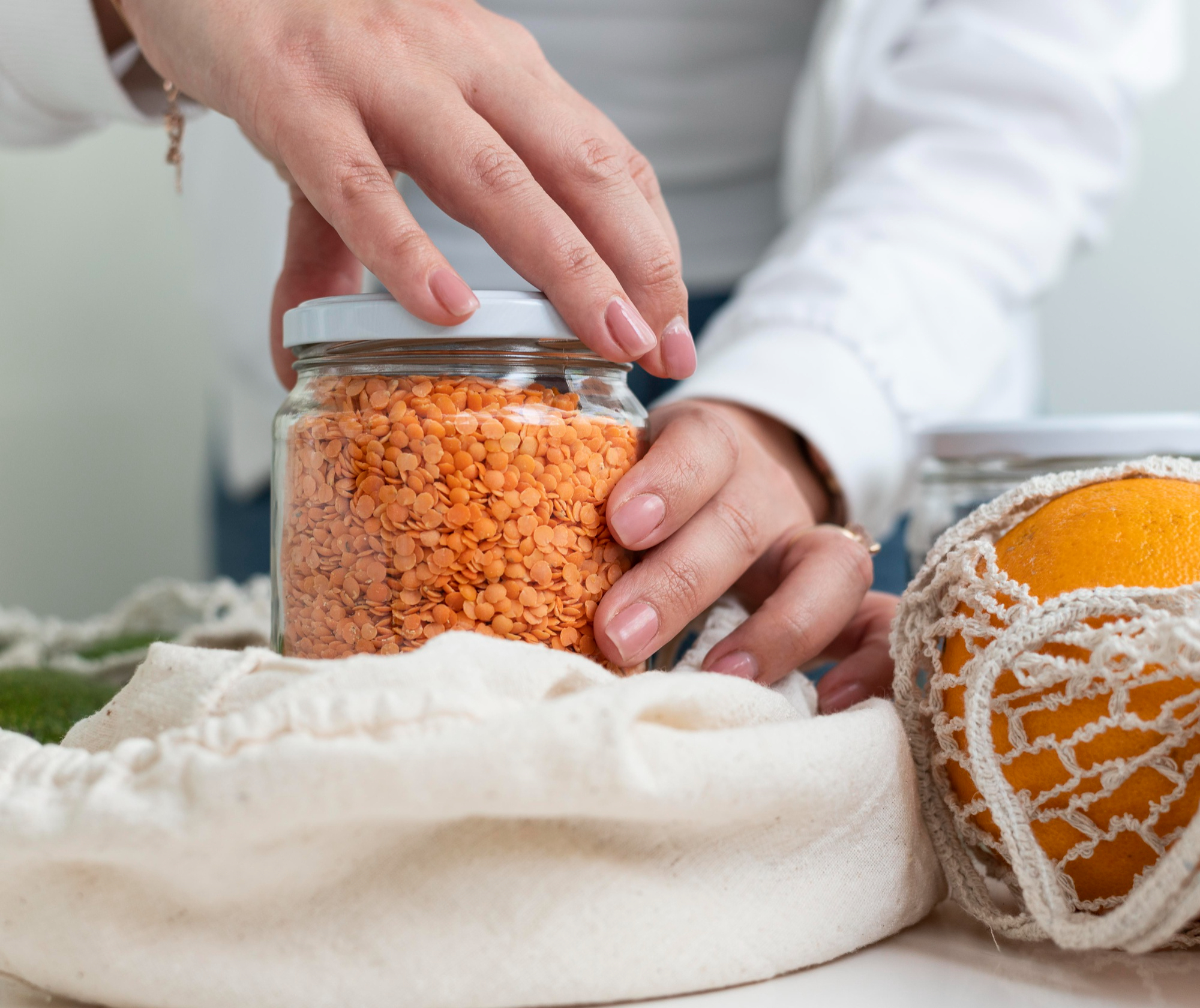
I want to begin with who I was before I understood any of this, because that person is important to the story and because she is easy to dismiss in retrospect, and I do not want to dismiss her.
My name is Claire. I am forty-two years old, and for eleven years I was married to a man named Eric Whitmore, and for most of those eleven years I was a person who believed she was managing her life well. I had a daughter, Maya, who was nine when I finally left. I had a career I was good at, project management for a mid-size construction firm, work that required me to track multiple variables simultaneously and identify the point at which small things became systemic problems. I had friends who liked me and a sister who knew me and a mother who called every Sunday and who I called back most Sundays, and I had a house in a suburb of Cincinnati that I had helped choose and helped decorate and helped maintain.
I say I was managing my life well because that was what I believed, and I want to be honest about the distance between what I believed and what was actually happening, because the distance is the whole story.
The thing about certain kinds of harm is that it is designed to be invisible, including to the person experiencing it.
I will come back to that.
Eric and I met when I was twenty-nine, at a professional networking event that I had attended out of obligation rather than genuine interest, the kind of event that produces business cards rather than relationships and that I was planning to leave within forty-five minutes. He was standing near the drinks table and he was the most composed person in the room, which is a quality I have always responded to, the particular ease of someone who does not need anything from a room to feel comfortable in it.
He was charming in a way that did not feel like performance. He asked about my work and listened to the answers, and his listening was active in the way I had come to associate with intelligence, the kind that connects what you are saying to things it knows and responds to the connections rather than simply waiting for its turn. He was handsome in a straightforward way, no drama to it. He laughed easily.
We went on six dates before he kissed me, which I noted as evidence of character at the time.
We were engaged two years later.
We were married eight months after that.
The early years were good. I am careful to say this and to mean it, because it is true and because the revision of history is something I want to resist. We traveled. We had good conversations. He was attentive to me in ways that I found, at the time, caring rather than monitoring. He liked to know where I was. He would text during the day to check in, not insistently, just regularly, and when I came home from work or from an errand he would ask how it had gone with the specific interest that felt, in those years, like love.
Maya was born four years into the marriage.
Eric wanted me to stop working.
This is not unusual as a preference, and I do not present it as the red flag that I might present it as now. He presented it reasonably, as a financial and practical discussion, running the numbers on childcare against my salary and concluding that the numbers did not support continuing to work. He was not wrong that the numbers did not support it, but numbers are rarely the whole argument, and I knew this and said so, and we reached a compromise in which I reduced my hours to part-time for Maya’s first two years and returned to full-time when she started at her daycare program.
He was not pleased when I returned full-time.
He did not say he was not pleased. He said he supported my decision, and his support had the quality of something that is said correctly without being felt correctly, the particular hollowness of a statement that is covering something else.
I noted it.
I filed it somewhere and moved forward.
This was a pattern I had not yet identified as a pattern.
The jar thing started in the third year of our marriage.
I know this because I can date it by memory to a period when Maya was still an infant and I was tired in the total way of new mothers and was doing more of the household management than I had done before because Eric had taken on extra work and was traveling more, and in that period of fatigue and adjustment I began noticing that I could not open things.
My hands are not weak. I want to establish this because Eric would later suggest that they were, would suggest it so consistently and with such apparent reasonableness that I eventually began to believe it, which is one of the mechanisms I am describing. My hands are the hands of someone who has done physical work, who grew up helping her father in his woodworking shop, who had spent summers in her twenties doing volunteer construction work in rural communities. I was not a person with weak hands.
But I could not open the jars.
I asked Eric about it the first time, casually, not as an accusation. He looked genuinely puzzled and said he was just closing them normally, and his puzzlement was convincing enough that I accepted it and moved on.
The second time I asked, a few months later, he offered to demonstrate how he closed them, screwing the lid on firmly but not excessively, and when I watched him do it, what I saw looked reasonable. I accepted this too.
The third time, I was specific. I showed him exactly how tight was too tight and asked him to stop. He said okay. For a while, things were better.
Then they were not better.
This cycle, I would come to understand, was the thing itself. Not the jars. The cycle. The problem appears, you address it, it improves briefly, it returns. You address it again, it improves again, it returns again, each time the improvement being just sufficient to make you feel you might be imagining the problem, each return being just gradual enough that you cannot point to a single moment when it began again.
It is a very effective system.
I did not know it was a system.
I tried practical solutions with the energy of a project manager who believes that every problem has a workflow solution. I put tape on the lids to see whether they were being touched. I organized the refrigerator so that the jars I used most were in a separate section. I bought rubber jar-opening grips in three sizes and kept them on the counter. I began automatically running lids under hot water before attempting to open them as a routine rather than a last resort.
Each solution produced a brief period of improvement.
Then things returned to how they had been.
When I brought it up, Eric’s responses had a particular quality that I want to try to describe accurately. The first response was usually confusion or hurt, a mild version of genuine-seeming puzzlement that made me feel I might be making something out of nothing. The second response, if I persisted, was rational: he was just closing them normally, he was trying to keep things fresh, he probably did it without thinking. These were not defensive responses exactly. They were the responses of a person who is managing a misunderstanding, and they carried the implicit message that the person with the misunderstanding was me.
The third response, if I persisted beyond that, was irritation.
“You’re seriously mad because I closed a jar?”
The irritation was not explosive. It was the contained irritation of someone being subjected to an unreasonable complaint, and it had the specific effect of making me feel that I was indeed being unreasonable, that I was indeed seriously mad because of a jar, which is a ridiculous thing to be seriously mad about.
And so I would drop it.
And then it would start again.
What I want you to understand about the eleven years is that this was not all they were. My marriage to Eric was not a continuous sustained crisis. There were good times, real ones, vacations and dinners and moments of genuine connection that I do not dismiss. There were years when things were easier and years when things were harder, and the pattern I am describing was not the only pattern. It was a pattern that ran underneath the other things, consistent and low-grade, creating a specific quality of exhaustion that I never quite identified correctly because I was always explaining it to myself in other terms.
I was tired because of work. I was tired because of Maya. I was tired because of the general accumulation of being a person with responsibilities. I was not tired because I had spent eleven years being systematically managed by someone who was very good at it.
I did not have that language yet.
Eric left for his work conference on a Monday morning in October.
It was an eight-day conference in Seattle, a big annual event in his industry, and he had been to it before. He was a senior sales director for a software company, and the conference was legitimate and important, and I did not question it or think much about it. I waved goodbye from the front porch and went inside and felt, as I sometimes did when Eric traveled, a particular quality of ease that I had learned not to examine too closely because examining it produced questions I was not ready to answer.
Maya was with my mother for the week, because the timing had worked out that way, my mother’s standing invitation for school break intersecting with Eric’s conference in a way that left me with a week alone in the house, which I was treating as an opportunity for the quiet domestic pleasures of solitude, books and early bedtimes and cooking only what I wanted to cook.
The second evening, I was making dinner.
I wanted the roasted peppers.
I could not open the jar.
I tried everything I knew how to try. The dish towel, the hot water, the banging the lid against the counter at the correct angle, the rubber grip in its three sizes. I tried for nearly fifteen minutes, which is a long time to try to open a jar, long enough for my palm to go red and my wrist to begin aching.
I stood in my kitchen with the jar in my hands and I felt something that I did not know how to name at the time but that I now understand was the feeling of a very small thing finally being large enough to see.
I knocked on Mark’s door.
Mark had been my neighbor for four years, a recently divorced man in his late forties who worked in IT and who had, over those four years, become the kind of neighbor who you borrowed things from and who checked in on your packages when you were traveling and who once spent an evening helping me and Eric figure out why the furnace was making a sound it had not made before. He was not a close friend in the way of people you told things to, but he was a good neighbor in the way that good neighbors are, the kind you could knock on the door of at seven-thirty in the evening without it being a production.
He opened the jar.
He struggled with it, which I noticed.
He made the joke about evidence, and I laughed, and then I told him about Eric’s jar-tightening habit because it was relevant and because the jar had been opened and I was in a light mood about it, the relieved mood of someone who has solved a small problem.
Mark thought it was funny.
Then he asked for another jar.
Something in the way he asked made me comply rather than asking why, and I gave him another, and he struggled with that one too, and something in his expression had changed from the expression of someone helping with a light domestic annoyance to the expression of someone assembling information.
He went through the jars.
The artichoke hearts Eric hated. The face mask I kept refrigerated because the packaging recommended it. The tiny jar of food coloring from Maya’s birthday cake three months ago that had been opened once for the pink layer and replaced in the back of the refrigerator and not touched since.
Mark could not open three of them.
He set them on the counter and looked at them and then looked at me and the look on his face was not the look of someone who had just solved a puzzle. It was the look of someone who had just recognized a puzzle they had seen before.
“Does he do this with anything else?” he said.
“What do you mean?” I said.
He looked around the kitchen.
He looked at the counter where my keys usually sat, at the planner open on the kitchen table where I kept my schedule, at the small corkboard by the back door where I pinned things I needed to see regularly. He looked at these things with a specific quality of attention that made me aware that he was seeing them rather than simply looking at them.
He looked back at the jars.
“Oh no,” he said. “This isn’t an accident.”
The cold feeling I had then was physical in a way that feelings are not always physical, an actual temperature change that began somewhere in my midsection and spread outward, and I recognized it as the feeling of understanding something you had been looking at for a long time without seeing.
Mark explained.
He did not explain everything at once. He explained carefully, the way you explain something to someone when you understand that the explanation is going to change the shape of their life and you are aware of the responsibility of that, the weight of it.
He had a sister, he said. He had watched his sister go through a marriage in which her husband had not hit her, had not shouted at her, had not done anything that could be easily pointed to and named. What he had done was smaller and more consistent and much harder to see. He had done things that created in his sister a specific kind of dependency, a reliance on him to do things she could not do herself, a gradual erosion of her confidence in her own capability, combined with a constant monitoring of her whereabouts and activities that was framed as love and was not love.
“The jars,” Mark said, “are not about keeping the food fresh. The jars are about making sure you need him.”
I sat down.
I sat down at my kitchen table and I looked at the row of jars on the counter, artichoke hearts and face mask and food coloring, the food coloring that had been sealed like evidence since July, three months of Eric’s hand on a lid that I had no reason to touch.
“It’s a control thing,” Mark said. He said it quietly, without any of the alarm that the word should have produced in me and was beginning to. “It’s very subtle. It’s not about the jars. It’s about you being reminded, constantly, that there are things in your own house that you can’t manage without him.”
I thought about the tape on the lids.
I had thought I was checking whether Eric was reopening jars after I asked him not to. I had been right, in a way, but wrong about what I was checking for. He had been opening them to retighten them.
I thought about the rubber grips in three sizes.
I had bought them to solve the problem. Eric had complimented me on the practical solution, and two weeks later the jars were back to being impossible.
I thought about the exhaustion that I had always explained in other terms.
“It’s designed not to look like anything,” Mark said. “That’s the whole point. Every time you complained about it, how did he respond?”
“He said he was closing them normally,” I said. “Or he said he was keeping the food fresh. Or he got irritated and made me feel like I was being unreasonable.”
“Because if you believe you’re being unreasonable,” Mark said, “you stop complaining. And if you stop complaining, he gets to keep doing it.”
I sat at the table for a long time.
Mark made me tea.
He made it in the way of someone who has decided the most useful thing he can do at this moment is make tea, and he put the mug in front of me and sat across from me and did not say anything while I sat with what he had told me.
“The checking in,” I said eventually.
“What do you mean?”
“He texts me during the day. To check in. He always has.”
Mark waited.
“He asks where I am,” I said. “Every day, multiple times. Not aggressively. Just regularly. And when I come home from something, he always asks specifically where I went and who I was with and what we talked about.”
“Does he check your phone?”
I thought about this.
“He doesn’t look at my phone,” I said. “But he asks enough questions that he doesn’t need to.”
Mark nodded.
“The conference trips,” I said.
I was doing the thing I do at work when I am identifying a system, pulling variables that had seemed separate and seeing where they connected. I was doing it now with my own life and the feeling of it was deeply disorienting, the feeling of being both the analyst and the subject of the analysis.
“He comes back from the conference trips,” I said, “and within the first day or two, he always finds something that I handled wrong while he was gone. Not dramatically. Just the kind of comment that reminds me that things go better when he’s here.”
Mark looked at his hands.
“What does he say?” he said.
“Last year he came back from a conference and the gutters had clogged while he was gone and I’d called a service to clear them. He said I had overpaid. He said he would have done it himself if I had just waited.”
“And the year before?”
I thought.
“I replaced a smoke detector that was chirping. He said the one I bought was the wrong brand.”
“And you felt,” Mark said.
“Like I couldn’t manage things properly without him,” I said.
I heard myself say it.
I heard the words and I understood, for the first time in eleven years, that the feeling I had been attributing to my own inadequacy was not evidence of my inadequacy at all. It was evidence that someone had been curating that feeling carefully for a very long time.
I called my sister Rachel that night.
Rachel is four years older than me and she has always had the quality of receiving difficult information without flinching, which is why I call her rather than anyone else when I need to say something I have not said before. I told her about the jars and about Mark and about what Mark had told me about his sister, and I told her what I had been doing at the kitchen table, pulling the variables.
Rachel was quiet for a longer time than was usual for her.
“Claire,” she said.
“I know,” I said.
“How long have you been trying to open jars?”
“Three years,” I said. “At least.”
“And the checking in. And the coming home from trips and finding the thing you did wrong.”
“Yes.”
“And before the jars? What was before the jars?”
I thought.
“He didn’t like my friend Jess,” I said. “He didn’t say he didn’t like her. He just had opinions about her that he would share regularly. Small things. She was unreliable, he thought. She had a tendency to drama. After about a year of small things, I stopped making plans with Jess.”
“Are you still friends with Jess?”
“We text sometimes,” I said. “But we haven’t seen each other in probably two years.”
“Who else?”
I thought.
“My friend Sarah moved to Denver in 2019 and Eric always had something scheduled when she was back in town.”
“Who else?”
I was quiet.
“My colleague Patricia,” I said. “She and I used to have lunch regularly. Eric asked once if I thought she was a good influence on me professionally, because he had heard that she was aggressive in her career ambitions and he thought that kind of attitude could affect how I was perceived. I stopped having lunch with Patricia.”
“Claire,” Rachel said.
“I know,” I said.
“Do you know what this is called?”
“Yes,” I said.
I had looked it up after Mark left. I had sat at the kitchen table with my laptop and my cup of tea that had gone cold and I had typed several things into the search bar and read several articles and I had cried once, briefly, not from sadness exactly but from the specific feeling of something that had been blurry for eleven years coming into focus all at once.
I had read the phrase coercive control.
I had read about the way it worked, the gradual isolation, the manufactured dependency, the undermining of confidence through consistent small corrections, the cycle of compliance and return that kept the target uncertain about whether the problem was real. I had read that it rarely involved physical violence, that in fact the absence of physical violence was often part of what made it difficult to identify, because the person experiencing it had no dramatic incident to point to, only an accumulation of small things that, taken individually, sounded like nothing at all.
“Yes,” I told Rachel. “I know what this is called.”
“What are you going to do?” she said.
“I’m going to call a lawyer,” I said. “In the morning.”
Rachel was quiet for a moment.
“Do you want me to come?” she said.
“Not yet,” I said. “I need to do this part on my own. I need to know that I can.”
I understood, saying this, that the need to know I could do something on my own was itself a consequence of what had been done to me, the erosion of my confidence in my own capability, and I also understood that naming it did not make it smaller, did not instantly restore what had been taken, but that acting through it was the beginning of restoration.
I called a family law attorney the following morning.
Her name was Diane Yates, and she had been recommended by a colleague who had gone through her own divorce two years earlier and who had described Diane as the kind of attorney who was both excellent at the law and good at understanding that the law was not the whole of what her clients were navigating. I had her name in my phone from when my colleague had given it to me, filed away in the contacts section under the category of things you hope you will not need.
Diane asked me to come in that afternoon.
I sat across from her in her office and I told her what I knew and when I knew it and what I had read the previous night and what the previous eleven years had looked like from the inside. She listened with the specific quality of someone who has heard many versions of this story and who takes none of them for granted, who does not flatten what she is hearing into a category but attends to the specific texture of it.
She asked about Maya.
She asked about the house, which was in both our names.
She asked about my finances, which I had always handled separately from Eric’s, which was one of the things Eric had consistently suggested was inefficient and which I had, for reasons I had not examined fully, declined to change.
“The separate finances may turn out to be significant,” she said.
She explained what the process would look like. The filing, the temporary orders, the question of the house and how the asset would be divided, the custody arrangement for Maya, which was going to be the most complex and the most important piece of everything.
“He’s not a bad father,” I said.
“Tell me what that looks like,” she said.
I thought about Eric with Maya. He was attentive with her. He attended her school events and knew her teachers’ names and helped with her homework with patience. He had, over the nine years of her life, never done anything I could point to as harmful to her.
“He tells her she’s capable,” I said. “He encourages her.”
“Does he do anything that concerns you in relation to her?”
I thought.
“He sometimes asks her where she went when she comes home from a friend’s house,” I said. “Very specifically. Who was there, what they did, what they talked about.”
Diane wrote something down.
“She’s nine,” I said.
“Yes,” Diane said. “We’ll talk about what that means for the custody arrangement.”
I drove home from Diane’s office through the October afternoon, the leaves at their peak color, the particular quality of October light that made everything look simultaneously beautiful and final, and I thought about what I was doing and what it would mean for the next part of my life, and I thought about Maya and what I was going to tell her and how and when.
I thought about the artichoke hearts Eric hated, sealed as tightly as the things he used.
There was no reason to touch that jar unless the point was not the artichoke hearts.
I had known this somewhere, in the part of me that monitors the way a project manager monitors, the part that tracks variables and notes discrepancies. I had known it and I had explained it to myself in terms that did not require me to act on what I knew, because acting on what I knew meant dismantling the life I had built and I had not been ready.
I was ready now.
Eric came home from Seattle on a Saturday morning.
I had spent the week following my conversation with Mark and my appointment with Diane doing several things.
I had met with Diane a second time and had discussed the specifics of the filing and what I wanted in terms of the initial temporary orders. I had called my company’s employee assistance program and had been given the name of a therapist who specialized in this area, and I had made an appointment for the following Tuesday. I had called Rachel and told her where I was in the process and she had said she was coming the weekend after Eric returned, not to be present for any confrontation but to be available after.
I had also, with the methodical attention of someone who has spent fifteen years managing projects, documented everything I could document.
I had photographed every jar in the kitchen, labeled with notes about whether they were items Eric used and when they had last been legitimately opened. Mark had come over again with his phone and had opened each jar and photographed the effort required and noted the ones he could not open at all. I had printed out the receipts for the rubber jar grips I had bought, the records of the phone calls I had made to Eric asking him to stop, the texts I had sent about it that he had responded to with the same cycle of confusion and irritation.
I had also pulled my financial records, my own accounts and the joint account, and I had spoken with Diane about what I found there, which was a pattern in the joint account of expenditures that were made by Eric without discussion and that were consistently in the range that was just below the threshold I had asked him to stay below for purchases that hadn’t been discussed.
Not over the threshold. Just under it.
Consistently.
I had been a project manager for fifteen years and I understood what it looked like when someone was managing a system.
Eric came home on Saturday morning and I was in the kitchen making coffee.
He was warm when he came in. He kissed me and said he had missed me and the trip had been good and asked about Maya, who was still at my mother’s, coming home Sunday. He dropped his bag at the base of the stairs and came into the kitchen and poured himself coffee and sat at the table with the ease of a man returning to his domain.
“How was the week?” he said.
“Good,” I said. “Quiet.”
He looked around the kitchen with the particular quality of attention he brought to arriving home from travel, the inventory check that I had always interpreted as engagement with his domestic life and that I now understood differently.
He looked at the counter where the jars were still visible, most of them, in their regular places.
“Everything okay?” he said.
“Yes,” I said. “I spoke with a lawyer this week.”
The quality of the room changed immediately.
This is not a dramatic description. It was a real and specific change, the kind that happens when a thing that has been operating quietly is suddenly visible.
Eric’s expression moved through several phases in about two seconds: surprise, assessment, the specific recalibration of someone who has encountered an unexpected variable and is determining how to respond.
“A lawyer,” he said.
“Diane Yates,” I said. “Family law.”
He was quiet.
“I’m filing for divorce,” I said. “The papers will be served on Monday.”
“Claire,” he said.
He said my name in the tone he used when I was being unreasonable, the patient tone that had always made me feel that my unreasonableness was being managed rather than challenged. I had heard it for eleven years and it had worked for eleven years, and I noticed it now the way I notice the mechanism of a thing when it no longer functions.
“I know what you’re going to say,” I said. “And I want you to know that I’ve thought about this very carefully. I’ve spoken to a therapist and a lawyer and my sister. I’m not making an impulsive decision.”
“You’re leaving me because of jars,” he said.
There it was.
The reduction. The framing. The thing that made me sound irrational if I accepted its terms.
“No,” I said. “I’m leaving you because of eleven years of being systematically undermined in ways that were designed to be invisible. The jars were just the part I could document.”
He was very still.
“Documented how?” he said.
I told him about Mark. About the row of jars on the counter. About the artichoke hearts he hated and the face mask and the food coloring from July.
“Mark opened them?” he said.
“Some of them he couldn’t,” I said.
Eric looked at the counter.
He was doing what he always did when he was assessing a situation, the internal calculation that sometimes preceded a shift in strategy. I watched him do it.
“I had no idea I was doing that,” he said.
The confusion framing. First response, as always.
“You tightened a jar of food coloring that has been in the back of the refrigerator since July,” I said. “You have no reason to touch that jar. You don’t use food coloring.”
He opened his mouth.
“Don’t,” I said.
He closed it.
I had prepared for this moment with Diane, not in terms of script but in terms of intention. Diane had told me that the moment of disclosure in these situations often produced a rapid escalation through the usual responses, confusion to explanation to irritation, and that the most important thing was not to be drawn into defending the decision, because defending it put me in the position of making my case to the person who was the reason I was making it.
I was not there to make my case to Eric.
My case had been made, to me and to Diane and to Rachel and to the therapist I would start seeing Tuesday. What happened in this kitchen was not a negotiation.
“I’m going to my mother’s to get Maya,” I said. “I’d like you to be gone when I get back. Rachel is coming on Friday and she’s going to help me think through next steps for the house.”
“You’re taking Maya,” he said.
“Maya will be with me,” I said. “We’ll discuss the custody arrangement through our lawyers.”
“You’ve already thought all of this through,” he said.
“Yes,” I said. “I have.”
He looked at me.
He looked at me with the expression I had almost never seen from him, which was the expression without the management, the expression of someone who has been running a very long operation and has just watched it fail.
“Why?” he said.
Not why are you doing this. He knew why. He was asking something else.
“Mark asked me if you did this with anything else,” I said. “And the answer was yes, but I didn’t know it yet. The jars were just the part I could see.”
I picked up my car keys from the counter.
“Claire,” he said.
“No,” I said.
I drove to my mother’s house in the October afternoon.
Maya was in the backyard with my mother, doing something with leaves, and she saw my car in the driveway and came running with the full-body momentum of a nine-year-old who is always glad to see you, and I crouched in the driveway and she ran into me and I held her for longer than was necessary and she did not complain about it.
My mother came to stand beside us and she looked at me over Maya’s head.
I had told my mother some of what was happening, not all of it, enough that she knew I was coming for Maya and that I would explain more soon. She looked at me now with the expression of a mother who has been waiting for a daughter to arrive at something difficult and is waiting to be helpful.
“Stay for dinner,” she said.
“Yes,” I said. “We’ll stay for dinner.”
We went inside.
Maya told me about the leaves, which they were collecting for a craft project she and my mother had devised, and she told me about the week at Grandma’s with the fluency of a child who has had a very good week and wants full accounting credit for it, and I listened to all of it and answered questions and asked questions and ate the dinner my mother made, which was pot roast because my mother made pot roast when someone needed feeding rather than just fed.
After Maya was in bed, my mother and I sat at the kitchen table.
She made tea.
She set mine in front of me and sat across from me and said: “Tell me.”
So I told her.
All of it. The jars and Mark and what Mark had explained about his sister and the two hours at the kitchen table identifying the pattern and the artichoke hearts and the food coloring and Rachel and Diane and the week of documentation and the morning in Eric’s kitchen when he had said I was leaving because of jars and I had said no.
My mother listened.
She did not interrupt.
When I finished, she wrapped her hands around her mug.
“I knew something was wrong,” she said.
“How?” I said.
“Because you stopped calling me back on Sundays as often,” she said. “About two years after you were married. It was gradual. You always had a reason. And then I stopped noticing because the reasons were always good and I didn’t want to make you feel guilty.”
“Eric wasn’t stopping me from calling you,” I said.
“No,” she said. “I know. But did he have opinions about how often we talked?”
I thought about it.
He had said once, fairly early in the marriage, that he sometimes felt like my family of origin occupied more of my emotional energy than our own family, and that he thought it was something to think about as we built our own life together. He had said it gently and once, and I had thought about it and made an unconscious adjustment and never identified the adjustment as something that had happened to me rather than something I had decided.
“Yes,” I said.
My mother nodded.
“You’re going to be all right,” she said. Not as reassurance exactly. As information.
“I know,” I said. “That’s what’s strange. I know I’m going to be all right. I’ve known how to manage my own life for forty-two years. I just forgot for a while.”
“He helped you forget,” she said.
“Yes,” I said. “He was very good at it.”
The jar of artichoke hearts is on my kitchen counter now.
I opened it myself the day after Eric left, with the rubber grip that was originally purchased out of resignation and that I have decided to keep out of something that is less practical and more symbolic. It took some effort. Not as much as it used to, partly because of the rubber grip and partly because Eric’s things are no longer in my refrigerator tightening what he touched.
Maya and I are in the house. The divorce is proceeding. Diane is handling it with the competence I was promised. Rachel came the following Friday and helped me reorganize the kitchen and the bedroom and several other spaces in ways that made the house feel like mine rather than ours, and she stayed for the weekend and we talked until very late on Saturday night in the way that sisters talk when there has been too much not said.
My colleague Patricia and I have had three lunches since October.
My friend Jess and I have made plans for December.
Maya is in counseling, which Diane recommended and which Maya has taken to with the particular matter-of-factness of a child who was born with good instincts about what is useful.
I am in therapy on Tuesdays.
I am learning to identify the feeling of managing my own life well, which is different from believing I am managing my own life well while someone rearranges the things I cannot see. The difference is not dramatic from the outside. From the inside, it is everything.
The food coloring is still in the refrigerator.
I have not used it since the birthday cake, and I probably will not use it for some time, but it is there, and it opens easily, and it is mine.

Specialty: Emotional Turning Points
Rachel Monroe writes character-driven stories about betrayal, second chances, and unexpected resilience. Her work highlights the emotional side of family conflict — the silences, the misunderstandings, and the moments when someone quietly decides they’ve had enough.