My name is Julia Mercer. I’m thirty-two years old, and until the night my father slammed his fist on a restaurant table, I thought I understood exactly who my family was.
I was wrong.
I grew up in a house where love was never free. My father Thomas ran our home like a business with two very different accounts. My sister Melanie’s account was full. Mine was always empty, no matter how much I deposited into it.
It started small. When we were kids, Melanie got the bigger bedroom because she “needed space to be creative.” I got the room next to the laundry closet because I “didn’t mind.” When Melanie failed a class, my father hired her a tutor. When I got straight A’s, he barely looked up from his newspaper.
“Good job, Julia,” he’d say, already turning the page.
I told myself it didn’t matter. I told myself that being the strong one, the reliable one, the one nobody worried about, was its own kind of reward. I threw myself into schoolwork, then into building a career, because achievement was the only language that ever seemed to get a reaction out of my father, even if the reaction was small.
By the time I was twenty-four, I had my real estate license. By twenty-six, I had my own investment firm, Vanguard Trust. By thirty, I was managing millions of dollars in property, corporate leases, and private equity deals. I built all of it from nothing, with my own hands, my own nights without sleep, my own refusal to quit.
Melanie built nothing. She didn’t need to. She had me.
Every time her latest business idea collapsed, every time her credit cards maxed out on designer bags and vacations she couldn’t afford, my father would call me, his voice thick with worry that was never really about her wellbeing. It was about how her failures might make the family look.
“Julia, you have to help your sister,” he’d say. “You know how she gets when she’s stressed. Just this once.”
It was never just once.
I paid off three different rounds of credit card debt for Melanie before I turned thirty. I co-signed the lease on her first apartment because her credit was too damaged for anyone to approve her alone. And five years ago, when my father’s own finances collapsed under the weight of everything he’d spent trying to keep Melanie happy, I did the biggest favor of all.
Thomas wanted to live in Silver Lake Estates, a gated community with a private beach and views that made grown men cry over the price tag. No bank would touch him. His credit was wrecked, his savings were gone, and his income didn’t come close to justifying the mortgage.
So I bought the house myself, in cash, through Vanguard Trust. I let him live there rent-free. My company paid the property taxes every single year. I never told him exactly how the paperwork was structured. He never asked. He just accepted the gift the way he accepted everything from me, without gratitude, like it was owed to him.
Around the same time, Melanie decided she wanted to open a boutique. She wanted to sell overpriced clothes to people who cared more about labels than fabric. She needed four hundred thousand dollars in credit to make it happen, and no bank in the state was going to hand that to a twenty-eight-year-old with no business history and a trail of defaulted accounts behind her.
I co-signed it. I became the reason her entire shop existed.
I told myself I was protecting the family name. I told myself I was being the bigger person. What I was actually doing was building the foundation under both of their lives, brick by brick, while they stood on top of it and looked down at me like I was the help.
Two years ago, everything in my personal life finally changed for the better. I met Owen.
Owen was a web designer, quiet and steady, the kind of man who noticed when I was tired before I said a word about it. He didn’t care that I didn’t post about my money. He didn’t care that I wore the same three blazers to work every week because I hated shopping. He looked at me like I was already enough, and it took me almost a year to stop flinching every time he said something kind, because I wasn’t used to kindness that didn’t come with a price tag attached.
Last year, he proposed to me on a hiking trail we’d walked a hundred times before, no cameras, no crowd, just the two of us and a ring he’d saved up for on his own, refusing to let me pay for it even though I offered.
“This one’s mine to give you,” he said. “Let me have this.”
I said yes before he even finished the sentence.
We started planning our wedding right away. I own a historic country estate through one of my company’s holdings, an old property with stone walls and a garden that blooms every September like it was waiting just for us. We booked the first Saturday of the month for our ceremony. We spent an entire year on the details. The flowers. The lighting. The exact shade of ivory for the table linens. I paid for every bit of it myself, and for once in my life, I wasn’t spending money to fix someone else’s mess. I was spending it to build something that was purely, finally, mine.
Six weeks before the wedding, my phone rang. It was my father, and his voice had that clipped, businesslike tone he used whenever Melanie needed something.
“We need to talk,” he said. “Family dinner. Tomorrow night. Don’t be late.”
I should have known right then.
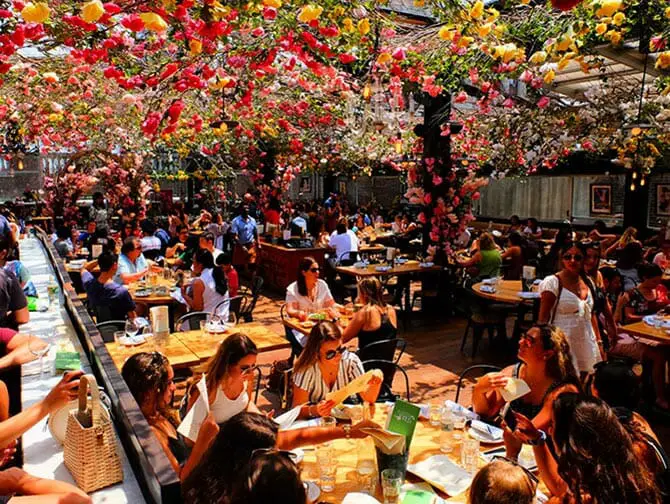
The restaurant he picked was expensive, the kind of place with candlelight and a wine list nobody at our table could actually afford without my help. Melanie was already seated when I arrived, arms crossed, foot bouncing under the table, staring at her phone like it owed her money. My father sat across from her, his jaw set in that stern, immovable line I remembered from every difficult conversation of my childhood.
I sat down. Nobody said hello.
“Julia,” my father started, not even bothering with small talk, “we need to talk about your wedding.”
“Okay,” I said carefully. “What about it?”
“Your sister has an opportunity,” he said, like he was announcing a business merger. “A very important launch party for her fashion brand. It has to happen on the first weekend of September. That’s the only weekend that works for the people she needs there.”
I felt my stomach tighten. “That’s my wedding weekend.”
“I know,” he said, like that fact was simply an inconvenience to be managed. “Which is why you’re going to cancel it and let Melanie use the estate for her event instead.”
I actually laughed, a short, disbelieving sound, because for a second I thought he was joking.
He wasn’t.
“You want me to cancel my wedding,” I said slowly, “a wedding I’ve spent a year planning, so Melanie can throw a party for Instagram?”
“Don’t be so dramatic,” Melanie snapped, finally looking up from her phone. “It’s not just a party, Julia. This is my career. My whole brand launches that weekend. I have real press coming. Actual influencers. Your wedding is just you and Owen and like, forty of his boring friends from work. Nobody’s going to notice if it happens a few months later. My timeline is not flexible. Yours can be.”
“It’s my wedding, Melanie,” I said, keeping my voice level even as my hands started to shake under the table. “I’ve already sent invitations. I’ve paid deposits. People have already booked flights.”
“So un-invite them,” she said, rolling her eyes like I was the unreasonable one. “It’s really not that hard.”
I looked at my father, waiting, hoping, some small stupid part of me still hoping, that he would step in and tell her to stop.
He didn’t.
“Your sister is right,” he said instead, leaning forward with the same cold authority he used to end every argument in our house when I was a kid. “Melanie’s business, her public image, it’s simply more important right now than one day of your life. You’ve always been able to handle things on your own, Julia. You don’t need the fuss. Melanie needs this. If you refuse to give her that venue, don’t expect anyone from this family to show up to your wedding at all.”
The restaurant noise around us seemed to fade into a dull hum. I stared at my father’s face, searching for even a flicker of doubt, some sign that he heard how insane what he’d just said actually sounded out loud.
There was none.
“So that’s it,” I said quietly. “You’re telling me that if I don’t cancel my wedding, you’re both boycotting it.”
“We’re telling you to be reasonable,” he said. “You have always been the strong one. The one who doesn’t need extra attention. Give your sister this one thing.”
Melanie smiled at me then, a small, satisfied smile, the same smile she used to wear as a kid when she knew she’d already won an argument before it started, because she knew, deep down, that I would fold. I always folded. I’d folded my whole life, quietly, without complaint, because the alternative, actually standing up for myself, felt scarier than losing.
But sitting there, staring at that smile, something inside me went very still and very cold.
I thought about the beach house I’d bought with my own money so my father could live like a man who’d never made a single financial mistake. I thought about the four hundred thousand dollars of debt sitting under my name so Melanie could sell hundred-dollar t-shirts to strangers. I thought about every late night, every ignored achievement, every time I’d swallowed my own needs to keep this family’s fragile, fake peace intact.
And I thought about Owen, waiting for me at home, who had never once asked me for anything except honesty.
“No,” I said.
It came out flat. Calm. Final.
My father’s face went red immediately. “Excuse me?”
“I said no,” I repeated. “I am not canceling my wedding. Not for Melanie’s launch party, not for anyone.”
He slammed his hand down on the table so hard the wine glasses jumped and clinked against the plates. A few nearby diners turned to look.
“How dare you,” he snapped, his voice rising. “How dare you sit there and refuse to help your own sister after everything this family has done for you. If you walk out of this restaurant without agreeing to help her, don’t bother coming to Thanksgiving. Don’t bother calling on Christmas. You will have no family left.”
For a moment, the old fear rose up in my chest, the automatic, practiced instinct to apologize, to smooth things over, to give in just to make the anger stop.
Then it passed. And underneath it was something I’d never quite felt before, something clean and quiet and absolutely certain.
“Then I guess I’ll have no family left,” I said.
I stood up. I picked up my purse. I didn’t look at Melanie’s stunned face or my father’s twisted, furious one. I walked straight out of that restaurant into the cool night air, and I did not cry. Not one tear. Not on the sidewalk, not in my car, not that whole drive home.
The hurt was there, somewhere underneath, I know it was. But it was buried under something much louder. A plan. Clear, cold, and already forming in perfect detail by the time I pulled into my driveway.
They wanted to teach me a lesson about what I owed this family.
Fine. I was going to teach them one back.
The next morning, I walked into my office before the sun was even fully up. I hadn’t slept, but I didn’t feel tired. I felt sharper than I had in years.
I called my lawyer, Mark, who had handled Vanguard Trust’s contracts for almost a decade and had never once heard me raise my voice.
“Mark,” I said, “I need you to pull two files. The lease agreement on the Silver Lake Estates property under Thomas Mercer, and the co-signer documents on Melanie Mercer’s business credit line.”
“Everything okay, Julia?” he asked, and I could hear him already reaching for his keyboard.
“Everything’s fine,” I said. “I’m exercising my rights as the property owner. I’m terminating Thomas’s lease, effective immediately, due to hostile conduct and breach of the residency terms. And I want my name removed as co-signer on Melanie’s credit line, effective the same day. File everything today. I want it executed first thing Monday morning.”
There was a brief pause on the line. “You’re sure about this?”
“I have never been more sure of anything,” I said.
He didn’t argue with me. He knew, the way anyone who’d worked with me for years knew, that I didn’t make decisions like this out of anger. I made them out of clarity.
Over that weekend, while the paperwork quietly moved through the courts and the banks, my father and Melanie were busy doing exactly what I expected. My phone filled up with angry texts, not from them directly at first, but from cousins and old family friends they’d clearly called and complained to. Messages accusing me of being cold. Selfish. Ungrateful. A monster who’d turned her back on her own flesh and blood over “a simple scheduling conflict.”
I didn’t respond to any of them. I turned my phone on silent and spent the weekend with Owen, finalizing the last details of our wedding, feeling, for the first time in weeks, like I could actually breathe.
Monday morning came fast.
At 8:45 a.m., a small convoy pulled up outside the beach house in Silver Lake Estates. Two police cars. A moving truck. A locksmith’s van. My father was on the patio in his robe, coffee in hand, reading the paper like it was any other ordinary morning of the extraordinary life I’d built for him.
An officer walked up the steps and handed him a folded document.
“Sir, this is an official notice,” the officer said. “This property has been reclaimed by the owner of record. Your lease has been terminated effective immediately due to breach of contract. You have fifteen minutes to gather personal identification, medication, and clothing. Everything else remains the property of the owning entity.”
I wasn’t there to see his face, but I heard about it later, secondhand, filtered through the panic in his voice on the phone. I imagine it went something like disbelief first, then confusion, then the slow, sinking horror of realizing this wasn’t a mistake.
The locksmiths didn’t wait around for him to process it. They got straight to work, drilling out the old locks and replacing them with electronic scanners tied to Vanguard Trust’s security network. My father stood on the sidewalk outside the house he’d lived in rent-free for five years, in his slippers, holding one small suitcase, while neighbors he used to boast to about his “success” watched from behind their curtains.
At almost the exact same hour, across town, the second half of my plan landed.
The moment the bank processed the paperwork removing me as co-signer, Melanie’s credit line vanished. Four hundred thousand dollars of borrowed money that had never really been hers to begin with, gone in the time it took a computer system to update a database. Her shop had been running on that credit for over a year, using it to cover rent, payroll, inventory, everything. Without it, the whole structure collapsed instantly.
By eleven that morning, bank representatives were at her boutique, taping closed signs across the front windows, changing the locks on the door she’d once had custom-painted gold to match her “brand aesthetic.”
Her boyfriend at the time, a real estate developer who liked being seen with a woman who looked successful, heard about the shop closing before Melanie even had a chance to call him herself. Word travels fast in circles built entirely on appearances. By that evening, he’d blocked her number.
By Monday afternoon, the entire fantasy my father and sister had built their identities around, the beach house, the boutique, the rich boyfriend, all of it, was gone.
My phone started ringing around three that afternoon and didn’t stop. I let it go to voicemail through most of it, but eventually, sitting alone in my office with the sun going down outside my window, I picked up.
“Julia.” My father’s voice was barely recognizable. Gone was the cold authority from the restaurant. What was left was raw and shaking. “Julia, you have to fix this. Right now. The police threw us out of the house. Melanie’s store is locked. Her boyfriend left her. We’re sitting in some disgusting motel off the highway with everything we own in two suitcases. How could you do this to your own family?”
I closed my eyes for a moment before I answered.
“I didn’t do anything to you, Dad,” I said, my voice steady. “You told me, to my face, that my wedding, my happiness, my entire life, meant less to you than Melanie’s Instagram launch party. You threatened to erase me from this family if I didn’t hand over the one thing I built for myself. I didn’t ruin your life. I just stopped paying for it.”
“That house, that money, we’re your family,” he said, his voice cracking. “You can’t just walk away from that.”
“I’m not walking away from anything,” I said. “I’m done being the invisible foundation this family stands on while you and Melanie pretend I don’t matter. I spent my whole life funding a version of this family that never once made room for me. I’m done. I’m done begging for a seat at my own life.”
“Julia, please,” he said, and for the first time in as long as I could remember, I heard something in his voice that sounded almost like fear. “We have nowhere to go.”
“I hope you find somewhere,” I said. And I meant it, genuinely, the way you might mean it for a stranger. Not out of cruelty. Just out of distance. A door closing quietly, not slammed, just shut.
Then I hung up, and I blocked every number connected to my family. My father. Melanie. The cousins who’d sent me angry texts on their behalf. All of it, gone in a few taps on a screen.
The silence that followed felt strange at first. For thirty-two years, there had always been some low hum of family obligation running in the background of my life, a phone call I was dreading, a debt I was quietly covering, a favor I was bracing to be asked for. Now there was nothing. Just quiet.
I let myself feel it for exactly one evening. I sat on my couch with a glass of wine and let the weight of it settle over me, the grief of losing a family that, if I was honest with myself, I had never really had in the first place. Not the way I’d always hoped.
Then I got up, washed the glass, and went back to planning my wedding.
Three weeks later, the first Saturday of September arrived exactly the way it was supposed to.
The morning was bright and clear, the kind of late summer day that still holds a little warmth without the heaviness of the months before it. I stood in the small dressing room at the estate, looking at myself in the mirror in a dress I’d chosen because it made me feel like myself, not because it would impress anyone.
My assistant, Claire, who had become something closer to a friend over the years, adjusted the last pin in my hair and smiled at me in the mirror.
“You look happy,” she said.
“I am happy,” I said, and I realized, as I said it, that it was the first time I’d said those words about my own life without some quiet asterisk attached.
The garden outside was full of people who actually wanted to be there. Owen’s parents, warm and a little teary already. My closest friends, some from college, some from the early grinding years of building Vanguard Trust from a one-room office into what it had become. My old college roommate flew in from three states away just for the day. Not a single person in that garden was there because they felt obligated, or because they wanted something from me.
When I walked down the aisle, there was no tension in the air, no undercurrent of resentment, no sense that at any moment someone might stand up and make the day about themselves. There was just sunlight, and flowers, and Owen standing at the end of the aisle looking at me like I was the only person in the world.
“You okay?” he whispered when I reached him, because he knew, better than anyone, what the weeks leading up to this day had cost me.
“I’m more than okay,” I whispered back. “I’m free.”
The ceremony was simple. No dramatic scenes, no last-minute interruptions, no family member bursting through the doors to cause a scene. Just two people making a promise to each other in front of the people who actually loved them.
Somewhere, in a cramped, dimly lit motel room off the highway, my father and sister were living out the consequences of a choice they’d made without ever once imagining it could cost them anything. I don’t know exactly what that day looked like for them. I’ve never asked. I don’t think I want to know.
What I do know is what my life looked like instead. A garden full of laughter. A husband who chose me without needing to be convinced. A peace so complete I almost didn’t recognize the feeling at first, because I had never actually experienced it before.
In the months that followed, I heard bits and pieces about my father and Melanie through people who still had one foot in both worlds. Thomas eventually found a small rental apartment on the outskirts of the city, nothing like the beach house he’d lost, but enough to get by on the modest pension he’d never bothered building because he’d always assumed my money would be there. Melanie tried to relaunch her boutique twice with borrowed money from friends, and both attempts folded within months, because without someone quietly covering the gaps behind the scenes, the whole structure had never actually been able to stand on its own.
I don’t feel triumphant when I hear those updates. I don’t feel vindicated in some loud, dramatic way. Mostly I just feel tired, in the way you feel tired after finally setting down something heavy you didn’t realize you’d been carrying for years.
People sometimes ask me if I regret what I did. If it was too harsh, too sudden, too final. I understand why they ask. From the outside, watching a family collapse in seventy-two hours looks brutal. It looks cold.
But I don’t regret it. Not for a single second.
I spent thirty years being told, in a hundred quiet ways and a few very loud ones, that my needs came second. That my success existed to be redistributed to people who never once said thank you. That my silence and my competence were the price of admission to a family that had already decided, long before that restaurant dinner, that I mattered less.
The night my father slammed his hand on that table and told me my wedding didn’t matter, he wasn’t asking me to change a date. He was asking me to prove, one more time, that I would always fold. That no matter how much I built, how much I gave, how much I sacrificed, I would keep coming back for scraps of approval that were never going to be enough.
I finally stopped proving it.
If there’s a lesson in any of this, it’s not about revenge, not really. It’s about recognizing the moment when someone’s love for you comes with a price tag attached, and having the courage to stop paying it.
Kindness is not weakness. But if you let people treat it that way long enough, they will keep taking until there’s nothing left of you to give.
Family is supposed to mean showing up for each other. It’s not supposed to mean funding someone else’s fantasy life while your own gets treated as an afterthought. It’s not supposed to mean threats and ultimatums disguised as love. And it is never, under any circumstances, supposed to require your own erasure just so someone else’s image can shine a little brighter.
I built my life the same way I built my career. Slowly, carefully, brick by brick, without ever expecting applause. For a long time, I thought that meant I had to accept whatever scraps of attention my family offered me, because at least it was something.
Now I know better.
Real love doesn’t ask you to disappear. Real family doesn’t threaten to erase you the moment you stop being useful. And real peace doesn’t come from finally being loud enough to be heard.
Sometimes it comes from walking away quietly, and simply refusing to come back.
I got married in a garden full of people who actually chose to be there. My father and sister spent that same afternoon in a motel room, staring at the wreckage of a life they’d built entirely on my back, without ever once thanking me for carrying it.
I don’t regret the choice I made that night at the restaurant. I don’t regret the phone call to my lawyer the next morning. I don’t regret the seventy-two hours that followed, or the silence that came after.
For the first time in my entire life, I finally stopped begging for a seat at a table that was never actually set for me.
And I have never once looked back.

Ethan Blake is a skilled Creative Content Specialist with a talent for crafting engaging and thought-provoking narratives. With a strong background in storytelling and digital content creation, Ethan brings a unique perspective to his role at TheArchivists, where he curates and produces captivating content for a global audience.
Ethan holds a degree in Communications from Zurich University, where he developed his expertise in storytelling, media strategy, and audience engagement. Known for his ability to blend creativity with analytical precision, he excels at creating content that not only entertains but also connects deeply with readers.
At TheArchivists, Ethan specializes in uncovering compelling stories that reflect a wide range of human experiences. His work is celebrated for its authenticity, creativity, and ability to spark meaningful conversations, earning him recognition among peers and readers alike.
Passionate about the art of storytelling, Ethan enjoys exploring themes of culture, history, and personal growth, aiming to inspire and inform with every piece he creates. Dedicated to making a lasting impact, Ethan continues to push boundaries in the ever-evolving world of digital content.