The homemade tart was still warm in my hands when Maya and I turned into my parents’ driveway, and the first thing I saw stopped me cold before I even got out of the car.
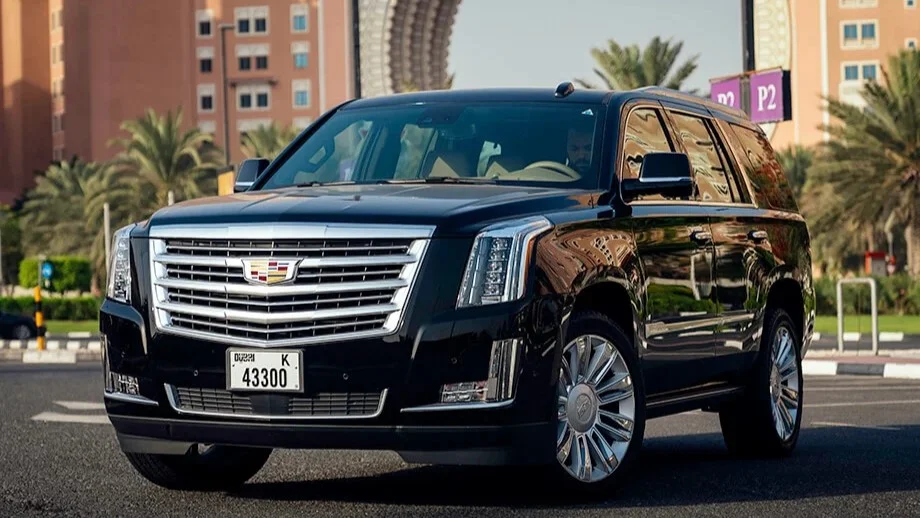
A brand new SUV sat gleaming on the gravel, metallic blue paint catching the afternoon sun, an oversized red satin ribbon wrapped across the hood like something out of a commercial. My stomach dropped before I even understood why.
“Whoa,” Maya said beside me, unbuckling her seatbelt. “Who’s that for?”
“I don’t know,” I said, though something in my gut already did.
My name is Samantha Smith. I’m thirty-six, a senior director at a regional logistics company, and for fourteen years I have done exactly one thing without fail, no matter how tight things got, no matter what else was happening in my life. On the first of every month, I moved two hundred dollars out of my paycheck and into a custodial savings account at Oakidge Valley Credit Union, opened the year my daughter Maya turned two.
I started that account with nothing but a plan. Maya would get a safe, reliable car for her sixteenth birthday, and whatever was left over would go toward college. I didn’t touch it for emergencies. I didn’t touch it when my transmission blew and I had to finance a used car of my own at a brutal interest rate. I didn’t touch it during the two years I was between promotions and money was tighter than I ever let Maya see. That account was untouchable, sacred, the one thing in my adult life I never let myself compromise.
By this spring, it held thirty-five thousand dollars.
Because I was only twenty-two when I opened it, the credit union had required an adult co-signer to help establish the account structure. My mother, Eleanor, offered to put her name on the paperwork as a secondary signatory. I never thought twice about it. Over the years I forgot it was even there, forgot her name was technically attached to an account that, in every practical sense, belonged entirely to my daughter and to me. I trusted my family. I trusted my mother. That trust, it turned out, was the biggest mistake I ever made.
We carried the tart through the front door and into a house already loud with celebration. My mother was arranging appetizer trays on the kitchen island. My older sister Jessica was pouring champagne into flutes near the dining table, laughing at something on her phone. My father George had a video camera balanced on his shoulder, fiddling with the settings, and my eighteen-year-old niece Brianna was checking her reflection in the hallway mirror, smoothing her hair, clearly dressed for an occasion she already knew was coming.
“Samantha, Maya, finally,” my mother called out, waving a hand impatiently in our direction. “Put that dessert down and come out to the driveway. We’ve been waiting on you.”
Maya glanced at me, confused but curious, and followed me back outside.
The whole family gathered around the front of the SUV. My mother stood at the center of it all, holding up a sleek leather key fob like a trophy, her voice pitched loud enough for the whole cul-de-sac to hear.
“Happy eighteenth birthday to our brilliant girl, Brianna,” she announced. “A brand new luxury crossover, to drive to State University this fall.”
Brianna screamed with delight and threw her arms around my mother’s neck, then ran to hug Jessica, who was already beaming, raising her champagne glass in a toast. My father whooped and swung the camera around to capture every angle of the reveal, narrating like a sportscaster.
“Look at that beauty,” he called out. “Our granddaughter’s going to college in style.”
Maya stood quietly beside me, hands tucked into the pockets of her cardigan. She was turning sixteen in three weeks. She was happy for her cousin, I could tell, genuinely happy, because that’s the kind of kid she is. But there was something small and quiet in her posture too, a girl standing at the edge of someone else’s spotlight, trying not to take up space.
Then my mother turned, found Maya in the crowd, and crooked a finger at her.
“Maya, sweetie, come stand right here next to your cousin,” Eleanor said, taking my daughter by the elbow and steering her toward the front bumper. “Put your arm around Brianna’s shoulder. Big smile for your grandfather’s camera. Say, congratulations on your new car, Brianna.”
Maya froze for half a second, her face flushing pink with the particular discomfort of being put on display in front of a crowd with no warning.
“Come on, Maya, big smile,” my father called, clapping his hands. “Show everyone how thrilled our family is.”
I stood at the edge of the driveway watching this unfold, and something cold started twisting low in my stomach that had nothing to do with the awkwardness of the moment. Jessica worked part-time as an administrative assistant and had been drowning in credit card debt for years, the kind of debt she liked to joke about at dinner and then go quiet about the second anyone asked a real question. My parents lived off a fixed pension, comfortable but far from wealthy. There was no version of this family, none, where anyone had forty thousand dollars in liquid cash sitting around for a surprise vehicle.
My phone buzzed in my coat pocket.
I almost ignored it. Almost. But something made me glance down, and the second I saw the credit union’s name on the notification banner, my whole body went still.
Transaction notice: complete withdrawal of $35,000 processed by secondary account holder at Oakidge Credit Union branch, Friday, 2:15 p.m.
My hands went cold. I tapped into the account details with fingers that suddenly didn’t feel like mine, and there it was, the balance on Maya’s custodial fund, the one I’d built dollar by dollar for fourteen years, sitting at exactly zero.
I looked up. My mother was standing near the driver’s side door of the SUV, tucking a credit union receipt envelope back into her handbag with the casual efficiency of someone closing out a grocery run.
I walked over to her, keeping my spine straight, my voice low enough that Maya, still posing awkwardly by the bumper, wouldn’t hear the tremor underneath it.
“Mom,” I said. “Why did I just get an alert that Maya’s custodial account was emptied on Friday?”
Eleanor didn’t even flinch. She adjusted her necklace, brushed an invisible speck of lint from her sleeve, and looked at me like I’d interrupted her over something trivial, a minor scheduling conflict, nothing more.
“Oh, Samantha, don’t start with the drama today,” she said, voice pitched low but sharp. “Brianna’s eighteen. She’s commuting twenty miles to State starting next month, and she needs something reliable so her studies aren’t disrupted. Maya’s sixteen. She can take the school bus, or walk, for a couple more years. It’s not the end of the world.”
I stared at her, genuinely stunned by the casual, bulletproof confidence in her voice.
“You pulled thirty-five thousand dollars out of my daughter’s account,” I said. “That was fourteen years of my paycheck. My money, saved specifically for her.”
“My name was on that original signature card,” Eleanor said, crossing her arms like she was closing an argument, not opening a confession. “Which means I had every legal right to access those funds. Family supports each other, Samantha. You have a good career. You can build that balance back up before Maya graduates. Now wipe that look off your face and go enjoy the barbecue.”
My father walked over and put a heavy hand on my arm, the same gesture he’d used my whole childhood whenever he wanted a conversation to be over before it really started.
“Your mother made an executive decision for the family,” he said. “Don’t ruin Brianna’s moment over money.”
I turned my head and found Maya still standing by the car, looking back and forth between us, her eyebrows drawn together as the pieces started clicking into place on her face. She was smart. She always had been. I could see the exact moment she understood what she’d just been forced to pose next to, and I felt something in my chest crack clean in half.
I didn’t yell. I didn’t cause a scene on the front lawn for the neighbors to peer at from behind their curtains. I walked over to my daughter, took her hand gently in mine, and picked her jacket up off the porch bench.
“Come on, sweetie,” I said quietly. “We’re leaving.”
“Samantha, where on earth are you going?” Jessica shouted from the deck, champagne glass still in hand. “We haven’t even done gifts or cut the cake.”
I didn’t answer her. I opened the passenger door for Maya, got behind the wheel, locked the doors, and backed slowly out of the driveway while my family stood frozen on the lawn behind us, my father still holding the camera, my mother’s mouth set in a hard, offended line.
Neither of us said much on the drive home. Maya stared out the window, and somewhere around the second traffic light she asked, quietly, “Mom, was that my birthday money? For my car?”
I reached over and squeezed her hand at the red light. “Don’t worry about it tonight, baby. I’m going to handle it.”
At home, I made sure she ate something, got her homework squared away, and tucked in early. Once her bedroom door clicked shut, I went into my home office, turned on the desk lamp, and unlocked the metal filing cabinet where I kept every document related to that account.
The original 2012 charter. Fourteen years of ledgers showing every single automatic payroll deposit, unbroken, month after month. The Uniform Transfers to Minors Act paperwork that made the legal status of that account crystal clear, no matter whose name sat in the secondary signatory line.
Because my mother had signed on as a fiduciary custodian and not a co-owner, using those funds for anyone other than Maya’s direct benefit wasn’t just a betrayal. It was a violation of federal banking trust regulations and state fiduciary law. I spent the next three hours drafting formal notices, attaching statements, sending priority filings to both the credit union’s compliance department and my attorney’s after-hours line.
Sunday night passed in a heavy, humming silence. I barely slept.
At 7:15 Monday morning, I was standing outside the main branch of Oakidge Valley Credit Union, fifteen minutes before the doors opened to the public, a leather briefcase in hand containing fourteen years of proof.
When the branch manager, Robert Henderson, unlocked the front doors, I was the first person through them.
We sat in his glass-walled office while I laid the documents across his desk, one stack at a time. “Mr. Henderson,” I said, “on Friday afternoon, my mother, Eleanor Smith, executed a complete withdrawal of thirty-five thousand dollars from account ending in 4092. That’s an irrevocable custodial account established for my sixteen-year-old daughter, Maya. Every deposit over fourteen years came directly from my payroll.”
He pulled up the file, scrolled through the history, opened the original 2012 charter. His expression shifted from polite professionalism to something far more serious as he read.
“Mrs. Smith,” he said slowly, “you’re correct. Your mother was listed as a secondary signatory to help establish the account back when you were young. But under a UTMA structure, the funds legally belong exclusively to the named minor beneficiary. A secondary signatory holds a fiduciary duty. Funds can only be withdrawn for the direct benefit of the child.”
“She used it to buy a car for my eighteen-year-old niece,” I said.
He shook his head, jaw tightening. “That’s an unauthorized conversion of minor trust assets under state banking code.” He reached for his phone and dialed the internal risk division without another word. “I’m placing an immediate fraud freeze on that cashier’s draft. Since the check hasn’t cleared final interbank settlement over the weekend, we can still stop it. We’ll also issue notice to the dealership invalidating the title transfer.”
By 8:30, the wheels were fully in motion. The funds were locked, the draft canceled, and the dealership notified that the vehicle currently sitting in my parents’ driveway had been purchased with disputed trust assets.
I drove to my office, sat down at my desk, and had barely taken a sip of coffee when my phone started buzzing violently against the wood.
Jessica’s name lit up the screen.
I put her on speaker.
“Samantha.” Her voice was shrill and breathless, distorted through the tiny speaker. “What did you do? There are two flatbed tow trucks in my driveway. Sheriff’s deputies. Someone from the dealership. What is happening?”
Behind her, I could hear Brianna sobbing, and my mother’s voice shouting furiously at someone in the background.
“The credit union placed a freeze on the unauthorized withdrawal,” I said, keeping my voice level. “The draft used to buy that car was canceled. The dealership is recovering their property.”
“Are you out of your mind?” Jessica screamed. “Brianna was inside getting ready. Her friends were coming at noon to see the car. You’re dragging this entire family through the mud over a technicality.”
“It wasn’t a technicality, Jessica,” I said. “It was thirty-five thousand dollars of my income, saved over fourteen years, for my daughter’s future. You and Mom both knew exactly where that money came from.”
There was a scuffling sound, and then my mother’s voice took over the line, sharp and furious.
“Samantha Smith. You call that credit union back right now and tell them that was an authorized family contribution. Your sister does not have the means to buy Brianna a car for college, and your father and I gave her our word. How dare you humiliate this family in front of the whole neighborhood.”
I looked at the framed photo of Maya on the corner of my desk, remembering exactly how uncomfortable she’d looked standing beside that car, forced to smile for a camera while my father clapped like she should be grateful.
“Mom,” I said, keeping my voice perfectly even. “You walked into a bank on Friday and emptied my daughter’s account. You made her pose next to a vehicle bought with her own stolen savings and forced her to say congratulations. You assumed I’d stay quiet to keep the peace, the way I always have. You miscalculated.”
“If you don’t unfreeze that draft by noon,” my mother snapped, “your father and I will never speak to you again. We’ll cut you out of this family completely.”
“You don’t need to worry about cutting me out, Mom,” I said. “Because my attorney is filing a petition this afternoon to remove your name from every financial document tied to my family, permanently. And if those funds aren’t fully returned to Maya’s account by five o’clock today, the credit union’s compliance department is forwarding the conversion report straight to the district prosecutor’s office.”
Silence. Total, suffocating silence.
Then my mother’s voice came back, small and shaking in a way I’d genuinely never heard from her before.
“Samantha, wait. We don’t have thirty-five thousand dollars sitting around to cover that if the bank voids the draft. The dealership is charging a breach fee and towing penalties just to take the car back. We can’t afford that.”
“Then I suggest you and Jessica figure out a payment plan with the dealer,” I said. “Because my daughter’s account will be made whole by end of business today.”
I hung up without waiting for a response.
By 4:30 that afternoon, the credit union redeposited the full thirty-five thousand dollars back into Maya’s account, now placed under my sole legal guardianship, with every trace of my mother’s name stripped from the paperwork.
Jessica ended up taking out a high-interest personal loan to cover the dealership’s repossession and cancellation fees. My parents, to avoid further legal exposure, were forced to sell their travel trailer to cover what was left of the balance.
That evening, once my shift ended, I picked Maya up from her after-school activity and took her to her favorite little Italian place downtown, the one with the window table she always asks for. We shared pasta and a slice of tiramisu, and somewhere between bites she looked up at me, her eyes bright with quiet relief.
“Thanks for taking care of it, Mom,” she said. “I was really worried yesterday.”
I reached across the table and squeezed her hand.
“You never have to worry, baby,” I told her. “As long as I’m here, nobody is ever going to take what belongs to you. Not ever again.”
In the weeks that followed, my family’s version of events traveled fast through the small web of relatives who still had one foot in both worlds, and every version made me the villain. The daughter who humiliated her own sister over a birthday gift. The mother who called the police on her own family. I let them say it. I stopped correcting the story, because I realized somewhere along the way that the people spreading it had never once cared about the truth. They cared about the version that let them keep feeling comfortable about what they’d done.
My father called twice in the following month, both times leaving voicemails heavy with the same tone he’d used on the driveway, the tone that assumed if he just repeated himself with enough authority, I’d eventually give in the way I always had before. I didn’t call back. Jessica sent a handful of long, rambling texts alternating between apology and accusation, sometimes in the same paragraph, and I answered none of them either. Not out of cruelty. Just because I’d finally run out of energy for a relationship that only ever ran in one direction.
Maya turned sixteen three weeks later. We used part of the recovered fund to buy her a modest, reliable used sedan, silver, nothing flashy, exactly the kind of practical first car I’d always pictured for her. We didn’t throw a party. We didn’t invite extended family or hire anyone to film the reveal. It was just the two of us in the driveway of our own home, her hands shaking slightly as she held the keys for the first time, grinning so wide it looked like it hurt.
“It’s perfect,” she said, running her hand along the hood the way you’d touch something you couldn’t quite believe was real.
“It’s yours,” I told her. “Every bit of it. Nobody gets to take that away from you.”
I watched her climb into the driver’s seat and adjust the mirrors, practicing even though she wasn’t going anywhere yet, and I felt something settle in my chest that had been unsettled for a very long time.
I think about that Sunday often, the ribbon on the hood, the way my mother positioned my daughter’s small body next to a car bought with her own stolen future and told her to smile for the camera like it was a gift instead of a theft dressed up in celebration. I think about how easily my family assumed I would swallow it, the way I’d swallowed so many smaller slights before, because keeping the peace had always felt safer than making waves.
But there is a version of peace that isn’t peace at all. It’s just quiet submission, dressed up in nicer clothes. I spent a long time confusing the two.
What I did wasn’t about revenge, even though I understand why it might look that way from the outside, two tow trucks and a pair of sheriff’s deputies pulling into a driveway on a Monday morning tend to read as dramatic no matter the context behind them. But every step I took was simply about protecting what was mine to protect. Fourteen years of quiet, unglamorous sacrifice, two hundred dollars at a time, was not something I was willing to let vanish into somebody else’s birthday party because my mother decided her favorite grandchild deserved it more.
Family loyalty means something. I still believe that. But it has to run in more than one direction to mean anything at all. It cannot be a one-way account that only ever gets withdrawn from, never deposited into, where one child’s sacrifices exist solely to fund another child’s comfort, over and over, for as long as the sacrificing child is willing to stay quiet about it.
I wasn’t willing anymore. I’m still not.
Maya still drives that silver sedan to school every morning. Some mornings I watch her back out of the driveway from the kitchen window, and I think about how close I came to letting that car, that whole future, slip quietly out of her hands because I was afraid of what it would cost me to say no to my own mother.
It cost me a relationship I’m not sure was ever as solid as I once believed it to be. But it bought my daughter something no one will ever be able to take from her again: the absolute certainty that her mother will stand between her and anyone, family included, who tries to treat her future as something disposable.
That’s not something I regret. I don’t think I ever will.

Lila Hart is a dedicated Digital Archivist and Research Specialist with a keen eye for preserving and curating meaningful content. At TheArchivists, she specializes in organizing and managing digital archives, ensuring that valuable stories and historical moments are accessible for generations to come.
Lila earned her degree in History and Archival Studies from the University of Edinburgh, where she cultivated her passion for documenting the past and preserving cultural heritage. Her expertise lies in combining traditional archival techniques with modern digital tools, allowing her to create comprehensive and engaging collections that resonate with audiences worldwide.
At TheArchivists, Lila is known for her meticulous attention to detail and her ability to uncover hidden gems within extensive archives. Her work is praised for its depth, authenticity, and contribution to the preservation of knowledge in the digital age.
Driven by a commitment to preserving stories that matter, Lila is passionate about exploring the intersection of history and technology. Her goal is to ensure that every piece of content she handles reflects the richness of human experiences and remains a source of inspiration for years to come.