I never told my family that my “farmhand” husband was actually the billionaire investor they were desperate to impress. To them, Daniel Brooks was just the quiet man I married after leaving the city, someone who worked with his hands, wore faded jeans, and didn’t talk much about money. And honestly, I liked it that way. I liked having one corner of my life that nobody in my family could touch, weigh, or turn into a talking point at a dinner party.
My family had always measured worth by appearances. My mother, Carolyn, believed success should be loud and visible, something you could hang on a wall or park in a driveway. My younger sister, Madison, had learned that lesson so well she’d made it her whole personality by the time she turned twenty-five. When she announced her wedding, it wasn’t really about love. It was about status, about proving to everyone in her orbit that she had arrived somewhere important. Her fiancé came from a well-known business family, old money mixed with new ambition, and the guest list read like a business journal’s most-watched list, executives, investors, a couple of minor celebrities my mother loved dropping into conversation like they were personal friends.
I hesitated for weeks before deciding to go. Daniel found me one evening sitting at our kitchen table with the invitation in front of me, untouched for three days.
“You don’t have to go if it’s going to hurt you,” he said, pulling out the chair across from me.
“I know,” I said. “But she’s still my sister. And some part of me keeps hoping this time will be different.”
He didn’t try to talk me out of it. He just reached across the table and squeezed my hand. “Let’s go,” he said calmly. “It’s your sister. I’ll follow your lead.”
That was Daniel in one sentence. He never pushed, never assumed he knew better than me what my own family deserved from me. He just showed up, steady as ever, and let me carry the weight of my own decisions while making sure I never carried them alone.
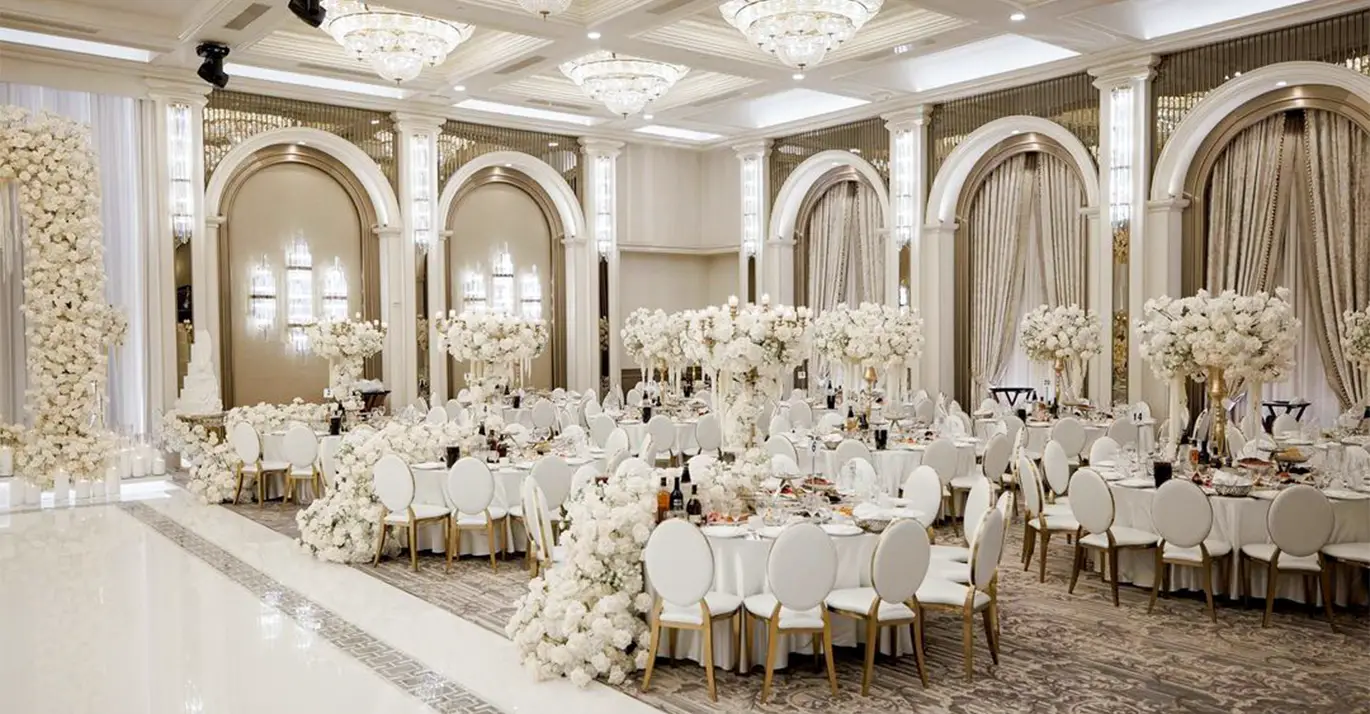
From the moment we arrived at the countryside wedding venue, a sprawling estate with manicured gardens and a ballroom that looked like it had been lifted straight out of a bridal magazine, it was clear we weren’t welcome, or at least that Daniel wasn’t. My mother looked him up and down the second we stepped out of the car, her eyes traveling from his worn boots up to his simple button-down shirt, and her lips tightened into a thin, disapproving line.
“We didn’t plan a seat for… extra guests,” she said sharply, not even bothering to lower her voice for the nearby valet.
I felt my stomach drop. “Mom, he’s my husband.”
“Of course,” she said, in the tone of someone humoring a child. Then she pointed toward a small table near the back of the property, close to the trash bins and the catering entrance, half-shielded from the main tent by a row of hedges. Rain had started drizzling steadily by then, soaking into the grass, turning the gravel path dark.
“You can sit there,” she added, like she was doing us a favor. “We’ll bring you leftovers.”
I stood there for a moment, rain collecting on my shoulders, waiting for some part of me to feel surprised. Nothing came. This was simply who my mother had always been, dressed up in a mother-of-the-bride gown instead of her usual church clothes.
Daniel didn’t argue. He simply took my hand and walked with me toward the little table by the bins, pulling out my chair like we were being seated at the finest restaurant in the city instead of next to a row of overflowing garbage cans. “It’s a nice view of the garden from here, actually,” he said quietly, nodding toward the hedges, and I almost laughed despite myself, because that was Daniel too, always finding some small, steady thing to hold onto even when everything around him was designed to make a person feel small.
Madison walked past us not long after, sweeping through the tent in her designer gown, veil catching the breeze, and she didn’t so much as glance in our direction. Later, during the reception, once the toasts had wrapped and the dancing had started, she finally made her way over to our table, a glass of red wine swaying dangerously in her hand.
“I can’t believe you showed up like this,” she said, looking Daniel over the same way our mother had. “Do you know how embarrassing it is to explain you to my friends? Half of them think you’re the groundskeeper.”
“I didn’t realize I needed an explanation,” I said quietly.
“Everyone needs an explanation when they show up looking like that,” she said, gesturing vaguely at Daniel’s outfit, at me, at the whole unglamorous shape of our table by the trash bins.
Before I could respond, she tipped her glass, whether on purpose or through some careless flick of her wrist I still don’t know for certain, though the way her lips curved afterward told me everything I needed to understand. Red wine spilled down the front of my dress, blooming dark against the pale fabric. Laughter rippled out from the nearby tables, quick and cruel, the kind of laughter that comes easily to people who’ve never once worried about being on the receiving end of it.
My mother didn’t stop her. She didn’t even flinch. She simply smiled, the same tight, satisfied smile she wore whenever she believed a lesson was being delivered exactly as deserved.
I felt my face burn with a shame that had nothing to do with the wine and everything to do with thirty years of being made to feel like the disappointing daughter, the one who never quite measured up, the one whose worth had to be constantly re-litigated at every family gathering. Daniel remained silent beside me, not out of weakness, but out of the particular kind of restraint that comes from a man choosing his moment with total deliberation. He gently pulled a napkin from the table and handed it to me.
“It’s okay,” he said softly, his voice pitched just for me, steady as a hand on my back.
I dabbed at the stain, feeling the eyes of half the tent still lingering on us, waiting to see what I would do, whether I would cry, whether I would make a scene, whether I would finally prove them all right about who I was.
Then, suddenly, the music stopped mid-song.
The doors to the ballroom swung open, and a ripple of excitement moved through the crowd like electricity. The wedding planner, a harried woman in a headset who had been running the event with military precision all evening, rushed forward toward the entrance, whispering urgently to someone just out of view.
A man stepped inside. Tall, sharply dressed in a charcoal suit that fit like it had been made for him because it had, followed by several other men and women in business attire who moved with the particular alertness of people used to being in important rooms. Someone near the stage gasped audibly.
“That’s him,” a voice whispered somewhere behind me, hushed with something close to awe.
And in that moment, as Daniel slowly stood up beside me, still holding the crumpled, wine-stained napkin in one hand, their perfect world began to crack.
The room buzzed with disbelief as Daniel walked forward, his rain-soaked jacket still draped over the back of his chair, having chosen to leave it behind rather than rush to put it back on. Conversations died mid-sentence all across the tent. Phones that had been discreetly raised for photos of the bride and groom froze in place, redirected now toward the man walking calmly across the dance floor.
My mother’s smile vanished entirely, replaced by something closer to panic. Madison’s face drained of every bit of color, the wine glass in her hand tilting dangerously before she caught herself and set it down.
The wedding planner reached him first, practically stammering. “Mr. Brooks, we didn’t expect you to arrive so early. We had you scheduled for the after-party reception, we weren’t prepared—”
Daniel gave her a polite, easy nod, the same nod he gave everyone regardless of their position, the mail carrier, the vet who came out to check on the horses, the head of a company worth billions. “I came as a guest,” he replied calmly. “But I see there’s been some confusion.”
A few of the executives who’d followed him in rushed over immediately, shaking his hand with the kind of enthusiasm usually reserved for celebrities. “Daniel Brooks, founder of Brooks Global Investments,” one of them said loudly, eyes practically shining with the thrill of proximity to someone that important. “We’ve been hoping to speak with you all evening, sir, we didn’t realize you were already acquainted with the family.”
A sharp silence followed that sentence, spreading outward from our little corner of the ballroom like ripples across still water.
Madison stared at me, then at Daniel, her lips trembling in a way I’d never seen from her before, not even as a child. “That’s, that’s not possible,” she whispered. “You said he worked on a farm.”
“He does,” Daniel answered evenly, still holding my hand. “I own it.”
The truth settled over the room like a thunderclap rolling in slow motion. My mother stumbled forward a step, forcing out a laugh that cracked halfway through. “This must be a joke,” she said, glancing around at the gathered guests as if searching for someone to confirm her disbelief. “Why would someone like you pretend to be, well,” she gestured vaguely toward the back of the room, toward the little table by the trash bins, unable to finish the sentence.
Daniel’s eyes hardened, though his voice remained perfectly steady, the same voice he used every morning over coffee, unchanged by the sudden attention of two hundred stunned wedding guests. “Because I wanted to know who valued people, and who valued appearances.”
Guests around us murmured uncomfortably, shifting in their seats. Some avoided eye contact entirely, suddenly fascinated by their napkins. Others smiled too widely in Daniel’s direction, eager now to be noticed, to be remembered as someone who had been kind to me all along, even though I could count on one hand the number of people in that tent who’d said more than two words to me the entire evening.
Madison grabbed my arm, her fingers digging in hard enough to leave marks. “Why didn’t you tell us?” she hissed. “Do you have any idea what you’ve done?”
I looked at her calmly, feeling something inside me that had been braced and tense for thirty years finally, quietly, let go. “You never asked who he was,” I said. “You only decided who we were worth.”
Daniel turned to face the crowd fully now, his voice carrying easily across the suddenly silent ballroom. “I was invited tonight because many of you hoped to impress me,” he said. “Instead, I watched my wife be seated by the trash bins in the rain, and then watched her sister pour wine down her dress in front of everyone here.” His gaze moved slowly across the room before landing, finally, on Madison, and then on my mother. “That tells me everything I need to know about this family, and about the people who chose to laugh along with them.”
My mother’s voice shook as she took another step forward. “We didn’t mean—”
“You did,” Daniel interrupted, not unkindly, but without any give in it either. “And choices have consequences, Carolyn. Tonight is one of yours.”
He took my hand fully in his then, lacing our fingers together the way he always did when we walked out to check on the animals in the evening, an ordinary gesture made extraordinary by the sudden weight of two hundred pairs of eyes watching us. “We won’t stay,” he said gently, loud enough for the nearest tables to hear but not shouted, never shouted. Daniel didn’t need volume to be heard.
As we walked toward the exit, the room remained frozen behind us, caught in that particular stillness that follows a moment nobody quite knows how to recover from. The laughter from earlier, the wine, the smug little comments about groundskeepers and embarrassing guests, all of it felt distant now, hollow, the way a joke feels once the person it was aimed at has stopped playing along. Behind us I heard whispered apologies starting to surface, frantic excuses being offered up to no one in particular, but none of it mattered anymore. It was already too late for any of it to matter.
Outside, the rain had slowed to a fine mist, the kind that clings to your skin without ever quite soaking you. I let out a breath I hadn’t realized I’d been holding for what felt like the entire evening, maybe the entire year.
“I’m sorry you had to see that side of them,” I said quietly, watching the lights of the ballroom glow warm and distant behind us.
Daniel smiled, reaching up to brush a drop of rain from my cheek with his thumb. “I’m not,” he replied. “Now you know you never need their approval. Not really. You never did.”
In the weeks after the wedding, the fallout was impossible to ignore, spreading through the family’s social circles the way news like that always does, quietly at first and then everywhere at once. My mother called repeatedly, leaving voicemail after voicemail filled with apologies that sounded rehearsed even through the tinny speaker of my phone, like she’d practiced them in the mirror before dialing. Madison sent a long, winding text explaining how stress and pressure had made her act out of character, how the wedding planning had worn her down, how she hoped I could understand. Neither of them mentioned the wine. Neither of them mentioned the trash table, or the rain, or the leftovers they’d promised and never brought.
Daniel didn’t answer any of it. He left that decision entirely to me, the way he left every decision about my own family entirely to me, never once pushing me toward forgiveness or away from it, just steady and present while I figured out which direction felt true.
For the first time in my life, I found that I wasn’t afraid of disappointing them. I realized something important in the weeks that followed, turning it over slowly in my mind the way you turn over a stone you’ve finally worked loose from soil it’s sat in for years. They hadn’t been cruel to me because they hated me. They’d been cruel because they’d decided, somewhere along the way, that I was beneath them, unworthy of the careful attention and warmth they reserved for people who could offer something back. And once that illusion shattered, once they saw exactly who I’d actually married, so did their sense of control over the story of our family.
We returned to our quiet life on the farm not long after, where mornings started with fresh air and the sound of horses in the pasture instead of judgment delivered over expensive coffee. Daniel still wore his old boots every single day, still spent his mornings mucking stalls and mending fences before most of his executives back in the city had even finished their first cup of coffee. I still loved the simplicity of our days, the rhythm of feeding the animals, tending the garden, watching the light change over the valley as the seasons turned. The only real difference now was that I stood a little taller through all of it, knowing I had chosen a life built on genuine respect rather than the exhausting architecture of appearances my mother had spent her whole life constructing and defending.
One evening, not long after the wedding, as we sat together on the porch watching the sun sink low and orange behind the tree line, Daniel asked me quietly, “Do you regret not telling them sooner?”
I thought about it for a long moment before shaking my head. “If I had, they would’ve treated me differently,” I said. “But for the wrong reason. I would’ve spent the rest of my life wondering if any of it was real, or if it was just about you.”
He smiled at that, the kind of smile that reached all the way to his eyes. “Exactly,” he said.
Months later, I heard through a cousin who still kept in loose touch with Madison that my sister’s marriage was under strain, the cracks showing in ways that couldn’t be papered over with the right dress or the right seating chart anymore. The people she had worked so hard to impress at that wedding, the executives and investors whose names my mother loved to drop, had already moved on to the next big name, the next wedding, the next ballroom worth being seen in. My mother, too, had grown noticeably quieter over the following year, less certain of her place in the social world she’d spent decades worshipping and performing for.
I didn’t feel any satisfaction hearing that. I just felt free, in a way I’d never quite managed to feel while I was still hoping, against all the evidence, that one more visit or one more gesture might finally earn me the warmth I’d spent my whole childhood chasing.
This story was never really about wealth, not in the end. It was about how quickly people show you their true colors the moment they believe no one important is watching, and how much of a relief it can be to finally stop performing for an audience that was never going to clap for you no matter what you did.
If you’ve ever been judged, dismissed, or treated as less than because of appearances, because of what you drove or what you wore or who you brought home, I hope you remember this: your value was never actually defined by their opinion of you. It only ever felt that way because you hadn’t yet met the people who would prove otherwise.
And if you’d been standing in that ballroom that night, watching a woman get seated by the trash bins in the rain, I wonder, honestly, which one you would have been. The one laughing along with the room. Or the one standing up.
Three years passed before the final ghost of that evening truly faded away.
It was a crisp autumn afternoon on our farm, the kind that arrives every year right on schedule but somehow still catches you by surprise with how beautiful it is. The leaves were turning gold and amber, burning softly under the low, slanted light of the late afternoon sun. Daniel was leaning against the wooden fencing of the upper pasture, running his hand slowly along the mane of a rescue horse we’d taken in a few months earlier, a nervous, skittish mare who’d only recently started letting him get close enough to touch her. Dirt dusted the sleeves of his denim jacket, and his worn boots were caked in dried mud from the morning’s work. To anyone driving past the gravel lane out front, he was just a hardworking man tending quietly to his land. To me, after everything, he was still my sanctuary, the one steady place in the world I never had to brace myself before walking into.
My phone buzzed against the porch table, vibrating faintly beside a sweating glass of lemonade I hadn’t gotten around to finishing. I didn’t even need to glance at the screen to know who it was. The caller ID confirmed it anyway. My mother’s name.
For three years, the calls had come in seasonal cycles, predictable as the changing of the leaves outside. Whenever the society columns ran another article about Daniel’s latest corporate investment, or whenever Madison’s husband hit another public financial setback, my mother would suddenly, conveniently, remember that she had an elder daughter after all. At first, the messages had come dressed up as desperate, motherly concern, careful phrases about missing me, about wanting to reconnect, about family being family no matter what had happened. Later, once the initial performance wore thin, they became subtler things: requests for investment introductions, invitations to parties clearly meant to be photographed, hints about public appearances that might help repair a social standing that had never fully recovered from that rainy September evening.
This time, though, there was a letter too, sent by registered mail and sitting propped against my lemonade glass when I came out to check the mail. It was a formal, embossed invitation to my mother’s sixtieth birthday gala, accompanied by a handwritten note from Madison in her familiar elegant, looping script.
Please come, Madison had written. People are asking why you never attend family events anymore. It’s making us look bad. Just bring Daniel for ten minutes. That’s all we ask.
I picked up the heavy cardstock, feeling the raised silver lettering catch faintly under my fingertips. Years ago, a note like this would have sent a sharp, familiar ache straight through my chest. I would have spent days agonizing over what to wear, how to act, how to somehow earn a few scraps of affection from women who had always calculated love in net worth and social invitations rather than anything softer or more honest.
Now, looking down at the sharp, pristine edges of that card, I felt only a quiet, settled kind of emptiness, the emptiness of a door that had simply closed on its own, without slamming, without drama, just closed.
Daniel walked up the porch steps a few minutes later, wiping his hands on a clean rag hanging from his back pocket. He glanced down at the silver envelope resting in my lap, then met my eyes with that same familiar, gentle gaze that had anchored me through every storm we’d weathered together, big or small.
“Another gala?” he asked softly, easing himself down onto the bench beside me, the wood creaking comfortably under his weight.
“Her sixtieth,” I said, tossing the invitation onto the small wooden table between us. “Madison says my absence is making them look bad.”
Daniel let out a low chuckle, a sound that carried no real bitterness in it, only the quiet, patient wisdom of a man who had long since seen straight through the theater of high society and found it entirely unconvincing. “It’s funny how people who threw you out into the rain suddenly care so much about how you look standing beside them now.”
He didn’t ask me what I wanted to do. He never did, not with things like this. He trusted me completely to find my own way through it, just as he had on the night red wine soaked slowly into the front of my dress near the catering bins, when he’d simply handed me a napkin and let me decide, in my own time, what came next.
I picked up my pen from where it sat clipped to the edge of my notebook. On the back of the RSVP card, where a small printed check box asked politely for the number of attending guests, I didn’t write zero. That would have felt too easy, too much like still playing along with their rules. Instead I wrote a single, quiet boundary that had taken me the better part of a lifetime to finally learn how to put into words.
We have built a life where kindness matters more than status. I hope you find the peace you are looking for, but we will not be attending. Please do not write again.
I slid the card back into its envelope, sealed it carefully along the edge, and set it out on the porch railing for the mail courier to collect the next morning.
A few weeks later, word reached us through a mutual acquaintance, an old college friend of mine who still occasionally crossed paths with Madison at some charity function or another, that my sister’s husband had finally declared bankruptcy, and their lavish lifestyle had collapsed all at once under the weight of debt they’d apparently spent years quietly hiding behind a very convincing facade. My mother’s grand birthday gala had been canceled outright, not because of my absence, as Madison had once so dramatically insisted it would need to be avoided, but because the venue had demanded full payment upfront, and her social circle, the very people she’d spent decades cultivating and impressing, had quietly declined to loan her the money. The very same people who had laughed along with her that rainy evening at Madison’s wedding had abandoned them completely the moment the money finally ran out.
I didn’t feel any joy hearing that news, not really. Karma wasn’t a weapon I’d wished upon either of them, not consciously, not with any real intention behind it. It was simply the natural, almost mathematical consequence of building an entire life out of glass, out of appearances stacked precariously on top of each other. When you learn to value people only for what they can hand you, you end up entirely alone the moment you have nothing left worth trading.
That evening, as the stars stretched slowly across the vast, darkening sky over the valley, Daniel joined me out on the porch swing, the chains creaking gently under our combined weight. He pulled a warm wool blanket up around my shoulders and settled his arm around me, drawing me in against the solid warmth of him.
“Are you okay?” he whispered, his chin resting lightly against the top of my hair.
I looked out over the quiet, darkened pastures, where the wind moved softly through the tall grass, entirely free of the noise of polite lies and performative smiles that had followed me for most of my life before this one.
“I’m better than okay,” I said, lacing my fingers through his. “For the first time in my life, I think I’m actually, completely whole.”
The world had spent years trying to teach me that love was something you had to earn through perfection, through wealth, through other people’s approval, doled out in careful, conditional portions. But standing beside the man who quietly owned half the industry my mother had spent her whole life trying to impress, and who chose, every single day, to hold my hand in dirt-stained jeans instead of a tailored suit, I finally learned the truth underneath all of it.
True wealth was never found in who happened to know your name in a crowded ballroom. It was found, instead, in who chose to hold your hand when the room went completely dark, and stayed there, steady, until the lights came back on.
I never answered my mother’s calls again after that. And as the night settled fully over the farm, wrapped in silence and scattered starlight, I finally let the past go, leaving it right where it belonged, far behind us, growing smaller and smaller in the rearview mirror of a life I’d finally, fully built for myself.

Specialty: Quiet Comebacks & Personal Justice
David Reynolds focuses on stories where underestimated individuals regain control of their lives. His writing centers on measured decisions rather than dramatic outbursts — emphasizing preparation, patience, and the long game. His characters don’t shout; they act.