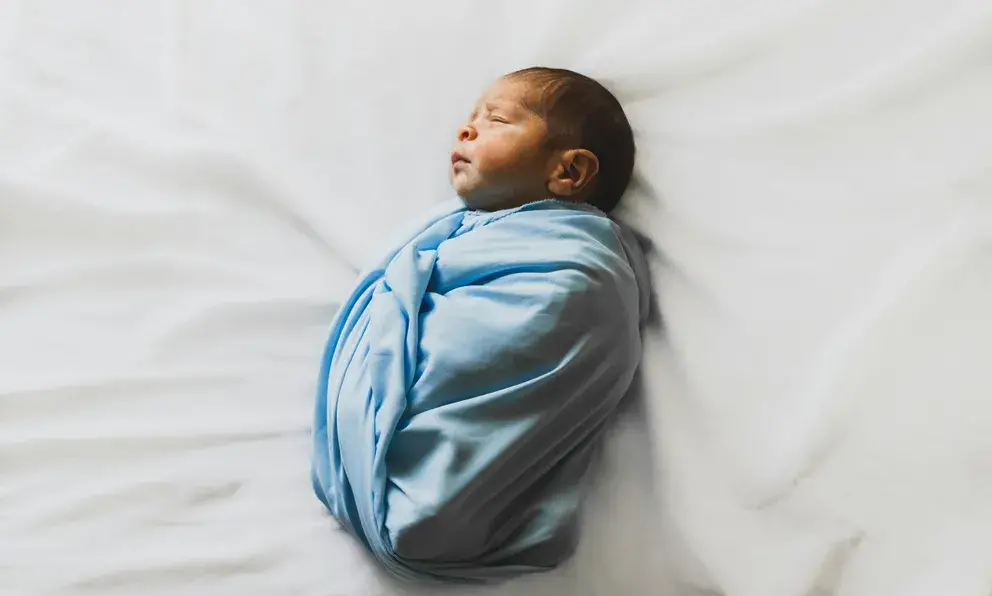
After ten years, six miscarriages, and more pain than either of us knew how to carry, my husband and I had almost stopped believing we would ever bring a baby home. So when our daughter was finally born healthy, I thought the worst was behind us. I was wrong.
My name is Vanessa. My husband Caleb and I had one rule for this pregnancy, a rule we never actually said out loud until the night we finally broke it. We weren’t going to celebrate early. No baby shower. No maternity photos taped to the fridge. No cheerful countdowns posted online for people to comment hearts under. After six miscarriages spread across ten years, hope had stopped feeling like a gift and started feeling like something dangerous, something that could be taken back the moment we let ourselves believe in it too loudly.
When I hit twenty weeks, my sister called and asked if she could buy us a crib. I remember standing in the kitchen with the phone against my ear, staring at the calendar on the wall where I’d stopped marking weeks after the fourth loss.
“Not yet,” I told her, and she didn’t push. She’d learned, the way everyone close to us had learned, not to push.
At thirty weeks, Caleb ordered one on his own, without saying a word to me about it. I caught him assembling it at midnight, kneeling on our bedroom floor in his boxers with an Allen wrench in one hand and the instruction sheet spread out under the lamp, muttering at a bolt that wouldn’t seat right.
“You broke the rule,” I said from the doorway.
He looked up at the half-built crib, then back at me, and shrugged like a man caught doing something he wasn’t ashamed of at all. “Return it if you want.”
I didn’t. I stood there a long moment watching him work, watching his hands, which had held me through six hospital rooms and six different kinds of silence, now carefully fitting a wooden slat into place for a baby we still weren’t letting ourselves fully believe in. That was as close as either of us came, in nine months, to admitting we actually believed this one might make it.
Yesterday morning I woke Caleb at 5:12 and said, “I think it’s happening.”
He shot upright so fast he nearly fell off the bed, blinking hard in the dark. “Are you sure?”
“I’ve had contractions for two hours.”
“You waited two hours?” His voice cracked somewhere in the middle of the sentence.
“I wanted to be sure,” I said. “I didn’t want to call it too early and be wrong again.”
He just stared at me for a second, and I watched something move across his face, some private calculation he didn’t share. Then he swung his legs out of bed and, in his panic, started putting on two completely different shoes, one brown loafer and one sneaker, without noticing.
I actually laughed. It surprised both of us. It was the first time in months either of us had laughed about anything even loosely connected to this pregnancy, and for a second the fear in the room cracked open just enough to let something lighter through.
The hospital was packed when we arrived, gurneys lined along one wall, a nurse jogging past with an armful of charts. Caleb never left my side, not for the check-in forms, not for the blood pressure cuff, not once through the long hours that followed. He held my hand through every contraction, counted breaths with me when I lost count myself, and once, somewhere around hour nine, pressed his forehead to my knuckles and just stayed there, not saying anything at all, like he needed the contact more than I did.
Around midnight, everything happened fast. More nurses filled the room all at once. The doctor kept giving instructions in that clipped, efficient voice doctors use when they need you to move quickly without panicking. Caleb stood by my shoulder, and when I glanced up at him between pushes, his face was a strange mixture of terror and awe, like a man watching something enormous happen right in front of him that he couldn’t quite process fast enough.
For a few seconds after, I couldn’t say anything at all. Then I heard crying. Not mine. Hers.
Our daughter. A loud, furious, healthy cry that filled the whole room and seemed to push all the air out of it at once.
Caleb pressed his forehead against mine, his whole body shaking slightly. “She’s here,” he whispered.
I started crying. “She’s really here.”
A nurse laughed gently, adjusting something near the foot of the bed. “She’s definitely got opinions of her own already.”
They laid her against my chest for one brief, impossibly warm moment, this tiny slick weight suddenly real against my skin after ten years of imagining it, before carrying her a few feet away to the warming station to be checked. I wanted to protest, reach after her, even though I knew perfectly well they had to examine her.
“Is she okay?” I called out.
“She’s doing great,” the pediatric nurse said without looking up from what she was doing.
Caleb hovered somewhere between my bed and the warming station, clearly torn, not sure whether his place was beside me or beside her, shifting his weight from foot to foot like a man who’d forgotten how his own legs worked.
“Go see her,” I told him.
“Are you sure?”
“Caleb, go.”
He went. I couldn’t see much from where I lay, since the doctor was still tending to me, still talking in that same calm, businesslike tone, but I could see Caleb’s face over near the station, lit up under the warming lamp, and he was crying openly, unguarded in a way I’d rarely seen from him.
“She’s got this little mark,” the nurse said to him, her voice carrying just enough for me to catch fragments.
Caleb laughed, a wet, surprised sound, then leaned toward me across the room. “Oh, wow.”
“What?” I asked, straining to sit up a little.
He glanced back at me. “She’s got a little mark.”
“What kind of mark?”
“Near her collarbone. Dark, kind of oval. Looks like someone pressed a thumb into wet paint and left it there.”
The nurse chuckled beside him. “It’s a birthmark. Nothing to worry about at all.”
Caleb looked down at her again, quiet for a moment, and for the first time all day I felt something close to normal settle over me.
“On the left side?” I asked.
“Yes.”
He smiled at me from across the room. “She’s already got more distinguishing features than I do.”
“That’s not hard,” I said.
He looked genuinely offended, which made me laugh again, a real laugh this time, the kind that comes from somewhere deep and unclenched.
Our daughter was alive. She was healthy. Caleb was cracking bad jokes at her warming station like a man who’d forgotten how to stop smiling. After ten years of not daring to hope, I finally let myself believe, fully and without flinching, that we had actually made it through.
Caleb came back and sat beside me while they carried our daughter to the nearby newborn assessment area for her routine checks, the weighing and measuring and all the small procedures that happen in that first blurry hour. I closed my eyes for what felt like ten seconds, my whole body finally allowing itself to unclench after nine months of careful bracing.
“Bald like you?” I murmured, only half awake.
“I hope not. I was already going bald at thirty.”
I smiled without opening my eyes. “You still have hair.”
“Barely.”
I closed my eyes again, and this time the ten seconds stretched much further than I realized. When I finally opened them, groggy and disoriented, a nurse I hadn’t seen before walked in carrying a baby wrapped snugly in blankets.
“Here she is,” the nurse said, smiling.
My heart sped up instantly, that particular lurch of joy that hadn’t worn off yet, that I suspected wouldn’t wear off for years. Caleb stood immediately, and his expression softened into something I’d genuinely never seen on his face before, something unguarded and complete.
The nurse smiled wider. “Want to hold your daughter?”
“Yes,” he said quietly, his voice thick. “Yes, I do.”
She placed the baby carefully in his arms, showing him how to support her head the way nurses always do with new fathers. The blanket slipped a little as he adjusted his grip, shifting to get comfortable, exposing the top of a small shoulder.
For one perfect second, he smiled down at her, and I watched from the bed, my chest full to bursting. Then he stopped smiling. His whole body went still in a way that made the air in the room feel suddenly different.
“Caleb?”
He didn’t answer right away. He just stared down at the baby in his arms. He’d gone pale, the color draining out of his face fast enough that I noticed it even from across the room.
The nurse noticed too. “Sir? Are you feeling lightheaded? Do you need to sit down?”
Caleb kept staring at the baby, his jaw tight. Then he whispered, “No.”
Something in the way he said it, low and strange, sent a cold prickle up the back of my neck. “What?” I asked.
He finally looked at me. “No. That’s impossible.”
The nurse frowned, glancing between us. “What is it?”
Caleb carefully pulled the blanket down a little further, his hands not quite steady. There, visible on the baby’s right shoulder, was a reddish mark.
He kept staring at it, unmoving. “The mark.”
I pushed myself up despite the pain shooting through me, ignoring the doctor’s protest somewhere near my legs. “Our daughter’s birthmark was on the left.”
“What about it?” the nurse asked, still not understanding.
“It wasn’t there.”
She blinked, genuinely confused. “I’m sorry?”
“Our daughter’s birthmark was on the left side of her chest,” I said, my voice rising. “This one is on the right.”
She gave a small, uncertain smile, the kind people give when they think they’re dealing with exhausted new parents seeing things that aren’t there. “Newborn skin can look a little different right after delivery. Redness and marks can shift or appear differently depending on—”
“No.” Caleb’s voice cut through hers, sharper than I’d ever heard him speak to a stranger. “This mark isn’t the same mark. I know what I saw ten minutes ago.”
The room suddenly felt too bright, the fluorescent lights pressing down harder than they had a moment before. “Caleb,” I whispered. “Tell me exactly what you saw. Slowly.”
He turned to face me fully. “A dark oval. On the left side. Near the collarbone. I said out loud that it looked like a fingerprint pressed into wet paint. You heard me say it.”
I had heard him say it. Of course I had. I’d already heard the first nurse confirm it too, laughing, calling it a perfectly ordinary birthmark.
I looked at the woman standing beside Caleb now, the one who’d carried the baby back into the room. She glanced toward the door, just briefly, a flicker of something uncertain crossing her face.
“You weren’t here earlier,” Caleb said. “When she was first checked.”
“No,” the nurse admitted, her voice smaller now. “I wasn’t.”
“Who was?”
She glanced toward the door again, like she was hoping someone else would walk through it and take this off her hands. “I can call your assigned nurse. She’s just down the hall.”
Caleb looked down at the ID bracelet fastened around the baby’s tiny ankle. “Look at this first.”
The nurse leaned in and checked it carefully. My name was printed there, spelled correctly. Caleb’s name too. Our hospital number, matching what I remembered from admission.
Everything on paper seemed to line up perfectly. I should have felt the fear drain out of me right then. Instead, watching Caleb’s face, watching how he still hadn’t relaxed even a fraction, the fear only tightened further, curling somewhere under my ribs.
“That says she’s yours,” the nurse said carefully, like she was choosing each word with great caution now.
Caleb shook his head slowly. “I know what I saw with my own eyes.”
“Give her to me,” I said.
I reached out both arms across the bed. “Give her to me, Caleb.”
He crossed the small room in three steps and placed the baby carefully on my chest, guiding her weight against me the way we’d practiced in that one prenatal class we’d finally allowed ourselves to attend near the very end. She was warm. Impossibly small. Asleep through the entire quiet storm building around her, her tiny fists curled near her chin.
She was someone’s daughter. That thought landed in me with a different, heavier kind of dread than anything I’d felt in labor. This wasn’t a stray detail or a simple clerical mix-up to laugh off later. She was, undeniably, someone’s daughter, wrapped in a blanket, sleeping against my chest, and I suddenly couldn’t be certain that someone was me.
“Call the head nurse,” I said, my voice coming out steadier than I felt.
The nurse hesitated by the door. “Just so we can clear this up quickly.”
“Right now, please.”
She rubbed both hands hard over her face, the way you do when you already sense a long night ahead of you, and left the room. Caleb started pacing the small space between my bed and the window, his hands raking through his hair.
“What if I’m wrong?” he asked, mostly to himself.
I looked down at the sleeping baby against my chest, memorizing the shape of her mouth, the faint dark fuzz along her hairline. “I hope you’re wrong. God, I hope you’re wrong more than I’ve ever hoped for anything.”
I hated that some small, cowardly part of me was suddenly afraid to hold her too tightly, afraid of loving something that might not, in the strictest legal and biological sense, be mine to love yet.
“I looked right at it,” Caleb said. “The mark. I looked right at it and I know exactly where it was.”
“I know.”
“The nurse saw it too. She said the words birthmark, nothing to worry about. I heard her say it.”
“I know.”
The little girl let out a small, sleepy squeak and rested her chin against my collarbone, utterly unaware of the quiet panic unfolding around her. I hated, more than I could say, that part of me had gone stiff and careful instead of simply holding her the way I’d imagined holding her for ten straight years.
A few minutes later, the head nurse arrived, walking briskly, followed closely by the nurse who had been present in the delivery room itself. The head nurse introduced herself as Denise, her tone calm but alert, the tone of someone who had clearly handled tense hospital rooms before and knew better than to rush past the tension rather than through it.
“Tell me exactly what happened,” she said, looking between Caleb and me.
Caleb told her. He described the birthmark in careful, precise detail, exactly where he’d seen it, exactly what he’d said aloud in the moment, exactly what the second nurse had said back to him. Denise listened without interrupting, her expression giving nothing away, and then she turned toward the delivery room nurse standing quietly near the door.
The woman looked first at Caleb, then at me, clearly bracing herself. “Do you remember the mark?” Denise asked her directly.
“Yes,” the nurse said.
I felt something in my chest seize up completely. “Where was it?” Denise asked.
“On the left side. Near the collarbone. I remember commenting on it myself.”
No one said anything for a long, heavy second, the only sound in the room the soft whir of the monitor still attached to my arm.
“Has she left this room since birth?” I asked.
Denise checked the bracelet on the baby’s ankle without removing it, cross-referencing the numbers against the chart in her hand with quick, practiced eyes.
“Has she left this room?” I asked again, louder.
“For a routine assessment,” the delivery nurse said. “Standard procedure.”
“Where to?”
“Down the hall. To the assessment station.”
Denise’s expression shifted slightly, some small tightening around her eyes that she was clearly trying to keep professional. “It was very busy tonight. I would need to check the log to confirm the exact timing.”
“Were there other newborns in that assessment area at the same time?” I asked.
The nurse hesitated, just a beat too long. “One other, I think.”
Denise looked at her sharply. “You think?”
“It was very busy,” the nurse repeated, her voice smaller now. “I would need to check the log.”
Denise stepped out into the hallway without another word, her pace quick and purposeful. Ten minutes crawled by, each one stretching longer than the last, before she returned with an administrator trailing behind her. Through the half-open door, before either of them fully entered, I heard her say to someone else in the hallway, “No one moves either baby until we’ve checked everything through.”
Either baby.
Caleb heard it too, his whole body going rigid. He sat down heavily on the edge of my bed. “There’s another one,” he said quietly.
I didn’t answer him. I just looked down at the little girl sleeping curled against my chest, her breath warm and even.
“There was another little girl born in the assessment area around the same time,” Denise said, stepping fully into the room now, her tone carefully measured. “Born shortly after your daughter.”
“Where is she now?” Caleb asked.
“With her parents.”
“Do they know? Have you told them what’s going on?”
“We’re speaking with them right now, in the room down the hall.”
I looked down at the baby sleeping against me, unable to look away from her face for more than a few seconds at a time. “The bracelet on this baby matches your hospital records,” Denise continued.
“What about the bracelets on both babies?” I asked. “Do they match each other, or just match what’s written on paper?”
“This baby’s bracelet matches your records,” Denise repeated, more carefully this time.
“That doesn’t actually answer my question,” I said.
Denise went quiet for a moment, glancing briefly at the administrator beside her before answering honestly. “No. It doesn’t.”
The administrator started explaining, in the careful, over-rehearsed language of someone trained specifically for moments like this, that they would need to review the internal transfer logs and the full staff assignment sheet from that shift, but I barely absorbed a word of it, my attention narrowing entirely to the door behind him.
The door opened.
“Bring the other parents in here,” I said.
“We need their consent before any direct contact between the families,” the administrator started to say.
The door opened fully behind him before he could finish. A woman sat in a wheelchair just inside the doorway, still in a hospital gown, gripping the armrests hard enough that her knuckles had gone pale. Her husband stood behind her, holding a newborn wrapped tightly in hospital blankets, his face drawn and uncertain.
“I told you something was wrong,” the woman said to him, not looking away from us.
He looked shaken, glancing down at the baby in his arms like he was seeing her for the first time all over again.
Denise stepped toward them. “Marissa, this is the other family I mentioned.”
Marissa looked at me first, then down at the baby resting against my chest. Her eyes filled instantly with tears, spilling over almost immediately.
“My mother knitted her a little pink hat,” she said, her voice cracking.
“What made you notice something was wrong?” I asked her gently.
She swallowed hard, her hands twisting together in her lap. “The hat.”
Caleb frowned, confused. “What hat?”
“My mother knitted her a little pink hat, months ago, before any of this,” Marissa said. “The nurses put it on her right after she was born, right there in the delivery room. I remember it clearly.” She pointed toward the baby wrapped in her husband’s arms. “When they brought her back to me from the assessment area, she was wearing a plain hospital hat instead. The pink one was just gone.”
“I thought maybe I was imagining it,” she continued, her voice unsteady. “I thought maybe I was just exhausted and confused.”
Her husband looked down at the floor. “I told her someone had probably just switched it out for a clean one. I told her not to worry.”
“I thought I was just tired,” Marissa said again, quieter now. “I thought maybe I’d remembered it wrong.”
Caleb stood up slowly from the edge of my bed. “Can I ask you something?”
Marissa nodded, wiping at her eyes with the back of one hand. Her husband instinctively pressed the baby a little tighter against his chest, some protective instinct kicking in before he even understood why.
“Can you check her left shoulder? Near the collarbone?”
Her husband’s arms tightened further around the baby for a moment, and nobody in the room moved. Then, slowly, Marissa reached over and pulled back the edge of the blanket herself.
Near the baby’s left collarbone was a small, dark, oval-shaped mark.
Caleb made a sound that was half laugh, half sob, something raw and involuntary. Every part of me wanted to cross that room immediately and take that child into my arms.
“There,” he said, his voice breaking completely now.
My vision blurred with tears. Every part of me wanted to go to that baby right then. But I didn’t. Not yet. Something in me, some last shred of caution, held me back.
Denise spoke before anyone else in the room could move or say another word. “We are not swapping these babies based on physical marks alone, no matter how convincing they look. We need confirmed results first.”
“Good,” I said, and I meant it, even through the ache of it.
Marissa nodded immediately, fiercely. “Test them. Test them right now, however fast you can.”
The hospital drew samples from both babies for an urgent paternity test while administrators pulled security footage, cross-referenced transfer logs, and compiled the full list of staff who had handled either child that night. Until the results came back, each baby remained with the family currently holding her, under close supervision from hospital staff stationed just outside both doors.
Those hours were unbearable in a way I still can’t fully describe. Caleb kept glancing toward the hallway every few minutes, unable to sit still. Marissa cried twice more that I witnessed, quiet, exhausted crying into her husband’s shoulder. I tried, and mostly failed, not to wonder whether I was quietly comforting her daughter while she comforted mine, whether the shape of my hand against this baby’s back already felt wrong to her in some way I couldn’t perceive.
Later that same day, Denise came back into the room, her face composed but tired. I only had to look at her expression for a half second to know. Caleb had been right all along.
“The results are conclusive,” she said.
Caleb had been right. The little girl I had been holding against my chest for hours was Marissa’s daughter. The baby with the dark oval mark on her left collarbone, the one currently across the hall, was ours.
For ten years I had feared, in the quiet, private way you fear things you can never say out loud to anyone, that I would never get to bring a baby home at all. It had genuinely never once occurred to me that she could be born healthy, cry in the very same room as me, be held against my own skin within the first hour of her life, and still very nearly leave that hospital in someone else’s arms entirely.
Denise stepped carefully between the two families, and under close supervision from the medical staff, we exchanged the babies.
When I finally had my own daughter back against my chest, properly this time, the first thing I did was study her small face, memorizing it all over again like I hadn’t already spent hours doing exactly that with the wrong child. Then I looked down at the small dark oval mark near her left collarbone. I touched it gently with one finger, half expecting it to somehow not be real.
Caleb leaned in close beside me. I started crying again, harder this time.
“A thumbprint,” he whispered against my temple. I kept crying. This time, so did he, both of us finally letting go of hours of held breath at once.
I looked up at him. “You knew, somehow. The moment you looked at her the second time, you already knew.”
He shook his head slowly. “I didn’t know anything. I just looked at her.”
The room went quiet again for a moment. Then, before anyone else could speak, Caleb turned toward the administrator still standing near the door.
“So explain the bracelets to me,” he said. “Explain exactly how another baby ended up wearing my wife’s name on her wrist.”
The room went quiet once more. The administrator glanced at Denise, clearly hoping she would field this part.
That answer took considerably longer to arrive. The internal investigation eventually revealed that during a particularly busy stretch in the assessment area that night, the two girls had briefly been placed in the wrong bassinets by an overwhelmed staff member juggling several newborns at once. Later, when replacement ID bracelets were printed for both babies, the staff member on duty had used the information already attached to those specific bassinets rather than independently verifying, mother by mother, which baby actually belonged to which chart.
The first small error had quietly caused the second, larger one. The label itself hadn’t contradicted anything Caleb said. It had simply carried the original mistake forward, dressed up in the appearance of official confirmation.
Before we were discharged the following day, the administrator returned to our room with a written notice detailing exactly what had happened and what would change going forward. It didn’t undo anything that had already happened. Nothing could undo those hours.
The hospital announced it was immediately suspending that particular bracelet-replacement process across the maternity ward. Going forward, any time a new bracelet needed to be issued to a newborn, it would have to be cross-checked directly against the parents’ own records and confirmed independently by a second staff member before being applied. It was a small, procedural fix layered on top of an enormous, almost unthinkable mistake. But at least, going forward, the error wouldn’t simply end in an apology and nothing else.
Before we left the hospital, Marissa came by our room one more time, her husband trailing behind her with their own daughter now correctly settled in his arms. For a moment, none of us quite knew what to say to each other, the four of us standing there having shared something no parenting book could have prepared any of us for.
“I am never going to make fun of my mother’s knitting again as long as I live,” Marissa finally said, then let out a tired, genuine laugh despite everything.
I laughed too, surprising myself. “And I’m never going to make fun of Caleb again for staring at weird little birthmarks like they’re the most important thing in the world.”
“Excuse me,” Caleb said, pretending to be wounded. “I have excellent observational skills, thank you very much.”
Marissa’s husband even managed a small, real smile at that, the first one I’d seen from him.
We took a photo together before we finally left, the two babies laid side by side for just a moment, blankets touching. Behind them stood two thoroughly exhausted mothers and two fathers still visibly trying to hold themselves together enough to smile properly for the camera. It wasn’t a perfect photo. It didn’t need to be. It was enough.
Caleb had noticed a birthmark. Marissa had noticed a missing knitted hat. Both details had seemed, in the moment, almost too small and insignificant to possibly matter against the busy, exhausting machinery of a hospital maternity ward on a packed night. They mattered enormously in the end, only because two exhausted, frightened people had each refused, separately, to simply let the small detail go.
Our daughters are almost a year old now. We don’t see Marissa and her husband especially often, our lives having settled back into their own separate rhythms, but we’ve stayed in touch, checking in every few weeks, sending photos back and forth.
Yesterday she sent me a birthday photo of her daughter. The little girl was reaching determinedly for a piece of cake, icing already smeared across one cheek, and you could just make out a faint reddish mark peeking above the neckline of her party dress. The caption underneath simply read, “Still holding up over here.”
I laughed harder than I expected to, sitting alone in our kitchen with the phone in my hand. Then I sent her back a photo of our own daughter, perched on Caleb’s lap, gleefully trying to eat a fistful of wrapping paper instead of any of her actual gifts. Her shirt had slipped slightly to one side in the chaos, just enough to reveal that same small, dark, oval mark near her left collarbone, still exactly where it had always been.
“She’s still got hers too,” I wrote back.
Marissa replied with a single red heart, nothing more needed.
Caleb glanced over my shoulder at the screen. “The birthmark club,” he said, half joking.
“Apparently.”
I don’t let myself spend much time imagining what would have happened if Caleb had simply looked away half a second sooner that night, if his eyes had never caught that small dark mark in the first place. He leaned down and pressed a kiss to the top of our daughter’s head, right where her hair was just starting to curl.
I don’t spend much time imagining it. I don’t need to.
The little girl sleeping upstairs right now, in the crib Caleb built too early and refused to return, is ours. She has always been ours. And one small, stubborn mark, no bigger than a fingerprint pressed into wet paint, made absolutely sure that we would know it.
Specialty: Emotional Turning Points
Rachel Monroe writes character-driven stories about betrayal, second chances, and unexpected resilience. Her work highlights the emotional side of family conflict — the silences, the misunderstandings, and the moments when someone quietly decides they’ve had enough.