I woke in a hotel room outside Cedar Creek, Tennessee, before my alarm ever had the chance to ring.
The heater under the window knocked softly every few minutes, that tired, arrhythmic sound old radiators make when they’ve been asked to do too much for too many winters. The gas station coffee I’d bought before sunrise had gone cold on the nightstand, untouched, a thin skin already forming on its surface. Gray November light pressed around the edges of the curtains, refusing to fully commit to morning, the way it does in that part of Tennessee when winter is still deciding whether it wants to arrive early or take its time.
My Navy dress uniform lay across the bed, exactly where I’d hung it the night before after steaming out every last wrinkle in the bathroom, running the shower on hot until the little room filled with steam and the fabric relaxed. Every crease was sharp. Every ribbon sat exactly where it belonged, pinned with the same careful precision I’d used a hundred times before inspections and ceremonies and hospital corridors. I stood there and looked at it for a long time, longer than I needed to, because putting it on meant walking into a room full of people who had already decided, twelve years ago, exactly who I was.
My mother would hate it. I knew that before I ever touched the jacket. Elaine Mitchell hated anything she couldn’t control, and my uniform represented twelve years of decisions she hadn’t made for me — the recruiter’s office I’d walked into at nineteen without asking her permission, the deployments she’d never approved of, the version of her daughter that existed outside the reach of her voice.
But there was something else I knew, too. My father had asked me to wear it.
Not face-to-face. Not on the phone. In a letter, dated October 14th, folded twice, written in that careful, deliberate handwriting he used when he wanted nobody to mistake his meaning. I still remembered the way his hand used to shake slightly near the end of his letters, like the effort of getting everything down before he ran out of steam or nerve.
Sarah, when they honor me, wear what you earned. Don’t wear it for them. Wear it for me.
I read those words at 8:12 that morning, sitting on the edge of a hotel bed two hundred miles from the house I grew up in. Then I slid the letter into the inside pocket of my jacket, right over my heart, and buttoned myself into the person my mother had spent twelve years trying to erase.
The drive to the church took eighteen minutes. I know because I counted them, watching the mile markers, watching the flat brown fields give way to the edge of town, watching Cedar Creek reassemble itself around me one familiar building at a time — the diner where Dad used to take me for pancakes after Sunday service, the hardware store with the same faded awning, the elementary school where Emily and I had both learned to read in the same low-ceilinged classroom two years apart.
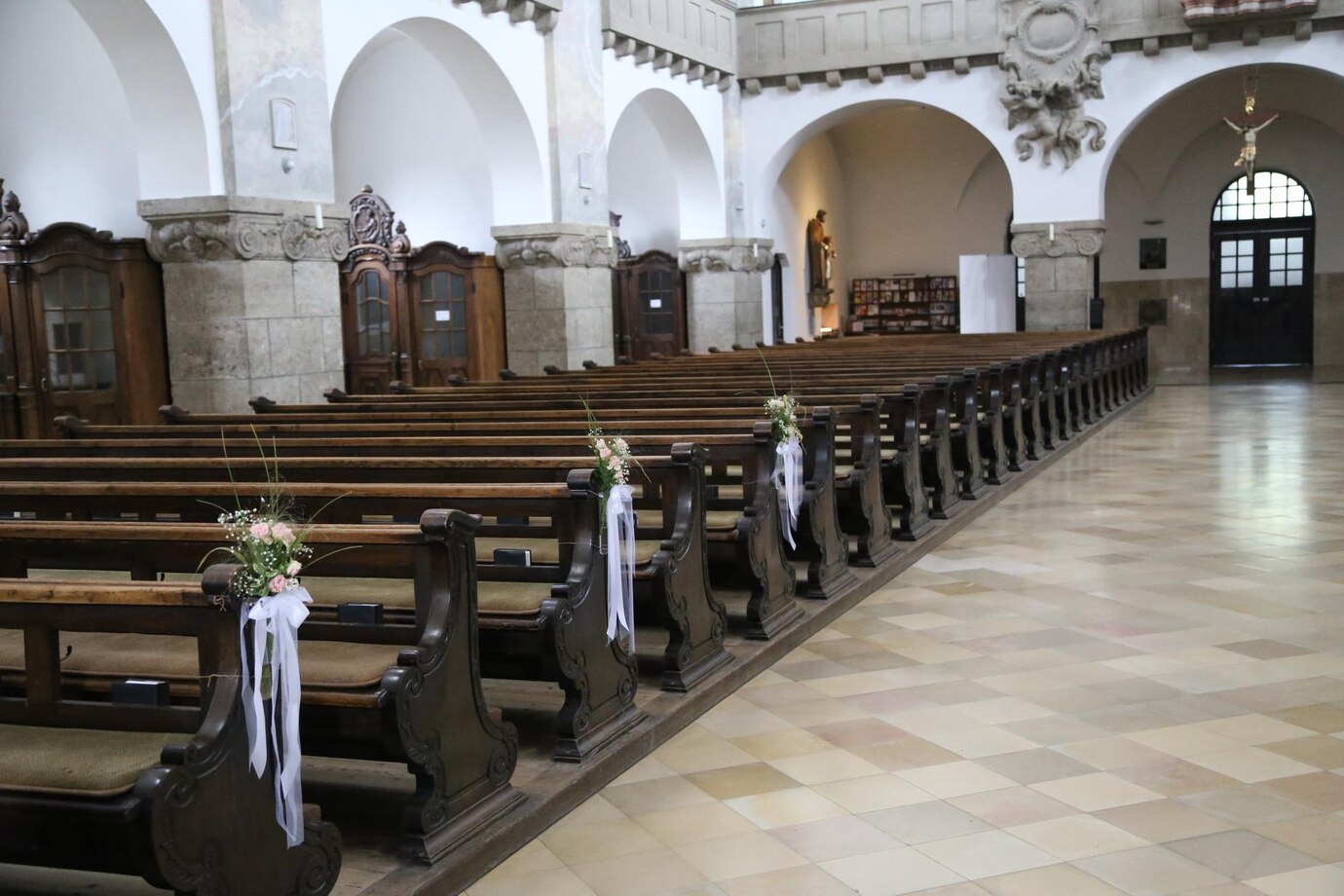
First Baptist Church sat on a hill at the edge of town, its white steeple cutting into a flat gray sky. Small American flags lined the walkway, snapping in the cold wind. The parking lot overflowed with pickup trucks and family SUVs, sedans with veterans’ decals stuck to the back windows. Men in dark suits stood near the entrance holding paper coffee cups in both hands. Women in black coats spoke in low voices near the church sign, their breath fogging in the cold.
People had driven in from neighboring counties to honor Colonel James Mitchell — retired Army officer, respected community leader, church deacon, a man half the county seemed to have a story about.
My father.
To them, he was a hero. To me, he was the man who taught me to change a tire in our driveway before I was old enough to drive, kneeling beside me in the gravel, patiently walking me through each step twice because he said the first time never sticks. The man who made pancakes on Saturday mornings and always snuck in cinnamon when Mom wasn’t looking, winking at me across the kitchen like we were pulling off some grand conspiracy. The man who wrote handwritten letters even when deployment rules kept him from knowing where I was, because he said a letter had a better memory than a phone call ever could — that you could hold a letter, fold it back up, carry it in a pocket until the paper went soft.
And now he was gone. Worse — I had missed his funeral. That was the part my hometown thought it understood. That was the part my mother had polished until it looked like proof, until it had hardened into the kind of fact nobody thought to question anymore.
She told people I’d stayed away. She told my sister Emily I’d chosen my career over my family. She told the church women that the Navy had made me hard, had changed something fundamental in me that used to be soft and dutiful and present. She told the neighbors that my father died with his oldest daughter too busy to come home, and she said it with just enough sorrow in her voice that nobody thought to ask a single follow-up question.
The truth was sitting in a folder back in my hotel room. Six weeks earlier, at 3:47 a.m. local time in Germany, my name had been typed onto a military hospital intake form after an explosion left shrapnel in my side and knocked me unconscious on a concrete floor two continents away from everyone I loved. There was a casualty notification report. Discharge papers with a surgeon’s signature scrawled at the bottom. A signed letter from my commanding officer explaining exactly why I couldn’t travel during the critical days after surgery, when even sitting upright took three nurses and a great deal of gritted teeth. There were emails I had sent my mother from a hospital bed with trembling hands, typed one shaking letter at a time on a phone screen I could barely focus on through the painkillers.
None of it had made it to Cedar Creek. None of it had made it past my mother’s front door.
A lie gets crueler when it wears a grieving woman’s face. People don’t question it. They hand it a casserole and a sympathetic squeeze of the arm and move on with their day, satisfied they’ve done their part.
When I stepped out of the rental car, the conversations nearest the church doors faded first, dying out in a ripple that moved backward through the crowd like a stone dropped in still water. A woman I remembered from the choir covered her mouth. Two older men went quiet beside a pickup truck, exchanging a look I couldn’t quite read. A teenage boy stared openly at my ribbons until his grandmother touched his elbow and pulled his attention away, murmuring something I couldn’t hear.
I felt every stare land on me like weight, like something physical pressing down on my shoulders. Still, I walked. The wind pulled at the hem of my jacket. The medal on my chest caught the weak morning sun and threw it back in a small, cold flash. I’d worn that uniform through inspections and ceremonies and hospital corridors, through the worst night of my deployment and the proudest day of my career, but that morning it felt heavier than anything I had carried overseas.
Inside, the church smelled like old hymnals and winter coats and burnt coffee drifting in from the fellowship room, a smell I would have recognized blindfolded, a smell that belonged specifically to this building and no other. A folding table stood near the lobby with a framed photo of Dad in uniform and a stack of memorial programs, their edges still crisp from the printer.
Colonel James Mitchell, U.S. Army, Retired. Beloved Husband. Father. Friend.
I stood in front of that photograph longer than I meant to. It was one I recognized — taken at his retirement ceremony, the two of us standing side by side afterward, though of course the version on the program had been cropped to remove me from the frame entirely. I noticed that immediately. I said nothing.
My younger sister Emily stood beside the table, one hand gripping its edge like she needed something solid to hold onto. She’d always been the softer one between us. When we were kids, she cried every time Dad deployed, standing at the window until his car disappeared down the road, and I learned to help her tape paper stars to the hallway wall so she could count down the days until he came home, crossing one off every night before bed like a small, private ritual that belonged only to the two of us. When Mom got sharp, Emily got quiet. When I left for basic training at nineteen, Emily stopped calling as much, her voice growing shorter and more careful on the phone each time, until eventually the calls stopped altogether. I used to tell myself she was just busy, that college and then work and then her own life had simply filled up the space where our relationship used to be.
The truth was uglier than that. She’d been living inside my mother’s version of me the whole time, absorbing a story I never got the chance to contradict.
For a moment, neither of us spoke. Then she whispered, “Sarah?”
I smiled, because if I didn’t, I thought I might break right there in the lobby, in front of the framed photo and the stack of programs and everyone still filing in behind me. “Hi, Em.”
Her eyes filled before she could stop them. “You came.”
“I promised I would.”
She looked at my uniform, then at my face, and something shifted in her expression — something I couldn’t fully name yet. It wasn’t forgiveness. Not yet. It was the first crack in a wall she hadn’t even realized she was standing behind, a wall built brick by brick over twelve years out of half-truths and careful omissions.
Then my mother’s voice cut through the lobby like a blade.
“No.”
One word. Clean. Final. The kind of word she’d perfected over decades of getting exactly what she wanted from a room simply by refusing to allow any other outcome.
Elaine Mitchell stood near the sanctuary doors in a black dress, pearl earrings, her silver hair styled to a perfection that suggested hours of preparation rather than grief. Her grief looked arranged, curated, positioned for maximum effect the way she arranged flowers on the dining table or seating charts at holiday dinners. That was always her gift — she could make control look like concern, and cruelty look like standards.
The crowd parted as she walked toward me, the way crowds always parted for my mother, some instinct in people recognizing the particular authority she carried even when they didn’t fully understand where it came from.
“You are not wearing that in here,” she said.
Someone behind me inhaled sharply. Emily’s hand tightened around her memorial program until the paper crumpled audibly in the quiet lobby.
“Mom,” I said.
“No.”
Her eyes moved over my jacket, my ribbons, my nameplate, then down to my hands, cataloguing every detail the way she’d always catalogued my flaws, real and imagined. “Your father’s memorial is not about you.”
There are words that hurt because they’re cruel. There are words that hurt because the person saying them knows exactly where the old bruise sits, exactly how much pressure it takes to make it ache again. For one second, I saw myself turning around — walking back through the glass doors, past the little flags snapping in the wind, past the staring neighbors, back to the rental car and the two-hundred-mile drive home. It would have been easier. Quieter. It also would have been one more lie my mother got to keep, filed away alongside all the others, another piece of evidence in the story she’d been telling for twelve years.
I pressed two fingers against the inside of my jacket and felt the edge of Dad’s letter through the lining, the paper worn soft now from how many times I’d unfolded and refolded it since it arrived.
“I’m here because Dad wanted me here,” I said.
Her mouth tightened into a thin, familiar line. “Then you’ll attend dressed appropriately.”
The sanctuary doors stood open behind her. Rows of mourners filled the pews, more people than I’d expected, more than the church probably usually held on an ordinary Sunday. Veterans sat near the front, ribbons pinned to their jackets, caps resting respectfully in their laps. Community leaders stood along the side wall in dark suits. A woman from the county veterans committee stood near the aisle, clutching a folder against her chest, staring down at the floor like she was bracing for something.
Nobody moved. A hymnbook stayed half-open in someone’s hands, forgotten. A little boy in a navy blazer stopped swinging his feet, sensing the shift in the room even if he couldn’t name it. An old man near the guestbook stared down at his cane like the carpet had suddenly become the most important thing in the building.
The church had become a room full of people waiting for someone else to decide what decency looked like, the way rooms sometimes do when everyone senses something important happening but nobody wants to be the first to move.
My mother took one more step toward me. “I will not let you turn this into a performance.”
My hands clenched once, nails biting into my palms. Then I opened them, deliberately, one finger at a time. I didn’t raise my voice. I didn’t reach for the hospital papers folded in my hotel room two miles away. I didn’t give her the scene she wanted to blame on me, the scene she could describe to the church women afterward over coffee, shaking her head at how the military had hardened her daughter.
“Dad knew where I was,” I said.
Her face changed. Not much. Enough that I saw it, the smallest flicker of something underneath the composed grief.
Then a chair scraped softly in the front row, and the sound traveled through the sanctuary like a match being struck in a dark room.
An elderly veteran slowly rose to his feet. Every head turned. He was tall but stooped with age, a dark suit hanging loose over rows of ribbons that told their own long story, his hands trembling slightly as he adjusted his jacket. His eyes did not tremble at all.
I knew him from Dad’s stories long before I recognized his face. Robert Hayes. Dad had once told me, late one night on the back porch with two beers between them, that Robert carried him through a bad night overseas and then spent forty years afterward refusing to let him get sentimental about it, waving off every attempt at thanks with a gruff shake of his head.
Robert looked at my mother first. Then at me. The whole church went silent, that particular silence that has weight to it, that presses against your eardrums.
He reached inside his coat and pulled out a cream envelope. Even from where I stood, twenty feet away, I recognized my father’s handwriting on the front.
He stepped into the aisle. “Elaine,” he said, his voice carrying easily in the stillness, “Jim asked me to stand if you tried this.”
My mother’s hand flew to the pearls at her throat. “Robert,” she said, but the word came out thin, brittle, nothing like her usual commanding tone.
He didn’t sit down. He held the envelope out — not to her, but to me.
“This was placed in the veterans committee folder last Tuesday,” he said.
The county committee woman lifted her head, face gone pale, her grip on her own folder tightening.
“Your father made me promise it would be read if anyone tried to dishonor your service in this church,” Robert continued.
A murmur moved through the room like wind through tall grass, dozens of quiet conversations starting at once and just as quickly falling silent again.
“Don’t,” my mother whispered. It was the first time her voice cracked, the first crack in twelve years of careful, unbroken composure.
Emily turned toward her. “Mom?”
Robert reached into his jacket again and unfolded a second document — a copy of my military hospital discharge summary. The paper was creased from being carried, folded and unfolded so many times the creases had gone soft and gray, but the header was plain enough for anyone close to read. My name. The intake date. The surgical notes. The travel restriction, stamped and signed.
He didn’t read every line. He didn’t need to.
“Lieutenant Sarah Mitchell was hospitalized in Germany at the time of her father’s funeral,” he read, his voice steady despite the slight tremor in his hands.
The room changed shape around that sentence, like something physical had shifted in the air. People who had stared at me looked away, suddenly finding their own hands or the hymnals in front of them fascinating. People who had looked away now stared at my mother, openly, without pretense.
Emily’s hand flew to her mouth. “You knew?”
My mother didn’t answer. That was answer enough. It hung in the sanctuary louder than any words could have.
Robert’s jaw tightened. “Jim knew before he died,” he said.
My knees nearly gave out beneath me. I had known Dad received some of my messages over the years — the occasional reply, brief and formal, that never quite matched the warmth I remembered from him. I hadn’t known how much he’d actually understood about what had really happened, about how many of my letters had simply never made it to him at all.
Robert opened the envelope with careful, unhurried fingers, the way you’d open something you knew was fragile and important in equal measure. The paper inside trembled once in his grip — not from fear, but from age, from hands that had held a rifle steady decades ago and now shook slightly over the weight of a folded letter.
“These are Colonel Mitchell’s final written instructions,” he said. Then he read, his voice carrying to every corner of the sanctuary.
If Sarah comes home in uniform, she comes in with honor. No one is to ask her to remove it. No one is to imply she chose absence over duty. She has carried more than this town knows. If Elaine tries to stop her, Robert, you tell them the truth.
My mother made a sound then. Not a sob. Something smaller. Something cornered, the sound of an animal realizing the exits have all been quietly closed while it wasn’t looking.
Robert lowered the page and looked directly at her. “Jim asked me why his daughter’s letters stopped reaching the house,” he said.
Emily’s head snapped up. My mother took a step back, her heel catching slightly on the carpet.
Robert’s voice grew rougher, the composure he’d carried into the aisle finally cracking under the weight of what he had to say next. “He found three of them in the drawer of your writing desk, Elaine. Unopened. Postmarked. Sarah’s name in the corner, plain as day.”
The sanctuary went still in a different way now. The earlier silence had been discomfort, the awkward stillness of people caught in the middle of a family’s private business. This one was judgment, cold and total, settling over the room like frost.
“You kept her letters?” Emily whispered, her voice barely audible but somehow reaching every pew.
My mother’s lips parted, but no defense arrived quickly enough to fill the silence. For the first time in my life, I watched my mother stand in a room with nothing to say.
I thought of every letter I’d written from airports, barracks, borrowed desks, hospital rooms — letters written on cramped folding tables during two-hour layovers, letters scrawled by flashlight because the barracks generator had gone down again, letters composed in a hospital bed with an IV taped to the back of my hand. I thought of every one I’d believed had gone unanswered because Dad was too ill, too tired, too angry to write back. I thought of the years I let silence become a family language, assuming the quiet was mutual, never knowing someone else had been quietly holding the dictionary the whole time, deciding which words got to reach him and which didn’t.
Robert turned one more page. “Jim wrote that he wanted both his daughters beside him, if God allowed it,” he said. His voice softened when his eyes found Emily across the aisle. “He wrote that if Sarah couldn’t come home, it was never to be used as a weapon against her.”
Emily started crying then. Not loudly. Not dramatically. Just one hand pressed over her mouth, her shoulders shaking in that particular quiet way, the exact way she used to cry when Dad’s plane left and she was trying so hard to be brave because she thought I was watching and needed her to be strong.
I wanted to go to her. I couldn’t move yet. My legs felt rooted to the carpet, my whole body still absorbing the weight of what was unfolding around me.
My mother looked around the church as if searching for one friendly face, one person who might still be on her side after everything that had just been read aloud. The choir director wouldn’t meet her eyes. The committee woman stared down at the folder in her arms like it had become suddenly too heavy to hold. One of the old veterans slowly removed his cap and held it against his chest, a gesture of respect that somehow felt aimed at me rather than at the service still to come.
Robert folded the letter back along its worn creases. “Colonel Mitchell’s memorial will proceed,” he said, quiet but unmistakable, carrying to every corner of the room. “And his daughter will attend as he requested.”
For a moment, my mother looked like she might argue, her jaw tightening, some old reflex rising up in her one last time. Then she seemed to actually see the room around her. She saw the veterans, caps now off, watching her with expressions that had gone from confused to something much colder. She saw Emily, crying openly now, no longer trying to hide it. She saw me.
For the first time in twelve years, my mother understood she was no longer the only person allowed to tell this story.
She stepped aside. Just one step. It was enough.
I walked past her into the sanctuary, my legs unsteady but my chin held level, the way Dad had taught me to carry myself even when everything inside me wanted to fold. Robert moved beside me, slow and dignified, his cap now tucked properly under his arm. Emily joined me before I reached the pew, slipping her hand into mine, her fingers cold and trembling.
“I’m sorry,” she whispered.
I squeezed her fingers. “We’ll talk,” I whispered back.
It wasn’t forgiveness. Not yet. It was a door, cracked open for the first time in over a decade.
The service began with a hymn Dad used to hum under his breath while fixing things in the garage, some tuneless, contented humming that used to drift through the house on Saturday afternoons while I handed him wrenches and asked too many questions about engines I didn’t understand. The pastor’s voice shook when he spoke about duty, because by then duty had become more than a word printed on a program. It had become a daughter standing exactly where her father asked her to stand. An old friend keeping a promise made years before, carried faithfully through every year since. A room full of people quietly realizing that absence and abandonment had never once been the same thing, no matter how convincingly someone had told them otherwise.
When it came time for family remarks, my mother didn’t rise. Emily did.
She walked to the front with Dad’s memorial program still creased in her hand from how tightly she’d been gripping it, looked out at the church, then down at me sitting in the front pew.
“My father loved both of his daughters,” she said, her voice breaking almost immediately. She continued anyway, pushing through it the way I’d watched her push through hard things as a kid, chin trembling but never quite stopping. “And today I learned that love can be hidden from you by someone standing close enough to call it protection.”
Nobody coughed. Nobody shifted in their seats. My mother stared straight ahead, her hands folded tightly in her lap, silent in a way I had never once seen her be silent before.
After the service, people approached me slowly, almost cautiously, the way you approach something you’re not entirely sure how to address. Some apologized, their words tumbling out in a rush. Some couldn’t quite find the words at all and simply gripped my hand a beat too long. One woman touched my sleeve and said, “We didn’t know.”
I wanted to tell her that not knowing wasn’t the same as not helping, that plenty of people had noticed the strangeness of my absence over the years and simply chosen the easier story instead of asking a single hard question. Instead, I just nodded. I was too tired, standing there in that cold churchyard, to hand everyone their own guilt and watch them decide in real time whether or not they wanted to carry it.
Outside, the wind had eased. The little flags along the walkway barely moved now, hanging limp in the stillness that had settled over the whole town, or maybe just over me. Robert stood near the church steps with his cap tucked under one arm, waiting. He handed me the original letter, the one that had started everything that morning.
“Your father was proud of you,” he said.
I looked down at Dad’s handwriting and felt something inside me loosen and ache at the same time, some tight, twisted knot finally beginning to give way after twelve years of holding its shape. “I wish he had told me.”
Robert’s eyes softened, the hard edge he’d carried into the sanctuary finally easing. “He tried.”
Behind us, Emily came down the steps slowly, one hand on the railing. She’d been crying again, but this time she wasn’t hiding it, wasn’t smoothing her face into something more presentable before anyone could see.
“I want to see the letters,” she said.
My mother stood several feet away near the church entrance, silent, somehow smaller now in the black dress that had looked so powerful and commanding an hour earlier. Nobody moved to stand beside her. Nobody offered her the comforting arm or quiet word that mourners usually receive. She stood alone in a way I almost, almost felt sorry for, before I remembered the three unopened envelopes in her writing desk drawer, my name in the corner of each one, and the feeling passed.
For years, my hometown believed I had abandoned my family. For years, my mother made sure they believed it, polishing the story a little more each time someone asked, until it had hardened into something nobody thought to question anymore. But that morning, in the church where my father had asked to be honored, the truth finally stood up on its own before I ever had to force it into the room myself.
And when I looked at Emily, at Robert, at the envelope now resting in my hands, I understood something my father had been trying to tell me from the very beginning, from the first letter he ever wrote me at boot camp all the way to the last one, carried across an ocean and finally read aloud in the church where we’d both once knelt together on Sunday mornings.
You don’t wear what you earned for the people who doubt you. You wear it for the one person who knew the cost.
That day, I wore it for Dad.

Laura Bennett writes about complicated family dynamics, difficult conversations, and the quiet moments that change everything. Her stories focus on real-life tensions — inheritance disputes, strained marriages, loyalty tests — and the strength people find when they finally speak up. She believes the smallest decisions often carry the biggest consequences.