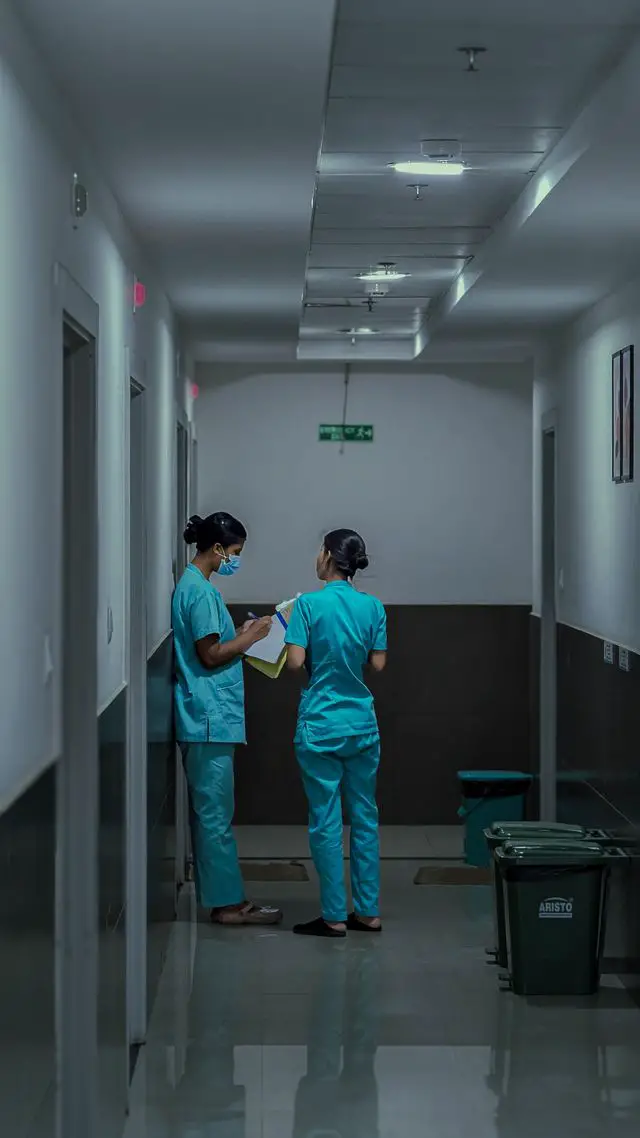
Nearly forty relatives sat beneath the polished chandeliers of the Reynolds Country Club, champagne flutes catching the late-morning light, while Barbara rested one manicured hand on my shoulder and announced to the assembled family with the particular warmth of someone conferring a verdict: “And this is Emily. She’s a nurse.”
There was a pause.
Not a cruel one. Somehow that made it worse. It was the quiet, barely perceptible drop in social temperature that happens when people decide they already understand you and can file you away without further inquiry. An elderly aunt gave me a kind, dismissive smile. Someone reached for the bread basket. A man across the table asked which hospital I worked at, the reflexive polite question of someone already preparing to move the conversation elsewhere.
When I said St. Victoria Medical Center, he brightened slightly.
“I’ve heard they have some excellent surgeons there.”
Barbara laughed with the easy grace of a woman who had been managing social occasions for thirty years. “Oh, they do. I’m sure Emily keeps them very organized.”
A few people chuckled. Someone made a comment about how healthcare workers were the true backbone of any hospital. The kind of remark people make when they want to sound generous while confirming exactly what they have already decided.
My fiancé Daniel went still beside me. I felt it in the way you feel a person go rigid when they are fighting the impulse to say something they know will cost them.
I didn’t.
I lifted my coffee cup and said, “They certainly keep me busy,” and let my smile do the rest of the work.
Barbara looked pleased. She thought I had accepted my designation and settled into it. She thought the conversation was over.
What she did not know was that I had spent nearly two years building a life with her son, and six weeks quietly watching his family form a complete picture of me from a single brushstroke, without once asking a question that might have complicated that picture.
Daniel had wanted to tell them from the beginning. He is not a man who enjoys incomplete information or the feeling that something important is being left unresolved. He had raised it the first time his mother asked what I did, standing in our kitchen in the Chicago condo we shared, and I had shaken my head.
“If they only respect me after hearing a title,” I told him, “then they don’t actually respect me. They respect the title.”
He had looked at me for a long moment with the expression he used when he thought I was right and wished I weren’t.
“And when it comes out?”
“It will come out when it comes out.”
So when Barbara first asked what I did at St. Victoria, I said I worked in surgery. She interrupted before I could finish the sentence, filling in the blank with the assumption that was already waiting behind her eyes. Oh, she’s one of the nurses. Said it brightly, helpfully, the way you might confirm a fact you’re pleased to have gotten right.
I had been a nurse. I was proud of it. Twelve years ago I had stood in a ward at three in the morning and held a frightened patient’s hand and known I was exactly where I was supposed to be. The fact that the path had kept going, had carried me through medical school and residency and fellowship and eventually to the top of the cardiothoracic surgery department at the most competitive private hospital in Chicago, did not make the beginning of the journey something to minimize.
So I let Barbara believe what she wanted to believe.
The weeks that followed taught me something I had suspected but had not quite confirmed: that Barbara Reynolds was not a cruel woman. She was something more complicated than cruel. She was a woman who had spent her entire adult life in a particular social world with a particular set of coordinates, and within that world she understood with perfect fluency exactly how much space each person was supposed to occupy. She was not malicious about it. She was precise.
At Sunday dinner two weeks after the brunch, she touched my hand and told me that becoming a physician was not for everyone, that there was genuine nobility in support roles, and that she had always had enormous respect for nurses. She said it the way people say things they believe are compliments and cannot understand why they land as something else.
At breakfast the following weekend, she set a spare apron on the counter near me and said that nurses were practical people, weren’t they, good with their hands, comfortable in organized environments. She said it while her husband Richard read the financial section of the Tribune and Daniel pretended to check something on his phone.
At a charity gala for the hospital foundation in October, she arranged the seating herself. Daniel was placed at the head table with two physicians from Northwestern, a hospital board member, a tech company executive who had made a recent large donation, and Barbara herself. I was placed near the service entrance with the event volunteers and two women from the catering company’s administrative staff. When I found my place card and looked up, Barbara was already moving toward the head table.
“The senior table is for leadership,” she explained, appearing briefly at my elbow. “I knew you wouldn’t mind. You’re so easygoing about these things.”
I minded. I said nothing.
The engagement brunch was held on a Saturday morning in late October at the country club, the same room where I had first been introduced as Daniel’s nurse fiancée. Barbara had organized it with evident care. The flowers were beautiful. The menu was thoughtful. She had invited people from both sides of the family, which was a gesture I genuinely appreciated, and she had written personal notes on each place card, which I found touching until I read mine.
After the meal, she produced a wrapped gift and set it in front of me at the table with the small ceremony of someone who has chosen something very deliberately.
It was a cookbook. The cover read: Easy Family Meals for Busy Beginners.
Inside was a handwritten card in Barbara’s careful script.
So Daniel won’t have to live on hospital cafeteria food forever. With love, Barbara.
The table laughed. A few people exchanged glances over their mimosas in the way of people who are not quite sure whether to laugh and have decided that if everyone else is doing it, it must be acceptable. Daniel’s hand found mine under the table and pressed once, hard.
I closed the book, thanked her, and looked directly at her across the centerpiece.
“A good meal keeps a marriage healthy,” she said, still smiling.
“So does kindness,” I said.
The smile stayed on her face but something behind it shifted. A fraction of a second, nothing more. Then it was back, polished and impenetrable.
My phone vibrated against my hip. I had exactly one category of caller allowed to breach the silent setting I used at social events, and that was the on-call system at St. Victoria. I excused myself and walked into the hallway beside the coat check.
Multi-vehicle accident on the I-90 interchange. Twelve incoming trauma patients. Two critical. The cardiothoracic resident on call had already identified at least one suspected aortic injury and was requesting immediate attending presence. The charge nurse’s voice was the voice of someone who was professionally calm and wanted me there in the next twenty minutes.
I walked back into the brunch room for my coat and purse. Daniel read my face before I reached the table. He had learned that particular expression over two years of dinners interrupted and weekends rearranged and vacations that existed only on the calendar until something more urgent claimed them.
“I have to go.”
Barbara looked up with the polite concern of a hostess presented with a logistical inconvenience. “Right now?”
“There’s been a major accident on the interstate. Multiple critical patients incoming.”
She made a small sound that was almost sympathetic. “Well, I imagine the hospital is very busy on weekends.”
I reached for my coat. I had my hand on my purse strap when she said it.
Loud enough for the nearest table to hear, with the lightness of someone delivering an observation they expect will land as charming: “I suppose someone has to change all those bedpans.”
The room did not quite go silent. It went to that particular register just below silence, where conversation continues but everyone within range is listening.
Daniel’s chair scraped back from the table.
“Mom.”
Barbara blinked at him with an expression of genuine surprise, as though she had expected him to laugh.
“That’s enough.”
“I was only joking, Daniel.”
“No.” His voice was quiet and entirely steady. “You have been disrespecting Emily since the day you met her. You have been doing it politely, which I think you believed made it acceptable. It doesn’t.”
The table had gone completely still. An uncle near the window was studying the centerpiece with great concentration.
I rested my fingers on Daniel’s arm. “It’s okay.”
He looked at me. “It isn’t.”
“I know. But it will be. I have to go.”
I picked up my purse and walked out of the Reynolds Country Club, and by the time the automatic doors of St. Victoria’s staff entrance opened for me twenty-six minutes later, I had already moved on.
A resident met me in the corridor with a tablet loaded with preliminary imaging. A scrub nurse fell into step beside me without being asked and began the verbal handoff. Someone pressed a set of surgical gloves into my hand. The trauma bay was organized chaos, exactly the kind I had been trained for and had spent fifteen years learning to move through like water finding its level.
Barbara Reynolds and her cookbook and her seating arrangements disappeared entirely from my mind.
There were lives to save.
I worked through most of the night. Two of the twelve patients required surgery. One was straightforward. The other was a thirty-one-year-old with a ruptured thoracic vessel that had the attending resident visibly rattled when I arrived. We were in the operating room for four hours and twenty minutes. The patient came out stable. By the time I was writing post-op notes, the sun was beginning to come up over Lake Michigan, orange and flat through the window at the end of the surgical floor corridor.
The following morning moved at the slower pace of post-call rounds. Coffee that was too strong and too necessary. Residents presenting updates with the careful thoroughness of people who know they are being assessed. Three trauma patients from the night before were stable and progressing. The fourth remained critical but had held through the night, which was more than we had expected at two in the morning.
I was reviewing a CT scan at the nurses’ station when my pager went off.
Emergency consult. Possible Type A aortic dissection. Sixty-three-year-old male. The imaging description alone told me we were not dealing with something that could wait.
The emergency physician met me in the corridor outside the cardiac imaging suite and handed me the chart. I took it without looking at the name first, the habit of someone who has learned to assess the medical facts before the personal ones.
I looked at the scan.
Then I looked at the name on the chart.
Richard Reynolds.
Daniel’s father.
For approximately two seconds, every sound in the room seemed to travel through water.
Then training arrived and everything else stepped aside. That is the thing about fifteen years of surgical practice that people outside medicine rarely understand: the work does not wait for you to finish having your feelings. The feelings go somewhere they cannot interfere, and they stay there until the work is done.
“Prep Operating Room Three,” I said. “Get cardiothoracic anesthesia on the phone now. I want a perfusionist standing by.”
I was moving down the corridor with the chart under my arm when I saw them.
Daniel was standing against the wall outside the cardiac bay, still in the clothes from the brunch the day before, his face carrying the particular devastation of someone who has been awake all night in a hospital waiting room and has long since moved past the stage of hoping for good news and into the stage of simply enduring. Beside him stood Barbara.
She was still composed, in the manner of a woman who had been composed through difficult things before. But the composure had a faint tremor in it, visible only if you knew what to look for.
Daniel’s eyes found mine immediately.
“Emily.”
Barbara turned.
The confusion that moved across her face when she registered me in scrubs, with a resident at my shoulder and a chart in my hand and a charge nurse already angling toward me from the nursing station, was not a performance. It was genuine. She looked at me the way you look at something that has appeared in a context where it does not belong, trying to construct an explanation that fits what she already believes about the world.
“What is she doing here?” she said. Not unkindly. Simply confused.
Before Daniel could answer, the charge nurse reached me.
“OR Three is ready. Anesthesia is on standby.”
Barbara stepped forward with the instinctive authority of a woman who was accustomed to being the most capable person in any room she entered. “I’m sorry,” she said, directing her attention to the charge nurse with a gracious urgency, “we’ve been waiting for the chief surgeon. Is there any update on when she’ll arrive?”
The charge nurse, who had worked with me for six years and had a gift for the perfectly calibrated pause, let one settle over the corridor.
Then she looked at Barbara.
Then she looked at me.
The silence lasted perhaps four seconds.
It felt considerably longer.
Barbara’s eyes moved back to me. I watched the calculation happen in real time, the rapid reassembly of information she had gathered over six weeks, the job title she had supplied from her own assumptions, the seating arrangements she had made, the cookbook, the bedpan comment, the careful architecture of condescension she had constructed and inhabited and never once questioned.
I had the chart under my arm.
A resident was waiting for my direction.
A perfusionist was being paged.
And her husband was on the other side of the door in front of us with a condition that, left untreated for another thirty minutes, carried a mortality rate that I was not going to say aloud in this corridor.
“Mrs. Reynolds,” I said, and my voice came out the way it always did before an operation: even, clear, not unkind, but carrying no room for anything except what mattered. “My name is Dr. Emily Carter. I’m the Chief of Cardiothoracic Surgery. Your husband has a Type A aortic dissection, which is a surgical emergency. We have an operating room ready. I’ve reviewed his imaging and I need your consent to proceed immediately.”
Barbara stared at me.
I had seen that expression before, though not often. It was the expression of someone standing in the gap between two versions of a story, one they have been telling themselves for a long time and one that has just arrived without warning to contradict it.
Daniel reached for her arm.
“Mom. Sign the consent.”
She looked at him. Then back at me.
“You’re the chief surgeon.”
“Yes.”
Her mouth opened and closed once.
“Sign the consent,” Daniel said again, gently.
She signed it.
I handed the chart to my resident and was moving before Barbara could say another word. Behind me I heard Daniel’s voice, lower now, and I caught only the end of one sentence. I’ll explain later. And Barbara’s voice, very quiet, saying something I couldn’t make out.
The operation lasted five hours and forty minutes.
A Type A dissection is the kind of emergency that concentrates every skill and every year of training into a single sustained exercise in precision. The aorta, the body’s largest artery, had torn along its inner wall. Left alone, it ruptures. Repaired correctly and promptly, a patient can walk out of the hospital and live another twenty years. The window is unforgiving. The margin for error is small. The surgery requires the kind of focused attention that makes five hours feel simultaneously like twenty minutes and like a very long time.
Richard Reynolds was sixty-three years old and otherwise in reasonable health for a man who had spent thirty years in commercial real estate, which is to say he had the cardiovascular profile of someone who had worked very hard and had not always remembered to take care of himself along the way. He had a mild history of hypertension managed with medication, which his internist had noted in the chart. Controllable. Not the cause of the dissection, but a contributing factor in the vulnerability that allowed it.
We repaired the dissection, replaced the damaged segment of the ascending aorta, and brought him off bypass in stable condition. His heart returned to normal rhythm on the second attempt, which was better than some and not as clean as others, but clean enough.
When I came out of the OR, Daniel was still there.
He was sitting in one of the padded chairs in the surgical family waiting room on the fourth floor, leaning forward with his elbows on his knees and his hands loosely clasped, the posture of someone who has been sitting in exactly that position for a very long time and has forgotten that other positions exist. He looked up when he heard the door.
I sat down in the chair beside him.
“He’s stable,” I said. “The repair went well. He’s in recovery and he’ll go to the cardiac ICU within the hour. Barring complications, which we’ll watch carefully in the first forty-eight hours, his prognosis is good.”
Daniel exhaled in a way that sounded like something leaving the body, some sustained internal pressure finally finding a way out. His eyes filled briefly and he blinked it back, and then he reached over and covered my hand with his.
We sat like that for a moment without speaking.
“Where’s your mother?” I asked.
“I sent her to get something to eat about an hour ago.” He paused. “She wouldn’t go until I promised I would text her immediately if anything changed.”
“She can see him in recovery in about thirty minutes. I’ll come with you.”
He nodded. Then he was quiet again, and when he spoke his voice had the quality of someone choosing words with unusual care. “How long have you known who he was?”
“When they handed me the chart.”
“And you operated anyway.”
“Of course.”
He looked at me.
“Emily, you didn’t have to.”
“Daniel. Your father needed emergency surgery. That is what I do.” I said it simply because it was simple. “I would have referred him to a colleague if I thought my judgment was compromised. It wasn’t.”
He was quiet for a moment. “She’s been sitting with this for the last five hours.”
“I know.”
“I don’t think she’s going to be the same person she was at that brunch.”
“People rarely are, after something like this.”
He squeezed my hand once. “I’m sorry. For all of it. I should have said more, sooner.”
“You said enough when it mattered.” I thought about his chair scraping back from the table. His voice, entirely level. That’s enough. “That’s what I’ll remember.”
Barbara was in the recovery bay waiting room when we reached her, sitting with her handbag on her knees and her back very straight, the posture of a woman holding herself upright through sheer discipline. She stood when she saw us come through the door, and her eyes went to my face immediately in the way people’s eyes go to a doctor’s face when they are trying to read the outcome before the words arrive.
“He’s stable,” I told her. “The surgery went well. He’s going to need a careful recovery period and there will be follow-up monitoring, but the repair was successful and his prognosis is good.”
Barbara sat back down.
She sat down the way people sit when their legs have simply decided the crisis is over and they are no longer required to participate in holding the body upright. She pressed one hand over her mouth and her shoulders moved once, sharply.
I gave her a moment.
Then I sat down across from her and explained what had happened, what we had found and repaired, what the recovery would involve. The cardiac ICU. The first forty-eight hours of monitoring. The lifestyle adjustments his cardiologist would want to discuss, the blood pressure management that was going to become more serious business than it had been. The follow-up imaging. The medications. I explained it all clearly and completely, the way I explained these things to every family, because when someone is frightened they need information more than they need reassurance, and real reassurance only comes from understanding.
Barbara listened to every word.
When I finished, she looked at me for a long moment. The confident social ease that had characterized every interaction we had ever had was completely gone. What was underneath it was something more unguarded than I had expected.
“I owe you a very significant apology,” she said.
I waited.
“Several, actually.” Her voice was steady but it cost her something to keep it that way. “The things I said. The things I implied. The way I treated you at every gathering since Daniel first brought you home.” She stopped. Started again. “I decided who you were before I spent five minutes trying to find out.”
“You did,” I said.
She looked slightly surprised that I agreed so directly. I think she had expected a small social mercy, a “don’t worry about it,” or a “you couldn’t have known.” She had been in rooms her whole life where those mercies were extended as a matter of courtesy.
“I behaved like a snob,” she said. “And a foolish one, since I didn’t even have my facts right.”
“What you had was an assumption,” I said. “The facts were available if you’d wanted them.”
She absorbed this. “Daniel tried to correct me. More than once, I think, without telling me directly.”
“Yes.”
“I didn’t listen.”
“No.”
She looked down at her handbag, then back up at me. “The bedpan comment.”
“Mrs. Reynolds.”
“Barbara.”
“Barbara. Your husband is alive because a team of highly trained people spent almost six hours in an operating room together. Every single person in that room matters. The perfusionist. The anesthesiologist. The scrub nurses. The circulating nurse. The resident who first read the CT scan correctly and called the right consult immediately. Every one of them.” I paused. “Comments like that one are how you tell people that their work doesn’t matter. They hear it. They remember it.”
She was quiet for a long time.
“I know,” she said finally. “I knew it when I said it. I said it anyway.”
That was honest. It was more honest than I had anticipated, and it asked something of me in return.
“I understand why you said it,” I told her. “Not because it was kind. But I understand the mechanism. You had a story about who I was. The comment was consistent with that story. It’s much harder to say a cruel thing about someone you actually know.”
She looked at me carefully. “Is that why you didn’t tell us the truth?”
“Partly.”
“And the other part?”
I considered the question. “I’ve been a woman in a very competitive field for a long time. I’ve had people’s opinions of me change the moment they hear my title, and not always in ways that are more genuine than their original dismissal. I wanted to know who you were before you knew who I was.”
Barbara was quiet.
“And now you do,” she said.
“Yes.”
“What do you think?”
It was a genuinely brave question. I respected her for asking it.
“I think you love your son,” I said. “I think you have high standards that you’ve sometimes applied without enough thought for how they land on people who don’t share your frame of reference. I think you’re capable of more than you showed me in the last six weeks, because what you just said took honesty that the woman at that brunch table didn’t display.”
She was quiet for a moment. “That’s a more generous answer than I deserve.”
“It’s an honest one.”
Daniel had been standing a few feet away during this exchange, close enough to hear, far enough to give us the space to have it between ourselves. He came forward now and sat beside his mother and she leaned against him briefly in the way of someone who has been very strong for a very long time and is finally, carefully, allowing themselves not to be.
I left them there together and went back to finish my notes.
Richard Reynolds spent four days in the cardiac ICU and eleven days total in the hospital. His recovery was complicated slightly by a brief episode of atrial fibrillation on day three, which is not uncommon after this type of surgery and resolved with medication adjustments. By day eight he was sitting up and complaining about the food, which is usually a reliable sign that a patient is returning to themselves.
I stopped by his room on morning rounds, as I did with all my post-operative patients. The first time I walked in and introduced myself by name and title, he looked at me for a moment and then said: “You’re Emily.”
“I am.”
“Daniel’s Emily.”
“The same.”
He looked at the ceiling for a moment. “Barbara told me.”
“How are you feeling?”
“Embarrassed,” he said. “On behalf of my wife, and also in general.”
“There’s no need.”
“I suspect there is, actually.” He had a dry, self-aware quality that I had not expected, something that explained certain things about Daniel that I had previously attributed entirely to temperament. “She also told me about the comment at the brunch.”
“Mr. Reynolds.”
“Richard.”
“Richard. You had nothing to do with that.”
“I should have been paying better attention.” He shifted against his pillow. “I have a habit of leaving social management to Barbara. It’s convenient and lazy and in this case it let something go on considerably longer than it should have.”
I had nothing to add to that, and he seemed to know it.
“Thank you,” he said. “For what you did in that operating room.”
“It’s my job.”
“It is,” he agreed. “It is also something more than that, I think, when the person on the table is someone connected to you the way I am.” He paused. “I won’t forget it.”
Neither would I, though for different reasons than he might have supposed. I would remember it because of the two seconds of silence in the imaging suite when I read his name on the chart and felt the full weight of everything I was being asked to hold at once. I would remember it because of what happened in those two seconds, which was that the training simply arrived and the weight was set aside and the work began. I would remember it because it confirmed something I had always believed about what medicine was and what it required, and confirmation of the things you believe most deeply tends to stay with you.
Daniel and I were married the following June in a ceremony at a small botanical garden on the north side of the city. We had chosen it for the light and the way the afternoon sun came through the trees, and for the fact that it held about eighty people comfortably, which was exactly the size we had wanted.
Barbara helped plan the flowers. She did not offer unsolicited opinions about the menu or the guest list or the venue. She asked questions and listened to the answers and when she had a suggestion, she offered it as a suggestion. It was a different version of her than the one I had first met, not entirely different, the architecture was the same, but something in it had been rearranged.
She gave a toast at the reception that she had written herself and clearly revised several times. She talked about Daniel, about the particular kind of man he had grown into, and then she turned to me and said, in front of everyone, that she had spent the first weeks of knowing me making assumptions she was ashamed of, and that the person Daniel had chosen to marry was someone who had shown her, in the most direct possible way, what it looked like to do your work with integrity when the stakes were at their highest.
She did not cry. Barbara Reynolds was not a public crier. But her voice was not entirely steady, and she did not attempt to make it seem as though it was.
Richard Reynolds, at the table nearest the garden wall, raised his glass.
My mother, seated beside him, reached over and patted his arm.
Daniel found my hand under the table, in the way he had at the engagement brunch, the same gesture entirely, except that this time nothing needed to be held back.
I thought about what I had told him in our kitchen the year before, when he had wanted to announce my title at the family dinner and I had said no.
If they only respect me after hearing a title, they don’t actually respect me.
That had been true. It was still true. The title was not the point, had never been the point. What I had wanted was the slower, less convenient thing: to be known before I was categorized. To let whatever respect developed be built on something real.
It was not the most efficient approach. It had cost me something, those six weeks, the seating arrangements and the cookbook and the comments absorbed without response.
But what we had arrived at, what Barbara and I had built in the recovery room and in the difficult conversation after it and in the months that followed, was not the surface approximation of civility that comes when people are impressed by credentials. It was something with more friction in it, and more honesty, and more substance.
I could feel, at the table in the botanical garden with Daniel’s hand in mine and the evening light moving across the flower arrangements Barbara had spent two weeks choosing, that what we had arrived at would last.
The following December, Richard came in for his annual post-surgical imaging and cardiology follow-up. I reviewed the results with his cardiologist and then stopped by to give him the summary in person. The aortic repair was holding perfectly. His blood pressure was well managed. He had, his cardiologist noted with visible satisfaction, actually modified his diet and exercise habits, which in post-surgical cardiac patients is never guaranteed.
He was in good health. Better health than before, in some respects, because he was now paying attention.
“Do you tell all your patients this?” he asked when I finished.
“Tell them what?”
“That they’re going to be fine.”
“Only when they are.”
He smiled. He had Daniel’s smile when he let it be genuine, which he had been doing more often since the surgery, a fact Daniel had mentioned on several occasions with a kind of careful, tentative gratitude.
“Good,” he said. “I like that.”
I drove home through the December streets with the particular feeling that comes at the end of a day when everything has been exactly what it needed to be. The work done well. The patient well. The city outside the windshield going about its complicated business under gray winter light.
Daniel was in the kitchen when I came through the door, making dinner with the focused attention he brought to everything that mattered to him, some kind of pasta, the apartment smelling of garlic and olive oil, music on low.
He turned when he heard the door.
“How was he?”
“Good. Really good.”
He exhaled. “I’ll tell Mom.”
“She’ll be pleased.”
He turned back to the stove, and I hung up my coat and set my keys on the hook by the door, and the ordinary sounds of the apartment settled back around us, comfortable and unremarkable.
I thought about the country club. The champagne flutes. The pause after Barbara said the word nurse, and the small, practiced drop in the room’s attention.
I thought about what it had cost me to let that stand, and what it had given me in return.
Not everyone earns the truth all at once. Some people need the long way around, through assumptions and errors and the slow, humbling work of revising what they thought they knew.
Barbara Reynolds had taken the long way around.
What waited for her on the other side was a relationship built on something she had not expected and could not have planned for.
The same thing that waits for anyone willing to do the harder thing.
The truth, arrived at honestly.
And in my experience, that is the only kind that holds.

Lila Hart is a dedicated Digital Archivist and Research Specialist with a keen eye for preserving and curating meaningful content. At TheArchivists, she specializes in organizing and managing digital archives, ensuring that valuable stories and historical moments are accessible for generations to come.
Lila earned her degree in History and Archival Studies from the University of Edinburgh, where she cultivated her passion for documenting the past and preserving cultural heritage. Her expertise lies in combining traditional archival techniques with modern digital tools, allowing her to create comprehensive and engaging collections that resonate with audiences worldwide.
At TheArchivists, Lila is known for her meticulous attention to detail and her ability to uncover hidden gems within extensive archives. Her work is praised for its depth, authenticity, and contribution to the preservation of knowledge in the digital age.
Driven by a commitment to preserving stories that matter, Lila is passionate about exploring the intersection of history and technology. Her goal is to ensure that every piece of content she handles reflects the richness of human experiences and remains a source of inspiration for years to come.