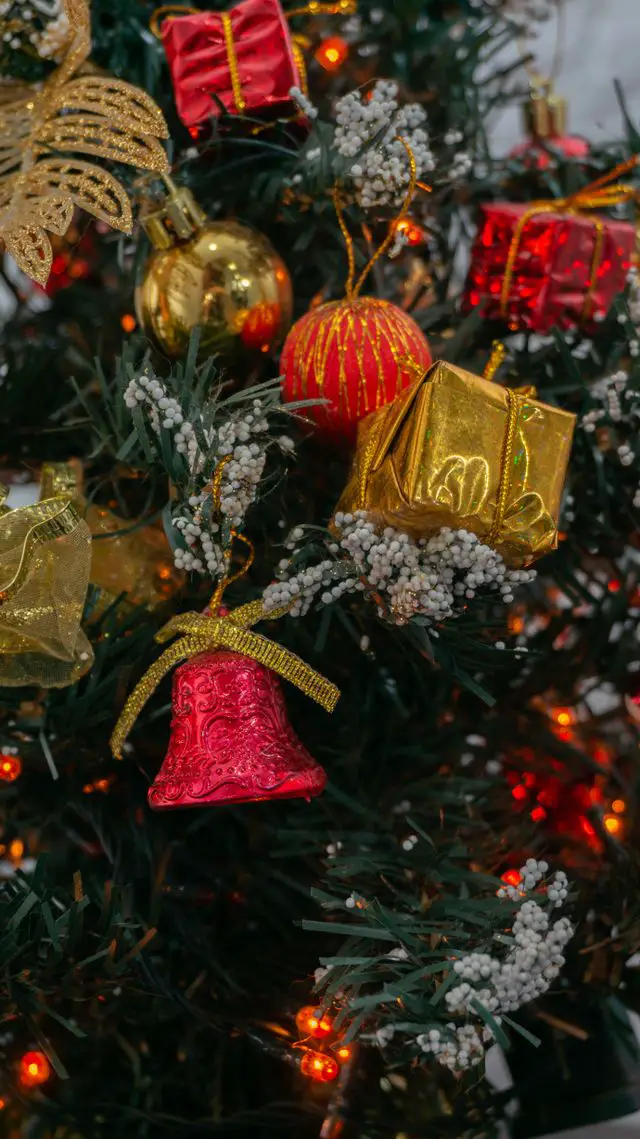
Every Christmas for fifteen years, my family forgot to invite me.
Not once. Not twice. Fifteen times, one after another, as reliable as the calendar itself.
And I always found out the same way. Around midnight on Christmas Eve, or sometimes early on Christmas morning, the photos would begin appearing on Instagram. My cousins in matching flannel pajamas, arms slung around each other. My aunts holding glasses of red wine, cheeks flushed and happy. My parents smiling side by side in front of a tree that always seemed taller than the year before, taller than the ceiling should have allowed, dripping with the ornaments I remembered from my own childhood.
Someone would caption it. Nothing better than having the whole family together.
The whole family.
Except me. Always except me.
I would sit there in the blue glow of my phone, wherever I happened to be that year, and I would scroll through the pictures of people who shared my blood celebrating a holiday they had somehow, once again, neglected to tell me was happening. I would look for myself in the background of the photos, foolishly, as though I might have been there without remembering it. I never was.
For the first few years, I asked about it. I called my mother, keeping my voice light, pretending it didn’t matter, asking if maybe there’d been a mix up.
“Oh, honey,” she would sigh, in that particular tone that made me feel like the unreasonable one for even bringing it up. “We just thought you were busy. You’re always so busy with work.”
My father had his own version. “Don’t make Christmas about hurt feelings, Nora. It’s supposed to be a happy time. Don’t ruin it for everybody.”
And my younger sister, Lauren, never bothered with softness at all. “You always bring weird energy anyway,” she told me once. “Honestly, it’s more relaxed without you there.”
I used to lie awake turning those phrases over, trying to find the thread that would unravel them, the argument that would finally make my family see what they were doing. But that’s the trap of that kind of exclusion. It’s always deniable. There was never a moment I could point to, never an outright you’re not welcome, just a soft endless fog of we thought you were busy and don’t be so sensitive and it just worked out that way again. If I got upset, I was the one making a scene. If I stayed quiet, nothing changed. Every year the invitation simply failed to arrive, and every year the failure was somehow, mysteriously, my own fault. They had it down to an art, the art of hurting someone while maintaining that no one had done anything at all.
So eventually, I stopped asking. There is only so many times a person can knock on a door that never opens before they understand that the silence is the answer.
I spent those Christmases alone, in a rotating series of lonely places. Some years it was my own apartment, with a small tabletop tree I bought at a drugstore and a movie I’d already seen a dozen times. Some years it was a friend’s guest room, where I was grateful for the kindness but always aware I was a guest at someone else’s family holiday, not my own. Because I’m a nurse, some years I simply volunteered to work the holiday shifts nobody else wanted, and I spent Christmas in the fluorescent hum of a hospital, holding the hands of other people’s lonely relatives, which was its own strange comfort. At least there, being needed felt real.
I got good at it, in a way. That’s the part that’s hard to explain to people who have never been quietly excluded. You develop routines. Traditions of one. I would make myself a nice breakfast on Christmas morning, real eggs, good coffee, and I would call it a treat instead of a consolation. I would buy myself one gift and wrap it and put it under the little tree so there would be something to open. I learned which movies to avoid, the ones full of big warm family reunions, and which ones were safe. I told myself, for a long time, that I preferred it this way. That family holidays were overrated and stressful and I was lucky to skip the drama. I almost believed it. You can convince yourself of a great many things when the alternative is admitting how much it hurts.
There was one year I will never forget, the year my apartment’s heating gave out on the twenty third and the landlord couldn’t get anyone to come until after the holiday. I didn’t want to impose on anyone, didn’t want to be the sad relative calling around looking for somewhere warm to sleep on Christmas. I had already done the math on what my parents would say, could hear my father’s voice, don’t make Christmas about hurt feelings, could picture my mother’s put upon sigh. So I spent that Christmas Eve wrapped in every blanket I owned in the front seat of my car, parked outside a diner that had closed early for the holiday, watching the snow come down under a streetlight, telling myself it wasn’t as bad as it was. I ran the engine for heat in short bursts to save gas, and I watched the flakes pile up on the windshield, and around eleven o’clock the Instagram photos started, the matching pajamas, the enormous tree, and I turned my phone face down on the passenger seat and I did not cry, because I was too cold and too tired and too used to it to bother.
And every single year, without fail, on the morning after, my phone would ring, and it would be Grandma Ruth.
“I saved you pie,” she would say. Every year. Those same four words, like a small warm lantern held out across all that cold distance. “You come out to the house whenever you can, and I’ll have it waiting. The good apple, not the mincemeat nobody eats.”
She was the only one who never forgot me. Not once, in fifteen years. She always knew when I’d been left out, and she never pretended otherwise, and she never made excuses for the rest of them. She just made sure I knew that at least one person in that family had kept a place for me at her table, even if it was only a slice of pie on a blue plate the day after everyone else had gone home.
Those day after visits became the real holiday for me, over the years. I’d drive out to the beach house on the twenty sixth, and it would be just the two of us, the family wreckage of Christmas already cleared away, and she’d have the pie waiting and a pot of coffee on, and we’d sit at her kitchen table for hours. She never asked me why I hadn’t been there the day before. She knew. Instead she’d tell me stories, about my grandfather, about the house, about her girlhood, and she’d ask me real questions about my life and actually listen to the answers, which was more than anyone else in that family had done in years. Those quiet afternoons, the two of us and the sound of the water, were worth more to me than any crowded Christmas dinner I was missing. I just didn’t understand yet that she was giving me something the rest of them would never have. Her full attention. Her real love. The thing they were all too busy taking the house to notice she was quietly handing to me instead.
When Grandma Ruth died in October, my family suddenly, miraculously, remembered my phone number.
Not to comfort me. Not to grieve with me, the one person who had been closest to her in her final years. Not to ask how I was holding up.
To ask about the beach house.
Grandma’s beach house sat on a gray, windswept stretch of the Maine coastline, at the end of a long gravel drive lined with beach roses that bloomed pink every June. It had cedar shingles gone silver with salt and weather, blue shutters she repainted herself every few years until she couldn’t manage the ladder anymore, and a wide covered porch that faced straight out at the water. My grandfather had bought it for almost nothing back in the sixties, a run down fisherman’s cottage, and the two of them had spent decades turning it into the place that anchored our entire family. When you thought of that family, you thought of that house. It was the setting of every good memory any of us had.
And every summer, for as long as I could remember, my relatives had treated it like a free beachfront resort.
They descended in waves from June through August. They filled every bedroom and slept on every couch. They left sand ground into the beds and wine stains blooming across the good rugs and wet towels molding in heaps on the bathroom floors. They emptied the pantry and the refrigerator and left the grocery receipts on the counter for Grandma to pay, as though restocking were simply part of the cost of her hosting. They borrowed her car and returned it on empty. They used the place hard, the way you only use something you don’t respect, and then they packed up and drove home and didn’t think about it again until the next summer.
I was the one who came in September, after they’d all gone, to help her put the house back together. I was the one who fixed the loose railing on the porch steps before somebody’s child fell through it. I was the one who drove three hours each way to take her to her doctor’s appointments as she got older and the appointments got more frequent and more serious. I was the one who sat beside her bed in that last year, in the room facing the water, on the days she was too tired to speak, just holding her hand and reading to her while the tide came in and went out below the window.
That last year is the one I hold onto now. When the diagnosis came and the treatments started, I cut my hours at the hospital to be with her, and I moved most of my life out to the coast without ever quite deciding to. I learned the rhythms of her medications and the names of her nurses and the particular way she liked her tea when the nausea was bad. I handled the insurance paperwork that arrived in relentless waves, the explanations of benefits and the appeals and the bills that made no sense, because she couldn’t manage it anymore and no one else offered. I paid for things quietly when her fixed income wouldn’t stretch, the way she had always quietly paid for things for other people, and I never mentioned it, and I never wrote it down, because I wasn’t keeping score. I just loved her. Meanwhile, her other children and grandchildren called occasionally to ask how she was doing, and a few of them visited for an afternoon here and there, and every one of those short visits somehow got photographed and posted, so devoted, so blessed to have this time with Grandma, while I did the actual work of her dying in a house that fell silent the moment the cameras left.
None of that made it into anyone’s Instagram captions. But it was the truest thing in my life.
The will reading was held in the cramped office of her estate attorney, a careful, soft spoken man named Mr. Devlin, three weeks after the funeral. Twenty three of my relatives crowded into that room, more of them than had ever come to a single one of her doctor’s appointments, more of them than had visited her in the entire last year of her life combined. They wore their good clothes. They’d done their hair. My aunt Patricia wore black lace and dabbed at eyes that, as far as I could tell, produced no actual tears, and she’d positioned herself in the chair nearest Mr. Devlin’s desk, as though proximity might translate into priority.
The funeral itself had been the same. A packed church full of people performing grief, cousins I hadn’t seen in years hugging me with sudden fierce affection, telling me how close they’d all been to Grandma, how devastated they were, how much she’d meant to them. I stood through it in a kind of numb astonishment, watching people who had let her die largely alone weep prettily in the front pews, and I understood even then that the performance wasn’t really about Grandma. It was about the house. Everyone in that church was, in some back corner of their mind, already thinking about the summers to come. I could feel it. And so, I would learn, could Grandma. She had felt it coming for years.
“Ruth was so generous,” Patricia announced to the room, before Mr. Devlin had even opened the folder on his desk. “She loved this family more than anything. She would have wanted us all to share the house. To keep it in the family, for the grandchildren, the way it’s always been. That’s what she always said to me. Keep it in the family, Patricia.”
Grandma had never once said that to me, and I had been the one she talked to, every week, for years. I had been the one holding her hand.
Mr. Devlin adjusted his glasses and looked down at the document in front of him, unhurried, and he read, in his careful voice, the sentence that changed everything.
“Ruth left the property, the house and the land in its entirety, solely and exclusively to her granddaughter, Nora.”
The room went utterly silent. And then, slowly, twenty three faces turned toward me.
It was the strangest thing. For the first time in my adult life, I felt every single one of them truly see me. For fifteen years I had been invisible to these people, a name they forgot on the guest list, an afterthought, a source of weird energy, and now, in the space of one sentence, I had become the most important person in the room. I watched the recalculation happen behind their eyes, watched them reassess me in real time, and I understood exactly what I had become to them. Not a granddaughter. Not a cousin or a daughter or a niece. An obstacle. A gatekeeper standing between them and something they wanted very badly.
Aunt Patricia recovered first. She turned to Mr. Devlin with the bright, brittle assurance of a woman who has never encountered a problem she couldn’t manage. “Well,” she said, “that’s clearly not what Ruth intended. Nora was her caregiver, that’s all, and everyone knows how these things happen at the end, how a person in that position can, shall we say, influence a vulnerable elderly woman. We’ll want to have our own attorney look at this. This will won’t stand.”
“You’re welcome to consult your own attorney,” Mr. Devlin said evenly. “I’d only note that Ruth executed this will more than a year before her death, that her physician documented her mental competence at the signing and at several points thereafter, and that she left a number of additional materials with this office anticipating precisely this reaction. But by all means. Consult whomever you like.”
I didn’t say a word during any of it. I just sat there, holding my grief and this new strange weight, and I let them look at me, and I thought about Grandma saying, you’ll know when the time comes. I was beginning to understand what she’d meant. And I was beginning to understand that she had armed me for exactly this, that the will was only the first move in a game she’d set up long before, seeing three moves ahead the way she always had.
The messages started in early December.
They came without preamble, without a single word of condolence or reconnection, as though no time had passed and nothing had changed and I had always been part of things.
Can’t wait for Christmas at the beach house this year! my cousin Blake wrote, with a string of festive emojis.
We’ll need the two upstairs rooms for us and the kids, texted a cousin I hadn’t spoken to in six years.
Can you have the cleaning lady come out early so it’s ready by the 23rd? wrote Aunt Patricia, as though I employed a staff, as though the house being ready for her arrival were simply my job now.
There were more. My aunt Carol wanted to know if the old crib was still in the attic for the baby. Someone’s husband asked whether the boat was still in the shed and whether he could take it out. Lauren texted, the first time she’d texted me in over a year, to say she was bringing her new boyfriend and hoped that wasn’t weird, followed immediately by another text asking which bedroom had the best view because she wanted to make a good impression. Not one of them asked how I was. Not one of them mentioned Grandma, except in the possessive, as in Grandma’s house and Grandma’s Christmas, the traditions they intended to continue exactly as before, with only the small administrative detail of ownership having changed hands.
Nobody asked. That was the thing that struck me, reading them all pile up. Not one person in my entire extended family asked whether they could come, whether it was all right, whether I even wanted to host a family Christmas at the house I had just inherited from the grandmother they’d left me to grieve alone. They simply assumed. They had taken that house for so many years that they had genuinely, completely forgotten it had never been theirs to take. Fifteen years of unchallenged use had curdled into a belief, deep in their bones, that the place belonged to them, and that I was merely the new administrator of their holiday.
I didn’t answer any of the messages. I just watched them accumulate, dozens of them, a whole family’s worth of assumptions, and I made a decision, and then I called Mr. Devlin.
Because here is the thing my family didn’t know. In her last year, Grandma Ruth and I had spent a great deal of time together, and not all of it had been quiet. Some of it had been her talking, clear eyed and unsentimental, about exactly what she wanted to happen after she was gone. She had seen everything. She had understood her own family far better than any of them ever gave her credit for. And she had made preparations.
I want to tell you about one of those conversations, because it’s the one I think about most. It was a night near the end, one of the good nights when she had energy and her mind was sharp, and we were sitting up in her room with the window cracked so she could hear the water. And out of nowhere she said, Nora, I’ve done something you might not understand, and I need you to promise me you’ll see it through even when they make you feel like a monster for it. I asked her what she meant. And she just took my hand and said, You’ll know when the time comes. Just remember that being kind and being a doormat are two different things, and I spent too many years confusing them. Don’t you make my mistake. She wouldn’t say more than that. But she’d already talked to Mr. Devlin by then. She’d already set the whole thing in motion. She just wanted to be sure that when the moment came, I wouldn’t lose my nerve.
On the morning of December twenty third, I drove out to the house before sunrise. I let myself in and lit the woodstove and made coffee and stood on the porch in the cold blue light, watching the sun come up over the water, the way she and I had done together so many times. I wasn’t nervous. I’d expected to be, but I wasn’t. I felt, for the first time in years, completely certain of what I was doing and why.
Mr. Devlin arrived mid morning, and not long after him came Sheriff Callahan, a broad, unhurried man who had known my grandmother for thirty years and had, it turned out, thought the world of her. The three of us went over everything one more time, and then we waited.
By noon, they came.
I heard them before I saw them, the crunch of tires on the long gravel drive, and then they came into view around the bend past the beach roses. Four rental vans rolled up one after another, packed to the roof with suitcases and coolers and shopping bags full of wrapped presents. I watched from the porch as they parked in a loose row across the gravel, doors sliding open, and twenty three relatives spilled out into the cold, stretching after the long drive, calling to each other, laughing, the easy noise of people arriving somewhere they feel entitled to be. Children broke away immediately and ran toward the dunes, shrieking, as though the beach and the house and the whole gray shining world belonged to them, as it always had. They wore matching red Christmas sweaters, the kind you buy in bulk for a family photo. Someone had a professional looking camera around their neck. They had planned this down to the last detail, the sweaters and the timing and the gifts and the food. They had planned absolutely everything except the possibility that the door might not open for them.
For a moment I just watched them, this whole crowd of people who were my blood and who had made me a stranger, and I felt something that surprised me. Not rage. Not even sadness, exactly. Just a strange, clear calm, the calm of a person who has finally stopped hoping for something and is therefore free.
Aunt Patricia climbed out of the lead van first, and she came bustling toward the porch, rubbing her arms against the cold, her face already arranged into a bright hostessy smile, the smile of a woman accustomed to running every room she enters.
“Nora,” she called out. “There you are. Come on, open up, it’s absolutely freezing out here. The kids need to use the bathroom and we’ve got cold things to get into the fridge before they spoil. Did the cleaning woman come? I hope you aired out the upstairs, it always gets so musty.”
She was halfway up the porch steps, still talking, still issuing instructions, before she seemed to fully register that I wasn’t moving to open the door, and that the large man standing beside me in the sheriff’s jacket was not there for the festivities.
I stood on the porch. Sheriff Callahan stood beside me, calm and solid, his hands folded in front of him. I had an envelope in my hand.
“No,” I said. “This year, you’re not coming in.”
For a moment, nobody moved. The words seemed to travel across the gravel and reach them one by one, and I watched the confusion register, the smiles beginning to falter.
My cousin Blake laughed from behind a teetering stack of luggage, the easy dismissive laugh of a man who has never once been told no by this family and doesn’t recognize the sound of it.
“Come on, Nora,” he said. “Don’t be dramatic. It’s Christmas. It’s tradition. We do this every year.”
I looked at them all standing there in the driveway. The vans, the coolers, the mountain of gifts, the matching red sweaters, the children shrieking with delight down by the dunes. Fifteen years of holidays they had shared without me, and now here they all were, arriving uninvited at the one door I finally held the key to.
“Tradition,” I said, “is just what you call taking something for long enough that you’ve mistaken it for ownership.”
Aunt Patricia’s smile vanished entirely. Her face went hard and cold in a way I recognized from a lifetime of watching her get whatever she wanted.
“Your grandmother,” she said, “would be ashamed of you. Ashamed. Turning family away at Christmas. She’d be turning over in her grave.”
That was the one that was supposed to break me. She said it with the full confidence of someone deploying a weapon that has always worked before, the invocation of Grandma’s memory to shame me into compliance, to make me the villain of the story, the cold hearted granddaughter ruining Christmas.
Sheriff Callahan cleared his throat.
“Actually,” he said, “Ruth filed a written statement with her estate attorney before she passed. Specifically anticipating this situation. Maybe you all should hear it before anyone says another word about what she would have wanted.”
That silenced them. Twenty three people went quiet all at once, and I could feel the ground shifting under them, could see them beginning to understand that this was not going to go the way they had assumed.
I opened the envelope and drew out the copies of the letter Grandma had left for me, the one she had written in her own hand and had Mr. Devlin witness and file with her estate. My hands were steady. I read it aloud, my voice carrying clear across the cold driveway, over the sound of the wind and the waves below.
To my family, she had written. If you are reading this, or hearing it read, because Nora has refused you entry to my home, then understand this above all else. She is honoring my wishes. She is not betraying them. Every decision she is making, she is making because I asked her to. If you are angry, be angry at me, not at her. I am the one who decided that my house would no longer be a place you could simply take.
I paused, and looked up at them, and then I kept reading, because there was more, and Grandma had wanted them to hear all of it.
For years, she had written, I welcomed you into this house, and for years I watched you treat it, and me, as something owed to you rather than given. I told myself family was family. I told myself that being generous was the same as being loved. I was wrong about that, and it took me too long to see it. You came every summer and you left me the bills and the broken things and the mess, and you went home, and at Christmas, the one holiday I could not host, you did not think of me at all, and you did not think of Nora either, the one grandchild who never stopped thinking of me. I noticed. I noticed all of it. I simply chose to say nothing until it could no longer be argued with.
Somewhere in the crowd, someone made a small sound. I didn’t look to see who.
My mother stepped forward then, pale beneath her careful makeup, her voice trembling in a way I couldn’t tell was real or performed.
“Nora,” she said. “Sweetheart. We’re your parents. You can’t do this to your own parents. Whatever your grandmother wrote, we’re your family.”
I looked at her for a long moment. My mother, who had sighed and said we thought you were busy for fifteen years running.
“You were my parents every Christmas you forgot me, too,” I said. “You were my parents the year my heat broke and I slept in my car rather than call you, because I already knew what you’d say. You don’t get to only be my parents on the years it’s convenient for you.”
My father looked away. He couldn’t hold my eyes. In some ways that was the closest thing to an admission I ever got from him.
My sister Lauren crossed her arms over her red sweater. “This is punishment,” she said flatly. “That’s all this is. You’re punishing all of us because Grandma loved you more than she loved us, and you know it, and you want to rub our faces in it.”
“No,” I said, and I found that my voice was very calm. “This isn’t punishment, Lauren. This is protection. Grandma protected this house from you because in the end she understood something. She understood that you all loved her house a great deal more than you ever loved her.”
The words landed in the silence and no one had an answer for them, because they were true, and on some level every person in that driveway knew they were true.
Sheriff Callahan stepped forward and handed Aunt Patricia a folded document, formal and official.
“This is a legal notice,” he said. “The property has been transferred into a private trust. As of Ms. Ruth’s passing, no family member holds any occupancy rights to this house whatsoever. Access is by written invitation from the trustee only. Any attempt to enter the premises without that invitation constitutes trespassing, and I’ll be obligated to treat it as such. I’d strongly advise all of you not to put me in that position today.”
Blake scoffed, but there was less certainty in it now. “You actually called the sheriff,” he said, turning to me. “On your own family. On Christmas. Who does that?”
“No,” Sheriff Callahan said, before I could answer. “She didn’t call me. Ruth did. Ruth asked me, months ago, to be here for exactly this. So if you’ve got a complaint about the sheriff being at the door, you can take it up with your grandmother.”
He turned to me then, and his weathered face softened. “Go on,” he said quietly. “Show them the second page. She wanted them to see it.”
My hands tightened around the papers. Because I knew what the second page was, and I knew what it would do.
The second page wasn’t about the house at all. It was a ledger.
Grandma Ruth had kept records. Of course she had. She was the sharpest person I’d ever known, and in her last years, as she watched her family use her, something in her had decided to write it all down. Page after page, in her own precise handwriting, was an accounting of exactly what her generosity had actually cost her over the years.
The repairs she had paid for after each summer’s damage, itemized with dates and amounts. New mattresses to replace the ones ruined by sand and spilled wine. Rugs professionally cleaned or thrown out entirely. A railing rebuilt, a window replaced, a refrigerator that gave out from being overloaded and left standing open. A boat motor repaired twice after someone ran it aground. The septic system pumped a year early because twenty people for a week is not what a house that size was built for. The medical appointments she had canceled or rescheduled because relatives had descended and expected her to host and cook and clean rather than tend to her own failing health, each one noted, each one a small theft of the time she had left. And the withdrawals from her bank account in the days after Aunt Patricia had helped with the grocery shopping, amounts that never quite matched what groceries should have cost, the difference noted in the margin in Grandma’s dry hand. Patricia’s “help” again. And beside each entry were her private observations, sometimes just a name, sometimes a full sentence, the quiet running commentary of a woman who saw exactly what was being done to her and chose, for reasons of her own, to document it rather than confront it while she lived. They think I don’t notice, she had written next to one entry. I notice everything. I am simply deciding what to do about it.
There were emails printed out and included too, I would see later when I read the whole file. Relatives pressuring her to host when she’d said she was too tired. A cousin guilting her into paying for a family reunion. Aunt Patricia, in writing, suggesting that Grandma should really think about signing the house over to the family now, for tax reasons, so it wouldn’t be a burden later. Grandma had forwarded that one to Mr. Devlin with a single line at the top. Please keep this. It tells you everything.
My mother went white. “Where,” she whispered, “where did you get that?”
I looked at her.
“From the woman you remembered every single summer,” I said, “and forgot every single Christmas. She left it to me. Along with everything else.”
Aunt Patricia lunged forward, her hand shooting out toward the ledger. “Give me that. That’s, you have no right—”
Sheriff Callahan stepped smoothly between us, one hand raised. “Don’t,” he said. “That document is part of an active estate review. Do not touch it, ma’am. I mean that.”
For once, my family fell quiet without immediately pretending their silence was politeness or grace. They just stood there in the cold, twenty three of them, finally out of things to say.
Because Grandma Ruth had not simply left me a house. She had left me proof. Bank statements. Repair invoices. Emails in which relatives pressured her, guilted her, made demands. And her own handwritten notes tying it all together, showing exactly who had used her, who had pressured her, who had treated her home like their inheritance while she was still alive and still watching and still, somehow, saving me pie every year and never once complaining to anyone but a private ledger no one knew existed.
Mr. Devlin came down off the porch about then, carrying a folder, and he made his way across the gravel with copies for every adult standing in that driveway.
“For the record,” he said, handing them out one by one, calm and methodical, “the trust that now holds this property has full documentation of the misuse of Ruth’s personal accounts over a period of several years. The trust intends to pursue repayment for the documented amounts. Each of you will find, in the packet I’m handing you, a summary of the specific claims that pertain to you individually. Discretionary family access to this property is revoked. Permanently. This is not a negotiation, and it is not subject to appeal to Nora’s better nature. It is the settled instruction of Ruth’s estate, and I would remind you that Ruth’s mental competence was documented by her physician at every relevant point, so there are no grounds to contest it. Mr. Blake, I believe your daughter has already tried that avenue, and the court has already ruled.”
Blake swore under his breath and threw his copy down onto the gravel.
Aunt Patricia began to cry, though whether from grief or fury or simple exposure I couldn’t say and didn’t much care. Then, recovering, she tried a different approach, her voice turning warm and reasonable, reaching for the tone that had gotten her whatever she wanted for sixty years. “Nora. Sweetheart. Let’s all just take a breath. It’s Christmas. Whatever this is, whatever’s in these papers, we can work it out as a family, can’t we? You don’t want to do this. This isn’t you. We can put all this behind us and have a lovely holiday, and figure out the details later, like reasonable people.”
“The details are already figured out, Aunt Patricia,” I said. “Grandma figured them out. Months ago. All I’m doing is what she asked.”
“She was sick,” Patricia snapped, the warmth gone as fast as it had come. “She wasn’t in her right mind at the end, everyone knows that, you took advantage—”
“Her doctor documented otherwise,” Mr. Devlin said mildly, “repeatedly. I’d be cautious about repeating that claim, ma’am. It’s defamatory, and it’s already failed in court.”
My mother kept repeating the same phrase, over and over, to no one in particular. “This is not what Christmas is about. This is not what Christmas is supposed to be about.”
I looked at the four vans packed to bursting with everything they’d brought for a holiday inside a house they had never once thought to ask permission to enter.
“You’re right,” I said to my mother. “It isn’t. Christmas was never supposed to be about taking. I learned that a long time ago, actually. I learned it from fifteen years of empty chairs.”
My father finally turned and looked at me, and there was something almost like real desperation in his face.
“Nora,” he said. “Please. Come on. It’s Christmas Eve tomorrow. We drove all this way, we’ve got the kids, we’ve got nowhere else to go. Please.”
And I will admit, that sentence almost broke me. We have nowhere to go. Standing there on Grandma’s porch, looking at my father’s frightened face and the children shivering by the dunes, some old reflex in me wanted to fold, wanted to open the door and let them in and be the good daughter, the peacemaker, the one who never made Christmas about hurt feelings.
Then I remembered. I remembered fifteen years of empty chairs that were never once offered to me. I remembered a car outside a closed diner, and the snow, and the cold, and how not one of these people had ever wondered where I was on the holiday they were all together. I remembered saving my own pie for the day after, always the day after, always the afterthought.
“There are hotels in town,” I said. “Several of them. I’d suggest you book quickly. It’s a busy weekend.”
They left before sunset.
There was no dramatic final scene. No shouting, no grand collapse, no one falling to their knees in the gravel. Just twenty three people quietly loading their suitcases and their coolers and their unopened presents back into four rental vans, not meeting each other’s eyes, not meeting mine. A few of them tried, at the very end, one last approach or another. A cousin I’d been close to as a child came up to the porch and said, softly, that she was sorry, that she’d always felt bad about the Christmases, and for a moment I almost softened, until she added that surely, since she’d apologized, I could at least let her family stay the one night. My aunt Carol suggested we could all just forget the paperwork existed and start fresh, as though the paperwork were the problem and not the fifteen years behind it. Blake told me I’d regret this, that family was all anyone really had, delivered by a man who had just thrown his own grandmother’s ledger onto the ground at my feet. I said nothing to any of them. I had said everything already, in the letter, in Grandma’s own words, and there was nothing left of mine to add.
One by one the vans turned around in the drive and rolled back down the gravel road, past the sleeping beach roses, while the cold ocean wind did the work that shame could not. I stood on the porch and watched their taillights disappear around the bend, and then it was quiet. Truly quiet, in a way that house had not been at Christmas in decades.
That night, I lit a fire in Grandma’s fireplace, the big stone one in the front room that faced the water. I made myself a proper dinner. And when I was done, I cut a slice of apple pie, the good kind, not the mincemeat nobody ate, and I set it on her blue plate, the one she’d always used for my day after slice, and I put it on the table across from me.
I cried, sitting there by the fire with the pie and the sound of the waves. But not because I was lonely. I had been lonely at Christmas for fifteen years, and I knew the taste of that particular grief, and this was not it. I cried because the house was finally, completely peaceful. Because for the first time in longer than I could remember, I was exactly where I was supposed to be, in a place that was truly mine, and no one was going to arrive uninvited to take it from me.
Over the following months, the estate did its work. Mr. Devlin was thorough and patient, and in the end the trust recovered a meaningful amount of the money that had been quietly taken from Grandma over the years. Some relatives paid rather than face a formal claim. A couple of them fought it and lost, once the documentation was laid out in front of a mediator, because it is very hard to argue with a dead woman’s own bank statements and her own handwriting. I won’t pretend it was pleasant, or that it made me happy, exactly. Getting the money back could never give her back the health she’d traded away hosting people who didn’t deserve her, or the appointments she’d canceled, or the dignity they’d chipped at year after year. But it was justice of a kind, the only kind still available, and I think it was the justice she wanted, or she wouldn’t have kept those records so carefully for so long.
There were phone calls, in those months. Angry ones at first, from relatives who called to tell me what a cruel, greedy, cold hearted person I’d become, how disgusted Grandma would be, how I’d torn the family apart over money. It was remarkable, really, how quickly the people who had taken tens of thousands of dollars from an old woman decided that I was the one who had made everything about money. I stopped answering unknown numbers. Then the calls changed, as the legal reality set in, and some of them turned pleading, relatives explaining that times were tight, that they couldn’t possibly repay what the estate said they owed, that surely family didn’t do this to family. I let Mr. Devlin handle all of it. That was what he was for, and it turned out there was a deep relief in no longer being the one who had to absorb everyone’s anger and need, the role I’d played my whole life without ever being thanked for it.
I used part of what the estate recovered to fund something Grandma would have loved. She had spent decades quietly supporting the little coastal library in town, the one with the children’s summer reading program she adored, and the trust established a permanent endowment for it in her name. There’s a plaque now, small and unshowy, exactly as she’d have wanted it, mounted by the door to the children’s room. Every summer the reading program runs a little longer and reaches a few more kids because of her. I go to the kickoff every June, and I sit in the back, and I watch children who never knew her benefit from her name, and it feels more like a memorial than any headstone ever could.
And I kept the beach house open. Not for the family that had used it, but for the people who had actually loved her, quietly, without ever expecting anything in return. Her home hospice nurse, a gentle woman named Grace who had treated Grandma with more tenderness in a few months than her own children had shown in years, came out for a long weekend with her own family, and I wouldn’t let her pay a dime, and I cried when she hugged me goodbye. Her next door neighbor, an old widower named Hollis who used to walk over with fresh eggs and stay for tea, had a standing invitation, and he took me up on it often, and told me stories about Grandma and Grandpa from before I was born. Her book club held their summer meeting on the porch, the way they used to when Grandma hosted, six older women with their dog eared paperbacks and their thermoses of iced tea, and they let me sit in, and it was one of the loveliest afternoons of my life. And the young woman who worked the register at the market in town, the one Grandma had tipped every single Friday for years just because she liked her smile and worried she wasn’t being paid enough, came out one afternoon and stood at the edge of the water and cried, and told me Grandma had once quietly paid for her community college textbooks without ever mentioning it to a soul. I hadn’t known that. There was so much about my grandmother’s quiet generosity that I was only learning after she was gone, whole rivers of kindness she had run underground where no one could photograph them.
That was the difference, I came to understand. My family had loved the house. These people had loved her. And she had known, at the end, exactly who was who.
My family sent Christmas cards the following year. Cheerful, glossy, family photo cards, everyone in coordinated outfits, as though nothing had happened, as though the driveway and the sheriff and the ledger had all been some unfortunate misunderstanding we could paper over with a nice card and a printed year in review. I didn’t open most of them. There was one, from my father, that I held for a long time before I set it, unopened, in a drawer. Maybe someday I’ll read it. Maybe I won’t. I’ve made my peace with not knowing what it says. An apology written on a Christmas card, after fifteen years of empty chairs and one afternoon of being turned away, would be too little too late, and anything less than an apology isn’t worth the paper. Either way, the drawer is where it belongs for now.
For fifteen years, my family forgot to invite me to Christmas, and every year they called it an accident, a scheduling mix up, a matter of them just assuming I was busy. Fifteen accidents in a row. I was young enough, and lonely enough, and hopeful enough, to keep believing them for a long time, to keep telling myself that next year would be different, that if I were just a little easier, a little less sensitive, a little more the person they wanted, they would remember me.
But Grandma Ruth never forgot anything. Not a birthday, not a slice of pie, not a single one of the small cruelties her family thought no one was keeping track of. She remembered all of it, and she wrote it all down, and she left it to the one grandchild who had sat beside her when she was too tired to speak, in the room facing the water, listening to the tide.
I think about that a great deal now, living in her house, sleeping in the room where she died, drinking my coffee on the porch where we watched so many sunrises. I think about how the whole family mistook her quietness for weakness, the same way they mistook mine. How they took and took from a gentle woman and assumed her gentleness meant she’d never do anything about it. And how wrong they were. She wasn’t weak. She was patient. She was watching. She was, all along, keeping a careful record and waiting for the moment when the truth would do the most good, which turned out to be the moment after she was gone, when she couldn’t be talked out of it or guilted into silence one last time.
And when the rest of them finally showed up at my door, twenty three strong, in their matching sweaters, expecting to walk into a house they’d taken for granted their whole lives, I gave them the only gift they had actually earned.
The truth. Wrapped in legal paper, tied up with the plain fact of everything they’d done. Delivered on the porch of the house they loved so much more than they ever loved the woman who built it and kept it and saved a slice of pie every single year for the one person they left out in the cold.
And then I closed the door. And I lit the fire in the big stone fireplace that faces the water. And I ate my pie off the blue plate, on Christmas Eve, alone but not lonely, in a house that was finally, and completely, and peacefully, home.

Lila Hart is a dedicated Digital Archivist and Research Specialist with a keen eye for preserving and curating meaningful content. At TheArchivists, she specializes in organizing and managing digital archives, ensuring that valuable stories and historical moments are accessible for generations to come.
Lila earned her degree in History and Archival Studies from the University of Edinburgh, where she cultivated her passion for documenting the past and preserving cultural heritage. Her expertise lies in combining traditional archival techniques with modern digital tools, allowing her to create comprehensive and engaging collections that resonate with audiences worldwide.
At TheArchivists, Lila is known for her meticulous attention to detail and her ability to uncover hidden gems within extensive archives. Her work is praised for its depth, authenticity, and contribution to the preservation of knowledge in the digital age.
Driven by a commitment to preserving stories that matter, Lila is passionate about exploring the intersection of history and technology. Her goal is to ensure that every piece of content she handles reflects the richness of human experiences and remains a source of inspiration for years to come.