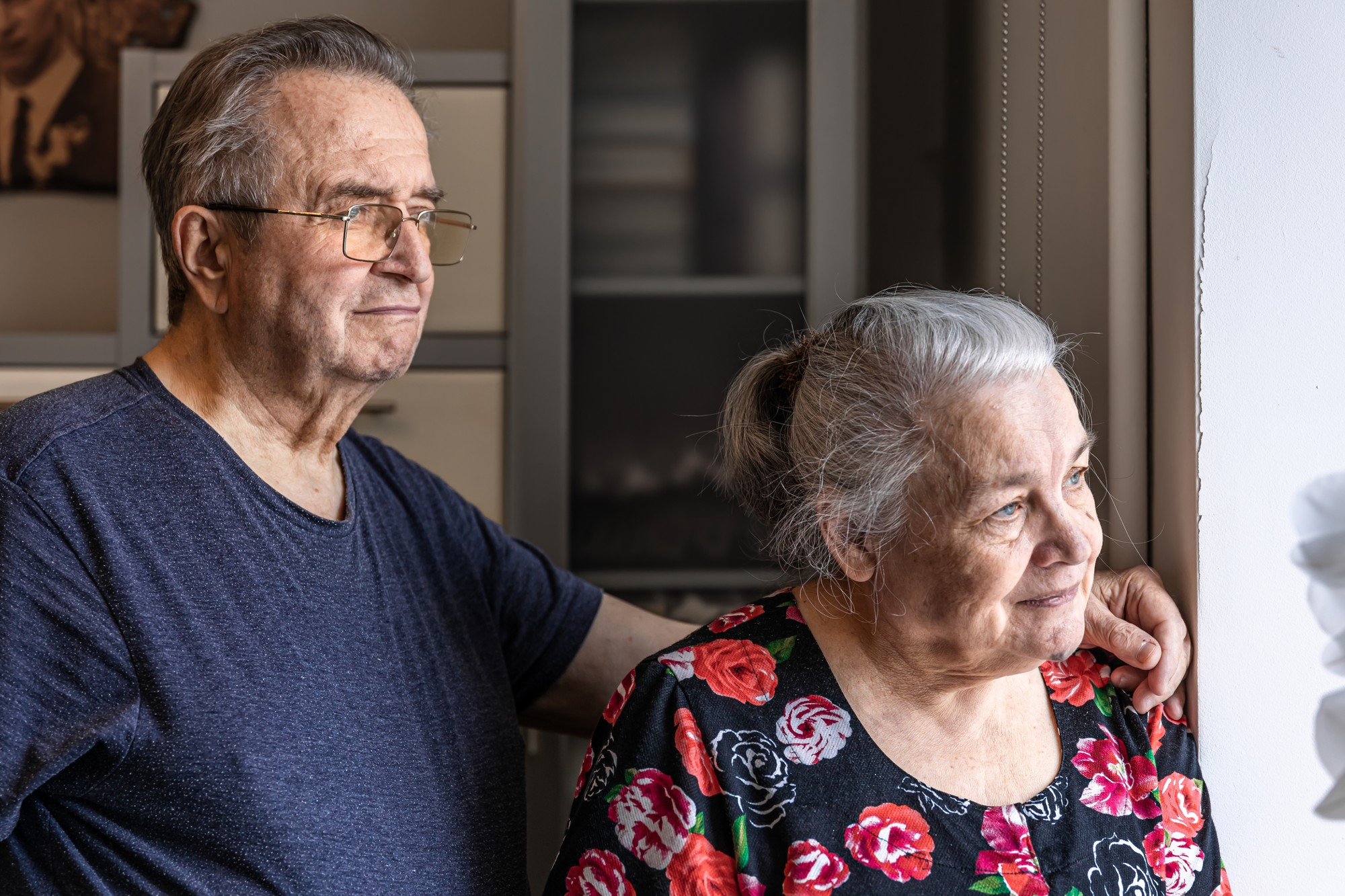
In thirty-one years of marriage, I had watched Greg sleep more times than I could count.
Not watching in the unsettling way of someone who cannot sleep themselves and who lies in the dark observing another person’s breathing. Watching in the ordinary way of a person who wakes briefly in the night and takes a moment before going back under, who glances at the familiar shape beside her and finds that the glancing is a kind of anchor.
Greg slept the same way he did everything else.
Steadily.
Without drama.
He had a specific posture he moved into within minutes of lying down, on his right side with one hand tucked under the pillow, and he stayed there for hours in the specific stillness of someone whose body had made its peace with sleep.
I knew the rhythm of his breathing so well that the absence of it was what woke me.
Not a sound.
An absence.
The slight shift in the ambient sound of the room when his side of the bed was empty.
The first time it happened, it was 2:17 in the morning in early November.
I reached across to his side.
Cool sheets.
His pillow was gone.
I lay there for a moment.
My first thought was that he was in the bathroom.
My second thought was that three minutes had passed and the bathroom light was not on.
I got up.
I went to the hallway.
The guest room door was closed but there was the specific quality of a door being occupied rather than an empty room, some quality of the air in a house that tells you a room is not empty even when you cannot see inside it.
I went back to bed.
In the morning, Greg was beside me again.
He had come back sometime in the early hours.
He rubbed his lower back.
He said: the guest-room mattress is firmer. I finally got some sleep down there.
He was fifty-six.
He had been talking about his back for two years.
I believed him.
My name is Laura Saunders.
I have been married to Greg Saunders for thirty-one years, which is long enough that the person beside you stops being someone you discover and becomes someone you have known long enough that the discovery feels complete, that the not knowing feels impossible.
I thought I knew everything.
I did not know the thing he had been carrying.
Greg and I had married when we were twenty-four and twenty-five, young in the way of people who have met the right person too early to be certain they are right and who decide to be certain anyway.
He was a civil engineer.
He built things for the county, bridges and retaining walls and drainage systems, the infrastructure that cities need and that nobody thinks about until it fails.
He worked steadily and without complaint and he was the kind of employee that employers keep for decades because the quality of his work was so reliable that his absence would have been immediately felt.
We had two children.
Michael, who was thirty now, who had moved to Australia four years ago for a research position and who called on Sundays, reliably, the phone call at seven our time that we organized our Sunday evenings around.
Emma, who was twenty-eight and living in Portland, who texted more than she called and who came home for holidays and who had the specific independence of a young woman who loves her family and has made a full life elsewhere.
Neither had children.
Neither was married, though Emma had been with the same partner for three years.
Our house had been a four-person house for twenty years and a two-person house for eight, and the two-person version of it was not lonely but was quieter, and the quietness had a quality Greg and I were both still adjusting to.
The adjustment was going reasonably well.
We had dinner together every evening.
We watched the same shows in the evenings, which we had not always had time for when the children were young.
We gardened, which we had started in the pandemic and which had continued because it turned out that growing things was satisfying in a way that neither of us had anticipated.
I taught high school English, which meant I was home by four in the afternoon and which gave me the specific pleasure of meaningful work that ended at a reasonable hour.
Greg was home by five-thirty.
We had built something.
Thirty-one years of building.
When the guest room nights started happening, I attributed them to the back, which was a legitimate issue that his doctor had confirmed, two bulging discs that had been managed with physical therapy and occasional anti-inflammatories and which flared periodically.
The mattress in the guest room was firmer than ours.
This was factually true.
We had talked about replacing our mattress.
We had not replaced it yet.
I believed the back.
I believed it the second time and the third time and the week when it happened four nights in a row and I said go see a doctor and he smiled and said Laura, I’m getting old, that’s the diagnosis.
I believed it until the blanket.
The blue knitted blanket was made by my mother in 1992, the year Michael was born.
My mother had died six years ago, and the specific weight of losing her was something I had processed and continued to process in the ongoing way of grief that does not end but changes, that becomes familiar rather than acute.
The blanket was one of the objects that had survived the consolidation that happens when a person dies and their things have to find new homes.
Greg had specifically asked for the blanket.
I had thought this was touching.
Greg was not a sentimental person by nature.
He kept things because they were useful and let things go when they were not.
He had a small number of sentimental exceptions.
The kindergarten lunchbox that Michael had decorated with stickers was in the attic.
A photograph of his father from 1978 was framed in his study.
A first-edition paperback that Emma had given him for his fiftieth birthday was on the shelf.
And my mother’s blue blanket, which he kept in the closet of the guest room, folded in the specific way my mother had shown him once when he accidentally unfolded it and needed to put it back.
When I went to the guest room closet and it was not there, I noticed.
When I asked Greg and he said he thought he had donated it by mistake, I stared at him.
The man who had kept a kindergarten lunchbox for twenty-five years.
Who organized his study the way he organized his projects, with the specific attention of someone who knew where everything was and why it was there.
Had accidentally donated my mother’s blanket.
I said: you? The man who wouldn’t let me throw away Michael’s kindergarten lunchbox?
He didn’t laugh.
He said: it got mixed in with some things.
We hadn’t donated anything in months.
That was the first time in thirty-one years I knew Greg was lying to me.
I did not panic.
I have taught high school English for twenty-two years, which means I have spent twenty-two years reading stories and teaching people how to read them, which produces a specific awareness of narrative.
Narrative is about what characters want and what they are afraid of and what they will do to protect the things they are afraid of losing.
I watched my husband.
I watched the way he slept, or left to sleep elsewhere.
I watched the way he rubbed his back, which was real, and I watched the way he looked at me over breakfast, which was also real but had something underneath it.
I was reading him.
Three nights after the blanket conversation, I woke at 2:04 in the morning.
His side of the bed was empty.
I lay still and listened.
His voice came up the stairs.
Soft. The specific softness of a voice that is trying not to be heard and that is also trying to be warm, which is an impossible combination that people attempt anyway when they are talking to someone they love in a private moment.
He said: it’s okay, sweetheart.
My heart started beating faster.
Then: daddy loves you too.
I sat straight up.
His phone was on the charger beside me.
If he was talking to someone, it was not on his phone.
Michael was in Australia.
Emma was in Portland.
Neither had children.
Neither called at two in the morning.
There was no one in our house who should have been calling my husband Daddy.
I got out of bed.
I went to the top of the stairs.
I heard the deadbolt turn.
The specific click of a deadbolt turning, which is a particular sound that carries in a quiet house.
The back door opened.
A few seconds later, it closed.
I went down the stairs.
The guest room door was wide open.
Greg was not inside.
But the rocking chair was moving.
The rocking chair that we had used for both our babies, the one that had been in the nursery until Michael outgrew it and then in Emma’s room until she outgrew it and then in the guest room because we could not bring ourselves to get rid of it.
Moving.
The porch light came on.
I went to the kitchen window.
I pulled back the curtain.
Greg was in the backyard in his pajamas.
He was kneeling in the flower bed.
With one arm he held something wrapped in Michael’s blue baby blanket against his chest.
With the other he was digging.
I stared.
I opened the back door.
I said: Greg.
He spun around.
His face in the porch light was the face of someone who has been caught in something they were not ready to explain.
He was holding the blanket against his chest.
He was holding it the way you hold something fragile and alive.
I walked across the damp grass.
I stood in front of him.
I said: what is in the blanket?
He looked at me.
He looked at the blanket.
He said: Laura.
I said: Greg. What is in the blanket?
He looked like a man who has been carrying something heavy for a long time and who has been waiting, without knowing he was waiting, for someone to ask him what it is.
He carefully opened the edge of the blanket.
Inside was a cat.
A very small cat.
Gray, with the specific coloring of a cat that would have been called blue by people who knew cats, and with the even more specific stillness of an animal that had recently died.
I looked at the cat.
I looked at my husband kneeling in the flower bed at two in the morning in his pajamas.
I said: Greg.
He said: her name was Millie.
He said: she was fourteen.
I sat down on the grass beside him.
He said: I found her in the parking lot at work. Six weeks ago. She had been a stray for a long time. She was thin.
He said: I took her to the vet. She had hyperthyroidism and a heart murmur.
He said: the vet said she might have six months. Might have less.
He said: I started taking care of her in my office. During lunch. Then after work.
He said: I couldn’t bring her home.
I said: why not?
He looked at me.
He said: you’re allergic.
I said: to cats.
He said: yes.
He said: Laura. Your allergy is serious. When Emma’s friend brought a cat to the house in 2009, you had to use the EpiPen.
I said: yes.
He said: I knew I couldn’t bring her home.
He said: but I couldn’t.
He stopped.
He said: she was so thin when I found her.
He said: she was living on nothing. In a parking lot.
He said: she was the friendliest cat. She walked up to me on the first morning like she had been waiting for me specifically.
I said: you’ve been keeping her at the office?
He said: for the first three weeks. Then one of the partners noticed and said I had to find another arrangement.
He said: I rented a room.
I stared at him.
I said: a room.
He said: at the Maple Inn. The one on Reservoir Road.
He said: weekly rate.
He said: I paid with my own account. The personal one from before we combined. I kept a small amount in it. You never needed to see the statements.
He said: I went to see her every night. When I couldn’t sleep.
He said: I told you the guest room mattress was better.
He said: that was true. But mostly I was going to see Millie.
I said: and the blanket.
He said: she liked to sleep in it.
He said: she smelled like Michael when he was small. The blanket.
He said: I couldn’t keep her warm enough at the inn. They didn’t provide proper bedding. And she was old.
He said: I know it was yours. I know it was your mother’s. I know I had no right to use it.
He said: but she needed to be warm and I needed her to be warm and it was there.
His voice had broken slightly on that last sentence.
He said: she died tonight.
He said: at the inn. I was with her.
He said: I brought her home.
He said: I wanted to bury her in the garden. Where she would have liked it.
He said: if she had been allowed to be here.
He said: I know that doesn’t make sense.
I said: it makes sense.
He said: I’m sorry.
He said: I should have told you. I should have told you from the beginning. I should have said, Laura, there is a cat, and she is dying, and I want to take care of her. And I should have figured out a way to do that without lying to you.
He said: I was afraid.
I said: of what?
He said: that you would say no.
He said: or that you would feel guilty for having an allergy.
He said: or that you would think I was being ridiculous.
He said: she was a stray. She was old. She was dying when I found her.
He said: some people would say you don’t attach to that.
He said: but I walked into that parking lot and she walked up to me and put her head against my ankle and I thought: this animal has decided to trust me.
He said: I couldn’t say no to that.
I looked at my husband in the porch light.
I had known this man for thirty-two years.
I had watched him be a father, which was the most complete version of him I had seen.
He had been the father who got up in the night without complaint, who drove to practices in the rain, who sat through every recital with his complete attention, who said I love you to his children at the end of every phone call without embarrassment and without modification.
He had been the kind of father who taught our children that loving something was not weakness.
He was kneeling in the garden at two in the morning, burying a stray cat in a blanket, because he could not say no to a thin gray cat who had decided to trust him.
I said: let me help.
He looked at me.
I said: is the hole deep enough?
He said: Laura, you should go inside.
I said: her hair.
He said: what?
I said: cat dander is in the hair. I’m not touching her. But I can help dig.
He said: you don’t have to.
I said: Greg.
He said: yes.
I said: did she purr?
He said: constantly.
He said: she would sit on the desk at the inn and purr while I worked in the evenings.
He said: I brought work to do there. Just so I could be in the room with her.
He said: she slept curled in the blanket. On the pillow I brought from home.
I said: the pillow from the guest room.
He said: yes.
He said: I’m sorry.
I said: stop apologizing.
I said: give me the small shovel.
He gave me the small shovel.
We dug together.
The flower bed was soft from the rain earlier in the week.
It did not take long.
Greg placed her in the hole with the blanket.
He said: goodbye, Millie.
He said it quietly.
He covered the hole.
I sat back on the grass.
He sat beside me.
The garden was very still.
The porch light made everything slightly gold.
I said: daddy loves you too.
He looked at me.
I said: that’s what you said. Before you went outside. I heard it.
He said: I didn’t know you heard.
I said: I was at the top of the stairs.
He said: yes.
He said: she liked it when I talked to her.
He said: I know it’s irrational.
He said: she was a cat.
I said: you called her sweetheart.
He said: yes.
He said: she was a very sweet animal.
I said: Greg.
He said: yes.
I said: you have been driving to a motel on Reservoir Road every night for three weeks to sit with a dying cat.
He said: yes.
I said: and lying to me about your back.
He said: yes.
He said: I’m very sorry about the lying.
He said: it was wrong.
He said: I should have just told you.
I said: yes.
I said: you should have.
He said: I know.
I said: but.
He said: yes?
I said: I understand why you didn’t.
He said: Laura.
I said: you thought I would say no. Or feel guilty. Or think you were being ridiculous.
He said: yes.
I said: were you?
He said: was I what?
I said: being ridiculous.
He thought about this.
He said: I don’t think so.
He said: she was a living thing who needed someone.
He said: and she decided to trust me.
He said: I don’t think responding to that is ridiculous.
I said: no.
I said: I don’t either.
He said: you’re not angry?
I said: I’m not happy about the lying.
He said: no. Of course.
I said: I’m not happy that you thought you couldn’t tell me.
He said: that part is more complicated.
I said: why?
He said: because your allergy is serious and I knew there was nothing to be done about it. If I told you, I knew you’d feel guilty about the allergy. And the guilt would be pointless because neither of us can control an allergy.
He said: I didn’t want to put that on you.
He said: I thought I could manage it.
I said: you almost did.
He said: she had about six more weeks, the vet thought.
He said: I had a plan.
I said: what was the plan?
He said: to keep going to the inn until she died, and then to bury her in the garden, and then to tell you about her.
I said: after she was gone.
He said: yes.
He said: so that the telling would not put you in the position of feeling guilty about something you couldn’t change.
He said: I thought it would be easier.
He said: it didn’t quite work out because she died sooner than the vet expected. And I had already been coming home from the inn at all hours and you had heard things.
He said: I was running out of time on the plan.
I said: six weeks of motel nights.
He said: yes.
I said: and the blanket.
He said: she needed warmth.
He said: toward the end she had trouble regulating her temperature.
He said: the vet said that was normal for old cats with heart issues.
He said: I bought a small space heater for the room.
He said: but at night she needed to be warm against something.
He said: the blanket.
He said: Laura, I know it was wrong to take it without asking.
He said: it was the best thing I had that was warm and soft enough.
He said: I should have asked.
I said: Greg.
He said: yes.
I said: my mother liked cats.
He said: yes. She did.
I said: she would have approved of the blanket being used for a cat.
He was quiet for a moment.
He said: I know.
He said: I thought of that.
He said: I thought: Eleanor would not mind.
He said: but you might.
I said: I don’t mind about the blanket.
He said: you’re being generous.
I said: I’m being accurate.
I said: the blanket was being used exactly as my mother would have wanted.
He said: yes.
We sat in the garden for a while.
The grass was damp.
The porch light was on.
The flower bed was smoothed.
I said: what was she like? Besides the purring.
He said: particular.
He said: she had opinions about things.
He said: she liked to sit to the left of the keyboard on the desk. Not the right. Always the left.
He said: she disliked the sound of the television but she liked music. I had music on for her most evenings.
I said: what kind?
He said: I played the playlists on my phone.
He said: she seemed indifferent to jazz. She liked the folk music. The one with the guitar.
He said: she had a preference for salmon-flavored food and she would push the other kinds aside.
I said: discriminating.
He said: very.
He said: she slept an enormous amount.
He said: but when she was awake, she was present.
He said: she would look at you. Really look at you.
He said: cats don’t do that by accident. When they look at you, they mean it.
I said: and she looked at you.
He said: from the first day.
He said: I walked out of my car in that parking lot and she was sitting in the middle of it. Just sitting. Like she had every right to be there.
He said: she saw me and walked straight over.
He said: I thought she was going to keep walking past me. But she stopped at my ankle and put her head against my leg.
He said: I stood there for about thirty seconds not knowing what to do.
He said: then I picked her up.
He said: she purred immediately.
He said: like she had just been waiting for someone to pick her up.
He said: I stood in the parking lot holding this skinny gray cat for several minutes thinking: now what.
I said: and now what turned out to be the inn on Reservoir Road.
He said: not immediately.
He said: first it was my office. Which didn’t work.
He said: then the vet, who confirmed the heart murmur and the thyroid and said six months with medication and good conditions.
He said: then the inn.
He said: I asked the owner. A woman named Barbara. She said the motel was pet-friendly and that she had two cats of her own and that she would check on Millie during the day.
He said: Barbara kept her company during the hours I was at work.
I said: there’s a Barbara.
He said: yes.
He said: Barbara called me twice when Millie seemed uncomfortable. In the mornings when I was at work.
He said: she gave her an extra blanket on cold days.
He said: she is a very kind woman.
I said: I would like to thank her.
He said: yes. I think she would appreciate that.
He said: Laura.
I said: yes.
He said: I know this is strange.
He said: I know it is a strange thing for a fifty-six-year-old man to do. To rent a motel room for a dying stray cat and to drive there every night.
He said: I know that.
I said: Greg.
He said: yes.
I said: do you know why you did it?
He thought about this.
He said: I think so.
I said: tell me.
He said: when I found her, she was very thin and she was alone.
He said: she had been alone for a long time. You could tell from her coat, the condition of it. She had been managing herself.
He said: but she was also the friendliest animal I had ever encountered.
He said: she had every reason to distrust people. She had been fending for herself in a parking lot.
He said: and she walked up to me and put her head on my ankle.
He said: I think I needed to be trustworthy.
He said: I think I needed to be the kind of person she had decided I was.
He said: she chose me.
He said: I wanted to be worth choosing.
I was quiet.
He said: does that make sense?
I said: yes.
I said: it makes complete sense.
I said: Greg.
He said: yes.
I said: in thirty-one years of marriage, I have watched you be the person who shows up.
He said: yes.
I said: for Michael and Emma. For your mother when she was sick. For every project and every promise.
He said: I try.
I said: the cat is consistent with who you are.
He said: you’re being kind.
I said: I’m being accurate.
I said: you are a person who shows up. You have been for thirty-one years.
He said: I hid this from you.
I said: you hid it because you were trying to protect me from guilt about an allergy.
He said: and because I thought you’d think I was ridiculous.
I said: a little of that too.
He said: yes.
I said: you were wrong about that.
He said: yes.
He said: I see that now.
He said: I underestimated you.
I said: yes.
I said: you should not assume I cannot handle something.
He said: no.
He said: that was wrong.
He said: I’m sorry.
I said: I forgive you.
He said: just like that?
I said: Greg. You spent six weeks taking care of a dying cat because she put her head on your ankle and trusted you.
He said: yes.
I said: I forgive you for the lying.
He said: okay.
I said: I need you to not do it again.
He said: yes.
He said: I know.
He said: I should have told you.
He said: there would have been a way to handle it without you needing to come into contact with her.
I said: yes.
He said: I could have told you I was visiting. You could have stayed home those evenings. The allergy requires direct contact. If I had managed the exposure.
I said: Greg.
He said: yes.
I said: that is a conversation we can have about the next cat.
He was quiet.
He said: the next cat.
I said: there will probably be a next cat.
He said: Laura.
I said: Greg. You have been going to a motel every night for three weeks. When the meetings at work run long and there’s no specific reason to rush home, where are you going to go now?
He was quiet.
I said: you’re going to find the next cat.
He said: I wasn’t planning to.
I said: you weren’t planning to find this one either.
He said: no.
I said: when the next one finds you.
He said: yes?
I said: tell me.
He said: yes.
He said: I will.
He said: Laura.
He said: I’m really sorry about Millie.
He said it with the specific quality of someone who means an apology for a loss rather than for a wrong.
He said: she was a good cat.
He said: she had a hard life for a long time and then six weeks of warmth and salmon-flavored food and someone who talked to her.
He said: I think that was enough.
He said: I hope it was enough.
I said: it was more than enough.
He said: she seemed happy.
He said: happy is a strange word for a cat. But she seemed content.
He said: she purred a great deal.
He said: she slept deeply.
He said: she looked at me when I talked to her.
He said: toward the end she became very still. But she still looked at me.
He said: I was with her when she died.
He said: she was in the blanket. I was talking to her.
He said: and then she just.
He stopped.
He said: she just went.
He said: very quietly.
He said: that is how I would want to go. With someone talking to me. Not struggling. Just going.
I said: yes.
I took his hand.
We sat in the garden.
The sky was beginning to change very slightly at the horizon, the specific early change that happens hours before dawn but that signals it is coming.
Greg said: the flower bed.
I said: yes.
He said: I thought she might like it there.
He said: because of the warmth in summer. The south-facing side gets the most sun.
He said: she liked warmth.
I said: yes.
He said: and things grow over the spot. Eventually.
He said: I thought that was right.
I said: it is right.
He said: the blanket.
He said: your mother’s blanket.
He said: Laura, I’m genuinely sorry about the blanket.
I said: I know.
He said: if I could take it out and give it back.
I said: don’t.
He said: no?
I said: it should be with her.
He said: yes?
I said: my mother would have wanted that.
He said: yes.
He said: I think she would have.
He said: Eleanor had a way of seeing things for what they were. Not what they were supposed to be.
He said: I think she would have said: that animal needed warmth. You gave her warmth. That is what the blanket is for.
I said: yes.
He said: I miss Eleanor.
I said: yes.
He said: she would have liked Millie.
I said: yes.
He said: she would have had a lot to say about a man who drove to a motel every night for a cat.
I said: she would have approved.
He said: you think so?
I said: I know so.
He said: she always did think I had more heart than I let on.
I said: she was right about that.
He said: you think so too?
I said: Greg. I have known you for thirty-two years.
He said: yes.
I said: you drove to a motel every night for six weeks to sit with a dying cat who put her head on your ankle.
He said: yes.
I said: and you did it secretly because you didn’t want me to feel guilty about my allergy.
He said: yes.
I said: that is either a lot of heart or a very specific kind of stubbornness.
He said: possibly both.
I said: yes.
He said: probably both.
We went inside as the sky began its real change, the blue that precedes the gold.
I made tea.
He sat at the kitchen table.
I said: we need to have breakfast.
He said: it’s three in the morning.
I said: you’ve been up since two.
He said: I can sleep.
I said: you never sleep after you’ve been awake.
He said: no.
He said: that’s true.
I said: eggs?
He said: yes.
He said: Laura.
I said: yes.
He said: I want to tell you something.
I said: yes.
He said: every night at the inn, when I finished and came home, I would check on you before I went to sleep.
He said: you were always asleep.
He said: and I would look at you. The way I always have.
He said: and I thought: I should just tell her.
He said: and then I thought: it’s too complicated. And the plan is almost done. And she’ll feel guilty.
He said: I talked myself out of it every night.
He said: I came close once.
I said: when?
He said: the night with the blanket. When you asked.
He said: I almost said: I’m sorry. Millie needed it.
He said: and then I thought: that opens the whole thing.
He said: so I said it was donated.
He said: and I have felt terrible about that ever since.
I said: yes.
He said: not the motel. Not the cat.
He said: the donated.
He said: that was a specific lie.
He said: about a specific thing.
He said: that I knew mattered to you.
I said: yes.
He said: I’m sorry.
I said: I know.
He said: I should have trusted you.
I said: yes.
He said: with the truth.
He said: even the complicated truth.
He said: even the part where you feel guilty about the allergy and I tell you there is nothing to feel guilty about and we have that conversation.
He said: even that part.
He said: it would have been better.
I said: yes.
I said: Greg.
He said: yes.
I said: the allergy.
He said: yes.
I said: I would have felt guilty.
He said: I know.
I said: and it would not have been useful guilt.
He said: no.
I said: but I would have preferred it.
He said: yes.
He said: I understand that now.
I said: the useful thing would have been finding a way to take care of Millie without me needing to be around her.
He said: yes.
I said: which is a solvable problem.
He said: yes.
He said: we could have figured it out.
I said: yes.
He said: I should have let us figure it out.
I said: yes.
The eggs were done.
We sat at the kitchen table.
Outside, the garden was there.
In the flower bed, the south-facing side, under the earth, in my mother’s blue blanket.
We ate.
I said: Daddy loves you too.
He looked up.
I said: was that for her?
He said: yes.
He said: she called me Daddy when she was a kitten, I think.
He said: I know that’s.
He said: I know how that sounds.
I said: what did she call you exactly?
He said: she made a sound when she saw me.
He said: a particular sound.
He said: specific to me. Not the sound she made for Barbara or the vet.
He said: her sound for me.
He said: I called her sweetheart because she was sweet.
He said: and she made her sound for me.
He said: and I told her daddy loves you.
He said: because it felt true.
He said: Laura, I know.
I said: don’t apologize for it.
He said: no?
I said: no.
He said: okay.
I said: she needed someone to love her.
He said: yes.
I said: and she picked you.
He said: yes.
I said: and you loved her.
He said: yes.
I said: that is not something to apologize for.
He said: no.
He said: it isn’t.
I said: it’s something to be glad of.
He was quiet for a moment.
He said: yes.
He said: I am.
He said: she had six good weeks.
He said: I know that’s not long.
He said: but they were warm weeks.
He said: she ate well. She slept in a blanket. Someone talked to her.
He said: I think that is not nothing.
I said: no.
I said: that is not nothing.
I said: that is quite a lot.
He said: I think so too.
He cleared the plates.
He washed them without being asked.
He made more tea.
He came and sat beside me.
We sat at the kitchen table in the specific early-morning quiet of a house where something has happened and been understood and put to rest.
He said: when Emma calls today.
I said: yes.
He said: can we tell her?
I said: yes.
He said: she will probably cry.
I said: yes.
He said: she has always cried at animal things.
I said: yes.
He said: Michael too.
I said: yes.
He said: they get it from you.
I said: and from you.
He said: I didn’t used to cry at animal things.
I said: no.
He said: Millie.
I said: yes.
He said: she changed some things.
I said: yes.
He said: I think she was supposed to.
I said: I think so too.
Outside, the morning was fully beginning now.
The garden was visible through the kitchen window.
The flower bed.
Greg was looking at it.
I said: tomorrow we can plant something there.
He said: what kind of thing?
I said: something warm-colored.
He said: yes.
He said: something that comes back every year.
I said: yes.
He said: Laura.
I said: yes.
He said: thank you.
I said: for what?
He said: for coming outside.
He said: for not being angry.
He said: for sitting with me.
I said: Greg.
He said: yes.
I said: thirty-one years.
He said: yes.
I said: you have sat with me in quite a few garden moments.
He said: yes.
I said: it goes both ways.
He said: yes.
He said: it does.
He said: it always has.
I said: yes.
The garden was there.
The morning was there.
The south-facing flower bed was there, where Millie was, in the warmth she had always liked.
The rocking chair in the guest room would stop moving.
The motel on Reservoir Road would be empty tonight.
Greg would sleep beside me.
And in the spring, something warm-colored would come up in the garden, from the bulbs we would plant, and it would come back every year, in the south-facing bed, where a stray gray cat was buried in a blue blanket.
She had walked up to him in a parking lot.
She had put her head against his ankle.
She had decided to trust him.
And she had been right to.
That was the whole thing.
And it was everything.

Specialty: Legal & Financial Drama
Michael Carter covers stories where money, power, and personal history collide. His writing often explores courtroom battles, business conflicts, and the subtle strategies people use when pushed into a corner. He focuses on grounded, realistic storytelling with attention to detail and believable motivations.