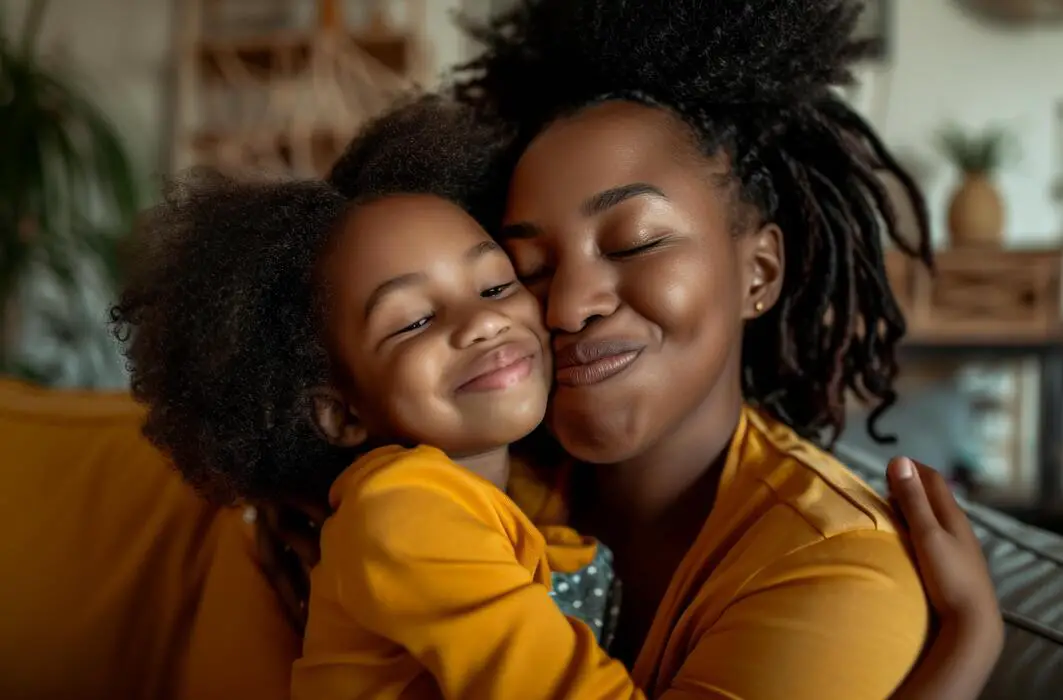
My daughter Avery is sixteen years old. Old enough to get her license soon, old enough to shut her bedroom door a little harder than she used to when she wants privacy, old enough that I’ve had to learn, slowly and reluctantly, when to step back and let her have her own private world. But she’s still young enough that some part of me believed I’d always be able to tell when something was actually wrong, the way I could when she was small and a fever or a nightmare would show up on her face before she ever said a word.
Lately, though, she’d been quiet in a way that didn’t match anything I recognized. Not the ordinary teenage quiet, the kind that comes from headphones and homework and the general business of being sixteen. This was careful. Measured. Like she was watching every word before it left her mouth.
She’d come home from school most days and go straight to her room without the usual pause in the kitchen for a snack, without telling me about whatever small drama had unfolded in the cafeteria that day. At dinner she’d push food around her plate and answer questions in single syllables. When I asked if everything was okay, really okay, she’d just nod and say, “I’m fine, Mom,” in a tone that made it very clear the conversation was over whether I liked it or not.
I told myself it was normal. I told myself sixteen-year-olds pull away from their mothers, that it’s a developmental stage with a name I’d probably read about in some parenting book years ago and forgotten. I told myself I needed to respect her space, give her room to have things that weren’t mine to know. I even asked her directly once, sitting on the edge of her bed while she scrolled through her phone. “You know you can talk to me about anything, right? Even if it’s something you think I won’t like.”
She’d looked up at me for just a second, something flickering behind her eyes that I couldn’t name at the time, and then she’d shrugged and said, “I know, Mom. I’m just tired. School’s a lot right now.” And I’d let it go, because that’s what you do when your teenager tells you she’s fine and you desperately want to believe her.
Last Tuesday changed all of that.
I was in the shower, letting the hot water work out a knot that had settled between my shoulder blades sometime around three that afternoon, when I suddenly remembered the new hair mask I’d bought at the drugstore the day before. I’d left it downstairs in my purse, and for whatever reason, in the moment, it felt urgent that I go get it right then rather than after my shower like a reasonable person.
I wrapped a towel around myself and hurried down the hallway, dripping water onto the hardwood, moving fast because the water was still running and I only meant to be gone ten seconds. That’s when I heard voices coming from the kitchen below.
Avery’s voice reached me first, low and strained, almost shaking in a way that stopped me cold at the top of the stairs.
“Mom doesn’t know the truth.”
I froze completely, one hand gripping the towel at my chest, water still running down my legs onto the floor.
“And she can’t find out.”
My stomach dropped so fast and so hard it felt physical, like the floor had briefly given way beneath me. I couldn’t even fully process what I’d just heard — my own daughter’s voice, saying those exact words, about me, in my own kitchen.
Then the old floorboard under my bare foot creaked, that same spot that had creaked since we moved into this house six years ago and that I’d never bothered to fix.
Silence, instant and complete, from downstairs.
“What’s going on?” I called out, trying and failing to keep my voice light, casual, the voice of a mother who hadn’t just heard something that made her blood run cold.
My husband Ryan’s voice came back a beat too quickly, brightening in that particular way that people’s voices do when they’re performing normalcy on the spot. “Oh — hey, honey! We were just talking about her school project.”
Avery jumped in almost on top of his sentence, a half-second too fast. “Yeah, Mom. I need a poster board for science tomorrow.”
They both smiled up the stairs at me when I came down to grab my purse, and the smiles were wrong somehow — too quick, too bright, too rehearsed for a conversation about poster board. I nodded, forced out a small laugh that felt like sandpaper in my throat, and walked back down the hall toward the bathroom like I hadn’t heard a single word.
Something was deeply, unmistakably off. I could feel it settling into my chest like a stone.
That night I barely slept. I lay awake next to Ryan, staring at the ceiling fan turning slowly in the dark, running the words over and over in my head. What truth? Why couldn’t I know it? Was this really about school, about some awkward secret my daughter didn’t want me involved in, or was it something bigger, something that made my husband’s voice change so fast when I walked into the room?
Around two in the morning I got up quietly and went to check on Avery, the way I used to when she was small and I’d stand in her doorway just to watch her breathing, reassuring myself she was safe. She was asleep, curled on her side the way she’d slept since she was a toddler, one arm tucked under her pillow. I stood there for a long moment in the dark, watching her chest rise and fall, and felt a wave of something that was equal parts love and dread.
I thought, standing there, about all the small moments over the past few weeks that I’d let slide past without examining too closely. The way she’d started taking her phone into the bathroom with her and locking the door, something she’d never done before. The way she’d flinched, just slightly, when I’d walked into the kitchen one evening while she was on a call, immediately lowering her voice and turning away from me. The way, twice now, I’d noticed her eyes red-rimmed when she came down for breakfast, and she’d claimed allergies both times, in a season when nothing in our yard was blooming.
I’d noticed all of it. I’d just chosen, each time, to believe the simplest explanation instead of asking the harder question.
The following afternoon, right after Avery got home from school, Ryan grabbed his keys off the hook by the door with a casualness that felt, now, deliberately practiced.
“We’re gonna run out for that poster board,” he said, not quite meeting my eyes. “Maybe grab pizza too while we’re out.”
Avery slipped on her sneakers by the door without looking up at me, lacing them with more attention than sneaker-lacing usually required.
“You want me to come?” I asked, watching both of their faces carefully now.
“No, it’s okay,” Ryan said quickly. “We’ll be quick.”
I nodded and told them to have fun, and the second the front door clicked shut behind them, my phone rang. I glanced at the screen, expecting maybe a spam call or my sister checking in, and instead saw the name of Avery’s high school flash up.
“Hello, is this Avery’s mother? I’m calling about her absences on Wednesday and Friday last week. We didn’t receive a note, and I wanted to make sure everything’s okay.”
I actually laughed, a short, confused sound, before the words fully registered. “I’m sorry — absences? Avery was at school both those days. I watched her leave the house both mornings.”
There was a small pause on the line. “According to our attendance records, she was marked absent for both full days. No note was submitted.”
My mouth had gone dry. “Oh — um. Yes, she had some appointments those days. I’ll send in a note.”
“Perfect, thank you so much.”
I hung up and stood in my kitchen holding the phone with both hands, staring at nothing, my mind racing through every possible explanation and rejecting each one almost as fast as it appeared. She’d missed school. Twice. And I’d had no idea, because as far as I knew, both those mornings, she’d left the house in her uniform with her backpack, same as always, and I hadn’t questioned a thing.
I looked out the front window. Ryan’s car was already gone from the driveway, already turning the corner at the end of our street.
Something was very wrong, and every maternal instinct I had was screaming at me to find out exactly what.
I grabbed my keys off the counter, told myself I was being ridiculous, that there was probably some perfectly reasonable explanation waiting at the end of this, and got in my car anyway.
I followed them.
I stayed several cars back, my hands tight on the steering wheel, half convinced I’d lose them at the first light and half terrified I wouldn’t. To my growing confusion, Ryan didn’t turn toward the shopping plaza where the Target sat, didn’t head anywhere near the direction of a store that would sell poster board. He turned the opposite way entirely, out toward the edge of town.
Ten minutes later, his brake lights flared as he pulled into a parking lot I recognized immediately, because I’d been there myself more times than I wanted to count over the years — for Avery’s broken arm in third grade, for my own appendix scare two years back, for a hundred small emergencies that make up a family’s medical history.
It was the local hospital.
My hands tightened so hard on the steering wheel that my knuckles went white. Why would they be at the hospital? Was someone hurt? Was Avery sick and hiding it from me, some diagnosis she’d been too scared to say out loud?
I parked several rows back, angled so I could watch without being obvious, my heart hammering against my ribs. Ryan and Avery got out of the car together, and instead of walking straight toward the main entrance, they stopped first at the small flower shop tucked near the doors. I watched Avery disappear inside for a moment and come back out holding a bouquet — white lilies mixed with yellow roses, the kind of arrangement you buy for someone you love, not for a casual visit.
Then they walked together into the main building, Ryan’s hand resting lightly on Avery’s shoulder in a way that looked less like comfort and more like steadying.
I waited about thirty seconds after the doors closed behind them, my whole body trembling slightly, and then I followed.
The hospital lobby smelled the way hospital lobbies always do, antiseptic layered over old coffee, a smell that instantly raises your blood pressure no matter why you’re there. I stayed far enough back that they wouldn’t spot me if they turned around, but close enough that I could track them through the crowd near the elevator bank.
They stepped into an elevator together. I watched the numbers light up above the doors as it climbed. Third floor.
I couldn’t bring myself to wait for the next elevator, some irrational fear that I’d lose them entirely if I did, so I took the stairs instead, my legs shaking with every flight, adrenaline making my whole body feel unsteady and strange.
When I reached the third floor and pushed through the stairwell door, I peeked carefully around the corner into the hallway. I caught sight of them a good distance ahead, walking together down a corridor lined with patient rooms. They stopped outside a door near the far end. Room 312.
I stood frozen at the corner, watching. Ryan knocked softly on the door. A moment later it opened, and a nurse in scrubs appeared, smiling warmly at both of them like she recognized them, like this was a routine she’d seen play out before. She stepped aside and let them in. The door closed.
I stayed there in the hallway, pressed against the wall near the stairwell, trying to make sense of what I was looking at. Who was in that room that my husband and daughter visited regularly enough for a nurse to smile at them like old friends?
I waited. Ten full minutes, though it felt considerably longer, standing in that antiseptic hallway with my heart still racing. Finally the door to room 312 opened again, and Ryan and Avery stepped back out into the corridor. Avery’s eyes were red and swollen, unmistakably from crying, and Ryan had one arm around her shoulders, murmuring something too quiet for me to hear from where I stood.
I ducked quickly into a supply closet a few doors down, my heart pounding so hard I was certain they’d hear it, and waited with the door cracked just enough to watch them pass, close enough that I could have reached out and touched Avery’s sleeve as she went by.
Once they’d disappeared around the corner toward the elevators, I stepped back out into the hallway and walked, on legs that didn’t feel entirely like my own, toward room 312. I reached for the door handle.
“Excuse me, ma’am.”
I turned. A nurse stood behind me, a different one from the woman who’d let them in, her expression polite but firm.
“Are you family?”
“I — yes. I’m his—” I started, and then realized, with a jolt, that I had absolutely no idea whose room this was. I didn’t even know if I was looking for a man or a woman.
“His what?” she asked, watching me carefully now.
I hesitated, and in that hesitation she seemed to understand everything she needed to. “I don’t actually know who’s in there,” I admitted, my voice barely above a whisper.
Her expression shifted into something more guarded. “Then I’m afraid I can’t let you in. Privacy regulations.”
“Please,” I said, hating how desperate I sounded. “My daughter was just in that room. I need to know who—”
“I’m sorry,” she said, not unkindly, but with total finality. “I can’t help you with that.”
She walked away down the hall, leaving me standing alone outside a closed door with no answers at all, my whole body still shaking from adrenaline that had nowhere left to go.
When I finally got home, driving on autopilot, hands still trembling slightly on the wheel, Ryan and Avery were already there ahead of me, pizza boxes spread out across the kitchen counter like nothing at all had happened that afternoon.
“Hey! Where’d you go?” Ryan asked, his voice easy, casual, completely unbothered.
“Just the store,” I lied, the words coming out smoother than I expected. I didn’t mention the school’s phone call. I didn’t mention what I’d seen. Something in me needed more time to understand it before I confronted either of them. “Get anything good?”
“Nah, just looked around.”
Avery wouldn’t meet my eyes at all, focusing intently on peeling a slice of pizza apart from the box.
That night I lay awake again, replaying everything on a loop behind my closed eyes. The whispered conversation. The hospital. The flowers, so deliberately chosen, lilies and roses, not the kind of bouquet you bring for someone with a broken leg or a routine surgery. Avery’s red, swollen eyes. The school calling about two full days of unexplained absences.
Something was happening in my own house, something significant, and my husband and my daughter were both actively hiding it from me.
The following day, Ryan made another excuse over breakfast, this one delivered with the same practiced ease as the day before.
“I’m taking Avery to the library after school. She needs to work on that science project some more.”
I nodded, keeping my face carefully neutral. “Okay. Have fun.”
The moment their car pulled out of the driveway that afternoon, I grabbed my keys again. But this time, something in me had shifted overnight. I wasn’t going to hide in a stairwell or duck into a supply closet. I wasn’t going to stand helplessly in a hallway while a nurse turned me away. I was going to walk directly into whatever this was and find out the truth, no matter how badly it hurt.
I followed them to the hospital a second time. I watched, from a distance, as they stopped again at the flower shop, watched Avery select another bouquet with the same careful attention as the day before. Then I parked, walked inside, took the stairs to the third floor, and this time went straight to room 312 without hesitating in the hallway at all.
I stood outside the door for five long minutes, gathering whatever courage I had left, my hand hovering near the handle. Then I took a deep breath, and I opened the door.
Ryan and Avery were standing beside a hospital bed, both of them turning toward the sound of the door at the exact same instant. Their faces froze in near-identical expressions of shock.
Avery’s face went completely white. “Mom?”
But I wasn’t looking at her. I was looking past both of them, at the man lying in the bed.
He was thin — shockingly thin, in a way that reshaped his entire face into something almost unrecognizable. Pale, an IV line running into the back of one hand, a hospital gown hanging off shoulders that used to fill out a suit jacket without any effort at all.
It was David. My ex-husband.
For a long moment, nobody in that room said a single word. Then Avery started crying, the sound breaking loose all at once. “Mom, I’m so sorry. I wanted to tell you, I really did, but—”
“What is he doing here?” I said, my voice coming out flatter and colder than I intended, cutting straight through her apology.
Ryan stepped forward, both hands raised slightly. “Sheila, let me explain—”
“Explain what? Why you’ve been bringing my daughter here behind my back? Why you’ve had her lying to her school, lying to me, sneaking around for weeks?”
“Because he’s dying,” Ryan said quietly.
The words landed on me like a physical blow, all the air leaving my lungs at once. I turned and looked at David directly for the first time in seven years, and he was watching me with tired, sunken eyes that seemed to carry an apology he’d probably been rehearsing for a long time.
“Sheila,” he said, his voice thin and rough. “I know you don’t want to see me. I understand that completely. But I needed to see Avery. Just — one more time, before I couldn’t anymore.”
“One more time,” I repeated, the words tasting strange in my mouth.
Ryan took a slow breath. “He has stage four cancer, Sheila. Pancreatic. He reached out to me a few weeks ago — showed up outside my office building one afternoon, completely out of nowhere. Told me he didn’t have much time left. Weeks, maybe a couple of months if he was lucky. And he asked if there was any way he could see Avery before it was too late.”
“He’s dying,” I repeated, still trying to make the words fit into any coherent shape in my head.
I stared at Ryan, my husband, the man I’d trusted completely with my daughter’s heart for the past six years. “And you didn’t think to tell me any of this?”
“I was going to.”
“Going to?”
“But Avery begged me not to.” His voice softened, and I could see, even through my own shock, that this had genuinely torn at him too. “She was terrified you’d say no. That you’d forbid her from coming, and she’d lose the chance entirely.”
I turned to my daughter, who was sobbing openly now, one hand pressed against her mouth. “I just wanted to see him, Mom,” she managed between breaths. “I know what he did to us. I know he left, I know he hurt you, I’ve never forgotten any of that. But he’s still my dad. And he’s dying, and I couldn’t just — I couldn’t just let that happen without seeing him.”
My heart ached in a way I hadn’t expected, looking between my daughter’s tear-streaked face and the broken, diminished figure of the man in that bed. David looked so entirely different from the man I’d married at twenty-four in a backyard ceremony with string lights and folding chairs, so different from the man who’d once carried a sleeping three-year-old Avery up two flights of stairs without waking her.
Thinner. Older by decades more than the actual years accounted for. Broken in a way that illness does to a person, stripping everything down to something raw and exposed.
“You left us,” I said, and I heard my own voice crack on the words, seven years of buried anger surfacing all at once. “You walked away from your own daughter like she didn’t matter at all.”
David’s eyes filled with tears, and he didn’t look away from me, didn’t try to defend himself the way he might have years ago. “I know,” he said. “I was a coward, Sheila. I was selfish, and cruel, and I’ve regretted every single day of it since the moment I drove away from that house.”
“Then why didn’t you come back? Why didn’t you fight for her, for any of it, if you regretted it so much?”
“Because I didn’t think I deserved to,” he said simply, his voice barely above a whisper.
Avery stepped forward then, positioning herself slightly between us, her cheeks streaked with tears. “Mom, please. I’m not asking you to forgive him. I’m not even asking you to understand it. I’m just asking you to let me be here. For him. While there’s still time. Please.”
I looked at my daughter, really looked at her, and saw the desperation written plainly across her face, the same desperation that had been quietly eating away at her for weeks while I’d told myself it was just teenage stuff she wasn’t ready to share.
I couldn’t speak. I turned and walked out of that room, my legs carrying me faster than I meant to move, past the nurse’s station, into the elevator, out through the lobby that still smelled like antiseptic and old coffee. I got into my car in the parking lot and sat there for a long moment before I could even remember how to start the engine.
I couldn’t breathe properly. I couldn’t organize a single coherent thought. I drove home on some kind of autopilot, barely registering the roads I’d driven a thousand times before.
Ryan and Avery came home about an hour after I did. I was sitting at the kitchen table when they walked in, staring at a spot on the wood grain, my hands wrapped around a mug of tea that had long since gone cold.
Avery sat down across from me carefully, like she was approaching something fragile. “I’m sorry, Mom. I know I should have told you.”
“Why didn’t you?”
“Because I was scared you’d be hurt. I didn’t want to hurt you, on top of everything else.”
“So you lied instead.”
“I didn’t lie,” she said, her voice small. “I just — didn’t tell you.”
“That’s the same thing, Avery. You know that’s the same thing.”
She didn’t argue. She just looked down at her hands folded on the table.
Ryan sat down beside me, close enough that I could feel the warmth of him but far enough that he was clearly giving me space. “Sheila, I’m sorry. I should have told you from the very beginning, the moment David first reached out. But Avery was so desperate to see him once I explained everything to her, and I didn’t know how to say no to that. I didn’t know how to weigh her need to see her dying father against the promise of honesty I owed you.”
I looked at him directly. “You’re her stepfather, Ryan. Not her accomplice.”
“You’re right,” he said quietly, without any defensiveness at all. “I crossed a line. Not just with Avery — with you, too. As your husband, I should have told you the truth from day one and trusted that you’d handle it however you needed to. Instead I went behind your back, and that was wrong of me. Completely wrong.”
“It wasn’t just wrong,” I said, my voice finally breaking. “That man broke my heart, Ryan. He broke this family apart, and he did it without a second thought, and you brought him back into our lives without even asking me.”
“I’m sorry, Sheila. I betrayed your trust. I know that, and I’m not going to try to explain it away.”
I looked between the two of them, my husband and my daughter, both of them sitting there waiting for whatever came next. “You should have trusted me,” I said finally. “Both of you. I would have found a way to handle this. I’ve handled worse.”
“I know, Mom,” Avery whispered, fresh tears sliding down her face. “I’m sorry.”
That night I lay awake again, but the shape of my thoughts had shifted somewhat from the nights before. I kept picturing David in that hospital bed — how thin he’d looked, how tired, how little time the doctors had apparently given him. I thought about the years he’d missed with Avery, all the birthdays and school plays and quiet ordinary evenings he’d forfeited the moment he chose someone else over his own family.
And then I thought about Avery herself, about the desperation in her voice when she’d said, please, Mom, I’m just asking you to let me be here. About how much courage it must have taken a sixteen-year-old to sneak around for weeks, to skip school and lie to her mother, all because some part of her understood, more clearly than I wanted to admit, that this was time that wouldn’t come again.
Somewhere around three in the morning, staring at the same slowly turning ceiling fan, I realized something that shifted everything.
This wasn’t really about me at all. It never had been. It was about Avery, and whatever she needed, in whatever form that took, to make peace with a father who was running out of time to make peace with her.
The following afternoon, I walked into the kitchen where Ryan and Avery were sitting together at the table, the tension between all three of us still thick in the air from the day before.
“I’m coming with you today,” I said.
They both looked up at me, clearly startled.
“To the hospital?” Avery asked, her voice cautious, like she was afraid to hope.
“Yes.”
“Are you sure?” Ryan asked.
“No,” I admitted. “I’m not remotely sure. But I’m coming anyway.”
I went to the counter and pulled out my old pie dish, the one that had sat mostly unused in the back of a cabinet for years. I’d made a blueberry pie that morning, before either of them woke up, standing alone in the kitchen at six a.m. with flour on my hands and old memories running through my head — David’s favorite pie, the one I used to make every summer when the blueberries came in fresh at the farmers market, back when we were still a family that made pies together on Sunday afternoons.
It wasn’t forgiveness. Not even close. But it was something, a small first step in a direction I hadn’t expected to walk.
When we arrived at room 312 together, all three of us, David looked up from the bed, and I watched his eyes widen when he saw me standing there.
“Sheila?”
I set the pie carefully on the small table beside his bed. “This doesn’t erase anything,” I said, my voice steady despite everything churning underneath it.
He swallowed hard, his eyes glassy. “I know.”
“Good.”
“I deserve that,” he said quietly.
“You’re right,” I said. “For once.”
I pulled a chair over and sat down across from him, keeping some distance, keeping my spine straight. “I’m not here for you,” I said plainly. “I want to be clear about that. I’m here for Avery. So she doesn’t have to keep sneaking around, lying to her school, carrying this alone.”
“I understand,” David said, and for the first time since I’d known him, he sounded genuinely humbled rather than defensive.
“I’m not here for you,” I said again, quieter this time, needing to hear myself say it a second time to believe it fully.
Avery and Ryan settled into chairs on either side of me, and Avery reached over and took my hand, squeezing it tightly. We sat there together for a while in a silence that wasn’t quite comfortable, but wasn’t hostile either. Just honest, four people occupying the same difficult space without pretending it was anything other than what it was.
Over the following weeks, we went back to that hospital room together, again and again, a routine forming out of what had started as a family secret. I didn’t forgive David — I want to be clear about that, because forgiveness isn’t something that arrives on a schedule just because circumstances demand it. I’m still not entirely certain I ever will, not completely, not in the way people mean when they use that word like it’s a door you walk through and everything changes on the other side.
But I let Avery have her time with him. I sat beside her chair while she told her father about her classes, about a boy she liked who I hadn’t even known existed until I heard her mention him casually to David one Tuesday afternoon, about the college she was starting to think about for the following year. I watched David’s face light up in a way I hadn’t seen from him in years, watched him hang onto every ordinary detail of his daughter’s life like it was something precious and irreplaceable, which, I slowly came to understand, it was.
Some afternoons he was strong enough to sit up and talk for an hour at a stretch, asking Avery question after question, trying visibly to compress years of absence into whatever weeks he had left. Other afternoons the treatments had worn him down so completely that he could barely keep his eyes open, and we’d sit quietly around his bed while he slept, the four of us — because somehow, without ever quite deciding it, Ryan had become part of this too, sitting beside me during those long, quiet hours, sometimes reading aloud from whatever paperback David had on his nightstand when David himself was too tired to hold the book steady.
One afternoon, about three weeks into our new routine, David asked to speak with me alone. Avery and Ryan stepped out into the hallway, and I sat there across from him, the room quiet except for the soft, rhythmic beep of the monitor beside his bed.
“I owe you an apology I probably don’t have time to fully give,” he said, his voice weaker than it had been even the week before. “But I want to say it anyway. I was a terrible husband to you. I threw away something good because I was chasing some idea of my own life that I thought I was owed. And I left you to raise our daughter almost entirely alone, and you did it beautifully, Sheila. Look at who she’s become. That’s you. Not me.”
I sat with that for a long moment, feeling old grief and old anger moving through me in slow waves. “You hurt her,” I said finally. “For years, she used to ask me why you didn’t call on her birthday. I never had a good answer for her.”
“I know,” he said, and his eyes filled again. “I’ll carry that regret with me for whatever time I have left. It’s the one thing I can’t fix, no matter how many blueberry pies you bring me.”
Despite everything, I felt the corner of my mouth twitch, almost a smile, the first genuine one I’d felt in that room. “That pie wasn’t for you,” I reminded him. “It was for her.”
“I know,” he said again, softer this time. “I know exactly who it was for.”
Six weeks after I’d first walked into that hospital room, David’s condition worsened sharply. The doctors moved him to hospice care, a quieter wing of the hospital with softer lighting and no more monitors beeping their steady rhythm, just a nurse who checked on him gently every few hours and a window that looked out over a small courtyard garden.
Avery visited every single day after school during those final weeks, sometimes just sitting beside his bed doing her homework in companionable silence, sometimes talking to him for hours about anything and everything, filling in years of missing conversation as fast as she possibly could. I went with her most days, sitting quietly in the corner chair, not always speaking to David directly, but present, bearing witness to whatever this was becoming between my daughter and the father who had failed her so completely and was now, in his own broken way, trying to make some small amends before it was too late for any amends at all.
David passed away on a Sunday morning in early spring, with Avery holding one of his hands and a nurse holding the other, having called us at four in the morning when his breathing changed. I drove Avery to the hospital in the dark, both of us barely speaking, and we arrived just in time. He opened his eyes once more before the end, found Avery’s face, and managed a small, exhausted smile.
“There’s my girl,” he whispered, and then, a few minutes later, he was gone.
Avery cried in a way I hadn’t seen since she was small, deep, wracking sobs that seemed to come from somewhere far beneath the surface, and I held her the way I used to hold her when she was little and the world felt too big and frightening to face alone. Ryan stood quietly behind us, his hand resting on my shoulder, and for the first time in weeks, I let myself lean back into him fully, grateful, despite everything, that he was there.
The funeral was small, just a handful of people — David’s elderly mother, a cousin or two, a few old coworkers who’d apparently stayed in touch with him over the years despite everything. Avery spoke briefly, her voice shaking but steady enough to get through it, about a father who’d made mistakes but who had, in the end, found the courage to come back and try. I sat in the second row beside Ryan and felt something complicated and unresolved settle in my chest, not peace exactly, but something adjacent to it.
Afterward, at home, Avery slept better than she had in months. The secrecy that had been eating away at her for weeks finally had somewhere to go, some resolution, however painful. She stopped flinching when I walked into rooms unexpectedly. She stopped locking the bathroom door to take phone calls. Slowly, over the following weeks, the daughter I recognized began to reemerge from underneath the careful, guarded version of her I’d been living with for months.
One night, tucking her into bed the way I still did sometimes even though she was far too old for it, a habit neither of us had quite let go of, she hugged me tightly around the neck, longer than usual.
“I’m glad you didn’t say no, Mom,” she whispered against my shoulder. “I know it was hard. I know what he did to you. But thank you for letting me have that time with him.”
I kissed the top of her head, the same way I had a thousand times since she was a baby. “I’m glad too,” I told her, and I found, somewhat to my own surprise, that I actually meant it.
Love doesn’t always fix the past. It doesn’t undo the years David missed, or the birthdays he let slip by uncelebrated, or the quiet ache Avery carried for years wondering why her own father hadn’t fought harder to stay in her life. Some things simply can’t be repaired, no matter how much time or forgiveness you’re willing to offer them.
But sometimes, I’ve come to understand, love isn’t about fixing what’s broken at all. Sometimes it’s simply about giving someone the strength to face whatever comes next, together, even when together looks nothing like what you once imagined it would.

Laura Bennett writes about complicated family dynamics, difficult conversations, and the quiet moments that change everything. Her stories focus on real-life tensions — inheritance disputes, strained marriages, loyalty tests — and the strength people find when they finally speak up. She believes the smallest decisions often carry the biggest consequences.