The Coded Gate
The first warning appeared on my phone at 7:12 on a Thursday morning.
The tile floor of my kitchen was cold under my bare feet, and the coffee in my hand smelled far better than it tasted, and I was standing there in that soft ordinary quiet before a workday begins when my father’s message arrived and set in motion the reckoning that had been building in my family for my entire adult life.
His text did not sound like a request. It sounded like a confirmation for a reservation he’d already booked.
Your lake house will be perfect for the family reunion. We’re coming next month.
No question mark. No hello. Not even a meaningless would that work for you. Just the flat announcement of a decision that had been made about my property without my involvement, delivered with the total confidence of a man who had never once, in forty years, imagined that I might say no.
Before I could even begin to compose a response, my mother called.
I knew, the instant I saw her name, exactly what her voice would sound like, because I’d heard it a thousand times. The bright, cheerful, managing voice she always put on after she’d decided how my time or my money or my things were going to be used. The voice that dressed up a taking as a favor.
“And Melissa’s boys can probably stay there for most of the summer,” she said, before I’d fully said hello, before we’d exchanged a single normal word. “You hardly use the place anyway.”
I stood at my kitchen window, looking out at my empty driveway, and the coffee went bitter in my mouth, and I was quiet for a long moment.
Let me tell you about the lake house, because everything hinges on what it was, and on what it was not.
It was not an old family cabin. It was not a place inherited from grandparents, hung with childhood photographs, with three generations’ worth of names on the deed and everyone’s dusty summer memories baked into the walls. It was not, in any sense, ours.
It was mine. Entirely, legally, completely mine. I had bought it nine months earlier, for six hundred and eighty thousand dollars, with money I had earned over twelve years in medical device sales. And I want you to sit with that number, and with those twelve years, because my family never did.
Twelve years of airport food eaten alone at gates. Twelve years of brutal quarterly sales targets, of the constant low-grade terror of the number, of weekends missed and holidays cut short and relationships that withered because I was always, always on a plane or on a call or in a hospital supply closet demonstrating a device to a skeptical purchasing committee. Two promotions I’d clawed my way to. And underneath all of it, a kind of financial discipline that my family had mocked for years, the saving, the investing, the not spending, the careful patient building of something, right up until the moment that something became large enough that they wanted a piece of it.
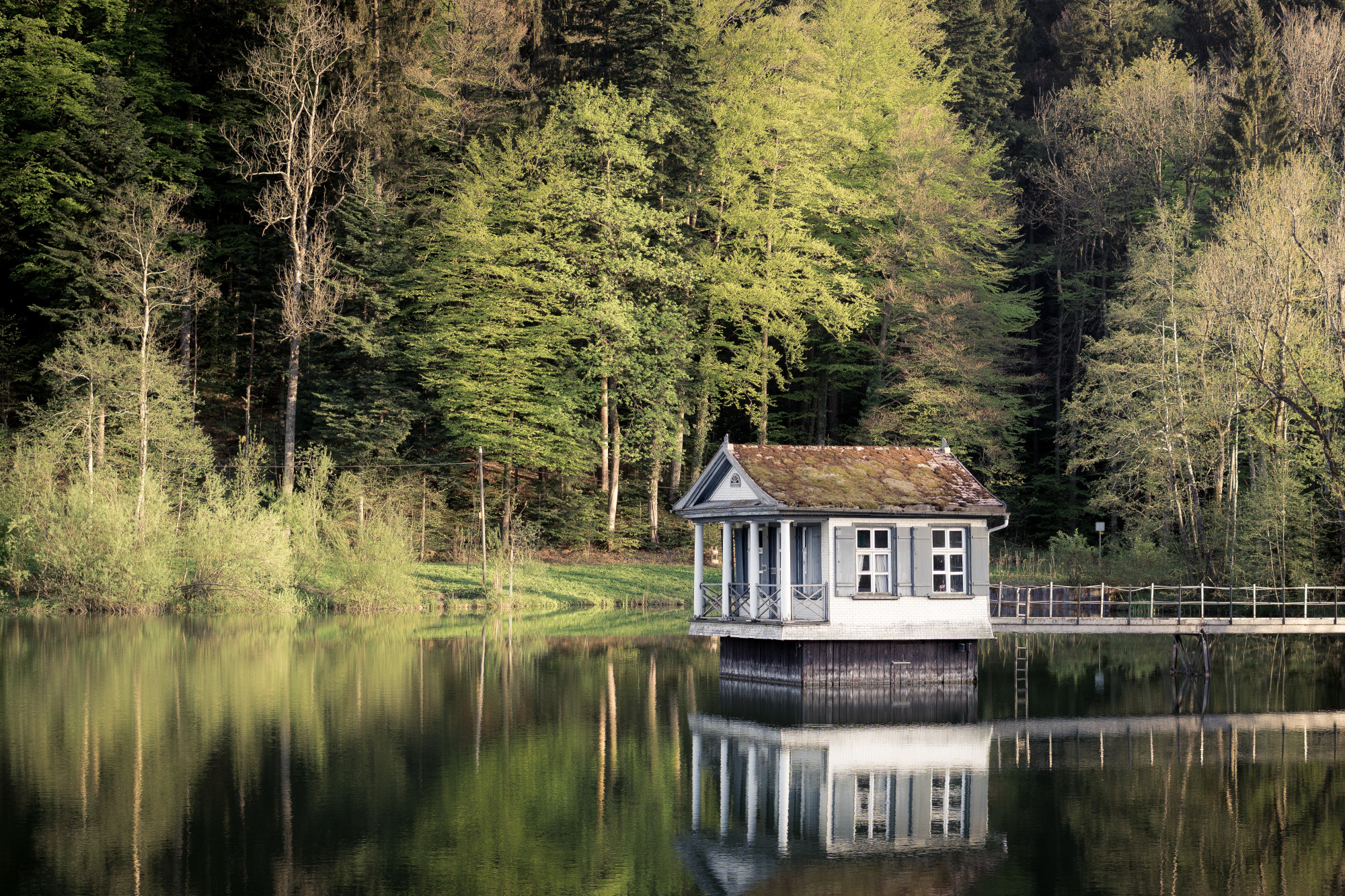
The house sat on Lake Norman, about forty minutes north of the city. It had a private dock, and a coded security gate, and a stillness so complete that after dark I could hear the water lapping gently against the wooden pilings. I had bought it for one reason, one simple reason that my mother, on the phone that Thursday morning, was in the process of demonstrating the necessity of.
I needed one thing in my life that no one else could gradually claim.
Because that was the pattern. That had always been the pattern. In my family, ownership was a stable, respected, inviolable concept, right up until the owner was me. My first apartment out of college had become my parents’ free hotel whenever they came to the city, and my mother had rearranged my kitchen to her liking and left passive comments about my housekeeping. My sister Melissa had borrowed my car when her transmission failed and kept it for over a month, returning it with an empty tank and a parking ticket in the glovebox and no apology, because we’re family. My mother had once filled my guest room with boxes of her craft supplies, unasked, because I lived alone and had, in her words, plenty of unused space.
Over and over, my whole adult life, my things became the family’s things, my space became available space, my money became the collective emergency fund, and it was always framed not as taking but as sharing, as family, as what people who love each other do. And it was always, specifically, my things. Melissa’s possessions were her own. My parents’ home was sacrosanct. But I was single, no husband, no children, and in the strange arithmetic of my family that meant that everything I had was surplus, unspoken-for, flexible, shared. My life had no legitimate claims on it, in their eyes, because it wasn’t organized around the people they recognized as real dependents. I was just a woman with a good income and no one to spend it on, which made everything I’d built fair game.
So when my mother paused, that Thursday morning, and waited for me to object, when she braced for the resistance she always got and always steamrolled, I did something I had never done before.
I gave her the opposite.
“Sure,” I said.
The silence on the line lasted just a beat too long. She’d expected a fight. She’d geared up for one, had her counterarguments loaded, was ready to call me selfish and difficult and remind me how much the family had done for me. And instead I’d simply agreed, and it wrong-footed her so completely that she almost sounded disappointed.
“See?” she called out, away from the phone, to my father. “I told you she’d be reasonable.”
Reasonable.
I have thought a great deal, since, about that word. People who profit from your silence always have such flattering names for it. Reasonable. Patient. Kind. Mature. Easygoing. They praise you for the very quality that lets them take from you, and the praise is part of the mechanism, because as long as you’re being reasonable, you’re getting a reward, a little pat, a little approval, and approval is what you’ve been trained your whole life to want. And then the moment you stop, the moment you decline to keep paying the price of everyone else’s comfort, the exact same people who called you reasonable will call you selfish, and cold, and difficult, and they will mean it, because in their world your entire value was your willingness to be taken from.
I said sure. And then I hung up, and I stood in my kitchen, and I made a decision that had been forty years in the making.
I was not going to say no. Saying no had never worked in my family. Saying no just started a negotiation, a campaign, a long grinding war of guilt and pressure and reframing that they always won because they had more stamina for it than I did, because they were a coordinated group and I was one person, because they’d had four decades of practice at wearing me down. No was an opening bid, in my family. No was an invitation to persuade.
So I wasn’t going to say no. I was going to say sure, and let them believe they’d won, and let them plan, and let them commit, and then I was going to let a coded gate say no for me, in a language that could not be argued with.
Over the following weeks, exactly as I’d known it would, their plans expanded like water spreading under a door.
At first the reunion was a weekend. Then it was ten days. Then my mother mentioned, casually, that some people might stay two weeks. Melissa asked whether her boys could just leave their bikes and their summer things at the house, since hauling it all back and forth was such a hassle, the clear implication being that they’d be there all summer. My father announced that Uncle Ron might bring his fishing boat and dock it at my private dock. My mother told several cousins there’d be room if they brought air mattresses. The single weekend I’d theoretically agreed to had metastasized, in the space of a few weeks, into what was unmistakably a plan to occupy my house, collectively, for the entire summer, and to establish the precedent that it was, henceforth, the family’s lake house, available to all, forever.
“We have plenty of space,” my mother told me, on another call.
We. That single word. We have plenty of space, about a house that was mine, that they had never contributed a dollar toward, that I had bought with twelve years of airport food and missed weekends. We. The word did more than any argument could have to confirm that I was doing the right thing. In their minds, it was already ours. The taking was already complete. They were just handling the logistics.
So I made my own logistical arrangements.
I called Wade, the retired contractor who did the landscaping and maintenance and dock repairs at the property, a steady, discreet man I trusted completely. And over the following days, quietly, thoroughly, I secured my house.
Every exterior lock replaced. The smart entry system reset with new credentials. The old garage door remotes deactivated. A new code programmed into the gate. The Wi-Fi administrator password changed. And I called the security company and had them adjust the camera zones for full coverage of the gate and the drive, and activate an alert that would notify me immediately of any repeated failed entry attempts.
And then I did the thing that my years in a documentation-heavy industry had trained me to do, the thing that would matter enormously later. I saved everything. Every invoice for the purchase of the house. The deed. The mortgage documents, all in my name alone. Every maintenance record. Every access log. The security reports. I put all of it in a single folder on my phone, organized and dated.
Not because I wanted a confrontation. I didn’t. I dreaded it. But because my family had taught me, over a lifetime, that people rewrite history the instant money and property are involved, and I was not going to be standing in a room full of relatives with no proof, being told that the house had always been understood to be shared, that I’d promised, that I was betraying the family, with nothing but my word against theirs. I was going to have the facts, in order, undeniable, ready.
And then I waited.
The first Friday in June arrived. I was in my office in the city, halfway through a quarterly report, the ordinary machinery of my working life humming around me, when a notification slid onto my computer screen.
Motion detected: Front gate.
My stomach dropped, and I opened the live camera feed.
There they were. My father’s SUV, parked at the keypad. Behind it, Melissa’s minivan. And behind that, a third vehicle towing a rented U-Haul trailer, and the trailer was packed. Storage containers. Bicycles. Coolers. Folding chairs. Suitcases. Enough belongings to make my chest go tight, because this was not the luggage of people coming for a weekend reunion. This was the cargo of people coming to move in. To establish residence. To fill my house with their things and their bikes and their air mattresses and make it, through sheer occupation, theirs.
I watched my father climb out of the SUV first. I watched him walk to the keypad with the easy confidence of a man who has never once in his life encountered a locked door that stayed locked for him, a man who believed, on some level below thought, that gates opened for him because he expected them to. I watched him punch in the old code.
Nothing happened.
Melissa got out of her van and started directing her boys toward the luggage, already unpacking, already moving in, so certain was she that the gate was a formality. My mother stood on the gravel in her big sunglasses, one hand on her purse, staring at the closed gate as though it had personally offended her.
My father entered the code again. And again. I watched the security system tick over the failed attempts, one, two, three, four. And through the camera’s microphone I heard his shoes grinding on the gravel as he stepped back and looked up, directly into the lens, his face darkening.
“Open this gate!” he shouted, at the camera, at me, at the whole edifice of my inconvenient independence.
And then my phone lit up. Dad. Then Mom. Then Melissa. I let every one of them go to voicemail.
I sat in my office chair, forty minutes away, and I watched my family stand at the gate of the house they’d decided was theirs, and I felt a strange, terrible, exhilarating calm. For one furious moment I wanted to pick up, to scream at them, to unload forty years of it, every borrowed car and commandeered guest room and every time they’d called me difficult for wanting to keep what I’d earned. I wanted to make them hear it.
But I didn’t. Because screaming would have made it a fight, and fights were their home terrain, and the whole point was that this was not a fight. This was a fact. The gate was closed. The house was mine. There was nothing to argue about.
I opened the gate’s intercom instead.
And I watched my mother slowly raise her sunglasses-hidden face toward the little black camera as she realized, all at once, that I had been watching the entire time.
“Hi, Mom,” I said, my voice coming out of the little speaker by the gate, calm, level, carrying across the gravel to all of them.
They froze. All of them. My father spun back toward the camera. Melissa’s boys stopped mid-haul. My mother’s mouth opened.
“Melissa,” my father barked, recovering first, striding back toward the keypad, “the code’s not working, there’s something wrong with the gate, call the, is that you? Can you hear us? The gate’s broken. Open it.”
“The gate’s not broken, Dad,” I said. “I changed the code. And the locks. And everything else. You’re not coming in.”
The silence that followed was so complete I could hear, through the camera’s microphone, a bird somewhere and the distant sound of the lake.
And then it erupted. All three of them at once, a barrage, the shock giving way to outrage giving way to the full deployment of every weapon in the family arsenal. What are you doing. Is this a joke. We drove all this way. We rented a trailer. Do you know how much this cost us. This is insane. Open the gate right now. How dare you. After everything we’ve done for you. What is wrong with you. You said yes. You agreed to this. You’re humiliating us. The boys are here. Uncle Ron’s coming with the boat. We told everyone. How could you do this to your own family.
I let it wash over me, standing at my desk forty minutes away, watching them rage at a camera on a gravel drive, and I waited until they’d worn themselves down, until the first fury had spent itself, and then I spoke, and I kept my voice calm, because calm was the whole thing, calm was the sound of a person who has decided something and cannot be moved.
“I never agreed to this,” I said. “I agreed to a weekend, once, and even that I only said to see how far it would go, and it went exactly as far as I knew it would. A weekend became the whole summer. A reunion became a move-in. That’s a U-Haul, Dad. You didn’t come for a visit. You came to take my house. And I’m not going to let you, and I want to be very clear about why, so please listen, because I’m only going to say this once.”
“Now you listen here,” my father started.
“No,” I said, and something in my voice stopped him, some quality it had never had in forty years of talking to my father. “You’ve been talking my whole life. It’s my turn. This house is mine. I bought it with money I earned over twelve years of a job that cost me most of my thirties, my relationships, my weekends, my health. I bought it for six hundred and eighty thousand dollars, and every dollar of that came from me, and there is not one cent of anyone else’s money in it, and there is not one other name on the deed. It is not the family lake house. It is my lake house. And I bought it, if you want to know the truth, specifically because I needed one thing in my life that this family couldn’t take from me piece by piece the way you’ve taken everything else.”
“That’s not fair,” my mother said, and her voice had changed, gone wounded, the pivot to victimhood I’d seen a thousand times. “We’ve only ever tried to be close to you. We’re a family. Families share. I don’t understand where all this bitterness is coming from.”
“It’s coming from the transmission, Mom,” I said. “It’s coming from the car Melissa kept for a month and gave back empty with a parking ticket in it. It’s coming from the craft supplies you filled my guest room with without asking. It’s coming from thirty years of my apartments being your free hotel and my savings being the family emergency fund and my time being everyone’s to claim, and every single time I ever hesitated, even for a second, being called selfish and difficult and cold. It’s coming from a lifetime of watching Melissa’s things stay Melissa’s and Mom and Dad’s house stay Mom and Dad’s, while everything I ever earned somehow became everyone’s, because I don’t have a husband or kids, because in this family a single woman’s whole life is considered surplus that the rest of you are entitled to.”
Melissa’s voice cut in, sharp. “Oh, so this is about me now. This is about you being jealous that I have a family and you don’t—”
“No, Melissa,” I said, and I was proud of how steady I stayed, because that was exactly the button that would have detonated me at any other point in my life, the jealous spinster button, the you’re-just-bitter-because-you’re-alone button, the button my family had pushed my whole life to keep me compliant and ashamed. “It’s not about that at all. I’m happy for your family. I love your boys. What it’s about is that your family being real, in this family’s eyes, and mine not being real, has meant that my entire adult life gets treated as a resource for the rest of you. And I’m done. That’s all. I’m just done. I built one thing that’s mine, one place with a gate and a lock, and I’m going to keep it, and the gate is going to stay closed.”
There was a long, seething pause.
And then my father played what he clearly believed was his trump card, the thing that always worked, the ultimate weapon, the threat that had kept me in line since childhood.
“If you do this,” he said, low and hard, staring into the camera, “if you leave your family standing at this gate, humiliated, after we drove all this way, then you are choosing this, this, this stuff, this money, over your own family. And I promise you, we will not forget it. You’ll be choosing to be alone. Is that what you want? To be a bitter, selfish, lonely woman with a big empty house and no family? Because that’s what this is. That’s what you’re choosing.”
And there it was. The whole thing, laid bare. Choose the family or the house. Choose us or your independence. Give us access to what you’ve built, or be cast out, be alone, be nothing. It was the choice they’d been forcing on me my whole life, in a thousand smaller versions, and I’d always, always chosen them, chosen the access, chosen the taking, because the alternative they threatened was to be alone, and I’d been too afraid of that to ever call the bluff.
I wasn’t afraid anymore.
“Dad,” I said, and my voice was very quiet now, and very certain. “You just said it perfectly, actually. You said I’d be choosing money over family. But that’s not the choice, and I think you know it’s not. The choice you’re actually giving me, the choice you’ve given me my whole life, is between being taken from and being cast out. Between letting you have whatever you want, or being called selfish and threatened with abandonment. Those are the only two options this family has ever offered me. Comply, or be alone. And I’ve finally understood something, standing here watching you rage at a gate. If the only way to keep my family is to let them take everything I build, then that was never family. That was just a toll. And I’d rather be alone than keep paying it. So if you want to make this a choice between the house and the family, fine. I choose the house. Not because the house matters more than family. Because a family that would make me choose isn’t one that was ever really mine to lose.”
The silence this time was different. Stunned. Because I had never, not once in forty years, called the bluff. I had never chosen myself. And now I had, calmly, completely, and they didn’t know what to do with it, because the threat of abandonment only works on someone who’s more afraid of being alone than of being consumed, and I had just stopped being that person.
“You should go home,” I said gently. “All of you. I’m sorry you rented the trailer. I’m sorry the boys are disappointed. I love those boys and I hope I get to see them grow up, and I’d love to have them out here sometime, when it’s an invitation and not an occupation. But not today, and not all summer, and not because you decided it. The gate stays closed. Please drive safe.”
And I turned off the intercom.
I watched them on the silent feed for a while longer. The raging, the gesturing, the phone calls I let go to voicemail, my father pacing, my mother sitting down heavily on a cooler with her head in her hands, Melissa herding the confused, disappointed boys back into the van. And then, slowly, they packed up. They loaded the luggage they’d just unloaded back into the trailer. And one by one, the SUV and the minivan and the U-Haul turned around in my drive and disappeared down the road, and my gate stayed closed, and my house stayed mine, and I sat in my office and shook for an hour, adrenaline and grief and something that felt, underneath everything, like the strangest and most terrifying freedom I had ever known.
The fallout was exactly what my father had promised. They did not forget it. For months, I was cast out, the family villain, the selfish daughter who’d humiliated her parents at a gate. There was a group text, which I was eventually removed from. There were flying monkeys, as I later learned people call them, aunts and cousins calling to tell me how much I’d hurt my mother, how could I, family is everything, it’s just a house, why couldn’t I just share. Each call was an attempt to reopen the negotiation, to guilt me back into compliance, and each one I met with the same calm, unmoving response. It’s my house. I’m happy to host people when it’s an invitation I extend. I’m not willing to have it taken. That’s my boundary, and it’s not going to change.
And here is the thing I discovered, the thing that became the meaning of the whole ordeal. The boundary held because I held it. That was all it took. Not arguing, not justifying, not defending, just calmly repeating the same fact, over and over, and refusing to be moved. My family’s power over me had never been real power. It had been my own fear, my own need for their approval, my own terror of being cast out, and the moment I stopped supplying those things, the moment I decided I could survive their disapproval and even their absence, all their leverage simply evaporated. They could only take from me for as long as I was more afraid of losing them than of losing myself.
The documentation, the folder on my phone, turned out to matter, though not in a courtroom. It mattered because at a certain point my mother tried to reframe the whole history, told relatives that I’d promised them the house, that it had always been understood as a family property, that I’d cruelly reneged. And I was able to simply, factually, state the truth, with the deed and the purchase records and the timeline, and the reframe couldn’t survive contact with the facts. People rewrite history when money is involved. I’d known that, and I’d protected myself, and it meant that the story couldn’t become that I was a promise-breaker, only that I was a person who wouldn’t let her house be taken, which is a much harder thing to villainize once everyone can see the deed with one name on it.
The estrangement lasted the better part of a year. And I won’t pretend it didn’t hurt. It hurt enormously. There were nights I sat in my beautiful quiet house by the lake, listening to the water against the pilings, and wondered if my father had been right, if I’d chosen a house over a family and would end up exactly the bitter lonely woman he’d predicted. The fear they’d used against me my whole life didn’t disappear just because I’d defied it. It sat with me, in the quiet, and I had to learn to sit with it.
But slowly, something shifted. Because it turned out that a boundary, held steadily and without cruelty, does something over time that no amount of arguing ever could. It teaches people how to treat you. And once my family understood, really understood, that the taking was over, that I could not be guilted or threatened back into the old arrangement, they had a choice to make that they’d never had to make before. They could have a relationship with me on terms of actual respect, or they could have no relationship at all. And to my genuine surprise, most of them, over time, chose the relationship.
It started with Melissa, actually, of all people. She called, months in, not to relitigate, but just to talk, and somewhere in the conversation she said, quietly, “I’ve been thinking about the car. The transmission thing. I never gave it back right, did I. And I never even said sorry. I think I just, we all just got used to you being the one we could lean on, and we never thought about what it cost you.” It wasn’t a full reckoning. But it was something. It was the first time anyone in my family had ever acknowledged the pattern, and it cracked something open.
My relationship with my parents took longer, and it never became warm in the way I might once have wished for. But it became real, which was better. They learned, grudgingly, that I had a self with legitimate claims on it, that my life and my time and my property were mine, and that treating them as such was the price of having me in their lives at all. And once they paid that price, once the taking stopped, I found I could actually enjoy them again, could invite them, on my terms, into the house that was unambiguously mine, and have it be a gift I gave freely rather than a thing extracted from me.
Because that’s the thing. I did, eventually, host family at the lake house. The boys came out for a week the following summer, invited, welcome, and I taught them to fish off my dock and it was one of the best weeks of my life. My parents came for a long weekend, once things had healed enough, and my mother, standing on the dock at sunset, said, “It really is beautiful, honey. You did this. All by yourself. That’s really something.” And it was the first time in my life she’d ever praised something I’d built without immediately trying to claim a piece of it, and I nearly wept.
The difference, the whole difference, was the gate. Not the physical gate, though that mattered. The gate I’d finally learned to build inside myself. The boundary. The line that said, this is mine, and you may enter when I invite you, and you may not take it, ever, and my willingness to be alone rather than be consumed is what makes my invitations mean anything at all.
I think about my father’s threat all the time. You’ll be choosing to be alone. That’s what this is. And the strange, deep truth I learned is that he had it exactly backwards. Holding the boundary didn’t make me alone. It was the only thing that ever made real connection possible. Because as long as I was just a resource to be drained, as long as my role in the family was to be taken from, I was profoundly alone even in the middle of them, alone in the specific way of a person who is used but not seen, valued for what can be extracted rather than for who they are. The compliance I’d traded for their approval had never bought me love. It had bought me a role. And it was only when I closed the gate, only when I risked the abandonment they’d always threatened, that I found out whether anyone in my family actually loved me, or only loved what they could take. Most of them, it turned out, loved me. They’d just never had to prove it, because I’d never made them choose.
The lake house is still mine. The gate still has its code, which I’ve given to exactly the people I choose to give it to. And on summer evenings I sit on my dock and listen to the water lapping at the pilings, the sound I bought the whole place for, and sometimes there’s family around me, laughing, invited, welcome, and sometimes it’s just me and the lake and the quiet, and both of those are good, because both of them are mine, chosen, not extracted.
You should be reasonable, my mother used to say, and she meant, you should let us take. And I was reasonable, her way, for forty years, and it cost me nearly everything, and it never once bought me the thing I actually wanted, which was to be loved as a person rather than used as a resource.
I stopped being reasonable, in her sense of the word, on a Friday in June, standing at an intercom forty minutes away, watching my family rage at a gate that would not open.
And it was the beginning of the only real family I’ve ever had. The one that had to knock, and wait to be let in, and understand at last that the woman inside was a person, with a life, and a self, and a house with her name on the deed, who would open the gate gladly for love, and never again for a toll.

Specialty: Quiet Comebacks & Personal Justice
David Reynolds focuses on stories where underestimated individuals regain control of their lives. His writing centers on measured decisions rather than dramatic outbursts — emphasizing preparation, patience, and the long game. His characters don’t shout; they act.