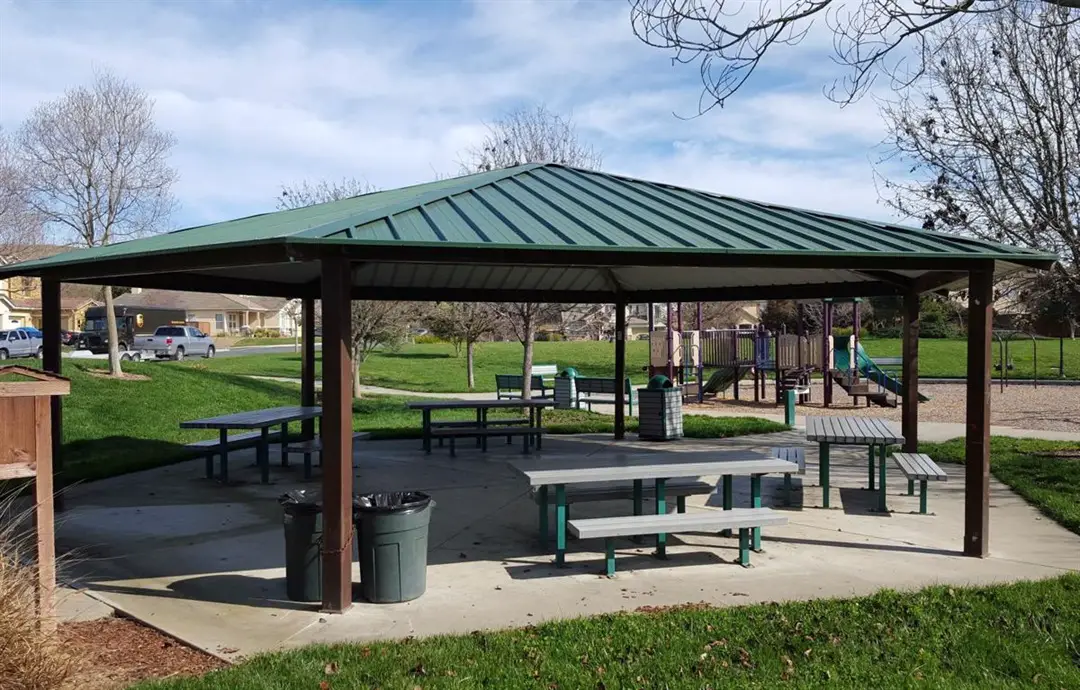
I knew something was wrong before I even reached our old bench. I could see it through the trees from a distance, sitting exactly where we’d left it fifty-five years earlier.
Nobody was sitting there.
I’d prepared myself for that possibility, of course. Three old friends scattered across three different countries had plenty of reasonable excuses not to remember a promise made by four seventeen-year-olds beside a lake, back in a summer that increasingly felt like it belonged to someone else’s life entirely.
What I hadn’t prepared myself for were the three boxes waiting on that bench. Each one had my name on it.
HAROLD.
I looked through the first box’s clear plastic lid before I’d even fully processed what I was seeing. Inside was something I hadn’t laid eyes on since the summer of 1970. A red fishing lure, the paint chipped along one edge in a pattern I somehow still recognized instantly, more than half a century later.
The bench itself was smaller than I remembered it, the boards gone gray and weathered with decades of weather, but four initials were still carved into one end, deep enough that they’d survived every winter since.
H. T. R. N.
I ran my thumb slowly over the grooves. We had carved those letters into that wood the night we graduated high school, back in 1970. Tommy, Ray, Nick, and me.
That night, we’d sat beside the lake until nearly midnight, talking about everything we were going to do with the rest of our lives, the way only teenagers on the exact threshold of adulthood can talk, with total certainty about futures none of us actually understood yet. Tommy’s family was moving to Australia that fall, his father having taken some position with a mining company none of us fully understood. Ray wanted to see Europe, all of it, starting with Germany for reasons that had something to do with a girl he’d met at a church youth conference the year before. Nick swore, with total seventeen-year-old conviction, that he’d marry the very first beautiful woman who genuinely laughed at his terrible jokes.
I wasn’t going anywhere. My father owned a hardware store in town, and he expected me to work beside him, the way his own father had expected the same of him a generation earlier. I’d talked, more than once that summer, about joining Tommy in Australia someday, some vague future plan I half-believed in. My father always changed the subject whenever I brought it up, steering the conversation back toward the store, toward inventory, toward anything else.
Before we left the lake that night, Tommy made us all promise something.
“Fifty-five years,” he said, with the particular solemnity only a seventeen-year-old can bring to an arbitrary number. “Same day. Same bench.”
Ray laughed. “We’ll be seventy-two.”
“Then bring your walking stick.”
We stacked our hands together on top of each other, the way excited children do when sealing some enormous, world-altering pact, and none of us doubted, not for one second, that we would actually be there.
For a while afterward, we stayed genuinely close, despite the distance. Tommy wrote from Australia, his letters full of strange new animals and a heat he complained about constantly. Ray sent letters from Germany, describing beer gardens and a language he was slowly, painfully learning. Nick eventually settled in Portugal, of all places, after a brief and apparently disastrous stint in France he never fully explained.
Then the letters became less frequent. Then, gradually, they stopped altogether.
I wrote too, in those early years. At first, I’d leave my letters sitting on the hall table for my father to mail whenever he drove into town for the store, since I didn’t have my own car yet and the post office wasn’t within easy walking distance. After a while, when nothing came back in return, I simply stopped giving him any to send. Eventually, silence starts to feel like its own kind of answer, one you don’t need spelled out any further.
I married a wonderful woman named Ellen a few years later, had two children with her, buried both my parents over the following decades, lost Ellen herself six years ago to a slow illness that took nearly two years to finish its work, became a grandfather three times over, and grew old in the very same town where the four of us had all started out together.
But I never once forgot the lake. I went back many times over the years, alone, usually in early autumn when the crowds thinned out. Sometimes I’d sit on our bench and trace those four carved initials with my fingertip, remembering the boys we’d once been and wondering, idly, where life had actually taken the other three. And every single time, without fail, I’d think about our promise and hope that somehow, when the full fifty-five years finally came due, they would remember it too.
Apparently, as it turned out, they had.
The boxes were different sizes, I noticed, sitting there on the bench in the morning light. My hands were shaking slightly when I finally opened the first one. I lifted out the red fishing lure and laughed out loud before I could stop myself. Tommy had bought that exact lure when we were sixteen, spending three straight weeks bragging to anyone who’d listen that it would catch the biggest bass the lake had ever produced. It never once caught anything at all, a fact we’d teased him about relentlessly for the rest of that summer.
Underneath the lure sat an envelope. The handwriting on the front was unfamiliar to me, but the very first sentence inside wasn’t.
Harold. If you’re sitting on our bench, you remembered.
I sat down on the bench itself, my legs suddenly unsteady. The letter was from Tommy, I realized, written only seven months earlier, according to the date at the top. He wrote about Australia, about his wife, about his children and grandchildren scattered across two continents now. He wrote that he’d spent years, decades really, imagining the four of us as old men sitting beside this exact lake together. Then came the sentence that stopped me cold, my eyes catching on it and refusing to move forward.
I wish we’d had the courage to ask you why you stopped writing. But if you came back to that bench, maybe I was wrong about you.
I read it twice through, my hands trembling slightly. Stopped writing? Tommy’s letter made clear that the three of them had remained in steady contact with each other, all these decades. Not constantly, but enough — Christmas cards every year, occasional phone calls, eventually emails once that became easier than international postage. And apparently, according to what Tommy had written, my name had never once fully disappeared from their conversations. For years, evidently, all three of them had genuinely wondered what they had done to make me cut them out of my life so completely.
My stomach tightened uncomfortably. I opened the second box. Inside sat a cheap silver compass, the kind you’d buy at any general store, one Ray had carried everywhere with him as a teenager despite being, by his own frequent admission, completely incapable of reading it properly. Beneath the compass sat a thick bundle of paper, tied together with ordinary kitchen string.
Letters. The first one was dated August of 1971.
Dear Harold, Germany is colder than I expected. Tommy says Australia is too hot, so between the two of us, we apparently chose our new countries very badly.
I smiled at that, the old familiar rhythm of Ray’s humor coming through clearly even across fifty-five years. Then I reached the final paragraph of that same letter.
You haven’t answered my last two letters. Everything okay?
The next letter in the stack was dated October. Then December. Then March of 1972.
Harold, if you’re angry about something, please just tell me. Nick hasn’t heard from you either. Tommy thinks maybe your father is keeping you too busy at the store to write.
Another letter, further down the stack: We miss you, idiot.
Another still: Please write back, even if it’s only one sentence.
I stared down at the pages spread across my lap, my chest tight. I had never once seen any of these letters before in my entire life. There were copies of eleven separate letters bundled together in that stack. Eleven.
I remembered, with sudden, painful clarity, checking our mailbox every single afternoon after work when I was eighteen. Then nineteen. I remembered, eventually, training myself to pretend I didn’t care anymore, the way you learn to do with anything that hurts too much to keep hoping for.
My father had noticed once, I recalled — one particular afternoon, standing beside that same mailbox. “Waiting for something?” he’d asked.
“No,” I’d told him.
“Those boys have their own lives now, Harold. You should get on with yours.”
Eventually, I had. Or at least, I’d told myself I had.
At the very bottom of Ray’s box sat a separate letter, written in a different, unfamiliar hand entirely. It was from his daughter.
My father kept almost everything from those years, including carbon copies of letters he typed before mailing the originals. When we found these boxes after his death, I finally understood why he sometimes talked about you with such sadness.
After his death. I covered my mouth with one hand. Ray was gone. He had died, according to his daughter’s letter, three years earlier. She wrote that one of the very last things he’d asked her to do, near the end, was make absolutely sure his box reached this bench if he himself couldn’t be here to bring it.
I sat there on that weathered bench for several long minutes before I could bring myself to touch Nick’s box. I almost didn’t want to open it at all, some part of me already bracing for whatever else I might discover.
Lying across the top of Nick’s box was a photograph of an old pocketknife. I recognized it immediately, even in the faded photo — the four of us had used that exact knife to carve our initials into this very bench, passing it hand to hand that final night.
Underneath the photograph sat another bundle, but these weren’t letters addressed to me. They were copies and originals that Tommy, Ray, and Nick had exchanged among themselves over the decades, apparently gathered together specifically for me to eventually find.
One letter from Tommy, dated 1973, mentioned me directly. Maybe we should stop bothering him. If Harold wanted us in his life, he would simply answer.
Nick had apparently replied to that one: I don’t understand it. He was the one crying when we left that summer.
Another exchange, years later: Do you think we did something wrong?
And finally, from Ray, in a letter I could barely make myself finish reading: I think we have to accept that Harold doesn’t want us anymore.
I lowered the page slowly onto my lap. For fifty-five years, I had believed exactly the opposite of what I was now reading in black and white. They hadn’t abandoned me. They had genuinely, painfully believed that I had abandoned them.
I was still trying to fully absorb how we could have all been so completely, tragically wrong about each other when a shadow suddenly fell across the letters spread out on my knees.
I looked up. Two young men and a woman were standing several yards away, watching me with expressions I couldn’t quite read yet.
The older of the two men stepped forward first. “Harold?”
“Yes.”
He smiled at me, though his eyes were noticeably wet. “I’m Oscar. Tommy’s son.”
The woman beside him introduced herself next as Ray’s daughter, Anna — the same handwriting, I realized, that had written the letter at the bottom of Ray’s box. The younger man was Nick’s son, Luis.
Suddenly, the whole picture clicked into place. “You brought these,” I said. “All of these boxes.”
Oscar nodded. “They made us promise we’d come here, even if they themselves couldn’t.”
Something in the particular way he said couldn’t made my stomach drop sharply. “Couldn’t?” I asked.
His expression shifted, softened into something careful and sad. Tommy had died eight months earlier, he explained. Cancer, diagnosed too late to do much about. He’d known, apparently, months in advance that he probably wouldn’t live to make it to the lake himself, so he’d carefully prepared his box ahead of time, entrusting it to Oscar.
Ray, of course, had already been gone three years by that point, as I’d just learned from his daughter’s letter.
I looked over at Luis, unable to bring myself to actually ask the obvious question. He seemed to understand exactly what I couldn’t say out loud.
“My father is alive,” he said gently.
The breath left me all at once. “Nick?”
“He’s alive,” Luis confirmed. “He’s quite ill, though. Traveling this far simply wasn’t possible for him anymore.”
I looked back down at the photograph of the pocketknife still sitting in my lap. “Does he know I’m here right now?”
Luis smiled, the first real smile I’d seen from any of them. “He’s been asking me every single hour since I landed.”
Something inside me finally, fully broke apart in that exact moment. I had spent decades carefully training myself not to miss three specific people, purely because I had believed, with total conviction, that they had long since stopped missing me first.
“Did they ever talk about me?” I asked, my voice barely steady.
Anna looked almost surprised by the question. “Mr. Harold, I’ve known your name since I was a small child.”
Oscar nodded. “Same for me.”
Luis smiled again. “My father used to tell us stories about the lake constantly. He always said you were the only person who could ever beat him swimming.”
“He cheated,” I said, and my voice cracked slightly on the word.
“I’ve heard that particular accusation too,” Luis said, grinning now.
I laughed at that, and then, almost in the same breath, started crying. Nobody standing there tried to stop me or make it smaller than it was.
Eventually, Anna sat down beside me on the bench, the old wood creaking slightly under our combined weight.
“There’s something else,” she said quietly. She gestured toward the stack of letters still spread across my knees. “My father never once understood why you didn’t receive any of these.”
Neither did I, not in that moment. But on the long drive home later that afternoon, one question simply would not leave me alone, circling back again and again no matter how hard I tried to focus on the road.
What had actually happened to all those letters?
I barely slept that night. Early the next morning, before the sun had fully come up, I went down into my basement. After my father died, twenty-six years earlier now, I had packed up what remained of his office into a series of cardboard boxes, most of which hadn’t been opened again since that same week.
I found his old desk pushed back against the far wall. The bottom drawer was locked, the small keyhole nearly hidden beneath decades of dust.
I almost simply ignored it and moved on to something else. Then I remembered something, a small, buried memory surfacing unexpectedly. My father had always kept a tiny brass key hidden inside an old tobacco tin, tucked somewhere on his desk, ever since I was a boy.
The tin itself was still sitting in one of the unopened boxes nearby. The key fit the lock perfectly, turning with a small, satisfying click after twenty-six years of disuse.
Inside the drawer sat old tax records, faded receipts, a handful of family photographs I’d never seen before. And underneath all of that, at the very bottom, sat a thick stack of envelopes.
The first one had my name written across the front. So did the second. So did the third. Some carried Australian stamps. Some carried German stamps. A few carried Portuguese ones.
I sat down heavily on the cold basement floor, the stack of envelopes spread out in front of me. Twenty-three letters in total, most of them unopened letters my three friends had sent to me over the years, intercepted before they’d ever reached my hands.
But near the very bottom of the stack sat three envelopes I recognized immediately, in a different way entirely. My own handwriting. My own stamps, carefully licked and affixed decades earlier. The letters I myself had given to my father to mail on my behalf, back when I was still a teenager without my own car.
He hadn’t only stopped their words from ever reaching me. He had stopped mine from ever reaching them in return.
I opened the oldest of my own letters with trembling hands. Near the bottom of the page, eighteen-year-old me had written, in handwriting I barely recognized as my own anymore: Don’t forget about me over there.
Suddenly, sitting alone on that cold basement floor, I was eighteen years old again, standing beside our old mailbox while my father told me, gently but firmly, that those boys had their own lives now, that I should get on with mine.
My father hadn’t merely watched me wait, day after day, for letters that never seemed to come. He had known, the entire time, exactly why they weren’t coming.
Beneath the intercepted letters sat one more envelope, this one with my name written across the front in my father’s own distinctive handwriting. It wasn’t sealed. Inside was a letter he had apparently started writing years later and never found the courage to actually give me.
You were going to leave. First Australia, then wherever the others eventually went. The store needed you. Your mother needed you. I told myself that one day you’d understand why I kept those letters.
I read it through until the words blurred completely in front of my eyes. My father had been terrified, I understood now, sitting there on that basement floor, that I would leave the way Tommy and Ray and Nick all eventually had. Instead of ever once telling me that fear directly, instead of trusting me enough to have an honest conversation about it, he had simply made the decision for me, quietly, methodically, one intercepted letter at a time.
He hadn’t needed to hide those letters forever. Only long enough. By the time I finally moved out on my own, years later, the damage had already been thoroughly, irreversibly done. My friends believed, with total conviction, that I had rejected them outright. I believed, with equal conviction, that they had simply forgotten me entirely. After enough unanswered letters piling up on both sides, hurt had done exactly what my father had apparently counted on all along. We had all, eventually, simply stopped trying.
I was furious, sitting there in that basement. But my anger had nowhere left to actually go. My father had been dead for twenty-six years already. Tommy was dead. Ray was dead. There are some things, I understood with a kind of bitter clarity, that an apology simply cannot restore, because everyone who genuinely deserved to hear it has already, permanently, gone.
But Nick wasn’t gone. Not yet. And I was not going to lose whatever time the two of us might still have left together.
Three weeks later, I stepped off a plane in Portugal, my legs stiff from the long flight, my heart pounding in a way that had nothing to do with the altitude.
Luis met me at the airport, waiting near baggage claim with a small handwritten sign that simply said HAROLD, which struck me as unexpectedly, touchingly funny given everything.
Nick lived with his wife in a small house overlooking the sea, Luis explained during the drive. I barely spoke during that entire ride, staring out the window at unfamiliar coastline, my stomach in knots.
“What if he doesn’t recognize me?” I finally asked, somewhere on the outskirts of the city.
Luis laughed, glancing over at me briefly. “He will.”
Nick was sitting beside a window when I finally walked into the small, sun-filled room. He was thin, considerably thinner than the boy still living in my memory, his hair gone entirely white, his hands spotted with age in a way that startled me despite knowing, logically, that we were both old men now. A thin oxygen tube ran beneath his nose, connected to a small tank beside his chair.
For several long seconds, neither of us said a single word. Then his eyes moved slowly across my face, taking in every year that had passed between us.
A small, familiar smile finally appeared. “You took your time,” he said.
I laughed, but it came out as something closer to a sob. Nick’s own smile trembled slightly at the sound of it. Then he held out his hand toward me.
I crossed the room and took it, but that alone wasn’t nearly enough. I bent down and hugged him fully, carefully, mindful of the oxygen tube. Nick’s arms came up around me in return, thin but still strong enough to hold on tight.
And suddenly, for just a moment, fifty-five years seemed to simply disappear. Not completely, of course — nothing could ever fully give those decades back to either of us. But for one suspended moment, I could smell lake water and summer grass again, could hear Tommy arguing cheerfully with Ray somewhere just out of sight, could feel four boys stacking their hands together on top of each other, promising one another something none of us had truly understood yet would eventually matter this much.
“I’m sorry,” I whispered against his shoulder.
Nick pulled back slightly to look at me. “For what, exactly?”
“For not finding you sooner. For not trying harder.”
He shook his head slowly. “We didn’t find you either, Harold.”
“My father took the letters,” I told him. “All of them. Every single one.”
Nick went very still as I explained everything, start to finish. The locked drawer. The tobacco tin and its small brass key. The twenty-three intercepted envelopes. My father’s own unfinished, unsent letter of explanation.
When I finally finished talking, Nick simply stared out through the window at the sea for a long, quiet moment.
“So you didn’t actually leave us,” he finally said.
“No.”
He squeezed my hand gently. “We didn’t leave you either, then.”
I had brought the old letters with me all the way to Portugal, carefully packed in my carry-on. I pulled out one of my own unsent letters now and handed it across to him. He read the single line I had written at eighteen years old, his eyes moving slowly across the faded ink.
Don’t forget about me over there.
Nick closed his eyes for a long moment. “Harold,” he said quietly, “we never did.”
Those particular words hurt more than anything else I had read in any of the three boxes combined. Because they gave me, finally and completely, exactly what I had wanted so desperately at eighteen years old. Only fifty-five years late.
We talked together for hours that afternoon. About Tommy, about Ray, about entire decades of marriages and children and careers and quiet mistakes neither of us had ever had the chance to share with each other in real time. Nick told me Tommy had kept that useless red fishing lure through six separate house moves across two continents, refusing to throw it away even when his wife insisted it was pure clutter. Ray, apparently, had carried his cheap silver compass all the way to Germany, then kept it sitting in his desk drawer for the rest of his life, still incapable of reading it correctly right up until the end.
Nick himself still had the old pocketknife. “I wanted you to have it,” he said, nodding toward where Luis had set it on a side table.
I reached into my own bag. “I brought something too.”
His eyebrows lifted with genuine curiosity. I placed a small carved wooden object carefully into his open palm. A carved fish, rough around the edges but still recognizable after all these years. I had made it in shop class when I was sixteen, back when we used to joke constantly that it was the only fish Tommy’s lure would ever actually catch. I had kept it, tucked away in a drawer, for more than half a century without fully understanding why.
Nick stared down at the small wooden fish for a long moment. Then he started laughing so hard that Luis came rushing in from the next room to check whether he was alright.
We had fifty-five years of friendship to catch up on together, and we most certainly weren’t finished yet.
A month later, we arranged one more meeting. Not at the lake this time, since Nick could no longer manage the travel involved. So instead, we brought the lake to him.
Oscar flew in from Australia, carrying Tommy’s old red fishing lure carefully wrapped in cloth. Anna brought Ray’s cheap silver compass. I brought the small carved wooden fish. Nick’s pocketknife was already sitting there in his own home, waiting.
We laid all four objects out together on the small table beside his window, arranging them carefully. Four pieces of four boys’ entire lives, brought back together in one place at last.
We took a photograph together. Oscar said quietly that his father would have absolutely loved seeing it. Anna said hers would certainly have complained that we’d placed the compass upside down, which made all of us laugh at once.
Nick looked over at me. “Fifty-five years,” he said.
“We kept the promise,” I said.
I glanced around at the empty chairs still arranged near us, thinking of Tommy, of Ray.
“Not exactly,” I said quietly.
Nick shook his head firmly. “They sent their children, Harold. I’d say that counts for something. I’d say that counts for quite a lot, actually.”
I cannot recover the years my father took from all four of us, no matter how much I might wish otherwise. I cannot sit beside that lake with Tommy again, or listen to Ray complain good-naturedly about getting old the way he always used to. But I know now, with absolute certainty, that they remembered me. They missed me, all those years, just as deeply as I missed them. They wanted me in their lives.
And somewhere in Australia, and somewhere in Germany, children had grown up hearing stories about a fourth boy who once sat beside a lake with their fathers. A boy their fathers, it turned out, had never once actually stopped calling their friend.
Before I left Portugal to fly home, Nick pressed the old pocketknife into my hand.
“Take it back with you,” he said.
“Back where?” I asked.
He looked at me like the answer should have been entirely obvious. “The bench.”
So yesterday morning, I returned to the lake one final time, alone. I sat exactly where four boys had once sat together, fifty-five years and a lifetime ago, and placed Nick’s old knife gently against the faded, weathered initials we had carved there together in 1970.
I didn’t cut any new marks into the wood.
I only traced the old ones, slowly, one letter at a time.
H. T. R. N.
They were still there, after everything. Weathered, faded, but unmistakably still there.
So, in the end, were we.

Ethan Blake is a skilled Creative Content Specialist with a talent for crafting engaging and thought-provoking narratives. With a strong background in storytelling and digital content creation, Ethan brings a unique perspective to his role at TheArchivists, where he curates and produces captivating content for a global audience.
Ethan holds a degree in Communications from Zurich University, where he developed his expertise in storytelling, media strategy, and audience engagement. Known for his ability to blend creativity with analytical precision, he excels at creating content that not only entertains but also connects deeply with readers.
At TheArchivists, Ethan specializes in uncovering compelling stories that reflect a wide range of human experiences. His work is celebrated for its authenticity, creativity, and ability to spark meaningful conversations, earning him recognition among peers and readers alike.
Passionate about the art of storytelling, Ethan enjoys exploring themes of culture, history, and personal growth, aiming to inspire and inform with every piece he creates. Dedicated to making a lasting impact, Ethan continues to push boundaries in the ever-evolving world of digital content.