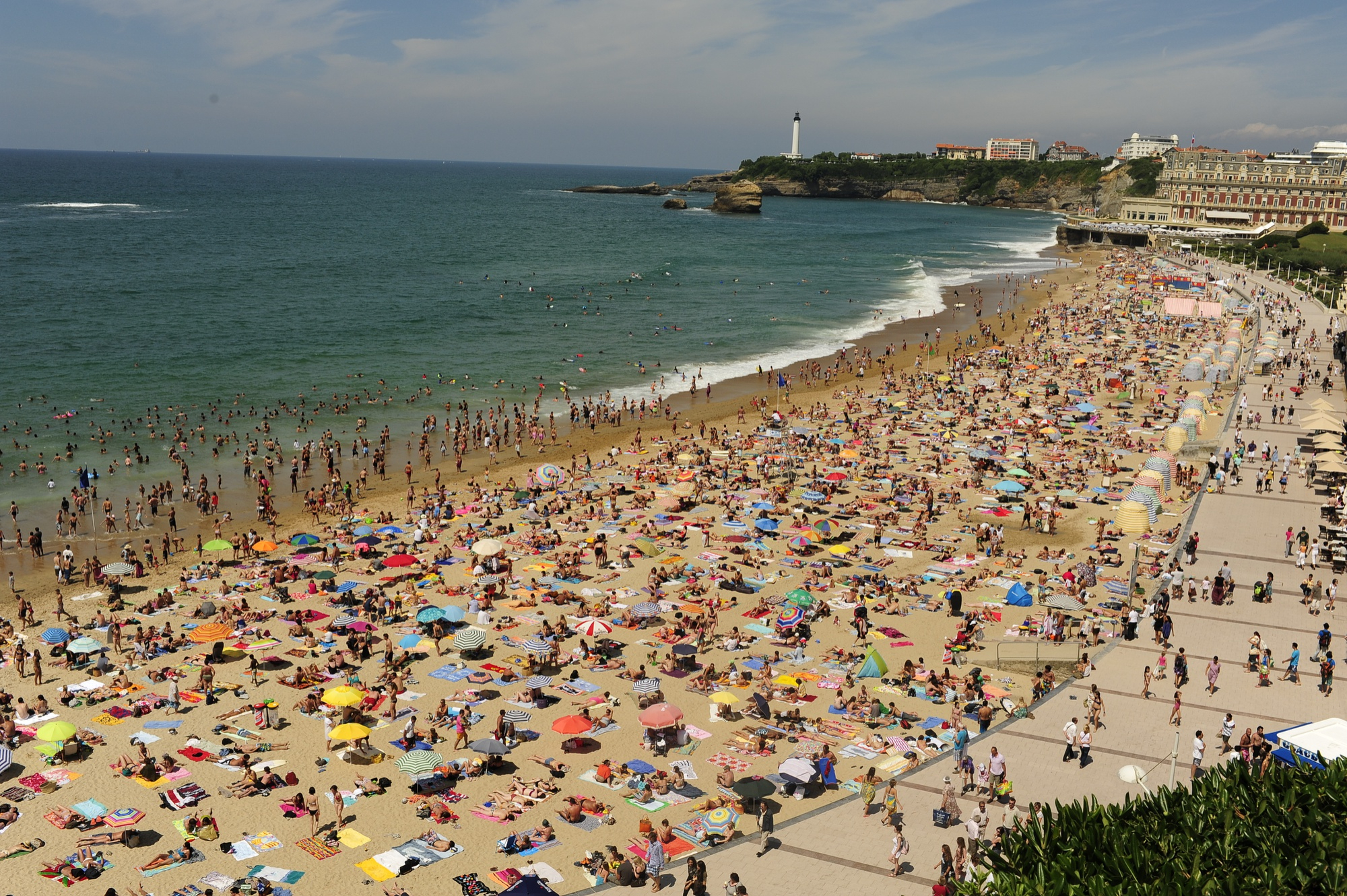
I was sixty-five years old the first time I ever saw the ocean.
Sixty-five. Let that sit with you a moment. Most people see the ocean when they’re children, hauled there by their parents, digging in the sand before they’re even old enough to remember it. I saw it for the first time as a woman with gray hair and knees that ached when it rained, standing at the edge of the water in a swimsuit I’d bought special for the trip, crying so hard I had to pretend it was the wind in my eyes.
But I’m getting ahead of myself. Let me tell you how I got there. And let me tell you what happened after, because the ocean turned out to be only the second most surprising thing about that week.
—
My name is Ruth. And for most of my life, a real vacation was something other people did.
I married young. My husband, Tom, was a good man, a kind man, but he died when our son Daniel was only six years old. A bad heart, the kind nobody knew about until it was too late. One morning he was drinking coffee at our kitchen table and by that afternoon I was a widow with a little boy and a stack of bills and no idea how I was going to keep the lights on.
So I did what women in my position have always done. I worked. I got a job waitressing at a diner off the highway, and when that wasn’t enough, I took a second shift, and for years, more years than I like to count, I worked doubles. I’d get Daniel off to school in the morning, work the breakfast and lunch rush, come home to make him dinner and help with homework, then go back for the evening shift and come home after he was asleep. My feet were always swollen. My back was always sore. I smelled like coffee and fry grease so permanently that I stopped noticing it.
And then, right when Daniel was in high school and I thought maybe, maybe, things might ease up, my mother got sick.
There was no question of what I’d do. You take care of your mother. So for the last years of her life, she moved in with us, and I added caretaking to the waitressing and the mothering, changing her sheets and managing her medications and sitting up with her on the bad nights. She passed when Daniel was in college. I was exhausted in a way that had gotten into my bones and never quite left.
There was never money for a vacation. There was never time. There was never anything left of me at the end of a day to even dream about one. Other waitresses at the diner would come back from a week in Florida, pink and peeling and happy, showing me pictures on their phones, and I’d smile and say how nice, and I meant it, and I’d think, someday. Someday, maybe. When Daniel’s grown. When the bills are paid. When there’s finally a little breathing room.
Someday kept not coming. That’s the thing about someday. You have to reach out and grab it, and I never had a free hand.
But I raised that boy. That’s the thing I’m proudest of in my whole life. I raised Daniel, alone, on tips and double shifts, and he grew up good. Kind. Hardworking. He went to college, the first in our family, and he got a good job, and he built a life. He never forgot where he came from, either, or what it cost me. He’d call me every Sunday. He’d send a little money when he could, even when I told him not to. He’d say, “Mom, I don’t know how you did it,” and I’d say, “You just do, when it’s your kid,” and both of us would go quiet on the line for a second.
Daniel married a woman named Macy. They had three children, my grandbabies, and I loved them the second I laid eyes on each of them. Emma, the oldest, who was eight. Jacob, who was six. And little Sophie, who was four and had my mother’s eyes, which nobody believed me about but which was true.
Macy, I’ll be honest with you, I never quite figured out. She was polished in a way I wasn’t. She’d grown up with money, I think, or at least with more than we’d had, and there was always a little distance between us, a little coolness, like she was measuring me and finding me a bit shabby. But she was the mother of my grandchildren and my son’s wife, and I made up my mind long ago to love her, or at least to try, and to never once make trouble. A mother-in-law who makes trouble is a curse on a family. I’d promised myself I’d never be that.
So when Daniel called me one Sunday, and his voice was excited in a way I hadn’t heard in years, and he said, “Mom, we’re taking a family vacation. To the beach. And you’re coming with us,” I didn’t know what to say.
“Oh, honey,” I said. “That’s for you and your family. I couldn’t.”
“You are my family, Mom.” He said it firm. “You’ve never seen the ocean. In your whole life you’ve never seen the ocean, and that’s not right, and I’m fixing it. I already looked at it. There’s a resort. We’re getting you your own room. I want you to finally get some rest. You’ve earned it more than anybody I know.”
I cried right there on the phone. I couldn’t help it.
“I don’t want to be in the way,” I said. “Are you sure Macy’s all right with it? A vacation’s a special thing for a young family. I don’t want to intrude.”
“I already talked to her. She’s happy to have you.” He laughed. “Mom, stop finding reasons to say no. Just say yes. Please. Let me do this for you.”
I called him back twice more over the next week to make sure. I know how I am, I didn’t want to push in where I wasn’t wanted. Both times, Daniel assured me it was fine. And once, when Macy answered the phone, I asked her directly, and she said, “Of course, Ruth, we’d love to have you,” in that smooth cool voice of hers, and I told myself the coolness was just her way, and that she meant it.
I live on a pension. It’s enough to get by, with care, but there was no way I could pay for a trip like that, and Daniel knew it, so he paid for everything. My room, my meals, all of it. I felt strange about that, a mother being paid for by her son, but he insisted, and I let him, and I told myself I’d find a hundred little ways to be helpful so I wouldn’t just be a burden along for the ride.
I bought a swimsuit. I bought a sun hat. I packed my little suitcase the night before and then couldn’t sleep, sixty-five years old and lying awake like a child before Christmas.
—
The first sight of the ocean nearly knocked me down.
We’d driven a long way, and the kids were restless, and I’d spent the whole trip in the back seat between Jacob and Sophie playing games to keep them happy. And then we came over a rise in the road, and there it was.
I had seen it in pictures. In movies. On television a thousand times. But nothing, nothing, prepares you for the real thing. The size of it. The way it just goes on and on until it falls off the edge of the world. The sound of it, even through the car windows. The smell of the salt.
I put my hand over my mouth and I didn’t say anything, because if I’d tried to talk I’d have sobbed, and I didn’t want to scare the children.
That first afternoon, once we’d checked in, I walked down to the water by myself while everyone was still settling into the rooms. I took off my shoes. I rolled up my pants. And I stepped into the ocean for the first time in my whole life, sixty-five years old, and the cold water rushed over my feet and pulled the sand out from under them as it went back out, and I stood there and I let myself cry, finally, because there was nobody to see.
I thought about Tom, who never got to see this either. I thought about my mother. I thought about all those double shifts, all those swollen-feet nights, all those somedays that never came. And I thought, well. It came. It finally came. Better late than never.
I felt, standing in that water, like the luckiest woman alive.
That feeling lasted exactly one day.
—
It was the very first morning at the beach that it happened.
Daniel had gone back up to the hotel room to grab something, sunscreen, I think, or somebody’s hat. So it was just me and Macy and the three children down on the sand. I was helping Sophie fill a little bucket, showing her how to pat the sand down so it would hold its shape, and I was as happy as I’d ever been.
Macy came and stood over me, and she cast a shadow across the little sandcastle, and she said, in a voice that had gone from cool to cold, “So. Maybe I forgot to mention it. But just so we’re clear. You’re here as the babysitter.”
I looked up at her, squinting against the sun. I thought I’d misheard.
“I’m sorry, honey?”
“The kids,” she said, gesturing at all three of them. “Taking care of them this week. That’s your job. That’s entirely your responsibility. Daniel and I need a real vacation. We need to actually relax, and we can’t do that chasing three kids around. That’s what you’re for.”
I sat there with wet sand on my hands and I didn’t know what to say.
Now, understand. I love my grandchildren more than my own life. And I always help. Whenever I visit, I’m up early with them, I cook, I clean, I give Macy and Daniel a break, I never mind a bit of it. Helping with those babies is a joy to me.
But this was different. This wasn’t helping. This was being told, on my first vacation in sixty-five years, on the trip my son gave me so I could finally rest, that I wasn’t a guest at all. That I was hired help. That I’d be working the whole time.
I tried to keep my voice gentle. I didn’t want to make trouble. God help me, even then, I didn’t want to make trouble.
“Macy, honey,” I said. “I’d love to help with the little ones, you know I always do. But maybe we could share it? Take turns? That way you could get some rest, and I could too. I’ve never seen the ocean before this week, and I did so want to just sit and look at it a while.”
And Macy laughed.
She laughed right in my face. A short, sharp laugh, the kind that’s meant to make you feel small.
“Know your place, Ruth,” she said. “My husband paid for this whole trip for you. He paid for your room, your food, all of it. You’re a woman on a pension who’s never been anywhere. So consider watching the kids your way of earning that back. Consider it paying us back for the money we spent on you.”
Earning it back. Paying them back.
I felt those words go into me like a knife. Because that was the thing, wasn’t it. That was the fear I’d carried onto the whole trip. That I was a burden. That I was being paid for. That I hadn’t earned my place. Macy had reached right into me and found the exact soft spot and pressed on it.
I opened my mouth. And then I closed it.
Because what was I going to do? Make a scene on the beach in front of the children? Fight with my son’s wife on the first day of a family trip? Be the difficult mother-in-law, the one who ruins the vacation, the curse on the family I’d sworn never to be? Daniel had spent all that money to give me something wonderful. I wasn’t going to repay him by starting a war with his wife over it.
So I swallowed it. The way I’d swallowed a thousand hard things in sixty-five years.
“All right,” I said quietly. “All right, Macy.”
And I watched the children.
—
I watched them the whole trip.
I want to tell you it wasn’t so bad, but it was. It was hard, hard work. Three young children on a beach is a full-time job for a young person, and I was sixty-five, with those knees, that back. I was up before dawn with them because they woke early. I fed them breakfast, got them sunscreened and dressed, hauled the bags and the towels and the toys down to the sand. I watched them every second in the water, because you cannot take your eyes off little ones near the ocean, not for a heartbeat. I broke up their squabbles and kissed their scrapes and built their sandcastles and I took them back up for naps and then brought them down again.
And Macy? Macy lay on a lounge chair with sunglasses on and a drink in her hand. She got massages at the resort spa. She slept in. She walked on the beach at sunset, alone, looking peaceful, while I fed her three children dinner and cleaned them up.
I never once sat and looked at the ocean the way I’d dreamed of doing. I never once rested. By the end of each day I was so tired I could barely climb the stairs to my room, and I’d fall asleep the second I lay down, and I’d wake before dawn to a small hand patting my face because Sophie was up and wanted breakfast.
I didn’t complain. I didn’t say a word. I told myself it was fine. I told myself at least I was near the ocean, at least I could smell the salt, at least I got to spend time with my grandbabies, which I did genuinely treasure even in the middle of the exhaustion. I told myself a lot of things.
But something in me was breaking a little. I’d worked my whole life. I’d never asked for much. And the one time, the one time, my son tried to give me a gift, to give me rest, it had been taken from me and turned into more work, and I’d been told I deserved that because I was poor and had needed help. I lay awake some of those nights, tired as I was, feeling smaller than I’d felt in years.
I never told Daniel. That’s important. I never said a word to my son. Because Macy had framed it as being about the money Daniel spent, and I didn’t want to put Daniel in the middle of it, didn’t want him fighting with his wife, didn’t want to seem ungrateful for the trip he’d worked so hard to give me. I figured I’d get through the week, and go home, and never let on, and just be grateful I’d seen the ocean at all.
I underestimated my son. I should have known better. I raised him.
—
It was the fourth day when Daniel noticed.
He’d been oblivious at first, honestly, the way people are on vacation, wrapped up in relaxing, not really seeing what was in front of him. Macy had been careful, too, I think, to do the childcare handoffs when he wasn’t looking, to make it seem natural, like Grandma just happened to always have the kids.
But on the fourth day, Daniel came and found me. I was sitting in the sand with all three kids, wiping ice cream off Jacob’s face and keeping one eye on Sophie near the water, and Daniel crouched down next to me and looked at me for a long moment.
“Mom,” he said. “Can I ask you something?”
“Of course, honey.”
“Why are you always with the kids?” His brow was furrowed. “Every time I look for you, you’ve got all three of them. You’re up before everybody. You never come to dinner with us, you’re always feeding them. You look exhausted. You haven’t gotten five minutes of rest this whole trip.” He shook his head. “This was supposed to be your vacation. You were supposed to see the ocean and relax. What’s going on?”
And I hesitated. I really did. Some part of me wanted to just say oh, I don’t mind, I love spending time with them, and let it go.
But I was so tired. And he’d asked me straight out. And I’ve never been a good liar, especially not to my son.
“Well,” I said carefully, not wanting to make it sound worse than it was. “Macy told me that I was here as the nanny, honey. So I could pay you back. For the money you spent on my trip. She said watching the kids was how I’d earn it back.” I patted his knee quickly. “It’s all right. I don’t mind helping. I just—”
I watched my son’s face turn red.
Not embarrassed red. Angry red. A red I’d only seen a handful of times in his whole life. His jaw went tight and something flashed in his eyes and for a second he couldn’t even speak.
“She said what?” His voice was very quiet, which was worse than shouting.
“Honey, don’t—please don’t make a fuss. It’s fine. I don’t want to cause trouble between you and your wife. I’ve had a lovely time. I saw the ocean, didn’t I? That first day. That was enough.”
But Daniel wasn’t listening to that part. He was looking at me, really looking, taking in the whole picture now, the exhaustion on my face, the way I was sitting there in the sand serving his children while his wife got a massage. And I watched something move across his face that I recognized, because I’d felt it myself so many times, watching someone I love get treated badly.
He reached out and he pulled me into a hug, right there in the sand, and he held me tight.
“Mom,” he said into my shoulder. “I am so sorry. I didn’t know. I swear to you I didn’t know. That is not why I brought you here. That’s the opposite of why I brought you here.” He pulled back and looked at me, and his eyes were wet, and his jaw was still hard. “Don’t you worry about a single thing. Okay? You’re done babysitting. Right now. You go put your feet in that water. I’ll take care of it.”
“Daniel, please don’t fight with her on my account—”
“I’ll take care of it,” he said again. And there was something in how he said it that told me the conversation was over.
He gathered up the children, all three of them, easy as anything, and he took them down toward the water himself, and he called back over his shoulder, “Go rest, Mom. That’s an order.”
I didn’t rest. I couldn’t. My stomach was in knots. I sat in a chair and I watched my son play with his children in the ocean, and I worried, the way mothers worry, that I’d caused a problem, that I’d made trouble after all, that I should have just kept my mouth shut and gotten through the week.
I had no idea what Daniel was planning. If I had, I might have worried less. Or more. I’m still not sure which.
—
I didn’t see much of Daniel and Macy that evening. He took the kids to dinner himself and told me to order room service and put my feet up, which I did, feeling strange and guilty about it the whole time. I heard, later, that he and Macy had a long talk that night. A very long one. I didn’t hear it, my room was down the hall, but I heard the shape of it, the low rise and fall of it through the walls, and I lay in my bed and prayed I hadn’t wrecked my son’s marriage.
I found out the rest the next morning.
I was just out of the shower, dressed, thinking about going down to finally, finally sit by the ocean the way I’d dreamed, when there was a pounding on my hotel room door. Not a knock. A pounding.
I opened it, and Macy stormed in past me, her face twisted with fury, and she screamed:
“DID YOU DO THIS? HOW DARE YOU!”
I stepped back, startled half to death. “Macy—honey—do what? What’s happened?”
“Don’t play innocent with me!” She was shaking a piece of paper in my face, and waving her phone in the other hand, and I couldn’t make heads or tails of any of it. “You went crying to Daniel! You couldn’t just do one simple thing, you had to run to my husband and turn him against me, and now look what he’s done! LOOK!”
“I don’t understand,” I said, and I truly didn’t. “What has he done?”
And she told me. Screaming, spitting, furious, but she told me, and slowly the pieces came together, and I understood, and I had to sit down on the edge of the bed because my legs went weak.
Here is what my son had done.
That night, after he found out, Daniel had sat Macy down and told her, in no uncertain terms, that what she’d done was unacceptable. That his mother had raised him alone on double shifts at a diner, had cared for her dying mother, had never in sixty-five years taken a single day for herself, and that he had planned this entire trip, saved for it, specifically so that she could finally rest. And that Macy had taken that gift and turned his mother into a servant and told her she was paying off a debt for being poor.
Macy, apparently, had not backed down. She’d doubled down. She’d said I was lucky to be there at all, that they’d spent good money on me, that a grandmother helping with the kids was normal and I was being dramatic.
And that was when Daniel made his decision.
He had booked me my own everything. That morning, while Macy slept, he’d gone down to the front desk and made arrangements. For the rest of the trip, I would have a spa package, mine, paid for. I would have a reserved lounge chair and an umbrella down on the best part of the beach, with waiter service, mine. He’d booked me a sunset dinner cruise, the kind that goes out on the water, something I’d mentioned wanting to see. He’d arranged a private car to take me wherever I wanted to go.
And he was paying for all of it, he told Macy, out of the vacation budget. Out of the money that had been earmarked for the fancy dinners and the couples’ activities and the things she’d been looking forward to. Because, he told her, if someone in this family was going to be treated like a queen this week, it was going to be the woman who’d earned it, and it wasn’t going to be her.
That was the paper she was waving in my face. The confirmation of it all. My name on spa bookings and dinner reservations and a beach cabana, paid in full.
“He canceled our couples’ massage!” Macy shrieked. “He canceled the nice dinner we had planned! He gave it all to YOU! Do you have any idea—”
“Macy.” A voice from the doorway.
Daniel was standing there. He’d heard the shouting. And his face was calm now, calmer than the red-hot anger of the beach, a settled kind of calm that was somehow far more serious.
“Get away from my mother,” he said. “Now.”
Macy spun around. “Daniel, tell her! Tell her how ridiculous this is! You’ve completely lost your—”
“I haven’t lost anything,” Daniel said. He came into the room and put himself between me and his wife, gently, like a wall. “But you have, apparently. You’ve lost your mind, if you think I’m going to stand by and watch you treat my mother like hired help. On the one vacation she’s had in her entire life. A vacation I gave her.”
“She’s poor, Daniel! We paid for everything! It’s completely reasonable to expect—”
“Stop.” He said it quietly and it stopped her cold. “Just stop talking. And listen to me, because I’m only going to say this once.”
The room went silent. I sat on the edge of the bed, my hands folded in my lap, hardly breathing.
“My mother,” Daniel said, “worked double shifts at a diner for fifteen years so I could eat. Do you understand that? She was on her feet sixteen hours a day. She smelled like fry grease at my school events because she came straight from work and never had time to change, and I was embarrassed by it as a kid, and I have never forgiven myself for that, because that smell was the smell of a woman killing herself so her son could have a life. She nursed her own mother through cancer at the same time. She has never had money. She has never had rest. She has never had one single thing that was just for her.”
His voice was shaking now, but he kept going.
“And I finally, finally got to a place in my life where I could give her something. One good thing. One week where she didn’t have to work, where she could see the ocean she’d never seen, where somebody took care of her for once instead of the other way around. That’s all I wanted. That was the whole point.” He looked at Macy, and his eyes were hard. “And you turned it into a nanny job. You told her she had to earn it. You told a sixty-five-year-old widow who raised me alone that she had to pay off a debt for being poor. In what world, Macy. In what world did you think that was okay.”
“I—” Macy started.
“I’m not finished.” Daniel drew a breath. “So here’s what’s going to happen. My mother is going to have the vacation I intended for her. Starting today. The spa, the beach, the dinner cruise, all of it. And you and I are going to take care of our own children ourselves, like the parents we are, because that’s our job, not hers. And when we get home, you and I are going to have a much longer conversation about who you are and who I thought I married. Because right now, I’m looking at you, and I don’t recognize you at all.”
Nobody moved. Nobody spoke. Macy’s face had gone from red to white.
And then, into that awful silence, I heard myself speak.
“Daniel,” I said softly. “Honey. That’s enough.”
Both of them turned to look at me.
—
I stood up off the bed. My legs had steadied. And I looked at my son, my good, good boy, standing there ready to burn the whole thing down for me, and I loved him so much in that moment I could hardly stand it. But I’d raised him, and I hadn’t raised him to be cruel, even to someone who’d been cruel first. And I’d learned some things in sixty-five years about how families break and how they hold together.
“Daniel,” I said. “I appreciate what you’ve done. More than you’ll ever know. But I don’t want to spend this week as the reason your marriage is falling apart. That would ruin the ocean for me worse than any babysitting could.”
I turned to Macy. She was braced, like she expected me to finally let her have it, to take my turn now that I had my son on my side. To pay her back.
I didn’t.
“Macy,” I said. “I don’t know what happened to you to make you think a person has to earn love. To make you think that money spent on someone is a debt they owe you. But I know it comes from somewhere. Nobody’s born thinking that way. Somebody taught it to you, and I’m sorry for that, truly.”
Her mouth opened, then closed.
“You hurt me,” I went on. “I won’t pretend you didn’t. When you told me to know my place, when you laughed at me, it hurt more than the work did, and the work was hard. But I’ve been hurt before, and I’ve learned that carrying it doesn’t do anything but weigh you down.” I took a breath. “So here’s what I’d like. I’d like to accept the lovely things Daniel arranged, because I confess I would love a day by the ocean. But I’d like you to be part of it too. Both of you. I don’t want a spa day while my son and his wife are at war down the hall. I want us to figure out how to be a family. Because those three babies out there are watching how we treat each other, and they’re learning from it, the same way you learned from somebody, and I’d like them to learn something better.”
The room was very quiet.
And then Macy did something I did not expect. Her face crumpled, and she sat down hard in the chair by the window, and she put her hands over her face, and she started to cry.
—
It didn’t all fix itself in that hotel room. Things like that never do, no matter what the stories say. But something cracked open in Macy that morning, and what came out of the crack, over the next few days and the months that followed, changed things.
She told us, eventually, sitting in that chair with her face wet, about her own mother. About growing up in a house where nothing was free, where love always came with a bill attached, where her mother kept a running tally of everything she’d ever done for Macy and reminded her of it constantly. Where “after everything I’ve spent on you” was the sentence that ended every argument. She’d been raised to believe that people who helped you were people you owed, and that the way you kept your footing with anyone was to make sure they owed you more than you owed them.
She’d looked at me, a woman being paid for, and some old broken part of her had reached automatically for the tally. Had needed me to owe her. It’s a terrible way to move through the world, keeping accounts on everyone you love, and I found, listening to her, that I couldn’t hate her for it. I felt sorry for her. Because I know what it is to carry something heavy, and she’d been carrying that ledger her whole life, and it must have been exhausting in a way that made my double shifts look easy.
“I’m sorry, Ruth,” she said, and it was real this time, none of the coolness in it. “I’m so sorry. I looked at you and I—I didn’t see you at all. I saw a debt. That’s a horrible thing to say but it’s true, and I’m ashamed of it.”
“I know, honey,” I said. And I went over and I put my arms around her, this woman who’d hurt me, and I held her while she cried, because that’s what you do. That’s the whole secret of families, if there is one. Somebody has to be willing to be the one who lets it go. Somebody has to break the ledger.
—
I did get my vacation, in the end.
I got the day by the ocean I’d been dreaming of for sixty-five years. But I didn’t spend it alone on a fancy lounge chair with waiter service. I spent it with all of them. Daniel and Macy and I took the children down to the beach together, and we shared the watching of them, all of us, the way I’d suggested to Macy on that very first day. And in between, I got to sit in the sand with my feet in the water and just look at it. Just look at that enormous, endless, ancient thing, and let it be as big as it was, and feel as small and as grateful as I did.
Macy sat next to me for a while. We didn’t say much. At one point she reached over and squeezed my hand, and I squeezed back, and that was more than any apology.
We did the dinner cruise, all of us together, and the children pressed their faces to the railing and pointed at the dolphins, and Daniel put his arm around me as the sun went down over the water and turned everything gold, and he said, “There it is, Mom. There’s your ocean,” and I cried again, and this time I didn’t pretend it was the wind.
Macy and Daniel did have their long talk when they got home. They ended up in counseling, the two of them, and Macy went on her own too, to untangle some of what her mother had wound so tight in her. It wasn’t quick and it wasn’t easy and I won’t pretend it was. But she did the work. That’s the thing about Macy I didn’t know at first, underneath the coolness and the ledger: when she finally saw herself clearly, she didn’t look away. She rolled up her sleeves and got to work on herself, which is the hardest work there is. Harder than double shifts. Harder than the ocean.
—
That was three years ago.
I’ve been back to the ocean twice since, both times as a guest, a real one, with nobody keeping a tally on me. Macy plans those trips now, and every single time, she makes sure there’s a chair with my name on it and time carved out for me to just sit and look at the water, and she watches her own children so I can. She overcorrects, honestly. She fusses over me now. I think it’s her way of paying down a debt she feels she owes me, and I keep telling her there’s no debt, that’s the whole point, we don’t keep those anymore in this family, but old habits die slow and I let her fuss because it makes her feel better.
She calls me most Sundays now, same as Daniel does. Sometimes she calls just to talk. The first time she called me “Mom” instead of “Ruth,” I had to sit down.
The children are getting big. Emma’s eleven now and reminds me of myself, always trying to help, always taking care of the little ones, and I’ve made it my job to teach her that helping and being used are two different things, and that she never has to earn her place at any table where she’s truly loved. She should know that young. I wish I’d known it young.
People ask me sometimes, when I tell this story, if I’m angry about what Macy did. If I forgave her too easy. If she deserved to be let off the hook.
And here’s what I’ve come to think.
I spent my whole life being told, in a hundred quiet ways, that rest was something I had to earn. That a woman like me, poor, working, alone, took what she was given and was grateful and didn’t ask for more. I believed it so deeply that when Macy said it out loud, when she told me I had to earn back a vacation, some part of me thought yes, of course, that’s true, that’s how it’s always been. The cruelest thing about what she said wasn’t that it was shocking. It was that it wasn’t. It was the thing I’d secretly believed about myself all along.
What I learned that week, standing in the ocean with my son’s arm around me, wasn’t really about Macy at all. It was about me. It was that I had been wrong my whole life. Love isn’t a debt. Rest isn’t a thing you earn. A person doesn’t have to justify taking up space in the world, or being cared for, or finally, after sixty-five years, seeing the ocean. You’re allowed. You were always allowed. Nobody ever told me, so I’m telling you, in case nobody’s told you either.
And the other thing I learned is that my son turned out even better than I’d hoped. Because when he saw someone he loved being treated as less than she was, he didn’t look away, and he didn’t stay comfortable, and he didn’t choose the easy peace of letting it slide. He stood up. He put himself between me and the hurt. All those double shifts, all those grease-smelling school events he was embarrassed by, all that raising him alone, and it turned out I’d raised a man who would stand in a hotel room and defend his mother’s worth against the whole world.
That’s the thing that was worth more than the ocean. And the ocean, believe me, was worth an awful lot.
I put my feet in the water for the first time at sixty-five. And I found out I’d been worth the trip all along.

Lila Hart is a dedicated Digital Archivist and Research Specialist with a keen eye for preserving and curating meaningful content. At TheArchivists, she specializes in organizing and managing digital archives, ensuring that valuable stories and historical moments are accessible for generations to come.
Lila earned her degree in History and Archival Studies from the University of Edinburgh, where she cultivated her passion for documenting the past and preserving cultural heritage. Her expertise lies in combining traditional archival techniques with modern digital tools, allowing her to create comprehensive and engaging collections that resonate with audiences worldwide.
At TheArchivists, Lila is known for her meticulous attention to detail and her ability to uncover hidden gems within extensive archives. Her work is praised for its depth, authenticity, and contribution to the preservation of knowledge in the digital age.
Driven by a commitment to preserving stories that matter, Lila is passionate about exploring the intersection of history and technology. Her goal is to ensure that every piece of content she handles reflects the richness of human experiences and remains a source of inspiration for years to come.