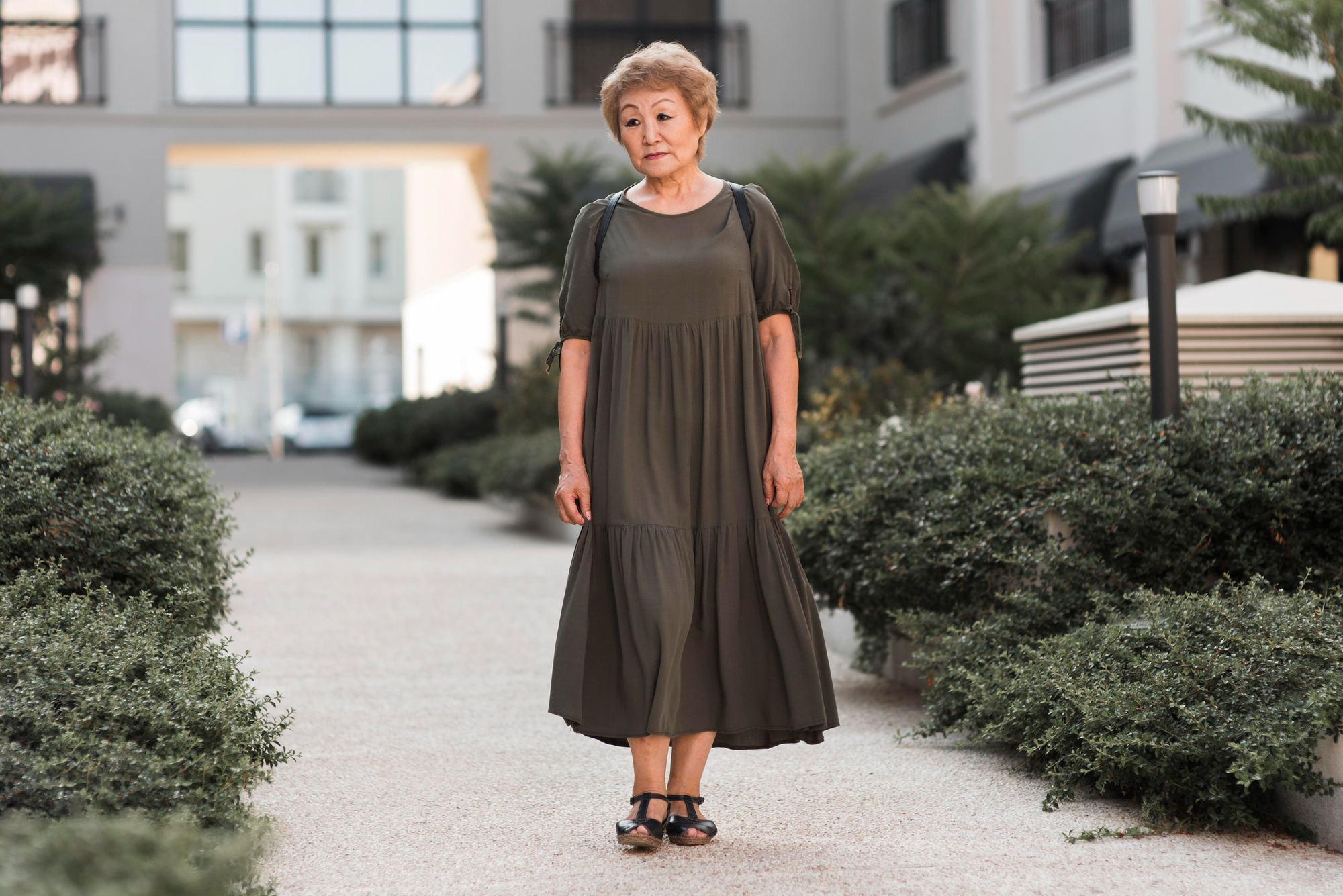
My mother has never wasted anything in her life.
Not food.
Not time.
Not money.
Not the specific energy it takes to impress people who are not worth impressing.
I learned this about her gradually, the way you learn the most important things about the people who raised you, not in a single lesson but through accumulation, through years of watching and absorbing and eventually understanding what you were watching.
She grew up in a small town in western Pennsylvania where the steel mill had been the center of everything and then had not been the center of anything, and the gap between those two eras had produced in the town a specific quality of endurance that she carried with her when she left at eighteen.
She left for the city.
She got a job in an accounting office filing documents and answering phones.
She met my father, who was charming and smart and who left when I was four, not dramatically but practically, in the way of someone who had decided that the life he had assembled was not the life he wanted.
He sends a card at Christmas.
He has a family in Phoenix.
My mother raised me alone.
She worked two jobs when I was small.
The accounting office during the day.
A restaurant on weekend evenings.
I spent those weekend evenings with the woman next door, Mrs. Garza, who was seventy and who smelled like talcum powder and who let me watch whatever I wanted on television as long as I was quiet.
I was always quiet.
I was a quiet child who understood that the specific arrangement of our life depended on things running smoothly and that smooth running required not adding complications.
My mother came home from the restaurant at eleven on Saturday nights.
She always came into my room and looked at me.
She did not wake me.
She just looked.
I know because I was sometimes awake and pretending to be asleep, which is a thing children do when they want to observe without being observed.
I would hear the door and then feel the specific quality of her presence in the room.
The way the air changed.
She would stand for a moment.
Then she would leave.
She did this every Saturday for years.
I have thought about it often as an adult.
The coming home late and tired and still taking the time to check.
The standing in the door.
The looking.
That was my mother.
Her name is Patricia Reyes.
She is fifty-nine years old.
She has been at the same accounting firm for twenty-two years now, not filing documents and answering phones but managing the accounts of small businesses in the city, which she is very good at and which she finds genuinely interesting.
She owns her apartment.
She has a small savings account.
She does not own expensive things.
She owns good things, which is different.
The coat she has had for twelve years is well-made wool and fits her correctly.
The shoes she wears to work are good leather that she maintains.
She buys less than most people and keeps things longer.
She is not cheap.
She is specific.
She knows the difference between spending money and wasting it, and she is very clear about which is which.
This is the woman who walked into Farrow’s Restaurant on a Tuesday evening in March wearing a faded floral dress that I had not seen since I was approximately fourteen years old.
My name is Elena.
I am twenty-nine years old.
I work in hospital administration.
I have been with James Hartwell for two years.
James is thirty-one.
He is kind and thoughtful and has the specific quality of someone who takes things seriously without being heavy about it.
He grew up in Westfield, which is the part of the city where the houses have the kind of landscaping that requires professional attention and where the schools have pools in them.
His parents are Robert and Catherine Hartwell.
Robert is a corporate attorney.
Catherine manages a gallery.
They are not flashy people.
They do not perform their money.
But you notice it in everything.
The house.
The trips they mention casually, as if going to Portugal for two weeks is an ordinary thing a person does.
The restaurants they describe as casual.
Farrow’s was casual, apparently.
Farrow’s had a tasting menu and a wine list that had its own printed booklet and linen napkins that the server refolded every time you stood up.
I had looked up the prices the week before.
I had thought about this for three days.
I had called my mother twice.
She said: Elena. It’s a dinner. It will be fine.
I said: it’s not just a dinner, it’s the first time our families are meeting.
She said: yes. Which means James’s parents are also going to be evaluated.
I said: by who?
She said: by me.
I said: Mom.
She said: I’ll be on my best behavior.
I said: promise?
She said: Elena.
She said my name the way she said it when she was reminding me of something she had already told me.
She said: I’ll be fine.
I believed her.
I should have asked a follow-up question.
The follow-up question would have been: what are you planning to wear?
I did not ask.
I arrived at Farrow’s at seven.
James was already there with his parents.
Robert Hartwell was in a dark blazer over an open-collared shirt.
Catherine Hartwell was in a silk blouse and tailored trousers.
They were elegant in the way of people who do not think about elegance because it has become ambient.
They stood up when I arrived.
Robert shook my hand.
Catherine hugged me.
She said: Elena. We’ve been looking forward to this.
She meant it.
She was not a cold woman.
She was a woman who existed at a particular altitude and who had the natural assumption of people at that altitude, which is that everyone else either also exists there or aspires to.
We sat.
We ordered drinks.
We talked about the engagement, about James, about the apartment James and I had been looking at.
James was beside me and he kept putting his hand on mine, which was something he did when he knew I was nervous.
I was nervous.
The door opened at seven-fifteen.
My mother came in.
She was wearing the floral dress.
I saw it before I saw her face.
The dress was one she had owned for at least fifteen years.
It had small flowers on it, blue and yellow on a cream background, and it had the washed-out quality of something that had been laundered many times.
It was not a bad dress.
It had probably been a nice dress fifteen years ago.
It was completely wrong for Farrow’s.
She had her good coat over her arm, which she handed to the host.
Under the coat was the dress.
I watched Catherine Hartwell see the dress.
I watched her face move through something that she managed quickly and professionally.
Her eyes went from my mother’s face to the dress and back.
She stood.
She smiled.
She said: oh. How comfortable.
My mother smiled back.
She said: it’s lovely to meet you. James has told Patricia so much about you.
She said it warmly.
She sat down.
She put her napkin in her lap.
She looked at the menu.
She said: how wonderful. They have the scallops.
She said this as if the scallops were the thing she was thinking about.
As if the comment about comfortable had not registered.
As if she were a person who existed entirely in the present moment and who found the present moment quite pleasant.
I was not in the present moment.
I was in the moment two minutes earlier when Catherine Hartwell had said comfortable, and I was also simultaneously in ten different imagined future moments in which this dinner went wrong in various ways.
Dinner began.
The comments were subtle.
Catherine mentioned the wine and its vintage in a way that assumed familiarity.
She mentioned the country club and then explained what the country club was, which was unnecessary.
She asked my mother if she had been to restaurants like this before, which was the specific kind of question that sounds polite and is not.
My mother answered everything pleasantly.
She asked Catherine about the gallery.
She asked Robert about his practice.
She listened to the answers.
She offered things from her own life that were interesting and specific and that demonstrated, if you were paying attention, that she was an intelligent woman who had done many things.
But she was in the dress.
And the dress was sitting at the table like its own presence.
And I was sitting across from my future mother-in-law watching her categorize my mother, watching the small adjustments of attitude that people make when they have decided what someone is.
By dessert I had eaten almost nothing.
By dessert I was ready to say something I would not be able to take back.
When my mother excused herself, I followed.
The restroom at Farrow’s was marble.
This is relevant.
The marble made things feel more formal than they were.
My mother was at the sink.
She looked at me in the mirror when I came in.
She said: you’re not eating.
I said: Mom.
She said: the lamb was good. You should have tried it.
I said: Mom, what is going on?
She turned.
She said: what do you mean?
I said: you have nicer clothes. You know you do. Why would you wear that tonight?
She looked at me.
She said: you’re embarrassed.
I said: a little. Yes.
I said: I wanted to make a good impression.
She looked at me in the mirror for a moment.
The specific look she used when she was deciding how to say something.
Not what to say.
She always knew what to say.
How.
Then she smiled.
Not the dinner smile.
The real one.
The one that meant she was about to say something she had been thinking about for a while.
She leaned closer.
She lowered her voice.
Not because she was worried about being heard.
Because lowering your voice makes people listen more carefully, which she knew, which was one of the things she knew.
She said: honey, I didn’t choose this dress by accident.
I stared at her.
She said: I chose it specifically.
She said: before I tell you why, I want to ask you something.
She said: what have you noticed tonight?
I said: I’ve noticed Catherine making comments.
She said: yes. What else?
I said: I’ve noticed that she categorized you when you walked in.
She said: yes. What else?
I said: I’ve noticed that James has not.
She looked at me.
She said: James has been watching you try not to be embarrassed by me and he has not said a word about the dress.
She said: not one word.
She said: not a look.
She said: not a small smile at his mother.
She said: he is sitting out there right now thinking about you, not about what I’m wearing.
I said: yes.
She said: and Robert?
I thought about Robert.
Robert had asked my mother about the accounting firm.
He had been genuinely interested in the small business work she did.
He had told her about a client of his who was having trouble with cash flow management.
My mother had given him two specific suggestions.
He had taken out his phone and typed them in.
She said: Robert Hartwell is a man who respects competence.
She said: he respected mine tonight.
She said: not because of what I’m wearing.
She said: in spite of it.
I said: what are you doing?
She said: Elena.
She said my name.
She said: sit down.
There was a small bench in the corner of the marble restroom.
I sat.
She sat beside me.
She said: I have been watching Catherine Hartwell tonight.
She said: and I want to tell you what I see.
She said: I see a woman who organizes the world by category.
She said: and who believes the category tells her what she needs to know.
She said: the dress told her my category.
She said: and she has been interacting with my category all evening rather than with me.
She said: which means I know something about her that she does not know about herself.
She said: and you know something about James that Catherine will never know about him.
I said: what do I know about James?
She said: that he has seen nothing but you tonight.
She said: not the dress.
She said: not the category.
She said: you.
She said: Elena.
She said: I’ve been thinking about this dinner for two weeks.
She said: not with anxiety.
She said: as an engineer thinks about a problem.
She said: I thought: what do I actually need to know before my daughter marries into this family?
She said: I need to know whether James sees her.
She said: I need to know whether Robert can be a fair-minded person.
She said: I need to know what Catherine is.
She said: not who she is.
She said: what she is.
She said: because what she is will determine what your life looks like.
She said: in thirty years.
She said: at Christmas.
She said: at the moments when you need your husband’s family to be something you can count on.
I said: Mom.
She said: yes.
I said: you wore the dress to test them.
She said: I wore the dress to see clearly.
She said: if I had walked in here in the right clothes, they would have behaved differently toward me.
She said: and I would not have been able to tell you what they are.
She said: I can tell you now.
She said: James is what you think he is.
She said: Robert is better than he appears.
She said: and Catherine.
She stopped.
She said: Catherine is a woman who will be difficult on the days when she feels her position is threatened.
She said: and simple on the days she doesn’t.
She said: you need to know that.
She said: specifically.
She said: before you marry into it.
She said: not so you can walk away.
She said: so you can walk in with clear eyes.
She said: so that you are never surprised by who she is when she is being herself.
I sat with this.
The marble.
The sound of the restaurant beyond the door.
My mother in the faded floral dress on the bench beside me.
I thought about the wine comment.
The country club.
The have you ever eaten at a restaurant like this before.
I thought about how my mother had smiled and answered and moved the conversation forward without defending herself once.
Not because she did not notice.
Because she was not there to defend herself.
She was there to observe.
I said: the whole dinner.
She said: yes.
I said: you were taking notes.
She said: I have been taking notes my whole life.
She said: it is how I have gotten where I am.
She said: you pay attention.
She said: and you do not let people know you’re paying attention.
She said: because people behave differently when they know they’re being watched.
I said: like the dress.
She said: like the dress.
She said: if I had walked in here in my good clothes, Catherine would have adjusted.
She said: she would have been warmer.
She said: she would have included me more.
She said: she would have been the version of herself that she presents when she respects someone’s category.
She said: and I would have thought: this is a reasonable woman.
She said: but I would not have known whether it was true.
She said: now I know it is not always true.
She said: which means I can prepare you.
She said: for the times when it’s not true.
She said: and I can tell you that the times when it’s not true are manageable.
She said: because she is not a cruel woman.
She said: she is a category woman.
She said: and categories can be navigated.
She said: if you know which one she thinks you’re in.
I said: which one does she think I’m in?
She said: at the moment?
She said: the same one as me.
She said: which is to say: beneath her son’s level.
She said: but Elena.
She said: that will change.
She said: because you will change it.
She said: not by performing.
She said: by being exactly what you are.
She said: which is more than she has yet understood.
She said: and she will understand.
She said: over time.
She said: the same way Robert understood tonight when I gave him the two suggestions about the cash flow client.
I said: he typed them in.
She said: yes.
She said: because Robert is a man who recognizes competence when it lands in his hands.
She said: he doesn’t care about the dress.
She said: he cares whether the person knows what they’re talking about.
She said: Catherine cares about the dress.
She said: you need to know the difference.
I said: Mom.
She said: yes.
I said: have you always done this?
She said: since I was eighteen years old in a new city with nothing but my own ability to pay attention.
She said: you pay attention.
She said: and you do not let people see you paying attention.
She said: because the information you need arrives when people think they’re unobserved.
She said: the dress was not a statement.
She said: it was a blind.
She said: it was me being unobserved.
I said: you are the smartest person I know.
She said: no.
She said: I am a person who has been paying attention for forty years.
She said: the smartest thing I ever did was decide to pay attention.
She said: everything else followed from that.
I said: what do we do now?
She said: we go back to the table.
She said: we have dessert.
She said: and we are perfectly pleasant.
She said: and when Catherine makes a comment, which she will.
She said: we smile.
She said: and we move on.
She said: and Elena.
She said: you eat your dessert.
She said: because the chocolate thing on the menu looked wonderful and you’ve been sitting there all night touching your fork.
I laughed.
She looked at me in the marble mirror.
She said: you are going to be fine.
She said: James is good.
She said: I have been watching him all night.
She said: he is good in the specific way that matters.
She said: which is that he sees you.
She said: not a version of you.
She said: you.
She said: everything else is manageable.
We went back to the table.
Catherine was telling James about someone she had seen at the gallery that afternoon.
James was listening with the polite attention he used when his mother was talking.
Robert was looking at his phone briefly.
He put it in his pocket when we sat down.
He said: Patricia, I sent those suggestions to my client. He responded already. He says they’re exactly what he needed.
My mother said: I’m glad. Cash flow in that kind of business is a specific problem. It looks like one thing and it’s actually three.
He said: exactly right. You’ve worked with clients like that?
She said: I have about twelve of them right now.
He said: I’d be interested in your perspective on the regulatory piece actually. We’ve had several clients running into the same issue.
She said: yes, the new filing requirements have been a challenge. The timing creates a gap that most small businesses aren’t prepared for.
He said: yes. Exactly.
He said: would you have time for coffee sometime? I think you might be useful to a few of my clients.
My mother said: I would enjoy that.
She said it simply.
The way she said things that were true.
Catherine was watching this exchange.
She was watching my mother with Robert and she was recalculating.
I could see the recalculation happening.
The category adjusting.
The woman in the faded dress who knew about cash flow and regulatory filing requirements and who had twelve clients with the same problem and who Robert Hartwell was asking for coffee.
The category was shifting.
Not gone.
Not eliminated.
Shifted.
Which was exactly what my mother had told me would happen.
Which she had known would happen.
The dessert arrived.
The chocolate thing was exactly as good as my mother had suggested.
I ate all of it.
James watched me eat it with the specific expression he used when he was pleased.
He said, quietly, leaning toward me: I thought you hated chocolate.
I said: I like it fine.
He said: you’ve been telling me for two years you don’t really like chocolate.
I said: I might have been wrong.
He smiled.
He said: your mom is remarkable.
I said: I know.
He said: my mother is being.
He paused.
He said: I’m sorry about the comfortable comment.
I said: it’s all right.
He said: it’s not, but I don’t know what to do with her sometimes.
I said: I think I’m starting to understand her.
He looked at me.
He said: how?
I said: my mother explained it.
He said: in the restroom.
I said: yes.
He said: what did she say?
I said: she said your mother is a category woman.
He said: what does that mean?
I said: it means she understands the world by type rather than by person.
He said: yes.
He said: that’s exactly right.
He said: Elena.
He said: I love my mother.
He said: and I also know what she is.
He said: which I think is actually the specific thing.
He said: knowing what someone is.
I said: yes.
I said: I’m learning.
He said: from your mother.
I said: from my mother.
He said: she came in here in that dress and sat through my mother’s comments and gave my father two suggestions about a cash flow problem.
He said: and now my father wants to have coffee with her.
He said: Elena.
He said: your mother.
He said: she did that on purpose.
I looked at him.
He said: the dress was on purpose.
I said: yes.
He said: she was testing us.
I said: she was seeing clearly.
He said: and?
I said: and you passed.
He said: what did I do?
I said: nothing.
He said: nothing?
I said: that was the point.
He said: I don’t understand.
I said: you didn’t look at the dress.
He said: why would I look at the dress?
I said: because it was an unusual dress for an expensive restaurant.
He said: it’s just a dress.
He said: your mother is not her dress.
He said: what she was wearing was the least interesting thing about her.
I said: I know.
He said: I hope you know.
I said: I’m learning to know it better.
He said: good.
He said: there will be a lot of moments in our life when someone’s dress is not the point.
He said: and I would like us to agree to look at the thing that is the point.
I said: yes.
He said: your mother just gave my father two useful suggestions about a professional problem.
He said: while wearing a floral dress from approximately fifteen years ago.
He said: and my father is going to remember her for the suggestions.
He said: not the dress.
He said: Catherine will remember the dress for a while.
He said: and then she will remember the suggestions.
He said: it will take her longer.
He said: but she’ll get there.
I said: you’re more perceptive than I gave you credit for.
He said: I’ve been watching your mother all evening.
He said: she is the most interesting person at this table.
I said: she would find that amusing.
He said: why?
I said: because she would say she is just a person who pays attention.
He said: that is exactly what makes her the most interesting person at this table.
He said: half the people at this table are not paying attention.
He said: she is.
He said: always.
He said: you can tell.
I said: I know.
I said: I have been watching her pay attention my whole life.
He said: it’s something you learn from the people who raised you.
He said: or you don’t.
He said: and the ones who do.
He said: they can navigate anything.
I looked at my mother.
She was talking to Catherine.
Not about accounting.
About the gallery.
About a show Catherine had curated last spring.
She was asking specific questions.
Good ones.
Questions that demonstrated she had been listening throughout the evening and had retained the details and was now using them to make Catherine feel seen.
Catherine’s posture had changed.
She was more open.
She was leaning slightly forward.
She was talking about the show with the animation of someone who genuinely loved what she did.
My mother was giving her this.
Not because she owed her anything.
Because she was, underneath the strategy and the observation and the dress that was a blind, a generous person.
A person who understood that people who organize the world by category are often people who are afraid.
Afraid of not knowing their place.
Afraid of being surprised.
Afraid of things arriving in forms they cannot categorize.
My mother understood this because she had spent her whole life arriving in forms people could not categorize.
A single mother from a small town who worked two jobs.
Who was also the smartest person in the room.
Who wore a faded dress to an expensive restaurant.
Who gave a corporate attorney two suggestions about cash flow that he typed into his phone immediately.
Who turned an uncomfortable evening into a study in exactly what she needed to know.
Who sat in a marble restroom with her daughter and explained everything.
So that her daughter would not walk into the rest of her life surprised.
The dinner ended.
We said our goodbyes in the lobby.
Catherine hugged me.
She said: Elena, we’re so happy for you and James.
She said it warmly.
More warmly than anything she had said all evening.
The category had shifted.
She turned to my mother.
She said: Patricia, it was lovely to meet you.
She said lovely.
Not comfortable.
My mother smiled.
She said: Catherine, the gallery show you mentioned sounds beautiful. I’d love to see it.
Catherine said: please come. I’ll send you the information.
She said it and she meant it.
She would send it.
My mother would go.
And at the gallery, in whatever she wore, she would look at the work and ask the specific questions that revealed she had been paying attention, and Catherine Hartwell would spend the car ride home telling Robert that Patricia Reyes was not what she had expected.
That she was more than the category.
That the category had been wrong.
That Patricia Reyes was actually quite.
And she would not find the word.
Because the word for my mother is not a category word.
The word is specific.
Particular.
Itself.
We walked to our cars.
My mother and I stood on the sidewalk outside Farrow’s.
March was cold.
She was in her good coat.
I was in mine.
She said: eat more at the next dinner.
I said: there’s going to be a next dinner?
She said: there are going to be many dinners.
She said: it will get easier.
She said: not because Catherine will change.
She said: because you will understand her better.
She said: and understanding is easier than being surprised.
I said: Mom.
She said: yes.
I said: thank you.
She said: for what?
I said: for the dress.
She said: I thought you were embarrassed by the dress.
I said: I was.
I said: I’m not anymore.
She looked at me.
She said: good.
She said: Elena.
She said my name.
She said: I want to tell you something I should have told you a long time ago.
I said: yes.
She said: I have been paying attention for forty years.
She said: since I was eighteen in a new city with nothing.
She said: and the thing that I have learned, the most important thing.
She said: is that the people who are worth knowing are always more than their category.
She said: always.
She said: and the people who see that are the ones worth being seen by.
She said: James sees it.
She said: which is why I am here.
She said: not to evaluate him.
She said: I already knew about him.
She said: I came to see who he was when his mother made those comments.
She said: and now I know.
She said: he is the person you think he is.
She said: he looked at the thing that was the point.
She said: which was you.
She said: not me in the dress.
She said: you.
She said: and that.
She said: that is the thing I came to find out.
She said: everything else was secondary.
I said: the cash flow suggestion.
She said: what about it?
I said: was that part of the plan?
She said: the conversation with Robert happened naturally.
She said: but Elena.
She said: I have twelve clients with the same problem.
She said: I know what I know.
She said: if he asked, I was going to answer.
She said: always.
I said: the dress was the blind.
She said: yes.
I said: but you were still yourself inside it.
She said: always.
She said: the blind is not a costume.
She said: you are still you inside it.
She said: you just let people see the blind first.
She said: and then you let what is real arrive after.
She said: at their own pace.
She said: some people pace faster than others.
She said: Robert is fast.
She said: Catherine is slower.
She said: both are manageable.
I said: Mom.
She said: yes.
I said: I hope I’m half as smart as you when I’m your age.
She said: you’re already smarter than I was at your age.
She said: because you asked the question I didn’t think to ask.
I said: what question?
She said: why.
She said: you asked me why I wore the dress.
She said: I didn’t ask why until I was thirty-five.
She said: I just watched without asking why.
She said: which is slower.
She said: you asked why.
She said: which means you’ll understand it sooner.
She said: and understanding sooner is everything.
She kissed my cheek.
She walked to her car.
She drove away.
I stood on the sidewalk outside Farrow’s in the March cold and I thought about forty years of paying attention.
I thought about working two jobs.
I thought about standing in the door of my room at eleven on Saturday nights.
I thought about the dress.
I thought about the bench in the marble restroom.
I thought about what she had said.
The people who are worth knowing are always more than their category.
And the people who see that are the ones worth being seen by.
James’s car was still there.
He was waiting.
He had told his parents he would call tomorrow.
He had stayed.
He rolled down the window.
He said: your mother is extraordinary.
I said: I know.
He said: I want to have dinner with her again.
I said: she’ll test you again.
He said: good.
He said: I’d like to know what she finds.
I said: she already told me what she found.
He said: what did she find?
I said: that you look at the thing that is the point.
He said: what’s the point?
I said: me.
He said: yes.
He said: that is the point.
He said: are you ready to go home?
I said: yes.
I got in the car.
He drove.
The city went past the windows.
The March night was cold and clear.
I thought about my mother in the faded floral dress.
I thought about the forty years she had been paying attention.
I thought about all the rooms she had sat in and all the people she had watched and all the specific things she had understood by being underestimated.
The dress was not a mistake.
It was never a mistake.
It was the smartest thing in the room.
Which was exactly what she had been, every time, in every room, her entire life.
Underestimated.
And paying attention.
That was the whole thing.
And it was everything.

Adrian Hawthorne is a celebrated author and dedicated archivist who finds inspiration in the hidden stories of the past. Educated at Oxford, he now works at the National Archives, where preserving history fuels his evocative writing. Balancing archival precision with creative storytelling, Adrian founded the Hawthorne Institute of Literary Arts to mentor emerging writers and honor the timeless art of narrative.