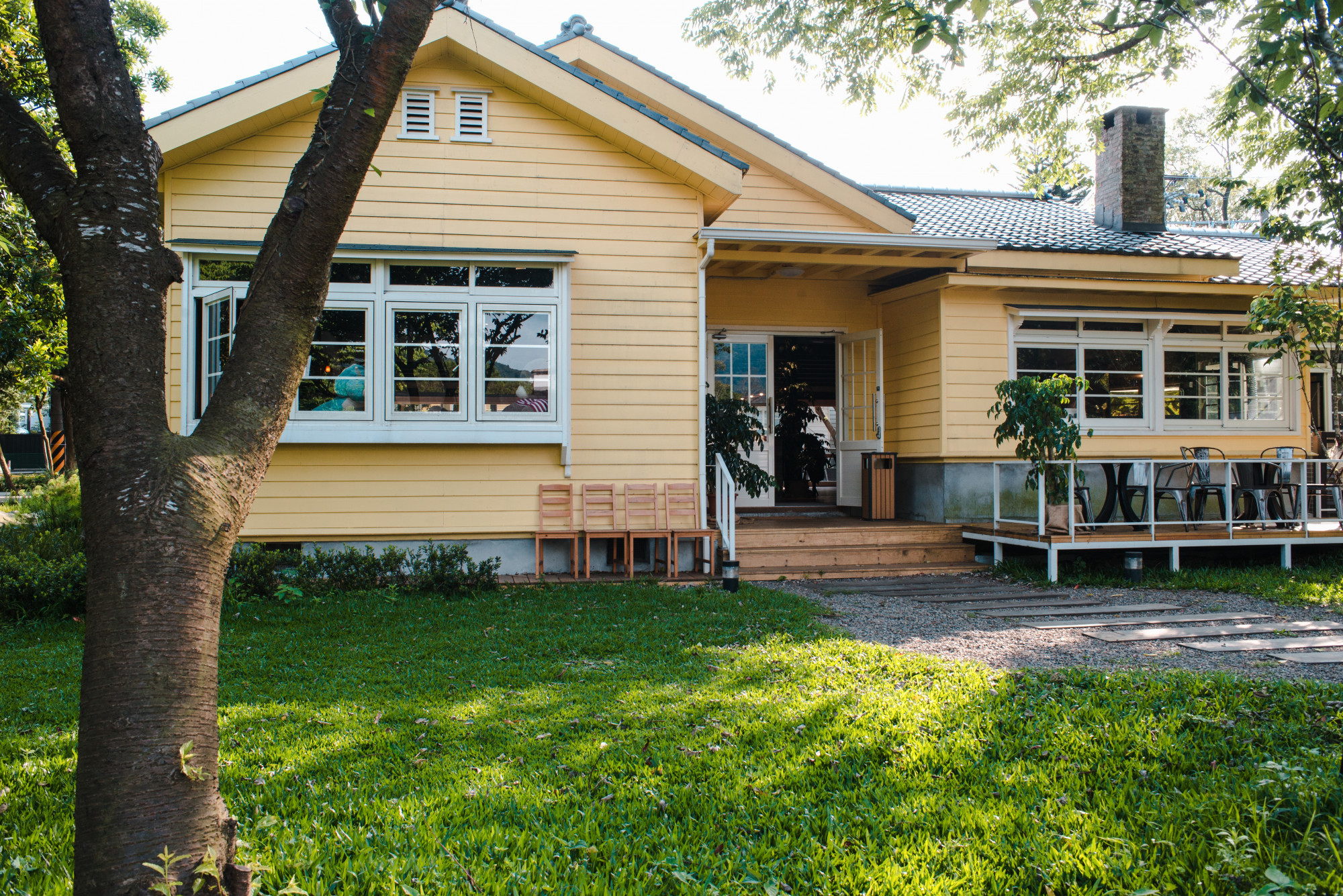
My husband planted the garden in the summer of 1997.
He did not ask me whether I wanted a garden. He simply came home one Saturday with a truck bed full of topsoil and a flat of red and yellow flowers and a plan he had been working on for weeks, which I could tell from the way he unloaded everything with the efficiency of someone who knows exactly where each thing is going.
I stood on the porch and watched him work.
He was fifty-three that summer, and he still had the build of the man I had married at twenty-six, though he moved differently than he had then, with the particular economy of motion that comes when a person knows their own body well enough to conserve what they need for the next hour.
He was out there until six in the evening.
When he finished, he came and stood beside me on the porch and we looked at it together.
He had planted the red and yellow flowers in a pattern that looked casual from the curb but that I could see, from slightly above, was not casual at all. The colors curved through each other in a way that caught the late afternoon light and made the whole small garden glow.
I said: Roy.
He said: do you like it.
I said: why those colors.
He said: because those are the ones I always bring you.
He said it the way he said things that were obvious to him and that he found slightly amusing to have to explain, with the smile that had been the first thing I noticed about him when we met at a church social in 1968.
He always brought me red and yellow flowers on our anniversary. Every year. For forty-one years he brought me those colors.
I said: it’s the most beautiful thing anyone has ever made me.
He said: it’s just a garden.
I said: it’s not just a garden.
He knew that too.
Roy died in March of 2011.
He was sixty-seven years old, which is not old enough, though I am aware that there is no age that would have felt old enough, that the specific age at which he died would have felt premature regardless of what it was because he was still himself, completely himself, still the man with the Saturday projects and the anniversary flowers and the smile that took its time arriving.
He had a heart attack. He was in the garden, which was where he spent Saturday mornings when the weather allowed, tending it with the same attention he had built it with.
They told me it would have been very fast.
I have chosen to believe this.
After he died, I kept the garden exactly as he had made it.
That is not entirely precise. Gardens are not static things. They require maintenance and seasonal change and replacement when things don’t survive the winter. What I mean is that I kept the character of it, the red and yellow flowers in the pattern he had planted them, the same curve of color that caught the afternoon light the same way.
Every spring I planted new flowers.
Every spring I spent an afternoon in the front yard on my knees in the dirt, planting red and yellow flowers in the pattern my husband had established, and when I stood up and brushed the dirt from my jeans and looked at what I had done, I felt him nearby in the particular way you feel the people you have loved when you are doing something that connects you to them.
The garden was not expensive.
Annual flowers are not expensive. The soil amendment I added each spring was not expensive. The garden cost me, in materials, perhaps forty or fifty dollars a year.
What it cost me in other ways was not calculable.
What it gave me in return was not calculable either.
I am seventy-one years old. I have lived in this house for twenty-nine years. My name is Eleanor Marsh, though most of the neighborhood calls me Ellie, which Roy started and which stuck because most things Roy started stuck around long after him.
I know every house on this street. I know which families have been here since before I arrived and which ones are new, and I know the specific rhythms of the block, the morning walkers and the dogs they walk and the children whose heights I have tracked across two decades of autumns and springs.
I knew the Hauser family.
Dennis Hauser had lived three houses down for twelve years. He was a man who had made money in the way of men who make money in mid-sized cities, through commercial real estate and a restaurant supply business and various other interests that I did not fully understand but that produced the visible evidence of considerable success. He drove a large silver sedan and wore the specific casual confidence of someone who has been comfortable long enough that comfort has become ambient.
He was not a bad neighbor.
He kept his lawn maintained. He did not make noise. He was pleasant when we passed each other and he had, once, when a tree branch came down in my yard during a storm, sent his groundskeeper over without being asked to clear it.
His son Kyle came home from college in June.
Kyle was twenty-two.
I understood, within two weeks of his arrival, that Dennis Hauser had made a specific error in the raising of this child, the error that people with considerable means sometimes make, which is confusing the provision of things for the teaching of accountability.
Kyle had everything and understood that he had everything and had organized his personality around this understanding.
He was loud in the way of young men who have never been required to be quiet.
He was careless in the way of people who have never had to repair what they broke.
He had a motorcycle.
The motorcycle was a large and expensive machine that he rode with the skill of someone who had owned it for less time than he pretended and with the consideration of someone who had decided that consideration was for people who did not have the kind of father he had.
The neighborhood endured him.
Not because we liked what he was doing but because the social calculus of a neighborhood is complicated and because Dennis Hauser was the kind of neighbor who, if you pushed back against his son, would respond in ways that made pushing back feel more costly than absorbing the irritation.
Mrs. Patterson at the corner had knocked on the Hausers’ door in July when Kyle blocked her driveway at eleven at night and Dennis had been polite and apologetic in the way that produces no actual change but that makes the complaint feel addressed.
The Nguyens, who had the meticulous garden two houses down from the Hausers, had watched Kyle cut across the edge of their lawn twice before deciding the conversation was not worth having.
I watched from my porch and from my window.
I noted things.
I have always been a person who notes things. Roy said I had the mind of an auditor, which he meant as a compliment, which I accepted as one. I observe, I record, I wait for the pattern to become clear before I decide what to do about it.
The pattern with Kyle became clear early.
He was going to damage something that mattered to someone, and when he did, he was going to shrug.
I did not know it would be my garden.
I should have.
It was a Saturday afternoon in late September.
The light was the light of early fall in the midwest, that particular quality of gold that makes everything look slightly more itself than it usually does, and the garden was in its last good weeks before the first frost, still full and the colors still bright.
I was in the kitchen making tea when I heard the motorcycle.
I heard it accelerate when it should have been decelerating, which told me before I reached the window what I was going to see.
He came around the corner too fast and instead of slowing and turning into the street properly he cut across the corner, which was my front lawn.
The back tire went through the flower bed.
I watched it happen.
From the window, in the second it took, I watched the back tire of Kyle Hauser’s motorcycle tear through the garden that Roy had planted in the summer of 1997, the garden I had maintained for twenty-nine years, the garden where I had spent Saturday mornings on my knees in the dirt planting red and yellow flowers in the pattern he had established.
The mud from the torn earth was visible from the window.
Several flowers were crushed flat.
The curve of the pattern was broken.
I set down my tea.
I went outside.
He had stopped his motorcycle in his driveway and was taking off his helmet.
I walked across my damaged lawn to the edge of my property.
I said: those flowers were for my husband. He passed away.
Kyle looked at the lawn.
He looked at the muddy track the tire had made.
He looked at the crushed flowers.
He shrugged.
He said: it’s just grass and flowers. They’ll grow back.
He said it without malice. That was the thing. There was no cruelty in it. There was something that was, in some ways, worse than cruelty. There was complete absence. Complete absence of any recognition that what he had just said was insufficient. That it had been insufficient for a reason he could not see.
He could not see the garden.
Not the real garden.
He could see the flowers. He could see the tracks. He could not see what they were.
Across the street, my neighbor Janet was on her porch.
She had seen what happened.
She and I made brief eye contact.
Then she went inside.
I looked at Kyle.
He had put his helmet on his bike and was checking his phone.
He glanced up, registered that I was still there, gave me a brief smile that was also a dismissal, and walked toward his house.
I did not yell after him.
I went inside.
I closed the door.
I stood in my kitchen for a moment.
Not with the shaking hands of someone who is barely containing herself. With the stillness of someone who has done this long enough to know that stillness is more useful than shaking.
I made a mental inventory of what had happened.
The tire had cut a track approximately three feet long through the garden.
Seven or eight flowers had been crushed or uprooted.
The pattern my husband had created was visibly disrupted on the south side.
Kyle Hauser had said it was just grass and flowers. They’ll grow back.
He had not apologized. He had not offered to repair anything. He had not acknowledged that he had done anything that required acknowledgment beyond his own assessment of the damage.
He was twenty-two years old and he was his father’s son and he had a motorcycle and he had shrugged.
I went to my small writing desk and I opened the drawer where I kept the things I had been collecting for four months.
Since June.
When Kyle had come home.
I had been noting things since June.
That is what I do.
I observe and record and wait for the pattern.
The pattern was now clear.
I picked up the phone.
I called a woman named Patricia Delgado.
Patricia Delgado was a junior partner at a firm that specialized in neighborhood and property disputes, specifically the kind that arose when one party had resources and another party had documentation.
She had been recommended to me three months earlier by my friend Agnes, who had used her in a dispute with a contractor. Agnes had described her as the kind of lawyer who made the opposing party feel, by the end of the first meeting, that they had wandered into a situation they were underprepared for.
I had retained her in August.
Not because I was planning to sue anyone.
Because I believed, by August, that Kyle Hauser was going to damage something and that when he did, I was going to need someone who could help me respond in a way that was accurate and complete rather than emotional and ineffective.
I had paid her a modest retainer.
I had provided her with the documentation I had been assembling.
Patricia answered on the second ring.
She said: Mrs. Marsh. Has something happened?
I said: this afternoon. The motorcycle came across my front lawn. The flower bed is damaged.
She said: tell me exactly what happened.
I told her exactly.
She said: documentation?
I said: I have photographs from August of the intact garden. I can photograph the damage today and compare.
She said: do that now. Before any further weather changes anything.
I said: yes.
She said: witnesses?
I said: Janet Kowalski across the street. She was on her porch. She went inside.
She said: she saw it.
I said: she saw it.
She said: Mrs. Marsh.
She said: I want to be clear about what we can do here and what we can’t.
She said: the flower bed damage, the crush and tire track damage to planted flowers, can be addressed as a property damage claim. Replacement value of plants plus lawn repair. It won’t be a large number.
She said: what can be larger, potentially, is what we do with the pattern.
I said: yes.
She said: the documentation you provided in August. The dates and descriptions. I need you to go through it and identify everything that is specific enough to be usable.
I said: I’ve already done that.
She said: of course you have.
She said: there’s something else I want you to consider.
I said: yes.
She said: sometimes the most effective response to a situation like this is not legal at all. Sometimes the most effective response is accurate public information.
She said: people like Kyle Hauser rely on a specific kind of silence. The silence of neighbors who have decided the cost of speaking is too high.
She said: when the silence breaks, the situation changes.
I said: yes.
She said: I have a colleague who does community mediation. She has a relationship with the local newspaper’s community section. She also knows the city council member for your district.
She said: if you are interested, there is a way to make what has been happening on your street something that Dennis Hauser has to respond to publicly.
She said: that is a different kind of pressure than a property damage claim.
She said: it may be more effective.
I said: yes.
She said: let me make some calls this afternoon. We’ll talk in the morning.
I said: thank you.
She said: Mrs. Marsh.
She said: the flowers.
She said: I’m sorry about the flowers.
She said it with the specific weight of someone who has listened carefully enough to understand what the flowers were.
I said: thank you, Patricia.
I photographed the damage.
I photographed it from six angles, close and distant, comparing where I stood to the photographs I had taken in August of the garden intact.
The track was clear. The crushed flowers were clear. The disruption to the pattern my husband had made was clear in the comparison.
I downloaded the photographs to my computer and I organized them in the folder where I kept the other documentation.
The folder was organized by date.
June fifteenth: Kyle’s motorcycle in the Nguyens’ lawn at the edge, photographed from my porch.
June twenty-second: motorcycle blocking Mrs. Patterson’s driveway at ten-fifty pm, engine running for twenty minutes.
July eighth: motorcycle revving in the street at eleven-forty-five pm.
July through September: additional incidents, photographed and noted with times and descriptions.
The folder was thorough.
Roy would have said it was excessive.
Roy would have said it while smiling the smile that meant he knew I was right.
I went to bed at my usual time.
In the morning, Patricia called at eight.
She said: I’ve spoken to my colleague and to the council member’s office. There is a community noise and property ordinance that Kyle Hauser has been in violation of multiple times. Your documentation supports a formal complaint.
She said: the council member’s office would like to receive that complaint.
She said: additionally, the newspaper’s community desk is interested in a piece about neighborhood noise and property issues in residential areas. They have been looking for a local angle. My colleague mentioned your street.
She said: it would not need to be about Kyle specifically. But if it were about the broader pattern, and if your documentation were to become part of the record.
She said: Dennis Hauser is on the board of the chamber of commerce. He has business relationships in this city that depend on a certain public image.
She said: public information has a way of reaching the right people.
I said: yes.
She said: there is also something I looked into last night.
She said: Kyle Hauser’s motorcycle registration. The permit that was issued when he was eighteen. There is a condition on his permit relating to a prior incident that he is in technical violation of when he rides in certain ways in residential areas.
She said: that is a matter for the traffic division.
She said: I know someone at the traffic division.
I said: Patricia.
She said: yes.
I said: you have been busy.
She said: you paid a retainer, Mrs. Marsh. I believe in providing value for a retainer.
I said: what do you need from me.
She said: the formal complaint, signed, with the documentation attached. I can file it this morning.
She said: and one more thing.
She said: I would like to send you something to place near your front walk this morning. Not in the damaged area. Adjacent to it.
She said: it is simply a legal notice. Posted on your property. Informing anyone who enters it without permission of their liability under local ordinance.
She said: it is a standard notice.
She said: but it is the kind of thing that a person sees when they walk out of their house in the morning and look toward the house they damaged the previous afternoon.
I said: I understand.
She said: it also, in combination with what I am filing this morning, begins the official record.
She said: the official record is what Dennis Hauser’s attorneys will need to respond to.
I said: yes.
She said: I’ll have it delivered within the hour.
She said: and Mrs. Marsh.
She said: the community desk reporter would like to speak with you at your convenience. About the garden. About what it represents. Not just as a property issue.
She said: I told her that was your decision.
I said: yes.
I said: I’ll speak with her.
She said: good.
She said: and the council member’s office would like to arrange a walkthrough of the street this week. To document the condition of various properties and the pattern of incidents.
She said: they invited several residents to be present.
I said: I will be present.
She said: I know you will.
The notice arrived at nine-fifteen, delivered by a young man from Patricia’s firm who set it in the ground beside my front walk with the efficiency of someone who has done this before.
It was simple. Legal language, clearly printed, on a stake that put it at eye level for anyone standing in the vicinity of my property.
The notice informed passersby that the property was under active legal review regarding recent incidents. That any further damage to the property or its plantings would be subject to formal claim. That the owner had retained legal counsel and that all future incidents would be documented.
It was accurate information.
It was public information.
It was, as Patricia had said, the beginning of the official record.
I sat at my kitchen table with my tea and I watched Kyle Hauser come out of his house at ten-fifteen.
He was wearing his jacket, the one he wore when he was going to ride the motorcycle. He came down his front steps looking at his phone.
He crossed toward his motorcycle.
He stopped.
He had seen the notice.
He stood and read it.
He stood for longer than the notice required to read.
Then he looked at my house.
He looked at my house the way people look when they have understood something they did not expect to understand. Not with guilt, exactly. With the specific expression of someone who has encountered something they had not anticipated, something that does not match their model of how the situation would proceed.
He had expected me to do nothing.
He had expected the silence of the neighborhood, the same silence that had absorbed every previous incident, the silence of people who had decided the cost of speaking was too high.
He was looking at my house because the silence had not held.
I was at the kitchen table.
He could not see me.
But I could see him.
He went back inside.
Twenty minutes later, Dennis Hauser came out.
He read the notice.
He looked at my house longer than his son had.
Then he went inside.
Forty minutes after that, Dennis Hauser knocked on my door.
He was in casual clothes. He held his hands at his sides in the way of someone who has been coached, by his own internal conversation, to appear unthreatening.
He said: Mrs. Marsh.
I said: yes.
He said: I’d like to speak with you about the notice.
I said: of course.
He said: I understand something happened yesterday.
I said: yes.
He said: Kyle mentioned it this morning.
I said: did he.
He said: I want you to know that he understands he behaved inappropriately.
He said it with the specific careful phrasing of someone who has been told by someone else that a thing happened and who is now trying to address it without fully committing to what addressing it means.
I said: that’s good.
He said: and I’d like to make this right.
He said: the flowers. Whatever the replacement cost is, I’ll cover it.
I said: yes.
I said: you will.
He looked at me.
He said: I just said I would.
I said: yes.
I said: Dennis.
I said his name.
He said: yes.
I said: the flowers are the smallest part of what needs to be made right.
He said: I don’t follow.
I said: have you spoken with the city council member’s office?
A brief change in his expression.
He said: no.
I said: they’ll be in touch.
I said: there’s also a formal complaint being filed this morning with the traffic division regarding Kyle’s permit conditions and the incidents from this summer.
He said: permit conditions.
I said: there was a prior incident when he was eighteen. It placed conditions on his riding in residential areas. You may want to speak with your attorney about what those conditions were and whether they’ve been observed.
Dennis Hauser was very still.
He said: Mrs. Marsh.
He said: I think we can handle this without involving.
I said: I know you think that.
I said: Dennis.
I said: I have been watching this street for twenty-nine years.
I said: I watched Kyle block Margaret Patterson’s driveway in July. I watched him ride across the Nguyens’ lawn in June.
I said: I watched Janet Kowalski go inside yesterday because she was afraid of what might happen if she said something.
I said: I have the dates and the photographs.
He said: photographs.
I said: since June.
He said nothing.
I said: the garden was planted by my husband.
He said: yes, I heard. I’m sorry for your loss.
I said: he planted it in 1997 and I have maintained it since he died.
I said: your son rode his motorcycle through it yesterday and told me the flowers would grow back.
I said: they will grow back.
I said: and the noise ordinance complaints will be resolved.
I said: and the permit conditions will be reviewed.
I said: and the council member’s walkthrough will happen this week.
I said: and the community desk reporter will write her piece.
I said: all of those things will happen whether or not you and I have this conversation.
I said: they are already in motion.
He said: what do you want.
I said: I want Kyle to come to my door.
He said: I’ll send him over.
I said: I don’t mean today.
He said: when.
I said: when he’s ready to mean it.
He looked at me.
He said: that’s a strange thing to ask for.
I said: is it.
He said: you have lawyers and council members and newspaper reporters and you want an apology.
I said: I want a real one.
I said: not the one you tell him to give.
I said: the one he arrives at himself.
He said: what makes you think he’ll arrive at it.
I said: I don’t know that he will.
I said: but I know that nothing else you can offer me is worth as much.
He said: the flowers.
I said: I will plant new ones in the spring.
I said: it won’t be the same.
I said: but it will be the garden.
He said: and Kyle.
I said: that’s for him to decide.
He said: and if he doesn’t.
I said: then the complaints and the council member and the reporter will proceed on their own timeline.
I said: they are not contingent on Kyle.
I said: they are happening because they should happen.
He said: I see.
He said: Mrs. Marsh.
He said: I owe you an apology too.
He said it the way he said things when he had thought about them.
He said: I’ve known about the noise.
He said: about the driveways.
He said: I told myself it was summer and he’d settle down when summer ended.
He said: that was convenient for me.
He said: I’m sorry.
I said: yes.
I said: thank you.
He went home.
I stood at the door after I closed it.
Roy would have had something to say about Dennis Hauser’s apology. He would have assessed it with the specific fairness he brought to most things, acknowledging what was genuine in it while being clear-eyed about what was still incomplete.
He would have been right about both.
Three days later, the council member came with a colleague from her office and walked the street.
Janet Kowalski came out.
The Nguyens came out.
Mrs. Patterson came out.
Seven other neighbors came out.
They told the council member about the summer. About the driveways and the noise and the lawn edges and the feeling of having decided that speaking was too costly.
The council member listened.
She asked questions.
She looked at the documentation I provided.
She said: this is thorough.
I said: I have been keeping records since June.
She said: why June.
I said: because that’s when I understood what was developing.
She said: and you just waited.
I said: I waited until something happened that could not be absorbed.
She said: the garden.
I said: yes.
The piece ran in the community section two weeks later.
It was about neighborhood quality of life and the specific ways that one household’s behavior affects a block and the ways in which documentation and civic engagement could address patterns that individual complaints often could not.
My name was in it.
The garden was in it.
Roy was in it.
Not Kyle’s name. Not Dennis’s name. The reporter had agreed to focus on the pattern rather than the individual. That was not to protect Kyle. That was because the pattern was the point. The point was larger than one twenty-two-year-old on a motorcycle.
Dennis Hauser read it.
I know because he called me after it ran.
He said: I read the piece.
I said: yes.
He said: it’s accurate.
I said: yes.
He said: Mrs. Marsh.
He said: Kyle has asked to speak with you.
He said: I didn’t ask him to.
He said: he came to me.
He said: he read the piece.
He said: and he came to me.
I said: when.
He said: whenever you’re ready.
I said: Saturday morning.
He said: I’ll tell him.
Kyle came Saturday morning.
He was not in his jacket. He was in plain clothes, the clothes of someone who has removed the thing he usually uses to present himself and who is therefore simply the person underneath.
He was twenty-two years old and he looked younger without the jacket.
He said: Mrs. Marsh.
I said: yes.
He said: can I come in.
I said: yes.
We sat at the kitchen table.
He said: I read the piece in the paper.
I said: yes.
He said: I didn’t know it was about. I didn’t know the full.
He stopped.
He said: I read about your husband.
He said: about the garden.
He said: and what I said. About it growing back.
I said: yes.
He said: I need to tell you I’m sorry.
He said it the way you say something when you have been holding it and it has gotten heavy.
He said: not for my dad.
He said: for me.
He said: I said a stupid thing.
He said: and I didn’t look.
He said: I didn’t look at what I was looking at.
I said: no.
He said: I saw grass and flowers.
He said: and you saw.
He said: you saw something I couldn’t see.
I said: yes.
He said: and that’s.
He stopped.
He said: I think about what it would be like if someone rode through something that mattered to my dad.
He said: and acted like it was nothing.
He said: and I think.
He said: I think I’ve been acting like a lot of things are nothing.
He said: because for me they are.
He said: because nothing I do has consequences.
He said: or it hasn’t.
He said: until now.
I said: yes.
I said: Kyle.
He said: yes.
I said: why did you come.
He said: because the piece said the flowers were for your husband.
He said: and I said they’d grow back.
He said: and.
He said: I keep thinking about that.
He said: about what I was saying.
He said: that whatever matters to other people will just grow back.
He said: that I don’t have to consider what things mean to people.
He said: just what they look like.
He said: just whether they’re replaceable.
He said: and.
He said: I think I’ve been doing that with people too.
He said: not just gardens.
He said it with the specific quality of someone who has arrived at a thing from the inside and not because they were told to.
I said: yes.
I said: I know.
He said: I’m going to fix the lawn. Properly. A landscaper. Whatever it needs.
He said: and in the spring.
He said: when you plant the new flowers.
He said: if you’d let me.
He said: I’d like to help.
I looked at him.
He was twenty-two years old and he was sitting at my kitchen table on a Saturday morning in a house he had damaged two weeks earlier and he was asking to help plant flowers in the spring.
I said: yes.
I said: you can help in the spring.
He said: okay.
He said: Mrs. Marsh.
He said: what was your husband like.
The question surprised me.
Not that it was asked. That he was the one asking it.
I said: Roy.
I said: he was a man who showed up on a Saturday with a truck full of topsoil and spent the whole day in the front yard and didn’t tell me what he was doing until it was done.
He said: why didn’t he tell you.
I said: because he wanted me to see it when it was finished.
He said: that’s.
He said: that sounds like someone who knew what mattered.
I said: yes.
He said: he knew what would matter to you.
I said: yes.
He was quiet for a moment.
He said: I want to be someone who knows what matters to people.
He said: I don’t think I am yet.
I said: you’re twenty-two.
He said: that feels like an excuse.
I said: it’s not an excuse.
I said: it’s a fact.
I said: you have time.
I said: what you do with it is yours.
He said: yes.
He stood up.
He said: Saturday morning.
He said: in the spring.
I said: bring gloves.
He said: yes ma’am.
He left.
I sat at the kitchen table.
Outside the window, the garden was in its winter state, the flowers long gone, the soil turned and waiting for spring.
Roy had planted that garden in the summer of 1997.
He had spent an entire Saturday getting it right.
He had brought a truck full of topsoil and a flat of red and yellow flowers because those were the colors he always brought me on our anniversary.
He had not asked permission.
He had simply done it.
I had kept it for twenty-nine years.
I would keep it for as many years as remained.
In the spring, a twenty-two-year-old in borrowed gloves would be in the front yard helping me plant red and yellow flowers in the pattern my husband had established.
He would not understand, not fully, not at twenty-two, what he was doing.
He would understand more of it than he understood now.
That was how understanding worked.
You arrived at pieces of it across time.
You planted things and you tended them and over years the shape of them became clear.
Roy had known that.
He had built it into the garden.
The garden that would grow back.
The garden that was still here.

Adrian Hawthorne is a celebrated author and dedicated archivist who finds inspiration in the hidden stories of the past. Educated at Oxford, he now works at the National Archives, where preserving history fuels his evocative writing. Balancing archival precision with creative storytelling, Adrian founded the Hawthorne Institute of Literary Arts to mentor emerging writers and honor the timeless art of narrative.