The Broken Girl
Two years ago, my daughter Mia would race me to the mailbox every single afternoon.
She’d hear my key in the front door and come tearing down the hallway, socks sliding on the hardwood, yelling, “Mailbox, Mom! Go, go, go!” And we’d run down the driveway together, her little legs pumping, her hair flying, and she’d always win because I always let her.
She’d stand there at the end of the driveway holding a fistful of grocery flyers and bills like she’d won a prize at the fair, grinning up at me, gap-toothed and out of breath.
“I beat you again,” she’d say.
“You sure did, baby.”
I would give anything to go back to those afternoons. Anything at all.
But you don’t get to go back. That’s the first thing life takes from you when something like this happens. It takes the going-back.
Let me tell you how it happened, and then let me tell you what my ten-year-old daughter did at her cousin’s wedding, because if you only remember one thing about my Mia, I want it to be that. Not the accident. The wedding.
But you have to understand the first part to understand the second.
It was a Thursday in February. The roads were bad — that thin, mean layer of ice that hides under a dusting of snow so you can’t even see it. I’d picked Mia up from her friend Hannah’s house, and she was in the back seat behind me, buckled in, telling me some long complicated story about a game they’d been playing.
I remember she was in the middle of a sentence.
I remember I said, “And then what happened?”
I never heard the end of that story.
A truck came through the intersection. The driver said later he’d tapped his brakes and just kept sliding, that there was nothing under his tires to grab. I believe him. I’ve never blamed him. The ice didn’t care whose fault it was.
He hit us on the back left. Right where Mia was sitting.
I don’t remember the sound. People always ask about the sound and I can’t tell them, because my brain took it and hid it somewhere I can’t reach. I remember the world spinning. I remember the airbag. I remember tasting blood and thinking, strangely, calmly, about whether I’d left the oven on.
And then I remember the silence. That’s the part that comes back to me at night. After all that noise, the terrible quiet, and my own voice screaming her name into it.
“Mia? Mia! Baby, answer me. Mia, please—”
Nothing.
I walked away from that car with bruises. A cut on my forehead that needed four stitches. A sprained wrist. That’s all. I walked away.
Mia woke up two days later in a hospital bed, and she couldn’t feel her legs.
The doctors used words I didn’t understand at first and then understood too well. Spinal cord. Incomplete injury. T-something, a number, a letter. They talked about swelling and time and hope and no-guarantees. They were kind. They were careful. And what it all came down to, underneath the careful words, was this: my little girl who raced me to the mailbox was never going to run again.
She was eight years old.
I want to tell you I was strong for her. The truth is more complicated. In the hospital, in front of Mia, I was a rock. I smiled. I told her we’d figure it all out together. I braided her hair and read her books and lied to her face about how everything was going to be okay.
And then I’d go down to my car in the parking garage, sit in the driver’s seat, and come apart. I’d cry so hard I couldn’t breathe. I’d grip the steering wheel and scream where nobody could hear me. And then I’d wipe my face, check my eyes in the mirror, and go back upstairs and be a rock again.
That’s what being a mother is, I’ve learned. It’s falling apart in the parking garage and being a rock upstairs.
The first year home was the hardest thing I’ve ever lived through, and I say that as a woman who’s buried her own parents.
Because the injury was only the beginning. The wheelchair, the ramps, the way we had to tear apart our own house and rebuild it around her — all of that was hard, but it was practical-hard. You could measure it. You could order the equipment and pour the concrete and check the boxes.
What you couldn’t fix was what it did to Mia inside.
She stopped smiling. My chatterbox, my little narrator who couldn’t get through a car ride without three stories — she went quiet. She’d sit by the window and watch the neighbor kids play in the street, and I’d watch her watching them, and neither of us would say anything, because what was there to say.
She hated the wheelchair. Wouldn’t look at it for weeks. When the physical therapist first brought it, Mia turned her whole body toward the wall and wouldn’t turn back until it was gone.
“I don’t want it,” she said. “I’m not sitting in that thing.”
“Baby, it’s going to help you get around. It’s going to give you your freedom back.”
“It’s not freedom. It’s a sign that says I’m broken.”
Eight years old. Where does a child even get a sentence like that.
And then one day, she said the thing that split my heart clean down the middle. We were getting ready to go to a doctor’s appointment, and I was trying to get her into the chair, and she was fighting me, and finally she just went limp and started to cry and said:
“I’m the broken girl now, Mom. That’s all I am. I’m the broken girl and everyone’s going to look at me and that’s all they’ll ever see.”
I got down on the floor in front of her. I took her face in my hands.
“You listen to me,” I said. “You are not broken. Do you hear me? You are Mia. You are my whole entire world, and there is nothing broken about you.”
But she just looked at me with those big wet eyes, and I could tell she didn’t believe a single word. And the worst part — the part I’ll carry forever — is that some small, terrible corner of my own heart wasn’t sure I believed it either. Not because it was true. But because I was so tired, and so scared, and I didn’t know how to give her back something I couldn’t even hold onto myself.
She stopped wanting to go out. School was the worst. She’d come home and tell me nobody was mean to her, exactly, but that they looked at her different. That a girl named Presley had asked, right in front of everyone, if Mia was going to be “like that forever.”
“What did you say?” I asked.
“I said I didn’t know.” She shrugged. “Because I don’t.”
She stopped asking to go to the store. Stopped asking for the park. She’d make herself as small as possible, tuck her arms in, keep her eyes down, like if she just didn’t take up any space, maybe people would stop seeing her at all.
My bright, loud, mailbox-racing girl was trying to disappear.
And I didn’t know how to stop her.
I tried everything. I really did. New toys, old favorites, her grandmother, a counselor, a support group with other kids in chairs — which she sat through with her arms crossed and refused to speak. I tried a puppy, if you can believe it, a little rescue mutt named Biscuit, and she loved him, she did, but even Biscuit couldn’t reach all the way down to where she’d gone.
I was starting to lose hope. I’m ashamed to say that, but it’s true. A year in, I was starting to believe that the daughter I’d known was gone as surely as if she’d died in that car, and that this quiet, folded-up child was who I had now, and that I’d better learn to love her too, even as I grieved the one I’d lost.
And then Claire’s wedding invitation came in the mail.
Claire is my cousin. She’s younger than me by about ten years, closer to a big sister for Mia than a cousin-once-removed. Claire had been coming around all through the hard year — she was one of the only ones who never got weird about the wheelchair, who talked to Mia exactly like she always had, who’d flop down on the floor next to the chair and paint Mia’s nails and gossip about celebrities.
Mia adored her.
When the cream-colored envelope came, I almost didn’t show it to Mia, honestly. I figured a wedding — with dancing, with all those people, with everyone on their feet celebrating — would be exactly the kind of thing that would hurt her. I figured she’d say no.
But she saw the envelope on the counter. She saw Claire’s name.
And she picked it up, and she read it, and something happened to her face that I hadn’t seen in over a year.
She lit up.
“Mom.” She looked at me, and her eyes were shining, actually shining. “Mom, it’s Claire’s wedding. Can we go? Please? I want to be there so badly.”
I stood in that kitchen and I could have wept. Because there she was. There was my girl, somewhere down inside, still alive, and something about Claire had reached her.
“Of course we can go, baby,” I said, trying to keep my voice level. “Of course. We wouldn’t miss it.”
“I want to look really pretty,” she said. “Can I have a new dress? A fancy one?”
“You can have any dress you want.”
She hugged the invitation to her chest. “Claire’s going to be so beautiful.”
For the next three weeks, that wedding was all she talked about. It was like a light had switched back on. She asked me about the dress every day. She wanted to know what Claire would wear, who’d be there, if there’d be cake, what kind of cake, could she have two pieces. My silent, folded-up girl was unfolding, one question at a time, and I would have driven that wedding to the ends of the earth if that’s what it took.
I called Claire to tell her how excited Mia was.
Claire got quiet on the phone, and then she said, “Oh, that makes me so happy I could cry. You know what? I’m going to do something special for her. I don’t know what yet. But that little girl is going to feel like a queen at my wedding, I promise you.”
I didn’t know then what she meant. I found out at the wedding.
I wish to God she’d never had the idea. And at the same time — I’m getting ahead of myself.
We found the dress at a little shop downtown. It was a soft lavender, Mia’s favorite color, with a full skirt that draped down over her lap and legs and a little sparkle at the collar. When she saw herself in the mirror in that dress, sitting in her chair, she went very still.
And then, quietly, she said, “I look nice.”
Not “I look broken.” Not “everyone’s going to stare.”
“I look nice.”
I turned away so she wouldn’t see me crying. First time in a long time it was the good kind.
I need to tell you about my sister Donna now, because she’s the villain of this story and I won’t pretend otherwise, though I’ll try to be fair.
Donna is my older sister. Two years older. And Donna has always, her whole life, believed she got a raw deal. That the world owed her something it kept forgetting to pay.
Some of that came from real places. Our parents weren’t easy, and Donna caught the worst of it, being the first. I’ve tried to remember that over the years, on the days she’s made it hard to love her. But somewhere along the line, Donna’s hurt turned into something else. It turned into a kind of hunger. A need to be the center of every room, to win every contest, to make sure that whatever good thing was happening, it was happening to her.
Weddings were the worst for her. Because Donna was forty-four and had never married, and it wasn’t for lack of trying. There’d been a string of men over the years, and every one of them had ended the same way — with Donna calling me at midnight, furious and heartbroken, explaining how it was all his fault, how she’d been wronged again, how she just couldn’t understand why these things kept happening to her.
She never once wondered if the common thread might be her. That kind of wondering wasn’t in Donna’s makeup.
And somewhere in there, she’d developed this strange, almost superstitious fixation. She’d gotten it in her head that the reason she’d never married — the actual reason — was that she had never, not once, caught a bridal bouquet. She talked about it like it was a curse. Like all those other women who’d caught bouquets over the years had stolen her luck, her turn, her happiness, right out of the air in front of her.
At the last family wedding, two years before Mia’s accident, Donna had physically shoved a bridesmaid to get at the bouquet and still missed it, and then sulked at her table for the rest of the night. It had been embarrassing. My mother, before she passed, used to say Donna would trample a nun to catch a bunch of flowers.
I tell you all this so you understand what happened. So you understand that when Donna did what she did, it wasn’t out of nowhere. It came from a lifetime of a woman who could not, would not, ever let anyone else have the thing she wanted.
Even a ten-year-old girl in a wheelchair.
The wedding was at a big hall out past the edge of town, a nice place with a garden and a ballroom with chandeliers. It was a beautiful day. Late spring, warm, everything in bloom.
Mia was beside herself with excitement. She’d been up since dawn. I did her hair in soft curls and let her wear a little of my lip gloss, and she kept checking herself in every reflective surface we passed, patting her curls, smoothing her lavender skirt.
“Do I look okay?”
“You look beautiful, baby.”
“Like really okay?”
“Like the most beautiful girl at the whole wedding.”
She smiled, and for a second she looked exactly like she used to. Exactly.
The ceremony was lovely. Claire was radiant — one of those brides who actually glows, who can’t stop smiling the whole way down the aisle. And she’d made sure there was a good spot for Mia’s chair, right up close, on the end of a row where she could see everything.
At one point during her vows, Claire caught Mia’s eye across the room and gave her a little wink. And Mia beamed back like she’d been handed the sun.
The reception is where it happened.
Dinner, toasts, the first dance. Claire and her new husband floating around the floor. Mia clapped for everything. She ate her cake — two pieces, I kept my promise — and she watched the dancing with this hungry, happy look, tapping her hands on the arms of her chair in time with the music.
And then the DJ’s voice came over the speakers.
“All right, all the single ladies! It’s time! Come on down to the dance floor. The bride’s got a bouquet to throw!”
There was the usual laughing and shuffling as women got up from their tables. A gaggle of them gathered in the middle of the floor — Claire’s friends, some cousins, a few of the younger women.
And Claire, standing there with her bouquet, looked over at our table. Right at Mia.
“Come on, Mia!” she called out, laughing. “You too, sweetheart! Get in there!”
Mia froze. She looked at me, eyes wide. “Me?”
“Go on,” I said. “You heard her.”
I could see Mia’s whole body fill up with a shy, thrilled kind of joy. I wheeled her out onto the edge of the dance floor, and the other women — bless them, every one of them — made room. They shuffled aside and pulled Mia’s chair right into the middle of the group, patting her shoulders, one of them fixing a curl that had come loose, everyone smiling down at her. For a moment, my daughter was not the broken girl in the corner. She was one of the girls. She was in the circle. She belonged.
I saw Claire look back over her shoulder, checking her aim. And I understood then what her special surprise was. She wasn’t going to leave it to chance. She was going to put that bouquet right in my daughter’s lap.
Claire turned around so her back was to the crowd. She lifted the bouquet. She gave it a little test-bounce in her hands.
And then, gently — so gently, not a real throw at all, just a soft toss up and back over her shoulder — she sent the bouquet arcing through the air.
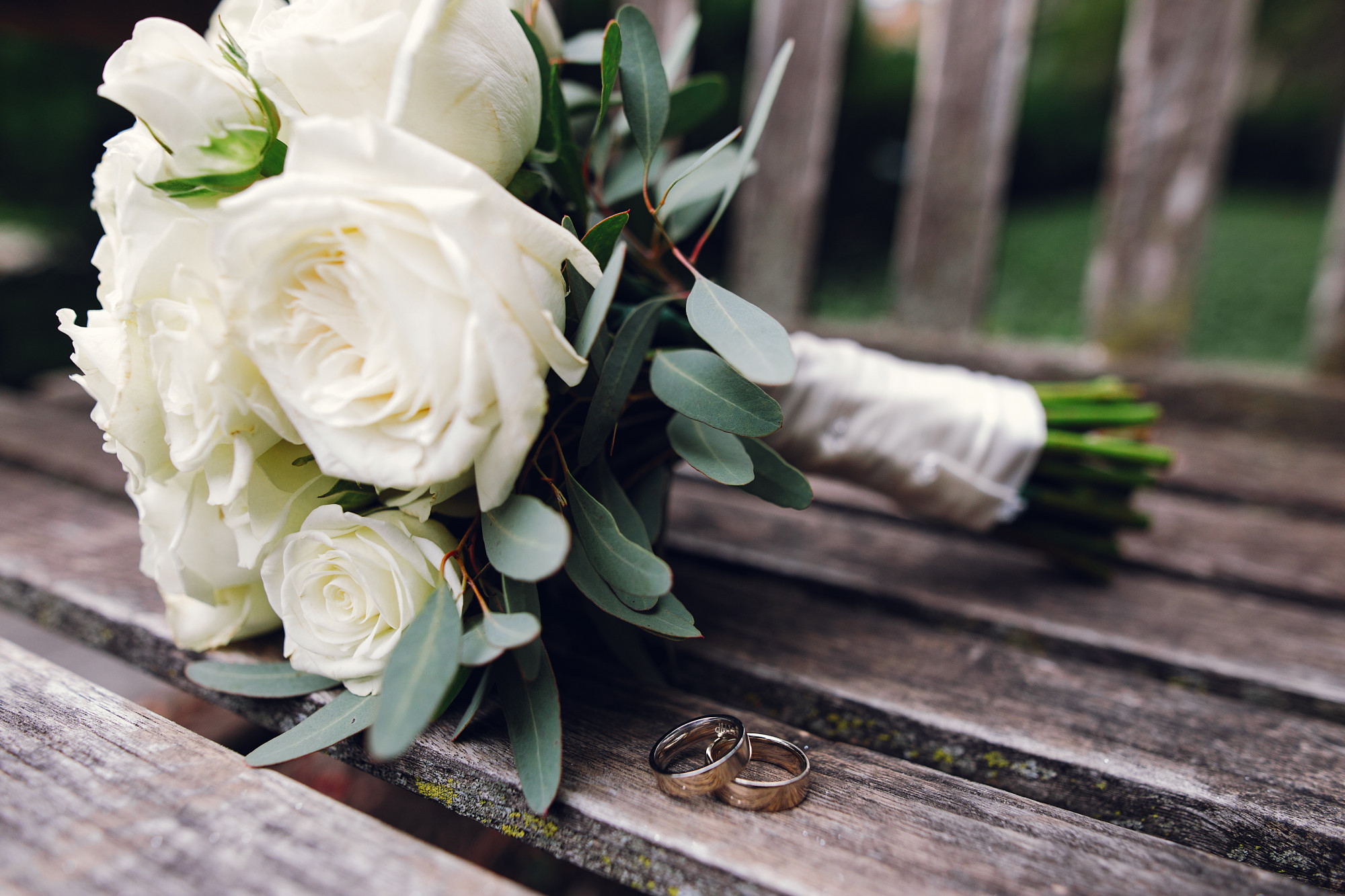
I watched it turn, slow, the white roses and the trailing satin ribbon, up and over.
And it came down, soft as a landing bird, right into Mia’s lap.
Right into her lap.
The room made that sound a room makes — that “awww,” that collective breath, that sweetness. Mia looked down at the flowers in her lap and her whole face — I have never seen anything like it, before or since — her whole face broke open with pure, undiluted joy. Her mouth fell open. Her hands came up. She looked up at me, and she looked up at Claire, and she was laughing, this delighted, disbelieving laugh, and she reached down for the satin ribbon—
And Donna hit her like a linebacker.
I didn’t even see her coming. She lunged out of the crowd from the side, and she grabbed the bouquet out of my daughter’s lap, and her hip caught the arm of the wheelchair so hard that the whole chair rocked up onto one wheel.
Mia tipped. She tipped sideways, a small cry catching in her throat, her hands flying out to grab something that wasn’t there.
I got the handles. I don’t know how. I was three feet away and somehow I had my hands on the handles and I hauled the chair back down onto four wheels before my daughter hit the floor. She jolted against the seat. Her curls bounced. And she sat there, breathing hard, staring at the empty space in her lap where the flowers had been one second ago.
And Donna stood in the middle of that dance floor and raised the bouquet over her head with both hands like she’d won an Olympic medal.
“Looks like I won!” she crowed.
The music was still playing but nobody was dancing. Nobody was making a sound. The whole room had gone dead silent except for that awful tinny beat still coming out of the speakers, and my sister, standing there grinning, holding a bunch of flowers she’d ripped out of a paralyzed child’s hands.
I don’t remember deciding to move. I just found myself in front of her.
“What is wrong with you?” My voice didn’t even sound like mine. “Claire wanted Mia to have those. You knew it. Everybody in this room knew it. What is wrong with you?”
Donna rolled her eyes. Rolled her eyes, with her sister’s whole face burning in front of her.
“Oh, please,” she said, and she said it loud, loud enough for the tables to hear. She actually turned a little so more of the room could hear. “Don’t be so dramatic. Why does she even need a bridal bouquet?”
And then she said the thing.
The thing I will hear in my nightmares until the day I die.
She looked down at my daughter, my Mia, sitting there in her lavender dress with tears starting in her eyes, and she said, loud and clear and cruel:
“She can’t even walk down an aisle. Do you honestly think any man is ever going to marry her?”
Somebody gasped. An actual gasp, from a table near us. Somewhere across the room a fork hit a plate with a sharp little clink and the sound of it seemed enormous in the silence.
And Mia heard it.
Of course she heard it. She was right there. She heard every word.
I watched it land on her. I watched that beautiful, joyful face that had broken open with happiness ten seconds ago break open a different way. Her chin trembled. The tears that had been gathering spilled over and ran down both cheeks. She stared down at her empty lap, at her own useless legs under the lavender skirt, and she made herself small, so small, tucking into herself the way she used to, trying to disappear.
Something in me went white-hot. I opened my mouth to unleash two years of grief and rage on my sister right there in the middle of Claire’s wedding, consequences be damned.
But I never got the chance.
Because Mia moved.
I felt it before I saw it — the chair shifting under my hands. My daughter, who had just been crumpling in on herself, wiped both cheeks hard with the backs of her small hands. Once, twice. She sniffed. She sat up straight. And she reached down and locked the brakes on her chair with a firm, deliberate click I heard in the silence.
Then she put her hands to the wheels, and she turned herself, and she rolled away from Donna — away from all of us — straight across that silent dance floor toward the DJ’s table.
Nobody moved. Nobody breathed. We all just watched this ten-year-old girl in a lavender dress wheel herself calmly across the floor, curls still bouncing, cheeks still wet.
She stopped in front of the DJ. He was a young guy, and he was staring at her with his mouth slightly open like the rest of us.
“Excuse me,” Mia said, and her voice was small but it was steady. “May I please borrow your microphone?”
The DJ looked at Claire. Claire — who had one hand pressed over her mouth, tears streaming down her own face — nodded quickly.
He handed Mia the microphone.
She held it in both hands. I could see them trembling. This tiny girl, in front of two hundred people, holding a microphone that seemed almost too big for her hands. My heart was pounding so hard I thought I might faint. I wanted to run to her, to protect her, to take her out of that room where a grown woman had just told her she was unlovable.
But something told me to stand still. Something told me this was hers.
Mia turned her chair to face Donna.
“Dear Aunt Donna,” she said.
Her voice came through the speakers, high and clear and shaking just slightly, filling that whole enormous silent ballroom.
“I’ve wanted to tell you something for a long time. Something really important that I think you forgot.”
Donna stood there with the bouquet still in her hand, and I watched a flicker of uncertainty cross her face. She hadn’t expected this. None of us had.
Mia took a breath.
“You said no man is ever going to marry me because I can’t walk down an aisle,” she said. “But you’re wrong. And I’m going to tell you why.”
The room was so quiet I could hear the chandeliers humming.
“My mom told me that when she married my dad, it wasn’t because he liked how she walked.” A small, broken laugh moved through the crowd. “It was because he thought she was the kindest person he ever met. And the funniest. And the smartest. She said the walking-down-the-aisle part took about twenty seconds. But the being-kind part, that’s the part that made him stay.”
I put my hand over my mouth. I had told her that. Months ago. On one of her worst nights, when she’d asked me through her tears if anyone would ever love a girl who couldn’t walk. I’d told her about her father, about our wedding, about how none of the parts that mattered had anything to do with legs. I didn’t know she’d kept it. I didn’t know she’d been holding it inside her all this time like a stone in her pocket, waiting.
“So here’s the important thing you forgot, Aunt Donna,” Mia said. And she lifted her chin. “It was never about the flowers. And it was never about walking.”
She looked out at the room, at all those still faces.
“You’ve caught a lot of bouquets,” she said, turning back to Donna. “My mom says you’ve been trying your whole life. But you’re still not married. And I used to wonder why. But now I think I finally understand it.”
She paused. The whole room leaned in.
“It’s not because you never caught the flowers,” Mia said, gently, almost sadly, the way you’d explain something to a person you felt sorry for. “It’s because of what you just did. You saw a kid in a wheelchair who was happy for one single second, and you couldn’t stand it. You had to take it. And a person who does that—” her voice caught, but she pushed through it, “—a person who takes happiness away from a little kid just so they can have it instead — that’s not a person somebody wants to marry, Aunt Donna. The flowers were never the problem. Your heart is.”
A sound went through the room. Not a gasp this time. Something warmer. Somewhere, one person started to clap.
Then another.
Then a whole table.
“My legs don’t work,” Mia said, and now she was crying again, but she was smiling through it, this fierce, shining smile, “and I used to think that made me broken. I used to call myself the broken girl. I thought nobody would ever love me. I thought I should just disappear.”
She shook her head.
“But I’m not the broken one in this room. I can’t walk. But I would never, ever do what you just did. Not to anybody. And that means my heart works just fine.”
She held the bouquet-shaped emptiness in her lap, but her hands were open, palms up, like she was holding something anyway.
“So you can keep the flowers,” she said. “I don’t need them. I already know I’m going to be loved. My mom loves me. Claire loves me. Everybody in this room just saw who I am and who you are. And someday, some man is going to think I’m the kindest, funniest, smartest person he ever met, and he is going to be so happy to marry me, wheelchair and all. And I hope, I really hope, that someday somebody sees something good in you too, Aunt Donna. But you’re going to have to grow it first. Because right now, there’s nothing there to catch.”
And the room came apart.
I have never heard anything like it. Two hundred people rose to their feet at once — chairs scraping back, napkins falling, a wave of them standing up all across that ballroom — and they clapped, and they cheered, and some of them were crying, and the sound of it filled that hall and rolled up into the chandeliers and shook the whole place.
For my daughter.
For my Mia.
The broken girl, they’d stood up for. The broken girl, they were roaring for. She sat there in the middle of that thunder in her lavender dress with the tears running down her face and her chin up, and she looked — I’m not exaggerating, I will swear to it forever — she looked like a queen. Exactly like Claire had promised. Exactly like the queen of the whole wedding.
And Donna.
Donna stood alone in the middle of the dance floor, holding those stupid flowers, and her face turned red, and then a deeper red, and she looked around the room for one single ally, one person clapping for her, and there was no one. Not one person. Even the women she’d been standing next to had stepped away from her, had turned toward Mia, were clapping for a ten-year-old who had just, in front of everyone, said the truest thing anybody had ever said about Donna in her whole life.
She dropped the bouquet.
It just fell out of her hands onto the floor. And she turned, and she walked — fast, then faster — out of the ballroom, past the tables, out the big doors into the garden, and she didn’t come back.
I found out later she’d left the wedding entirely. Called a cab and went home. Didn’t say goodbye to anyone.
Claire crossed the dance floor before Donna was even out the door. She scooped up her own bouquet off the ground, and she knelt down next to Mia’s chair, and she put those flowers back in my daughter’s lap where they’d been in the first place, and she wrapped her arms around her and held her while the whole room kept cheering.
“They’re yours,” I heard Claire say into Mia’s hair. “They were always yours. Nobody’s ever taking them from you again.”
And then Claire did something. She stood back up, and she took the microphone that Mia was still holding, and she said to the whole room, her voice thick:
“Everybody. I want you to meet my cousin Mia. She is the bravest person I have ever known in my entire life, and I am honored — honored — that she came to my wedding. Mia, honey—” and here Claire’s voice broke completely, “—when you get married someday, and you will, I am going to be in the front row bawling my eyes out. And I already know it’s going to be the most beautiful wedding any of us has ever seen.”
The room went up again.
And Mia laughed — that laugh, that real one, the mailbox-race laugh I hadn’t heard in two years — and it came through the speakers and out into the room, and I stood there and sobbed like a child, because my daughter was back. My daughter was back, and she was more than she’d ever been, more than the accident, more than the chair, more than any of the small broken words a small broken woman had tried to bury her under.
We danced that night. Or — Mia danced, in her way, spinning her chair in circles on the dance floor while Claire and her friends danced around her, everyone laughing, the DJ playing every song Mia requested. She had the bouquet tucked into the side of her chair the whole time. She wouldn’t let it go.
On the drive home, she was quiet in the back seat, watching the streetlights go by, holding those white roses in her lap.
“Mom?” she said.
“Yeah, baby?”
“Do you think Aunt Donna’s okay?”
I looked at her in the rearview mirror. After everything Donna had done, my girl’s first quiet thought in the dark was whether the woman was okay.
That’s who Mia is. That’s who she’s always been. It just took a wedding, and a cruel woman, and a borrowed microphone, for her to remember it.
“I think Aunt Donna has a lot of growing to do,” I said. “Just like you told her. And I think that’s up to her now.”
Mia nodded slowly. Then she looked down at the bouquet.
“I meant what I said,” she told me. “About getting married someday. I really believe it now. I didn’t used to. But I do now.”
“I know you do, baby.”
“Because it was never about the walking,” she said, mostly to herself, touching one of the roses. “It was about the heart part.”
“That’s right.”
She was quiet a moment more. Then, softly: “I don’t think I’m the broken girl anymore, Mom.”
I had to pull over. I couldn’t drive and cry that hard at the same time. I pulled onto the shoulder and I put the car in park and I turned around in my seat and I reached back and took my daughter’s face in my hands, the same way I had that day on the floor when she’d first said those terrible words about herself.
“You were never broken,” I told her. “Not for one single second. Do you hear me? The world just took a while to see what I always saw. And tonight, they finally saw it. Two hundred people stood up, Mia. They stood up for you.”
“They did, didn’t they,” she said, and she smiled, wet and wobbly and radiant.
“They did.”
I want to tell you what happened after, because a night like that could have been just a night — a beautiful moment that faded by Monday. But it wasn’t. Something changed in Mia at that wedding and it never changed back.
She started going out again. First small things — the store, the park, a movie. Then bigger things. She joined a wheelchair basketball league in the city, forty-five minutes away, and I drove her every Saturday and watched her get fierce and fast and strong, watched her make friends with a dozen other kids who understood, watched her laugh with them in a way that had no shame in it anywhere.
She went back to school like a different kid. When the girl named Presley asked her something rude again that fall, I heard Mia told her, calm as anything, “My legs don’t work, but my brain does great, thanks for asking.” And apparently the whole class laughed — with Mia, not at her — and after that, somehow, Mia was one of the popular ones. Kids wanted to sit with her. The chair stopped being the thing they saw. She made it stop.
She wrote a speech that year for a school assembly. Stood up in front of the whole school in her chair with a microphone — she wasn’t scared of microphones anymore, not after Claire’s wedding — and she talked about the accident, and the wheelchair, and the difference between a body that doesn’t work and a person who’s broken. Her teacher told me later there wasn’t a dry eye in the gym. They gave her a standing ovation.
Two standing ovations now, my girl. She was collecting them.
Claire had that baby the following spring, a little girl, and she named Mia the godmother. Mia takes it more seriously than anything in her life. She’s saving up, she told me, to buy that baby the best birthday present anyone’s ever gotten, when she’s old enough. She’s ten going on eleven and she’s already planning to be the greatest godmother in history.
And Donna.
I’ll tell you about Donna, because people always ask, and the truth is more complicated than the story wants it to be.
Donna didn’t speak to me for almost a year. She told the family her version — that Mia had “humiliated” her at the wedding, that we’d turned everyone against her, that she was the real victim. Some of the family believed her, for a while. Donna’s always been good at finding people who’ll believe her.
But something happened, over that year. I think — and I can’t prove this, but I believe it — I think what Mia said got into her. A ten-year-old had stood up in front of two hundred people and named the exact broken thing in Donna’s heart, gently, sadly, and told her she’d have to grow something new before anybody could catch it. And I think, in the long quiet after, when all her allies had drifted away and the story had stopped being interesting to anyone, Donna sat alone with those words.
She called me about a year later. Late, the way she always called. But she wasn’t furious this time. She was quiet. She cried. She said she’d been thinking about the wedding every day. She said she didn’t know why she did it, that she’d been so full of wanting-something and hating that a little kid had it, and that she was so ashamed she could barely say it out loud.
She asked if she could apologize to Mia.
I said that was up to Mia.
I told Mia about the call. I told her she didn’t have to say yes. That nobody would think less of her for saying no, after what Donna had done.
Mia thought about it for a whole day. Then she said, “I’ll see her. Because I told her I hoped somebody would see something good in her someday. And I can’t say that and then not give her the chance to grow it.”
Ten years old.
So Donna came over. And she sat down across from my daughter, and she cried, and she said she was sorry, really sorry, for the flowers and for what she’d said and for who she’d been. And Mia listened, and when Donna was done, Mia reached out and took her aunt’s hand and said, “Thank you for growing. I knew you could.”
It’s not a fairy tale. Donna and I are not close, even now. Some things don’t fully heal. But she’s better than she was. She comes to Mia’s basketball games sometimes. She sits in the stands and cheers, and I’ve caught her crying more than once, watching my daughter fly down the court.
She never did catch another bouquet, as far as I know. But I don’t think she’s looking for them anymore. I think she finally understood it was never about the flowers.
It was about the heart part.
Mia’s fifteen now. She still can’t walk. That never changed, and I’ve made my peace with the truth that it probably never will. But if you met her, the wheelchair would be about the tenth thing you’d notice, if you noticed it at all. You’d notice the way she talks, fast and funny, three stories deep before you’ve caught the first one. You’d notice the way a room turns toward her. You’d notice that she is, without question, the kindest and the funniest and the smartest person you’re likely to meet.
Some boy is going to notice all of that someday. And when he does, when he sees her, I already know Claire’s going to be in the front row bawling her eyes out, just like she promised. And so will I.
But that’s years away, and it’s Mia’s to tell, not mine.
What’s mine to tell is this. There was a girl who thought she was broken. Who tried to disappear. And one night, a cheap and hurting woman tried to bury her under six cruel words in front of two hundred people.
And instead of breaking, my daughter borrowed a microphone.
And she stood up — in the only way she’ll ever stand, which turned out to be the tallest way I’ve ever seen anybody stand — and she made the whole room rise to its feet.
I still think about those mailbox races. I still miss them. I’d be lying if I said I didn’t.
But I don’t grieve them the way I used to. Because I know now what I didn’t know then, sitting in that parking garage, coming apart where nobody could see.
My girl never needed her legs to run.
She just needed to remember she was never the broken one.
And she remembered. With a borrowed microphone, in a lavender dress, in front of everyone.
She remembered out loud.

Adrian Hawthorne is a celebrated author and dedicated archivist who finds inspiration in the hidden stories of the past. Educated at Oxford, he now works at the National Archives, where preserving history fuels his evocative writing. Balancing archival precision with creative storytelling, Adrian founded the Hawthorne Institute of Literary Arts to mentor emerging writers and honor the timeless art of narrative.