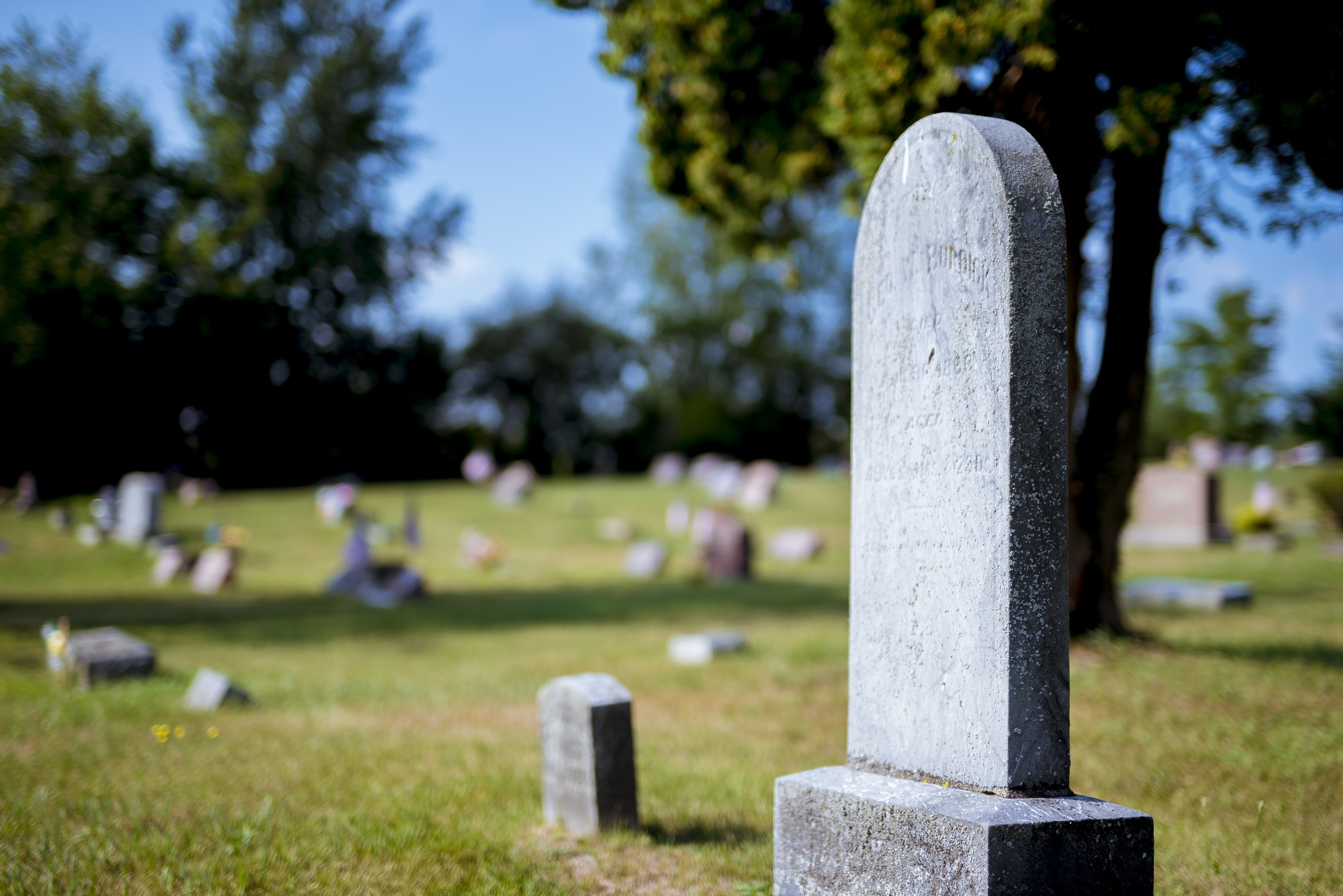
The Grave with My Name on It
My name was on the headstone.
Not a name like mine. Not something close. My name. Jesica Eleanor Hale. Spelled with one “s,” the way my mother always insisted on spelling it, the way that made every teacher and every barista get it wrong for twenty-eight years.
Under it was my birth date. March 14, 1998.
And under that, carved a little smaller, was the date I died.
March 17, 1998.
Three days.
I stood there on the wet grass in my black funeral dress, holding a program with my best friend’s face printed on the front, and I read it again. Then again. My brain kept trying to make it into something else. A cousin. A coincidence. A joke. But the stone didn’t change. It just sat there, gray and old and patient, with a little ring of moss creeping along the bottom edge.
Beneath the dates, there was one more line.
Held for three days. Loved forever.
My hands were cold. Not cold like a chilly morning. Cold like someone had opened a door inside me and let the winter in.
I took out my phone. My fingers were shaking so badly that the first picture came out blurry. I took another one. And another. I didn’t know why. I think some part of me already knew nobody was going to believe me. Maybe I wasn’t going to believe me either, once I got back to my car.
There were white roses lying at the base of the stone. Old ones, dried and brown at the edges, but still holding their shape. Someone had put them there. Someone came here.
Behind me, far off, I could hear car doors closing. People leaving Jason’s burial. Someone laughing softly, the way people do at funerals when they’re too tired to cry anymore.
I should explain how I ended up there.
Jason Reyes died on a Tuesday night on Route 9, when a pickup truck crossed the center line and hit him head-on. He was thirty. He was on his way home from an emergency surgery on a golden retriever that had swallowed a corn cob. The dog lived. Jason didn’t.
We met in our first year of vet school. He sat next to me in anatomy lab and said, “You look like you’ve never touched a dead thing in your life.”
“I haven’t,” I said.
“Rich girl?”
I didn’t answer, and he laughed. Not in a mean way. In a way that said, Okay. I see you. We’re still going to be friends.
And we were. For nine years. He was the one who helped me move into my first tiny apartment, the one with the broken radiator. He was the one who sat with me in the parking lot the day my father told me I was “throwing my life away on cats and cows.” He was the one who told me, over cheap beer, “Life’s too short to live the one somebody else picked out for you, Jess.”
At the funeral, his mother held my face in both hands and said, “He talked about you all the time. You know that?”
I nodded because I couldn’t talk.
After they lowered him down, I couldn’t stand being near the crowd anymore. Everyone was saying the same soft things. He’s in a better place. At least it was quick. I wanted to scream at all of them. So I walked the other way, up the hill, into the old part of the cemetery where the trees were bigger and the stones were leaning and nobody went anymore.
That’s where I found her.
Me.
Whoever she was.
I don’t remember walking back to my car. I just remember sitting in it, keys in my hand, not starting the engine.
The program with Jason’s face was on the passenger seat. I looked at it and thought, He’d know what to do. And then I thought, No. He’d tell me to go ask.
So I did.
I didn’t call first. I didn’t text. I didn’t think about what I was going to say. I just drove. Forty minutes into the city, running two yellow lights and one that was definitely red. I parked in the fire lane in front of Hale Holdings, the glass tower my grandfather built and my father made bigger.
The security guard at the front desk knew me. He’d known me since I was six and used to hide under the lobby benches.
“Miss Hale,” he said, standing up. “Is everything—”
I walked past him into the elevator.
Thirty-second floor. The doors opened onto thick gray carpet and quiet music and the smell of expensive coffee. My father’s assistant, Diane, looked up from her desk and her face changed.
“Jesica? Honey, he’s in the middle of—”
I didn’t stop.
“Jesica, wait, the board is—”
I pushed the door open.
The whole room turned to look at me.
There were maybe fifteen people around the long table. Men in suits, a few women in suits, glasses of water in front of each of them, a big screen at the far end showing a chart with a line going up. I recognized some of them. Martin Crane, my father’s business partner and my godfather, was sitting on the right side with his reading glasses pushed up on his head. Mrs. Aldridge from the bank. Two of the Pierce brothers.
And at the head of the table, standing, holding a little black clicker, was my father.
Richard Hale. Sixty-three years old. Silver hair, perfect suit, the posture of a man who had never once in his life slouched. He stopped mid-sentence and looked at me like I was a stain on the carpet.
“Jesica,” he said. Calm. Very calm. “We’re in a meeting.”
I walked right up to him. I could feel everyone watching. I could hear my own shoes on the carpet. I took out my phone, pulled up the photo, and slapped it down on the table in front of him, hard enough that someone’s water glass rattled.
“What does this mean?!”
My voice came out so loud it surprised even me. It cut through that room like a dropped plate.
Nobody moved.
My father looked down at the phone.
I’ve seen my father angry. I’ve seen him cold. I’ve seen him bored, which was somehow worse than angry. But I had never, not once in my life, seen him scared.
His face went white. Not pale. White. Like the blood just drained out of it all at once. His hand, the one holding the clicker, started to shake, and he put the clicker down very carefully, like he was afraid he’d drop it.
He didn’t pick up the phone. He just stared at it.
“Richard?” Martin said quietly.
My father didn’t answer him.
“Dad,” I said. “Look at me. Whose grave is that?”
He lifted his eyes to mine. For a second, just one second, I saw something in them I didn’t understand. Something like grief. Something like guilt.
Then it was gone, and the wall came back up.
“Everyone out,” he said.
“Richard, we still have the—”
“Out. Please.” He didn’t raise his voice. He never had to. “We’ll reschedule. Diane will call you.”
Chairs scraped. People gathered their folders. A few of them glanced at me on their way out, curious, a little annoyed. Mrs. Aldridge touched my arm as she passed, and I pulled away without meaning to.
Martin was the last one to go. He stopped at the door and looked back at my father. Something passed between them. A look. The kind of look two people give each other when they share something nobody else knows.
Then he closed the door.
It was just the two of us. The big screen was still glowing with that chart. Somewhere down the hall, a phone was ringing.
“Sit down,” my father said.
“I don’t want to sit down.”
“Jesica.”
“I was at Jason’s funeral,” I said. My voice cracked on his name, and I hated that. “I was walking back to my car, and I found a grave with my name on it. My full name. My birthday. And it says I died three days later. So I don’t want to sit down. I want you to tell me what that is.”
He picked up my phone. He looked at the photo for a long time. He used two fingers to zoom in on the words at the bottom. Held for three days. Loved forever.
He put the phone down on the table, face down.
“It’s a family matter,” he said. “An old one. It has nothing to do with you.”
I actually laughed. It came out ugly. “It has my name on it.”
“It’s a name that was used before. In the family. It’s complicated.”
“Then uncomplicate it.”
He walked over to the window. The whole city was spread out below him, gray and shining. He put his hands in his pockets.
“Your mother and I,” he said slowly, “had some difficulties. Before you were born. It was a very painful time. I don’t want to talk about it here, and I don’t want to talk about it today.”
“Did Mom have another baby?”
He didn’t answer.
“Dad. Did Mom have a baby that died? Did I have a sister?”
“Go home, Jesica.”
“Did I have a twin?”
He turned around. His face was completely controlled again. The businessman face. The one he used on reporters.
“I said go home. You’ve had a terrible day. You buried your friend. You’re not thinking clearly. I’ll come by later this week and we’ll talk about it properly.”
“You’re lying to me.”
“I’m asking you to leave my office.”
“The birth date is the same,” I said. “Not close. The same. How is that a family matter that has nothing to do with me?”
He looked at me for a long moment. Then he walked back to the table, picked up the clicker, and set it straight, parallel to the edge of the wood. Like the conversation was over. Like I was a meeting that had run too long.
“Please,” he said quietly. “Not today.”
It was the please that got me. My father never said please to me. Not when I was a kid. Not ever.
I grabbed my phone and walked out. I didn’t slam the door. I wanted to. I closed it very softly, and somehow that felt worse.
Diane stood up as I passed. “Jesica, are you all right?”
“I’m fine,” I said.
I was not fine.
Growing up a Hale meant a lot of things, but mostly it meant being looked at.
People looked at me at charity galas to see if I was pretty enough. They looked at me at country club lunches to see if I was polite enough. They looked at me at my father’s business dinners to see if I was smart enough, or quiet enough, or grateful enough. And the whole time, I could feel them deciding that I wasn’t. That something was a little off. A little wrong.
I was never the daughter my parents seemed to be expecting.
When I was eight, there was a Christmas party at our house. Two hundred guests. A string quartet in the front hall. My mother had bought me a velvet dress the color of wine, and I was supposed to stand next to her at the door and say, “Merry Christmas, thank you for coming,” to every single person.
I lasted forty minutes.
Then I heard a sound from the garage. A thin, high sound. I slipped away and found a stray cat hiding behind the recycling bins, soaking wet from the snow, with a cut on her back leg. I wrapped her in the velvet dress. I didn’t even think about it. I just took it off, stood there shivering in my tights and undershirt, and wrapped her up.
My father found me like that. Sitting on the cold concrete floor, holding a bleeding cat inside a four-hundred-dollar dress.
He didn’t yell. He just looked at me for a long time. And then he said something I have never forgotten.
“Why can’t you just be what you’re supposed to be?”
I didn’t know what that meant. I was eight. I didn’t know what I was supposed to be. I only knew I wasn’t it.
My mother took the cat to a shelter the next morning. I cried for a week. Nobody asked me why.
It went like that for years. Riding lessons, where I cared more about brushing the horses than riding them. Etiquette classes, where I once got sent out for asking the instructor if she knew what her dog’s teeth looked like, because her breath smelled like a dog with gum disease. Business camps. Debutante things. Summer internships at Hale Holdings where I sat in a glass office sorting papers and staring at the pigeons on the ledge outside.
When I was seventeen, I told my parents I wanted to be a veterinarian.
We were at dinner. The long table in the dining room, the one that could seat twenty, with just the three of us at one end. My mother put down her fork. My father kept cutting his steak.
“That’s a hobby,” he said, “not a career.”
“It’s a medical degree.”
“For animals.”
“Yes. For animals.”
He finished chewing. He dabbed his mouth with his napkin. “You’ll go to Wharton, like I did. You’ll get your MBA. You’ll join the company. In ten years, you’ll run a division. In twenty, you’ll run all of it. That’s what this family has been building for three generations, Jesica. That’s what it’s for.”
“What if I don’t want it?”
“You don’t know what you want. You’re seventeen.”
“Richard,” my mother said softly.
“No, Eleanor. She needs to hear this.” He looked right at me. “I did not build all this so my only child could spend her life giving shots to poodles.”
My only child.
I remember that phrase now. I remember how he said it. Heavy. Like it cost him something to say.
I didn’t go to Wharton. I went to state school on scholarships and loans because he refused to pay. I worked weekends at a kennel cleaning cages. I lived on rice and eggs. My mother slipped me checks sometimes, folded inside birthday cards, with notes that said Don’t tell your father. My father didn’t speak to me for almost two years.
And then I met Jason in anatomy lab, and for the first time in my life, somebody looked at me and didn’t decide I was broken.
That night, I sat on my kitchen floor with my back against the cabinets and my dog Moose’s head in my lap.
Moose is a hundred-pound mutt with one ear that stands up and one that flops over. Somebody left him tied to a fence outside my clinic three years ago. He had mange and a broken tooth and he was so scared he peed every time someone raised a hand. Now he sleeps on my bed and snores like a truck.
I kept looking at the photo on my phone. I zoomed in on the dates. I zoomed in on the roses. I zoomed in on the little line at the bottom until the letters turned into blocks of gray.
Held for three days. Loved forever.
Around eleven, I got up and pulled my folder of important papers out of the closet. Passport. Car title. Lease. And my birth certificate. I’d needed it for my vet license. I’d looked at it a hundred times without really seeing it.
Jesica Eleanor Hale. Born March 14, 1998. St. Mary’s Hospital. Mother: Eleanor Margaret Hale. Father: Richard James Hale.
Everything looked normal. Official. Stamped.
Attending physician: Dr. Samuel Whitlock.
I knew that name. Dr. Whitlock had been our family doctor my whole childhood. He had a white mustache and he kept butterscotch candies in his coat pocket. He’d retired years ago.
I sat with that paper in my hands for a long time.
At some point, I picked up my phone and almost called Jason. My thumb was actually on his name before I remembered.
I put the phone down. Moose whined and pushed his big head under my arm.
“I know, buddy,” I said. “I know.”
Then I did something I hadn’t done in months. I called my mother.
She picked up on the third ring. “Jesica? It’s late, sweetheart. Is everything all right?”
I could hear the television in the background. Some old movie. I could picture her in the sitting room in her robe, reading glasses on, a cup of chamomile tea going cold on the side table. She drank the same tea every night of my life.
“I’m okay,” I said. “I just wanted to hear your voice.”
“Oh, honey. Is this about Jason? I’m so sorry I couldn’t make it today. Your father said you were there. He said you were very upset.”
So he’d talked to her. I wondered what he’d told her.
“What did Dad say?”
“Just that you came by the office. That you were grieving.” She sighed. “He was very quiet at dinner. I think he felt badly for you.”
She didn’t know. I could hear it. She didn’t sound guarded or nervous. She just sounded like my mother. Tired and a little sad and a little distant, the way she always was.
“Mom,” I said. “Can I ask you something weird?”
“Of course.”
I opened my mouth. The question was right there. Did you have another baby? Did you have a daughter who died?
But I thought about the way my father had looked at that phone. The way his whole face had gone white. And something stopped me.
“What was I like? When I was a baby?”
She was quiet for a moment. “You were very small,” she said finally. “And you cried a lot. I wasn’t very well after you were born, honey. I don’t remember much of those first weeks. I was in the hospital for a while. Your father took care of everything.”
“You were sick?”
“There were complications. I lost a lot of blood. They kept me sedated for a few days.” She laughed a little. “When I woke up, there you were. Your father was holding you. He looked so tired. I’d never seen him look so tired.”
My heart was pounding so hard I could feel it in my throat.
“Why are you asking about this, sweetheart?”
“No reason,” I said. “Just thinking about family. Because of Jason.”
“Well. Get some sleep. Come for dinner Sunday? Your father would like that, I think. Even if he’d never say so.”
“Maybe,” I said. “Goodnight, Mom.”
After she hung up, I sat there in the dark kitchen for a long time.
They kept me sedated for a few days.
When I woke up, there you were.
I didn’t go to work the next morning. I called my clinic manager, Priya, and told her I needed a personal day. She didn’t ask questions. She knew about Jason.
Instead, I drove back to the cemetery.
In daylight, the old section looked different. Less spooky. Just old. Crooked stones, big oak trees, a wrought-iron fence with rust eating through the bars. I found the grave again easily. I think I would have found it with my eyes closed.
The dried white roses were still there.
I crouched down and looked at them closely. They weren’t from last week. They were from months ago. Maybe from the spring.
Maybe from March.
“You family?”
I nearly fell over. A man was standing a few rows away, leaning on a rake. Old, thin, wearing a green work jacket with a patch on it that said Walt. He had a face like a walnut and very kind eyes.
“Sorry,” he said. “Didn’t mean to scare you.”
“It’s okay.” I stood up and brushed off my knees. “I’m… yes. Maybe. I don’t know.”
He walked over slowly and looked at the stone. Then he looked at me. Then he looked at the stone again. I saw him read the name. I saw him do the math.
“Huh,” he said.
“Do you know anything about this grave?”
He scratched his chin. “Been working here thirty-one years. I know most of ’em. This one’s a Hale plot. Old family section. Your people?”
“My people,” I said.
“Well.” He leaned on his rake. “I’ll tell you what I know, which ain’t much. Somebody comes every year. Same day. Middle of March. Brings white roses. A dozen. Always a dozen.”
“Who?”
“A man. Older fella. Nice coat. Comes early, before the gates are really supposed to be open. I let him in anyway.” He shrugged. “Seemed like a man who needed to be let in.”
My mouth was dry. “What does he look like?”
“Tall. Gray hair. Stands up very straight. Doesn’t say much. Just sits on that bench over there for about an hour and then leaves.” He pointed. There was a stone bench under the nearest oak tree, half covered in leaves. “Once, maybe ten, twelve years back, I came by and he was crying. Didn’t want to bother him. Just kept raking.”
I had to put my hand on the top of the headstone to steady myself.
“You all right, miss?”
“What day?” I asked. “What day in March?”
He nodded at the stone. “That day. The seventeenth. Never misses.”
Every year of my life, my father went away on a business trip in the middle of March.
I’d never thought about it. It was just a thing that happened. Dad was gone for a day or two, sometimes three, and then he came back. My birthday was March 14th, and he was always there for that. There was always a dinner. Always a cake from the French bakery. Always an expensive present that had obviously been picked out by Diane.
But on the 17th, he was always gone.
When I was twelve, I asked my mother where he went. She said, “Oh, it’s the Chicago meeting. It’s been on his calendar forever.” When I was sixteen, I heard him on the phone telling Martin, “Clear my morning on the seventeenth. You know why.” And Martin said something I couldn’t hear, and my father said, “Thank you.”
I’d forgotten that. I’d forgotten all of it. It was just background noise. The kind of thing you don’t notice until suddenly it’s the only thing you can hear.
I sat on the stone bench under the oak tree, where my father apparently sat every year, and I cried. Not neatly. Ugly, gasping crying, the kind that makes your face hurt. Walt stayed a polite distance away and kept raking, the same way he said he did for my father.
When I finally stopped, he walked over and held out a folded handkerchief. An actual cloth handkerchief.
“It’s clean,” he said.
I laughed through my tears and took it. “Thank you.”
“Whatever it is,” he said, “it’s been sitting here a long time. It can wait a little longer while you catch your breath.”
Dr. Samuel Whitlock lived in a small yellow house by the lake, about an hour north of the city. It took me twenty minutes of searching online and three phone calls to old family friends to find the address.
When he opened the door, I almost didn’t recognize him. The white mustache was the same, but he was thin now, and bent, and he walked with a cane. He looked at me through thick glasses for a long moment.
Then his face fell.
He knew. He knew before I said a single word.
“Jesica,” he said.
“Hi, Dr. Whitlock.”
He closed his eyes. “I always wondered if this day would come.”
He let me in. His house smelled like old books and burnt toast. There was a cat asleep on the radiator, a gray tabby with a crooked tail. Out of habit, I noticed she was a little overweight and her coat looked dry. I almost said something. Then I didn’t.
He lowered himself into an armchair. I sat on the edge of the couch across from him.
“I found the grave,” I said.
He nodded slowly.
“Please,” I said. “My father won’t tell me. My mother doesn’t know anything. I think. I just need someone to tell me the truth. I don’t care how bad it is.”
He looked at his hands for a long time. They were spotted and shaking.
“I made a promise to your father,” he said. “A long time ago. I was a younger man. I thought I was doing something kind.”
“Dr. Whitlock.”
“I know.” He took off his glasses and rubbed his eyes. “I know. You have a right. God knows you have a right.”
He put his glasses back on and looked at me.
“Your mother gave birth to a baby girl on March 14th, 1998,” he said. “Seven pounds, one ounce. Dark hair. Beautiful. Everyone said so. But there was something wrong with her heart. A defect. We knew within hours. We tried everything. We brought in the best specialist in the state. But it was too much. She was too small.”
My throat was so tight I couldn’t swallow.
“She lived three days,” he said. “Your father held her for almost all of them. He wouldn’t put her down. The nurses tried to make him rest, and he wouldn’t. He just sat in that chair by the window and held her and talked to her. I don’t know what he said. I never asked.”
“And my mother?”
“Your mother hemorrhaged during the delivery. Badly. We almost lost her too. She was unconscious for most of the first day, and after that, we kept her heavily sedated. She was very fragile. Physically and in other ways. She had lost a pregnancy the year before. And one before that.” He paused. “The baby was the thing she was holding onto. We were very worried about what would happen to her if she woke up and found out.”
I understood before he said it. But I needed him to say it.
“The baby died on the seventeenth,” he said. “Your mother didn’t know. And your father came to me that night. He was out of his mind. He said, ‘She won’t survive this, Sam. You know she won’t.’ And I did know. I’d seen her after the last miscarriage. I’d seen what it did to her.”
“So what did you do?”
He was quiet for a long moment.
“There was a girl,” he said. “On the maternity floor. Two doors down. She’d given birth on the sixteenth. She was nineteen. Alone. Her family had a little farm up north and they’d more or less thrown her out when she got pregnant. The father was gone. She’d already talked to a social worker about adoption. She was going to sign the papers in a few days.”
I was holding the arm of the couch so hard my fingers hurt.
“Your father went and talked to her,” he said. “I don’t know everything he said. I know he offered to pay for everything. Her hospital bills. School, if she wanted it. A place to live. And I know that, at the end, she agreed. She signed a private adoption agreement that your father’s lawyers drew up that same night.”
“And the birth certificate?”
He looked away.
“I signed it,” he said. “I listed the baby as Eleanor’s. Born March 14th. I recorded the death of the other child, the first child, as a separate infant, unnamed, stillborn, in a different file. Your father buried her privately. Only a few people knew. Me. Your father. Martin Crane, who handled the lawyers. The girl.”
“And my mother?”
“When Eleanor woke up, your father put you in her arms. You were very small. Newborns look so much alike. She was on heavy medication. She’d barely seen the first baby before she lost consciousness.” His voice broke. “She held you and she cried and she said, ‘She made it. She made it.’ And your father said, ‘Yes. She made it.'”
The cat on the radiator stretched and yawned. Outside, a boat motor droned out on the lake. Everything was so normal. So ordinary. And my whole life had just been pulled up by the roots.
“What was her name?” I whispered. “The girl. My… the girl.”
“Rachel,” he said. “Rachel Doyle.”
I drove home in the dark. I don’t remember most of the drive. I remember the headlights of other cars. I remember a song on the radio that Jason used to love and switching it off so fast I almost swerved.
My real birthday was March 16th.
I’d had twenty-eight birthday cakes on the wrong day. I’d been wearing a dead girl’s name like a borrowed coat. Every time my father looked at me across the dinner table, he’d been looking at someone else. Someone who never got the chance to disappoint him.
Why can’t you just be what you’re supposed to be?
Now I knew what he meant.
I pulled into my parking lot and sat in the car with the engine off, the same way I’d sat outside the cemetery. My phone buzzed. A text from Priya at the clinic: Hope you’re ok. Mrs. Kowalski’s beagle is doing great after surgery. She says thank you. Take all the time you need.
I laughed. I don’t know why. I just sat in my car and laughed until it turned into crying again.
When I finally got upstairs, there was someone sitting on the floor outside my apartment door.
It was my father.
He stood up when he saw me. Slowly. His knees cracked. He was still wearing his suit, but his tie was loose and his hair was messy, like he’d been running his hands through it. I had never in my life seen my father with messy hair.
“Sam called me,” he said.
I stopped a few feet away from him. Moose was barking on the other side of the door.
“How long have you been here?”
“About three hours.”
“On the floor.”
“Your neighbor offered me a chair,” he said. “I didn’t want to bother anyone.”
I didn’t know what to say. So I unlocked the door. Moose came barreling out, sniffed my father’s shoes, and then, to my shock, leaned his whole hundred-pound body against my father’s legs and looked up at him with his stupid floppy ear.
My father looked down at him. Then, awkwardly, like he’d never done it before, he put his hand on Moose’s head.
“He likes you,” I said. “He doesn’t like anybody.”
“Dogs never liked me much,” my father said. “You did. When you were small. You thought I was the best person in the world.” He paused. “I don’t know when that stopped.”
I didn’t answer. I went inside. After a second, he followed.
My apartment is small. Two rooms and a kitchen. There’s dog hair on everything. There’s a stack of veterinary journals on the coffee table and a mug with dried coffee in it that I’d left there before the funeral. My father stood in the middle of the living room like he didn’t know what to do with his body.
“Sit,” I said.
He sat on the edge of my couch. I stayed standing.
“Is it true?” I asked. “Everything he told me?”
“Yes.”
Just like that. One word. After twenty-eight years.
“Why?” I said. “Why would you do that?”
He looked down at his hands. “Because your mother would have died.”
“You don’t know that.”
“I do.” He looked up at me, and his eyes were wet. “You didn’t see her after the second miscarriage, Jesica. She stopped eating. She stopped talking. She sat in the nursery we’d painted, in the dark, for three weeks. I found her one night in the bathroom with a bottle of her sleeping pills in her hand. She hadn’t opened it. She was just holding it. Staring at it.”
I sat down in the armchair across from him. My legs didn’t want to hold me anymore.
“When the doctor told me the baby wasn’t going to live,” he said, “I held her for three days, and the whole time, all I could think about was your mother in that bathroom. With that bottle. And I thought, I can’t lose them both. I can’t. I’m not strong enough.”
“So you went down the hall and took somebody else’s baby.”
He flinched like I’d hit him.
“I didn’t take you,” he said quietly. “Rachel chose. I didn’t force her. I gave her every option. I told her the truth about why. She cried. I cried. And she said…” He stopped.
“What did she say?”
“She said, ‘At least she’ll be wanted.'”
The room was very quiet. Moose lay down across my feet.
“And was I?” I asked. “Wanted?”
He didn’t answer right away. And that silence told me more than anything else could have.
“Your mother loved you from the first second,” he said finally.
“I’m asking about you.”
He looked at me for a long time.
“I held my daughter for three days,” he said. His voice was shaking now. “And then I buried her in the rain with nobody there except a priest and Martin. I couldn’t tell anyone. I couldn’t grieve her. I couldn’t say her name out loud. And then I came home and there was a baby in the crib with her name. Every time you cried, I heard her. Every time you smiled, I thought, she should be smiling. It wasn’t your fault. I know that. I knew it then. But I…”
He put his face in his hands.
I had seen my father give speeches to thousands of people. I had seen him fire a man in front of me when I was eleven. I had seen him stand at my grandfather’s funeral without shedding a single tear.
I had never seen him cry.
He cried now. Quietly. Shoulders shaking. Sixty-three years old, sitting on my dog-hair-covered couch in his ruined suit, crying into his hands.
I didn’t go to him. I wanted to, a little. But I didn’t.
“All those years,” I said. “You kept trying to turn me into her.”
“Yes.”
“You kept telling me I wasn’t what I was supposed to be.”
“Yes.”
“The animals. The vet school. When I said no to the company, you didn’t talk to me for two years.”
“I know.”
“Why?”
He wiped his face with the back of his hand. “Because every time you became more like yourself, you became less like her. And I felt like I was losing her again. Every single time.” He shook his head. “That’s not an excuse. There’s no excuse. I was cruel to you. For a long time. I know that.”
I stared at him. I didn’t know this man. I’d known him my whole life, and I didn’t know him at all.
“Does Mom know?” I asked. “Any of it?”
“No.”
“Twenty-eight years, and you never told her.”
“How could I?” he said. “How do you tell your wife that the child she’s raised, the child she loves, isn’t the one she gave birth to? That her real daughter has been lying in the ground since before she opened her eyes? What would that do to her?”
“It’s the truth, Dad.”
“The truth would destroy her.”
“Or it would destroy you,” I said. “Which one are you actually afraid of?”
He didn’t answer.
I stood up. “I’m going to tell her.”
He stood up too, fast. “Jesica, please. Please. Give me some time. Let me think about how—”
“You’ve had twenty-eight years to think about how.”
“She’s not strong. She’s never been strong. You don’t know what this could—”
“She’s stronger than you think,” I said. “She has to be. She’s been married to you for thirty-five years.”
That landed. I saw it land. I felt bad about it immediately, and I didn’t take it back.
He stood there for a long moment. Then he nodded slowly.
“Sunday,” he said. “Come to dinner Sunday. I’ll tell her. I’ll tell her myself. You shouldn’t have to.”
“You’ll really tell her?”
“I’ll tell her.”
“If you don’t,” I said, “I will.”
He nodded again. He walked to the door. He stopped with his hand on the doorknob.
“Her name was the same as yours,” he said without turning around. “But she never had a middle name that meant anything. We gave her Eleanor after your mother. When I put you in your mother’s arms, your mother said, ‘Jesica Eleanor. My little Jesica Eleanor.’ I don’t think I ever said that name to you again without thinking of both of you.”
Then he left.
I locked the door behind him. I slid down against it and sat on the floor, and Moose put his big head in my lap, and I stayed like that until the sky outside the window started to go gray.
I had three days until Sunday.
I went back to work. I needed to. I needed to have my hands on something that made sense.
Friday morning, I did two spays, a dental cleaning on a very angry cat named Duchess, and a vaccine appointment for a litter of eight puppies whose owner kept apologizing for them. The puppies climbed all over me. One of them chewed my stethoscope. Another peed on my shoe. Priya watched me from the doorway, arms crossed.
“You’re smiling,” she said.
“They’re puppies,” I said. “Everybody smiles at puppies.”
“You haven’t smiled since Tuesday.”
I didn’t say anything. I just kept holding the puppy.
At lunch, I sat alone in Jason’s old office. His lab coat was still hanging on the back of the door. His coffee mug, the one that said World’s Okayest Vet, was still on the desk. There was a sticky note on his computer monitor in his messy handwriting: Call Mrs. Reyes re: rescue land.
Mrs. Reyes was his mother.
I didn’t know what rescue land meant. I took the sticky note and put it in my pocket.
Saturday, Jason’s mother called me.
“Jesica? It’s Carmen. Jason’s mom.” Her voice was thin and tired. “I’m sorry to bother you. I’m going through his things, and I found something I think you should have. Could you come by?”
I drove over that afternoon. Jason’s family lived in a little brick house on the east side. There were casseroles stacked on every surface in the kitchen, the way there always are after someone dies.
Carmen handed me a manila folder. Inside were printouts. Real estate listings. Maps. A handwritten budget on a yellow legal pad.
“He was going to talk to you about it,” she said. “He was waiting until he had enough saved. He wanted to buy some land. Out past Millbrook. For a rescue. A place for animals nobody else would take. Old horses. Dogs like your Moose.”
I looked down at the legal pad. At the top, in his handwriting, it said: Reyes & Hale Animal Sanctuary. (Ask Jess. She’ll say no first. Ask again.)
I laughed. I couldn’t help it. And then I was crying, and Carmen was crying, and we stood there in her kitchen full of casseroles and held onto each other.
“He was going to ask you on Friday,” she said. “He told me. He said, ‘She’s going to think I’m crazy.'”
I remembered his last text. Coffee Friday? I have news.
“I would have said yes,” I said. “Eventually.”
“I know,” Carmen said. “He knew too.”
Sunday came.
I drove up the long gravel driveway to my parents’ house at six o’clock. It was a big stone house with ivy on the walls and a fountain in the front that nobody ever turned on anymore. I’d lived there until I was eighteen. I’d never once felt like it was mine.
My mother opened the door before I could knock. She hugged me. She smelled like the same perfume she’d worn my whole life. Something with roses in it.
“You look tired, sweetheart,” she said, holding me at arm’s length. “Are you eating?”
“I’m eating, Mom.”
“You’re thin.” She touched my cheek. “Come in. Your father’s in the study. He’s been in there all afternoon. I don’t know what’s wrong with him. He hasn’t said ten words all weekend.”
I walked into the dining room. The long table was set at one end for three. Candles. Cloth napkins. The good china. The same way it had been every Sunday of my childhood.
My father came out of the study. He looked terrible. Like he hadn’t slept since he’d sat on my apartment floor. He looked at me across the room, and I looked back at him, and neither of us said anything.
“Well,” my mother said brightly, “let’s sit down. Maria made the roast chicken you like, Jesica.”
We sat. Maria, the cook, who had worked for my parents for twenty years, brought out the food and left again. My mother talked about her garden club. About a fundraiser in October. About the neighbors’ new dog, a poodle that barked at night.
My father didn’t eat. He moved his food around on his plate. He kept looking at my mother. Every time he opened his mouth, he closed it again.
Twenty minutes went by. Then thirty.
I put down my fork.
“Dad,” I said.
He looked at me.
“Richard?” my mother said. “What’s going on? You two are acting so strangely.”
My father put his napkin on the table. He folded it once. Then again. His hands were shaking.
“Eleanor,” he said. “I need to tell you something.”
He told her.
He didn’t do it well. He started in the wrong place. He started with the business trips in March, and she looked confused, and then he jumped to the hospital, and then to the heart defect, and then back again. His voice kept breaking. At one point, he had to stop completely and just breathe.
My mother didn’t say anything while he talked. She sat very straight in her chair with her hands folded on the tablecloth. Her face didn’t move at all. The candles flickered.
When he got to the part about the girl two doors down, her hands came apart.
When he got to the part about the birth certificate, she looked at me.
When he got to the part about putting me in her arms and saying Yes, she made it, she stood up.
She stood up so fast that her chair fell over backward. It hit the floor with a loud crack. Maria peeked around the kitchen door and then disappeared again.
“Stop,” my mother said.
“Eleanor—”
“Stop.“
She stood there, one hand on the table, breathing hard. Then she looked at me again. A long, strange look. Like she was seeing me for the first time. Like she was searching my face for something.
“Your eyes,” she said quietly. “I always wondered. Nobody in my family has green eyes. Nobody in his. Your grandmother used to joke about the milkman. I used to laugh.” Her voice cracked. “I used to laugh.”
“Mom,” I said.
She turned back to my father. “Where is she?”
“Eleanor, please sit down.”
“Where is my daughter?“
He flinched. “St. Anne’s. The old section. By the oak tree.”
“You buried her,” she said. “Without me.”
“You were unconscious. You were—”
“You buried my baby without me, and you let me think—you let me—” She couldn’t finish. She put both hands over her mouth.
“I was trying to protect you,” my father said.
“You were protecting yourself!” It came out as a scream. My mother, who had never in my entire life raised her voice at a dinner table, screamed it. “You made that decision for me! For twenty-eight years! Every single day! Every birthday, every Christmas, every time I tucked her in, you knew, and you let me—”
She stopped. She looked at me. Her face crumpled.
“Oh God,” she said. “Oh God, Jesica. I’m sorry. I didn’t mean it like that. I didn’t mean you’re not—”
“I know, Mom.”
“You are my daughter. You are. I raised you. I—”
She couldn’t finish. She just stood there crying, and I got up and went around the table and put my arms around her. She was so small. I don’t know when she’d gotten so small. She held onto me so tightly it hurt.
Over her shoulder, I could see my father. He was still sitting at the table. He looked like a man watching his house burn down.
We sat in the living room afterward. My mother on the couch, holding a tissue she wasn’t using. Me beside her. My father in the armchair across the room, the way he’d sat on my couch three nights before.
For a long time, nobody talked.
Then my mother said something I wasn’t expecting.
“I knew.”
My father looked up sharply.
“Not what happened,” she said. “I didn’t know what. But I knew something. From the very beginning.” She looked at the tissue in her hands. “When I first held you, sweetheart, I cried because I was so happy. But there was this feeling. Just underneath. Like I’d walked into the wrong house. Like everything was in the right place but it wasn’t my furniture.”
I didn’t say anything. I couldn’t.
“I thought it was the medication,” she said. “Then I thought it was me. I thought I was a terrible mother. I read all these books about postpartum depression. About mothers who didn’t bond with their babies. I talked to a counselor for two years about it. I never told your father.” She laughed, and it was a broken sound. “I thought there was something wrong with me. I spent years trying to love you the right way, and all the while, I was so ashamed that I had to try at all.”
“Mom.”
“And you know what the worst part is?” She turned and looked at me. Her eyes were red and swollen. “I did. I did learn to love you. Not the way I thought I would. Better. Because I had to choose it. Every single day, I chose it. And somewhere along the way, it stopped being a choice. It just was.”
She took my hand. Her fingers were cold.
“I was always a little afraid of you,” she said. “You were so different. So brave. You’d bring home birds with broken wings. You’d argue with your father at the dinner table when nobody else would. You’d walk into a room full of people who could buy and sell this whole town and you’d look bored. I never knew where you came from.” Her voice broke. “Now I know. And it doesn’t change anything. It just explains it.”
I cried then. Really cried. The kind I hadn’t done in front of my mother since I was a little girl.
Across the room, my father put his face in his hands again.
My mother went to the cemetery the next morning. Alone. She didn’t tell either of us she was going. Walt called me that afternoon. I’d given him my number, just in case.
“Your mother was here,” he said. “Stayed about four hours. Sat right on the grass, even though I brought her a chair. She talked to the stone the whole time. Brought pink roses. Not white.”
“Is she okay?”
“She’s okay,” he said. “She asked me to help her plant some bulbs. Tulips. Said they’ll come up in March.”
I had to sit down.
“Thank you, Walt.”
“Nothing to thank,” he said. “Came back to rake anyway.”
My parents didn’t speak to each other for eleven days.
My mother moved into the guest room. My father slept in his study. Maria called me twice, worried. “They pass each other in the hallway like ghosts,” she said. “Your mother eats in the kitchen with me now. Your father doesn’t eat at all.”
On the eighth day, my father resigned as chairman of Hale Holdings. Martin Crane took over. It was in the business section of the newspaper. Hale Steps Down, Cites Personal Reasons. I read it on my phone in the break room at the clinic, and Priya read it over my shoulder.
“Personal reasons,” she said. “That’s rich-people code for something, right?”
“Something,” I said.
That same week, my father sent me a package.
It came by courier, to the clinic. A wooden box, the size of a shoebox, old and dark, with a little brass lock. The key was taped to the lid. There was a note in my father’s handwriting. Very short.
These are yours. They always were. I’m sorry I kept them. — Dad
I took the box into Jason’s office and closed the door. I unlocked it.
Inside were letters. Stacks of them. Envelopes, all the same size, all tied together with rubber bands that had gone brittle with age. I pulled out the one on top. It was addressed to Richard Hale, Hale Holdings, and the return address was a rural route number in a town called Coldwater, about two hours north.
The postmark was March 16th.
I pulled out another one. March 16th. Another. March 16th.
Twenty-eight letters. One every year. On my real birthday.
Every single one of them had been opened.
The first letter was short. The handwriting was round and young and a little messy.
Mr. Hale,
I know I said I wouldn’t write. I know I signed the paper. I just need to know she’s okay. You don’t have to write back. I only want you to know that today she’s one year old, and I thought about her all day. I hope she’s happy. I hope she’s loved. I hope you tell her someday that somebody else loved her first.
— Rachel
I read it three times. Then I set it down on Jason’s desk very carefully, like it might break.
The letters went on. The handwriting changed a little over the years. Got neater. Then got shakier again. The paper changed. Some were on notebook paper. Some were on nice stationery. One, from when I would have been about twelve, had a small drawing in the corner, a pencil sketch of a horse.
She’d be twelve this year. I wonder if she likes horses. I have seven now. I started taking in the ones nobody wants. Old ones, sick ones, the ones people were going to send off to auction. Most folks around here think I’m crazy. Maybe I am. But every time I bring one home, I think about her. I think about how somebody took her in. I guess I’m just trying to pay it back.
I put my hand over my mouth.
The letter from the year I turned seventeen, the year I told my father I wanted to be a vet, said:
I don’t know why, but I dreamed about her last night. She was standing in a field. There was a dog with her. She looked happy. I know it was only a dream. I hope it wasn’t.
And the last letter. From this past March. Six months ago.
Mr. Hale,
Twenty-eight. I can’t believe it. I’m getting old, and she’s a grown woman. I hope she’s doing something she loves. I hope she has good friends. I hope she knows how to laugh.
I’ve never asked for anything, and I won’t start now. But if she ever asks about me, if she ever wants to know, please tell her where I am. Please tell her the door is open. It’s been open for twenty-eight years.
— Rachel Doyle
I didn’t call ahead. I think I was afraid that if I called, I’d lose my nerve, or she’d lose hers.
I drove up on a Saturday in October. Moose was in the back seat with his head out the window, ears flying. The road to Coldwater went through farmland. Corn fields, already cut down to stubble. Red barns. Cows standing in muddy pastures, looking at us as we passed.
The address was a dirt road off a dirt road. At the end of it, there was a white farmhouse with a sagging porch and a hand-painted sign nailed to the fence: Second Chance Farm. Horses, Dogs & Whatever Else Shows Up.
I sat in the car with the engine running for a long time.
Moose whined in the back seat.
“I know,” I told him. “I know. Give me a second.”
Then I heard barking. Three dogs came running around the side of the house. A beagle, a black lab with a gray muzzle, and a scruffy little mutt with only three legs who ran faster than the other two put together. They skidded to a stop by my car and barked their heads off. Moose barked back.
A woman came around the corner of the barn.
She was in her late forties. Short. Strong-looking. Wearing muddy jeans and a flannel shirt and big rubber boots. She had a bucket of feed in one hand. Her hair was pulled back in a messy ponytail, dark with gray streaks in it.
She stopped when she saw my car. She put the bucket down. She shaded her eyes against the sun.
I got out.
We stood there, maybe thirty feet apart, just looking at each other. The dogs went quiet. Even Moose went quiet.
Her eyes were green.
Not a little green. The exact same green as mine. The green my grandmother used to joke about. The green nobody in my family had.
She didn’t say anything. She just put her hand on the fence post next to her, the way I’d put my hand on the headstone. Like she needed something to hold on to.
“Rachel?” I said. My voice came out small.
She nodded.
“I’m Jesica,” I said. “I think… I think you’ve been writing to me.”
She made coffee. Terrible coffee, weak and a little burnt, in a big dented pot on an old stove. We sat at her kitchen table, which was covered in veterinary bills and seed catalogs and a horse halter that needed fixing. There was a cat in the window. Another one on top of the refrigerator. A very old goat was standing in the doorway, looking at us like he paid the rent.
“That’s Harold,” Rachel said. “He thinks he’s a dog.”
“He’s got a hoof problem,” I said, before I could stop myself. “Left front. He’s favoring it.”
She looked at me.
“Sorry,” I said. “Habit. I’m a vet.”
She put down her coffee cup. For a second, she didn’t say anything. And then she started laughing. And then she started crying. And then she was doing both at the same time, with her hand pressed flat against her chest.
“A vet,” she said. “You’re a vet.”
“Yes.”
“Oh my God.” She wiped her eyes with her sleeve. “Oh my God. I used to pray. When you were little. I used to pray you’d get something from me. Anything. I didn’t have much to give. No money. No education. But I thought, maybe she’ll get my stubbornness. Or my hands. I’ve got good hands with animals. My daddy always said so, even when he wasn’t saying much else nice.” She shook her head. “A vet.”
“My father didn’t want me to be,” I said. “He fought me on it for years.”
Her face changed a little. “Mr. Hale.”
“He gave me your letters. Last week. All of them.”
She was quiet. “He kept them?”
“Every one. In a locked box.”
“He never wrote back,” she said. “Not once. I didn’t know if he even read them. I thought maybe he threw them away. I kept writing anyway. It was the only way I could… I don’t know. Keep the door open.”
“He read them,” I said. “They were all opened. Some of them looked like they’d been read a lot.”
She looked down at her coffee.
“I hated him for a long time,” she said quietly. “For not writing back. For making me sign that paper that said I’d never contact you. For having all that money and all that power, and me having nothing. I hated him. And then, some years, I didn’t. Some years I just felt sorry for him.” She looked up at me. “He was so sad, that night. At the hospital. I’ve never seen a man that sad. He sat on the chair by my bed and told me about his baby, and his wife, and how scared he was. And I was nineteen, and I was scared too, and I thought, well, at least one of us can get what we need.”
“Did you?” I asked. “Get what you needed?”
She thought about that for a long time.
“He paid for everything,” she said. “Like he promised. My hospital bills. Two years of community college. The down payment on this place. I never asked for more. He never offered more.” She looked around her messy kitchen, at the cats and the goat and the mud on the floor. “I got a life. Maybe not a fancy one. But mine.” Then she looked back at me. “But I didn’t get you. And I never stopped wanting that.”
I didn’t know what to say.
So I told her about Moose. About finding him tied to the fence. About the mange and the broken tooth and how he used to pee every time someone raised a hand. About how he snores. About how he leaned against my father’s legs the night everything came out.
She listened to every word like it was the most important story she’d ever heard.
I stayed all day.
She showed me the horses. There were eleven of them now. Old ones, mostly. A swaybacked mare named Rosie who was thirty-one years old. A blind gelding named Captain who followed Rosie everywhere by the sound of her hooves. A pony with a bad temper who bit me on the shoulder the second I got close.
“That’s Pickles,” Rachel said. “He bites everybody. Don’t take it personal.”
“I’ve been bitten by worse,” I said, rubbing my shoulder.
“Oh yeah? Worst bite you ever got?”
“A chihuahua named Princess. Seven stitches.”
She laughed so hard she had to lean on the fence.
I looked at Captain’s eyes while she was laughing. Cataracts, both of them, but also some old scarring on the left one that looked like it had never been properly treated. I looked at Rosie’s teeth. I listened to Pickles’s heart, while he tried to bite me again.
“You don’t have to do that,” Rachel said. “You didn’t come here to work.”
“I want to,” I said. And I meant it.
At some point in the afternoon, we sat on her porch steps with Moose and the three dogs piled around us. The sun was going down behind the barn. Everything was gold.
“Can I ask you something?” she said.
“Sure.”
“Your name. They gave you her name. The baby who died.”
“Yes.”
“Do you mind?”
I thought about it. I’d been thinking about it for three weeks. I’d thought about changing it. I’d thought about going by my middle name, or picking something new, something that was only mine. I’d even looked up the legal process one night at two in the morning.
“I thought I did,” I said slowly. “At first. It felt like I’d been wearing somebody else’s clothes my whole life. Like I was a stand-in. A replacement.” I rubbed Moose’s floppy ear. “But she only got three days. She never got to do anything with it. And I’ve had twenty-eight years.”
Rachel didn’t say anything. She just waited.
“I think I’m going to keep it,” I said. “I think I’ll just… carry it for both of us. Does that sound stupid?”
“No,” Rachel said. Her eyes were wet again. “No, honey. That doesn’t sound stupid at all.”
Honey. My mother called me sweetheart. Rachel called me honey. I didn’t know what to do with the fact that I liked both.
Before I left, she walked me to my car. The dogs followed. Moose jumped into the back seat and immediately stuck his head out the window.
“Will you come back?” she asked. She said it lightly, like it didn’t matter. But I saw her hands. She was holding them so tightly together that her knuckles were white.
“Captain needs his eye looked at properly,” I said. “And Harold’s hoof. And somebody should tell Pickles he can’t bite people.”
She smiled. It was a small, careful smile, like she was afraid it might break.
“So, yes,” I said. “I’ll come back.”
She nodded. And then, before I could get in the car, she stepped forward and hugged me. Quickly. Hard. Like she’d been waiting twenty-eight years to do it and was afraid I’d change my mind.
She smelled like hay and horses and cheap shampoo. Nothing like my mother. And somehow, it still felt like something I recognized.
“Happy birthday,” she whispered. “I know it’s late. I know it’s the wrong month. I just never got to say it out loud.”
I held on to her for a long time.
The next weekend, I went back to my parents’ house.
My father was in the garden. I’d never seen my father in the garden. He was on his knees in the flower beds in old khakis and a sweater with a hole in the elbow, pulling up weeds with his bare hands. My mother was sitting on the stone bench nearby with a cup of tea, watching him.
They weren’t talking. But they were in the same place. That was something.
“He’s been doing this every day,” my mother said when I sat down beside her. “He doesn’t know a weed from a daisy. He’s pulled up half my lavender.”
“Why doesn’t he stop?”
“I asked him that.” She took a sip of tea. “He said he needs to do something with his hands that isn’t signing things.”
My father looked up and saw me. He stood slowly, brushing dirt off his knees. He walked over and stood in front of us, his hands black with soil.
“You went to see her,” he said.
“Yes.”
“How is she?”
I told him. About the farm. The horses. The coffee. Harold the goat. Pickles. The letters she’d kept writing even though he never wrote back.
He listened without interrupting. When I got to the part about the letters, he looked down at the ground.
“I should have written,” he said. “Every year, I sat down to do it. Every year, I couldn’t.”
“Why not?”
He was quiet for a long time.
“Because if I wrote back,” he said finally, “it would have been real. That she existed. That you had another mother. That our Jesica was really gone.” He shook his head. “I thought if I just didn’t answer, I could keep it all locked up. Like the letters. In a box.”
My mother reached out and, very gently, took his dirty hand in hers. He looked down at their hands. He didn’t pull away.
“I want to meet her,” my mother said.
We both looked at her.
“Rachel,” my mother said. “I want to meet her. I want to thank her.” She looked at me. “She gave me you. Even if I didn’t know it. Even if I never got a choice. She gave me you, and I’ve never once said thank you.”
My father’s face did something I’d never seen it do. It crumpled and softened all at once.
“Eleanor,” he said.
“I’m still angry at you, Richard,” she said. “I’m going to be angry at you for a very long time. Maybe forever.” She squeezed his hand. “But I’ve been married to you for thirty-five years, and I’m too old to learn how to do it alone.”
He sat down on the bench beside her. Dirt all over his khakis. She didn’t say a word about it.
The three of us sat there together in the garden, not talking, for a long time. It wasn’t comfortable. It wasn’t fixed. But for the first time in my life, it felt honest.
Things didn’t get perfect after that. I want to be clear about that. This isn’t that kind of story.
My mother went back to therapy. Real therapy, this time, not the kind where she hid the truth. My father went with her sometimes. They moved back into the same bedroom in November, but my mother told me once, over lunch, that some nights she still went to the guest room. “Just to breathe,” she said. “Just to remember I have a door.”
My father and I talked more. Not a lot. We weren’t suddenly best friends. But he called on Sundays now. He asked about the clinic. He asked about Moose. Once, he asked me what the most interesting surgery I’d ever done was, and he listened to the whole answer, all twenty minutes of it, about a German shepherd with a twisted stomach. At the end, he said, “That’s remarkable.” And I could tell he meant it.
In December, my mother drove up to Coldwater with me. She wore her pearls and a camel coat and stepped straight into a puddle of mud up to her ankle the second she got out of the car. I waited for her to be upset. She wasn’t. She just looked down at her ruined shoe and started laughing.
Rachel came out onto the porch. The two of them looked at each other across the muddy yard.
I held my breath.
Then my mother walked up the porch steps, one ruined shoe and one good one, and took both of Rachel’s hands in hers.
“Thank you,” she said. Just that.
Rachel’s face crumpled. “I’m sorry,” she said. “I’m so sorry about your baby.”
My mother shook her head. “I’m sorry about yours.”
They stood there holding hands on that sagging porch. Two women who’d never met, who’d been connected to each other for twenty-eight years by a secret neither of them had chosen. Harold the goat wandered up and started chewing on my mother’s coat. Nobody stopped him.
In January, I signed the papers on forty acres of land out past Millbrook.
It was the land from Jason’s folder. Carmen helped me with some of the money. She’d gotten his life insurance and said, “He’d want it to go here. Don’t argue with me.” I put in my savings. And then, to my complete shock, a check arrived in the mail from my father. No note. Just a check, for more than I’d ever asked for or expected.
I called him.
“I can’t take this,” I said.
“It’s not for you,” he said. “It’s for the horses.”
“Dad.”
“Your grandmother used to have horses,” he said. “Did you know that? Before she married your grandfather. She loved them. She used to say the Hales had money but no sense.” He paused. “Maybe that’s where you got it. From somewhere in our family, after all.”
I didn’t have the heart to tell him that genetics didn’t work that way. I think he knew. I think he just needed to say it.
“Thank you,” I said.
“Build something good,” he said. And then he hung up, before either of us could get too emotional.
We named it the Reyes-Hale Animal Sanctuary. Rachel helped me plan the barns. She brought down Captain and Rosie that spring, because I’d set up a proper medical facility and could finally treat Captain’s eye. She drove down three days a week to help. Carmen came on weekends and brought food for everyone. My mother, of all people, organized the fundraising. She was very good at it. She’d been planning galas for thirty years. Turns out, she could get rich people to give money to old horses just as easily as she could get them to give money to opera houses.
My father came out once a month. He didn’t know anything about animals. He mostly carried hay bales and got bitten by Pickles, who we’d brought down with Captain because Rachel said he’d die of loneliness without him.
“This pony,” my father said, holding his bleeding thumb, “is a menace.”
“He likes you,” I said.
“How can you possibly tell?”
“He only bites people he likes.”
My father looked at the pony. The pony looked at my father.
“I’ll take that under advisement,” my father said, very seriously. And Rachel laughed so hard she had to sit down on an overturned bucket.
On March 14th, my family took me out for a birthday dinner, the way they always had.
On March 16th, Rachel drove down and we had a second one at the sanctuary. Burnt coffee and a store-bought cake with Happy REAL Birthday written on it in blue gel icing that had run a little in the car. Carmen came. Priya came. Walt, of all people, came. My mother had invited him, and he showed up in a clean shirt with his hair combed and a card that said Happy Birthday in shaky handwriting.
On March 17th, I woke up before the sun.
I drove to St. Anne’s. The gates weren’t technically open yet. Walt let me in anyway.
My father was already there. He was sitting on the stone bench under the oak tree, with a dozen white roses on his lap. He looked up when I walked over.
“I didn’t know you’d come,” he said.
“I didn’t know if I should.”
He moved over on the bench to make room for me. I sat down beside him.
In front of us, the grave looked different than it had in September. There was a row of tulips coming up along the bottom of the stone. Green shoots, not blooming yet. Almost ready. My mother’s tulips. There was a small bunch of pink roses leaning against the headstone. Fresh. My mother had been there already, at dawn, before either of us.
Jesica Eleanor Hale.
March 14, 1998 – March 17, 1998.
Held for three days. Loved forever.
My father stood up and laid the white roses next to the pink ones. He stood there for a moment with his hand on the top of the stone. Then he came back and sat down beside me.
“Every year,” he said quietly, “I sat right here and told her about you.”
I looked at him.
“I told her when you learned to walk. When you lost your first tooth. When you wrapped that cat in your Christmas dress.” He almost smiled. “I told her when you graduated. When you opened your clinic. I told her about the sanctuary last month. I told her everything.” He paused. “I think I was telling her because I couldn’t tell you. I couldn’t tell you I was proud of you. So I told her instead.”
I didn’t say anything. My throat was too tight.
“I’m proud of you, Jesica,” he said. “I should have said it a thousand times. I’m saying it now.”
I leaned my head on his shoulder. He stiffened a little. My father was never a man who knew what to do with touch. Then, slowly, he put his arm around me.
We sat like that while the sun came up over the old section of the cemetery, turning the frost on the grass to water, turning the gray stones gold.
Later that morning, I walked down the hill to the newer section of the cemetery.
Jason’s stone was simple. Just his name and his dates. His mother had added a line at the bottom: He loved every creature, and every creature loved him back.
I sat on the grass in front of it. It was damp, and it soaked through my jeans, and I didn’t care.
“So,” I said. “I did it. The sanctuary. You would have hated the name. I know you would have wanted your name second. Tough luck.”
The wind moved through the trees. Somewhere far off, a dog was barking.
“Pickles bit my dad,” I told him. “Twice. You would have loved that.”
I sat there for a long time. I told him everything. About the grave. About the board meeting. About Dr. Whitlock and the letters and Rachel’s green eyes. About my mother stepping in the mud. About my father on the bench this morning, saying he was proud of me.
“You know what’s funny?” I said. “If you hadn’t died, I never would have walked up that hill. I never would have found her. I’d still be walking around thinking there was something wrong with me.” I pulled at a blade of grass. “I hate that. I hate that you had to go for me to find out. I’d trade all of it to have you back. All of it.”
I wiped my eyes.
“But you were right,” I said. “What you always told me. Life’s too short to live the one somebody else picked out for you.”
I stood up and brushed off my jeans.
For twenty-eight years, I thought I was broken. I thought I was the wrong daughter. The one who didn’t fit, who couldn’t be what she was supposed to be. It turned out I was never broken. I was just living in somebody else’s story, and nobody had told me.
Now I know where I come from. I come from a scared nineteen-year-old girl who kept writing letters to a man who never answered. I come from a grieving father who sat on a stone bench once a year and told a dead baby everything he couldn’t tell his living one. I come from a mother who chose to love me every single day before she ever knew she was choosing. I come from a little girl who only lived three days, and whose name I get to carry.
I come from all of them.
And for the first time in my life, that feels like enough.
I walked back up the hill toward my car. At the top, I turned around and looked out over the whole cemetery. The old section and the new one. The tulips just starting to break through the ground by the oak tree. My father, still sitting on the stone bench, small in the distance, not in any hurry to leave.
My phone buzzed in my pocket. A text from Rachel.
Captain walked straight to the water trough by himself this morning. Didn’t even need Rosie. Thought you’d want to know.
I smiled. I typed back: On my way.
Then I got in my car, turned the engine on this time, and drove home.

Adrian Hawthorne is a celebrated author and dedicated archivist who finds inspiration in the hidden stories of the past. Educated at Oxford, he now works at the National Archives, where preserving history fuels his evocative writing. Balancing archival precision with creative storytelling, Adrian founded the Hawthorne Institute of Literary Arts to mentor emerging writers and honor the timeless art of narrative.