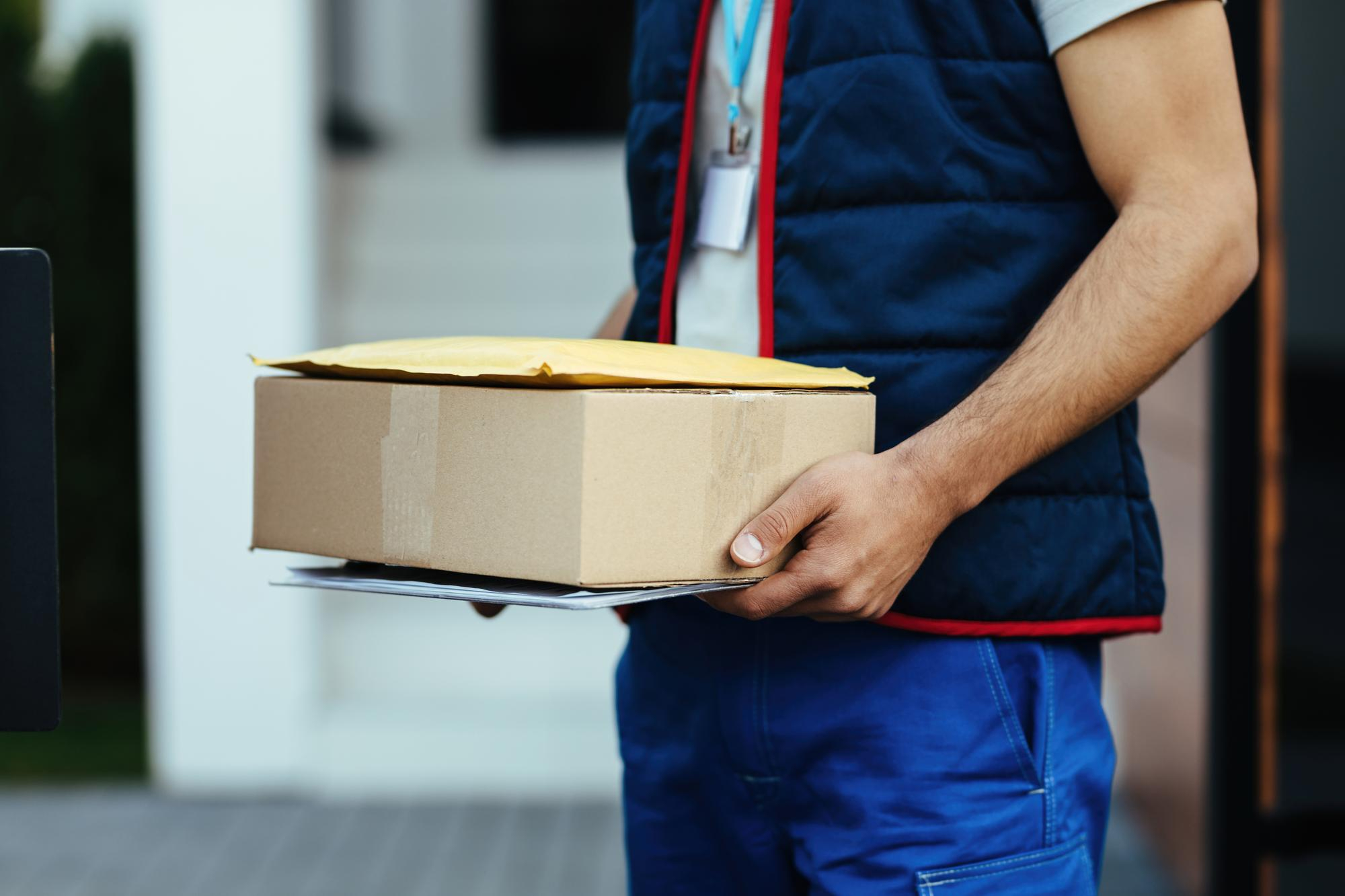
Delivered
A Story About What Gets Left on Your Doorstep, and the Art of Letting Someone Teach Themselves a Lesson
There is a particular kind of theft that is worse than the ordinary kind.
Not because the objects taken are more valuable — often they aren’t. Not because the act itself is more violent — it never is. But because it happens in the space of something that was supposed to be safe. In the slice of your ordinary life between leaving your house in the morning and returning to it in the evening. In the twelve inches of concrete between someone else’s hands and your front door.
It happens in the small, daily assumption of trust that most people make without examining, the assumption that the world between your door and the street is yours, that the thing addressed to you and left at your home will be there when you get home.
When that assumption is violated by someone you know — someone you have stood in the driveway with, someone you have complained to about the very packages they were taking — the violation is different in kind, not just degree. It is not stranger-danger. It is the specific cold feeling of a hand you recognized.
My name is Claire, and my neighbor Denise took my packages for four months, and I know this with the certainty of a woman who watched her open the door in my dress and look me in the eye and lie about it.
This is the story of what happened next.
I should tell you about the neighborhood first.
Beaumont Court is one of those streets that looks exactly like what people mean when they say neighborhood — the kind of specific, old-fashioned word that implies more than a physical location. It means the neighbors who wave when you back out of your driveway. It means the block party that happens every July. It means the Facebook group that is sixty percent lost pets and forty percent complaints about parking, with occasional bursts of genuine community that make you glad you live there.
My husband Marco and I have been here for five years.
We have a two-bedroom bungalow with a porch that faces the street, a garden in the back that Marco tends with an enthusiasm I find touching and a skill level I find impressive, and a front mat that says WELCOME in the particular way of front mats everywhere — optimistically, without conditions.
The mat is where my packages were left.
Denise’s house is directly across the street. Blue shutters, two big planters at the front that she fills with seasonal flowers — petunias in summer, ornamental cabbage in fall, which is more of a choice than I would make but it’s her porch and I respect the commitment. She has lived there for nine years and is, by the metric of the neighborhood, an established and trusted presence.
She is fifty-four, divorced, works from home doing something in insurance that she describes with the specific vagueness of someone who finds their job genuinely difficult to explain and has stopped trying. She has a daughter in college who visits on holidays and a cat named Gerald who sits in the front window with the focused disapproval of a cat who has decided the neighborhood could be better managed.
We were friendly.
The driveway-conversation kind of friendly — the kind where you know enough about each other to ask meaningful follow-up questions, where you have built up over five years a fabric of goodwill and mild interest. She had given me her number in case of emergencies. I had brought her soup when she had a bad flu two winters ago.
I had stood in her driveway and complained about my missing packages.
This is the part I have thought about the most, in the months since. The specific cruelty of it — not just that she was taking the packages, but that she let me tell her about it. Let me stand there, puzzled and frustrated, describing the problem to the person who was causing it, nodding with the sympathetic expression of a neighbor who was very sorry to hear about these troubles.
She had looked me in the eye and expressed sympathy.
For the theft she was committing.
While I was standing on her street, outside her house, where my packages were presumably already waiting inside.
The packages had been coming opened since September.
October, November, December — a steady trickle of wrong. Not everything, not immediately, not enough to be obviously systematic. The book that arrived with no shrinkwrap, the candle whose box had been resealed. The kitchen gadget whose packaging was intact but whose interior product paper was missing. A scarf that arrived alone in a too-large box, which could have been a fulfillment center error or could have been something else.
Marco’s theory, in the beginning, was depot errors.
Things get opened and repackaged all the time, he said. They scan something and the seal breaks, they put it back together. It’s probably nothing.
So I called the post office.
Everything leaves us sealed. If your mail is being opened, it’s happening after delivery.
After delivery.
At my front door.
I sat with that for a while.
Then I thought about who was home during the day.
I worked until five. Marco worked until six. Our street was a working street — most of the houses empty during business hours, the occasional freelancer or retiree, a dog that barked at everything from one of the end houses but had never been introduced to me by name.
And Denise, who worked from home, whose light was always on when I came home, who was there when I wasn’t.
I filed this thought in the place where you file things you don’t want to believe.
I ordered the dress.
The dress was specific.
The work party had a theme — slip dress, the whole lingerie-chic aesthetic that had been having a moment — and I had been searching for the right one for longer than I wanted to admit. Soft pink, black lace trim at the chest and the hem, the kind of piece that looks like a nightgown because that is its entire design philosophy. Not expensive. Not cheap. Exactly right.
I had checked the delivery date nine times.
It had to arrive by Friday.
Thursday, two-fourteen in the afternoon, I got the notification.
I drove home faster than Marco would have approved of.
Nothing at the door.
Nothing behind the planter.
Nothing around the side.
I called the courier, who told me politely but firmly that he had definitely left it, and sent the delivery photo: my door, my mat, my house number clearly visible, a package sitting exactly where packages were supposed to sit.
Delivered at 2:14 PM.
Gone by 4:47 PM, which was when I got home.
The window was two hours and thirty-three minutes.
I stood on my porch and I looked across the street at Denise’s house and I thought about who was home between two-fourteen and four-forty-seven.
Then I walked across the street.
She opened the door in my dress.
I know this sounds like the kind of thing that only happens in stories, the too-perfect coincidence of a crime movie where the thief is caught with evidence on their body at the exact moment of accusation. But life has no sense of dramatic proportion, and Denise had apparently been wearing my dress around her house all afternoon, which is the behavior of someone who believed with complete confidence that she was not going to be confronted.
She was wrong about that.
The dress was soft pink.
Black lace at the top and the hem.
My dress. On her body.
I laughed.
I want to be clear about this — the laugh was genuine, an involuntary response, the kind that happens when your brain has received information so dissonant from your current model of reality that it defaults to laughter while it updates. I was not laughing because it was funny. I was laughing because I had not fully caught up yet.
Denise, I said. Where did you get that?
This? She looked down at it with the specific performance of someone who has not rehearsed this moment and is improvising. Oh, no, this is just my nightgown. I bought it like a week ago.
It’s just — I ordered one exactly like it and it never came. Maybe they mixed up the houses. Can I look at the label?
Her face closed.
I have thought about this phrase many times since — her face closed. It is exactly the right description. There was a moment, brief and revealing, when the performance stopped working and what came through instead was the cold machinery of a person calculating their next move. And the calculation produced: denial, then closure, then door.
No. I told you. A week ago, on sale, completely different store.
I only want to see the—
She shut the door.
I stood on her step and I looked at the closed door and I thought: I know. And she knows I know. And she has decided to simply not care.
And then I went home.
Marco was in the kitchen.
He took one look at me — the look of a man who has been married long enough to read his wife’s face across a room — and said: What happened?
I told him about the dress.
He was quiet for a moment.
Then: She’s taking your stuff.
I know. And we can’t prove a single thing.
This was the frustrating truth. A delivery photo showing a package on a mat. A neighbor who answers the door in what may be an identical dress purchased elsewhere. A pattern of opened and resealed packages that proves nothing. A five-year history of goodwill that would make any accusation look like neighborly paranoia.
The dress was the most damning thing and it still proved nothing.
So what, Marco said. You’re just going to let it go?
No, I said. I have a plan. She has to be taught a lesson, because otherwise she’s never going to stop.
He looked at me.
What plan?
I told him.
He looked at me for a long time when I was done.
That’s either brilliant, he said, or I’m going to be explaining this to a neighbor.
It’s brilliant, I said.
How sure are you?
Ninety percent, I said.
What’s the other ten percent?
I’m wrong about her. Which I’m not.
He picked up his coffee.
Okay, he said. What do you need from me?
Here is what I know about people who take things.
They are not, in most cases, desperate. The desperate thief takes what they need and the need is legible, even if the action isn’t justified. Denise was not desperate. She had a house, a job, a car I had watched her detail every spring.
What she had was opportunity.
The opportunity to take, and the belief — built up over four months of successful taking — that the taking was safe. That I would keep complaining to her about my missing packages, that I would call the courier, that I would scroll through tracking numbers and scratch my head, and that nothing would ever resolve to point at her.
The thing about that belief is that it creates a very specific kind of carelessness.
A person who believes they are perfectly safe takes less care.
A person who believes they are perfectly safe might answer the door in the evidence.
What I needed was to give her a reason to take something she couldn’t sell, couldn’t use, couldn’t deny, and couldn’t explain.
And I needed it witnessed.
The plan had three parts.
Part one was the package.
I ordered something specific: a pair of bright, distinctive kitchen towels with a pattern so particular — a print of illustrated cats in chef hats, the kind of thing you either love or you don’t and which is impossible to describe as generic — that anyone who saw them would know exactly what they were and where they came from.
I chose them for the pattern and for the price — cheap enough that losing them would not cost me anything real — and I ordered them in a box slightly larger than necessary, with the company’s name clearly visible on the exterior.
I also ordered something else, in a separate order, from a different company.
A decoy.
This was the beautiful part. The decoy was a set of plain white dish towels — the exact size and heft that the first package would feel like, if you picked it up and squeezed it through the packaging. I ordered the plain ones first. They were going to arrive before the distinctive ones.
The plain ones were for Denise.
The distinctive ones were for me.
Or more precisely, the distinctive ones were the reason I needed the package I had asked Marco’s sister Terri to help me with.
Terri is Marco’s older sister and she has the particular quality of someone who, when you explain a situation to her and then explain what you need, says okay and begins immediately planning the logistics rather than asking a lot of questions about your feelings.
She is a project manager by profession and a fixer by temperament and I love her.
I called her on a Friday.
Terri, I said. I need a favor. It’s somewhat elaborate.
How elaborate?
I explained.
Okay, she said. I can do that. I need two things from you: the tracking number when it ships, and about forty-five minutes on the day it delivers.
Done, I said.
Who else knows about this?
Marco. You. That’s it.
Good, she said. Keep it that way.
Part two of the plan was the camera.
Marco had wanted security cameras for a long time and I had resisted on the grounds that I found them aesthetically unpleasant and somewhat paranoid. This was before my packages started arriving opened.
He ordered the camera on Sunday.
It was installed by Tuesday, aimed at the porch, covering the mat and the twelve feet of path between our door and the street. The camera also caught, at a slight angle, the lower half of Denise’s front steps.
Denise would have seen the camera go up.
This was intentional.
A person who had been taking packages from a camera-less porch might, upon seeing a camera installed, do one of two things. They might stop, because the risk had increased. Or they might not stop, because four months of successful taking had made them confident and complacent and slightly stupid about the whole thing.
I was betting on the second.
The camera was visible. Obviously visible. I made no effort to conceal it.
If she’s watching, Marco said, she knows you’re watching back.
Good, I said.
Doesn’t that make her stop?
Maybe, I said. But here’s the thing about the camera. She sees the camera and she thinks: they got a camera because they’re suspicious. But they don’t have evidence yet, otherwise they’d have said something. So as long as I’m careful—
She’ll keep going, Marco said.
She’ll keep going, I agreed. Because she’s been getting away with it for four months and that builds confidence. And confidence builds mistakes.
And the towels are the mistake.
The towels are the mistake.
Part three of the plan was Terri.
Specifically, Terri’s presence on the day the decoy delivered.
This was the delicate part. I could not be there — my presence would alert Denise, who had now been confronted (in the dress incident) and would be watching for signs that I was paying attention. Marco could not be there — she knew his car and his face and would notice.
Terri was unknown to Denise.
Terri drove a car Denise had never seen.
Terri could park two houses down and be, from Denise’s perspective, simply a neighbor’s visitor or someone who had pulled over to make a call.
We had to time it right.
The decoy package — the plain white dish towels, in their slightly larger-than-necessary box — was scheduled to deliver on Thursday. I had checked the tracking obsessively, the way I had checked the dress tracking nine times, but this time with a spreadsheet.
Thursday morning I texted Terri: Thursday delivery between one and four, probably mid-afternoon. Can you be there?
She texted back: I’ll move my two o’clock.
You don’t have to—
Claire. Stop.
I stopped.
The camera captured everything.
The delivery happened at 2:47 PM.
The courier was the same one who had delivered the dress — I recognized him from the previous photo, the same guy, the one who had sent me the evidence of my package sitting on my mat. He set the box down, scanned it, took the photo, drove away.
The box sat on my mat for eleven minutes.
I know it was eleven minutes because the camera timestamp is very precise.
At 2:58 PM, Denise’s door opened.
She did not come out immediately. The door opened slightly and stayed open, which tells you something about the level of caution she was exercising — she was looking first. Looking across the street at my house, probably checking that my car wasn’t there, checking the windows, checking for signs of life.
My car was not there. I was at work.
The windows showed nothing.
What Denise did not check was two houses down, where Terri was sitting in her gray Honda with her phone in her lap, recording.
Denise came out.
She walked across the street with the specific walk of someone trying to look like they aren’t doing what they’re doing — not the confident stride of a person on their own property, but not the skulk of a cartoon thief either. The practiced medium pace of someone who has done this before and has learned that the key is to look purposeful but casual.
She picked up the box.
She walked back across the street with it.
She went inside.
The whole thing took forty-seven seconds.
Terri sent me the video at 3:04 PM.
Got it, she texted. Very clear. You want to call the police now or wait for the other thing?
I sat at my desk and looked at the video twice.
Wait for the other thing, I texted back.
The distinctive towels arrived on Saturday.
The chef-hat cats, illustrated in the specific palette of someone who loved this kind of thing — I had spent twenty minutes on the website selecting the exact print — came in their own box with the company’s cheerful branding on the outside.
They delivered at ten-fifteen in the morning.
I was home.
I brought them inside immediately.
I took them out of the box.
I put them in my kitchen.
And then I waited for Sunday.
Sunday on Beaumont Court was a social day.
Not formally — nothing was scheduled, no block party or organized event. But the weekend habit of the street meant that people were in their yards, doing the things that yards require in various seasons. November meant raking, mostly, and the occasional last-mow of the year, and the bringing-in of planters before the cold made them impossible to move.
I went outside at ten-thirty with the towels tucked under my arm.
I had offered, a few weeks earlier, to help Mrs. Patterson at the end of the street with her planters — she was seventy-eight and the large ceramic ones were legitimately too heavy to carry alone. I had not followed up on this offer because things had been busy. Today was a good day to follow up.
I walked down the street with the towels under my arm — I was carrying them to show Marco something in the garden, not carrying them anywhere specific, just carrying them — and I knocked on Mrs. Patterson’s door.
She was delighted to see me.
We spent twenty minutes moving her planters from the porch to the garage, and during those twenty minutes several neighbors were outside, including the Nguyens from across from Patterson, including Greg the dog-walker from the corner, including, crucially, Denise, who was raking her front walk and had an unobstructed view of me carrying the distinctive cat-hat towels.
I did not look at Denise.
I did not need to.
I just needed her to see them.
The conversation with Terri that evening was brief.
Did she see? Terri asked.
She saw, I said.
Good. A pause. You know she’s going to panic.
That’s the plan, I said.
She can’t return them, Terri said. She doesn’t have a receipt. She doesn’t have the box.
No, I said.
She can’t sell them, Terri said. You’d see them somewhere.
Probably not, I said. But she has to know that’s a risk now.
So she’s sitting on something she took, Terri said. That she can’t use. That you can identify. And she watched you carry the distinctive version around the neighborhood today, which means she knows that you know exactly what they look like.
Exactly.
And you have video of her taking the decoy.
Excellent video.
Terri was quiet for a moment.
She’s going to come to you, Terri said.
I think so, I said.
What are you going to do when she does?
I haven’t decided yet, I said. I’m waiting to see how she does it.
She knocked on my door on Monday evening.
Six-fifteen, after dark, which told me something — she had chosen an hour when she could not be easily observed, when the street was quiet and the neighbors were inside.
I opened the door.
She was holding a gift bag.
A nice one — the kind with tissue paper folded at the top, the kind you use when you want to present something as a gift rather than as what it is.
Hi, she said. I was — I wanted to drop this off.
Come in, I said.
She hesitated.
I’ll just leave it—
Denise, I said. Come in.
She came in.
Marco was in the kitchen. He stayed there. He had agreed to stay there, out of sight, which meant that she did not immediately see him and could not pretend she had come only to talk to me as the neutral party.
We stood in the front hall.
I brought you something, she said. She held out the bag.
I looked at the bag.
I did not take it.
What is it? I said.
She shifted.
Some dish towels I thought you might like. I saw you carrying some this weekend and I — I found some similar ones and I thought—
Can I see?
She handed me the bag.
I pulled out the tissue paper.
Inside were the plain white dish towels. The decoy.
I held them for a moment.
These are nice, I said.
I saw you liked that kind of thing and I—
Denise, I said. I have a camera.
Silence.
I installed it last week, I said. You probably saw it go up.
She was very still.
It recorded Thursday afternoon, I said. The delivery at two-forty-seven. And then the eleven minutes after.
She did not speak.
I also had someone parked on the street, I said. She got video from the street angle. So I have the camera and the street.
Denise looked at the floor.
I also have four months of evidence that packages were being opened at my door, I said. Not before delivery — I checked with the post office. After.
The silence stretched.
And, I said, I have a very clear memory of the dress.
She looked up at me.
What I saw on her face was not what I had expected. I had expected the cool denial she had performed at the door when she shut it in my face. Instead what I saw was something more complicated than that — not remorse, exactly, but the specific exhaustion of a person who has been running a thing and has now run it into a wall.
How long were you going to keep going? I said.
She didn’t answer.
Denise. I need to understand. We’ve been neighbors for five years. I brought you soup when you were sick. You’ve had my phone number since 2021. Why didn’t you just— I stopped. I don’t even know what I’m asking. Why didn’t you just ask me? Or buy things? Or—
It started as an accident, she said.
I waited.
There was a package on your porch, she said. You’d been gone for a few days and it had been sitting there and I thought it would get stolen. I brought it inside to hold it for you. And then you came back and— She stopped.
And you never told me, I said.
No.
And then you opened it, I said.
I don’t know why I did that, she said. I just — I started to and then I did. It was a book. I put it back and I thought you’d never know.
But then it happened again, I said.
And again, she said. Quietly.
The dress, I said.
She looked at the floor again.
That was — I know that was different, she said. That was a line.
A line you crossed, I said.
Yes.
And then you shut the door in my face.
Yes.
Marco appeared in the kitchen doorway.
He did not say anything. He just stood there, and his presence said what it needed to say — that this was not a conversation between two women with a private understanding, that there was a witness and there were records and there was a decision to be made.
What do you want? Denise said. Are you calling the police?
I had thought about this a great deal.
I want to tell you what I have, I said. I have video of you taking the package on Thursday. I have Terri’s footage from the street. I have the four months of opened packages, which I have documented. I paused. The dress is harder to prove because you shut the door before anyone else saw it, but it’s part of the pattern and a detective would look at the pattern.
She was very still.
I want you to return everything you still have, I said. Everything you took that you haven’t consumed or used or given away. I want the dress, if you still have it.
I was going to give it back, she said, and I said nothing, because the specific relationship between what she had been planning and what she had been doing was not something I needed to get into.
I want the dress and I want anything else you have, I said. And I want you to understand that the video exists and that if anything is ever taken from my porch again, I will call the police and I will give them everything.
She nodded.
And I want to know why, I said.
She looked up.
I need to know why, I said. Not to use against you. Because I need to understand how this happened between two people who were supposed to be neighbors.
She was quiet for a long moment.
I lost my job in September, she said.
September.
When the packages started coming opened.
The insurance work, she said. The company downsized. I’ve been freelancing since then but it’s — it’s slow. I still have the house but things have been—
Tight, I said.
Very, she said.
But the dress isn’t tight, I said. The book wasn’t tight. You took things you didn’t need.
She looked at me.
No, she said. I know. That’s — it started because I was scared and then it became something else. It became— She paused. Easy. Which was stupid.
Very stupid, I said.
Yes.
We stood in my front hall for a moment with the gift bag of plain dish towels on the table between us and the specific weight of something that had happened and could not unhappen.
I’m sorry, she said.
I looked at her.
I know you are, I said. I believe you’re sorry. I paused. I don’t know yet what that means for us going forward. That depends on what comes next.
What do you need from me?
The dress, I said. Tomorrow morning. Whatever else you have. And then I need some time.
She brought the dress the next morning.
Along with a candle, a scarf I hadn’t known I was missing, and a kitchen gadget I had thought I’d lost in a move and had replaced twice.
She left them on my porch in a bag.
She did not knock.
I found the bag when I went to get the mail.
I told Marco that evening.
He sat with it.
What are you going to do? he said.
I don’t know, I said. I keep thinking about September.
When she lost her job.
When she lost her job, I said. And I kept standing in the driveway telling her about my missing packages while she was— I stopped.
That doesn’t make it okay, Marco said.
No, I said. It doesn’t.
But.
But it explains something, I said. And the explaining doesn’t fix it but it makes it — smaller than I thought, in some ways. And bigger in others. Because she stood there in my driveway in September and October and November and she was clearly struggling and I never asked.
That’s not on you, Marco said.
Maybe, I said. But I didn’t ask.
I knocked on Denise’s door a week later.
She opened it carefully, the way you open a door when you know who’s on the other side and don’t know what they’ve come to do.
I said: Can I come in?
She let me in.
We sat in her kitchen.
I had not been inside her house in five years of being neighbors. It was a kitchen that looked like the kitchen of someone who had stopped cooking — takeout containers on the counter, a coffee maker that appeared to be in heavy rotation, the refrigerator covered in photos that were older than recent.
The photos were of her daughter.
She came home last week, Denise said, noticing where I was looking.
For the holiday?
She’s been coming more, Denise said. Since everything. She looked at her hands. She knows things have been hard.
I sat across from her.
I’m not going to the police, I said. I want you to know that.
She looked up.
I’m not doing that because I feel sorry for you, I said. I’m doing it because what you returned — I have it back, and the pattern stopped, and I think you understand what the alternative is. I paused. But I need you to understand that the alternative exists. That I have the footage. That’s not going away.
I understand, she said.
Okay, I said.
We sat for a moment.
Why did you come? she said. You could have just—
Because you are my neighbor, I said. And because I know September happened, even if I can’t make that matter more than it should. I paused. And because I stood in your driveway for four months complaining about my packages and you listened, and some part of me wants to know if any part of that was — I don’t know. If you felt anything.
She was quiet.
I felt terrible, she said. Every time.
But you didn’t stop, I said.
No, she said.
Why?
She looked at her hands again.
Because I told myself it wasn’t hurting you that much, she said. Because you kept buying things and complaining but nothing terrible happened. Because I convinced myself you wouldn’t notice and then when you noticed I convinced myself you couldn’t prove it. She paused. I know how that sounds.
It sounds like what people tell themselves, I said. To keep doing something they know is wrong.
Yes, she said. That’s exactly what it sounds like.
We sat in her kitchen for a while longer.
I did not offer absolution. I was not equipped to give it and she had not asked for it. What I had come to give her was the specific information that I knew, and that I was not going to act on it, and that the reason was complicated and had something to do with September and something to do with her daughter’s photos on the refrigerator and something to do with the fact that I believe most people are more than the worst thing they’ve done.
Not all people. Not always.
But most.
Denise got a job in January.
I know this because she told me. She knocked on my door one Saturday morning with a plate of something she had baked — imperfectly, which I respected — and she said: I wanted to tell you. I’m working again.
That’s good, I said.
Full time, she said. Benefits.
I’m glad, I said.
She handed me the plate.
I know things are — I know I can’t just— She stopped. I’m not expecting anything. I just wanted you to know.
Okay, I said.
I took the plate.
We stood on my porch for a moment.
Your garden looks good, she said. The hydrangeas.
Marco’s doing, I said. He has a gift for them.
They never do well for me, she said.
He has a trick, I said. Coffee grounds. I can ask him what the ratio is.
She looked at me.
I looked at her.
That would be — yes, she said. Thank you.
I want to tell you what I think the lesson was.
Not the lesson for Denise, which was the obvious one — that cameras exist and neighbors have friends who park on streets and patterns create evidence. That lesson delivered itself.
The lesson I mean is the one I learned, which is less neat and does not fit on a bumper sticker.
The lesson is about what you do when you’ve been wronged by someone you know.
You can be furious, which I was. You can want them to understand what they did, which I did. You can want them to stop, which was the essential minimum requirement.
But underneath all of those things is a quieter question, which is what you believe about people.
I believe that most people who do wrong things are not fundamentally wrong people. I believe this not because it is comfortable — it is sometimes deeply uncomfortable — but because I have found it to be more true than the alternative. I believe that September happened and that it did not justify what Denise did and that both of those things are simultaneously true.
I believe that the most important thing I did was not the camera and not Terri and not the decoy towels, though all of those things served their purpose. The most important thing I did was sit across from her in her kitchen with the takeout containers and her daughter’s old photos and say: I know. I have the evidence. I’m choosing to use it in this specific way and not that way. And I’m doing that because you are a person and people are complicated and I’d rather live on this street with a complicated truth than with the simpler version where I called the police and was done with it.
I’m not saying that’s the right choice for everyone.
I’m saying it was the right choice for me.
The camera is still up.
Marco leaves it up not because we expect anything — nothing has disappeared since January — but because the camera is now simply part of the porch, and removing it would be its own statement that I’m not interested in making.
My packages arrive sealed.
I notice this every time, the specific small pleasure of a box that looks exactly the way it should look.
The dress, as it turned out, fit slightly better after I washed it.
I wore it to the party.
People asked where I got it.
I said: It was a gift.
Denise’s hydrangeas came up in May.
Not as full as Marco’s, but something.
She sent a photo over the fence.
One word: Finally.
I sent back: Coffee grounds.
She sent back a coffee cup emoji.
We are not, and may never be, what we were.
But we are neighbors again.
That is something.
Some things, when they’re broken, don’t go back together.
But sometimes they make a new shape.
And the new shape holds.

Lila Hart is a dedicated Digital Archivist and Research Specialist with a keen eye for preserving and curating meaningful content. At TheArchivists, she specializes in organizing and managing digital archives, ensuring that valuable stories and historical moments are accessible for generations to come.
Lila earned her degree in History and Archival Studies from the University of Edinburgh, where she cultivated her passion for documenting the past and preserving cultural heritage. Her expertise lies in combining traditional archival techniques with modern digital tools, allowing her to create comprehensive and engaging collections that resonate with audiences worldwide.
At TheArchivists, Lila is known for her meticulous attention to detail and her ability to uncover hidden gems within extensive archives. Her work is praised for its depth, authenticity, and contribution to the preservation of knowledge in the digital age.
Driven by a commitment to preserving stories that matter, Lila is passionate about exploring the intersection of history and technology. Her goal is to ensure that every piece of content she handles reflects the richness of human experiences and remains a source of inspiration for years to come.