Ten minutes after takeoff, my husband came through the business-class curtain looking like he’d just watched his whole life fall apart on a five-inch phone screen.
“Diane,” he said. “What did you do?”
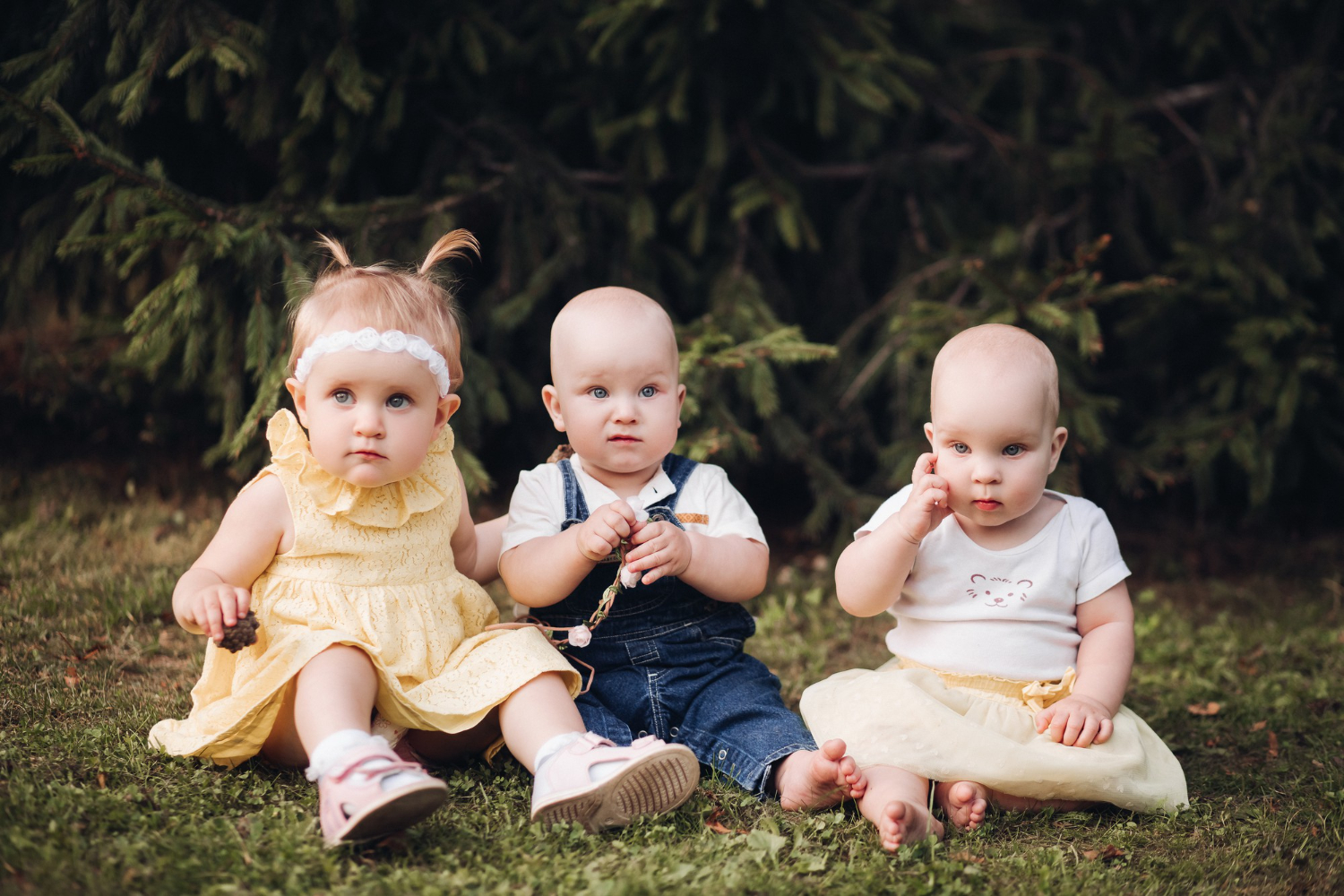
I was in row 31, seat B. The middle seat. Tina was finally asleep against my chest, her mouth open, drooling onto my shirt. Thomas was in the window seat next to me with both hands wrapped around his stuffed giraffe, sucking hard on his pacifier. Talia was in the aisle seat, trying to rip the safety card out of the seat pocket with the focus of a bank robber.
I looked up at Eric.
“What are you talking about?”
“Delete it.”
His voice was low. But his face was white. Completely white. I’d never seen him that color. Not even the day the doctor told us we were having three babies.
“Delete what?”
“The reservation. The one you sent to the family chat.”
I shifted Tina higher on my shoulder. She sighed in her sleep.
“Why?”
“My parents are blowing up my phone.”
“Then answer them.”
“Diane, stop.”
He glanced around at the people in the seats near us. A man in a baseball cap across the aisle had taken out one earbud. A teenage girl behind me had stopped scrolling.
“You’re making me look horrible,” Eric whispered.
I looked down at my phone on the tray table.
All I’d done was share the reservation. The one he made.
It showed everything. His business-class seat. My economy seat. Three economy seats for our one-year-old triplets. His oceanfront room. The standard room he’d booked for me and the babies, on the other side of the resort. His business-class flight home. Our economy flight home.
Everything was right there. In black and white. With prices.
“I didn’t write anything horrible about you,” I said.
“You knew what they’d think.”
“I showed them what you booked, Eric.”
He stared at me.
“You didn’t have to show everybody,” he said. “But you did.”
And something inside me settled. Like a snow globe after you stop shaking it. All the swirling stuff just drifted down and went still.
“You didn’t mind doing it, Eric,” I said. “You just mind people knowing you did it.”
His face changed.
That morning had started badly.
But I didn’t understand how badly until we got to the gate.
And to understand the gate, you have to understand the year before it.
Our triplets turned one three weeks before the trip.
Talia was the oldest by two minutes, and she acted like it. She touched everything. Every outlet, every cabinet, every dog she saw at the park. If there was something she wasn’t supposed to have, she’d find it and put it in her mouth.
Thomas was the middle. The sweet one. He laughed at everything until he got overtired, and then he fell apart completely. Like a sandcastle when the tide comes in.
Tina was the baby. The smallest, by almost a pound. She spent her first three weeks in the NICU. And ever since she came home, she wanted to live on my shoulder. Not in her crib. Not in the swing. Not in anybody else’s arms. My shoulder.
I loved them so much it scared me.
I was also so tired that I once put my phone in the refrigerator and spent twenty minutes looking for it. I found it next to the butter. It was very cold.
Another time, I put the babies’ bottles in the dishwasher and started it without any soap. Then I stood there in the kitchen and cried, because I’d have to run it again, and that felt like the end of the world.
Eric thought he was tired too.
“The crying is getting to me,” he said one night in March.
It was a little after two in the morning. I was standing in the kitchen warming a bottle in a pot of water on the stove. Thomas was crying upstairs. Talia had just gone back to sleep after an hour of fussing. And Tina was balanced on my hip, wide awake, pulling on my hair.
Eric was standing by the counter in clean pajamas. He’d come down to get a glass of water.
He’d slept in the guest room for the last four months. “So one of us gets some real rest,” he’d said. “It’s better for everybody. I’ll be more useful during the day.” I’d agreed, because I was too tired to argue.
He was not more useful during the day.
“We need a vacation,” he said.
I stared at him.
“You slept seven hours last night.”
“Not properly,” he said. “I kept hearing them through the wall.”
I almost laughed out loud.
“Somewhere by the ocean,” he went on. “Somewhere warm. A real break. For both of us.”
I tested the bottle on my wrist. Too hot. I put it back in the water.
The idea sounded impossible. Three babies on an airplane. Three babies in a hotel. Three babies on a beach.
It also sounded wonderful.
I hadn’t sat down without a baby on me in a year. I hadn’t slept more than three hours in a row since before they were born. I hadn’t worn a real bra in months. I hadn’t read a book, or seen a movie, or eaten a hot meal.
The ocean.
I closed my eyes for a second and pictured it.
“We can’t afford it,” I said.
“You have your savings,” Eric said.
I opened my eyes.
Before we got married, I worked as a dental hygienist for eight years. I saved almost every penny. I lived with two roommates in a tiny apartment and drove a car with a door that didn’t open from the outside. I’d put away almost thirty thousand dollars. My safety net. My just in case money.
“That’s for emergencies,” I said.
“This is an emergency,” Eric said. “Look at us. Look at you, Di. When’s the last time you slept?”
“I don’t remember.”
“Exactly.” He came over and put his hand on my back. “I get my bonus in October. Every year. You know that. I’ll pay back every single dollar. I promise.”
Tina grabbed a fistful of my hair and yanked.
“Every dollar?” I said.
“Every dollar.”
And I said yes.
At first, it was supposed to be simple. Flights. A nice hotel. A week.
Then the costs kept growing.
“I found a better resort,” Eric said one night in April, showing me his laptop. “It’s all-inclusive. So food’s covered. That’ll save money in the long run.”
It was twice as expensive.
“We need airport transfers,” he said in May. “You can’t take three babies in a taxi.”
Four hundred dollars.
“They have a kids’ club,” he said in June. “Babysitting. So we can have a night out.”
Another three hundred.
“I got us travel insurance. Just in case.”
“There’s a spa package. For you. You deserve it.”
I never booked the spa package. I don’t think it ever existed.
Every time I opened my banking app, the number was smaller. Every time I asked about another charge, Eric had the same answer.
“I’ll pay you back after my bonus, Di. Don’t worry about it.”
I remember once, in July, standing at the kitchen counter holding a statement.
“Eric, this says eleven thousand dollars.”
“That’s including the flights.”
“We said six. Maybe seven.”
“Things cost more in summer. It’s peak season.” He didn’t look up from the TV. “I’m paying it back. I don’t know why you’re making this such a big deal.”
I stood there holding the paper.
And then Thomas started crying upstairs. And Talia started crying because Thomas was crying. And I put the statement in the drawer and went up the stairs.
I wanted the trip so badly I stopped arguing.
That’s the truth. I’m not proud of it. I wanted to see the ocean so much that I let myself stop asking questions.
My mother-in-law, Mary, called me every Sunday that year.
She lived three hours away with Eric’s father, Charles. They’d come to visit twice after the babies were born, and both times Mary had stayed up all night rocking Thomas, and Charles had fixed the broken drawer in the nursery without being asked.
But mostly, she called.
“How are you managing, honey?” she’d ask.
And I’d say, “Oh, we’re doing fine. It’s a lot, but we’re doing fine.”
“Is Eric helping?”
“Oh, he’s great,” I’d say. “He’s really trying.”
I don’t know why I said it. Every single Sunday.
No. That’s not true. I do know.
I was embarrassed.
I was embarrassed to tell her that I’d stopped asking her son for help. That every time I asked him to do something, it came with a sigh. Or an excuse. Or a question like, What did you do all day?
That the last time I asked him to change a diaper while I fed the other two, he changed it so slowly and with so much huffing that Talia rolled off the changing table and I had to catch her by the ankle.
That he hadn’t done a single night feeding since February.
That I cried in the shower every morning, because it was the only place nobody could hear me.
I didn’t want Mary to think I’d married the wrong man. I didn’t want her to think her son wasn’t a good father.
I didn’t want to think it either.
So I protected him. Every Sunday.
He’s great. He’s really trying.
The morning of the flight, we left the house at five-fifteen.
By the time we reached the airport, I was pushing the triple stroller with one hand. I was holding Thomas on my hip with the other, because he’d been screaming in the stroller and only calmed down when I picked him up. The diaper bag was over my shoulder. My purse was over the other shoulder. A backpack full of bottles and formula and snacks and changes of clothes was on my back.
I looked like a pack mule.
Eric walked beside me with a coffee in one hand and his phone in the other.
That’s all he carried. A coffee. And his phone. The big suitcase had been checked at the curb, and he’d tipped the man twenty dollars of my money.
“Can you take Thomas for a minute?” I asked.
Eric looked down at his coffee.
“I’m drinking, Diane.”
“And my hands are full.”
He sighed. That long, heavy sigh. I’d been hearing that sigh for a year.
“Diane,” he said. “You get yourself so worked up.”
I stopped walking. Right there in the middle of the terminal. People had to step around us.
“I’m carrying a baby,” I said. “I’m pushing two others. And I’m wearing enough luggage for a weekend evacuation.”
“That’s exactly why you need this trip,” he said.
I stared at him.
He took a sip of his coffee.
I thought about arguing. I thought about all the words I could say. About the stairs, and the bottles, and the diaper, and the guest room, and eleven thousand dollars.
Then I just said, “Okay.”
Eric relaxed. His shoulders came down.
He always did when I said that word.
He thought okay meant the conversation was over.
He didn’t understand, yet, that sometimes okay means something is just starting.
We got through security. It took forty minutes. They made me take all three babies out of the stroller so they could send it through the X-ray machine. Eric went through first, and then stood on the other side, looking at his phone, while I juggled three one-year-olds and a TSA agent went through my bottles one by one.
A woman in the line behind me helped me hold Talia while I got my shoes back on. Eric didn’t look up.
At the gate, I finally found somewhere to park the stroller. I pulled out our boarding passes to check the seat numbers.
Mine said Economy. Row 31, Seat B.
The kids’ said Economy. Row 31, Seats A and C. Row 32, Seat A.
Then I looked at Eric’s.
Business Class. Row 3, Seat A.
I read it twice.
“There’s something wrong with your ticket,” I said.
Eric glanced over. “No mistake, Di.”
My stomach dropped.
“You upgraded yourself?”
“It’s one flight.”
“You’re sitting up front,” I said slowly. “While I handle three one-year-olds. Alone. In the back.”
“They’re calmer with you.”
“They’re calmer with me because I’ve learned how to calm them,” I said. “Because I’ve done it every single day for a year. Because you haven’t.”
His mouth got tight. “Don’t start this nonsense.”
“Start what?”
People were starting to line up around us. A family with two teenagers. An old couple with matching fanny packs.
Eric lowered his voice.
“I need an actual vacation, Diane.”
I looked at him.
“And I don’t?”
“You’re their mother.”
I waited. I thought maybe there was more to that sentence. Something that would make it make sense.
There wasn’t.
“They’re your responsibility,” Eric said.
For a moment, I couldn’t speak. It felt like he’d slapped me.
“You booked yourself business class,” I said finally. “With my money.”
“I told you I’ll pay you back.”
“That doesn’t answer my question.”
He glanced toward the gate desk.
“And don’t complain when we get to the resort,” he said.
My chest went tight. “What does that mean?”
“I upgraded my room too.”
“Your room?”
“Oceanfront. Top floor.”
I stared at him.
“What room are we in?”
“You and the kids have a standard room. It’s on the garden side. It’s nice. It has two cribs.”
“We’re not even staying together?” I said. My voice cracked. “Eric. What’s the point of a family vacation if we don’t get to be a family?”
“I don’t want them wrecking expensive furniture,” he said. “You know what they’re like. Talia would have that room destroyed in an hour.”
“I’m paying for this trip, Eric.”
He rolled his eyes.
“And I could’ve gone without you,” he said.
That was the moment something shifted.
It didn’t happen loudly. There was no big scene. I didn’t throw his coffee at him or start screaming in the middle of the gate.
I just stopped.
I stopped trying to explain to him why what he’d done was wrong. I’d been explaining things to Eric for a whole year. Why I needed help. Why it wasn’t fair. Why I was tired. Explaining and explaining and explaining, like he was a student who kept failing the same test.
Standing at that gate, I just stopped.
The gate agent called for business class.
Eric straightened his jacket. He picked up his coffee.
“I’ll see you when we land,” he said.
And he walked away.
I watched him hand his boarding pass to the agent. I watched him walk down the jet bridge. He didn’t look back.
Talia started chewing on the stroller strap.
Thomas started crying.
By the time we were in the air, all three of them were crying.
Thomas was screaming from the pressure in his ears. Talia had one hand wrapped in my hair and was yanking it like a rope. Tina had dropped her pacifier somewhere under the seat in front of us and was wailing about it.
I had a bottle wedged between my knees. I had one of Thomas’s socks in my lap. I had no idea where the other sock was.
The man in the baseball cap across the aisle put on big headphones.
I could feel the whole back of the airplane looking at me.
“I’ve got it.”
The woman in the aisle seat next to Talia leaned down. She reached under the seat in front of us. She came back up holding Tina’s pacifier.
“Oh my gosh,” I said. “Thank you.”
She was maybe seventy. Silver hair cut very short. Bright red lipstick. Big dangly earrings shaped like parrots, green and yellow and red.
“I’m Mildred,” she said.
“Diane,” I said. “And these are Talia, Thomas, and Tina.”
“Triplets,” Mildred said. “Well. Aren’t you busy.”
Talia immediately let go of my hair and reached for one of Mildred’s parrot earrings.
“Oh no, Talia, no—I’m sorry,” I said. “I’m so sorry. She grabs everything.”
“Don’t apologize for her being a baby,” Mildred said.
My throat closed up. I don’t know why. It was such a small thing to say.
But nobody had said anything like that to me in a long time.
Mildred didn’t ask why my eyes were wet. She didn’t ask where the babies’ father was. She just unhooked her earring and handed it to Talia to hold. Then she took the cloth book out of the diaper bag and started turning the pages for her.
“Look,” Mildred said to Talia. “A duck. What does a duck say?”
Talia stared at her. Then she stuck the parrot earring in her mouth.
“Close enough,” said Mildred.
A few minutes later, Tina finally fell asleep against my chest.
Thomas finally took his pacifier. His eyes started to droop.
Talia, sitting on Mildred’s lap now, became completely fascinated by Mildred’s seatbelt buckle. She opened it. She closed it. She opened it. She closed it.
For the first time since we’d boarded, I had one hand free.
The airplane Wi-Fi connected. My phone buzzed.
I almost ignored it.
Then I thought about Eric’s oceanfront room. On the top floor.
I opened the travel app. I wanted to see it. I wanted to see exactly how much of my savings had gone to making sure my husband didn’t have to sleep near his own children.
The reservation popped up.
Everything was there.
Business Class upgrade, outbound: $1,340.
Business Class upgrade, return: $1,340.
Oceanfront Premium Suite, 7 nights: $4,210.
Garden View Standard Room, 7 nights: $1,890.
I read the numbers twice. Then again.
Almost seven thousand dollars. Just for him.
Then I noticed a little blue button at the bottom of the screen.
SHARE TRIP DETAILS.
I looked at it for a while.
Before I could touch it, a notification popped up at the top of my screen.
It was from our family group chat. The Morrisons. Me, Eric, Mary, Charles, Eric’s sister Beth, and her husband.
Eric had posted.
Finally airborne! Hoping Diane gets the rest she desperately needs this week. ❤️
I stared at it.
Mary answered first.
You both deserve it so much. Take good care of her and those babies. We’ll see you soon!!
Then Eric replied.
I always do, Mom.
I stared at that one even longer.
I always do.
Then, for some reason, I scrolled up.
I hadn’t been reading the family chat for weeks. I never had time. It was always full of Beth’s dog pictures and Charles forwarding articles about the stock market.
But I scrolled up. And I found other messages. From earlier that week. From Eric.
Tuesday night: Diane’s having a hard day. I keep offering to help but she likes things done a certain way.
Mary: Oh honey. Just keep trying. New moms can be like that.
Thursday: She’s so overwhelmed. I’m trying to get her to let go a little. She won’t let me take a single feeding.
Charles: Hang in there, son. You’re doing great.
Saturday: Took the kids to the park for an hour so Di could nap.
There was a picture. Eric pushing the triple stroller on the path at the park by our house.
I remembered that day.
He pushed the stroller for exactly one hour. Then he came home and put all three babies in the living room, screaming, and told me they needed changing, and went upstairs to watch the baseball game.
I didn’t get a nap. I spent the hour folding laundry, because it was the first time in three days I had two free hands.
My anger changed.
It wasn’t about the airplane seat anymore. Or the hotel room. Or even the money.
For months, Eric had been telling his parents a story.
A story where he was the patient husband. The good father. The one who kept trying to help. And I was the overwhelmed, exhausted, controlling mother who just wouldn’t let him.
And the worst part was, I’d helped him write it.
Every Sunday. He’s great. He’s really trying.
I’d protected him. I’d covered for him. And while I was covering for him, he was using my silence to build a version of our marriage that made me the problem.
Mildred glanced over at me.
“Everything okay, honey?”
“No,” I said.
She waited. She didn’t push. She just bounced Talia gently on her knee.
I looked at the reservation again. The numbers. The separate rooms.
Then I looked at Eric’s messages. I always do, Mom.
“I think,” I said slowly, “I’m done making it look like everything is fine.”
Mildred didn’t say anything. She just nodded, once.
I tapped SHARE TRIP DETAILS.
A little menu popped up. I selected The Morrisons.
A text box appeared.
I typed: Since everyone keeps wishing us well for our vacation, here’s the reservation Eric made.
My thumb hovered over Send.
And the old instinct came back. Hard. Like a hand on my wrist.
Don’t embarrass him. Handle it privately. Keep the peace. Don’t make a scene. Don’t let his parents think badly of him. Don’t make them think you married the wrong man.
I looked down at Tina, asleep on my chest, drooling. At Thomas, finally sleeping, his giraffe tucked under his chin. At Talia on Mildred’s knee, chewing on a parrot earring.
I thought about spending the next seven nights in a garden-view room with three babies and two cribs, while Eric slept on the top floor with the ocean outside his window. A room I paid for.
I thought about I could’ve gone without you.
I hit Send.
My phone buzzed almost instantly.
Mary: Diane, is this true??
Then Charles: Why are you and the babies in economy?
Then Beth: Wait what
Then Charles again: Why does Eric have a separate room?
Then Mary: Eric. Reply to my messages. NOW.
Then Beth: Oh my GOD Eric
Then Mary: ERIC.
I turned my phone face down on the tray table.
I didn’t need to say anything else. The reservation said everything for me.
Mildred looked at me.
“Feel better?” she asked.
I thought about it.
“I don’t know yet,” I said honestly. “Ask me in an hour.”
Ten minutes later, the business-class curtain opened, and Eric came walking fast down the aisle.
Which brings us back to where I started. My husband standing next to row 31, white-faced, hissing at me to delete it.
“Tell them it was a mix-up, Diane,” he said. “Please. Just tell them the booking site messed up.”
“It wasn’t a mix-up.”
“My dad is furious.”
“Then talk to him.”
He ran his hand through his hair. He looked around at the people staring at us. The man in the baseball cap had taken his headphones off completely now.
“Fine,” Eric said. “Fine. I’ll sit back here. With you. I’ll switch with somebody.”
“No.”
He blinked. “What?”
“Go back to your seat, Eric.”
“I thought that’s what you wanted. For me to sit back here.”
“What I wanted,” I said, “was a husband who thought sitting with his wife and his children was normal. Not a punishment. Not something he does when his parents catch him.”
“Diane, please—”
“You can’t fix a year of this in an airplane aisle,” I said. “Go enjoy the seat you bought.”
He looked at Tina asleep on my chest.
Then he looked at Thomas, asleep in the window seat. And at Talia, on a stranger’s lap, chewing a parrot.
“What am I supposed to tell my parents?” he said.
“Whatever you want,” I said.
I looked straight at him.
“But I’m not covering for you anymore.”
He stood there another second. His mouth opened and closed.
Then he turned around and walked back up the aisle and through the curtain.
The man in the baseball cap put his headphones back on. The teenage girl behind me went back to scrolling.
Mildred didn’t say anything.
She just leaned down and picked up Talia’s cloth book, which had slipped onto the floor, and put it back on her lap.
That small kindness almost broke me.
Somewhere over the ocean, Mildred told me about herself.
She’d had four boys in five years. Back in the seventies. Her husband was a salesman who traveled three weeks out of every month.
“And when he was home,” Mildred said, “he wanted a vacation from the vacation he’d been on.”
“Did he ever change?”
“No,” Mildred said. “He didn’t. And I kept waiting for him to. For eleven years.” She bounced Talia gently. “Then one day, I stopped waiting. And I realized I’d been raising four boys by myself the whole time anyway. The only difference was, now I didn’t have to cook for a fifth.”
I laughed. Then I stopped laughing.
“I don’t know if I want to leave him,” I said quietly. “I don’t know anything right now.”
“You don’t have to know right now,” Mildred said. “You’re on an airplane with three babies. That’s enough for one day.”
She looked down at Talia, who had finally fallen asleep on her chest, parrot earring still clutched in one fist.
“But I’ll tell you something, honey. The fact that he came running back here? That means he cares what people think of him.” She paused. “Now you just have to find out if he cares what you think of him.”
When we landed, Mildred carried Talia off the plane for me. She walked me all the way to baggage claim. She helped me get all three babies back into the stroller.
Then she took one earring back from Talia, very gently, and left her the other one.
“She can keep that one,” Mildred said. “Every girl needs a parrot.”
She hugged me. She smelled like vanilla and airplane coffee.
“You’re doing better than you think,” she said in my ear.
And then she was gone, into the crowd.
I never saw her again. I don’t even know her last name.
Talia still has the parrot earring. It’s in a little box in her dresser. When she’s older, I’m going to tell her about Mildred.
Charles and Mary were waiting for us outside the terminal. Near the shuttle pickup.
They’d flown out three days before us, to have a little time on their own. They’d planned to spend the first two days of our trip with us at the resort, helping with the babies. Mary had been talking about it for weeks. I’m going to take them to the pool every morning and you’re going to sleep until noon.
When we came through the sliding glass doors, Mary saw the stroller and waved. A big wave. Her whole face lit up.
Then she noticed Eric.
He was walking about ten steps behind me. Carrying nothing but his carry-on bag.
Mary’s hand dropped.
“Where,” she said, “were you sitting?”
Eric stopped.
“Mom, can we get the bags loaded first? It’s hot, and—”
“No,” Mary said. “I need to know who you’ve become.”
I’d never heard her use that voice. Mary was a retired kindergarten teacher. She was the gentlest person I knew. I’d seen her apologize to a chair after bumping into it.
That voice was not gentle.
Eric looked at me.
“Diane gets overwhelmed,” he said. “The babies settle better with her. It just made sense for—”
“Stop,” Mary said.
He frowned. “What?”
“Stop using that word,” Mary said sternly, “like it explains everything.”
Nobody said anything.
I parked the stroller. I put the brakes on. I turned to face my mother-in-law.
“Yes,” I said. “I get overwhelmed.”
Mary looked at me.
“There are three one-year-olds, Mary,” I said. “I haven’t slept through a single night in a year. Not one. And he doesn’t help. At all.”
Eric opened his mouth.
“He sleeps in the guest room,” I said. “He has since February. He hasn’t done a night feeding in six months. He keeps telling everybody that I’m overwhelmed. Every week, in the family chat. But he never tells anybody why.”
Mary’s face changed. It crumpled in on itself.
“He told us,” she said slowly, “you wouldn’t let him help.”
“I stopped asking,” I said.
“Why?”
“Because asking became another job,” I said. “I’d ask him to take one feeding, and he’d sigh like I’d asked him to carry a piano up the stairs. I’d ask him to change Tina while I fed the other two, and he’d ask me what I’d been doing all day. I’d ask him to watch them for twenty minutes so I could take a shower, and he’d put them in front of the TV and go outside to make a phone call.”
Mary’s mouth fell open.
“The seat on the plane lasted a few hours,” I said. “The separate room lasts the whole trip. But the rest of it? That’s been going on for a year.”
Charles hadn’t said a word. He was standing next to Mary with his arms crossed. He’s a big, quiet man. A retired electrician.
He looked at the stroller. Three babies, sweaty and cranky in the heat.
Then he looked at his son.
“How much did you pay for these upgrades?” he asked.
“He didn’t pay, Charles,” I said. “I did. We used my savings. From before we got married.”
Charles turned slowly and looked at Eric.
Eric let out a breath.
“I already said I’d pay her back,” he said. “After my bonus. In October. I told her that from the beginning.”
I looked at him.
“And you will, Eric,” I said.
Charles started to say something. His face was red.
I lifted my hand.
“The money stays between Eric and me,” I said.
Charles stopped. He looked at me for a long moment. Then he nodded, once.
Mary reached out and touched the handle of the stroller. Gently. Like she was touching something fragile.
“We came out here,” she said, “because we wanted to help. With the babies. I knew you’d be exhausted after the flight, Diane. I was going to take them to the pool. I bought them little hats.”
I swallowed hard.
“I know you did,” I said.
Then I looked at Eric.
“That’s what I thought you wanted too,” I said.
The resort was beautiful.
That’s the stupid part. It was the most beautiful place I’d ever seen. White buildings. Palm trees. Flowers everywhere, pink and orange and red. And the ocean, right there, the bluest thing I’d ever seen, like somebody had turned up the color on the whole world.
At the front desk, we checked in. Two rooms.
Eric walked with me to the elevators. The garden-view rooms were in one building. The oceanfront suites were in another. We’d have to split up right there.
He stopped by the elevator doors.
“You’re really staying in the standard room?” he said.
I tightened my grip on the stroller handle.
“That’s the room you booked for your family,” I said. “So, yes.”
“Diane, come on. You can stay in the suite. With me. I’ll ask them to bring in cribs.”
“You don’t want them wrecking the expensive furniture,” I said. “Remember?”
“I didn’t mean—”
“You made this arrangement, Eric.”
The elevator doors opened.
I rolled the babies inside before he could answer. I pressed the button for the third floor.
The doors closed on his face.
The standard room was fine.
Two queen beds. Two portable cribs by the window, pushed together. A little balcony that looked out at a garden with a fountain and a stone frog that spit water.
I couldn’t see the ocean. But I could hear it, if I stood very still on the balcony. A soft, far-off rushing sound under the noise of the fountain.
It took me two hours to get all three babies fed, bathed, changed, and asleep. Thomas fought it the hardest. He was overtired from the flight, and he fell apart completely, screaming and arching his back for forty-five minutes until he finally passed out on my shoulder.
I laid him in the crib next to his sisters.
Then I sat down on the floor. Right there on the carpet, between the cribs and the bed. I didn’t have the energy to climb up onto the mattress.
I hadn’t eaten since the airport. A granola bar at six in the morning.
Somebody knocked on the door.
I got up, very slowly, and opened it.
Mary was standing in the hallway. She was holding a plate with a cover over it.
“You missed dinner,” she said.
That did it.
Something about those three words. You missed dinner. A plate of food carried across a resort by my mother-in-law, just because she knew I hadn’t eaten.
I covered my face with both hands and started to cry.
Mary stepped inside and closed the door quietly behind her, so she wouldn’t wake the babies. She put the plate on the dresser. Then she sat down next to me on the carpet. She didn’t say anything. She just put her arm around my shoulders and let me cry.
It took a long time.
When I could finally talk, I said, “I keep looking at him and wondering if I still love him. Or if I just can’t stand who he’s become.”
Mary was quiet for a while.
“You don’t have to decide everything tonight, hon,” she said.
“I know.”
“But that’s not the Eric I raised.” Her voice cracked. “I don’t know where that man came from. I raised him to carry the groceries. To hold the door. To take out the trash without being asked.” She wiped her eyes with the back of her hand. “When his father had his heart surgery, Eric was sixteen, and he got up every morning at five to make Charles breakfast before school. Every single morning for two months.”
“I didn’t know that.”
“I know.” She shook her head. “I don’t know what happened to that boy.”
I thought about it. About leaving. About what it would actually look like.
Three babies. Two homes. Custody schedules. Car seats moved back and forth every weekend. Lawyers. The end of a marriage I had once believed was solid.
Six years ago, Eric got down on one knee in a pizza place because he couldn’t wait until the fancy restaurant. He was so nervous he dropped the ring in the parmesan cheese.
I didn’t know how to hold that man and this man in my head at the same time.
“Eat your dinner,” Mary said, patting my knee. “It’s fish. It’s very good.”
I ate the whole thing sitting on the carpet.
Later, around ten-thirty, there was another knock.
I knew who it was before I opened the door.
Eric was standing in the hallway. He’d changed out of his travel clothes. He looked tired. His eyes were red.
“Can we talk?” he said.
I stepped out into the hallway and pulled the door almost closed behind me. I left it open a crack, so I could hear the babies.
“I screwed up,” Eric said.
“You did more than that.”
He waited.
“You made me carry everything,” I said quietly. “For a whole year. And then you told your family I wouldn’t let you help. You made me the problem. And you did it all while spending my money.”
His eyes dropped to the carpet.
“I don’t know how to trust you after this,” I said.
“Diane—”
“If I could make one clean decision tonight,” I said, “I’d leave.”
He went completely still.
I watched my words hit him. I watched them sink in. I didn’t take them back.
“But I’m not ready,” I said, “to break our family apart without trying first.”
His eyes came up slowly.
“So we try?” he said. His voice was barely a whisper.
“I’ll go to counseling,” I said. “Because I want to know if we can make our home healthy. For them.” I pointed at the door behind me. “For the three of them.”
I swallowed.
“But don’t mistake that for forgiveness, Eric. Because right now, walking away feels a whole lot easier than staying.”
He nodded slowly.
“And you repay every dollar,” I said. “Every single one. And you take real parenting shifts. Not helping. Shifts. And you stop calling it helping me.”
“I will,” he said.
“I’ll believe that when I see it.”
Then I went back inside and closed the door.
I stood with my back against it for a long time. On the other side, I could hear him standing there. He didn’t knock again.
Eventually, his footsteps went away down the hall.
The next morning, at six-thirty, there was a knock on the door.
I opened it with Tina on my shoulder and Thomas crying in the crib behind me.
It was Eric. He was wearing swim trunks and a T-shirt. He had a bag over his shoulder.
“I’m taking them to the beach,” he said. “For the morning. All three of them.”
I stared at him.
“You’ve never taken all three by yourself.”
“I know,” he said. “So today’s the first time.”
“Eric—”
“Mom and Dad are coming with me. Mom said she’ll kill me if I try to do it alone the first time.” He almost smiled. “But I’m doing the diapers. And the sunscreen. And the bottles. She said she’s only there to make sure nobody drowns.”
I didn’t know what to say.
“Go back to sleep, Di,” he said. “Please.”
I handed him Tina.
She screamed. Of course she did. She reached back for me with both arms and wailed like I’d handed her to a stranger.
Eric held her awkwardly. He bounced her. She screamed louder.
“She likes it on your shoulder,” I said. “Not your arms. Put her up on your shoulder.”
He moved her up onto his shoulder.
She stopped screaming. She hiccupped once. Then she put her thumb in her mouth and looked at me, betrayed.
“Huh,” Eric said. “That actually works.”
“I know it works,” I said. “I’ve been doing it for a year.”
He looked at me for a long moment.
“Yeah,” he said quietly. “You have.”
They were gone for four hours.
I slept for three and a half of them.
Three and a half hours. In a row. In a big quiet bed with the curtains closed and the air conditioning humming and nobody touching me.
When I woke up, I didn’t know where I was. I lay there in the dim room listening to the fountain outside and thinking, Something’s wrong. It’s too quiet. Then I remembered.
I got up. I took a shower. A long one. Twenty minutes. I washed my hair twice, just because I could. I didn’t cry.
Then I got dressed and walked down to the beach.
I stood at the edge of the sand and saw them.
Mary was sitting under a big umbrella with Thomas asleep in her lap. Charles was standing in the shallow water holding Talia, who was screaming with joy every time a tiny wave touched her toes.
And Eric was sitting on a towel with Tina.
She was on his shoulder. Asleep. Drooling on his T-shirt.
He was sitting very, very still, like he was afraid if he moved she’d wake up. He had sand all over his legs. There was a diaper, rolled up, sitting next to him on the towel. There was a smear of something orange, probably sweet potato, on his cheek.
He looked exhausted.
He looked up and saw me.
“She’s been asleep for forty minutes,” he whispered. “I can’t feel my arm.”
I walked across the sand and sat down on the towel next to him.
“Welcome to my life,” I said.
He looked at me.
“This is every day?” he said. “This is every single day?”
“This is a good day,” I said. “Today you had two extra adults and an ocean.”
He was quiet for a long time. We sat there together and watched Charles dunk Talia’s feet in the water, and Talia shriek, and Charles laugh his big deep laugh.
“I’m sorry, Di,” Eric said finally.
I didn’t answer. I just watched the waves.
I’d waited a year to see this ocean. It was even bluer up close.
We didn’t switch rooms.
Eric offered, three more times. To give me the suite. To move into the standard room with all of us. To switch to a family room.
I said no every time.
It wasn’t about punishing him. Not really.
It was that I didn’t want to be rescued. Not like that. Not in one grand gesture that would make everything look fixed by the end of the week.
I wanted to see what he’d do without the gesture.
So he came to the standard room every morning at six-thirty. He knocked on the door. He took his shift. Some mornings he took all three. Some mornings, after his parents flew home on day three, he took two, and I kept Tina, because she still wanted my shoulder more than his.
On the fourth night, he came to the door at two in the morning when Thomas woke up screaming.
“I heard him from the hallway,” he said. “I was walking back from the lobby. I couldn’t sleep.”
“You were walking around the resort at two in the morning?”
“The suite’s too quiet,” he said. He shrugged, embarrassed. “I kept waiting to hear them.”
He took Thomas out onto the balcony and rocked him for an hour while the fountain gurgled and the stone frog spit water into the dark.
I watched him through the glass door. I didn’t go back to sleep until they came back inside.
We flew home at the end of the week.
Eric had tried to change his flight. To downgrade his ticket to economy so he could sit with us.
The airline wanted three hundred dollars to change it.
“I’ll pay it,” he said. “Out of my own account. Not yours.”
He paid it. He sat in row 31, seat A, by the window, with Thomas on his lap the whole way home. Thomas threw up on him somewhere over Texas.
Eric didn’t sigh once.
Three weeks after we got home, Eric’s bonus came.
That same afternoon, he transferred money into my savings account.
He didn’t make a big announcement about it. He didn’t bring me flowers or take me out to dinner to celebrate. He just sent me a text while I was in the middle of feeding all three babies lunch.
Done. Every dollar. Plus the $300 for my ticket change that should’ve never come out of your money anyway.
I checked the amount in my banking app. I checked it twice.
It was exactly right. To the penny.
I texted back one word.
Good.
It wasn’t romantic. Paying me back wasn’t a love letter. It wasn’t a grand gesture. It was just a debt, finally settled. Something he owed me, finally paid.
But I noticed that he didn’t expect me to thank him for it.
That was new.
Counseling was harder.
We found a therapist, a woman named Dr. Ferris, who had an office in a strip mall between a dry cleaner and a nail salon. The whole office smelled faintly of acetone. She had a box of tissues on every single surface.
The first two sessions were awful. Eric was defensive. He kept saying things like, “I didn’t realize,” and “Nobody ever told me,” and “I thought she wanted to do it all herself.”
Dr. Ferris just listened. She wrote things down in a little notebook. She didn’t say much.
During the third session, she asked him a question.
“Eric,” she said. “When Diane was doing everything, how did that feel for you?”
He started to answer. Then he stopped.
He was quiet for a long time. So long I thought he wasn’t going to answer.
“It felt easy,” he said finally. His voice was very quiet. “It felt comfortable. I’d drop something, and she’d pick it up. Every single time. And after a while, I stopped noticing I was dropping things. I just got used to believing she’d carry whatever I put down.”
He looked down at his hands.
“And then I got mad at her,” he said. “For being tired. For being overwhelmed. Because if she was tired, that meant I had to notice why.”
Nobody said anything.
Dr. Ferris handed him a tissue. He didn’t cry. He just held it.
I looked at him.
“That’s the first honest thing you’ve said about this,” I said.
At home, things changed. Slowly.
We made a schedule. An actual schedule, on paper, on the refrigerator. Eric’s nights. My nights. His mornings. My mornings. Bath nights. Grocery runs.
He moved back into our bedroom. Not because everything was fixed. Because if he was going to take night shifts, he needed to be close enough to hear them.
And I stopped reminding him.
That was the hardest part for me. Harder than anything.
For a year, my brain had been running on a constant loop. Thomas needs his medicine at six. Talia’s out of diapers. Tina has a pediatrician appointment Thursday. Eric needs to remember to pick up formula.
If I stopped reminding him, things might not get done. Somebody might miss a feeding. Somebody might run out of diapers.
But if I kept reminding him, I’d still be carrying all of it. The whole list. In my head. Every day. Forever.
So I stopped.
And a few times, things didn’t get done. Once, Eric forgot to buy diapers, and we had to use a kitchen towel and a safety pin on Talia for two hours until he got back from the store. Once, he forgot Tina’s pediatrician appointment, and we had to reschedule.
I didn’t fix it. I didn’t cover for him. I let it be his mistake.
And he learned. Slowly. The way you learn anything. By getting it wrong enough times that you finally start getting it right.
If Thomas cried on Eric’s night, Eric got up.
If Tina needed changing on Eric’s shift, he changed her.
If Talia climbed into the dishwasher, which she did about twice a week, he got her out.
One evening in November, I was sitting at the kitchen table with a cup of coffee.
I’d just made it. It was hot. I was going to drink it while it was hot, which I hadn’t done in over a year.
It was Eric’s night.
Upstairs, Thomas started wailing.
Eric was on the couch in the living room. I heard him sigh. That old, heavy sigh.
And my body moved before I even thought about it. I was already pushing my chair back. Already half-standing. Already reaching for the banister.
Then I stopped.
I stood there, halfway out of my chair, with my hand on the table.
I sat back down.
A moment later, Eric appeared in the kitchen doorway.
He looked at me. At my coffee. At my hand, still gripping the edge of the table.
“I’ve got him,” he said.
“Okay,” I said.
He disappeared down the hall and up the stairs. I heard the nursery door open. I heard Thomas’s crying change pitch, the way it does when somebody picks him up. I heard Eric’s voice. Low and soft. Singing something.
It was badly off-key. It was the song about the itsy-bitsy spider, except he’d forgotten half the words and was making them up.
Down came the rain and… washed the spider… somewhere…
I sat at the table and drank my coffee.
It was still warm when he came back down ten minutes later.
“He’s asleep,” Eric said.
“Good.”
He stood there in the doorway. He hesitated.
“Are we okay?” he asked.
I set my cup down on the table.
I thought about it. Really thought about it. I didn’t just say yes to make the conversation end. I’d done that too many times.
“We’re trying,” I said. “That’s not the same thing.”
He nodded slowly.
“And if this marriage survives,” I said, “it won’t be because I carried it for both of us. It’ll be because we both did.”
He nodded again.
“Okay,” he said.
And this time, I knew he didn’t think okay meant the conversation was over.
Talia was in her high chair, eating a very late dinner of peas and mashed banana. She picked up her spoon and dropped it on the floor. On purpose. Then she looked at me to see what I’d do.
Tina, in the high chair next to her, thought this was the funniest thing that had ever happened in the history of the world. She laughed so hard she got the hiccups.
I leaned down and picked up the spoon. I handed it back to Talia.
I didn’t get up to wash it. I didn’t get up to wipe Tina’s face. I didn’t get up to start the dishes, or fold the laundry, or check the formula, or make the grocery list.
I stayed in my chair.
Eric went to the sink and got a clean spoon.
I still love my family.
I love my three wild, exhausting, beautiful babies. Talia and her grabby hands. Thomas and his sandcastle meltdowns. Tina and her shoulder.
And some days, I even love Eric the way I used to. The man who dropped the ring in the parmesan cheese. The man who got up at five every morning to make his father breakfast when he was sixteen. The man who walked around a resort at two in the morning because the suite was too quiet without us.
Some days, I’m still not sure.
But I spent a whole year covering for him. Protecting him. Every Sunday on the phone. He’s great. He’s really trying. I thought keeping the peace meant protecting our family.
It didn’t.
All it did was make me the only one holding everything up. While everybody else thought I was just holding on too tight.
Being their mother didn’t make everything my responsibility.
And being his wife didn’t make him mine to carry.

Laura Bennett writes about complicated family dynamics, difficult conversations, and the quiet moments that change everything. Her stories focus on real-life tensions — inheritance disputes, strained marriages, loyalty tests — and the strength people find when they finally speak up. She believes the smallest decisions often carry the biggest consequences.