The message from Marisol contained only six words. “Watch this before answering anyone.”
My hands trembled as I pressed play.
The video had clearly been recorded from outside the private dining room before the guests arrived. Marisol must have been checking decorations when she overheard voices inside. The camera wasn’t pointed directly at anyone, but the audio was crystal clear.
Vanessa laughed first. “Claire will sit wherever you tell her to. She always does.”
Then my father’s voice answered. “I’ve already taken care of the business side.” There was the unmistakable sound of paper sliding across the table. “The IT department scheduled her access removal this morning. By the time dinner starts, she’s already out of the company. She just doesn’t know it yet.”
Vanessa chuckled. “And the kids?”
A long pause. “They’ll sit at the service table.”
“They’ll be embarrassed.”
“That’s the point.” Another laugh. “Maybe she’ll finally understand this isn’t her company anymore.”
My stomach turned. Then came the sentence that broke something inside me. “If she leaves,” Dad said calmly, “people will think she’s unstable. If she stays, she’ll accept her place.”
The video ended. For several minutes, I simply stared at the screen.
But before I tell you what happened after that recording, and how it eventually reshaped an entire family, you need to understand the years that led up to that seventieth birthday dinner, and the particular kind of quiet erasure that had been building for far longer than that single evening suggested.
My name is Claire Bennett, forty-two years old, and I’d spent nineteen years of my adult life working at Bennett Office Supply, the company my father, Harold Bennett, had built from a single storefront into a regional distribution business with three warehouses and contracts spanning four states. I started there straight out of college, first in accounts receivable, then operations, then eventually running the day-to-day management of nearly every department that mattered, all while my father remained the public face of the company, the man whose name was on the building and whose photograph hung in the lobby.
I married young, to a man named David whom I divorced when Ethan was three and Sophie was newborn, an amicable split that nonetheless left me raising two children largely on my own while also becoming, without ever formally being given the title, the actual operational backbone of my father’s company. I don’t say this bitterly. I loved the work. I loved watching supply chains untangle themselves under careful attention, loved the particular satisfaction of a vendor relationship built patiently over years finally paying off during a crisis. What I didn’t love, though I didn’t fully understand this until much later, was how invisible that labor remained to the people who benefited most from it.
My father remarried four years after my mother passed away from a sudden stroke, a loss that hit our family hard and that I think, in retrospect, left Dad more vulnerable than any of us wanted to admit at the time to whoever offered him comfort first. That person turned out to be Vanessa, a woman twelve years younger than him who’d worked briefly in the company’s marketing department before their relationship became public. I want to be honest that I tried, genuinely, to give Vanessa the benefit of the doubt in those early years. I attended her wedding to my father with what I believed was real warmth. I invited her to family dinners. I included her in decisions about company events.
What I noticed gradually, over the years that followed, was a particular pattern in how Vanessa positioned herself relative to the company’s public image versus its actual operations. She attended every gala, every ribbon-cutting, every chamber of commerce luncheon, always photographed beautifully beside my father, always quoted in the local business journal about “our family’s commitment to the community.” Meanwhile, when Dad’s health began declining five years ago, a cardiac event that required a significant recovery period followed by ongoing management, it was me who sat in his hospital room reviewing quarterly reports on my laptop, me who negotiated a critical vendor contract renewal from a folding chair beside his bed, me who quietly kept three warehouses running and four hundred employees paid while Vanessa posted photographs from a wellness retreat captioned about “holding space for healing.”
I never confronted her directly about the imbalance, mostly because I didn’t fully see its shape until it was already deeply entrenched, and partly because confronting it felt, at the time, like making a fuss over something that should have been beneath me. Dad recovered enough to return to the office in a reduced capacity, resuming his role as the visible chairman while I continued running everything underneath that visible surface, an arrangement that felt, for a while, like a reasonable division of labor rather than what it actually was, which was a slow, steady transfer of credit away from the person actually doing the work.
My children, Ethan and Sophie, grew up mostly around this company, spending countless afternoons doing homework at a spare desk in my office while I finished up meetings, attending the annual company picnic every summer, learning the names of employees I worked alongside every day. I think, looking back, they understood the company as something like an extension of our own family long before that seventieth birthday dinner taught them otherwise.
The dinner itself had been planned for months, an elaborate celebration at a private event space downtown, nearly two hundred guests including employees, longtime clients, extended family, and community figures Dad had cultivated relationships with over four decades. I’d helped coordinate parts of the event myself, in fact, arranging vendor catering through contacts I’d built over years, because even at my own father’s birthday celebration, some part of me still automatically reached for the logistics no one else seemed inclined to handle.
We arrived that evening in good spirits, Ethan in a new blazer he’d insisted on picking out himself, Sophie in a dress she’d twirled in front of the mirror for a full ten minutes before we left the house. I remember feeling, walking into that beautifully decorated room, a genuine warmth toward the evening ahead, no premonition yet of what was actually waiting inside.
The seating arrangement became apparent almost immediately. The main dining tables, close to the stage where Dad would eventually give his remarks, were populated by extended family, business associates, and several of Vanessa’s own relatives I barely recognized. My children and I were directed, by an event coordinator I didn’t recognize, toward a smaller table positioned near the kitchen entrance, close enough to the service doors that we could hear dishes clattering every time a server pushed through them.
I told myself, in that first uncomfortable moment, that it was simply an oversight, a seating chart assembled by someone unfamiliar with our actual place in this family’s history. I settled Ethan and Sophie at the table, made a joke about getting a “front row seat to the kitchen action,” and tried to keep the evening light for their sake even as something in my chest had already started tightening.
What happened over the following hour clarified that this had been no oversight. Dinner service began at the main tables first, course after course arriving for the guests seated closest to the stage while our table waited, and waited, watching servers pass by repeatedly with trays clearly meant for other tables. Sophie, eight years old at the time, asked quietly whether we’d get food too. I told her yes, of course, keeping my voice steady even as I watched Vanessa’s laughter carry across the room from a table stacked with appetizers we hadn’t yet seen a single plate of.
By the time the main course arrived at every other table in the room, ours remained empty. Ethan, eleven years old and old enough to understand humiliation when he saw it happening in real time, stopped asking questions and simply stared down at the white tablecloth in front of him, his hands folded in his lap in a posture of forced patience that broke something in me to witness. I excused myself, walked toward the kitchen to find out what was happening with our order, and that’s when I ran into Marisol, one of the event coordinators I’d actually hired myself years earlier for smaller company functions, standing just outside the private dining room with her phone still recording, her face pale.
She didn’t say anything in that moment. She simply handed me her phone, the screen already dark, the recording already saved, and told me, quietly, to watch it later, somewhere private, before I did anything else that evening.
I got through the rest of that dinner on autopilot, somehow managing to keep a calm face for my children while internally replaying the fragments Marisol’s expression had already told me were coming. I made an excuse about Ethan not feeling well, gathered my children’s coats, and left before my father’s toast, before the cake, before whatever performance of family unity had been scripted for the rest of that evening.
We ended up at a diner three blocks from the venue, the kind of place with vinyl booths and laminated menus, and it was there, watching my children pick unenthusiastically at pancakes they’d ordered mostly out of habit rather than actual hunger, that I finally opened Marisol’s message and pressed play.
The video ended. For several minutes, I simply stared at the screen.
Ethan quietly asked, “Mom?”
I looked at my children. Their eyes weren’t asking about the company. They weren’t asking about money. They were asking one simple question. Are we enough?
I reached across the diner booth and took both of their hands. “Listen to me carefully.” They looked up. “Nothing that happened tonight says anything about your worth. It says everything about theirs.”
For the first time that evening, Sophie smiled. It was small. But it was real.
The next morning, my phone exploded. Voicemails. Texts. Emails. Dad. Vanessa. Several relatives. I answered none of them.
Instead, I called the company’s largest supplier. The owner, Richard, had worked with me for almost twelve years.
“Claire?”
“I need to ask you something.”
“Anything.”
“If I wasn’t with Bennett Office Supply anymore, would you still work with me?”
He laughed. “Claire, you’re the reason we stayed with Bennett after your father’s surgery.”
Another supplier said almost the exact same thing. Then another. Then another. By lunchtime, I had spoken with nine longtime vendors. Every single one said the same thing. “You built those relationships.” Not your father. Not Vanessa. You.
At three o’clock that afternoon, someone knocked on my front door. Marisol. She wasn’t alone. Behind her stood Uncle David. Then Aunt Linda. Then Cousin Marcus. Each carried a folder.
“We’re done pretending,” Uncle David said.
Inside the folders were copies of emails. Meeting notes. Financial reports. Contracts. Evidence that during Dad’s illness, I had managed nearly every major operation of the company. While Vanessa posted glamorous photos from charity galas and business luncheons, I had negotiated vendor agreements, handled payroll crises, trained employees, and personally kept the company from bankruptcy during supply shortages.
I want to describe what it actually felt like, standing in my own doorway with that small delegation of relatives, because it wasn’t the triumphant vindication you might expect. Uncle David, my father’s younger brother, had always been quietly observant at family gatherings, the kind of man who noticed things but rarely commented on them. Aunt Linda had worked briefly in the company’s HR department years earlier before retiring, and I understood, watching her hand me her folder, that she’d apparently been keeping her own private accounting of things for far longer than I’d realized. Cousin Marcus, barely thirty, worked in the warehouse and had witnessed, firsthand, countless moments of my actual day-to-day management that never made it into any official narrative about the company’s leadership.
“There are more,” Marisol said quietly. She placed a flash drive on my kitchen table. “Security backups.”
Over the next week, I met with an attorney. Then an accountant. Then a corporate investigator. None of them were interested in family drama. They were interested in facts.
The facts were surprisingly simple. Several employment procedures had been violated. Corporate records showed I had been removed without proper board notification. Vendor communications had been altered before my termination. And perhaps most importantly, nearly seventy percent of the company’s largest accounts listed me, not my father, as their primary business contact.
The attorney smiled. “They may own the building. But you’ve earned the trust.”
Meanwhile, something unexpected happened. Employees began calling me. Not because I asked them to. Because they wanted answers.
“I heard you left.”
“No,” I corrected gently. “I was removed.”
Silence. Then one employee whispered, “Half the office is talking about quitting.”
I told everyone exactly the same thing. “Don’t quit because of me. Make the decision that’s best for your family.”
I want to be honest that these calls affected me more deeply than I initially let on. Sandra from accounts payable, who’d worked at Bennett for nineteen years, the same length of time I had, called crying, telling me she’d overheard Vanessa dismissing my management style to a board member as “overly sentimental,” a phrase that landed with a particular sting given everything I’d sacrificed to keep that company functioning through my father’s illness. James from logistics called simply to say thank you, explaining that I’d once quietly covered a payroll shortfall out of my own account during a rough quarter years earlier so his family wouldn’t miss a mortgage payment, a detail I’d genuinely forgotten until he brought it up, one small kindness among hundreds that had apparently accumulated into a kind of loyalty no org chart could properly measure.
A week later, my father requested a meeting. I agreed. Only because Ethan asked one question. “Can Grandpa say sorry?”
I honestly didn’t know.
We met in Dad’s office. The same office where, years earlier, he had proudly handed me my first employee badge. Now it felt unfamiliar. He looked older. Much older than seventy. The confidence from the birthday dinner was gone. Instead, there was exhaustion.
He spoke first. “I underestimated you.”
“No,” I replied calmly. “You underestimated kindness.”
He frowned. “What does that mean?”
“You believed kindness meant weakness. It doesn’t. It means people remember who stood beside them.”
I slid Marisol’s video across the desk. “I don’t need to play it. I’ve heard it enough.”
His face turned pale. “You recorded us?”
“I didn’t. But someone finally stopped protecting the wrong people.”
For several moments neither of us spoke. Then he quietly asked, “What do you want?”
I looked directly at him. “I don’t want revenge. I want honesty. I want my children to never again wonder whether they’re family. And I want you to understand that respect cannot be inherited. It has to be earned.”
I want to describe a little more of that conversation, because it didn’t end quite as cleanly as those exchanges might suggest, and I think the messier parts matter for understanding how genuine the eventual change actually was. My father tried, at one point in that meeting, to explain his reasoning, some tangled logic about needing to establish clear succession before his health declined further, about worrying that a public perception of me as the true operational leader would somehow undermine his own legacy in the community he’d spent decades building relationships within. I listened to all of it without interrupting, and when he finished, I told him, plainly, that a legacy built on erasing the person who actually sustained it wasn’t a legacy worth protecting in the first place.
He didn’t have a good answer to that. He sat with it, silent, for what felt like a very long time, and I watched something in his posture change, some old certainty finally cracking under the weight of having to actually justify himself out loud rather than simply assuming his authority spoke for itself.
The board meeting took place two weeks later. It lasted nearly six hours. When it ended, several decisions had been made. Vanessa resigned from her executive position. An independent financial review was ordered. The company adopted new governance policies. And I declined every offer to return.
Everyone seemed surprised. Even my attorney. “After everything you built?”
I smiled. “I built relationships. I can build again.”
Three months later, I opened a new office. It wasn’t fancy. No marble lobby. No giant conference room. Just sunlight, hardworking people, and coffee that somehow always tasted better than it had at Bennett. Several former clients followed. Then suppliers. Then employees. Not because I convinced them. Because trust travels. One relationship at a time.
I want to describe those first difficult months of building something new, because it wasn’t the seamless transition the summary might suggest. There were nights I sat alone in a small rented office space, invoices spread across a folding table, wondering whether I’d made an impulsive decision I’d come to regret, whether nineteen years of relationships would actually transfer to a company with no history, no name recognition, nothing but my own reputation to stand on. Richard, the supplier who’d been the first to reassure me, became one of my earliest and most patient partners during that uncertain stretch, extending payment terms that helped me manage cash flow until larger contracts started coming through. Sandra left Bennett within two months and joined my small team, bringing with her nineteen years of institutional knowledge about exactly which accounts needed which kind of attention, and having her steady presence in that early period meant more to me than she probably ever fully understood.
Near Christmas, there was another knock at my door. Dad. He stood alone. No expensive suit. No speeches prepared. Just an elderly man holding two wrapped presents.
“I don’t know if they’ll forgive me.”
I answered honestly. “Neither do I.”
He nodded. “I was wrong.” Not “I’m sorry you were upset.” Not “Let’s move on.” Just four words. “I was wrong, Claire.”
Ethan stepped into the hallway. Dad knelt. “I’m sorry I hurt you.” Then he looked at Sophie. “And I’m sorry I made you feel invisible.”
Sophie studied him for what felt like forever. Then she asked, “If we eat together, can we all sit at the same table?”
Dad’s eyes filled with tears. “Yes. The same table. No empty plates.”
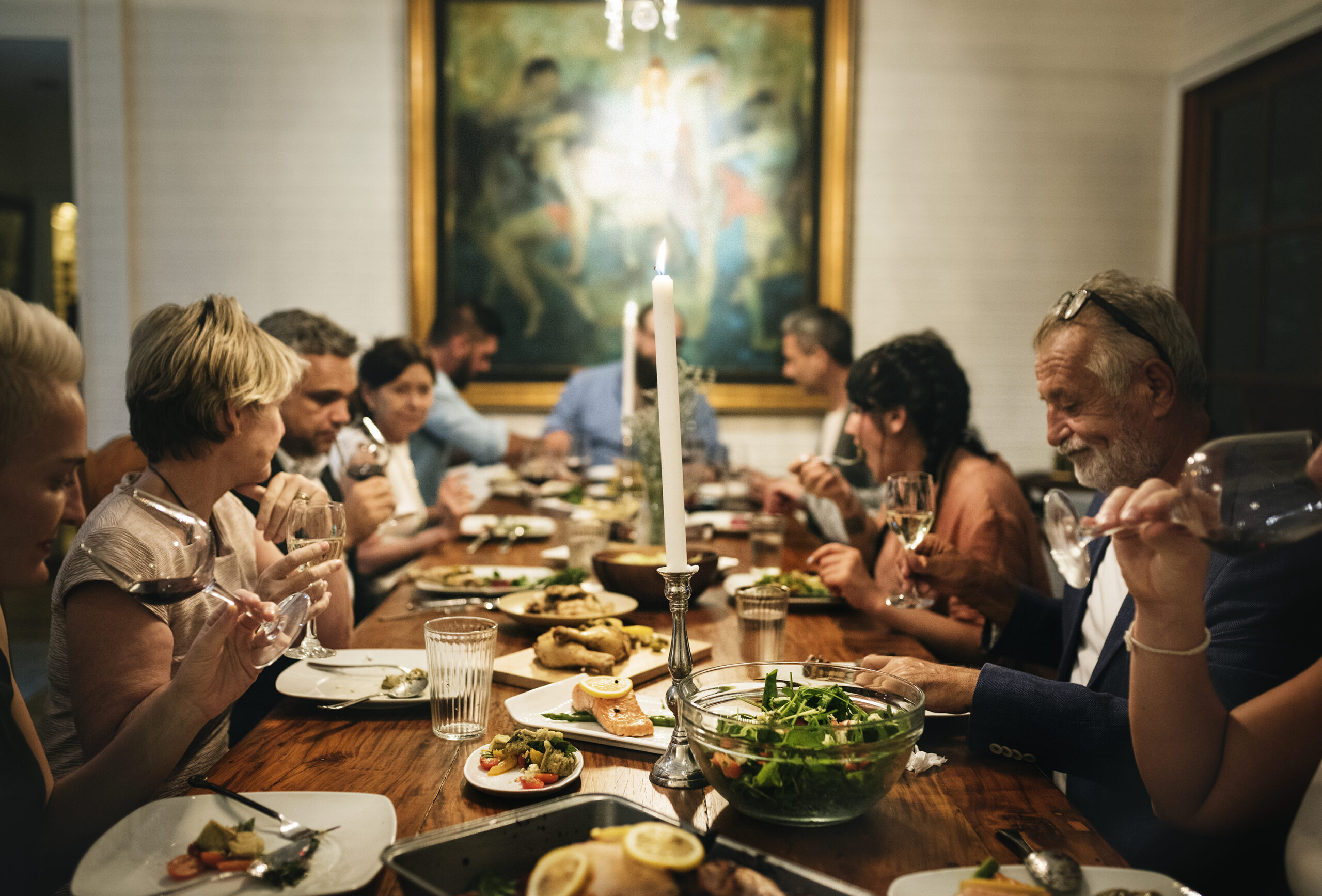
That Christmas dinner looked nothing like his seventieth birthday celebration. No assigned status. No children’s table hidden beside the kitchen. No favorites. Everyone served themselves. Everyone waited until every plate was full before anyone took the first bite.
Dad insisted on one change. He removed the old wooden sign that had always hung above the dining room. It had read: SUCCESS BUILDS A FAMILY. In its place hung a simple frame Ethan had made at school. It read: LOVE MAKES ROOM FOR EVERYONE.
Years later, people still asked why I never returned to the family company. The answer was easy. Because businesses can be rebuilt. Money can be earned again. Titles come and go. But the night my children sat in front of empty plates taught me something priceless. Never stay where your children are expected to accept less than dignity.
Real family isn’t measured by inheritance, wealth, or who sits closest to the head of the table. Real family is the place where no child has to wonder if they belong. And sometimes, the bravest thing a parent can do is stand up, pick up two little coats, walk away from everything familiar, and make room for a better future at a different table.
Ten years later, I found the old photograph while cleaning out a drawer. It was from my father’s seventieth birthday. Ethan was eleven. Sophie was eight. Two small children sitting at a separate table with empty plates.
I almost threw the photograph away. Then I noticed something written on the back. In Ethan’s handwriting. “Mom chose us.”
I sat there for a long time, holding that picture. Ethan was now twenty-one. Sophie was eighteen. Both were grown, confident, and nothing like the frightened children who had once sat beneath that awful gold banner.
That evening, my father came over for dinner. He was older now, quieter, and much more careful with his words. Before we ate, he looked around my dining room and smiled.
“You know,” he said, “this is the first table I ever sat at where I wasn’t worried about who belonged at the head.”
I smiled. “There is no head of the table here.”
Ethan laughed from across the room. “Mom doesn’t even let anyone have the good chair.”
Sophie carried in another plate. “Because Mom says everyone gets fed first.”
We all laughed. My father looked at me. And for a moment, neither of us needed to say anything.
Some wounds never completely disappear. But sometimes, they stop hurting when you realize they no longer control your life.
I looked around that table. Four generations of people. Full plates. Open chairs. No one waiting for leftovers.
And I finally understood something. That night at my father’s birthday dinner, I thought I was walking away from my family. I wasn’t. I was walking toward the family I had always deserved.
And more importantly, I was teaching my children that they never had to earn a seat at a table where they were already loved.

Adrian Hawthorne is a celebrated author and dedicated archivist who finds inspiration in the hidden stories of the past. Educated at Oxford, he now works at the National Archives, where preserving history fuels his evocative writing. Balancing archival precision with creative storytelling, Adrian founded the Hawthorne Institute of Literary Arts to mentor emerging writers and honor the timeless art of narrative.