The Bouquet
A Story About the Things We Do in Secret, the Promises We Make in Youth, and the Love That Was Always There
Let me tell you what I thought in that first moment.
Standing on the pavement outside a church I had driven past a hundred times without stopping, looking at my mother in her blue bathrobe, her hair uncombed, her slippers leaving marks in the dew on the grass — I ran through the possibilities in the way you do when something is wrong and you’re trying to find the version that is least frightening.
Sleepwalking. Some kind of episode. Early-stage dementia, the thing no one in our family had said out loud but that I had noticed my father and I both thinking about whenever she forgot a name she should have known, whenever she lost the thread of a sentence.
I thought: this is it. This is what it looks like when it starts.
But then she looked at me.
Her eyes were clear.
That was the thing that undid the neat, frightening theory I had assembled. The eyes of someone in a fugue state, a confused state, a lost state — they have a particular quality, a searching quality, the look of someone trying to locate themselves. My mother’s eyes were not searching. They were steady. They knew exactly where they were. They knew exactly who I was and what I was thinking and were already forming the response to the question I hadn’t asked yet.
She was fully present.
She was fully herself.
She was standing outside a church at seven in the morning in her bathrobe, holding a bridal bouquet, and she was the most deliberately, purposefully there that I had ever seen her.
That was somehow more frightening than the alternative.
My name is Daniel Archer.
I am forty-one years old, an architect by profession, a son by circumstance and by choice. The choice part matters, I think — there is the family you are born into and the family you decide to be part of, and the decision to be the son who shows up, who calls on Sundays, who takes the two-hour drive to his parents’ house without being asked because he senses something might be off — that decision is made again, quietly, over and over, until it becomes simply who you are.
My parents have been married for forty-three years.
This fact has always felt like a kind of architecture to me, in the way that certain structures feel inevitable in retrospect — as though the materials could not have been combined any other way and produced anything else. My father, George Archer, is a man who expresses love through reliability: he is simply always there, always steady, always the same. My mother, Rose — born Rose Calloway, Rose Archer for four decades — expresses love through attention. She notices things. She remembers. She asks the question that cuts straight to the actual thing you were worried about.
They have been well-matched in the specific way of people who have grown into their compatibility over time, who have learned to complement each other’s qualities through the slow work of years. I had never, in forty-one years, seen evidence that this might be a surface presentation concealing something more complicated.
Until the morning I found her outside the church.
I had been driving to the office.
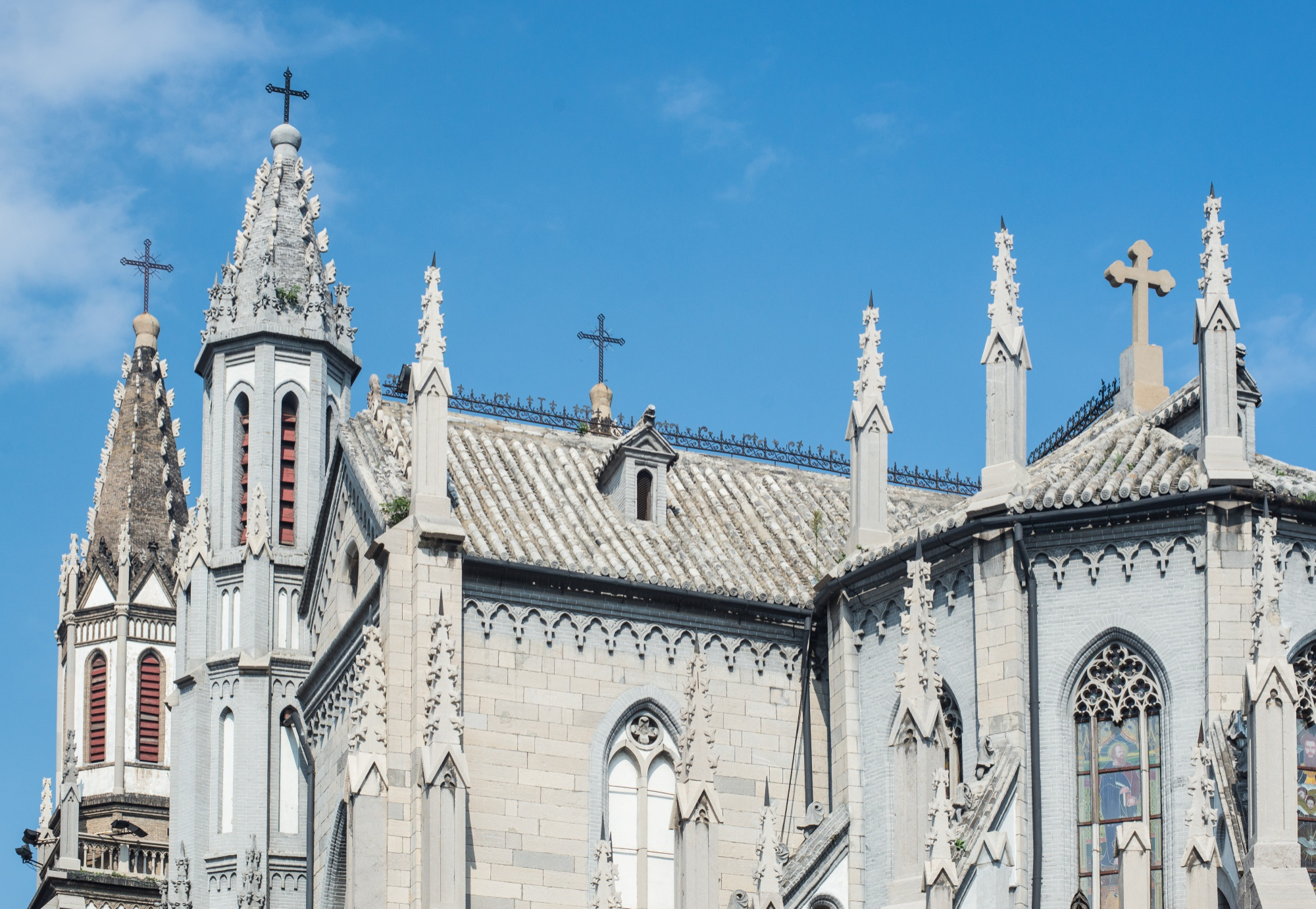
It was a Thursday in March, just after seven, the kind of morning that is more winter than spring despite what the calendar says. The road I take to work runs through the older part of town, past houses from the nineteen-twenties and a hardware store that has been in the same family for three generations and the church — St. Clement’s, an Episcopal church with stone walls and a modest sign and a garden that was bare and brown at that hour.
I almost didn’t stop.
That is the honest truth. I was running slightly late, my coffee was in the cupholder, I was thinking about a meeting I had at nine. The woman outside the church was simply a figure in my peripheral vision until something about the bathrobe registered, and I looked again, and I understood.
I pulled over.
I got out of the car.
The things I have already told you happened: the clear eyes, the firm I’m fine, the way she held the bouquet against her chest when I reached for it, the your father can never know I was here.
Her eyes filled with tears after she said it.
And then she told me what was going on.
She said: I need you to know something about your father and me.
She said it the way people begin things they have been carrying for a very long time — with the specific relief of someone who has arrived at the moment when the carrying can end, even though the moment has not arrived in any of the ways they might have imagined.
I’ve been keeping a secret for forty-three years, she said. And this morning I finally understood that keeping it any longer would cost more than telling it.
I waited.
She looked at the bouquet in her hands. The flowers were white — roses, mostly, with some greenery. I would understand their significance later. In that moment I only understood that she had purchased them or acquired them with intention, that they were not random.
When I was twenty-three, she said, I was engaged to someone else.
I opened my mouth.
She held up one hand.
Let me finish, she said. I need to say this in order.
His name was Thomas Bellamy.
She had met him when she was twenty, at the university where she was studying English literature and he was studying law. He was, she said, the kind of person who occupied a room differently from other people — not louder, not more dramatic, but more certain. Certain of himself, of his opinions, of what he wanted. For a twenty-year-old woman who had grown up in a family where certainty was in short supply, this had been profoundly appealing.
They had been together for three years.
They had been engaged for eight months.
The wedding was planned for a Saturday in June. The venue was a church — not this church, but a larger one in the city where Thomas’s family worshipped. The dress had been fitted twice. The invitations had gone out.
My mother had been twenty-three years old, standing at the beginning of what she had been led to believe was the life she was going to have.
And then? I said.
She looked at the church doors.
Your father, she said.
George Archer had been an acquaintance of hers for most of those three years — they moved in overlapping circles, the way people at universities do, not quite friends but friendly. She had always liked him. He was the opposite of Thomas in almost every way: quiet where Thomas was certain, patient where Thomas was decisive, content with ordinary moments where Thomas was always reaching for the exceptional.
Three months before the wedding, at a mutual friend’s gathering, she had found herself sitting beside my father on a porch while everyone else was inside.
They had talked for four hours.
About nothing, she said. About everything. About books and childhood and what we wanted from our lives. He asked me questions no one had asked me before. Not because they were clever questions. Because he actually wanted to know the answers.
She paused.
I drove home that night and I sat in my car and I understood that I was in trouble.
She had not acted on it immediately. She had told herself it was a passing feeling, the anxiety of an approaching wedding, the ordinary questioning of someone about to make a permanent commitment. She had talked herself back into the certainty of the plan.
Then my father had called her, two months before the wedding, on a Sunday evening.
He had said: I need to tell you something. I know you’re engaged and I know this isn’t appropriate and I’ll understand if you never speak to me again. But I would rather know I said it than spend the rest of my life wondering if things might have been different.
He had told her he was in love with her.
He had told her he had been in love with her for over a year and had said nothing because he respected her and he respected her relationship and he understood that his feelings did not constitute a claim on her.
Then he had said: That’s all. I just needed you to know.
He said that was all, my mother told me. He wasn’t asking me to leave Thomas. He wasn’t proposing an alternative. He was just — giving me the information and leaving the rest to me.
She had not called him back that night.
She had sat with it for eleven days.
On the twelfth day, she had called Thomas.
I want to tell you that she had been kind about it. She told me she had been kind. I believe her, because she is a person who understands that the way you end things shapes what comes after, and she has always been careful about what comes after.
She had told Thomas the truth: that she cared for him deeply, that she had loved him and in some ways still did, but that she had come to understand that what they had was not the right thing for either of them, and that marrying him knowing this would be a cruelty, not a kindness.
Thomas had not taken it well.
This was fair. He was twenty-four and he had a wedding planned and the woman he intended to marry was calling off the engagement. There is no version of that which is taken well.
But he had, eventually, stopped calling. Eventually, moved on. My mother had heard, years later through someone who knew someone, that he had married and had children and was happy — the word used was genuinely happy, which she had thought about for a long time because it mattered to her that she had not destroyed his life.
She had called my father back.
She had not explained or apologized or framed it as a consequence of what he had said. She had simply called and said: Would you like to go for coffee?
They had gone for coffee.
Three months later, they were together.
Fourteen months after that, they were married.
Forty-three years after that, I found her outside a church in her bathrobe holding a bridal bouquet.
So what does this have to do with today? I said.
She was quiet for a moment.
Thomas Bellamy died, she said. Last week.
She had found out through the same network of someone who knew someone. He had died of a heart attack at sixty-six. He had been, by all accounts, a good man who had lived a good life.
He never knew, she said.
Never knew what?
She looked at the bouquet again.
That it was because of him, she said. That the night I called him off, it was because of your father. Thomas thought I had simply — changed my mind. Had cold feet. He never knew there was someone else.
That’s a kindness, I said. You were protecting him.
Maybe, she said. Or maybe I was protecting myself from having to say the thing out loud. She shook her head slightly. It doesn’t matter now. What matters is — he’s gone. And last night I was lying awake thinking about him, thinking about what it means that someone who was part of my most important decision is gone, and I — I needed to do something. I needed to mark it somehow.
So you came to a church.
Not just a church, she said. This church.
I looked at the stone walls. The modest sign. The bare garden.
What is this church? I said.
She looked at it.
Your father asked me to marry him here, she said. In the garden, in September, the year we were together. It was a Sunday morning. We had walked from his apartment. It was — it was right here.
I looked at the garden.
A small garden, edged with what would be flowers in a few months but was currently just brown earth and bare branches. A bench near the back wall. A birdbath that had been emptied for the winter.
He proposed here, I said.
Yes. She touched one of the roses in the bouquet. I always thought I would bring flowers here someday. Just to — mark it. The beginning. Her voice was very quiet. I never did. Life gets in the way of the things you mean to do.
And Thomas dying made you come today.
Thomas dying made me understand that time doesn’t wait for the things you mean to do, she said. And that the beginning deserved to be marked. That what your father did — what it took for him to make that call, knowing I was engaged — deserved to be acknowledged, even if only by me, even if he never knows.
I stood in the March morning looking at my mother in her bathrobe with her bridal bouquet.
Why can’t he know? I said.
She looked at me.
Because he would try to make it less than it was, she said. He would say it was nothing, what he did. He would minimize it. You know how your father is about these things.
I did know. My father was a man who deflected compliments, who reduced his own significant acts to anyone would have done the same, who had spent forty-three years being remarkable without taking credit for any of it.
He’d say it was nothing, she said, and he’d be wrong, and I’d have to argue with him about the most important phone call anyone ever made to me, and I’d rather just — hold it myself. Know it myself.
And leave flowers in the garden, I said.
And leave flowers in the garden, she agreed.
She looked at the bouquet one more time.
Then she walked through the small iron gate into the garden.
I stayed at the gate and watched her.
She crossed the garden to the bench near the back wall. She stood there for a moment. Then she set the bouquet on the bench, carefully, the way you place something you want to stay.
She stood looking at it.
I could not see her face from where I stood.
She was standing in a church garden in her bathrobe on a March morning, in the place where my father had asked her to marry him, and she was saying something that I was not close enough to hear.
She stood there for perhaps two minutes.
Then she turned and walked back toward me.
Her face was composed. Not happy, exactly. Not relieved, exactly. Something more settled than both of those — the specific expression of someone who has done the thing they came to do.
Ready? I said.
I need a coffee, she said. And you need to not ask any more questions for a while.
I can do that, I said.
We got coffee.
She did not explain, in the car or at the coffee shop, what she had said in the garden. I did not ask. There are spaces in other people’s private lives that you stand at the edge of, that you witness without entering, and I understood that the words she had spoken in the garden belonged to her and to the garden and to the forty-three years they represented.
I bought her a muffin she did not eat.
She held her coffee with both hands and looked out the window at the street.
After a while she said: He called me on a Sunday.
I know, I said. You told me.
I know I told you. I want to tell you again. She set down the coffee. He called me on a Sunday evening and he said what he said and then he said that’s all. He wasn’t asking for anything. He was just — putting the information in the world. Trusting me to do what was right with it.
And you did, I said.
Eventually, she said. Eleven days later.
That’s not very long.
It felt long.
I watched her.
What were you doing for eleven days? I asked.
She looked at me.
Deciding, she said, what I wanted my life to be.
And you chose Dad.
I chose your father, she said. But more than that, I chose what your father represented. The patience. The — not reaching for the exceptional thing but making the ordinary thing into something good. She shook her head slightly. Thomas always wanted the exceptional. The right restaurant, the right party, the right image of what a life was supposed to look like. There was always a performance happening. I was always supposed to be something.
And with Dad?
She smiled. The smile of someone remembering something specific.
He asked me, on our second date, if I wanted to just walk around the neighborhood. No plan. We walked for two hours and talked about everything and nothing and I ate ice cream from a gas station and it was the best date I had ever been on.
A gas station.
Your father has excellent taste in ice cream, she said. Don’t tell him I said that. It will go to his head.
I laughed.
She laughed.
For a moment we were just two people in a coffee shop, and then the laughter settled and she looked back out the window.
He died, she said, quietly. Thomas. A good man. I hope he had everything he wanted.
Do you think he did?
I think he had a full life, she said. I hope that’s the same thing.
I took her home.
My father was in the kitchen when we arrived, and he looked up from the newspaper with the mild, unconcerned expression of a man who trusts his wife entirely and therefore had not noticed, or had chosen not to investigate, her absence.
Where were you two? he said. The question was casual, the question of someone who was slightly curious but not worried.
Coffee, my mother said. I ran into Daniel on my walk and we went for coffee.
My father looked at her bathrobe.
In that?
I wasn’t planning to see anyone when I went out, she said. It was a spontaneous coffee.
My father looked at me.
I had approximately two seconds to decide whether to corroborate this or to indicate that something had happened that deserved a conversation.
I looked at my mother.
She was looking at me with the specific expression of someone who has asked you to do a thing and is trusting you to do it.
She flagged me down from the street, I said. I had time before my meeting. It was nice.
My father nodded.
I’ll put the kettle on, he said, and went back to his newspaper.
My mother looked at me.
Her expression was the expression of a woman who has been trusted with something by two people she loves, who has been the keeper of a secret for forty-three years and then shared it and had it kept, and who understands that both the keeping and the sharing were acts of love.
She mouthed: thank you.
I nodded.
I stayed for tea.
My father made the tea the way he always made tea — precisely, in a specific order, the kind of small ritual that accumulates over decades into the texture of who you are. He set three cups on the table. He put the biscuit tin in the center. He sat down across from my mother, in the chair he always sat in, the one where the sun came through the kitchen window at the right angle in the morning.
He talked about the newspaper. Something about local planning decisions, something about a sports result he had an opinion about. My mother listened and responded and drank her tea, and I watched the two of them in the specific way I had been watching them all my life — the small language of forty-three years, the way they moved around each other, the look she gave him when he said something she found slightly exasperating, the look he gave her when she said something that made him proud of her without knowing why.
I thought about a phone call on a Sunday evening.
I thought about a man who had loved a woman and had told her so, once, completely, without asking for anything in return, and then had trusted the outcome to her.
I thought about the version of my life that did not exist — the version where she had said to Thomas no, I’m not calling off the wedding, the version where she had talked herself into the certainty of the existing plan, the version where she had decided that the feeling she had for a quiet man with good taste in ice cream was not sufficient reason to upend everything.
I was sitting in a kitchen that would not have existed.
I was drinking tea that would not have been made.
I was the son of a woman and a man who had found each other at the last possible moment, almost too late, almost lost to the gravity of other plans and other certainties.
Almost was doing a great deal of work in that sentence.
I have thought about this since then.
About what my father did.
He was twenty-four years old and in love with a woman who was engaged to someone else. He had carried that for over a year. He had not acted on it, had not made it her problem, had respected her relationship and her choices and her right to be unavailable to him. And then, at some point — at some point that I have tried to reconstruct in my imagination and cannot quite locate — he had decided that silence was no longer the right thing.
Not because he thought it would work.
Not because he had calculated the odds and determined they were in his favor.
He had made the call, he had told her what he told her, and he had said that’s all and meant it. He had given her information and released her from any obligation to respond to it in any particular way. He had been as undemanding in the confession as he had been in the carrying of it.
That took something.
I have thought about what it took.
The willingness to be vulnerable without demanding reciprocity. The love that says: I want you to know this, and I want nothing from you for knowing it. The trust in another person’s judgment that is deep enough to give them everything and take nothing back.
He had done this at twenty-four.
He had not known it would work.
He had done it anyway.
I am forty-one years old and I have loved people and I have been loved and I have had the ordinary losses and recoveries of a life lived with attention, and I am not sure I have ever done something that required the specific courage he had required of himself on that Sunday evening.
Anyone would have done the same, he would say, if I told him this.
He would be wrong.
Three weeks after the morning at the church, I took my parents to dinner.
Not for any occasion. Just because I wanted to see them, and because the morning had given me something I was still processing, and being in the same room with them helped me understand it better.
We went to a restaurant they liked, one they had been going to for twenty years, the kind of place where the waiter knew their order and the owner came to say hello and the table in the corner was, by informal arrangement, theirs.
My father ordered the salmon. He always ordered the salmon.
My mother ordered the pasta. She always ordered the pasta.
I ordered something and did not pay attention to what.
Over dinner, my father told a story about a problem at work — he was retired but consulted occasionally, the way retired people do when they have specific expertise that the industry hasn’t finished using. My mother listened and added details he missed. He looked at her when she added the details, not in the corrective way but in the affirming way, the way that says: yes, you know this too, you were there too.
They were telling the story together without planning to.
After dinner, while my mother was in the restroom, my father and I sat with the remains of the wine and the comfortable quiet of a table that has been well-used.
He said: Is everything all right?
I looked at him.
What do you mean?
You’ve been watching us, he said. In the restaurant. Before, with the bread. You’ve been watching us like you’re looking for something.
I had not realized he had noticed.
My father noticed more than he let on. This was a quality I had always understood but kept underestimating.
I’m fine, I said.
He looked at me with the patient, steady look of a man who has spent forty-three years not pushing and knows the value of waiting.
I’ve been thinking about you and Mom, I said. About — how you ended up together.
We ended up together, he said, by luck and good timing and your mother’s better judgment.
What does that mean?
He smiled slightly.
It means I was lucky she said yes, he said. And that she has always had better judgment than me about most things, and I’ve tried to pay attention to that fact.
You called her, I said. Before you were together. When she was engaged.
He was quiet.
How do you know about that?
She mentioned it, I said. A while ago.
He looked at the table.
That was a long time ago, he said.
You called her and told her how you felt and then said that’s all and left the rest to her.
Yes.
Weren’t you terrified?
He considered this for a moment.
Yes, he said. Genuinely terrified.
But you did it anyway.
I did it because not doing it seemed worse, he said. I thought — if I don’t say it, I will spend the rest of my life wondering. And the wondering seemed more unbearable than the rejection.
And if she had said nothing? If she had stayed with Thomas?
He was quiet for a long time.
Then she would have stayed with Thomas, he said. It was her life. It was her decision. I gave her the information. What she did with it was hers.
You trusted her.
I loved her, he said. Trusting her was part of the same thing.
My mother came back from the restroom.
She looked at us — at the quality of silence between us, at whatever was on our faces.
What are you two talking about? she said.
My father looked at me.
I looked at my father.
Nothing, I said. Dad was telling me about the restaurant.
My mother sat down.
She looked at me for a moment with the look she had — the one that saw through things.
All right, she said. And picked up her wine.
The thing about a secret, I have been thinking since March, is that it is not always what it appears to be.
My mother kept a secret for forty-three years. She had never told my father about Thomas, about the other plan, about the life she had turned away from. She had carried the full weight of the decision without sharing it.
I had initially thought, when she told me, that this was strange. That a marriage of forty-three years should be able to hold the history of the people in it, should be able to sustain the knowing of who each person had been before.
But I have thought about it more carefully now.
What she was protecting was not the secret itself. She was not protecting my father from the knowledge that she had once been engaged to someone else — he knew this, vaguely, as a historical fact. She was protecting something more specific.
She was protecting the call.
She was protecting the act of what he had done — the specific, terrifying, un-strategic thing of telling someone you love them when they are promised to someone else and then releasing them completely to make their own choice. She was protecting it from being reduced, which was what he would have done to it. He would have said it was nothing. He would have minimized it into a small story with a lucky ending.
She did not want it to be a small story.
She wanted it to be the thing it was: enormous, and brave, and the reason her life was what it was.
She had been keeping it large by keeping it private.
That was not a deception. That was a form of preservation.
And on a March morning, when a man from her past died and reminded her that time does not wait for the things you mean to do, she had gone to the garden where her husband had proposed to her and she had stood with flowers and she had acknowledged, to the air and the church and herself, that she had always known what he had done, and what it had meant, and that she had never stopped being grateful for it.
She had marked the beginning.
She had done it alone.
And it was enough.
I drove home that evening thinking about the kind of love that doesn’t ask for anything.
Not the love that keeps score, or the love that performs itself, or the love that requires constant confirmation. The love that gives you information and says that’s all and means it. The love that trusts you to make the right choice and accepts that the right choice might not be the one it’s hoping for.
I thought about my mother standing in a garden in her bathrobe, bouquet in her hands, saying something to the air that I was not close enough to hear.
I thought about my father at twenty-four, making a phone call that could have ended everything, and then not calling back, and not following up, and not pushing, and not asking — just trusting.
I thought about forty-three years of Sunday mornings and gas station ice cream and salmon and pasta and the table in the corner that was, by informal arrangement, theirs.
I thought about the things we do when no one is watching that are the most important things we do.
I thought about the courage it takes to put the true thing into the world and release it and mean the release.
I pulled into my driveway.
I sat in the car for a while.
Then I took out my phone.
There was a woman I had been seeing for seven months — her name was Laura, and she was a landscape architect, and she had a laugh that I had been thinking about since our third date. We had been proceeding with the kind of careful, calibrated pace that I had always applied to relationships, the pace that felt safe and sensible and that I had spent seven months reassuring myself was simply taking things properly.
I was stalling.
I had been stalling because I was afraid of putting the true thing into the world and releasing it.
I thought about my father at twenty-four.
I thought about that’s all.
I dialed.
She answered on the third ring.
Daniel? she said. Slightly surprised, because I usually texted. Is everything okay?
Everything’s fine, I said. I just — I wanted to tell you something. And then I’m not going to ask for anything about it. I just need you to know.
A pause.
Okay, she said. Carefully.
I told her.
I told her what I had been not saying for seven months, the actual thing underneath the careful calibrated pace, the thing I had been protecting from the risk of being said out loud.
Then I said: That’s all. I just wanted you to know.
She was quiet for a moment.
Then she said: Daniel.
Yes.
You took seven months to say that.
I know.
I’ve been waiting for seven months.
I know, I said. I’m sorry.
Don’t apologize, she said. Just — don’t make me wait anymore.
I won’t, I said.
We talked for another hour.
I sat in my driveway and talked for an hour and thought about a phone call on a Sunday evening that my father had made to a woman who was engaged to someone else, and how everything that had followed from it — the marriage, the house, the kitchen, the tea, the salmon and the pasta, and me, sitting in a car thinking about a woman with a good laugh — was downstream of that one act of trusting the truth enough to say it.
That’s all, he had said.
It had been more than enough.
I called my mother the next morning.
How are you? I said.
Fine, she said. Good, actually. Better than I’ve been in a few weeks.
You sound like yourself.
I am myself, she said. I was always myself. I just had something I needed to do.
The garden helped?
The garden helped, she said.
I thought about asking what she had said there. I decided not to.
How’s Dad? I said.
Making the tea, she said. In the correct order. The kettle first, then the cups, then exactly the right amount of time.
He never gets that wrong.
He never gets that wrong, she agreed.
Mom.
Yes.
He’s a good man.
She was quiet for a moment.
Yes, she said. He is. He’s always been a good man. He was a good man at twenty-four, when it was hardest to be one, and he’s a good man now, and I have known this every single day.
I know you have, I said.
He doesn’t need to know how much I know, she said. But it’s good that I do.
Yes, I said.
Daniel.
Yes.
Is there something you want to tell me?
I thought about the phone call the night before.
I told Laura something, I said. Something I’d been waiting to say.
How did it go?
Well, I said. Really well.
Good, she said. It’s about time.
How would you know it’s about time?
I’ve been watching you not say it for seven months, she said. You should have listened to your father’s example sooner.
I paused.
What does that mean?
She laughed.
Nothing, she said. I’m just saying that some things are better said.
She hung up.
I sat with the phone in my hand.
Outside my window, the March morning was doing the thing March mornings do — neither winter nor spring, neither one thing nor another, on the edge of something.
I thought about a church garden. A bouquet of white roses. A woman in a bathrobe who had gone at seven in the morning to mark the beginning.
I thought about a phone call.
I thought about forty-three years.
I thought about the love that says the true thing and then releases it.
That’s all.
It had been everything.
The salmon and the pasta.
The table in the corner.
The tea in the correct order.
A garden in the spring that will have flowers by May.
A bench near the back wall.
And somewhere — in the air, in the stone, in the forty-three years of a life built from a single brave phone call on a Sunday evening — a bouquet of white roses, marking the beginning.
Still there.
Still marking it.

Adrian Hawthorne is a celebrated author and dedicated archivist who finds inspiration in the hidden stories of the past. Educated at Oxford, he now works at the National Archives, where preserving history fuels his evocative writing. Balancing archival precision with creative storytelling, Adrian founded the Hawthorne Institute of Literary Arts to mentor emerging writers and honor the timeless art of narrative.