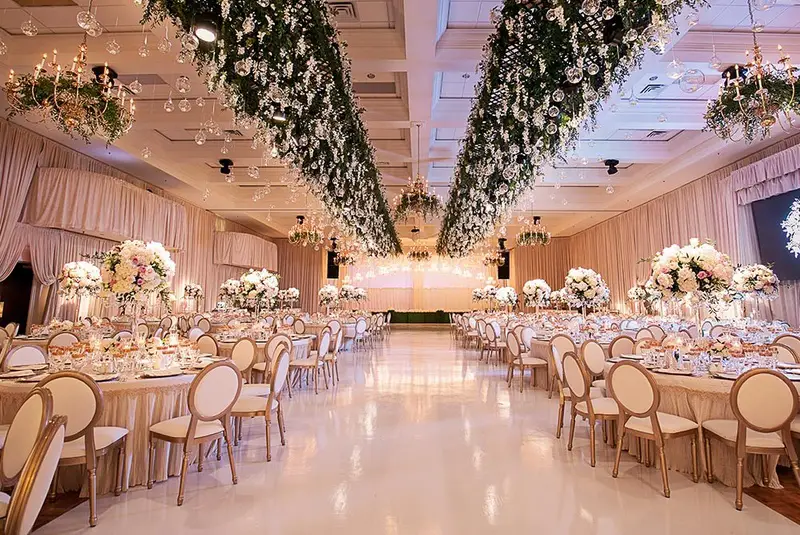
At my sister’s engagement party, my mother pointed at me across the room and laughed.
“Oh, and this is my other daughter. She cleans floors for a living.”
My father chuckled and shook his head. “Every family’s got one.”
The whole room laughed with them. Fifty people in cocktail dresses and dark suits, holding wine glasses under two crystal chandeliers, laughing at me.
I kept smiling. I said nothing.
Then the groom’s father looked at my left hand.
I was holding a water glass, and my palm was turned slightly up toward the candlelight. The long pale scar across it caught the glow. His smile disappeared. He stared at my hand for several seconds. Then he slowly set down his fork, pushed back his chair, and stood up.
The entire room went quiet.
He looked straight down the long room, past my mother, past my father, past the flowers and the candles, directly at me sitting at the table by the kitchen doors.
“Could I speak with you outside?”
He didn’t wait to see if I would follow. He just walked toward the courtyard doors.
I set my napkin down beside my plate. I stood up in front of fifty people who had just laughed at me. And I followed him out.
What happened in that courtyard took about eleven minutes. By the time we came back inside, the evening my mother had spent three weeks planning didn’t belong to her anymore.
But none of it will make sense unless I take you back first. Not to the start of the party. To the start of the arrangement. Because that’s the only word I’ve ever found for the way my family worked.
My mother has a one-sentence version of me, and she’s been performing it for six years.
She cleans floors for a living.
It always comes with a little laugh. A tilt of the head. Sometimes a hand resting on my shoulder for a second, so the room understands that she loves me anyway. In spite of it.
My sister gets the full biography. The degree. The job title. The promotion last spring. And now, the ring.
I get the sentence.
I’ve heard it at weddings. At funerals. At retirement dinners. Once at a christening, where she said it to the minister’s wife over the sound of somebody else’s baby crying.
And here’s the thing about that sentence.
It isn’t a lie.
I do clean floors. I’ve personally cleaned more square footage than everyone at that party will walk across in their combined lifetimes.
The sentence is just engineered. The way everything my mother says in public is engineered. It’s true, but it’s built to create a very specific picture in people’s heads.
And the picture is of a daughter who never became anything.
I grew up in a brick house with a hedge my mother trimmed for the neighbors’ benefit. There’s a staircase in that house, and the wall along the staircase is where the family story gets told.
My sister’s milestones climb that wall in individual frames. First piano recital. Honor society. Graduation. And right in the center, in the biggest frame with a cream-colored mat, her college diploma.
I show up on that wall twice. Both times in group photos. Once, I’m partially hidden behind an aunt.
I counted when I was sixteen, on an afternoon when the house was empty. I stood on the stairs and counted every frame, one by one.
And I remember deciding that the count was information, not an insult.
I’ve always been good at counting things and deciding what they mean.
Inside that house, everything ran on comparison.
My father taught at the college. He had a quiet, red-pen kind of mind that graded everything I did against everything my sister did. He never yelled. He never had to.
When I brought home a B-plus, he’d mention my sister’s A the way other people mention the weather.
“Your sister always liked chemistry,” he’d say, and go back to his newspaper.
When I won a regional essay contest in tenth grade, he missed the ceremony because he was at my sister’s recital. The next morning, he read my certificate standing at the kitchen counter with his coffee. He nodded once.
“That’s a good start,” he said.
The word “start” did all the damage.
Everything I ever did was a start. Nothing I ever did was an arrival.
My mother’s method was different. She never compared me to my sister directly. She performed me instead. At her garden club. At church. At the school fundraisers she ran.
She talked about me in a voice I can only describe as loving regret.
“She’s still finding her way.”
“We worry, you know how it is.”
“She’s a free spirit, that one.”
Those weren’t lies either. They were constructions. And they were built so well that I walked into rooms already explained.
By my mid-twenties, people I’d never met were pre-loaded with gentleness for me. They spoke a little slower. They’d prepared in advance to be gracious about my life.
You can feel it when a room has been given its instructions before you walk in. It feels like weather.
My sister is three years older than me, and I want to be careful here, because she wasn’t the villain.
She was raised inside the same arrangement. Just on the other side of it. And what she learned was that the arrangement was normal.
She never once aimed the sentence at me.
She also never once stood up in a room and said, “Stop.”
There’s a kind of love that is completely real and almost completely useless. For most of my twenties, that’s what my sister and I had.
On our own, away from our parents, she was warm. She remembered things I told her. One winter, she gave me a blue sweater she’d picked out herself, no help from anyone, just because she saw it in a store window and thought of me.
“It’s your color,” she said, holding it up against me. “Don’t you think? It’s so you.”
I still wear it.
People are rarely just one thing.
So when people ask me why I never corrected my mother, why I never stood up at one of those dinners and set the record straight, here’s my answer.
Correcting her meant explaining. And explaining meant handing my mother new material.
My mother is a gifted editor.
Anything I ever gave that family came back to me rewritten, retitled, and credited to someone else.
So I gave them the one sentence they already had. And I kept everything else for myself.
You should know what everything else was.
I left home at nineteen, on a Tuesday in August, with $900 and one duffel bag.
There was no fight. Nobody raised their voice. I had simply done the math on what staying was costing me, and I discovered I couldn’t afford it anymore.
I wrote a note and left it under the fruit bowl on the kitchen table. Then I let myself out.
The note said I’d call when I was settled.
I did call. Two weeks later, from a pay phone outside a laundromat.
“You’re being dramatic,” my mother said. Then, almost in the same breath, “Are you eating enough?”
“I’m fine, Mom.”
She handed the phone to my father.
“Do you need anything?” he asked.
“No.”
It was the truth. And I think the truth disappointed him. Because needing something was the only currency he knew how to accept.
For the next four years, I worked three jobs.
Mornings, five to nine, I cleaned a medical plaza on the north side. Waxed floors. Exam rooms. That cold smell of hospital disinfectant that gets into your sleeves and never really leaves.
Afternoons, I ran a register at a grocery store.
Three nights a week, I cleaned office floors downtown with a small crew. I vacuumed around the desks of people whose salaries I couldn’t even imagine. I read the framed awards on their walls while I emptied their trash into my cart.
I was invisible in those buildings. And I want to be precise about what that taught me, because it wasn’t bitterness.
Invisible people see everything.
I learned which crews cut corners and which supervisors noticed. I learned what a lobby floor is supposed to sound like under a machine when the finish is healthy. I learned that at four in the morning, a building will tell you everything that’s wrong with it, if you’re the kind of person who listens.
And by then, I was. Buildings were more honest with me than my family had ever been.
I kept a green spiral notebook. Income down the left column. Expenses down the right. The total at the bottom of every page.
And there was one rule. The total was never allowed to be negative.
Not once.
Some weeks, that rule was enforced with rice and eggs and a bus pass instead of gas money. But it held.
Tuesday and Thursday nights, I took certification courses at the community college. Floor care systems. Commercial bidding. A bookkeeping class I nearly failed and had to take again.
I asked my father to co-sign a small business loan. Twice.
The first time, we were sitting at the kitchen table. He looked at my business plan for a long time.
“I’ll think about it,” he said.
A whole semester of thinking went by.
The second time, he didn’t even look at the paper.
“The timing isn’t right,” he said.
There was no third time.
Two years later, I qualified on my own. Less money, worse interest rate. And I’ve never once regretted those terms. Because every dollar of that loan answered to me and nobody else.
At twenty-three, I bought a van at a city auction for $1,100.
It came with a dented mop bucket in the back that I hadn’t asked for. And a pocket in the driver’s side door exactly deep enough to hold a box cutter.
Remember the door pocket.
If you clean commercial buildings, a box cutter lives in your pocket or in your van. You open forty boxes of supplies a week. You scrape paint off glass. You cut shrink wrap and floor pads and zip ties.
Mine lived in that door pocket for six years. I could find it in the dark without looking.
And one night, that mattered more than anything else I owned.
My first client was a dental office that had just fired their cleaning contractor for streaking their brand-new tile. I underbid by an amount that embarrassed me. And I did the work myself, alone, at night, for a whole year.
That dental office led to an accountant’s suite. Then a daycare. Then a chiropractor.
I cleaned all day for other people and all night for myself. I slept in pieces. And the green notebook’s rule held.
My first hire was a woman from my old downtown night crew. The most thorough human being I’ve ever watched push a vacuum.
The night I handed her a company shirt with our name stitched on the chest, she held it up in front of her and laughed.
“Look at us,” she said. “Look at us!”
I had to go check a supply closet that didn’t need checking.
By the end of the first year, we had four buildings.
By year three, fifteen people on payroll. And I still took shifts myself when somebody’s kid spiked a fever. Because I believed then, and I believe now, that you can’t manage work you won’t do yourself.
By year six, this year, fifty-two employees. Commercial contracts across half the city. Crews bonded and uniformed. And a small office with the company’s name on the glass door in brushed metal letters.
I installed those letters myself one Saturday morning when the street was empty.
Afterward, I stood on the sidewalk for about thirty seconds, looking at them.
Then I went inside and answered emails.
That was the whole celebration.
It was enough.
My family knows none of this.
That was a decision, not an accident. And I want to be honest about the reason, because the reason is the spine of this whole story.
It was never revenge.
It was arithmetic.
I’d spent my whole life watching what my parents did with things of value. They didn’t hold valuable things. They presented them.
The moment my company entered that house, it would stop being a company. It would become material.
A new sentence for my mother to perform, with herself right back in the center of it. She’d tell her garden club about my success in a voice that made it hers. My father would find the one number where it was still just a start.
And I’d spend the rest of my life unable to tell whether they finally saw me, or had just updated my category.
So years ago, when my mother asked me in front of a room full of people, “Are you still doing the cleaning thing?” I said yes.
Because it was true.
And because the whole truth was the only thing I owned that they’d never touched.
Three years ago, on a Thursday at the end of October, it rained from noon until midnight.
I was twenty-six. The company was in its third year. Fifteen employees.
That evening, one of my floor techs called me.
“I’m so sorry,” she said. “My son’s got a fever of a hundred and three. I can’t leave him.”
“Stay home. I’ll cover it.”
So I covered her building myself. A law office. I buffed the lobby, locked the suite, set the alarm. Then I pointed the van toward home on the highway outside of town, a little after seven.
Wipers on high. Almost dark. The kind of rain that turns every set of taillights into a red smear.
The car was maybe fifty feet ahead of me when it happened.
I’ve replayed it more times than I can count. And it always happens at the same speed, which is to say no speed at all, and then all at once.
The taillights swung sideways. The back end came around. It caught the edge of the shoulder, lifted, flipped, and landed on its roof in the grass. The wheels were still spinning in the rain.
I don’t remember deciding anything.
I remember the van was on the shoulder with the hazards flashing. I remember I was running. And the box cutter from the door pocket was already in my hand, because that’s where it lived, and my hand knew the way without me.
People ask me later how you think to grab something like that.
You don’t think. You just take inventory of what you’re holding once it’s over.
The smell of gasoline reached me before I reached the window.
The roof was crushed down to the headrests on the passenger side. Glass lay scattered all over the wet grass like pebbles. And the driver was hanging upside down against his seat belt.
An older man. Gray hair. Dark suit. A line of blood running up his forehead. Which is the wrong direction for blood to run. That tells you how upside down he was.
He was conscious enough to be pushing at the buckle. Slow, underwater movements. The hands of a man whose head wasn’t keeping up with his fear.
The buckle wouldn’t give.
Buckles jam under weight. Most people don’t know that. I knew it the way I know which floor machines throw sparks on wet concrete. From a life nobody at a dinner party would ever ask me about.
I got down flat on the wet grass beside the window.
“Stop pushing,” I told him. “I’ve got you. Be still, sir.”
I don’t know why the “sir” came out of me.
But he stopped pushing.
I cut the shoulder strap first. Two strokes. The webbing parted with a sound like a zipper.
Then I reached across him for the lap belt. That’s a bad angle. Cutting toward yourself in the dark, with rain coming through the broken window, and the full weight of a grown man about to come down on your arm.
The last cut let him go all at once.
He dropped. I caught what I could.
And the blade slipped.
I felt it open my palm from the base of my first finger all the way to the heel of my hand. A long, bright line of heat.
I noticed it the way you notice a phone ringing in someone else’s house. There was no time for it to be about me.
Getting a half-conscious grown man out of an upside-down car window isn’t like the movies. It’s slow and ugly, and he can’t help you.
I got my arms under his and pulled. In stages. Six inches. A foot. Rest. Again. Glass under my knees. Gasoline in my nose the whole time. His heels dragging two tracks through the mud.
We cleared the car, and I kept going, farther up the embankment. I didn’t trust the smell.
I folded my jacket and put it under his head in the rain. Then I called 911.
“Eight minutes,” the dispatcher said.
And I remember thinking that eight minutes was a number I could manage. Managing numbers was the one thing my whole life had trained me for.
So I stayed.
I kept talking to him. Or talking at him, since I’m not sure he ever held on to a full sentence.
“The ambulance is coming. It’s close. Just stay with me.”
I told him about the rain like it was news. I asked his name. I don’t remember if he answered.
His eyes never settled on my face. And I never properly saw his. It was dark. It was pouring. Half his face was covered in blood. And all my attention was on his breathing and on the road.
If you’d asked me a week later to pick him out of a lineup of gray-haired men in dark suits, I couldn’t have done it.
What I kept was the weight of him. The sound of that belt giving way. And the smell of gasoline, which to this day hits my body before it hits my nose.
When the sirens were close enough to count, I stood up.
And I want to explain why I left. Because this is the part people argue with me about.
Some of it was practical. My hand was bleeding through everything I pressed against it. I had no health insurance that year. Every dollar the company made was going straight back into payroll. An emergency room visit was a number the green notebook couldn’t absorb.
Some of it was the building I had to open at five the next morning. The client didn’t care what had happened on the highway.
But most of it, if I’m honest, was older than that night.
I’d spent my whole life learning that the safest place to keep the things I did was out of sight. Do that long enough and it stops being a strategy. It becomes a reflex.
I saw the first red pulse of lights far down the road. And the reflex carried me back to the van.
I drove home with a clean rag from the supply box clamped in my fist, steering with one hand through the rain.
At my kitchen sink, I cleaned the cut. I pulled it closed with superglue and butterfly strips. If you work a trade, you’ve done this or watched it done. I wrapped it tight. I took the strongest thing in my apartment, which was store-brand ibuprofen. And I slept for five hours.
At five the next morning, I opened the building with a blue nitrile glove pulled over the bandage.
A man in a suit walked through the lobby I’d just finished. He walked right past me. He didn’t see me at all.
That particular morning, that suited me fine.
The cut healed slowly and a little crooked. A pale, curved line from the base of my finger to the heel of my hand.
I told no one. Not my crew. Not my sister.
For a few weeks, I checked the local news. I found one paragraph. Driver hospitalized after single-vehicle accident. Expected to recover. No name released.
No follow-up. Then nothing.
I let it go the way you let a stone drop into water.
It never occurred to me that anyone would ask about the scar.
And for three years, I was almost right.
Clients noticed it sometimes during walk-throughs, when I handed over paperwork.
“Ouch, what happened there?”
“Work accident. A long time ago.”
They’d nod and move on, satisfied. Because most people only ask to be polite.
In three years, nobody in my family asked at all.
The company kept growing. And two years ago, it jumped to a whole different weight class.
A commercial broker I’d worked with before invited my firm to bid on a portfolio. Six buildings downtown. Four office properties, a medical suite, and a hotel. All owned by a single development group.
It was the biggest bid of my life.
I spent four days pricing it. And I priced it honestly. Not low. Because I’d learned by then that the clients you win with a cheap number are the clients who make you pay it back later.
We won it on references. And on a walk-through where I told their people, without checking a single note, exactly why their lobby stone was clouding.
The day the signed contract came back, I sat alone in my office for a few minutes with my hand flat on the paper.
Then I hired six people in three weeks.
Everything about that account ran through the owner’s operations director. A brisk man, gray around the edges, who answered emails at strange hours and never wasted a single word.
In two years of cleaning those six buildings, I never met the owner himself.
I never expected to.
Owners of portfolios like that don’t meet the people who clean their floors. That’s not a complaint. That’s just how the world is designed. And I’d built my company quietly inside that design, where I was comfortable.
Last fall, at renewal time, the broker forwarded something to my operations manager. A screenshot he probably shouldn’t have sent. An internal email from inside the owner’s company about year-end contracts.
One line was highlighted in yellow.
Exceptional work across all six sites. Recommend full renewal. No concerns.
I printed that screenshot. I taped it inside the supply room cabinet at our office. A place no client and no family member would ever see. But where every one of my crew leads opens the door twice a day.
That’s the kind of trophy I keep.
Remember that email. Like the door pocket, it matters later.
Six weeks ago, my sister called me on a weeknight. She only does that when something is real.
“I’m engaged,” she said. Her voice was shaking.
I was happy for her. I want that on the record, because nothing that happened later changes it.
Her fiancé is a steady, unhurried man who actually looks at her when she talks. I’d privately decided that was the whole test. And he’d passed it every single time I’d seen them together.
They met two years ago. He proposed at the lake where our family used to rent a cabin every summer.
“He got down on one knee right on the dock,” she said. She was crying. “Right where Dad used to fish. I couldn’t even say yes. I just nodded like an idiot.”
I was standing in my office parking lot at eight o’clock at night, phone against my ear, smiling at a dumpster. Genuinely glad.
There’d been one dinner a few months earlier where both families were supposed to meet.
I missed it.
That evening, a pipe burst above the second floor of the medical suite and put an inch of water down two hallways. I spent those hours with two of my techs and every water extractor we own, pulling water out of carpet. Somewhere across town, both sets of parents passed a roast chicken around a dinner table.
My mother told everyone I “had to work.” She said it in the tone of a woman confirming a diagnosis.
So on the night of the engagement party, I had never met the groom’s parents.
Hold on to that. It’s the hinge the whole evening turned on.
The invitation came in the mail. Heavy cream card stock, my name in calligraphy.
On the back, in my mother’s handwriting, in blue ink, was one extra line.
Cocktail attire. Borrow something if you need to.
I stood in my kitchen and read that line more times than I’m going to admit.
Borrow something if you need to.
Technically thoughtful. Engineered like everything else. And what it was engineered to do was arrive ahead of me.
I sat with the decision for three days. I’ve learned to budget for evenings with my family the way you budget for any large expense. What it will take. What it will cost. Whether there’s enough in the account to cover it.
Then my sister called again.
“I want my sister there,” she said.
Not “Mom wants you there.” Not “It would look strange if you didn’t come.”
I want my sister there.
“Okay,” I said. “I’ll be there.”
I bought a navy dress. Plain and well cut. I paid more for it than I had for my first van.
And I didn’t borrow anything.
The party was at a restored carriage house downtown. Exposed brick walls, two chandeliers, and a string quartet in the corner playing the kind of music that exists so nobody has to notice it.
I arrived twelve minutes late on purpose. Not rudeness. Logistics. Twelve minutes late means the big doorway moment is over. The room is already moving. And my mother is already busy managing it.
A valet took my keys. I walked up the front steps alone.
At the door, I stopped for half a second. The entry floor was honed marble. I knew the stone by name. I’d bid on a building with that exact floor last spring. I know how it’s maintained. I know what it costs per square foot per month to make a room like that look effortless.
I walked across it thinking: Somebody does this. Somebody invisible does all of this.
Then I went in and found my place card.
It was at the table nearest the kitchen doors. Of course it was.
I was seated between a second cousin I’d met twice and a woman from my mother’s garden club. The garden club woman complimented the centerpieces two separate times, like the flowers might report back to my mother.
Every time the kitchen doors swung open behind me, I could feel the heat from the warming trays on the back of my neck.
From my seat, the head table was a long diagonal away. Candlelight and ivory. My sister, lit up from the inside. Her fiancé’s hand resting on her back. My parents arranged at their best angles.
And the groom’s parents, whom I was seeing for the first time in my life.
I noticed him before I knew anything about him.
The groom’s father. Silver hair. Dark suit. And the stillest posture in a room full of people performing relaxation.
It wasn’t stiffness. It was the other thing. The rarer thing. The calm of a man with nothing left to prove to anyone.
Everyone else at that party was performing attention. He was actually paying it.
At one point, a waiter nearly dropped a tray right behind his chair. Glasses rattled. He didn’t flinch. He just turned around, glanced at the waiter’s arm, said something quiet that made the young man laugh, and turned back.
I noticed all of that from my table by the kitchen. The way I notice everything. Watching rooms from their worst seat has been my actual profession for years.
My sister found me before the first course.
She crossed the entire room to do it. She crouched down beside my chair in her ivory dress and squeezed my hand.
“You came,” she said. “You look beautiful.”
“So do you. You look so happy.”
“I am.” She laughed and wiped under her eye. “I’m so happy you’re here.”
For a second, it was just the two of us, on the side of the arrangement where we were only sisters.
Then a photographer called her name. She went, because it was her night, and it should have been.
The introductions came with the first course.
My mother moved from table to table holding a glass of white wine she never actually drank. Presenting people to each other in her bright, polished sentences. I could track where she was in the room by the laughter.
When she reached the head table, she presented my father.
“Thirty-three years together. The backbone of this family.”
Warm applause.
She presented my sister with the full biography. The degree. The title. The promotion. The ring. The room made all the warm sounds rooms make.
And then her eyes crossed all that candlelight and found me at the kitchen table.
And she laughed before she said anything.
That laugh is the tell. I have twenty years of data on it. It’s the sound of her loading the sentence.
You already read what came next.
“Oh, and this is my other daughter. She cleans floors for a living.”
And my father, right on cue, with the little head shake of a man delivering a favorite joke.
“Every family’s got one.”
The room did what rooms do when they’re handed permission. It laughed politely. Fifty strangers, all excusing themselves at once.
The garden club woman next to me laughed too. Then she caught herself and stared down into her wine.
What you couldn’t read at the top of this story is what it costs to hold your face still through that.
It’s not hard because you want to cry. It’s hard because the smile has to be the right smile. Loose around the eyes. Nothing tight in the jaw. Because any other smile becomes evidence that you’re difficult.
And “difficult” is the only word my family has ever needed to end an argument I didn’t start.
So I held my water glass. I looked at the centerpiece. I let the moment move through me, the way I’d let a hundred of them move through me. And I waited for the laughter to finish so the evening could go back to ignoring me.
Except one laugh never came.
You learn to hear that, the way a musician hears a missing note in a chord. The silence had a location.
I looked up to find where it was sitting.
It was sitting at the head table.
And it was looking at my left hand.
I was holding my water glass in a way that turned my palm halfway up. The scar was catching the candlelight along its whole pale length.
The groom’s father was looking at it the way you look at something you recognize.
Not curiosity. People had been mildly, politely curious about that scar for three years.
This was recognition.
And behind the recognition, I could see him doing math.
I watched his face change. It didn’t fall apart. It reorganized. The way a map reorganizes the moment you finally understand where you are.
Then he set his fork down. He didn’t drop it. He placed it on the tablecloth. A careful, soundless movement. A man clearing everything else out of his attention.
Four seconds passed. I know, because I counted them without realizing I was counting.
Then he stood up.
No throat clearing. No excuse to his table. None of the little rituals people use to leave a seat at a party.
My mother’s smile held its shape while everything behind it recalculated.
He looked past her. Past my father. Past the flowers and the candles and the whole careful architecture of the evening. Straight down that long diagonal to the table by the kitchen.
And he asked, in a voice that didn’t need to be loud, because the room had already gone silent for it.
“Could I speak with you outside?”
My mother started to say something.
He was already walking toward the courtyard doors.
The courtyard behind the carriage house was strung with little lights and completely empty. Iron chairs around small tables, all still wet from the afternoon rain. Nobody using them. It was cold enough that I could feel it on my bare arms.
He was standing near the far edge of the light when the door shut behind me. His hands were folded in front of him. He turned around slowly. The way he seemed to do everything.
“I’m sorry for pulling you away from dinner,” he said.
“It’s fine.”
Then he looked at my left hand. Directly this time. Openly. A look that didn’t pretend to be anything else.
“May I ask how you got that scar?”
I gave him the version I give everyone.
“Work accident. A long time ago.”
It’s a good version. It satisfies people, because most people are only asking to be polite, and the answer gives them somewhere to put the question.
He didn’t put it anywhere.
He just waited. With the patience of a man who already knew there was more.
And something about the way he waited told me that politeness had nothing to do with it.
So I told him.
Standing in the cold in my navy dress, with my sister’s party glowing behind the glass, I told a stranger everything.
The rain. The highway. The taillights swinging sideways. The box cutter from the door pocket. The jammed buckle. The shoulder strap. The lap belt. The last cut. The slip. Dragging him up the embankment. My jacket under his head. The sirens. The rag in my fist. The kitchen sink. The blue glove over the bandage at five the next morning.
I told it the way I tell anything that cost me something. In order. No drama. Because true things don’t need my help.
And because I had never once said any of it out loud before. Hearing it in the open air felt like watching someone else count my money.
He was very still while I talked. I understood by then that stillness was his natural state. But this was a different kind of still. The stillness of a man holding something perfectly level so it won’t spill.
When I finished, he looked at the scar for a long moment.
Then he spoke quietly. Not as a question.
“The buckle was jammed. I kept pushing at it. And you told me to stop pushing.”
I stopped breathing.
“You called me sir.”
The courtyard got very, very small.
He told me his side, standing there in the cold, in that same level voice. I’m going to give it to you the way he gave it to me.
He woke up in a hospital with three broken ribs, a concussion, and a bleed in his head. They kept him for six days.
The paramedics told him a woman had called it in. She was gone before they got there. No name. No vehicle anyone remembered. No face.
“For a while, I assumed you’d turn up,” he said. “In my experience, people who pull strangers out of cars eventually come forward. Or at least their version of the story does.”
Nobody came forward. No version arrived.
So a month after he got out of the hospital, he hired an investigator.
The man worked it properly. He pulled what little camera footage existed on that stretch of highway. He canvassed every urgent care and emergency room across three counties, looking for a left-hand cut treated that night.
“Because whoever cut that belt had bled,” he said. “There was blood on my shirt that wasn’t mine. That detail never stopped bothering me.”
The canvas came back empty.
Of course it did.
I’d treated the wound at my own kitchen sink. With superglue. Alone. For free. In the dark.
The one decision that made me impossible to find was the one I made without thinking. For reasons that had nothing to do with him and everything to do with the house I grew up in.
After a year, the investigator brought him the only thing he would ever find.
Four seconds of footage from a gas station camera on the far side of the highway.
A woman, blurred by rain, hauling a man out through a car window. Her face was nothing. Gray noise. A smear.
But for one second, as the man came free, her left hand opened flat against the white of his shirt.
And there it was. A long, curved line across the palm. Dark with blood. From the base of the finger to the heel of the hand.
“I’ve kept a printed still of that frame in the top drawer of my desk for three years,” he said.
He said it evenly. Like inventory. Somehow that made it worse.
“For three years, I’ve glanced at the left hand of every woman of roughly the right height who’s ever reached out to shake mine. I’d mostly made my peace with never finding her.”
He paused.
“And tonight, at my son’s engagement party, while a room full of people laughed at a joke, I looked down the room and saw the hand from the photograph in my desk. Wrapped around a water glass at the table by the kitchen.”
Then he said something that stopped me cold.
“I have been looking for you for three years.”
I need to stop on that sentence for a second, because of what it did to me.
I’ve been looked at my entire life. Looked at with pity. Looked at with the gentle, pre-loaded patience of people who’d been given the official version before I walked into the room. Looked past. Looked through, by men in suits crossing lobbies I’d just finished cleaning at five in the morning.
I’d built an entire adult life, a company, fifty-two paychecks, around not needing to be seen. And I’d told myself that arrangement suited me. Most days, that was even true.
But I had never once been looked for.
“Why does it matter so much?” I asked him. My voice came out rough. “Three years. An investigator. A photograph in a drawer.”
He thought about it. He didn’t seem afraid of the pause. I’ve since learned that’s just how he is.
“When you owe a stranger your life,” he said, “the not knowing doesn’t fade. It compounds.”
I had nowhere to put that.
I’ve spent my whole life being the one who owes nothing and is owed nothing. The one whose column always balances. Nobody had ever carried me on their ledger before.
Then, into the quiet, he asked the polite question.
The one he thought he already knew the answer to, because my mother had handed it to the whole room an hour ago. Gift-wrapped.
He asked it gently. Almost apologetically. The way you ask a smaller question after a big one.
“And the work you do now? You’re still cleaning?”
There’s a version of me that says yes. That lets the evening close back over the water like nothing happened. That version had kept me safe for six years. I could feel her recommending herself.
Instead, standing in the cold, I made the decision I’d been not making since the day I screwed those brushed metal letters onto my glass door.
“I don’t work for anyone,” I said. “I own the company.”
He didn’t move.
“It started with one woman. One van I bought at a city auction for eleven hundred dollars. And a box cutter that lived in the driver’s door pocket.”
I watched his face.
“The same blade. The exact same one.”
His eyes went to my hand.
“It’s fifty-two employees now. Bonded crews. Offices, medical suites, a hotel. The best renewal rate in the city.” I took a breath. “My family has never asked one question past the first sentence. So in six years, I’ve never offered them a second one.”
He was quiet for a moment.
“What’s the name of your company?”
I told him.
I watched the name land.
His stillness changed a second time. The map reorganizing again, faster now. Lines connecting that he hadn’t known were on the same page.
He took his phone out of his jacket. He scrolled with one finger. No hurry, even now.
Then he turned the screen toward me in the glow of the string lights.
It was an internal email from his operations director. Dated last fall. The subject line said: Year-End Contract Renewals.
And halfway down, highlighted in yellow by whoever had forwarded it along, one line.
Exceptional work across all six sites. Recommend full renewal. No concerns.
My screenshot. The one taped inside my supply room cabinet, where only my crew leads would ever see it.
I was looking at the other end of it.
The six buildings downtown. The portfolio that changed my company’s weight class two years ago. The brisk operations director with the late-night emails. The owner I’d never met, because owners of buildings like that don’t meet the people who clean their floors.
I had been cleaning his floors. For two years.
He laughed once. Short. Almost silent. The laugh of a man being handed the punchline of a three-year joke at his own expense.
He shook his head slowly.
“I paid a man for three years to find you,” he said. “And you’ve been on my ledger every single month for two of them.”
He looked up from the phone.
“So you’re the reason we renewed.”
We stood there, the two of us, holding the whole shape of it between us in the cold.
Through the glass doors, I could see the party still moving. My mother’s silhouette tilting toward a table. Her hand drawing something graceful in the air.
He followed my eyes.
Then he asked me one more question. And out of everything he said that night, this is the one I keep.
“Do they know any of it?”
“No,” I said.
He nodded slowly. The way a man confirms a measurement he’s already taken twice.
“With your permission,” he said, “I’d like to make a toast.”
I want to be honest with you about that moment, because it would be easy to pretend I grabbed it with both hands.
I didn’t.
My whole life of saying nothing rose up at once and argued for itself. Fluent. Persuasive. In my own voice. Saying nothing was load-bearing. Saying nothing had built everything I had.
But standing in front of me was the one person on this earth who had gone looking for the truth about me. With money. With years. With a photograph in a drawer.
And he wasn’t asking to tell my story for me.
He was asking permission.
Nobody in my family had ever asked my permission for anything they said about me in a room.
“All right,” I said.
We walked back through the courtyard doors together. Fifty people pretended not to watch us cross the floor.
My mother was in the middle of a toast. Glass raised. Chandeliers dimmed. Halfway through the story about my sister’s childhood lemonade stand. The one she tells when she wants a room to adore her daughter, and by extension, the woman who raised her.
“She made eleven dollars that day,” my mother was saying, “and gave every penny to the animal shelter. Every penny! Even then, we knew she was special.”
I went back to my seat at the kitchen table.
The groom’s father went to the head table and stood beside his chair. Hands folded. Patient as furniture. He let her finish the story.
The room raised its glasses to my sister. And it should have. I raised mine too, because she deserved every glass in that building.
Then, as the room settled, came the sound of a ring tapping twice against crystal.
The room went quiet for him in a way it hadn’t gone quiet for anyone all evening. Some people carry silence with them and lend it out.
“I’m not much of a man for speeches,” he said.
A few people chuckled.
“So I’ll tell a short story instead.”
Something in his voice put the chuckling away.
“Three years ago, on the highway out past the county line, my car left the road in the rain and landed on its roof.”
He said it plainly, like a weather report. And fifty people stopped breathing at the same time.
“My seat belt jammed. There was gasoline coming from somewhere. I couldn’t get out. And I was not, at that point in my evening, a man capable of getting himself out.”
Nobody moved.
“A woman stopped,” he said. “She cut me out of that belt with a box cutter, in the rain, with fuel leaking under both of us. She opened her own hand to the bone doing it. She dragged me up the embankment. Put her jacket under my head. Called the ambulance. And stayed there talking to me until the sirens were close.”
He paused.
“And then she was gone. No name. Nothing I could ever repay.”
Not a single sound in that room. Not a fork. Not a glass.
“I’ve spent three years and one very patient investigator trying to find her. All he ever found was four seconds of film from a gas station camera. And in it, one detail.”
He let it sit.
“A scar across a left palm.”
I watched it move through the room like weather.
Guests turned to each other. Then to him. And then, in ones, then twos, then a whole tide, they turned to me. Because some of them had been close enough during the introductions to see my hands.
At the head table, my sister’s fingers had gone to her mouth.
My mother was still smiling. But it had become the smile of a woman standing very still in a room where a shelf has started to lean.
“Tonight,” he went on, “I came to celebrate my son. Who has found the best person either of our families has ever brought home.”
He glanced at my sister, and she made a small sound.
“And during dinner, a woman at the table by the kitchen doors lifted a water glass into the candlelight. And I saw the scar from the photograph that has lived in my desk drawer for three years.”
He turned to me.
And the whole room turned with him. Fifty faces, all down one long diagonal. Every instruction my mother had ever given them, erased in a single second.
For the first time in my life, all of that attention arrived at once.
And I didn’t want to be smaller.
“There’s one thing more,” he said.
He looked at my mother. Then at my father. His voice stayed perfectly, surgically level.
“I was told this evening that she cleans floors for a living.”
My mother’s hand tightened around her glass.
“That’s true,” he said. “Her company cleans six of my buildings, and has for two years. And my operations director, who is not a man given to enthusiasm, calls her firm the finest contractor we have ever carried.”
My father’s face went slack.
“She built that company from one van. And the same blade that cut me out of that car. I’ve spent two years trusting her with everything I own, and three years searching for the stranger who saved my life.”
He paused.
“And until forty minutes ago, I didn’t know they were the same woman.”
He raised his glass a little higher into the candlelight.
“To the woman who cleans floors,” he said. “I owe her my life. And it turns out I’ve been trusting her with it for years.”
The room rose.
I’ll never know who stood first. I think it was the groom. But chairs scraped back all around me. Fifty strangers on their feet, glasses raised high.
The garden club woman beside me was crying onto her bracelet.
My sister was already crossing the floor toward my table, one hand still pressed over her mouth, the hem of her ivory dress catching on chair legs. She didn’t stop for any of them.
My father’s face was doing something I had never seen it do in my entire life of watching it. Something that looked, for just a moment, like a man realizing he’d been grading the wrong test.
And my mother’s glass stopped halfway to her mouth.
It stayed there, frozen in the candlelight, while the whole room applauded someone she had spent six years explaining away.
My sister reached me. She didn’t say anything. She just pulled me up out of my chair and wrapped her arms around me so tight I could barely breathe, right there beside the swinging kitchen doors, with the heat of the warming trays on our backs.
“Why didn’t you tell me?” she whispered into my hair. “Why didn’t you ever tell me?”
I held on to her. Over her shoulder, I could see the groom’s father still standing at the head table. He caught my eye and gave me one small nod. The nod of a man whose ledger had finally balanced.
“Because nobody ever asked,” I said.
And for the first time, standing in a room full of people who were finally looking at me, that sentence didn’t feel like a secret.
It felt like the truth.

Specialty: Quiet Comebacks & Personal Justice
David Reynolds focuses on stories where underestimated individuals regain control of their lives. His writing centers on measured decisions rather than dramatic outbursts — emphasizing preparation, patience, and the long game. His characters don’t shout; they act.