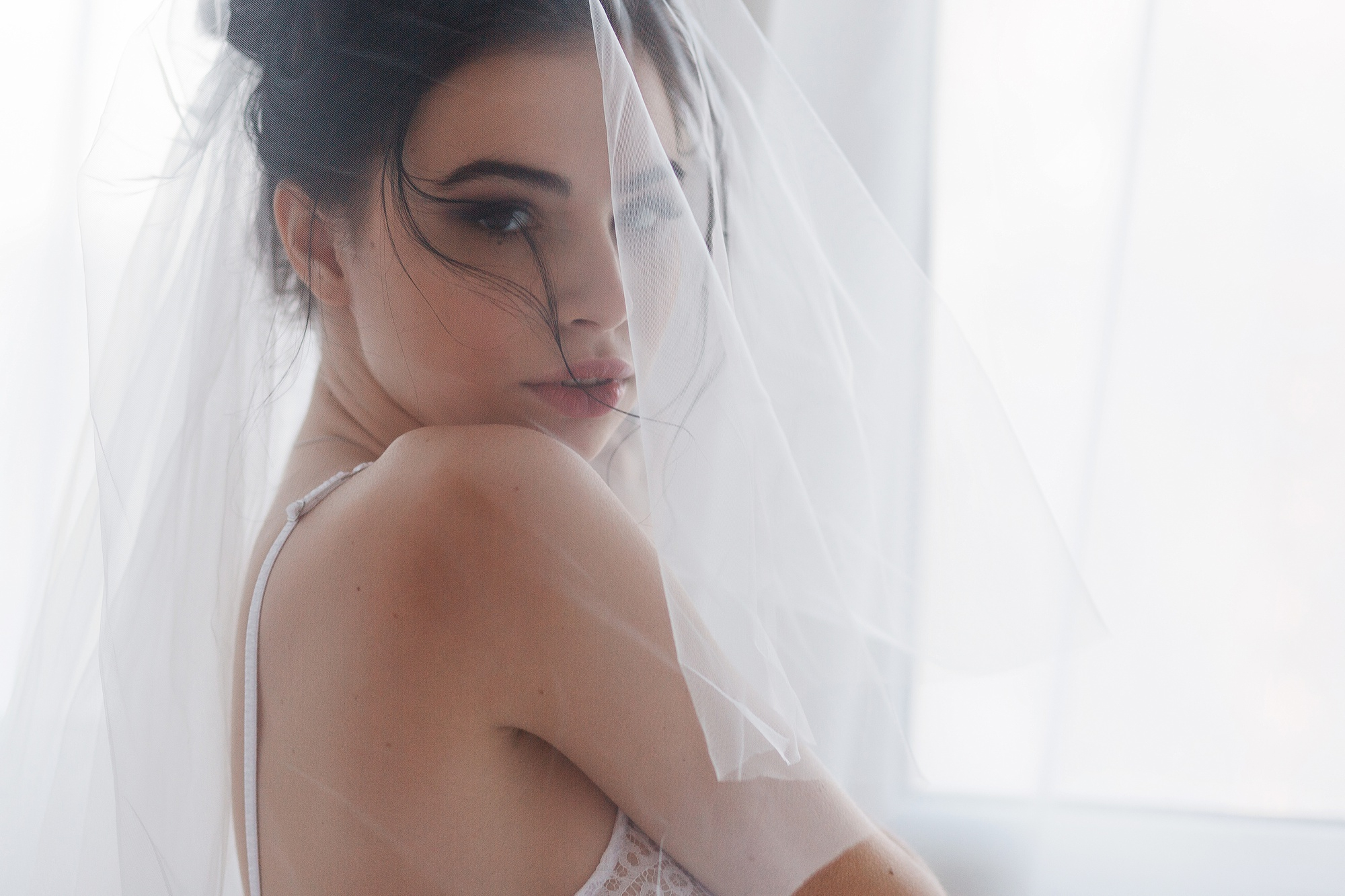
Three months after I buried my fiancé, I stood in the back hallway of a wedding venue and heard his voice through a half-open door.
“Does everything look okay?”
I knew that voice. I had heard it every morning for four years. I had heard it mumble my name half asleep. I had heard it whisper jokes to me in dark movie theaters. I had heard it argue with me about cake.
And I had heard it go silent forever.
At least, that’s what I believed.
My hand pressed flat against the wall to keep me standing. My heart pounded so hard I could hear it in my ears. Every part of my brain was screaming that this was impossible. That grief was playing another cruel trick on me, the way it had a hundred times before.
But I leaned forward anyway. I looked through the narrow gap in the door.
And there he was.
To understand what that moment did to me, you have to understand what the three months before it had been like.
Adrian and I were supposed to get married that summer.
By spring, almost everything was ready. We had booked the venue, a restored barn outside town with string lights hanging from the rafters and a view of the hills. I had chosen my dress. Ivory, simple, with lace sleeves that stopped at my wrists. I had cried in the fitting room when I saw myself in it, and the saleswoman had handed me a tissue and said, “That’s how you know.”
We had sent out the save-the-dates. We had a playlist. We had a seating chart that I rearranged every other night.
And we argued over cake flavors like two people who had nothing bigger to worry about in the whole world.
He wanted chocolate. I wanted lemon.
“We’re seriously fighting over cake now?” Adrian asked one night. He was sitting across from me at our little kitchen table, a stack of bakery brochures between us.
“We’re not fighting,” I said. “I’m explaining why you’re wrong.”
He laughed so hard he nearly spilled his coffee. He had to put the mug down and wipe his eyes.
“Chocolate is a classic, Meredith.”
“Chocolate is heavy. It’s a summer wedding. People want something light. Something fresh.”
“People want chocolate.”
“People want lemon. They just don’t know it yet.”
He leaned back in his chair and grinned at me. “What if we do both? Half and half.”
“That’s the most cowardly suggestion I’ve ever heard.”
“It’s called compromise.”
“It’s called being afraid of commitment.”
He reached across the table and took my hand. “I’m not afraid of commitment. I’m marrying you, aren’t I?”
I rolled my eyes, but I was smiling. “Fine. Half and half.”
“See? We’re already great at marriage.”
Those were the moments I kept returning to later. Not the big plans. Not the guest list or the flowers or the venue deposit. I remembered his laugh. I remembered the way he leaned against the kitchen counter in the mornings, waiting for the coffee to finish, scrolling through his phone. I remembered how he always kissed the top of my head when he walked past me, like it was something he did without thinking.
And I remembered how certain I had been. How completely, stupidly certain I was that we had years ahead of us. Decades. A whole life.
Six weeks before our wedding, Adrian died in a car accident.
There was no warning. No final conversation. No chance to say anything important.
That morning, he had left for a work trip two hours away. He kissed the top of my head on his way out the door, the way he always did.
“Don’t let your mom talk you into the pink napkins,” he said.
“They’re blush, not pink.”
“They’re pink, Meredith.”
“Drive safe.”
“Always do.”
That was it. That was our last conversation. Napkins.
I spent the afternoon at my flower shop, working on a baby shower order. Then I went home and made dinner. I texted him around seven.
How’s the trip?
No answer.
At nine, I called. It went to voicemail. I figured he was at dinner with clients.
At eleven, there was a knock at my door.
It wasn’t the police. It was Colleen, his mother. Her face was gray. Her hands were shaking. Julian, Adrian’s older brother, was standing behind her on the steps.
“Meredith,” Colleen said. That was all she said. Just my name.
I knew before she said anything else. I think my body knew. My knees gave out and I sat down right there in the doorway.
Colleen knelt beside me on the floor and held me while I screamed.
The next few days are blurry. I remember pieces. I remember Julian telling me the crash had happened on a back road near the county line. I remember someone saying the car had caught fire. I remember sitting in a cold room while a man in a gray uniform handed me a plastic bag with Adrian’s things inside.
His watch, the glass cracked. His wallet. The keychain I had given him for our third anniversary, a little silver flower.
“Is this your fiancé’s property, ma’am?”
I stared at the keychain. I couldn’t speak. I just nodded.
One day, I had been deciding where to seat his difficult uncle, the one who always started political arguments at family dinners. The next, I was identifying Adrian’s belongings in a plastic bag.
The crash had been so bad that we buried him in a closed casket.
Colleen and Julian handled most of the arrangements. I was grateful. I couldn’t have done it. I couldn’t even pick out a shirt for him. Colleen said she’d take care of everything, and I let her.
On the morning of the funeral, I stood in front of my closet for twenty minutes, trying to choose a black dress. My eyes kept drifting to the garment bag hanging at the far end. My wedding dress. I had brought it home from the shop two weeks before, because the seamstress was done with the alterations.
I zipped the closet door shut and wore the first black thing I touched.
I remember standing beside Colleen at the graveside, holding her hand while they lowered Adrian into the ground. It was a gray day. The wind kept pulling at my hair. The casket was dark wood, polished and closed, with a spray of white lilies on top.
I had made those lilies myself. I insisted. Colleen tried to talk me out of it, but I couldn’t let anyone else do it. It was the last thing I could ever give him.
Colleen squeezed my fingers so hard they hurt.
Neither of us said much.
There wasn’t anything useful to say.
Afterward, people kept coming up to me. Quietly. Carefully. Like I was something that might shatter if they spoke too loud.
“He loved you so much, sweetheart.”
“He never stopped talking about you.”
“It gets easier. Time helps. I promise.”
They hugged me. They pressed casseroles into my hands. They told me to call if I needed anything.
I nodded because I didn’t know what else to do.
I thought that was the worst day of my life.
Three months later, I learned I was wrong.
I’m a florist.
I own a small shop on the corner of Maple and Third, with a green awning and a bell over the door that jingles every time someone walks in. I opened it five years ago with every dollar I had saved, and I’ve kept it alive through slow winters and one burst pipe that nearly ruined me.
Before Adrian died, weddings were my favorite jobs.
I loved arriving early, before the guests, when the venue still felt unfinished. Empty chairs. Bare tables. Staff running around with extension cords. I loved watching those plain rooms slowly turn into celebrations.
Flowers could change everything. That was the magic of it.
A plain table became romantic with the right centerpiece. A cold ballroom became warm with greenery and candlelight. And a nervous bride, shaking in her dress, could relax the second someone placed a bouquet in her hands. I had seen it happen a hundred times. Her shoulders would drop. Her breathing would slow. She’d look down at the flowers and smile.
After Adrian died, I couldn’t even look at a bridal bouquet without thinking about the one I had chosen for myself. White garden roses, ranunculus, a little eucalyptus, tied with ivory silk ribbon. I had sketched it on a napkin one night while Adrian watched TV.
“What’s that?” he’d asked.
“My bouquet.”
He leaned over and looked at the drawing. “It’s pretty. Where’s the chocolate?”
“There’s no chocolate in a bouquet.”
“There should be.”
That napkin was still stuck to my refrigerator with a magnet.
I stopped accepting weddings.
For weeks, I handled birthdays, corporate events, and sympathy arrangements instead. Anything but weddings. I sent the brides who called me to other florists in town. I told them I was booked.
Even hearing someone say the word “fiancé” made my stomach tighten. A woman came into my shop one afternoon and said, “My fiancé wants sunflowers,” and I had to walk into the back room and sit on an overturned bucket for five minutes until my hands stopped shaking.
My assistant, Kendra, took over the front counter more and more. She was twenty-four, sharp, and fiercely loyal. She never asked questions. She just picked up whatever I couldn’t carry.
“You should go home,” she told me one afternoon. I had been staring at the same bundle of carnations for ten minutes.
“I’m fine.”
“You’ve been trimming the same stem since lunch. It’s basically a toothpick now.”
I looked down. She was right.
“I don’t know what to do at home,” I said quietly. “His stuff is everywhere. His shoes are still by the door. I can’t move them.”
Kendra didn’t say anything. She just took the scissors out of my hand and hugged me.
The sympathy orders were the hardest in a strange way. I made funeral arrangements for strangers every week. And every time I tucked a card into a wreath that said something like “Forever in our hearts,” I thought about the white lilies on Adrian’s casket.
Some nights, I sat in my car in the cemetery parking lot. I never got out. I just sat there and looked at the gate.
But eventually, I had bills to pay.
Grief didn’t stop rent from being due. It didn’t pay my suppliers. It didn’t keep the lights on in my shop or the cooler running.
I sat down one night at my kitchen table with a stack of invoices and a calculator. The numbers didn’t work. Weddings were my biggest income. Without them, I had maybe two months before things got serious.
I looked at the napkin on my refrigerator. The bouquet sketch.
“I’m sorry,” I said out loud. I don’t know who I was apologizing to.
The next morning, I told Kendra I was going to start taking weddings again.
She looked at me carefully. “Are you sure?”
“No,” I said. “But I have to.”
I told myself work might help. That maybe if I did it enough times, the word “wedding” would stop feeling like a knife.
Three months after the funeral, on a bright Saturday in June, my phone rang at seven in the morning.
It was Lisa, another florist in town. We weren’t close, but we covered for each other sometimes when one of us was overbooked or sick.
She sounded terrible. Her voice was hoarse and thick.
“Meredith, I’m so sorry to do this. I’ve got a fever of a hundred and two. I can’t even stand up.”
“Oh no. Are you okay?”
“I’ll live. But I’ve got a wedding today. Big one. Two hundred guests. Everything’s already prepped in my cooler, the arrangements are mostly done, I just need someone to install it all and handle the day-of stuff.” She coughed for a long time. “I know it’s last minute. I wouldn’t ask unless I really needed you.”
I stood in my shop and looked around.
Buckets of roses sat near the cooler. Kendra was already at the back table, organizing deliveries for the day. A radio played softly in the corner.
Every part of me wanted to say no. A wedding. A real wedding, with a bride and a groom and vows and a first dance. The thing I had been avoiding for three months.
But Lisa had covered for me the week of the funeral. She’d handled two of my events without asking for a single dollar.
“I’ll do it,” I said.
“Oh, thank God. I’ll text you the address and the order sheet. The couple’s names are on there. Meredith, thank you. Seriously.”
“Feel better, Lisa.”
The address was for a country club on the other side of the county. A place I’d never worked at before. Big white building, golf course, fancy crowd.
The order sheet didn’t have much detail. Lisa had written it fast. Bride’s bouquet, six bridesmaids, groom’s boutonniere, two mothers’ corsages, ceremony arch, twenty centerpieces. The couple’s names were scribbled at the top, but her handwriting was so bad I could only make out “Sarah” and a last name that started with a W.
I didn’t think twice about it. Why would I?
Kendra and I loaded the van with Lisa’s arrangements and headed out.
On the drive, Kendra kept glancing at me.
“You okay?”
“I’m fine.”
“You’re gripping the steering wheel like it owes you money.”
I loosened my hands. “I’m fine, Kendra. It’s just flowers.”
“Okay.” She paused. “But if you need to leave at any point, you tell me. I can finish.”
“I won’t need to leave.”
I really believed that.
The venue was beautiful. White columns, a long drive lined with trees, a ballroom with floor-to-ceiling windows overlooking the golf course. Staff were already running around, setting up tables and hanging fabric.
The wedding coordinator met us at the service entrance. She was a brisk woman with a headset and a clipboard.
“You’re covering for Lisa? Great. Ceremony’s outside on the lawn at four. Reception in the ballroom after. Bridal suite is upstairs on the left. Groom’s room is down this hallway, second door. Mothers’ corsages go to the family, I’ll send them to you. Questions?”
“No. We’ve got it.”
“Perfect.” She was already walking away, talking into her headset.
Kendra and I got to work.
I did what I always did. I set up the centerpieces. I adjusted candles. I fixed the ceremony arch, which Lisa had built with white hydrangeas and trailing greenery. It was lovely. Better than lovely.
For the first hour, I was okay. My hands knew what to do even when my heart didn’t. There’s a kind of peace in that, in work your body remembers.
Then I opened the box of corsages.
There were two. One was labeled “Bride’s Mother.” The other was labeled “Groom’s Mother.”
I had to finish the groom’s mother’s corsage myself because Lisa hadn’t gotten to it. I pinned a small white rose to a band of ivory silk ribbon and added a sprig of eucalyptus.
I stared at it when I was done.
I had made one almost exactly like it for Colleen. Months ago. For my own wedding. It was still sitting in a box in my shop cooler, dried out now, because I couldn’t bring myself to throw it away.
I set the corsage down and walked outside for some air.
“You good?” Kendra called after me.
“Just need a minute.”
When I came back inside, the coordinator took the corsages from me and sent them upstairs with a staff member. I went back to the ballroom centerpieces.
A few hours later, around three, the guests started arriving. I was fixing the flowers near the main entrance when I saw a familiar woman near the doorway.
Silver-blond hair, cut short. A navy dress. A small, careful way of walking, like she was always trying not to take up too much space.
Colleen.
For a second, I thought grief was playing another trick on me. It had happened so many times. I would see a man in a gray jacket at the grocery store and my heart would stop, because for half a second, he looked like Adrian. I would hear a laugh at a restaurant and turn around too fast.
So I told myself it wasn’t her. Just a woman who looked like her.
Then she turned slightly.
It was definitely her.
I almost called out to her. My mouth was already opening. I hadn’t seen her in weeks. We had talked on the phone twice since the funeral, both times short and awkward, both of us crying too much to say anything.
Then she saw me.
Her face changed. It wasn’t sadness. It wasn’t surprise, either, not the normal kind, the “oh my goodness, what are you doing here” kind.
It was fear.
Pure fear. Like she had just seen a ghost.
She immediately turned away and disappeared down a side hallway.
I stood there holding a candle.
That was strange. Really strange.
Colleen and I hadn’t spoken much since Adrian died, but we were never on bad terms. She used to call me “sweet girl.” She had given me her own mother’s pearl earrings to wear at the wedding. Something old.
Why would she hide from me?
I set the candle down and followed her.
“Colleen?”
She stopped halfway down the hallway. For a second, she didn’t turn around. I watched her shoulders rise and fall.
Then she slowly faced me.
“Meredith?” Her voice was too high.
“What are you doing here?”
She looked nervous. Her hands kept moving, touching her purse, touching her hair.
“I could ask you the same thing.”
“I’m working. I’m the florist.”
“Here?” The word came out sharp.
“Yes. Lisa’s sick, I’m covering for her. Why?”
Before she could answer, the wedding coordinator came hurrying down the hallway toward us, holding her headset against her ear.
“Ms. Colleen! We’ve been looking everywhere for you. The groom needs his mother.”
I stared at Colleen.
The groom needs his mother.
And for a moment, it seemed to explain everything.
Adrian had an older brother. Julian.
Of course. This must be Julian’s wedding.
Julian and I had always gotten along well. He was quieter than Adrian, more serious, but he was kind to me in a steady, easy way. At holidays, he was usually the one who helped me carry dishes into the kitchen while everyone else argued over football. Once, at Thanksgiving, he stood beside me at the sink for an hour drying plates while I washed, and we barely said ten words, and it was one of the nicest conversations I’d ever had.
I didn’t even know he was seeing someone. But then, I hadn’t asked. I hadn’t asked anyone anything for three months.
I won’t lie. It hurt a little that he hadn’t invited me.
But after Adrian’s death, I had barely spoken to the family. Maybe they thought a wedding would be too painful for me. Maybe Julian decided that seeing him stand at an altar would remind me too much of everything I’d lost.
Maybe he was right.
I tried not to take it personally.
Then I noticed the corsage on Colleen’s wrist.
A small white rose. Ivory silk ribbon. A sprig of eucalyptus.
I had made it myself that morning.
It was for the groom’s mother.
Colleen saw me looking at it. She pulled her hand behind her back, like a child caught stealing. Then she glanced at me one more time and quickly followed the coordinator away.
I watched her go.
Something still felt wrong. I couldn’t name it. It was like a splinter under the skin, too small to see but impossible to ignore.
I told myself it explained her strange behavior. She had felt awkward seeing me here. She thought I’d be upset. Maybe she felt guilty that Julian was getting married only three months after Adrian’s funeral. Maybe she thought I’d judge them for celebrating so soon.
That had to be it.
I forced myself back to work.
There were still arrangements to finish. Candles had to be lit. The ceremony flowers on the lawn needed one final check before the guests sat down.
Kendra found me in the ballroom. “Hey. You look pale.”
“Adrian’s mom is here.”
Her eyes went wide. “What? Why?”
“I think it’s his brother’s wedding.”
“Oh my God. Meredith. Do you want to leave? I can handle the rest.”
“No. It’s fine. It makes sense.” I took a breath. “It’s fine.”
“You keep saying that word.”
“Because it’s true.”
She didn’t look convinced. But she went back to the centerpieces.
About ten minutes later, I walked down the back hallway to grab a box of extra ribbon from the service room. I passed the second door on the left. The groom’s room.
Colleen was standing outside it.
This time, I almost walked away. Of course she was there. Her son was getting married. Where else would the groom’s mother be?
Still, something about the way she moved bothered me.
She looked left, down the hallway. Then right. Like she was checking to make sure nobody was watching. I stepped back into a doorway before she saw me.
Then she slipped inside the room and pulled the door almost closed behind her. It didn’t latch. A thin gap stayed open.
I don’t know why I moved closer. I’ve asked myself that a hundred times since. Some instinct pulled me down that hallway, one quiet step at a time.
Then I heard Colleen’s voice.
“You need to hurry. The ceremony starts in twenty minutes.”
A man answered her.
I stopped walking.
That wasn’t Julian’s voice. Julian’s voice was deeper, slower.
Something about this voice made my whole body go cold. Cold from the inside, like someone had poured ice water into my veins.
I had heard that voice half asleep in the morning, mumbling that it was too early. I had heard it whisper beside me in movie theaters, making fun of bad dialogue. I had heard it arguing about cake.
But that was impossible.
That was completely, absolutely impossible.
I moved closer to the door.
Through the narrow opening, I could see Colleen. She was standing in front of a full-length mirror, her back half turned to me.
Then the man stepped into view.
My hand flew to my mouth.
Adrian.
Alive.
Standing in a room, breathing, with color in his face and his hair combed back the way he always did for special occasions.
And he was wearing the same suit he had bought for our wedding.
Charcoal gray. Slim fit. I had gone with him to pick it out. I had stood outside the fitting room while he came out and turned in a circle, and I’d told him he looked like a movie star, and he’d said, “A movie star who’s about to go broke,” because the suit had cost more than he wanted to spend.
He was wearing it now. For someone else.
I couldn’t move.
For one terrible second, my mind simply refused to accept what my eyes were showing me. It was like looking at a painting that had been hung upside down. Everything was wrong and I couldn’t make it right.
“Does everything look okay?” he asked.
Colleen stepped forward and adjusted his tie. She smoothed the collar of his shirt with her fingertips. The same way she’d straightened the lilies on his casket.
“You look perfect,” she said softly.
Adrian smiled. That same easy smile. The one I’d seen across our kitchen table a thousand times.
“Good,” he said. “I don’t want anything going wrong today.”
I stumbled backward before either of them could see me. My shoulder hit the wall. I pressed my hand over my mouth so hard it hurt.
My heart was pounding so loud I was sure they could hear it through the door.
Three months earlier, I had stood at Adrian’s funeral believing I would never hear his voice again. I had listened to old voicemails on my phone every night just to hear him say, “Hey, it’s me, call me back.” I had slept in his T-shirt until it stopped smelling like him. I had sat in the cemetery parking lot staring at the gate.
Now he was alive.
His mother knew.
And they had both let me mourn him.
I turned and ran.
I don’t remember the hallway. I don’t remember the door. I just remember the restroom, cold white tile, and the click of the lock.
I barely made it inside before the tears came.
I slid down the wall and sat on the floor in my work clothes, with flower pollen on my sleeves, and I cried until I could barely breathe. Not quiet crying. The ugly kind. The kind where your whole body shakes and you can’t catch your breath and you’re scared you’ll never stop.
He was alive. He was alive. He was alive.
And somehow that was worse. Somehow that hurt more than the day Colleen knocked on my door.
My phone started ringing in my apron pocket. I ignored it. It stopped. Then it started again.
I pulled it out. Kendra.
“Meredith? The coordinator’s looking for you. They’re about to start the ceremony. She wants the arch checked one last time.”
I got up off the floor. I looked at myself in the mirror.
My eyes were swollen and red. My mascara had run down both cheeks in long black streaks. I looked like a stranger.
“Meredith? Are you okay?”
“No.”
A pause. “What happened? Where are you?”
“Bathroom. Back hallway.”
“Do you want me to take over? I can do the arch. I can do everything. Just tell me.”
I thought about Adrian. Alive. Smiling. Adjusting his tie in the mirror. Getting ready for a wedding while I had spent three months grieving him, sleeping in his shirt, staring at his shoes by the door.
“No,” I said.
“Are you sure?”
I wiped my face with the back of my hand. I picked my florist badge up off the sink where it had fallen.
And suddenly, I knew exactly what I was going to do next.
I stood in front of the mirror for another few seconds.
My hands were still shaking.
Part of me wanted to leave. Just walk out the back door, get in the van, drive home, and never think about this day again. Pretend I never saw anything. Let the dead stay dead.
Another part of me wanted to kick open the door of that groom’s room and scream at him until my voice gave out.
But somehow, neither option felt possible anymore.
Because I kept thinking about everything that had happened.
He had watched me bury him. Maybe not in person, but he knew. He knew I was standing at that grave.
His mother had held my hand while I cried. She had squeezed my fingers so hard they hurt. She had knelt with me on my own doorstep while I screamed.
Someone had arranged a funeral. Someone had chosen a casket. Someone had put that casket in the ground, with my white lilies on top.
People had brought food to my apartment. My friends had sat beside me on my couch while I stared at the wall for hours. My mother had driven four hours to sleep on my floor for a week because she was scared to leave me alone.
Adrian had let all of that happen.
And now he was twenty minutes away from marrying someone else.
I turned on the faucet. I washed the mascara off my cheeks with cold water and paper towels until my skin was pink. I pinned my badge back on my apron.
Then I unlocked the door and walked out.
Kendra found me near the service hallway. She was breathing hard, like she’d been running around looking for me.
She stopped when she saw my face.
“What happened?”
“I need you to do something for me.”
“Anything.”
“Stay with the flowers. Don’t let anyone move the arrangements. Don’t let anyone touch anything.”
She studied me. Her eyes went from my swollen face to my shaking hands.
“Meredith, you’re scaring me.”
“I know.”
“Should I call someone? Your mom? Somebody to come help us?”
“Not yet.”
“What’s going on? Please.”
I looked at her. I didn’t know how to say it. I didn’t know how to put it into words without sounding insane.
“Adrian’s here,” I said.
Kendra stared at me. Her face went through confusion, then pity, then worry. I watched her think I had finally cracked.
“Honey,” she said gently. “Adrian’s gone.”
“He’s in the groom’s room. Wearing the suit he bought for our wedding.”
She opened her mouth. Closed it. Opened it again.
“You’re serious.”
“I’m serious.”
“Oh my God.” She grabbed my arm. “Oh my God, Meredith.”
“Stay with the flowers,” I said again. “Please.”
She nodded slowly. She didn’t let go of my arm until I pulled away.
I walked toward the ceremony space.
The lawn was full now. White chairs in neat rows. Guests in summer dresses and linen suits, laughing, fanning themselves with the programs. A string quartet was tuning under a tree. The arch I had fixed stood at the front, covered in white hydrangeas, glowing in the afternoon sun.
I looked across the rows of faces.
I recognized almost no one.
That hurt more than I expected. I had met all of Adrian’s friends. His cousins. His college roommates. His coworkers. I had been to their birthday parties and their barbecues.
None of them were here.
Adrian had built an entire life around whatever he had done. A life with different people, different friends, a different woman. And somehow, I had been removed from it completely. Like I had never existed at all.
Then I saw Julian.
He was standing near the back row in a dark suit, talking quietly to an older man. His hands were in his pockets.
For a moment, relief washed over me. Julian. Steady, kind Julian, who dried dishes with me at Thanksgiving.
Julian could explain this.
I crossed the lawn quickly.
“Julian.”
He turned.
The color drained from his face. I watched it happen, like someone had pulled a plug. His mouth fell open slightly. His eyes went wide.
That was all the answer I needed.
“You knew,” I said.
His eyes shifted toward the building. Toward the hallway. Toward the groom’s room.
“Meredith, please. This isn’t the place to do this.”
“You knew he was alive.”
“Keep your voice down.” He took my elbow and steered me a few steps away from the chairs, toward the edge of the lawn.
I laughed once. It sounded ugly, harsh, like something breaking.
“I stood beside your family at his funeral. I stood beside you, Julian. You hugged me. You told me he was in a better place.”
Julian rubbed his forehead with his hand. He looked like he hadn’t slept in days.
“Please. Let me explain after the ceremony.”
“The ceremony?”
He lowered his voice until it was barely audible. “It’s complicated.”
“No.” My voice was shaking. “Complicated is changing a wedding date. Complicated is finding out your fiancé cheated on you. Complicated is a fight about money. This is something else. This isn’t complicated. This is insane.”
A few guests in the back row turned to look at us.
Julian stepped closer and dropped his voice even more.
“Adrian was going to tell you.”
“When?”
He didn’t answer.
“When, Julian? After the honeymoon? On our anniversary? Was he going to send me a postcard?”
Nothing.
And I felt something inside me settle. Like a snow globe that had been shaken so hard, and all the snow was finally drifting down to the bottom.
The grief was still there. It would be there for a long time. But another feeling had moved in beside it now.
Clarity.
“Who’s the bride?” I asked.
Julian looked away, toward the hills.
“Her name is Sarah.”
“How long?”
“Meredith.”
“How long has she been with him?”
His silence lasted too long. Way too long. I watched him try to find a better answer and fail.
“Before the accident,” he finally said. His voice was so low I barely heard it.
A wave of nausea hit me so hard I had to put my hand on the back of a chair to stay upright.
Before the accident.
While we were arguing about cake. While he was kissing the top of my head in the mornings. While I was sketching my bouquet on a napkin and he was asking where the chocolate was.
He was already with her.
I nodded slowly. My mouth felt numb.
“So there was no accident.”
“There was an accident.”
“What?”
Julian exhaled. He looked like the words physically hurt him.
“Adrian was in the car. It was real. The crash was real. But he survived.” He hesitated. “Someone else didn’t.”
I stared at him. “Someone else.”
“I can’t—I don’t know everything, Meredith. I swear I don’t. He called Mom from the side of the road. He was hurt, but he could walk. And by the time anyone got there, he’d made a decision.”
“He took advantage of the accident to disappear,” I said.
Julian’s expression tightened. “He panicked.”
“He faked his death.”
“He thought it was the only way to get out.”
“Out of marrying me?”
Julian looked ashamed. He couldn’t even meet my eyes.
“Out of everything,” he said.
I stepped back from him.
For three months, I had imagined Adrian’s final moments. Every single night. I lay awake wondering whether he had been scared. Whether it hurt. Whether he knew what was happening. Whether, in those last seconds, he thought about me.
I used to hope he did. I used to pray that the last thing in his mind was my face.
Instead, he had survived. He had stood on the side of the road, alive, and decided that being dead was easier than being honest with me.
Easier than one conversation. One hard, awful conversation where he said, “Meredith, I don’t want to marry you.”
I would have survived that. It would have broken my heart, but I would have survived it.
He didn’t even give me that.
Inside the ceremony space, the string quartet started playing. Soft, sweet music. The guests began settling into their seats.
Julian grabbed my arm. “Meredith, please don’t do anything.”
I pulled away from him. “Don’t touch me.”
Then Colleen appeared on the path from the building.
She stopped when she saw us together. She looked from Julian to me, and then she closed her eyes. Just for a second. Like she’d been dreading this exact moment for three months.
“You told her,” she said to Julian.
“He didn’t have to,” I said.
Colleen opened her eyes. They were already wet.
“Meredith, please.”
“You held my hand.”
Her face crumpled.
“I know.”
“You watched me cry over your son. You knelt on my doorstep and held me while I screamed.”
“I know.”
“You let me stand in front of that coffin. You let me put flowers on it. I made those lilies with my own hands, Colleen. I stayed up all night making them.”
Tears spilled down her cheeks. She pressed her hand against her mouth.
“What was in it?” I asked. My voice cracked. “What was in that coffin?”
She shook her head. She couldn’t answer.
“I thought I was protecting him,” she whispered.
“From what?”
She looked toward the building. Toward the groom’s room.
“From ruining his life. He said he couldn’t go through with the wedding. He said he’d made a terrible mistake, that he loved someone else, that he didn’t know how to tell you. He was crying on the phone, Meredith. My son was crying on the side of the road, and he begged me, and I—”
“So you ruined mine instead?”
She had no answer.
She just stood there, crying, with my corsage on her wrist.
The music changed. The quartet shifted into something slower. Something I knew. The processional.
And that’s when I finally saw the bride.
Sarah stood near the entrance of the lawn with an older man beside her. Her father, I guessed. He had the same chin. She was holding his arm with one hand and her bouquet with the other.
Lisa’s bouquet. White peonies and pale pink roses. I had tightened the ribbon that morning.
She was beautiful. Young, maybe twenty-seven. Dark hair pinned up with little pearls. Her dress was simple, soft, flowing. She looked nervous and happy. She kept smoothing the front of her skirt and laughing at something her father whispered to her.
She also looked completely unaware.
That changed everything.
When I walked out of that bathroom, I had imagined storming into the ceremony. Standing up when the officiant asked if anyone objected. Humiliating Adrian in front of every single person he had chosen instead of me.
But looking at Sarah, I knew she wasn’t my enemy.
If she knew the truth, that was one thing. If she knew he had faked his death, if she knew about me, then she was part of it, and she could deal with the consequences.
But if she didn’t know, she was about to marry the same liar I had almost married.
She was about to stand at that arch, under those flowers, and make promises to a man who had let another woman bury him.
I couldn’t let that happen. Not to anyone.
I slowly made my way across the grass toward her.
Colleen followed right behind me. “Meredith. Don’t. Please don’t.”
I kept walking.
Sarah looked up as I got close. She smiled politely, the way you smile at staff.
“Hi. Can I help you?”
“I’m the florist.”
Her smile got a little warmer. “Oh! The flowers are beautiful. Seriously. I cried when I saw the arch.”
“Thank you.”
“Is something wrong? Do I need to hold this differently?” She lifted the bouquet.
“No. You’re holding it perfectly.” I took a breath. “But before you walk down that aisle, there’s something you need to know.”
Her smile disappeared.
Behind me, Colleen whispered my name. “Meredith.”
I ignored her.
Sarah’s father stepped forward slightly. “What’s going on here?”
Sarah glanced between Colleen and me. “What are you talking about?”
So I told her.
Not loudly. Not dramatically. I kept my voice low and steady, and I just told her the truth.
I told her Adrian had been engaged to me. That three months ago, we were six weeks away from our wedding. That we had a venue and a date and a cake we’d argued about.
I told her about the accident. The knock on my door at eleven at night.
I told her about the closed casket.
I told her that I had stood at his grave and watched them lower him into the ground.
Sarah stared at me. She didn’t blink.
“That’s impossible,” she whispered.
“I wish it were.”
She turned to Colleen. Her voice was shaking.
“Is she lying?”
Colleen said nothing.
And Sarah’s face changed. I watched the color drain out of it, the same way it had drained out of Julian’s.
“Ms. Colleen?”
Still nothing. Colleen just stared at the grass.
Sarah’s father put his hand on his daughter’s back. “Sarah, sweetheart—”
Then Adrian appeared at the far end of the path.
He must have heard the music stop. Or maybe someone told him the bride was delayed. He came walking out of the building quickly, still adjusting his cufflinks, looking annoyed.
He stopped dead when he saw me.
For the first time that day, he looked terrified.
His face went white. His hands dropped to his sides.
“Meredith.”
I turned to face him.
It was so strange, seeing him from ten feet away. Real. Solid. Breathing. There was a small scar on his forehead I’d never seen before, near his hairline. From the crash, I guessed.
“You finally remembered my name,” I said.
Sarah stepped forward. She was trembling. “Adrian. Please tell me she’s lying.”
Adrian looked at his mother.
Then at Julian, who had come up behind us.
Nobody helped him. Nobody said a word.
“Sarah, I can explain,” he said.
She slapped him.
The sound cracked across the lawn like a gunshot. The string quartet stopped playing. Every single guest turned in their chair. Some of them stood up.
Adrian touched his cheek. A red mark was already spreading across it.
“Sarah.”
“You told me,” she said. Her voice was rising now. “You told me she knew about everything.”
I froze.
Adrian looked at her sharply. “Sarah, not here.”
Sarah started crying. Her mascara was running now, just like mine had in the bathroom.
“You said Meredith knew you wanted out. You said you’d told her months ago and she took it badly. You said the funeral was some legal mess your family couldn’t stop. Some insurance thing. You said everyone knew but nobody could talk about it.”
I stared at him.
He had lied to her too.
Different lie. Same cowardice.
“I didn’t know anything,” I told her. My voice broke. “Nobody told me anything. I thought he was dead. I’ve spent three months thinking he was dead.”
Sarah covered her mouth with her hand. The bouquet slipped and dangled at her side.
“I’m so sorry, Meredith,” she whispered.
“So am I.”
We looked at each other for a long moment. Two strangers who had loved the same man. Two women he had lied to in different ways.
Adrian stepped toward me.
“Meredith, please. Listen to me.”
“No.”
“I never wanted to hurt you.”
That almost made me laugh. It rose up in my throat, bitter and wild.
“You let me bury you,” I said.
His face twisted. “I know. I know. I just—I didn’t know how to end things. You had everything planned. The venue. The dress. Your mom had already bought her plane ticket. Every time I tried to tell you, you’d show me another picture of flowers, and I couldn’t—”
“So you died?”
He had nothing to say to that.
He just stood there, in the charcoal suit I had helped him pick out, with a red handprint on his face.
I reached up and unpinned my florist badge from my apron. I held it in my hand for a second. Then I looked him straight in the eye.
“You were right about one thing, you know.”
He frowned. “What?”
“You said you didn’t want anything going wrong today.”
He stared at me.
“Something went wrong today,” I said.
Then I turned and walked away.
I didn’t destroy the flowers. I didn’t knock over the arch. I didn’t grab a microphone and make a speech in front of two hundred guests.
Neither of those things mattered anymore. The truth was already out, and it was doing all the damage it needed to do on its own.
Behind me, I heard Sarah’s father say, “We’re leaving. Now.”
I heard the rustle of her dress as they walked across the grass together, toward the front doors, toward the parking lot. She didn’t look back at Adrian once.
The guests began whispering. Then talking. Then talking loudly. Chairs scraped. Someone asked, “What happened? What did she say?”
Julian went toward the rows of chairs, raising his hands, trying to explain whatever he could to whoever would listen.
Colleen sat down right there on the edge of the stone path, in her navy dress, with her back against the wall of the building. She put her face in her hands and cried.
And Adrian stood alone in the middle of the lawn in the suit he had bought for our wedding. Under the arch that I had fixed. Surrounded by flowers I had arranged.
I found Kendra in the ballroom. She was standing guard over the centerpieces like a soldier.
She took one look at me and said, “Is it over?”
“It’s over.”
“Do you want to go home?”
“Yes.”
“Okay.” She grabbed our bags. “I’ll call Lisa from the van. The flowers can stay. They’re paid for.”
We walked out the service entrance together. The sun was lower now, turning everything gold. Kendra didn’t say a word until we were in the van and the doors were shut.
Then she said quietly, “Meredith, I’m so sorry.”
“I know.”
“Are you okay?”
I thought about it. Really thought about it.
“No,” I said. “But I think I will be.”
She reached over and squeezed my hand.
That night, I went home to my apartment. His shoes were still by the door. The same brown sneakers he always kicked off without untying.
I picked them up. I carried them to the trash can outside and dropped them in.
Then I went back inside and opened my closet. The garment bag was still hanging at the far end. My wedding dress. Ivory. Lace sleeves.
I didn’t cry this time. I just touched the fabric through the plastic and thought about the woman in the fitting room who had cried when she saw herself in it. She had been so happy. She hadn’t done anything wrong. She had just loved the wrong person.
I would donate it, I decided. Someone else should get to wear it. Someone who would walk down an aisle toward a person who actually showed up.
I took the napkin off my refrigerator last. The bouquet sketch. White garden roses, ranunculus, eucalyptus.
I looked at it for a long time.
Then I folded it once and put it in a drawer. Not the trash. Just a drawer. Because the bouquet was mine. I had designed it. That part of the dream belonged to me, not to him.
My phone buzzed on the counter. It was a text from a number I didn’t know.
It’s Sarah. I got your number from the florist sheet. I just wanted to say thank you. I don’t know what I would have done if I’d found out after. I’m so sorry for what they did to you.
I read it three times.
Then I wrote back.
I’m sorry for what they did to you too. Take care of yourself.
The next week, Colleen called me four times. I didn’t answer. On the fifth call, she left a voicemail. She was crying. She said she didn’t expect me to forgive her. She said she just wanted me to know that she thought about me every day.
I deleted it without listening to the end.
Julian sent a letter. A real one, handwritten, on plain white paper. He said he was ashamed. He said he had begged Adrian to tell me the truth a dozen times. He said he should have told me himself and he would regret that he didn’t for the rest of his life.
I kept that one. I’m not sure why. Maybe because he was the only one who didn’t make excuses.
Later, I heard through people in town that there was an investigation. Something about the accident, the car, the other person who had died on that road. About the coffin and what had been in it. About insurance papers that someone had signed. I didn’t follow it closely. I didn’t want to. It wasn’t my story anymore.
For three months, I had believed losing Adrian was the worst thing that had ever happened to me.
Walking out of that venue, with the sun on my face and Kendra beside me, I finally understood something.
I hadn’t lost the man I was supposed to marry.
I had discovered who he really was before I married him.
There was a difference. A huge one.
The first was a tragedy. The second was an escape.
Two weeks later, a young woman came into my shop. She was nervous, fidgeting with the strap of her purse. She told me she was getting married in September. She said her fiancé loved sunflowers, and she wanted to surprise him.
I didn’t have to walk into the back room this time. I didn’t have to sit on a bucket.
I pulled out my sketchbook, smiled at her, and said, “Tell me about him.”
And for the first time since the funeral, I didn’t feel like a grieving fiancée.
I felt like Meredith again.
So here’s the question I still think about sometimes: when someone lets you grieve a life they never actually lost, do you still need answers? Or is walking away the only closure you really need?

Specialty: Quiet Comebacks & Personal Justice
David Reynolds focuses on stories where underestimated individuals regain control of their lives. His writing centers on measured decisions rather than dramatic outbursts — emphasizing preparation, patience, and the long game. His characters don’t shout; they act.